Webstacks Reviews 2026: Is This Composable Web Agency Worth It? (+ 5 Best Alternatives)
Introduction
In today’s headless & composable web era, agencies like Webstacks are gaining serious traction. Known for building high-performance B2B SaaS websites, Webstacks positions itself as a growth-focused digital partner.
But is it actually worth the hype?
Let’s break down Webstacks reviews, pros & cons, and then explore 5 better alternatives you should consider in 2026.
QUICK LIST
Weframetech, Orium, Netguru, Bounteous, Freshy, composable web agencies, headless CMS experts, B2B SaaS website agencies, API-first web development companies, JAMstack development teams, enterprise web consultancies, headless commerce agencies, MACH architecture specialists, growth-focused web agencies, scalable content architecture experts, Next.js development agencies, Sanity and Contentful experts, composable commerce consultants, conversion-focused digital agencies
Webstacks vs Alternatives (Quick Comparison)
|
Agency
|
Best For
|
Specialization
|
|
WeFrameTech
|
Headless commerce
|
Medusa.js, eCommerce
|
|
Netguru
|
Enterprise apps
|
Product development
|
|
Orium
|
Enterprise commerce
|
MACH architecture
|
|
Bounteous
|
Digital experience
|
Enterprise CX
|
|
Freshy
|
SMB websites
|
WordPress
|
TL;DR
- Best headless commerce alternative → Weframetech
- Best enterprise composable commerce consultancy → Orium
- Best architecture-first development agency → Netguru
- Best personalization & digital experience agency → Bounteous
- Best budget-friendly WordPress agency → Freshy
- Biggest web trend in 2026 → API-first and composable web architecture
- Best for scalable headless CMS ecosystems → Weframetech & Webstacks
About Webstacks
Webstacks is a San Diego-based composable web agency focused on:
-
Website design & development
-
CMS implementation (Contentful, Sanity, etc.)
-
Growth marketing & SEO
-
Website migrations & redesigns
They primarily work with SaaS, FinTech, and B2B companies, helping turn websites into conversion-driven growth engines.
Webstacks Reviews (2026)
Overall Ratings
-
4.2/5 (Glassdoor – employees)
-
5.0/5 (Client reviews – HubSpot marketplace)
-
78% recommend working there
Pros of Webstacks
1. Strong expertise in composable architecture
They specialize in modern stacks like Headless CMS + JAMstack, making them ideal for scalable SaaS platforms.
2. Excellent project management & communication
Clients consistently praise their fast delivery and structured workflows.
3. High-quality design & development
Their work focuses on performance, scalability, and UX, especially for growth-stage companies.
4. Learning & growth environment (for employees)
Employees mention strong mentorship and exposure to high-level projects.
Cons of Webstacks
1. Premium pricing
Not ideal for startups or budget-conscious teams
2. Limited CMS specialization (e.g., WordPress)
They are not focused on WordPress-heavy ecosystems.
3. Internal concerns (employee reviews)
Some reviews mention:
-
Leadership challenges
-
Communication gaps
-
Scaling issues in teams
5 Best Alternatives to Webstacks (2026)
If you’re comparing agencies (especially for headless / composable / eCommerce builds), these are strong alternatives
1. Weframe Tech
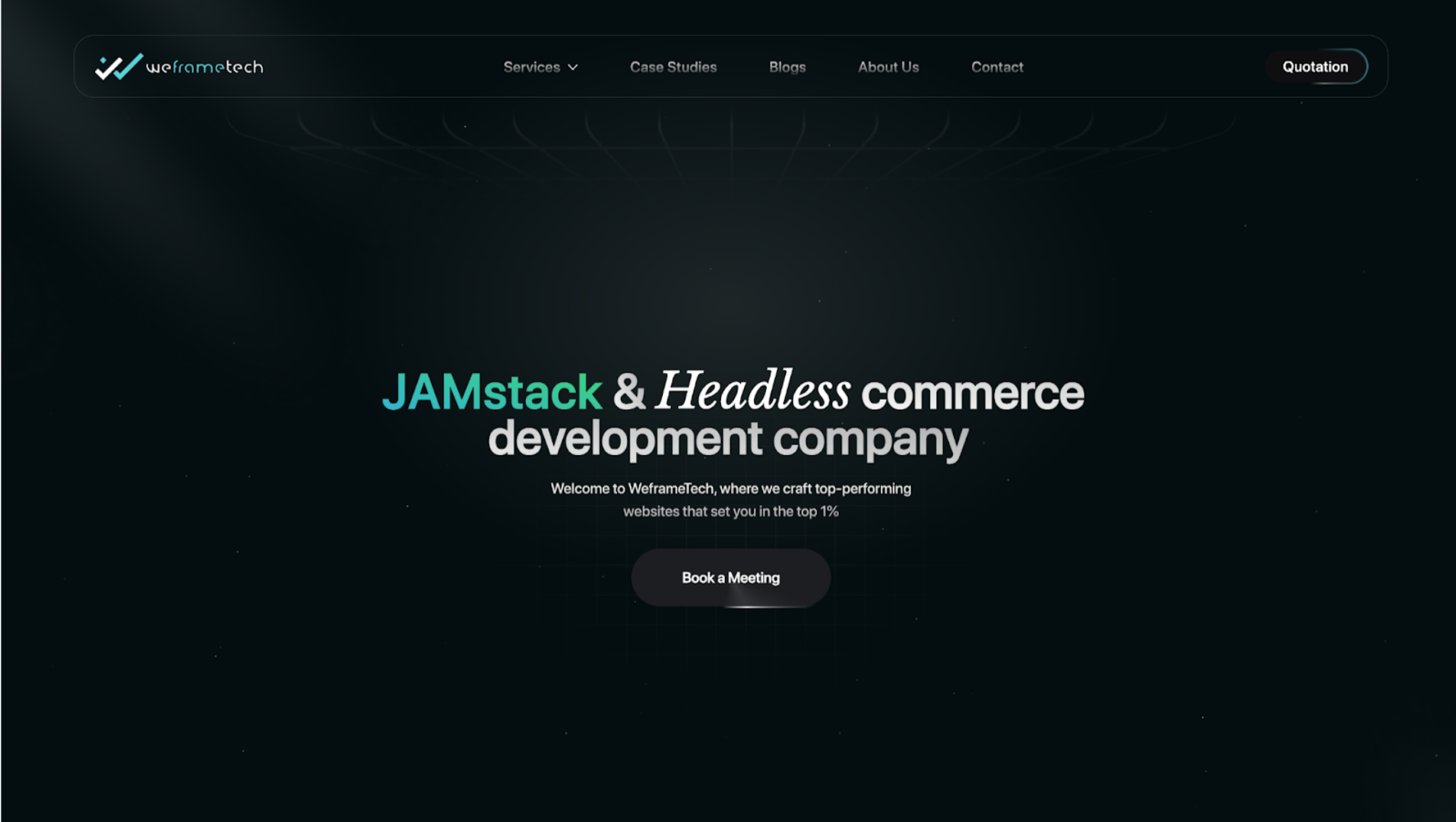
Why Us
-
Top Rated agency on Upwork with a 100% Job Success Score, trusted by global brands for high-stakes commerce implementations.
-
Weframe Tech offers up to 40% lower development costs through AI-accelerated workflows and access to one of India’s top ecommerce engineering teams delivering faster execution, higher efficiency, and enterprise-grade quality without inflated agency overhead.
-
One of the most recognised leaders in global digital commerce consulting — highly experienced in composable commerce, omnichannel retail, personalisation, enterprise headless CMS, Sanity CMS, Directus CMS, and Medusa.js implementations for large-scale retail ecosystems.
-
Deep enterprise architecture expertise across B2B, DTC, marketplace, and multi-region commerce environments with scalable, future-proof infrastructure.
-
Commercial-first execution focused on measurable outcomes — improving conversion rates, increasing AOV, reducing CAC, and lowering total cost of ownership.
-
End-to-end delivery partner providing strategy, UX, development, integrations, performance optimisation, migrations, and long-term growth support under one team.
Weframe Tech — The Top-Rated Headless CMS Development Agency on Upwork, Serving Clients Globally.
Whether you're building high-converting landing pages, a full-scale ecommerce store, or a complete digital experience platform we design and build headless CMS architectures that are fast, flexible, and built to perform. From content-driven B2B SaaS websites to composable commerce for enterprise retail, we've delivered for brands across the USA, UK, Australia, Canada, UAE, Singapore, and beyond.
Why Brands Choose Weframe Tech for Headless CMS
We don't just implement a CMS. We architect complete digital experience ecosystems — connecting your content layer, commerce engine, frontend, and third-party integrations into one unified, high-performing stack. Every engagement is backed by a team that understands both the technical depth of headless architecture and the commercial outcomes your business demands — conversion, organic growth, revenue, and scale.
100% job success score on Upwork
What We Build
For Landing Pages & B2B Web
-
High-Converting Landing Pages — CRO-first, SEO-optimised, and content-managed at scale
-
B2B SaaS & AI Websites — performance-driven websites built for inbound acquisition and pipeline growth
-
Organic Growth Engine — SEO-first architecture, structured content, and technical foundations that compound over time
-
Inbound Acquisition Infrastructure — content systems designed around your ICP, their intent, and their buying journey
-
Content at Scale — structured content models that let your marketing team launch, test, and iterate without a developer
-
CMS Migration — seamless migrations from WordPress, Webflow, HubSpot CMS, or any legacy platform
For Ecommerce & Commerce
-
Custom Headless Storefronts — fully bespoke, brand-first commerce experiences built from the ground up
-
Composable Commerce Architecture — future-proof commerce stacks built for scale, performance, and flexibility
-
Headless Shopify Plus — Shopify as the commerce engine, paired with a fully custom headless frontend
-
Medusa.js Commerce — open-source, fully customisable commerce for brands that need complete ownership
-
B2B Storefronts & Portals — account-level pricing, quote workflows, PO-based checkout, and role-based access
-
Large-Scale Migration — structured, zero-disruption migrations from any legacy platform to a modern headless stack
-
Internationalisation — multi-currency, multi-language, and multi-market setups for global brands
-
Ongoing Retainer & Growth Support — a dedicated team that continues to optimise and grow your implementation post-launch
Our Headless CMS Tech Stack
CMS & Content Sanity CMS, Contentful, Storyblok, DatoCMS, Prismic, Contentstack, Hygraph
Commerce Engines Shopify Plus, Medusa.js, Commercetools, Commerce Layer, Elastic Path, Fabric, Vtex, BigCommerce Enterprise, Salesforce Commerce Cloud
Frontend Frameworks Next.js, Nuxt.js, Astro.js, Remix, SvelteKit, Gatsby
PIM Akeneo, Salsify, Pimcore, inRiver, Plytix
Search & Discovery Algolia, Meilisearch, Elasticsearch, Constructor.io, Bloomreach
UI & Component Libraries Tailwind CSS, Shadcn UI, Radix UI, Framer Motion, GSAP, Three.js
SEO & Performance Ahrefs, Screaming Frog, Semrush, Google Search Console, Lighthouse, Core Web Vitals
CRO & A/B Testing Optimizely, VWO, AB Tasty, Dynamic Yield, Ninetailed, Convert
Analytics & Heatmaps Google Analytics 4, Mixpanel, Hotjar, FullStory, Heap, Microsoft Clarity, Triple Whale
Lead Capture & Marketing Automation HubSpot, Marketo, ActiveCampaign, Pardot, Mailchimp, Customer.io
Chat & Conversion Intercom, Drift, Qualified, Crisp
Personalisation Ninetailed, Mutiny, Optimizely, Dynamic Yield
Reviews & Social Proof Okendo, Yotpo, Stamped, Judge.me
Subscriptions & Loyalty Recharge, Loyalty Lion, Smile.io, Skio
Email & Retention Klaviyo, Omnisend, ActiveCampaign, Drip, Customer.io
Customer Data & CDP Segment, Rudderstack, Bloomreach CDP, Klaviyo
Payments & Checkout Stripe, PayPal, Klarna, Afterpay, Braintree, Adyen, Mollie, Shopify Payments
OMS & Fulfilment ShipBob, Shipstation, Brightpearl, Fluent Commerce, Orderhive
ERP & Backend SAP, Oracle NetSuite, Microsoft Dynamics 365, Acumatica, Brightpearl
Infrastructure & DevOps Vercel, Netlify, AWS, Cloudflare, Railway, Docker, GitHub Actions
Design & Prototyping Figma, Framer, Adobe XD, Lottie
Who We Work With
We work with B2B SaaS companies, DTC brands, enterprise retailers, manufacturers, and high-growth businesses that take their digital presence seriously. Our clients include:
-
Certify — $50M funded healthcare company (Next.js & Sanity CMS)
-
Slingshotbio.com — $49M funded biotech company (Next.js & Sanity CMS)
-
Unimig — Australia's largest welding manufacturer (Next.js & Sanity CMS)
-
Skin Laundry — One of the largest skin treatment brands in the USA, $3M+ venture funded (Next.js & Sanity CMS)
-
Abaxx Exchange — Publicly listed fintech company (Next.js & Sanity CMS)
-
Catalyser (Next.js & Sanity CMS)
We've also had the privilege of working with globally recognised brands including Ferrari, Bentley, Keepway, Lulu Mall, and Bellini.
Where We Work
We are a globally distributed agency serving clients across:
-
🇺🇸 United States
-
🇬🇧 United Kingdom
-
🇦🇺 Australia
-
🇨🇦 Canada
-
🇦🇪 United Arab Emirates
-
🇸🇬 Singapore
-
🇪🇺 Europe
-
🇮🇳 India
No matter where you are — our team operates across time zones to deliver without delay.
If Any of These Sound Familiar — We Should Talk
-
Your current CMS is slowing your team down and limiting what you can build
-
Your site is slow and it's costing you conversions and organic rankings
-
Your marketing team can't launch or update pages without a developer
-
You're migrating away from WordPress, Webflow, HubSpot CMS, or a legacy platform
-
You need a content infrastructure that supports both your marketing and commerce teams
-
You're scaling globally and need multi-market, multi-language, and multi-currency capabilities
-
You want a commerce stack you fully own — no vendor lock-in, no platform fees
-
You need a team that understands both the technical architecture and the business outcomes
-
You need a long-term partner, not just a one-time implementation team
Every project we take on is treated as a commercial problem first and a technical one second. We don't just implement headless CMS — we build the digital infrastructure that drives organic growth, maximises conversion, and scales with your business.
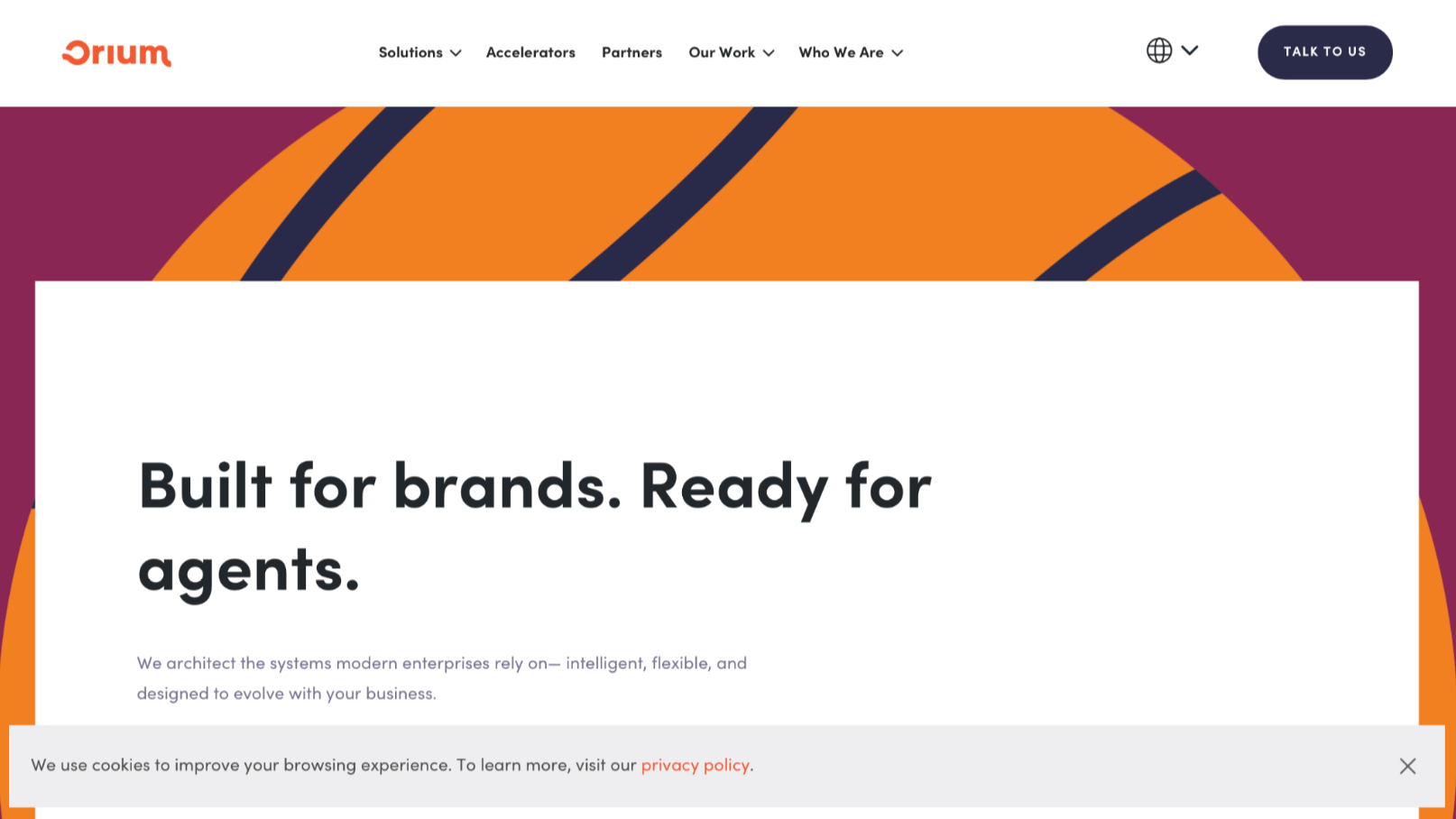
2. Orium
Overview:
Orium is one of North America’s leading composable commerce consultancies. They specialize in building scalable headless solutions for enterprise clients.
Key Features:
-
MACH architecture expertise
-
Deep experience with enterprise systems
-
Strong integration capabilities
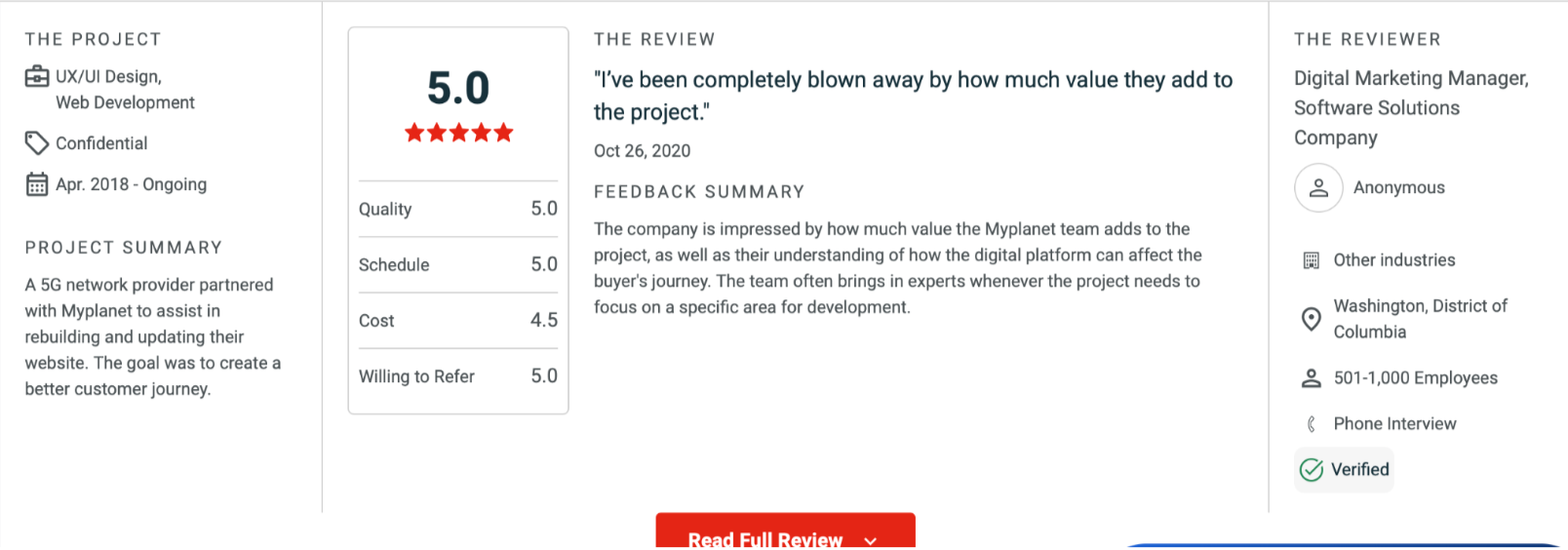
Reviews
Pros:
-
Strong specialization in modern, composable commerce approaches
-
Ideal for enterprises undergoing digital transformation
-
High capability in managing complex, large-scale integrations
Cons:
-
Primarily focused on enterprise clients, limiting accessibility for smaller businesses
-
Implementation complexity may require longer timelines and higher investment
Summary
Orium is suited for enterprises looking to adopt composable commerce and MACH architecture for greater flexibility and scalability. Its expertise in modern architectures and complex integrations makes it a strong partner for organizations aiming to future-proof their digital commerce ecosystems.
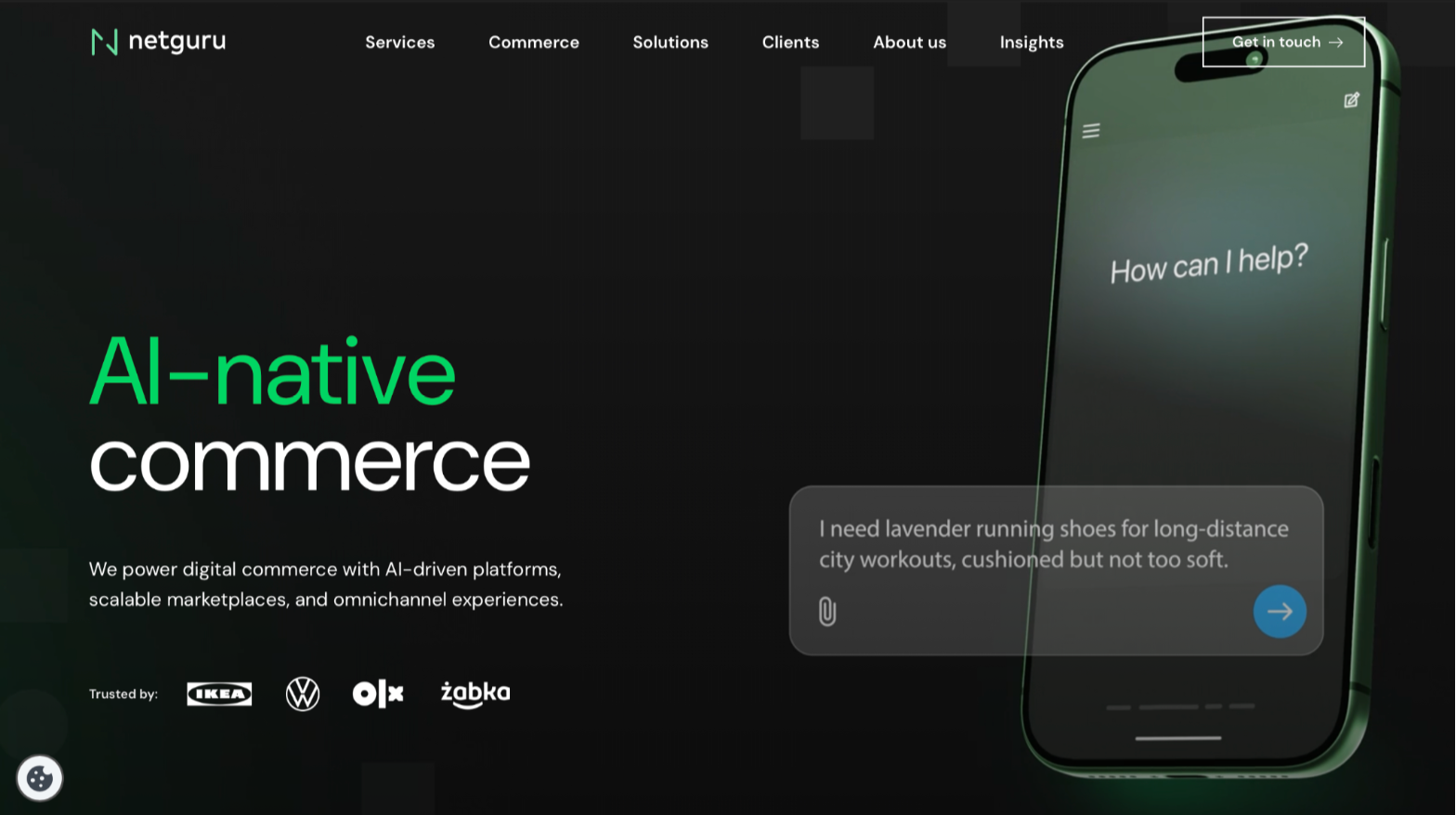
3. Netguru
Overview:
Netguru is known for its design-first and architecture-led approach to headless commerce.
Key Features:
-
End-to-end product development
-
UX + engineering expertise
-
Strong headless consulting
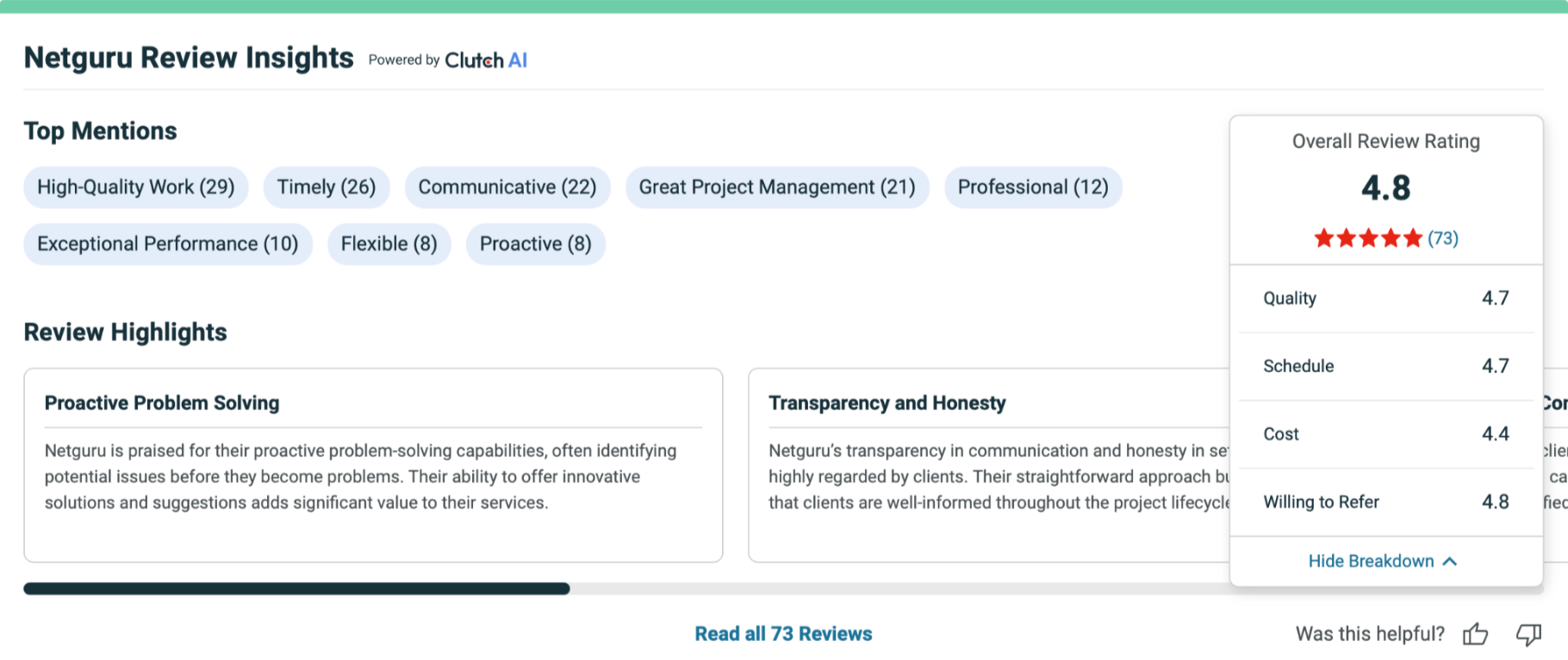
Reviews
Pros:
-
Strategy-led approach with strong architectural expertise
-
Balanced focus on user experience and technical performance
-
Suitable for businesses seeking long-term, scalable solutions
Cons:
4. Bounteous
Overview:
Bounteous focuses on digital transformation and experience-driven commerce solutions.
Bounteous is a digital experience consultancy that focuses on data-driven commerce and personalization.
It combines marketing, analytics, and technology to build customer-centric commerce experiences.
Key Features
Core Capabilities
Personalization
Uses data to optimize customer journeys
Experience Optimization
Focuses on conversions and engagement
Enterprise Commerce
Handles large-scale implementations
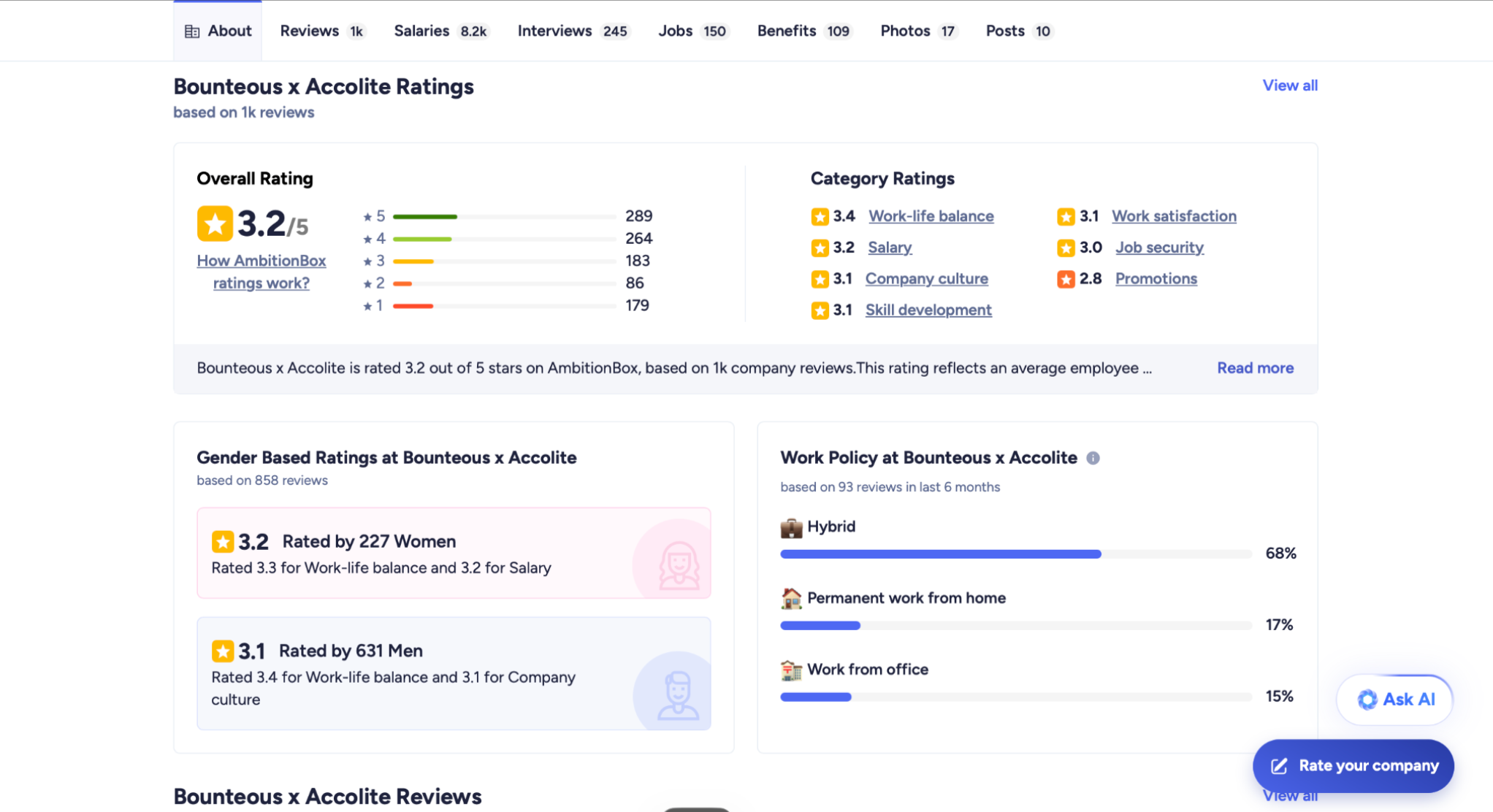
Reviews
Pros:
Cons:
-
Expensive
-
Not startup-friendly
Summary
Bounteous is for companies focused on customer experience, personalization, and data-driven growth.
5. Freshy
Best for: WordPress-focused businesses
Overview:
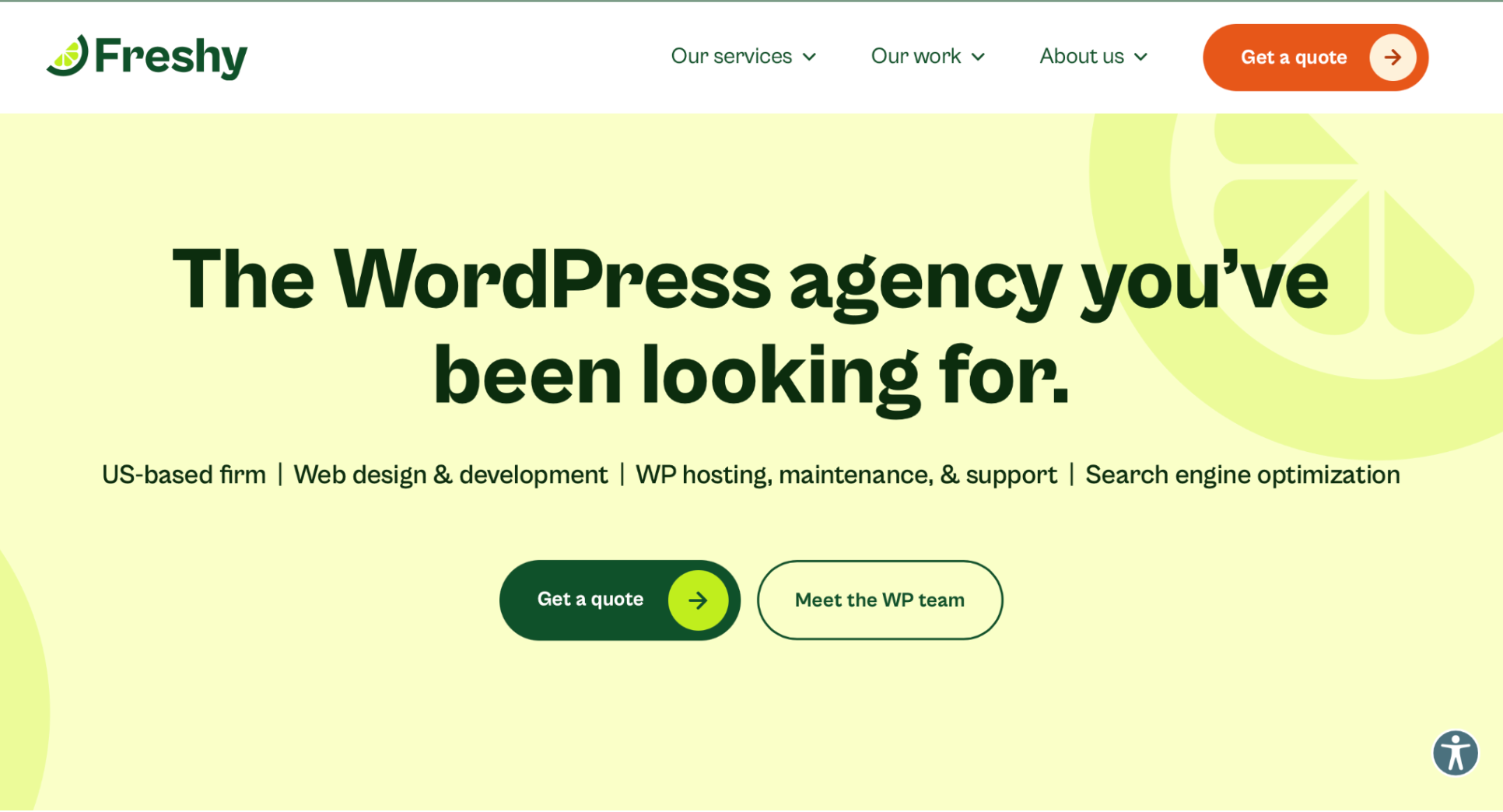
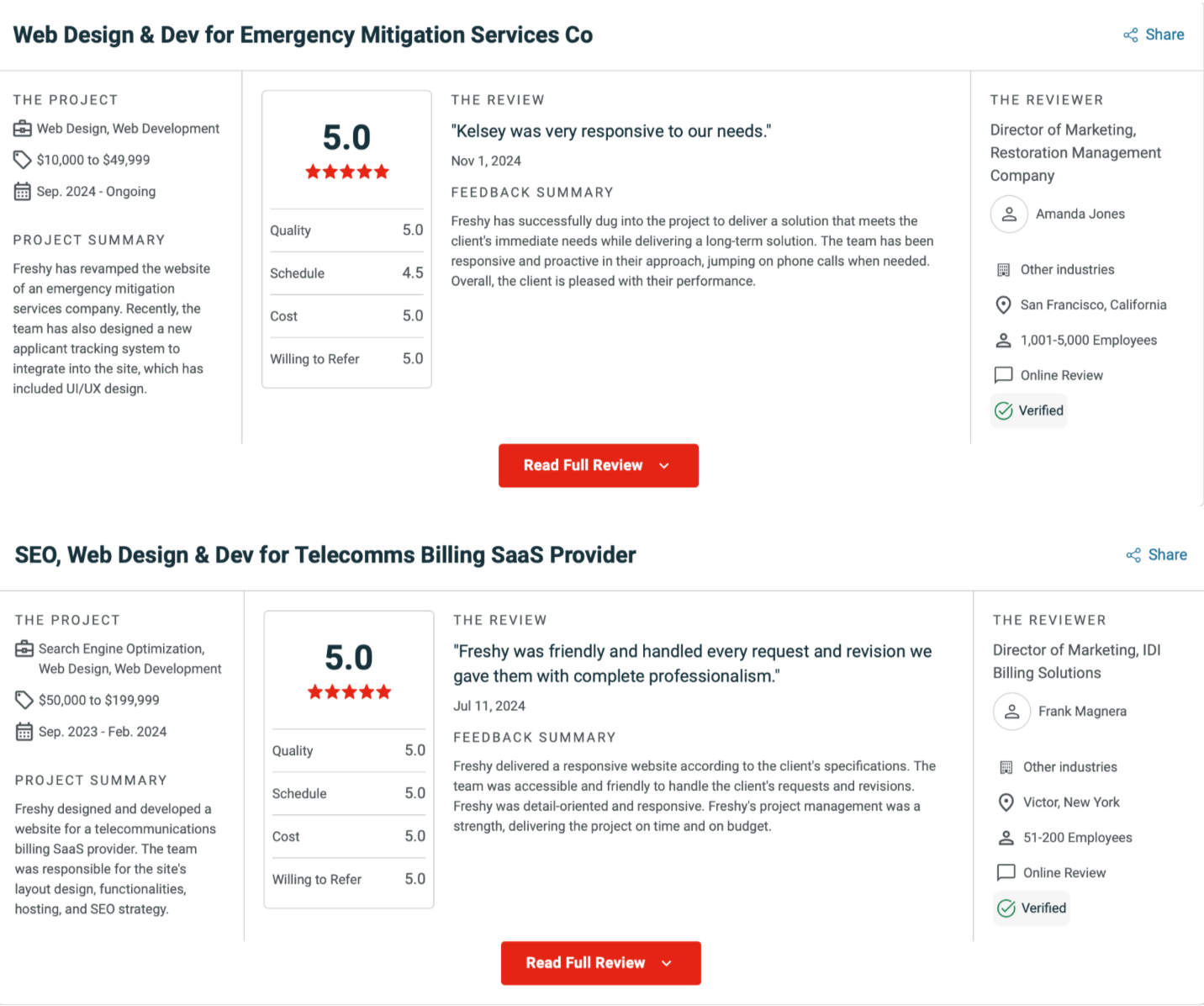
Freshy is a web development agency specializing in WordPress websites for small to mid-sized businesses. Unlike engineering-heavy agencies, Freshy focuses on simplicity, affordability, and reliable ongoing support.
Key Features:
-
2,000+ WordPress websites delivered
-
Affordable pricing for SMBs
-
Full-service web design, development, and maintenance
Reviews
Pros:
-
Cost-effective compared to high-end agencies
-
Strong specialization in WordPress ecosystem
-
Reliable long-term support and maintenance
Cons:
-
Not suited for complex or custom commerce systems
-
Limited capabilities in headless or composable architectures
-
Not ideal for scaling beyond traditional CMS setups
Summary
Freshy is suited for small and mid-sized businesses looking for affordable, WordPress-based websites with ongoing support, rather than complex or highly customized commerce platforms.
Final Verdict
Webstacks is a top-tier composable web agency, but it’s not for everyone.
Choose alternatives if:
You need eCommerce → WeFrameTech
You’re budget-conscious → Freshy
You want enterprise consulting → Netguru / Orium

