

Words that inspire, ideas that spark,
stories that stay
Top 6 Best Online Marketplace Builders (2026)
V. Srinidhi Reddy
Thursday, April 16th, 20268 min read
Table of content
Top 6 Best Online Marketplace Builders (2026)
Introduction
Building a marketplace in 2026 isn’t just about launching fast — it’s about flexibility, scalability, and not losing your sanity dealing with tech debt later.
Whether you're building:
-
A product marketplace (like Amazon)
-
A service marketplace (like Fiverr)
-
Or something niche (rentals, communities, B2B)
The platform you choose will literally decide how fast (or painful) your growth is.
This guide breaks down the 6 best marketplace builders, including modern headless tools like Medusa JS (Mercur) and plug-and-play options like Sharetribe.
TL;DR
-
Best for developers: Medusa JS (Mercur)
-
Best no-code marketplace: Sharetribe
-
Best enterprise: Shopify + apps
-
Best flexible SaaS: Arcadier
-
Best fast launch: Yo!Kart
-
Best WordPress-based: Dokan
Quick Comparison
| Platform | Best For | Tech Level | Pricing |
|---|---|---|---|
| Medusa JS (Mercur) | Custom marketplaces | Advanced | Free |
| Sharetribe | No-code marketplaces | Beginner | SaaS |
| Shopify + Apps | Ecommerce marketplaces | Medium | Subscription |
| Mirakl | Enterprise marketplaces | Advanced | Enterprise pricing |
| Arcadier | Multi-use marketplaces | Medium | SaaS |
1. Medusa JS (Mercur)
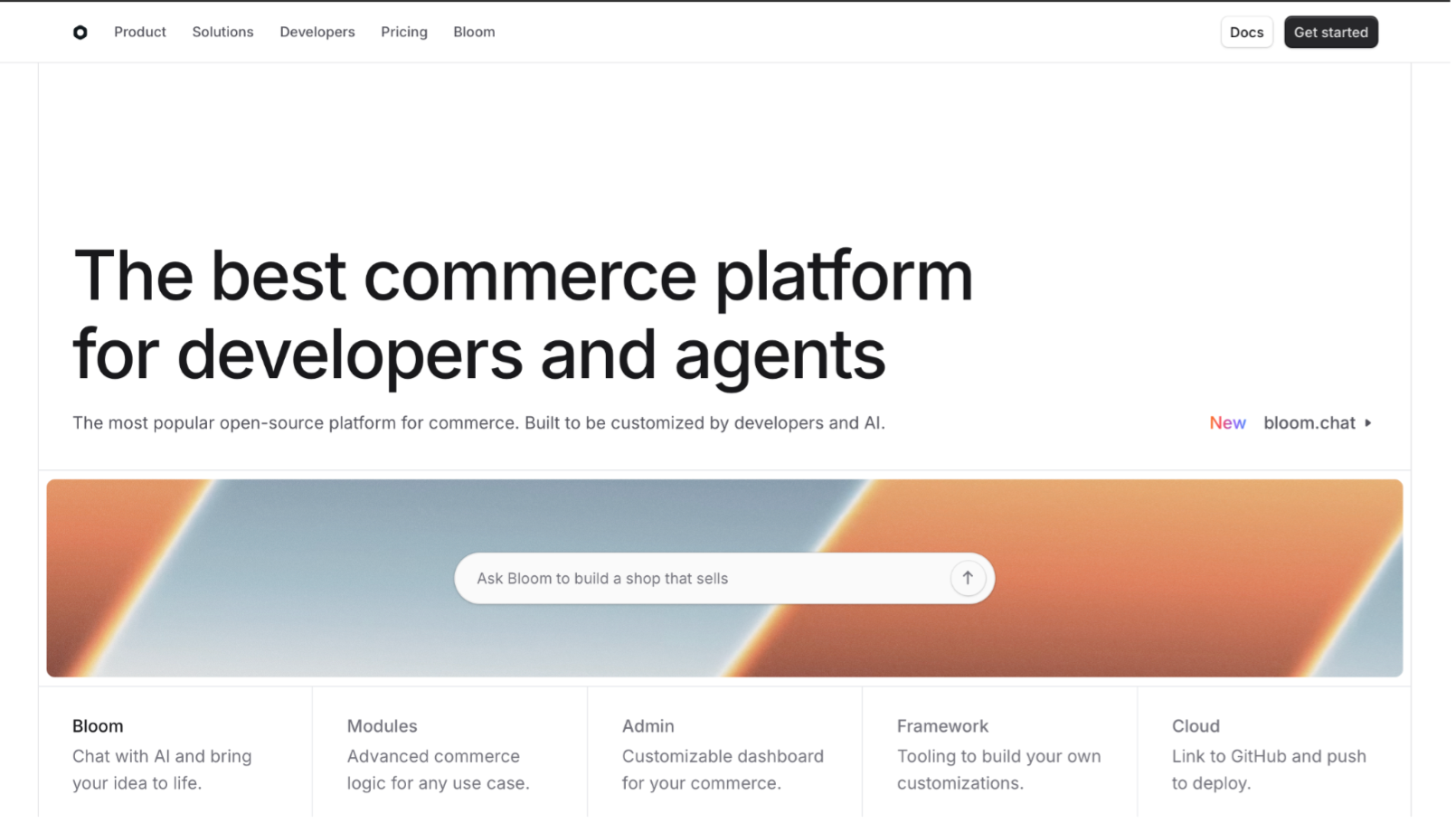
Medusa JS is one of the most powerful open-source commerce engines right now. Built for developers, it gives you full control over your marketplace architecture without locking you into a rigid system.
It’s especially popular for headless marketplaces, meaning you control both backend and frontend completely.
Key features:
-
Fully open-source and customizable
-
Modular architecture (plugins, APIs)
-
Multi-vendor support via extensions
-
Headless commerce (use any frontend: Next.js, React, etc.)
-
Scalable for enterprise-level marketplaces
Pricing:
-
Free (self-hosted)
-
Costs depend on hosting + development
Developer & Open Source Ecosystem
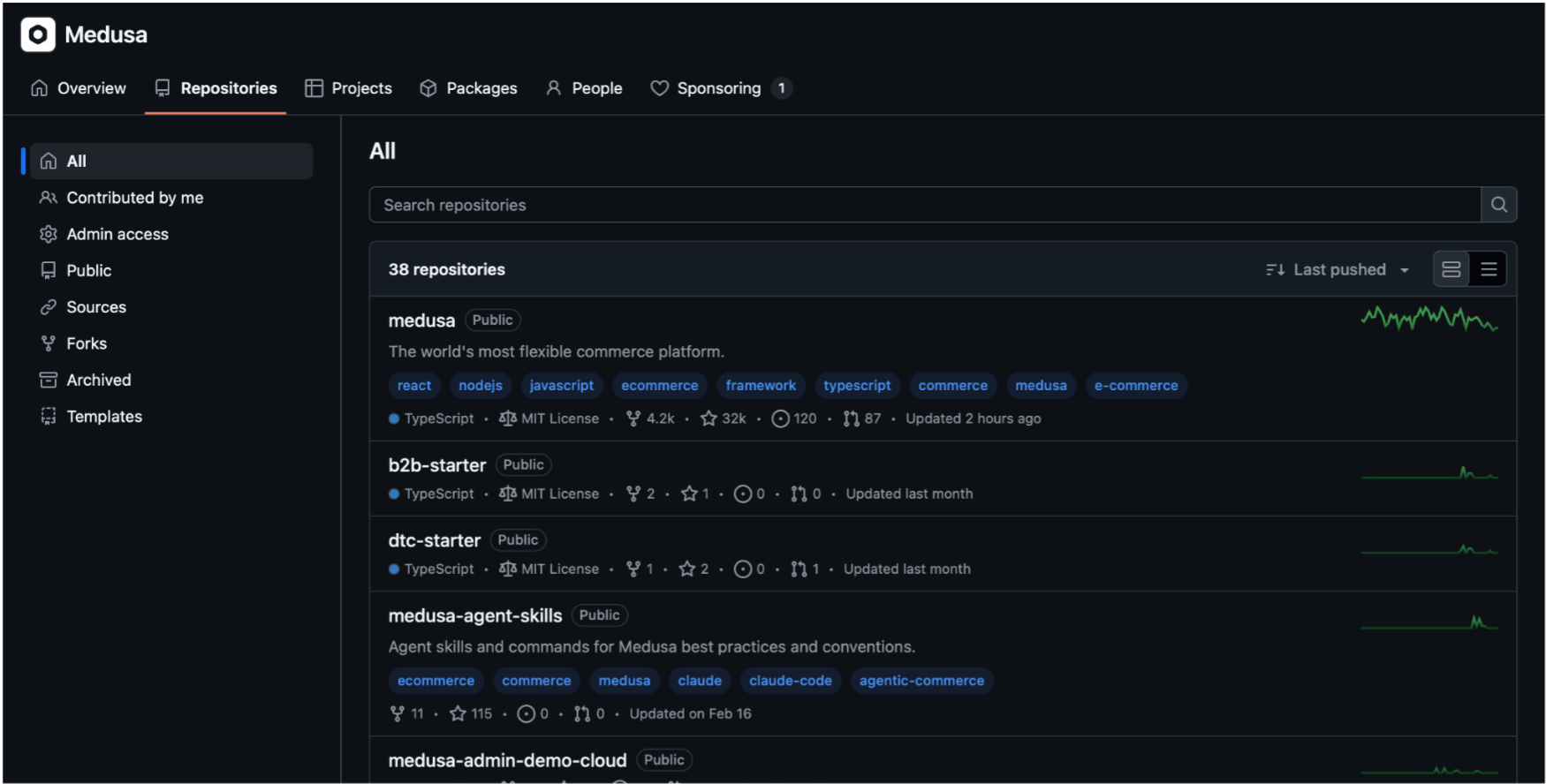
Medusa is fully open source and actively maintained.
-
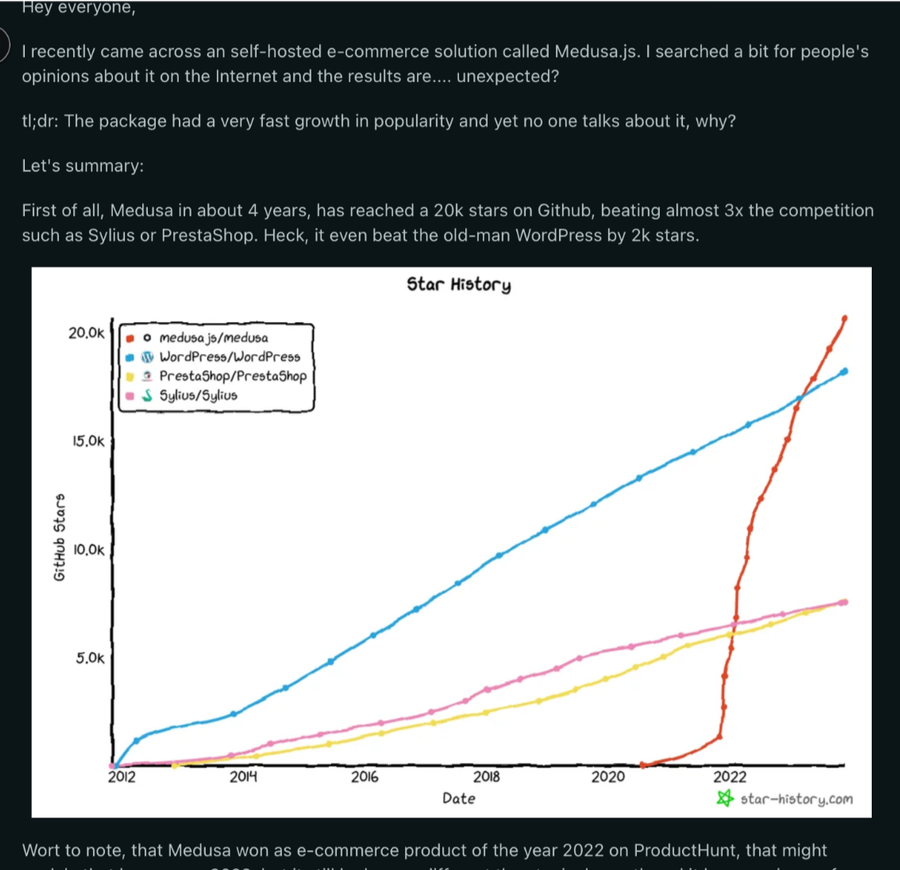
GitHub: 18k+ stars (rapidly growing)
-
Fully customizable backend with plugin architecture
-
Extensive API support for custom storefronts
-
Active contributor community and frequent updates
This makes it ideal for teams that want complete ownership of their commerce stack rather than relying on closed SaaS systems.
Core Features
Medusa focuses on flexibility, customization, and developer experience.
-
Modular architecture
Build only what you need using plugins and custom modules -
API first commerce
Easily connect with any frontend (Next.js, React, mobile apps, etc.) -
Custom workflows & logic
Full control over checkout, cart, pricing, and order management -
Multi region & multi currency support
Built for global commerce use cases -
Self hosted or cloud deployment
Gives full control over infrastructure and scaling
Pricing
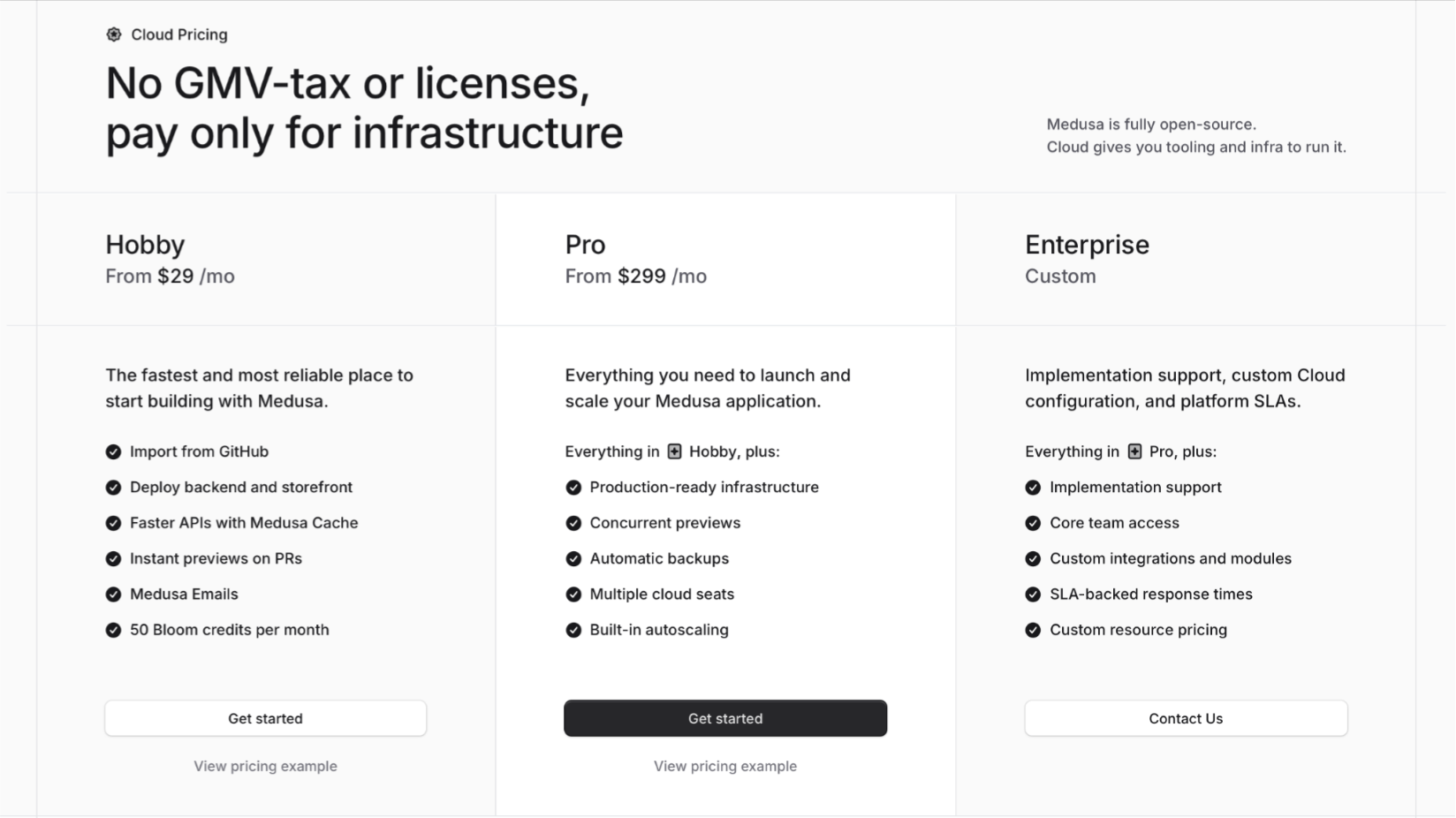
Medusa follows a completely different pricing philosophy compared to SaaS platforms.
-
Free (Open Source) → Core platform is completely free to use
-
Hosting Costs → Depends on your infrastructure (AWS, Vercel, etc.)
-
Medusa Cloud (if used) → Paid managed hosting (optional)
This means:
-
No revenue based fees
-
No transaction cuts
-
No platform lock in
For growing brands, this can significantly reduce long term costs compared to platforms like Shopify or Swell.
Clients
Medusa is used by a growing number of modern DTC brands, startups, and agencies, especially those building custom commerce experiences.
While it is not positioned as an enterprise “logo heavy” platform like commercetools, it is widely adopted by:
-
Developer led ecommerce teams
-
Headless commerce agencies
-
Fast growing DTC brands needing flexibility
Custom Enterprise & B2B (Medusa Angle)
Medusa is particularly strong for custom enterprise and B2B use cases where out of the box platforms fall short.
-
Custom pricing logic (tiered, negotiated pricing)
-
Role based access for B2B buyers
-
Multi store and multi region setups
-
Custom checkout and approval workflows
Because it’s open source, enterprises can fully tailor the backend to match complex operational needs — something that’s often difficult with SaaS tools.
Reviews
Medusa is highly appreciated in the developer community for its flexibility and modern architecture.
-
Strong GitHub engagement and community support
-
Positive feedback on extensibility and ease of customization
-
Frequently compared to Shopify alternatives in headless setups
Unlike SaaS tools, Medusa doesn’t rely heavily on G2 style reviews — its credibility comes from developer adoption and open source traction.
Founder
Medusa was founded by Sebastian Rindom, Oliver Juhl, and Nicklas Gellner.

The idea for Medusa came from their frustration with traditional ecommerce platforms like Shopify and Magento, where customizations often required workarounds and hacks instead of clean solutions.
That’s why they built Medusa as a developer first, open source alternative, focused on flexibility and full control.
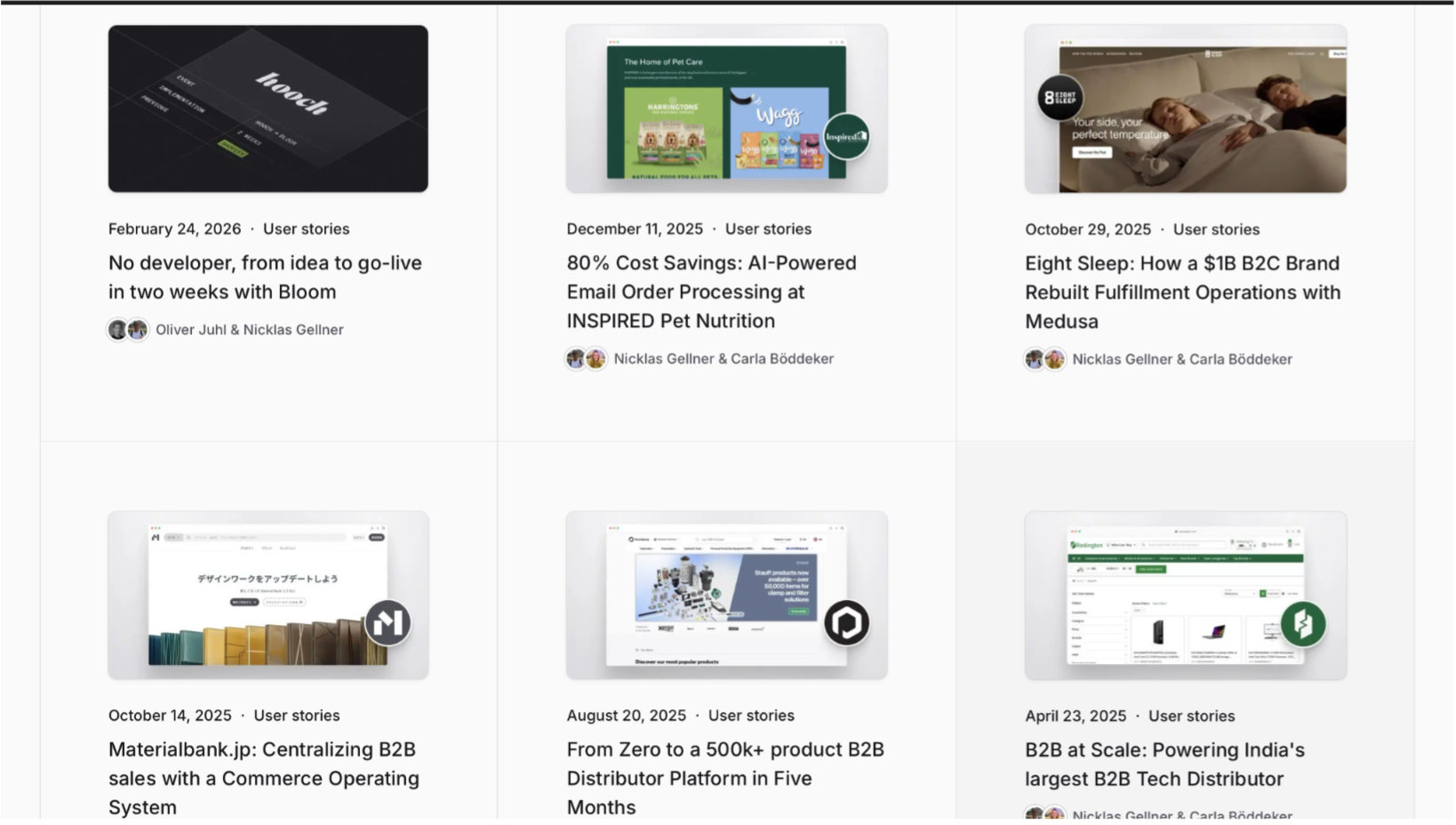
Famous Case Studies
Medusa has been used in various custom commerce builds and headless implementations.
-
High performance DTC storefronts
-
Custom marketplace setups
-
International ecommerce architectures
Pros
-
Fully open source and customizable
-
Strong developer first architecture
-
No platform lock in
-
Scales well with custom infrastructure
-
Growing community and ecosystem
Cons
-
Requires developer resources (not plug and play)
-
Smaller ecosystem compared to Shopify
-
No built in “enterprise support” unless self managed
Summary
Medusa JS is best suited for brands and teams that want full control over their ecommerce stack rather than relying on restrictive SaaS platforms.With its open source foundation, modular architecture, and strong developer ecosystem, it’s not just an alternative to Swell — it’s a complete shift towards owning your commerce infrastructure.f you’re building a custom, scalable, and future proof ecommerce experience, Medusa is easily one of the strongest options available in 2026.
2. Sharetribe
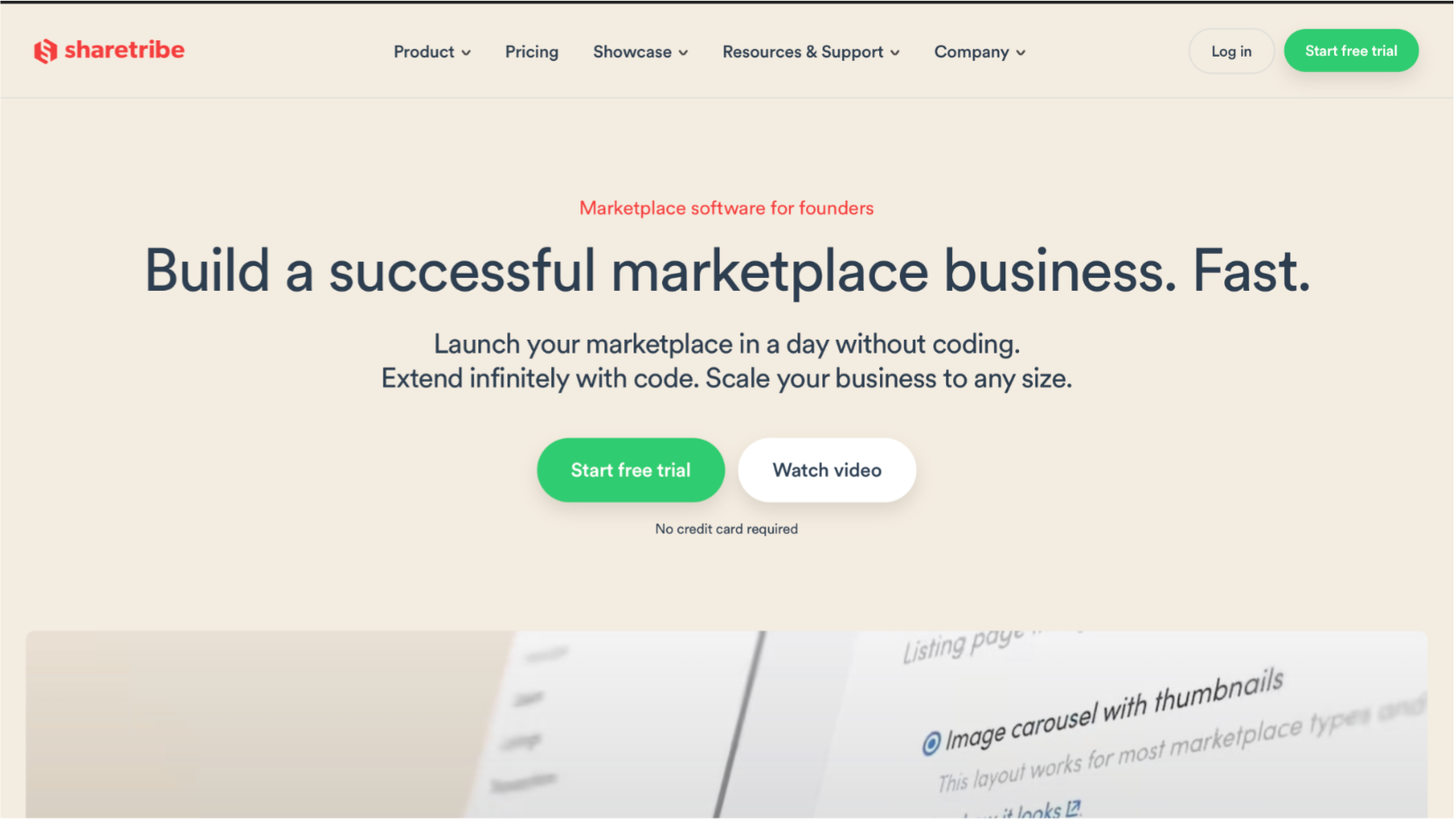
Sharetribe is one of the easiest ways to launch a marketplace without coding. It’s perfect for founders who want to validate fast and launch quickly.
Key features:
-
No-code marketplace builder
-
Built-in payments & transactions
-
Vendor profiles & listings
-
Custom workflows
-
API access (Flex version)
Pricing:
-
Starter: ~$39/month
-
Growth: ~$99/month
-
Flex (API): Custom pricing
Reviews
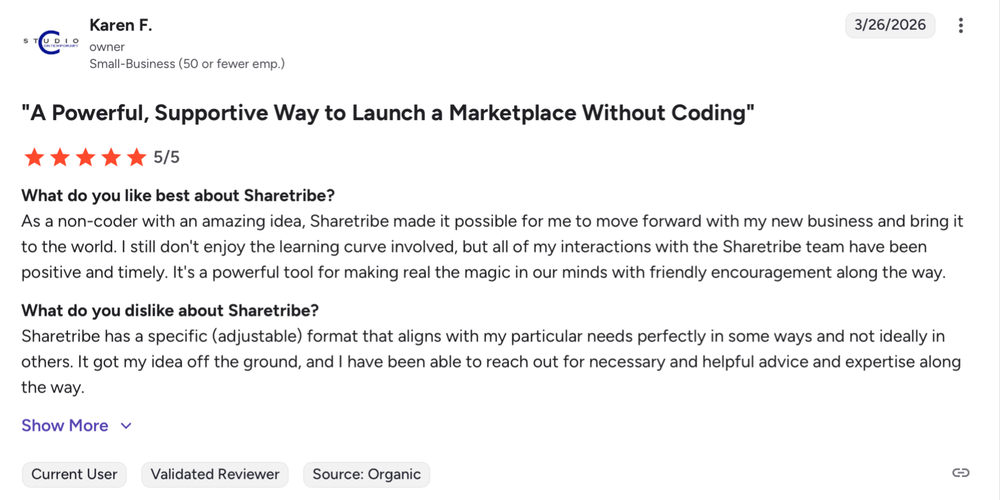
Sharetribe is a powerful and supportive platform for building marketplaces, especially for non-technical founders. It makes it possible to take an idea from concept to launch without needing coding skills, which is a huge advantage for small teams and first-time entrepreneurs.
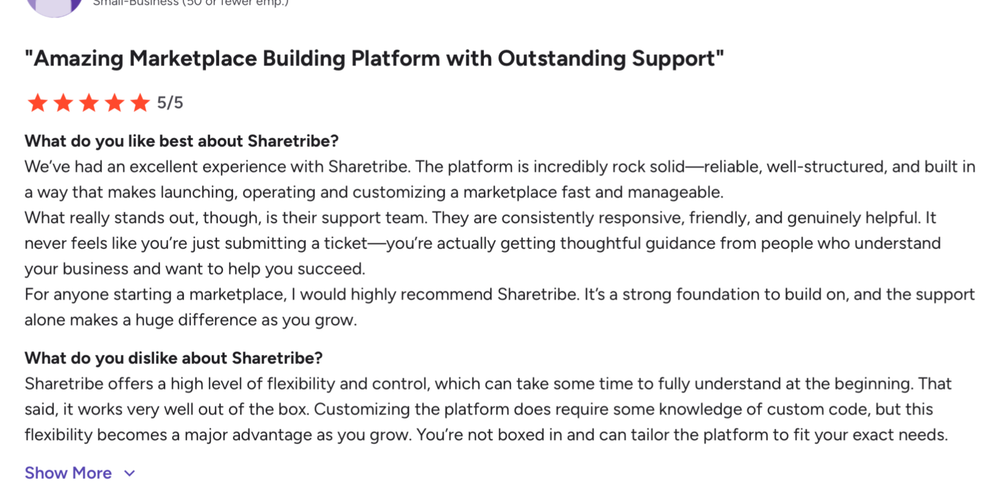
Users consistently highlight how the platform helps bring their business ideas to life while offering a structured and reliable foundation. It’s designed in a way that makes launching, operating, and managing a marketplace straightforward and manageable. Even though there is a learning curve at the beginning, the overall experience is smooth once you get familiar with the system.
One of the biggest strengths of Sharetribe is its support team. Many users mention that interactions feel personal and genuinely helpful rather than transactional. The team is responsive, friendly, and provides timely guidance, making the journey less overwhelming.
That said, the platform does come with some limitations. Its predefined structure may not perfectly suit every use case, and customization can sometimes require basic coding knowledge. Understanding the full flexibility of the platform can take time, especially for beginners.
Overall, Sharetribe is highly regarded as a reliable and flexible marketplace builder. It offers a strong starting point with the ability to scale and customize as your business grows, making it a solid choice for anyone looking to launch a marketplace efficiently.
Summary
Sharetribe is a beginner-friendly, no-code marketplace builder ideal for quickly launching and validating ideas. It offers essential features like built-in payments, vendor management, and customizable workflows, with flexible pricing options. Users praise its ease of use, reliable structure, and especially its responsive, helpful support team. While there is a learning curve and some limitations in customization without coding, it remains a strong, scalable choice for non-technical founders looking to build and grow a marketplace efficiently.
3. Shopify + Marketplace Apps
Overview
Shopify Plus is the enterprise-grade offering from Shopify, designed for high-growth brands that need scalability without dealing with backend complexity.Unlike platforms like Medusa JS or Saleor that prioritize flexibility and customization, Shopify Plus focuses on ease of use, speed, and reliability within a fully managed SaaS environment.It allows businesses to scale rapidly while relying on Shopify’s infrastructure, making it a popular choice for brands that want to focus on growth rather than engineering.
Developer Ecosystem
Shopify Plus has one of the largest ecosystems in ecommerce:
- Thousands of apps in the Shopify App Store
- Strong partner and agency network
- Extensive API support (Storefront API, Admin API)
- Hydrogen & Oxygen for headless builds
Compared to commercetools, Shopify Plus is less flexible but much easier to implement and manage
Core Features
Shopify Plus focuses on scalability, automation, and ease of use:
- Fully hosted SaaS infrastructure
- High scalability for large traffic volumes
- Shopify Flow (automation engine)
- Omnichannel selling (web, mobile, social, POS)
- Built-in checkout optimization
- Global commerce support (multi-currency, multi-store)
- Headless commerce support via APIs
Pricing
Shopify Plus follows a premium SaaS pricing model:
-
Starts around ~$2,000/month (can scale higher)
-
Additional app and transaction costs may apply
This means:
-
Predictable costs compared to usage-based platforms
-
More expensive than open source options
-
Lower operational overhead (no infra costs)
Clients
Shopify Plus is used by some of the largest global and DTC brands, including:
-
Gymshark
-
Allbirds
-
Kylie Cosmetics
-
Heinz
These brands rely on Shopify Plus for fast scaling and reliable infrastructure.

Custom Enterprise & B2B
Shopify Plus has expanded into enterprise and B2B:
- B2B storefronts and pricing
- Wholesale channel support
- Multi-store setups
- Shopify Functions for backend customization
However, compared to Commerce Layer or commercetools, it offers less deep backend flexibility.
Reviews
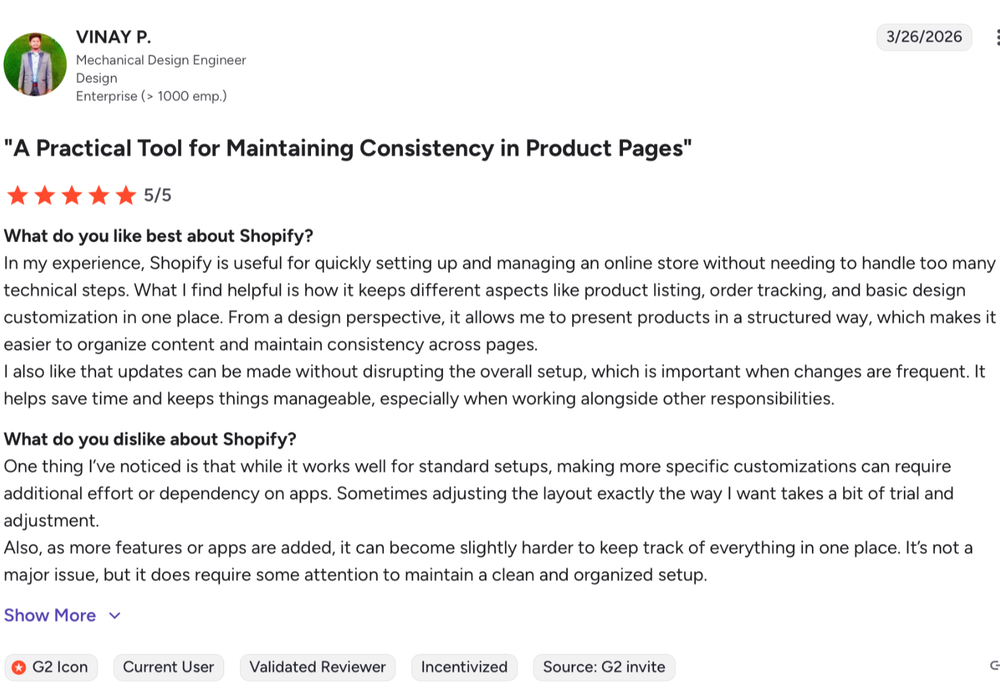
Shopify Plus is widely praised for its ease of use, flexibility, and strong support system, especially among growing ecommerce teams. A Head of Ecommerce from a small business describes it as a “flexible, robust, and intuitive ecommerce solution.”
Another major advantage is how intuitive the interface is. Teams can onboard new members quickly without requiring extensive technical training, making Shopify Plus highly accessible across different roles. This ease of use becomes especially valuable for growing teams that need to scale operations without slowing down.
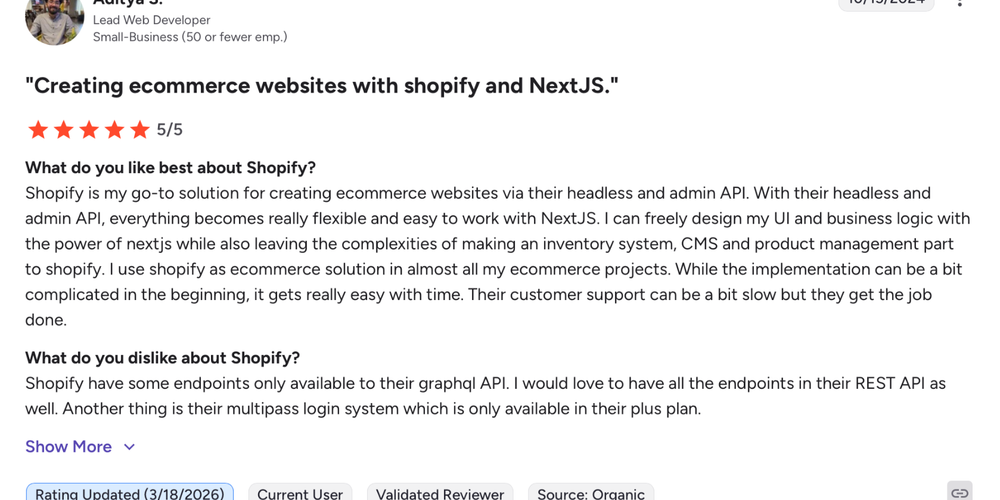
Flexibility is also a strong point. Developers appreciate Shopify’s headless capabilities and APIs, which allow for custom frontend experiences using technologies like Next.js, while Shopify handles backend complexities like inventory, CMS, and product management. Although implementation can feel slightly complex at the beginning, it becomes significantly easier over time.
Operational efficiency is further enhanced through features like bulk imports and exports, which make managing large product catalogs easier and streamline workflows for teams handling scale.
That said, there are a few limitations. Advanced customizations may require additional apps or trial-and-error adjustments, and some features or endpoints are limited (for example, certain APIs are only available via GraphQL, and features like multipass login are restricted to higher-tier plans). As more apps are added, managing everything in one place can also require extra attention to maintain a clean and organized setup.
Summary
Shopify Plus is a fully managed, enterprise-grade ecommerce platform built for high-growth brands that prioritize speed, scalability, and ease of use over deep backend customization. With a massive app ecosystem, strong APIs, and headless capabilities, it enables businesses to scale quickly while minimizing technical complexity. Its intuitive interface makes onboarding easy for teams, and features like automation, omnichannel selling, and bulk operations improve efficiency at scale. While it offers less flexibility than open-source or composable platforms and can become costly with apps and advanced needs, Shopify Plus remains a reliable, scalable choice for brands focused on growth rather than infrastructure.
4. Mirakl
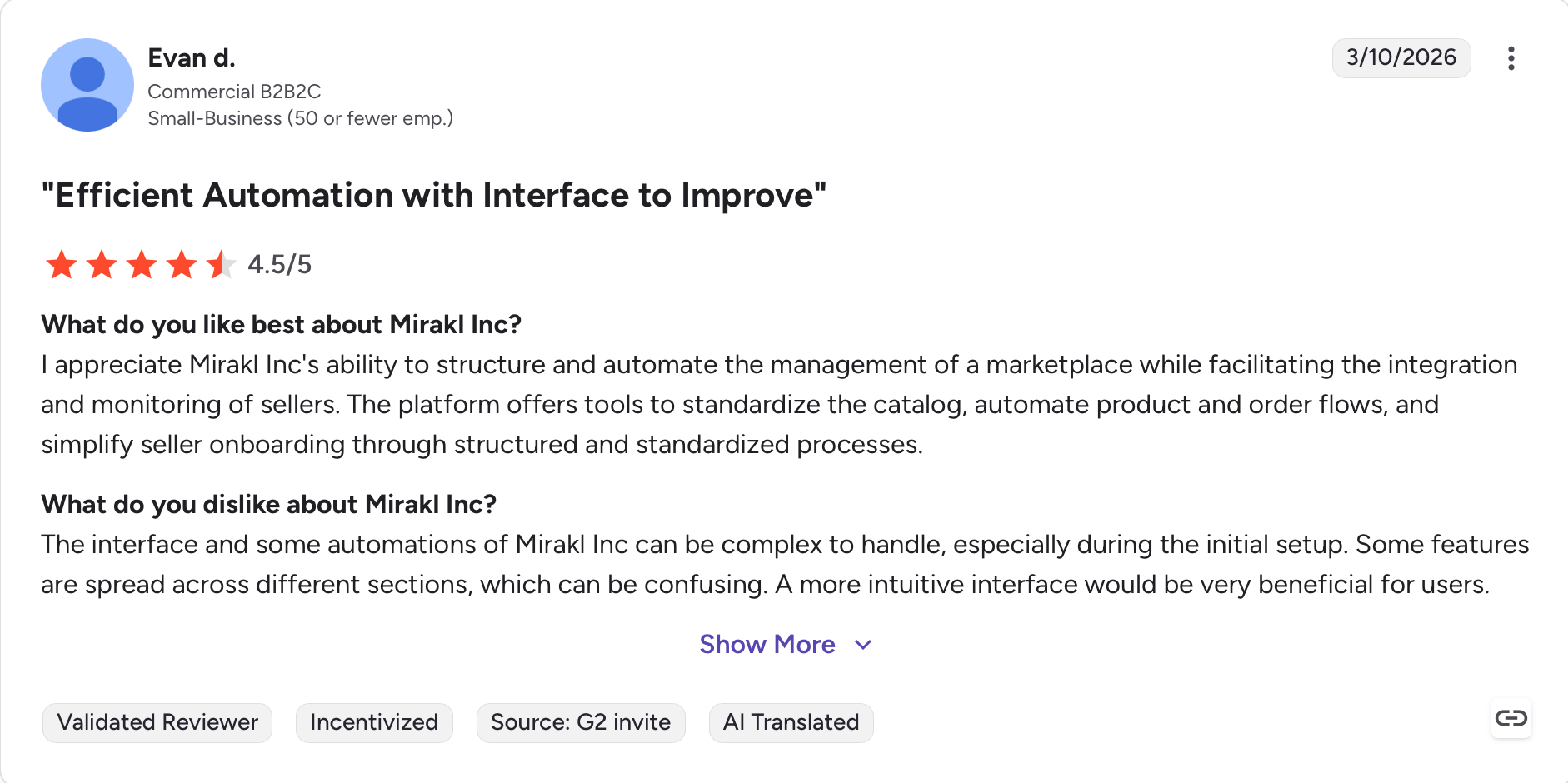
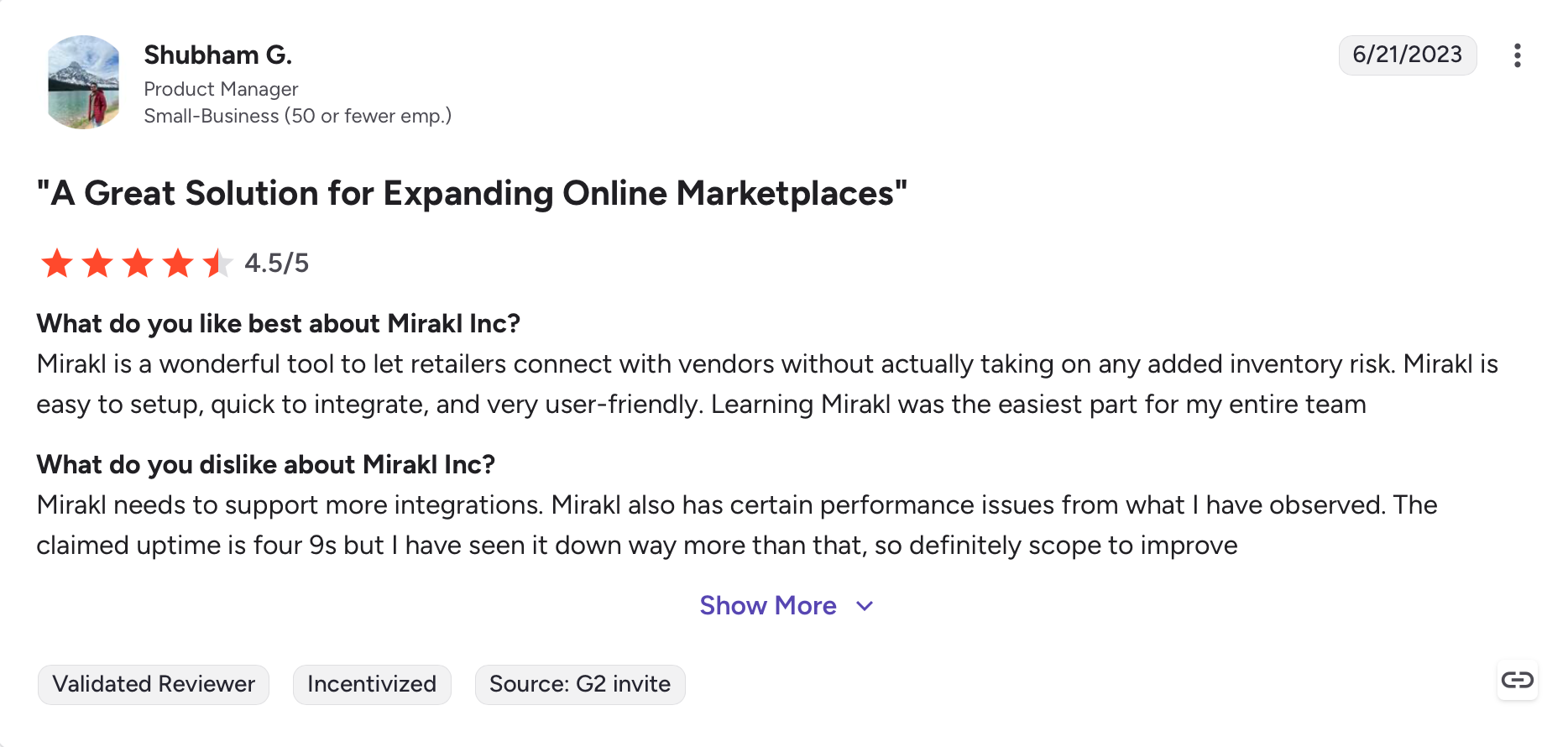
Mirakl is an enterprise marketplace platform used by large retailers and B2B businesses to launch scalable multi-vendor marketplaces.
Key features:
- Enterprise-grade marketplace infrastructure
- Seller onboarding and vendor management
- Strong B2B marketplace capabilities
- Integration-focused architecture
Best for:
Large enterprises and retailers building complex marketplace ecosystems.
Cons:
- Expensive for startups
- Requires implementation partners
- Less flexible for custom developer-led builds compared to open-source solutions
This keeps Mirakl strong enough to be credible while still making Medusa look like the most flexible/dev-first option.
Reviews
Summary
Mirakl is a robust enterprise marketplace platform designed for large-scale B2B and retail marketplace operations. With strong vendor management, automation capabilities, and enterprise-grade scalability, it helps businesses efficiently launch and grow complex multi-vendor ecosystems. While implementation and costs can be higher than startup-focused solutions, Mirakl remains a strong choice for enterprises seeking reliability, scalability, and advanced marketplace infrastructure.
5. Arcadier

Arcadier is a flexible SaaS tool designed for multiple marketplace types.
Key features:
-
Multi-vendor support
-
Multiple marketplace types (services, rentals, products)
-
API integrations
-
Custom plugins
Pricing:
Core Setup & Configuration
One-time setup fee to configure, connect, and launch your marketplace across environments.
Platform Licensing
Monthly subscription with full API access, updates, and scalable usage based on growth.
Management & Maintenance
Ongoing monthly support for monitoring, maintenance, and platform optimization.
Technical Support
Flexible pay-as-you-go access to expert support, integrations, and development help.
Reviews
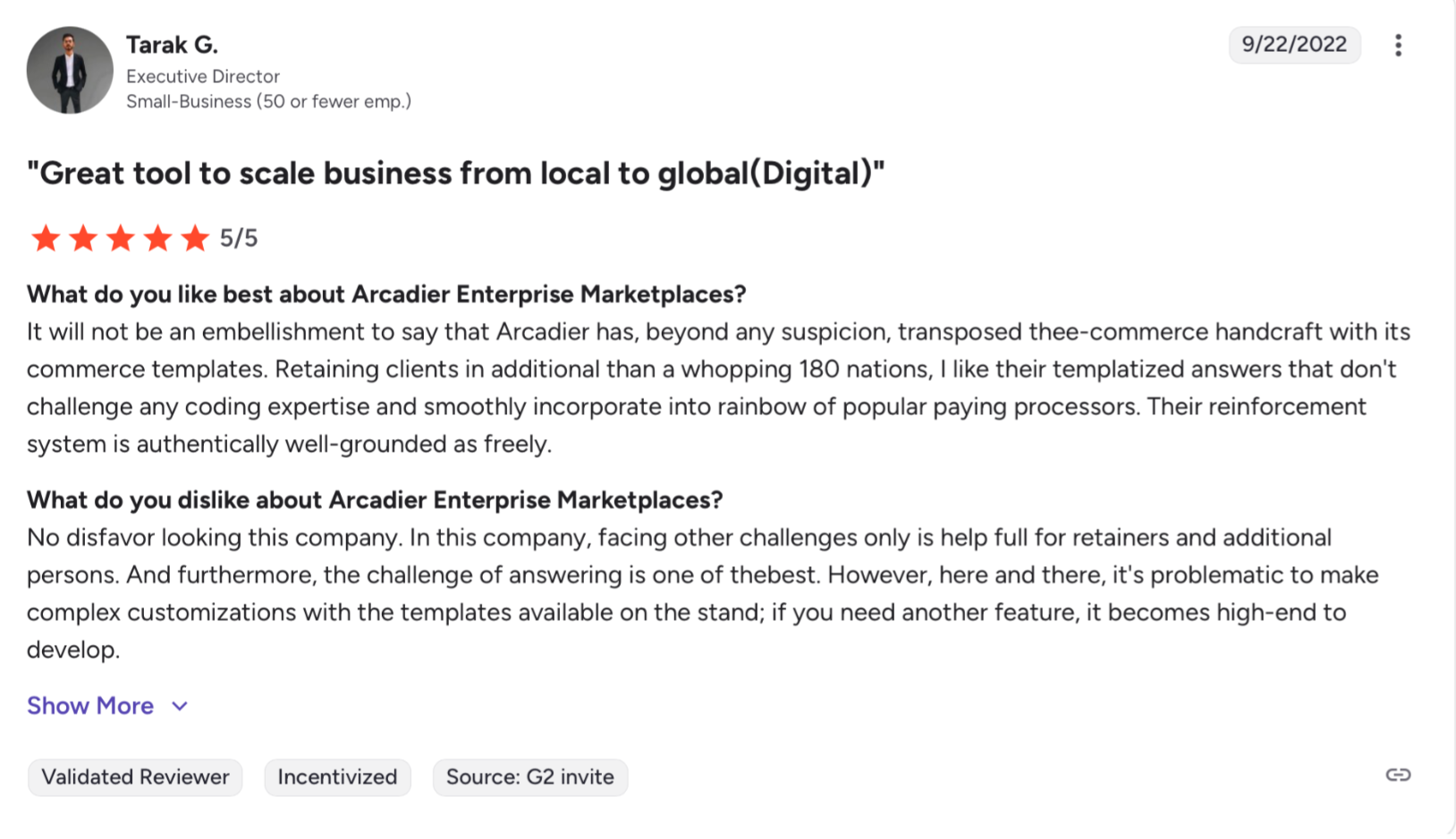
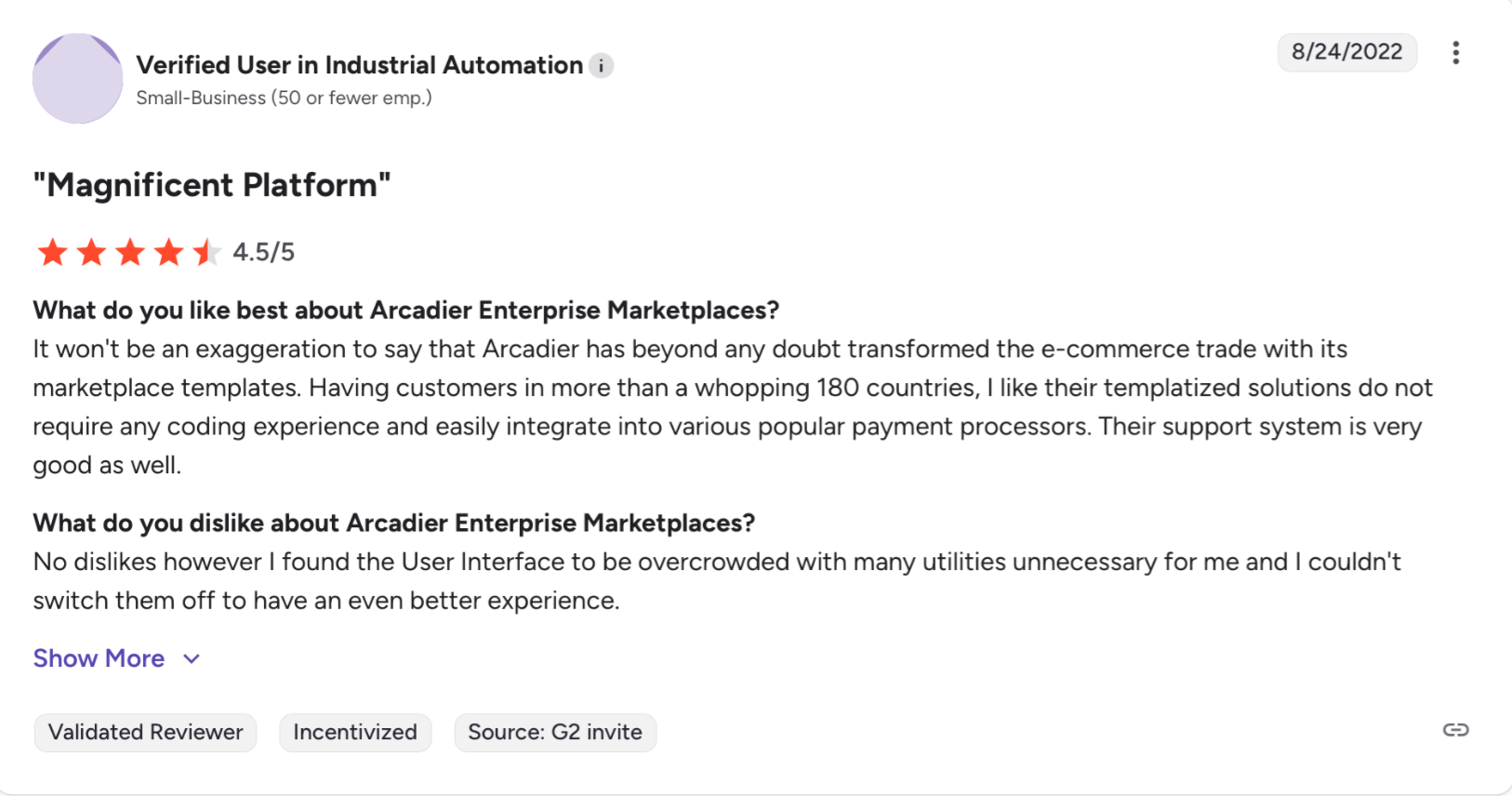
Arcadier is praised as a practical and scalable marketplace platform, especially for businesses looking to expand globally. Its ready-to-use templates make it easy to launch without coding, while integrations with multiple payment processors and support for 180+ countries add to its appeal.
Users appreciate its simplicity, structured setup, and helpful support team, making it a strong choice for non-technical founders. However, customization beyond templates can be limited and may require additional development, and some find the interface slightly cluttered.
Overall, Arcadier offers a solid balance of ease of use and scalability for businesses aiming to grow quickly.
Summary
Solid middle-ground between no-code and customizable.
6. Yo!Kart
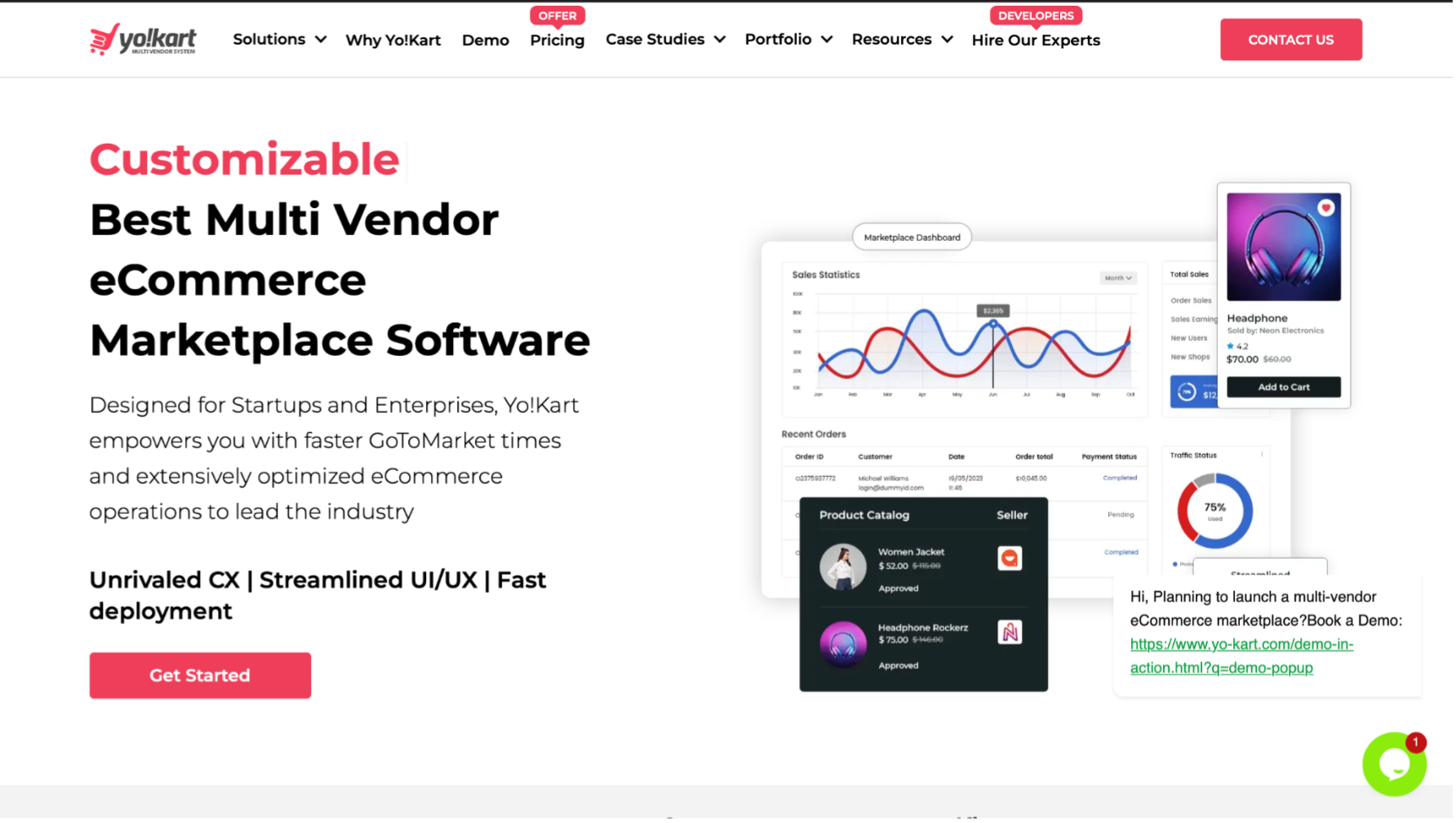
Yo!Kart is a popular option for startups wanting a ready-made marketplace solution.
Key features:
-
One-time license
-
Built-in vendor system
-
Mobile-ready
Pricing:
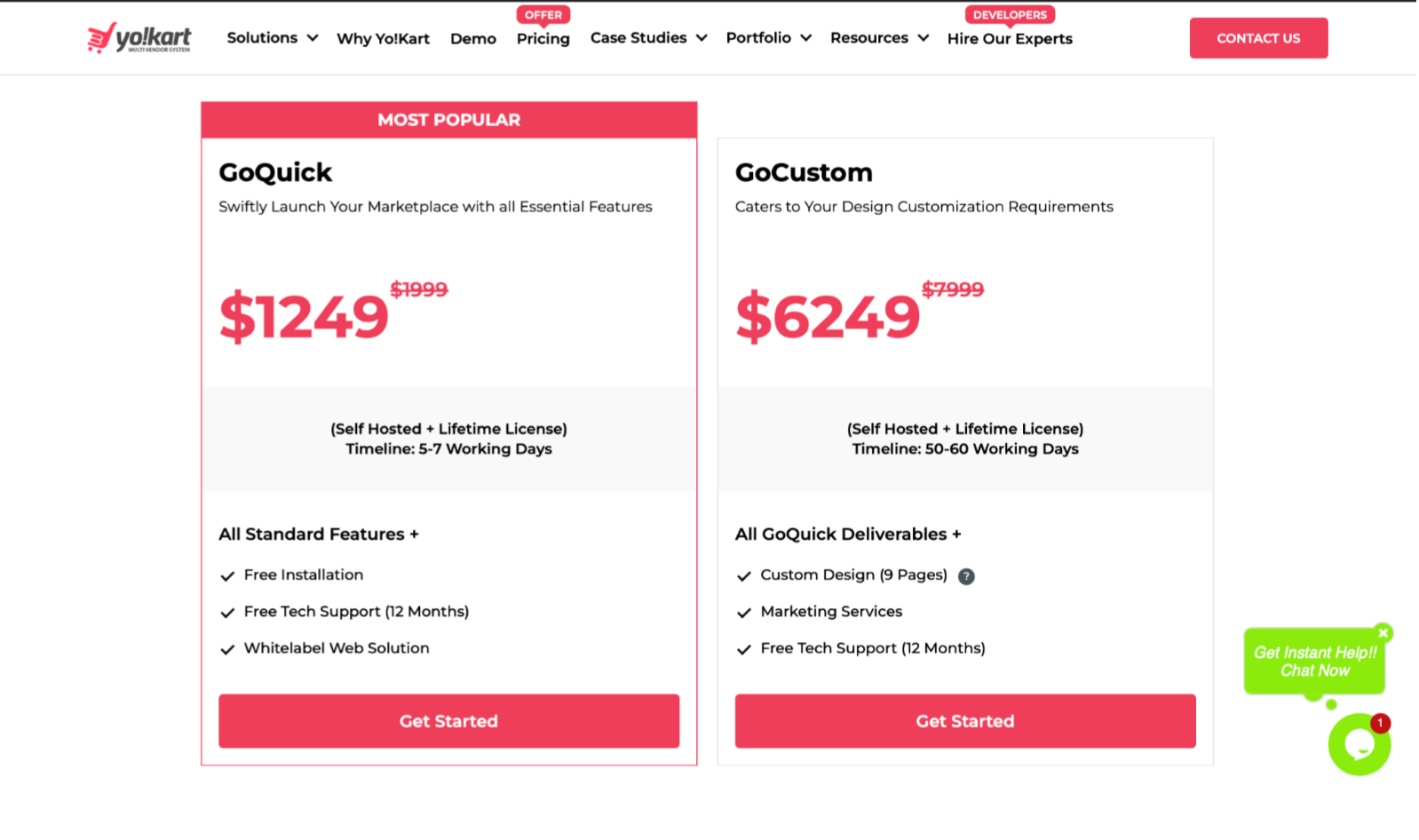
GoQuick
Affordable, ready-to-launch marketplace solution with lifetime license and essential features included.
Ideal for fast deployment with minimal setup time (5–7 days).
GoCustom
Fully customized marketplace solution tailored to your design and business needs.
Higher investment with extended delivery time (50–60 days) for complete flexibility.
Reviews
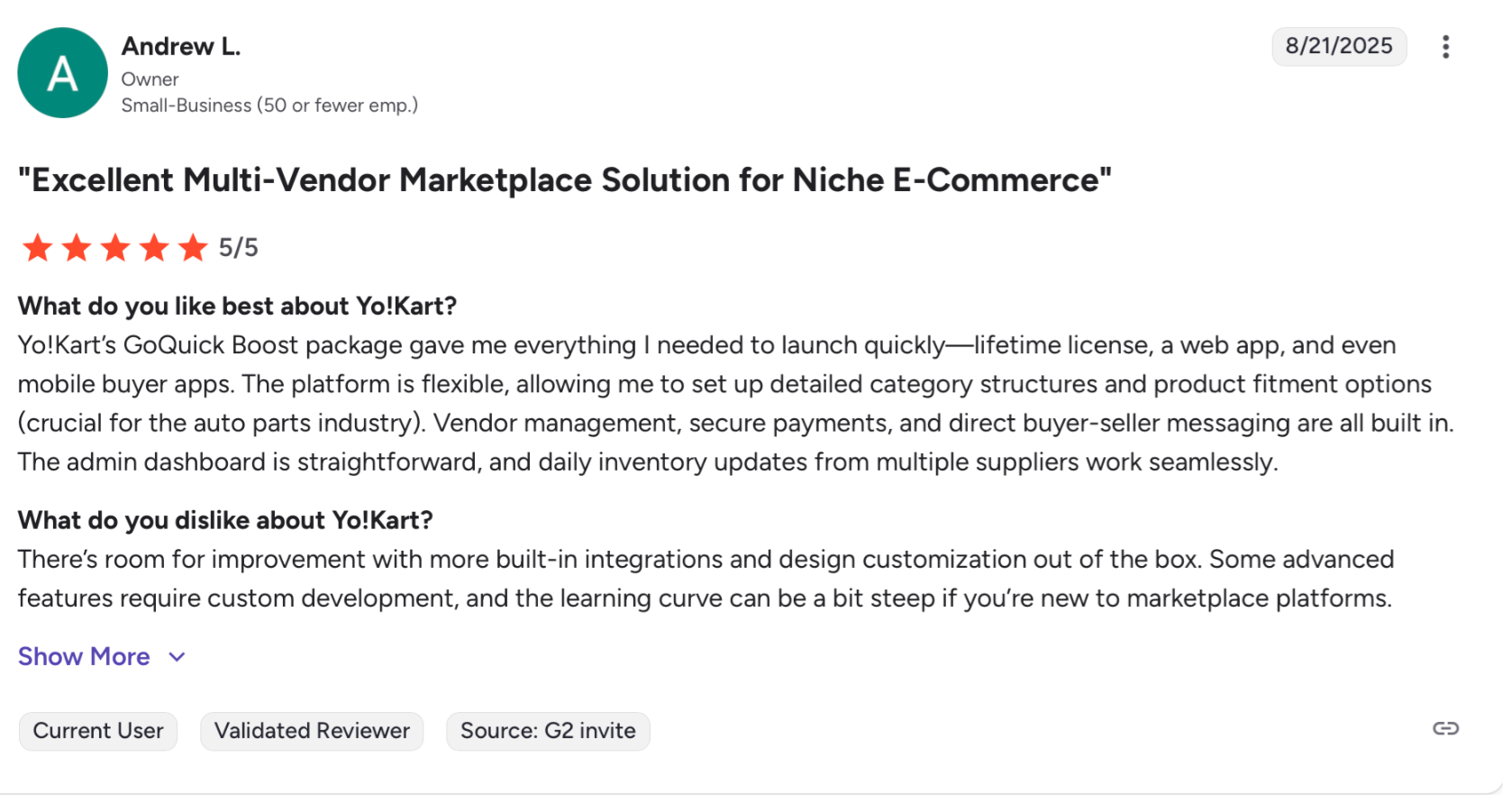
Yo!Kart is highly regarded as a flexible and efficient multi-vendor marketplace solution, especially for niche ecommerce businesses. Users appreciate its GoQuick package, which enables fast launch with a lifetime license, built-in features like vendor management, secure payments, and buyer-seller communication, along with support for web and mobile apps.
The platform is praised for its structured admin dashboard and ability to handle complex product setups and multi-supplier inventory seamlessly. However, some users note that advanced customizations and integrations may require additional development, and the learning curve can be slightly steep for beginners.
Overall, Yo!Kart is a strong choice for businesses looking to launch and scale niche marketplaces with solid built-in functionality.
Pros:
-
No recurring fees
-
Quick deployment
Cons:
-
Limited flexibility
-
Customization can be costly
Summary
Yo!Kart is a cost-effective, ready-to-launch marketplace solution ideal for startups seeking quick deployment without recurring fees. It offers strong built-in features, mobile readiness, and efficient vendor management, making it well-suited for niche marketplaces. While it provides a solid foundation and fast setup, customization can be limited and may require additional investment as the business scales.
7. Dokan (WordPress)
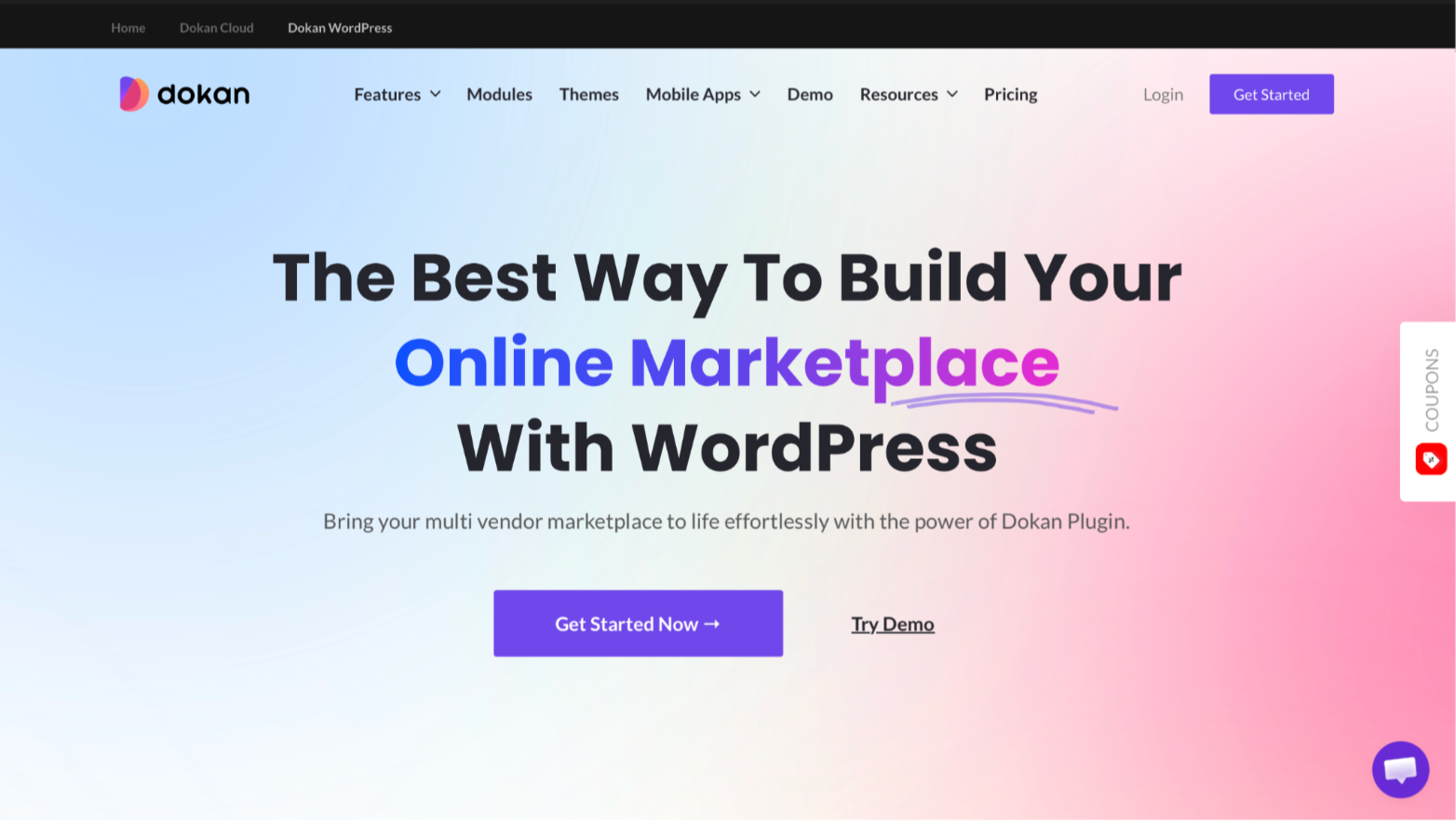
Dokan turns WordPress into a marketplace.
Key features:
-
Works with WooCommerce
-
Vendor dashboards
-
Easy setup
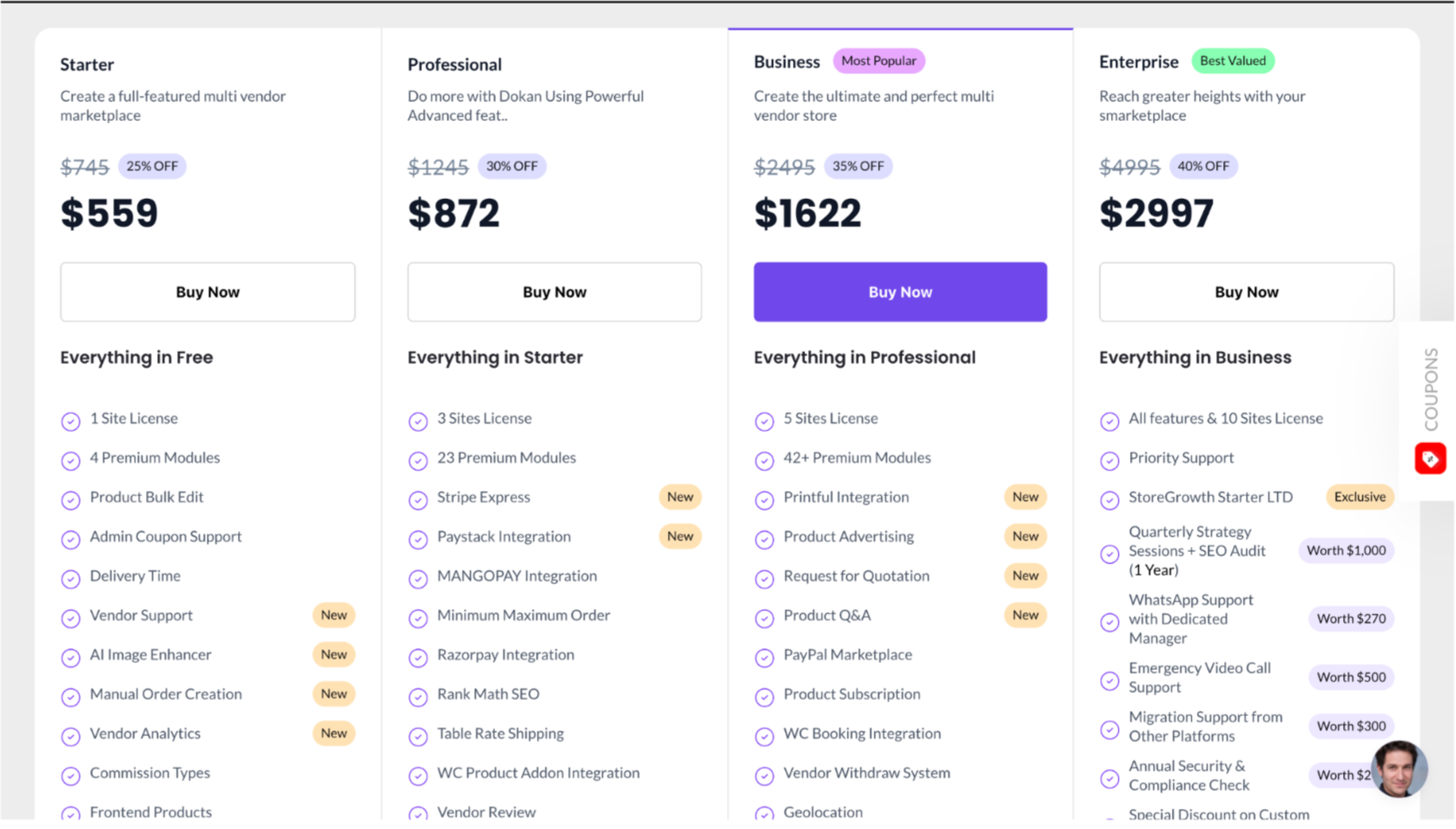
Pricing:
-
Free + paid plans
Reviews
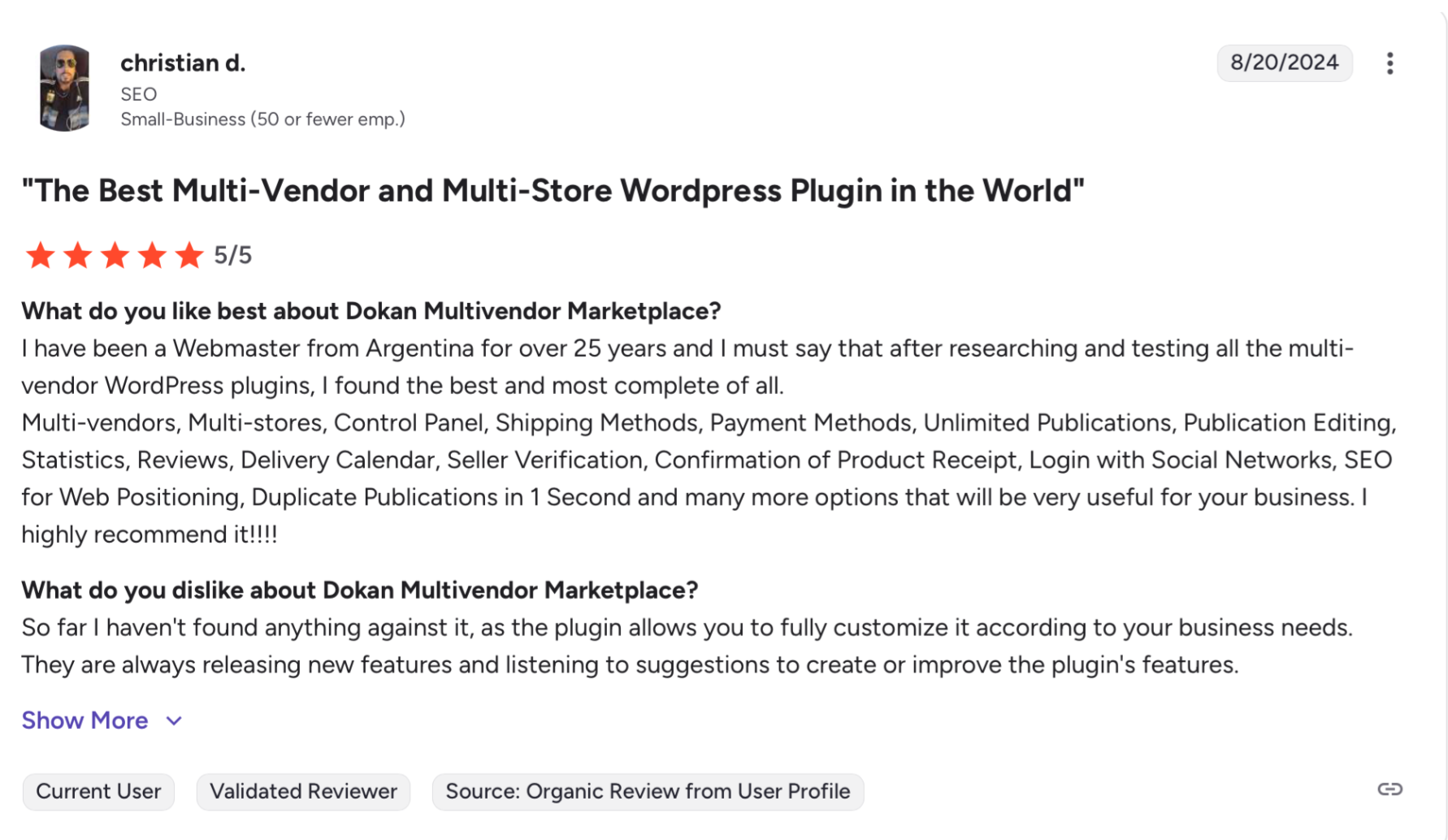
Dokan is widely praised as one of the most complete multi-vendor marketplace plugins for WordPress. Users highlight its extensive feature set, including multi-store support, vendor management, shipping and payment configurations, product publishing tools, analytics, and SEO capabilities. It offers a high level of flexibility, allowing businesses to fully customize their marketplace according to their specific needs.
Another major strength is its continuous improvement. Users appreciate that the platform regularly releases new features and actively listens to feedback, making it a reliable and evolving solution. The ability to manage multiple vendors, handle listings efficiently, and integrate essential ecommerce functionalities makes it a strong choice for businesses building on WordPress.
Notably, many users report little to no major drawbacks, emphasizing its customization capabilities and overall completeness as a marketplace solution.
Pros:
-
Affordable
-
Beginner-friendly
Cons:
-
Performance issues at scale
-
Plugin dependency
Summary
Dokan is a powerful and feature-rich multi-vendor plugin ideal for WordPress users who want full control and customization. With its extensive capabilities, continuous updates, and flexibility, it stands out as a reliable choice for building scalable and fully customizable marketplaces.
Final Verdict
-
Want full control → Medusa JS
-
Want fast launch → Sharetribe
-
Want ecosystem → Shopify
- Want enterprise scalability → Mirakl
-
Want balance → Arcadier
-
Want budget → Yo!Kart / Dokan
Conclusion
Choosing the right marketplace builder in 2026 really comes down to one core question:
Do you want speed or control?
If you’re just starting out and want to validate quickly, platforms like Sharetribe or Dokan make launching incredibly easy.
For enterprise retailers and large B2B marketplace ecosystems, Mirakl stands out with its advanced automation, seller management, and operational scalability.
If you're building something more complex or long-term, tools like Arcadier and Shopify give you a balance between usability and scalability.
But if you're aiming to build a serious, scalable, future-proof marketplace, then one platform clearly stands out.
Out of all six, Medusa JS (Mercur) is the best choice.
It gives you:
-
Full control over your architecture
-
No platform lock-in
-
Unlimited customization
-
True scalability as your marketplace grows
Yes, it requires technical expertise — but that’s exactly why it wins. Because you’re not building within limits… you’re building without them.
Struggling to choose the right Headless CMS & Headless Commerce tech stack? We’ll help you pick the best solution for your business! Exclusive Offer: 20 Hours of Free Development & Consultation
Book a MeetingFrequently Asked Questions
If you're just starting out, Sharetribe is the best option. It’s no-code, easy to set up, and lets you launch quickly without needing developers.
For long-term scalability, Medusa JS is the strongest choice. Its headless and open-source nature allows you to build and scale without restrictions.
Yes, you can use Shopify with third-party apps to create a marketplace. However, it’s not natively designed for multi-vendor systems, so flexibility may be limited.
Budget-friendly options include:
-
Dokan (low-cost WordPress solution)
-
Yo!Kart (one-time payment model)
These are great for small or early-stage marketplaces.