

Words that inspire, ideas that spark,
stories that stay
Top 4 Best Commerce Layer Alternatives (2026)
V. Srinidhi Reddy
Wednesday, April 1st, 20265 min read
Top 4 Best Commerce Layer Alternatives (2026)
Introduction
Commerce Layer has become a solid choice for brands that want a clean, API first commerce backend, especially for global and multi market setups. It’s lightweight, flexible, and avoids the heavy, monolithic approach of traditional ecommerce platforms.
But as businesses scale, requirements evolve.
What initially works well for structured, API driven commerce can start to feel limiting when you need deeper customization, more control over backend logic, or better cost predictability. Usage based pricing can also become a concern at higher volumes, and some teams begin to look for platforms that offer either more ownership or more enterprise grade capabilities.
That’s where alternatives come in.
Some platforms focus on open source flexibility and full control, while others are built for enterprise scale composable commerce. There are also options that strike a balance between simplicity and customization.
In this blog, we’ll break down the top 4 Commerce Layer alternatives in 2026, helping you understand which platform fits your current stage and future growth.
TLDR: Best Commerce Layer Alternatives (2026)
|
# |
Platform |
Best For |
|
1 |
Medusa JS |
Open source flexibility and full control |
|
2 |
commercetools |
Enterprise and global scale |
|
3 |
Swell |
Balanced headless commerce |
|
4 |
Saleor |
Performance and modern architecture |
1. Medusa JS
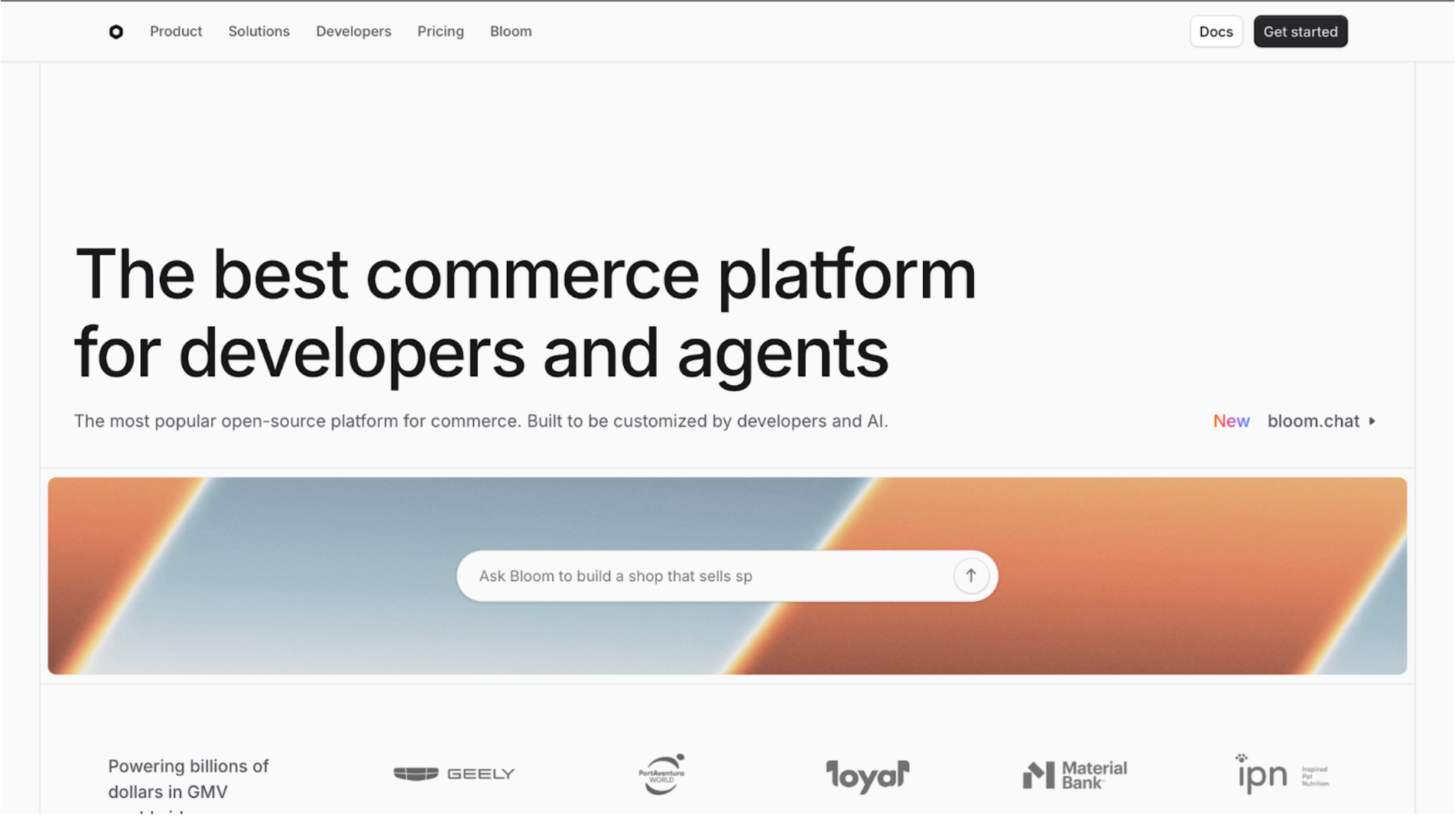
Medusa JS is one of the fastest growing open source ecommerce platforms and a strong alternative for teams that want complete ownership of their commerce backend.
Unlike Commerce Layer, which operates as a SaaS platform with usage based pricing, Medusa is fully open source. This means you are not constrained by platform limitations, and you can customize every part of your commerce logic—from checkout flows to pricing systems.
Why It’s a Strong Alternative
Medusa is particularly appealing for teams that have outgrown structured platforms and need deeper customization. Instead of adapting your workflows to fit the platform, you can build the platform around your workflows.
This makes it ideal for:
-
Custom checkout experiences
-
Advanced pricing logic
-
Multi store or multi region setups
-
Unique business models
Developer & Open Source Ecosystem
-
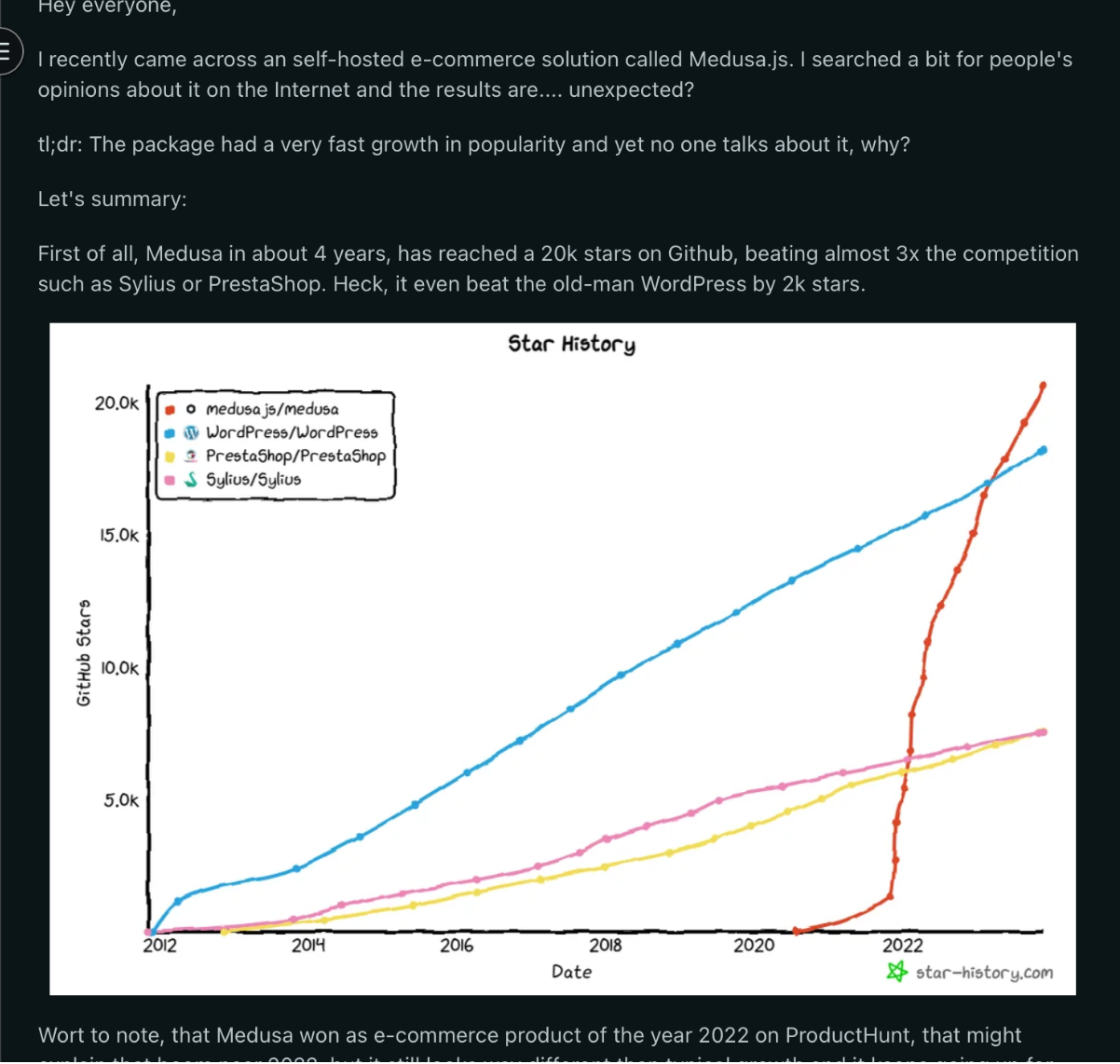
18k+ GitHub stars and growing
-
Plugin based architecture
-
Active contributor community
-
Extensive API support
Core Features
-
Modular backend architecture
-
API first commerce engine
-
Multi region and multi currency support
-
Fully customizable workflows
Pricing
-
Free (open source core)
-
Hosting costs depend on your infrastructure
-
Optional managed cloud offering
There are no transaction fees or revenue based cuts, which can significantly reduce long term costs.
Clients
Medusa is widely used by:
-
Developer led ecommerce teams
-
Headless commerce agencies
-
Fast growing DTC brands
Reviews
Medusa is highly regarded in the developer community for its flexibility and extensibility. Its credibility comes more from GitHub traction and real world adoption than traditional review platforms.
Pros
-
Fully open source
-
No platform lock in
-
Highly customizable
-
Strong developer ecosystem
Cons
-
Requires development resources
-
Not plug and play
-
Smaller ecosystem than SaaS platforms
Summary
Medusa JS is best suited for teams that want full control over their ecommerce infrastructure. If Commerce Layer feels limiting as your business grows, Medusa offers a more flexible, ownership driven approach.
2. commercetools

commercetools is one of the leading platforms in the composable commerce space, built specifically for enterprise businesses that need scalability, flexibility, and global reach.
Why It’s a Strong Alternative
While Commerce Layer provides a clean and efficient API first system, commercetools is designed for organizations with significantly more complex requirements.
It allows businesses to build their commerce stack using a composable approach, integrating best in class tools for different functions such as search, payments, content management, and more.
Developer & Integration Ecosystem
-
API first, microservices based architecture
-
Extensive SDKs and tooling
-
Supports modern frontend frameworks
-
Built for composable commerce
Core Features
-
Omnichannel commerce capabilities
-
Multi region and multi currency support
-
Custom workflows and integrations
Pricing
-
Custom enterprise pricing
-
Based on API usage, order volume, and scale
This makes it more suitable for mid to large enterprises rather than smaller businesses.
Clients
commercetools is trusted by global brands such as:
-
Audi
-
Sephora
-
Danone

Reviews
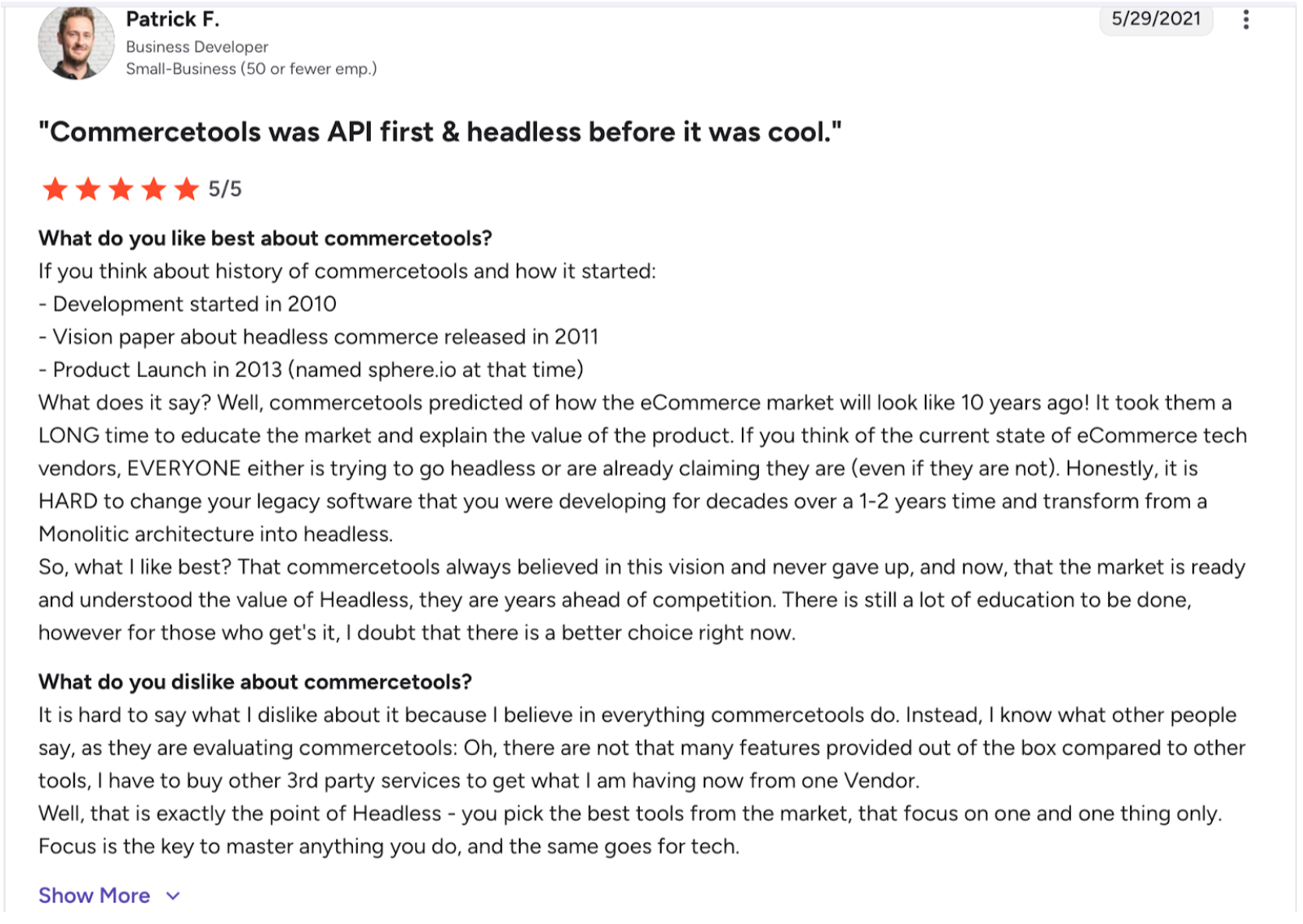
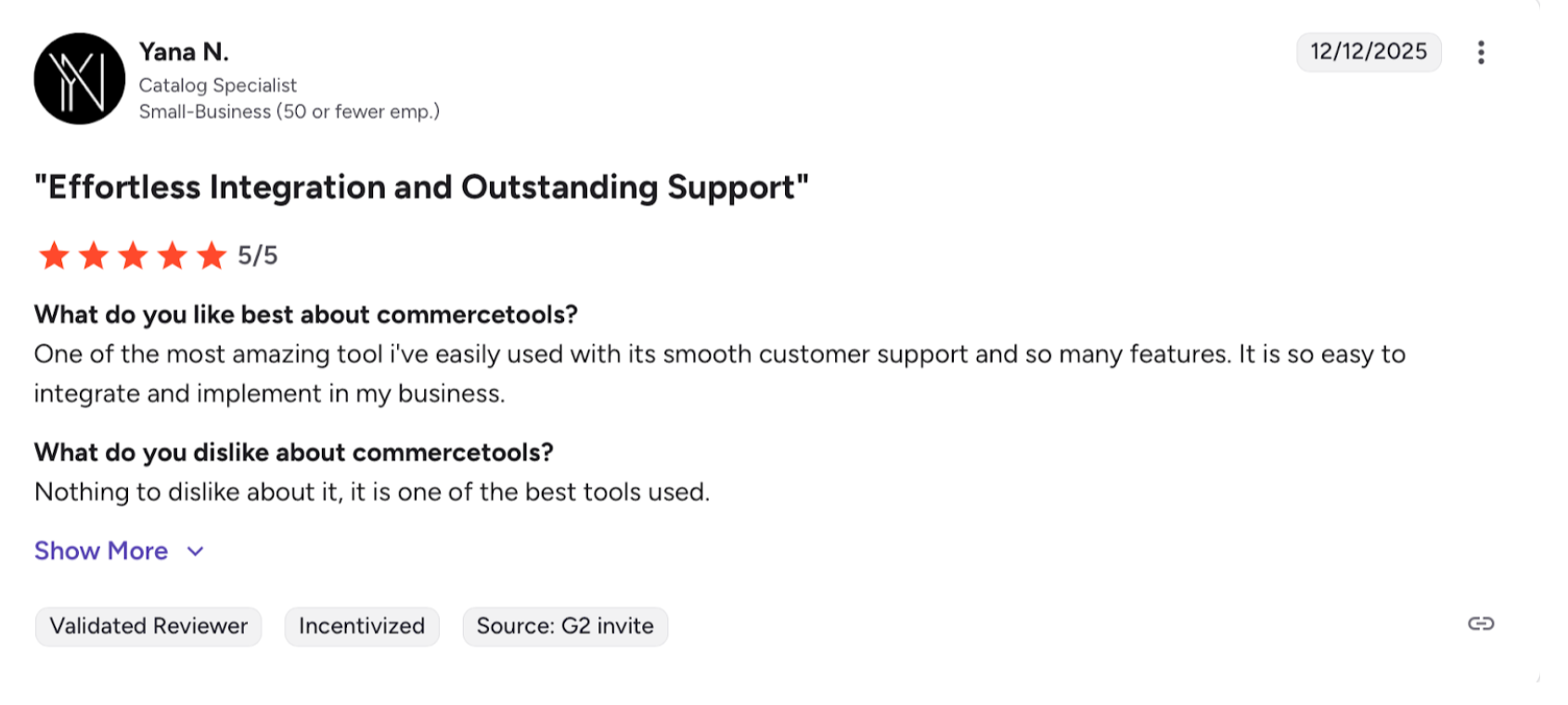
commercetools is highly rated in enterprise commerce.Users highlight that it was “API first and headless before it was cool,” with many saying it’s now years ahead of competitors. It’s also praised for easy integrations and strong support, making it ideal for building custom commerce setups.
However, some note fewer out of the box features and a steeper learning curve, meaning it works best with experienced developers.
Overall: Best suited for businesses that want flexibility and scalability over plug and play simplicity.
Pros
-
Enterprise grade scalability
-
Highly flexible architecture
-
Strong composable ecosystem
-
Trusted by global brands
Cons
-
Expensive
-
Complex implementation
-
Requires strong technical resources
Summary
commercetools is best suited for enterprise businesses that need full control over complex, large scale commerce operations. It is a powerful upgrade for teams that have outgrown simpler platforms.

3. Swell
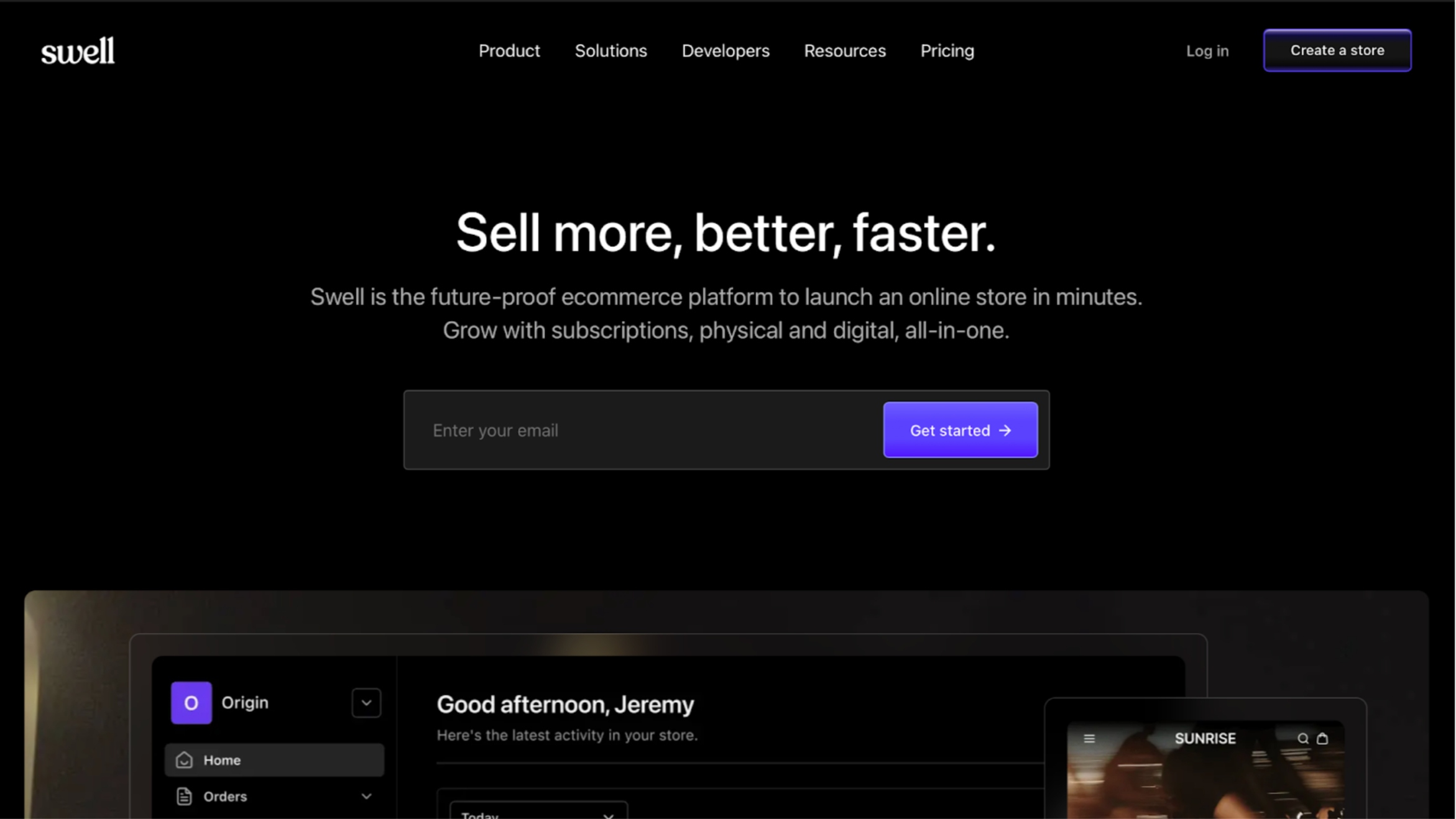
Swell is a headless commerce platform that offers a balance between flexibility and ease of use, making it a strong alternative for teams that don’t want the complexity of enterprise tools.
Why It’s a Strong Alternative
Swell provides many of the benefits of headless commerce without requiring the same level of technical investment as platforms like commercetools.
It’s particularly useful for brands that want:
-
Faster time to market
-
Custom storefronts
-
Subscription based models
Developer Ecosystem
-
API first architecture
-
Easy integrations
-
Faster implementation compared to enterprise platforms
Core Features
-
Subscription and recurring billing support
-
Custom checkout and workflows
-
Headless frontend flexibility
-
Built in ecommerce features
Pricing
-
SaaS based pricing
-
Scales with usage
Clients
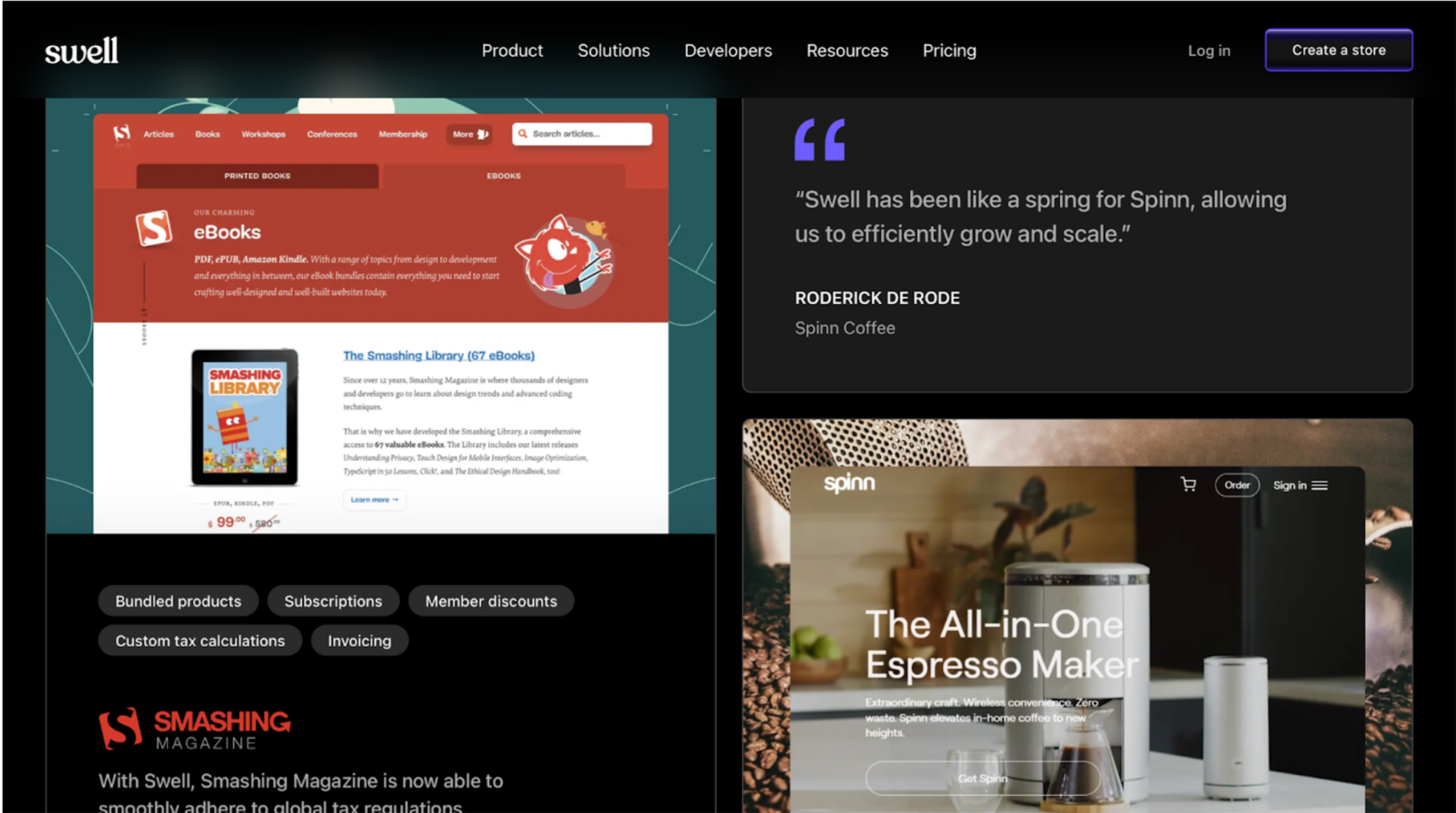
Swell is commonly used by:
-
DTC brands
-
Subscription based businesses
Reviews
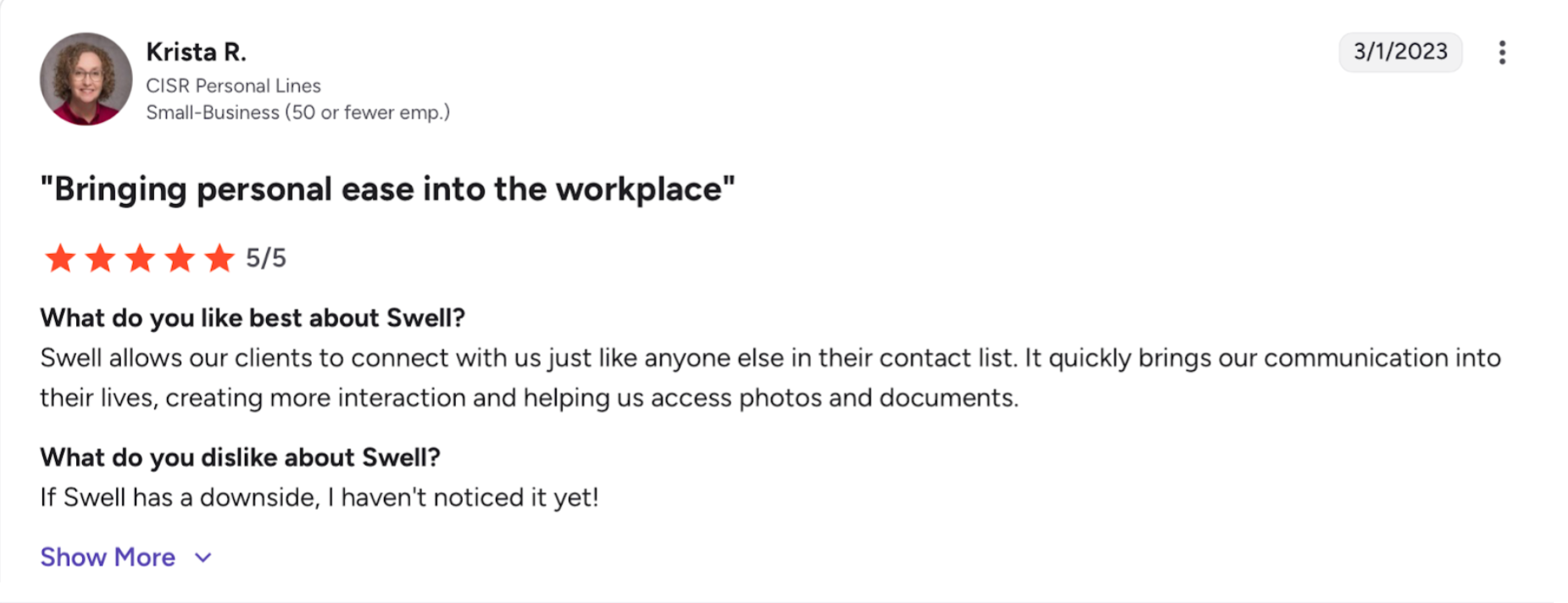
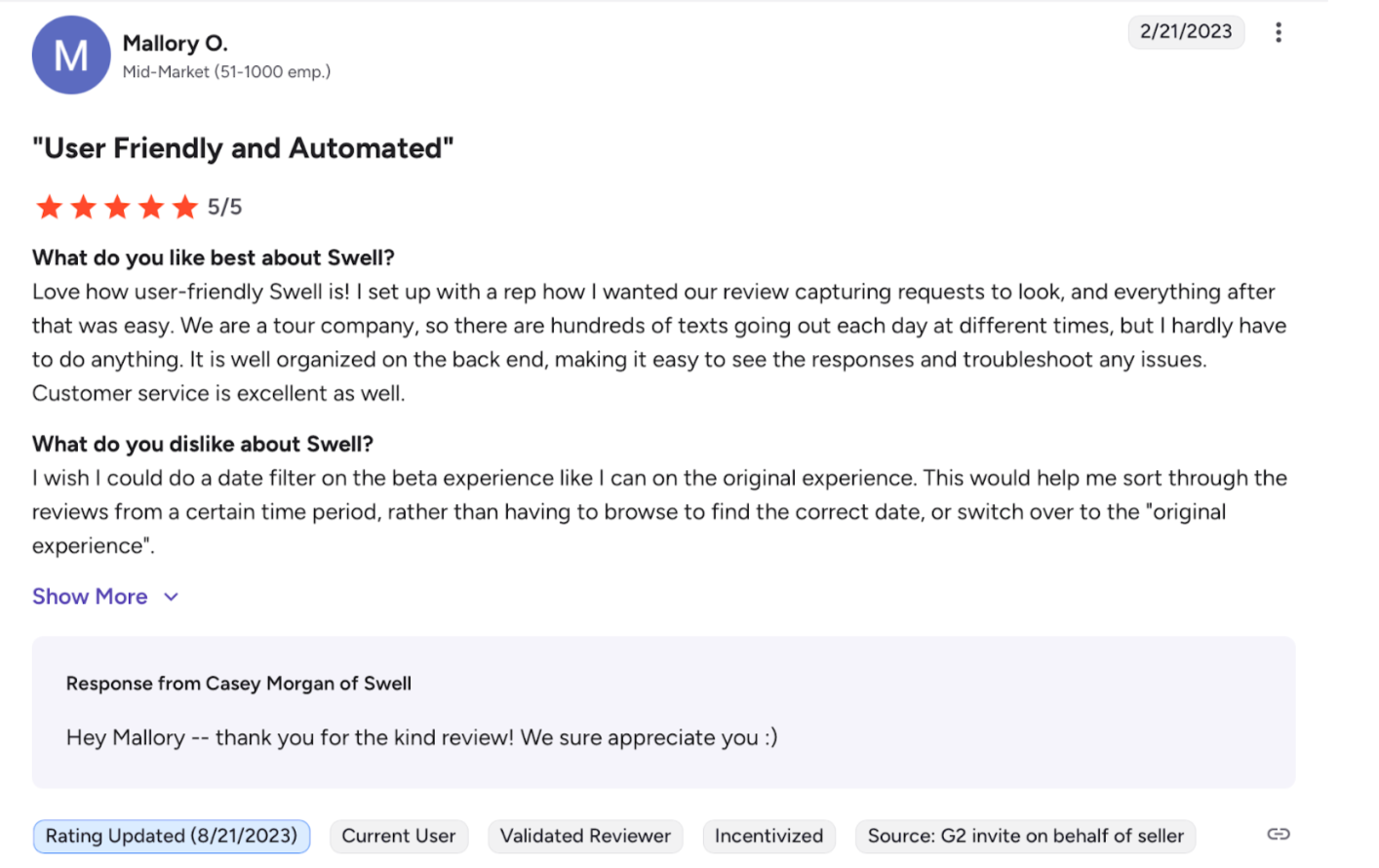
Swell receives strong positive feedback on G2, especially from small to mid sized businesses.
Users frequently highlight its ease of use and automation capabilities, noting that once set up, many processes—like review collection and communication—run smoothly with minimal manual effort. The platform is often described as user friendly and well organized on the backend, making it easy to manage responses and workflows.
Another commonly praised aspect is how Swell helps businesses improve customer interaction, allowing seamless communication and better engagement through features like messaging and document sharing.
In terms of drawbacks, feedback is relatively minor. Some users mention limited filtering or customization options in certain areas, but overall, most reviewers report little to no major issues.
Overall: Swell is seen as a reliable, easy to use platform that excels in automation and customer engagement, particularly for growing businesses.
Pros
-
Easier to implement
-
Good balance of flexibility and usability
-
Built in features reduce development effort
Cons
-
SaaS lock in
-
Limited deep customization
-
Costs increase with scale
Summary
Swell is ideal for businesses that want a flexible, headless solution without the complexity of enterprise platforms. It’s a practical middle ground alternative to Commerce Layer.
4. Saleor
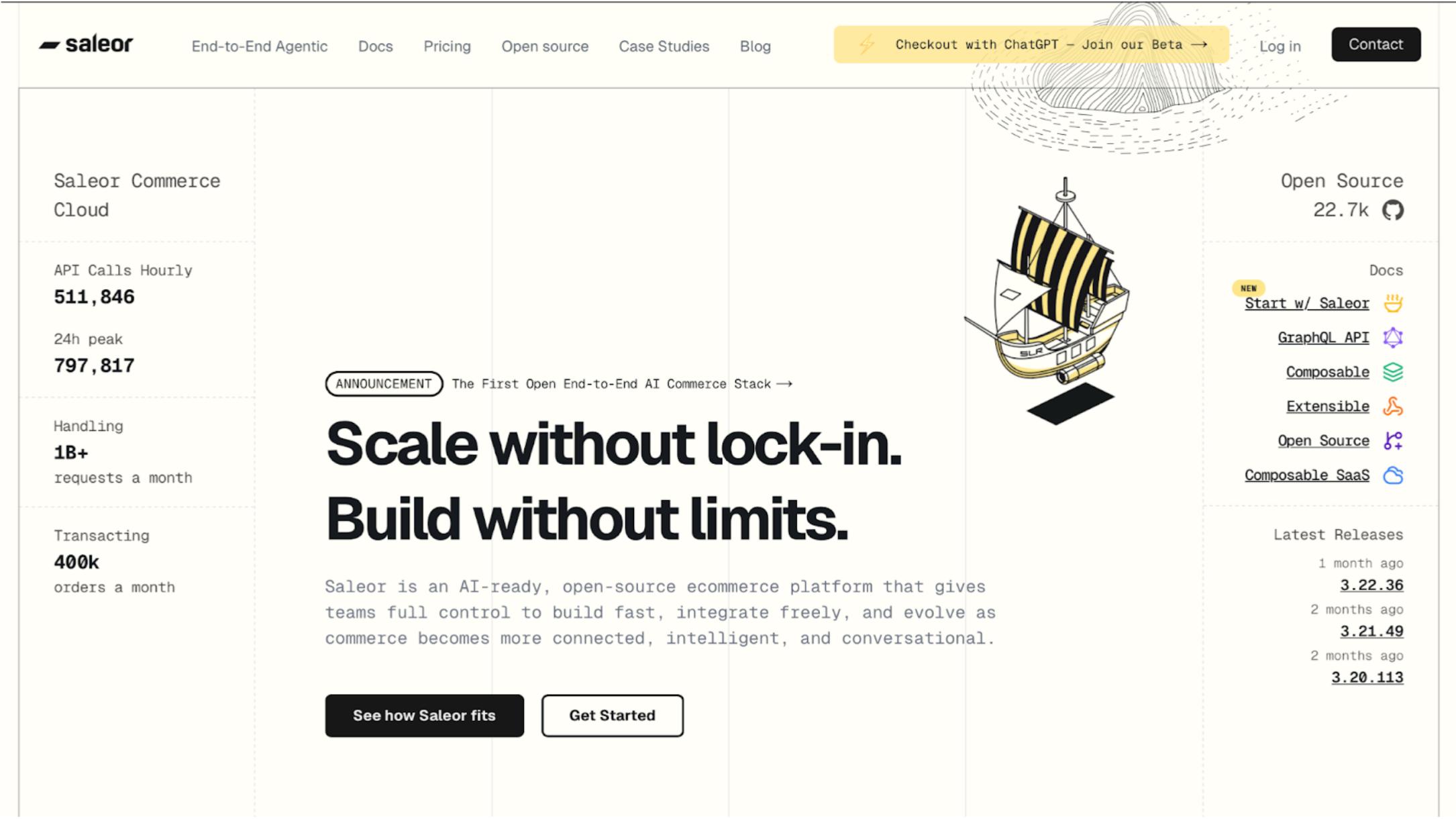
Saleor is a modern, open source ecommerce platform built around a GraphQL first architecture, making it a strong choice for performance focused teams.
Why It’s a Strong Alternative
Saleor stands out for its modern tech stack and efficient data handling. Its GraphQL first approach allows developers to fetch exactly the data they need, improving frontend performance and flexibility.
Developer & Open Source Ecosystem
-
30k+ GitHub stars
-
Active open source community
-
Modern development stack
Core Features
-
GraphQL API
-
Headless architecture
-
Multi channel commerce support
-
Clean and modern admin dashboard
Pricing
-
Free (open source version)
-
Paid cloud version available
Clients
Saleor is used by brands such as:
-
Lush
-
Breitling
Reviews
Saleor is highly praised in the developer community.
-
Strong GitHub traction and community support
-
Developers love the GraphQL first architecture
-
Known for clean UI and modern stack
Common feedback:
-
Requires technical expertise
-
Setup can be complex for non developers
Pros
-
GraphQL first architecture
-
Open source flexibility
-
High performance
-
Modern tech stack
Cons
-
Requires developers
-
Setup complexity
-
Smaller ecosystem compared to larger platforms
Summary
Saleor is best suited for teams that prioritize performance and modern architecture. It’s a strong alternative for building fast, scalable, headless commerce experiences.
Conclusion
Choosing an alternative to Commerce Layer depends on your business needs, technical capabilities, and long term goals.
-
If you want full control and ownership → Medusa JS
-
If you need enterprise scalability → commercetools
-
If you want a balanced solution → Swell
-
If performance is your priority → Saleor
There is no one size fits all platform. The best choice depends on how you plan to scale and how much control you need over your commerce stack.
As ecommerce continues to move toward headless and composable architectures, selecting the right foundation early can help avoid costly migrations later.
Struggling to choose the right Headless CMS & Headless Commerce tech stack? We’ll help you pick the best solution for your business! Exclusive Offer: 20 Hours of Free Development & Consultation
Book a MeetingFrequently Asked Questions
It depends on your needs:
-
Medusa JS → Best for flexibility and control
-
commercetools → Best for enterprise
-
Saleor → Best for performance
Yes:
-
Medusa JS
-
Saleor
commercetools is one of the strongest enterprise solutions available.
Saleor, due to its GraphQL first architecture