

Words that inspire, ideas that spark,
stories that stay
Top 3 Best Shopware Alternatives (2026)
V. Srinidhi Reddy
Wednesday, April 1st, 20268 min read
Table of content
Top 3 Best Shopware Alternatives (2026)
Introduction
Shopware is known for its flexibility and strong presence in the European ecommerce market. It offers a mix of open source customization and enterprise capabilities, making it a solid choice for both mid sized and large businesses.
However, as ecommerce evolves toward headless and composable architectures, many businesses start looking beyond Shopware.
Some teams want:
-
More developer control
-
Better scalability
-
Cleaner API first systems
-
Or simpler SaaS alternatives
That’s where modern commerce platforms come in.
Platforms like Medusa JS, commercetools, Commerce Layer, Saleor, BigCommerce, Shopify Plus, and Vendure are leading alternatives depending on what you prioritize.
In this guide, we’ll break down the top 3 Shopware alternatives in 2026, focusing on where each one actually fits.
QUICK LIST
Medusa JS, commercetools, Commerce Layer, Shopware alternatives, headless commerce platforms, composable commerce solutions, API-first ecommerce systems, open-source ecommerce platforms, enterprise commerce infrastructure, global ecommerce platforms, modular commerce architecture, multi-region ecommerce systems, Shopify Plus alternatives, developer-first ecommerce tools, scalable ecommerce backends, omnichannel commerce platforms, B2B ecommerce solutions, headless CMS integrations, modern ecommerce infrastructure, future-proof commerce platforms
TLDR: Best Shopware Alternatives (2026)
|
# |
Platform |
Best For |
|
1 |
Medusa JS |
Full control & open source flexibility |
|
2 |
commercetools |
Enterprise scale composable commerce |
|
3 |
Commerce Layer |
Global, multi market commerce |
Why Businesses Look for Shopware Alternatives
- Better scalability
- More developer control
- API-first flexibility
- Faster frontend performance
- Easier multi-region commerce
- Lower long-term platform lock-in
Best Shopware Alternatives by Use Case
- Best open-source option → Medusa JS
- Best enterprise option → commercetools
- Best global commerce backend → Commerce Layer
Key Features to Look for in a Shopware Alternative
- Headless architecture
- Composable commerce support
- Multi-currency & multi-region support
- ERP, CMS, and PIM integrations
- API-first infrastructure
- B2B and omnichannel capabilities
Related Keywords to Naturally Include
- headless commerce platform
- composable ecommerce
- Shopify Plus alternative
- Magento alternative
- API-first ecommerce
- enterprise ecommerce platform
- open-source ecommerce backend
- modern ecommerce stack
- ecommerce infrastructure
- omnichannel commerce system
1. Medusa JS
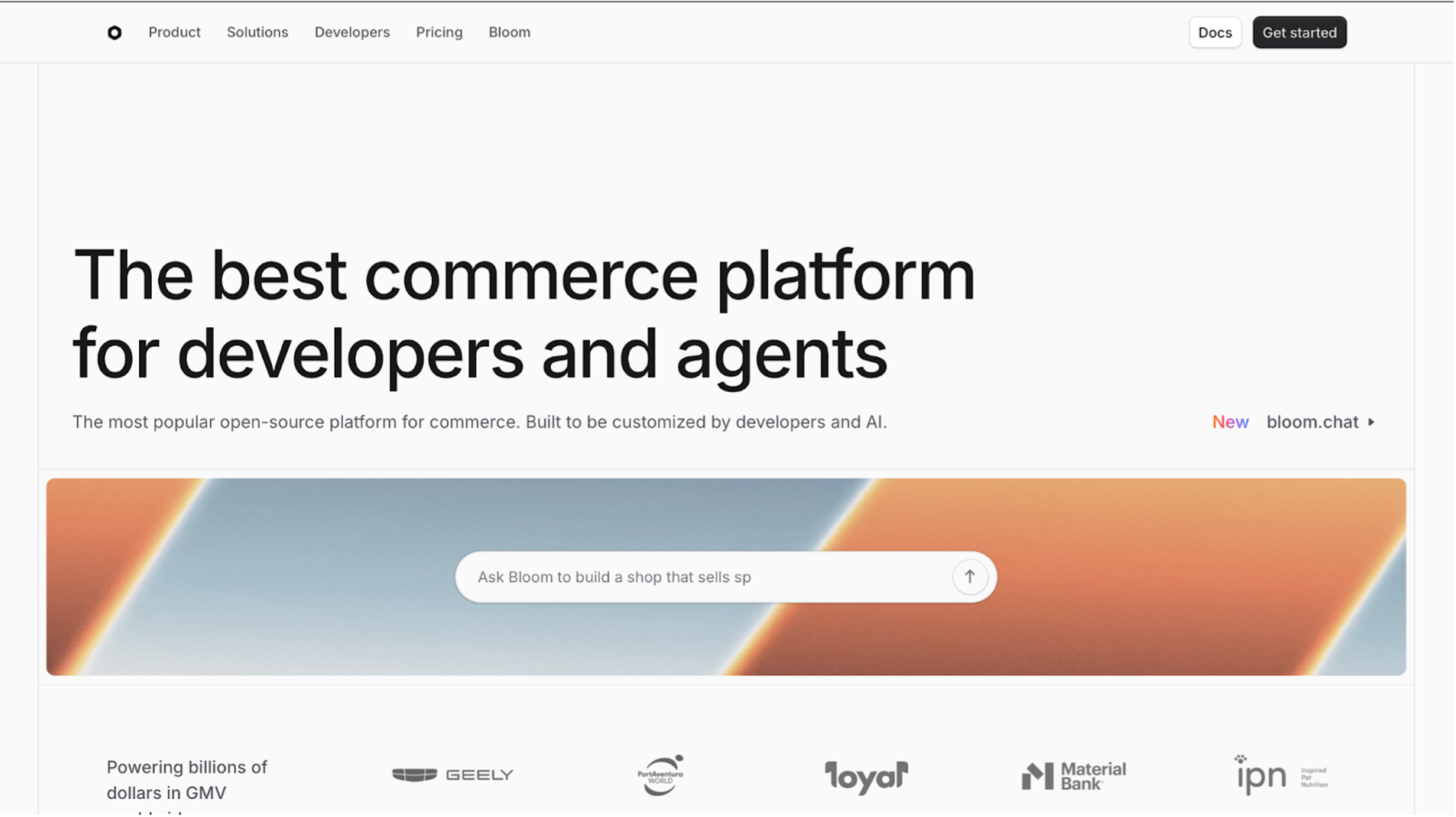
Medusa JS is one of the fastest growing open source ecommerce platforms, built specifically for developers who want full control over their backend without being locked into rigid SaaS systems.
Unlike traditional commerce platforms, Medusa follows a modular, API first architecture, allowing businesses to customize everything from checkout flows to pricing logic and integrations. This makes it especially powerful for brands that need flexibility beyond what platforms like Swell or Shopify can offer.
Over time, Medusa has positioned itself as a developer first alternative in the headless commerce space, gaining strong adoption among startups, agencies, and scaling ecommerce brands.
Medusa stands out as one of the best open source alternatives with its flexibility, extensibility, and strong developer ecosystem.
Developer & Open Source Ecosystem
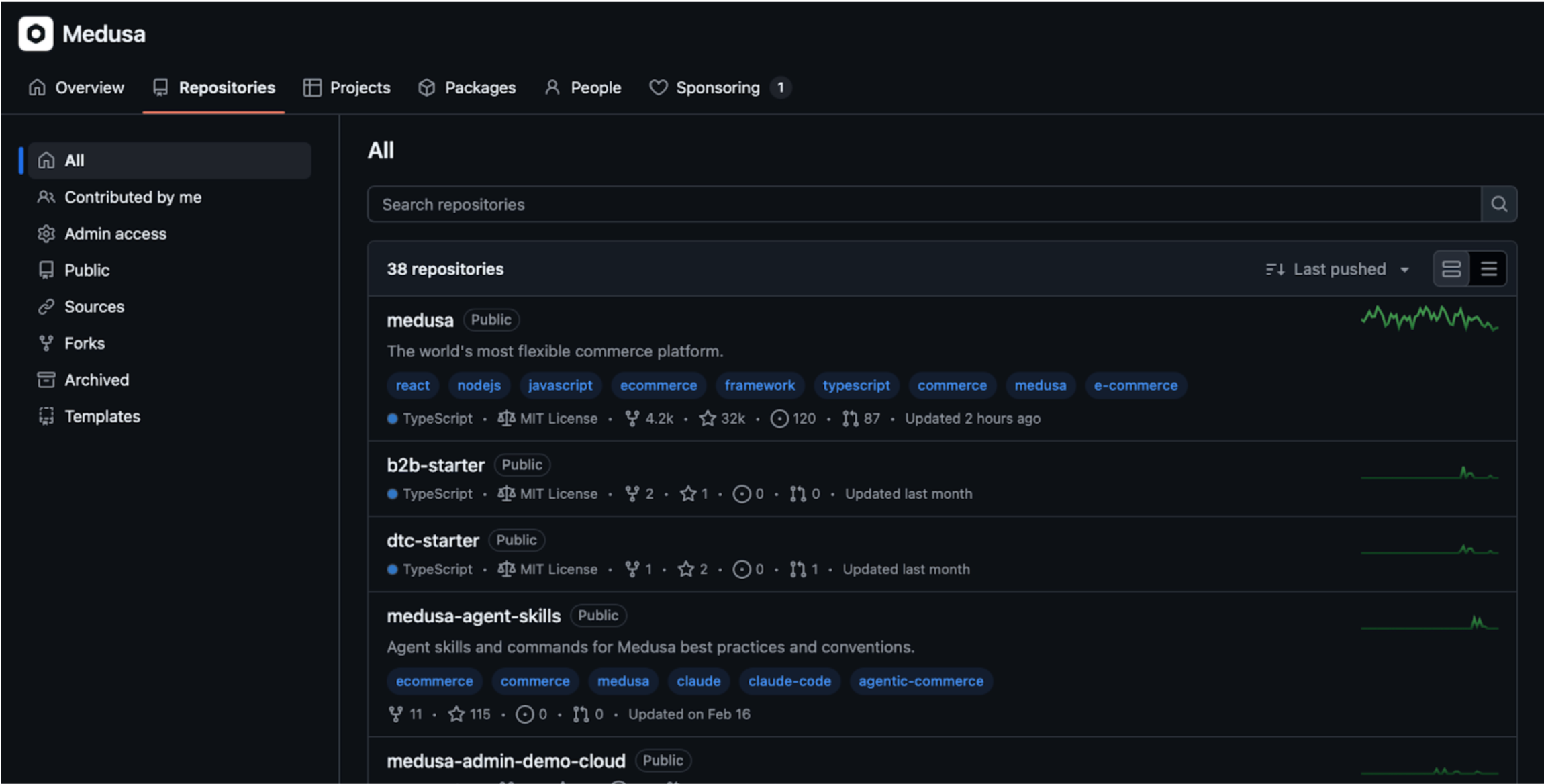
Medusa is fully open source and actively maintained.
-
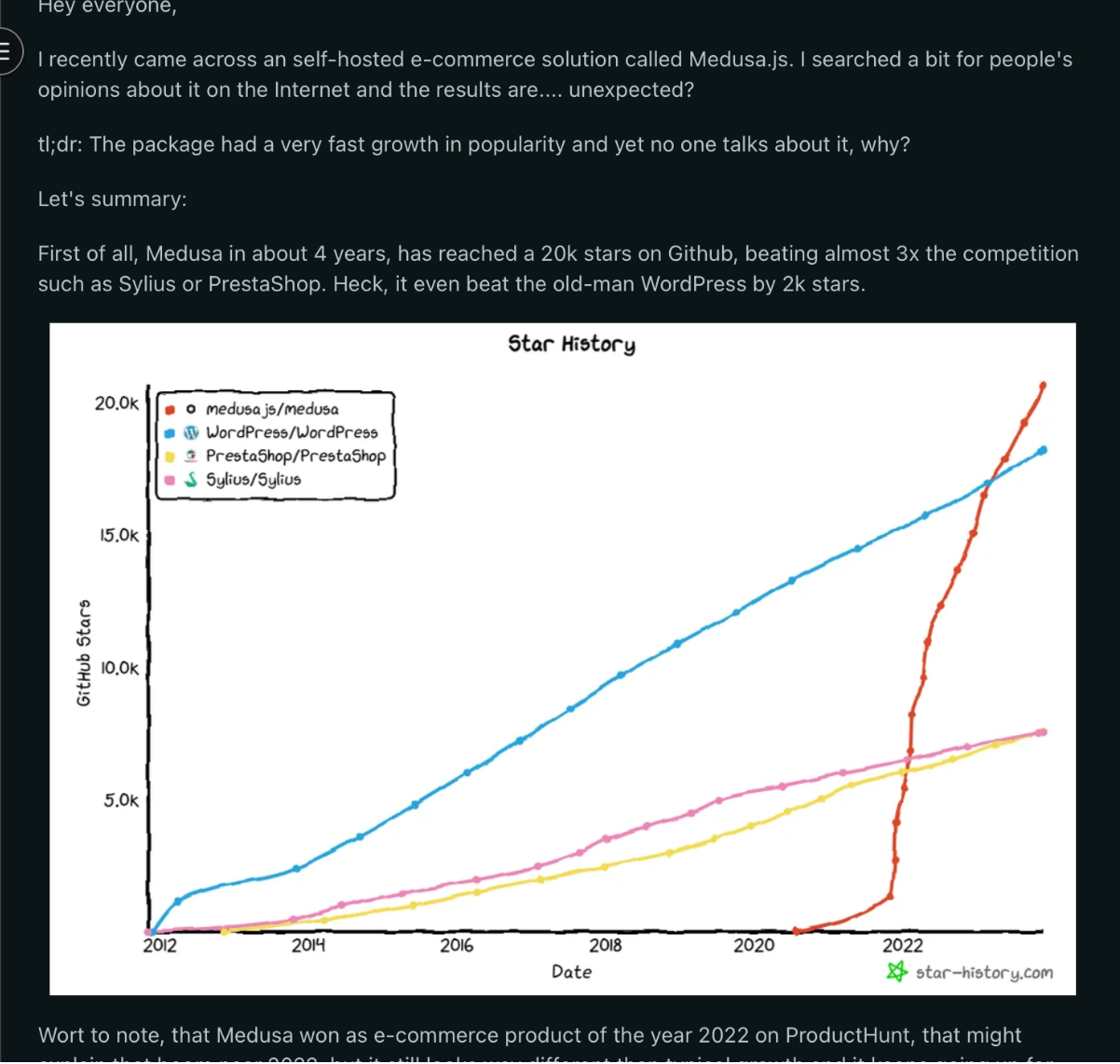
GitHub: 18k+ stars (rapidly growing)
-
Fully customizable backend with plugin architecture
-
Extensive API support for custom storefronts
-
Active contributor community and frequent updates
This makes it ideal for teams that want complete ownership of their commerce stack rather than relying on closed SaaS systems.
Core Features
Medusa focuses on flexibility, customization, and developer experience.
-
Modular architecture
Build only what you need using plugins and custom modules -
API first commerce
Easily connect with any frontend (Next.js, React, mobile apps, etc.) -
Custom workflows & logic
Full control over checkout, cart, pricing, and order management -
Multi region & multi currency support
Built for global commerce use cases -
Self hosted or cloud deployment
Gives full control over infrastructure and scaling
Pricing
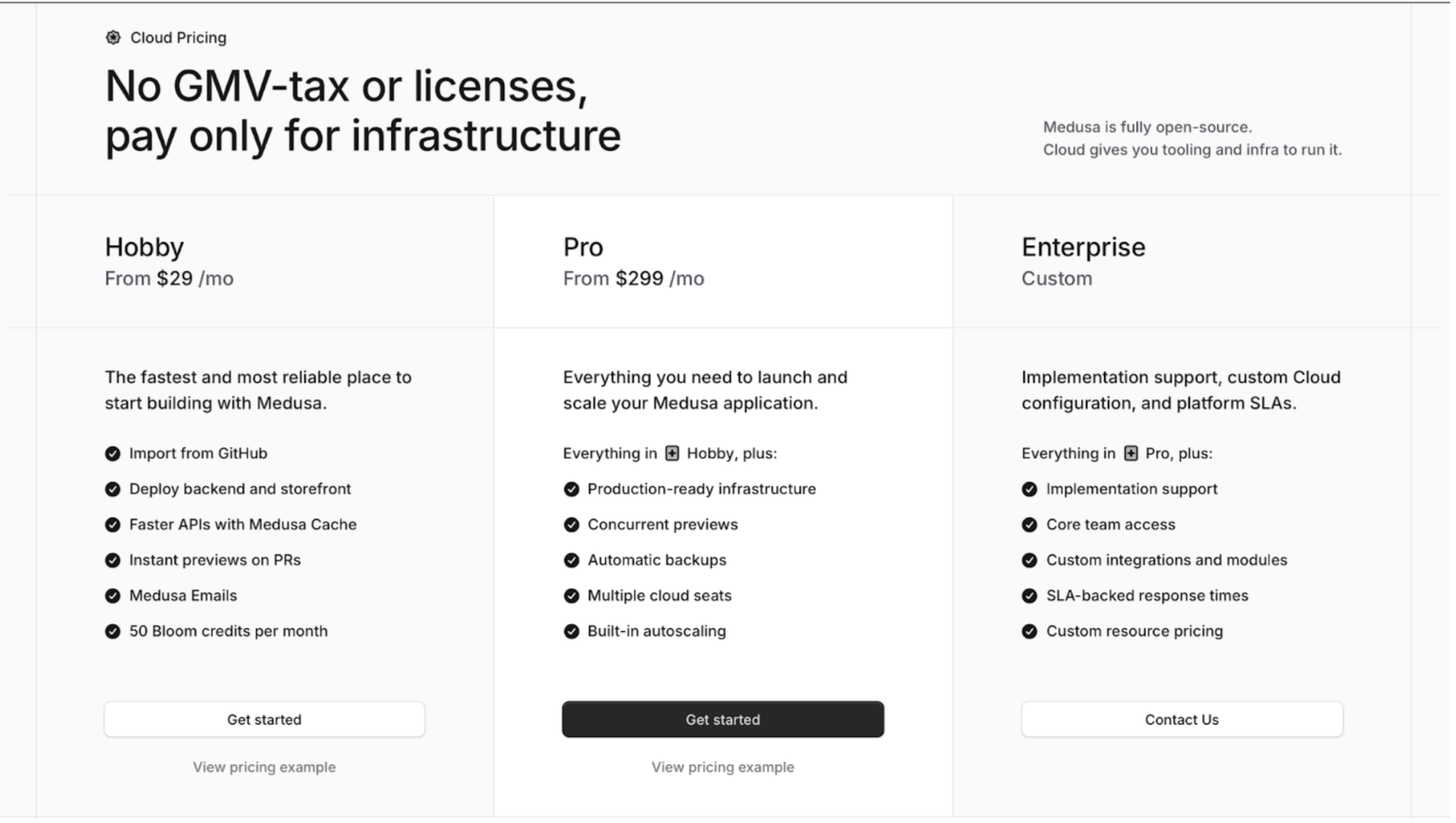
Medusa follows a completely different pricing philosophy compared to SaaS platforms.
-
Free (Open Source) → Core platform is completely free to use
-
Hosting Costs → Depends on your infrastructure (AWS, Vercel, etc.)
-
Medusa Cloud (if used) → Paid managed hosting (optional)
This means:
-
No revenue based fees
-
No transaction cuts
-
No platform lock in
For growing brands, this can significantly reduce long term costs compared to platforms like Shopify or Swell.
Clients
Medusa is used by a growing number of modern DTC brands, startups, and agencies, especially those building custom commerce experiences.
While it is not positioned as an enterprise “logo heavy” platform like commercetools, it is widely adopted by:
-
Developer led ecommerce teams
-
Headless commerce agencies
-
Fast growing DTC brands needing flexibility
Custom Enterprise & B2B (Medusa Angle)
Medusa is particularly strong for custom enterprise and B2B use cases where out of the box platforms fall short.
-
Custom pricing logic (tiered, negotiated pricing)
-
Role based access for B2B buyers
-
Multi store and multi region setups
-
Custom checkout and approval workflows
Because it’s open source, enterprises can fully tailor the backend to match complex operational needs — something that’s often difficult with SaaS tools.
Reviews
Medusa is highly appreciated in the developer community for its flexibility and modern architecture.
-
Strong GitHub engagement and community support
-
Positive feedback on extensibility and ease of customization
-
Frequently compared to Shopify alternatives in headless setups
Unlike SaaS tools, Medusa doesn’t rely heavily on G2 style reviews — its credibility comes from developer adoption and open source traction.
Founder
Medusa was founded by Sebastian Rindom, Oliver Juhl, and Nicklas Gellner.

The idea for Medusa came from their frustration with traditional ecommerce platforms like Shopify and Magento, where customizations often required workarounds and hacks instead of clean solutions.
That’s why they built Medusa as a developer first, open source alternative, focused on flexibility and full control.
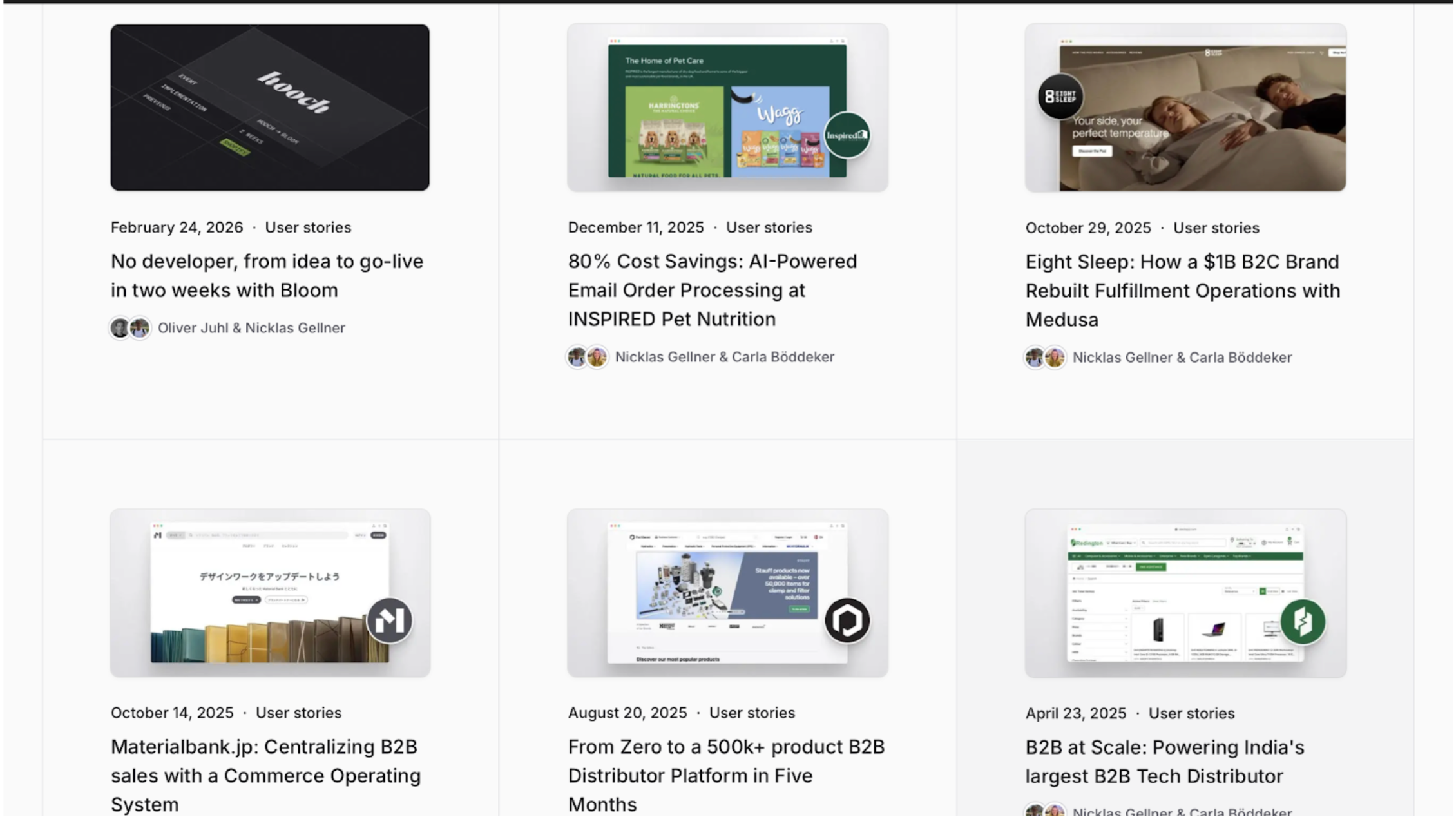
Famous Case Studies
Medusa has been used in various custom commerce builds and headless implementations.
-
High performance DTC storefronts
-
Custom marketplace setups
-
International ecommerce architectures
Pros
-
Fully open source and customizable
-
Strong developer first architecture
-
No platform lock in
-
Scales well with custom infrastructure
-
Growing community and ecosystem
Cons
-
Requires developer resources (not plug and play)
-
Smaller ecosystem compared to Shopify
-
No built in “enterprise support” unless self managed
Summary
Medusa JS is best suited for brands and teams that want full control over their ecommerce stack rather than relying on restrictive SaaS platforms.
With its open source foundation, modular architecture, and strong developer ecosystem, it’s not just an alternative to Swell — it’s a complete shift towards owning your commerce infrastructure.
If you’re building a custom, scalable, and future proof ecommerce experience, Medusa is easily one of the strongest options available in 2026.
2. commercetools

commercetools is one of the most established players in the composable commerce space, designed for enterprises that need flexibility, scalability, and full control over their commerce infrastructure.
Unlike traditional ecommerce platforms that come with rigid structures, commercetools is built on a headless, API first architecture, allowing businesses to assemble their commerce stack exactly how they want. This makes it a preferred choice for large scale brands that operate across multiple markets, channels, and regions.
Over time, commercetools has positioned itself as a leader in enterprise commerce, powering complex global ecommerce operations with high performance and reliability.
The platform is widely used by enterprise brands that require custom workflows, multi channel experiences, and scalable infrastructure, making it one of the strongest Swell alternatives in 2026.
Developer & Integration Ecosystem
commercetools is not open source, but it offers one of the most powerful developer ecosystems in the industry.
-
Fully API first and microservices based architecture
-
Extensive SDKs and developer tooling
-
Supports modern frontend frameworks (React, Vue, etc.)
-
Designed for composable commerce (integrates with best in class tools)
This allows enterprises to build highly customized commerce experiences without backend limitations.
Core Features
commercetools focuses on enterprise grade scalability and flexibility.
-
Composable commerce architecture
Build your stack using best of breed services -
API first design
Everything is accessible and customizable via APIs -
Multi region & multi currency support
Built for global commerce operations -
Omnichannel capabilities
Deliver consistent experiences across web, mobile, POS, and marketplaces -
High scalability & performance
Handles large transaction volumes with ease
Pricing

commercetools follows a custom enterprise pricing model.
-
No fixed pricing tiers
-
Pricing depends on:
-
API usage
-
Order volume
-
Regions and scale
This means:
-
Best suited for mid market to enterprise brands
-
Not ideal for small stores due to higher cost and complexity
Clients
commercetools is trusted by major global brands, highlighting its enterprise credibility.
-
Audi
-
Danone
-
Sephora
-
Bang & Olufsen
-
Ulta Beauty
These brands use commercetools to power complex, large scale ecommerce operations across multiple regions.

Custom Enterprise & B2B
This is where commercetools truly excels.
-
Advanced B2B workflows
-
Custom catalogs and pricing models
-
Multi store and multi brand setups
-
Role based access and account management
-
Deep integrations with ERP, CRM, and PIM systems
It is built for organizations that need full control over complex commerce logic at scale.
Reviews
commercetools is highly rated in enterprise commerce.
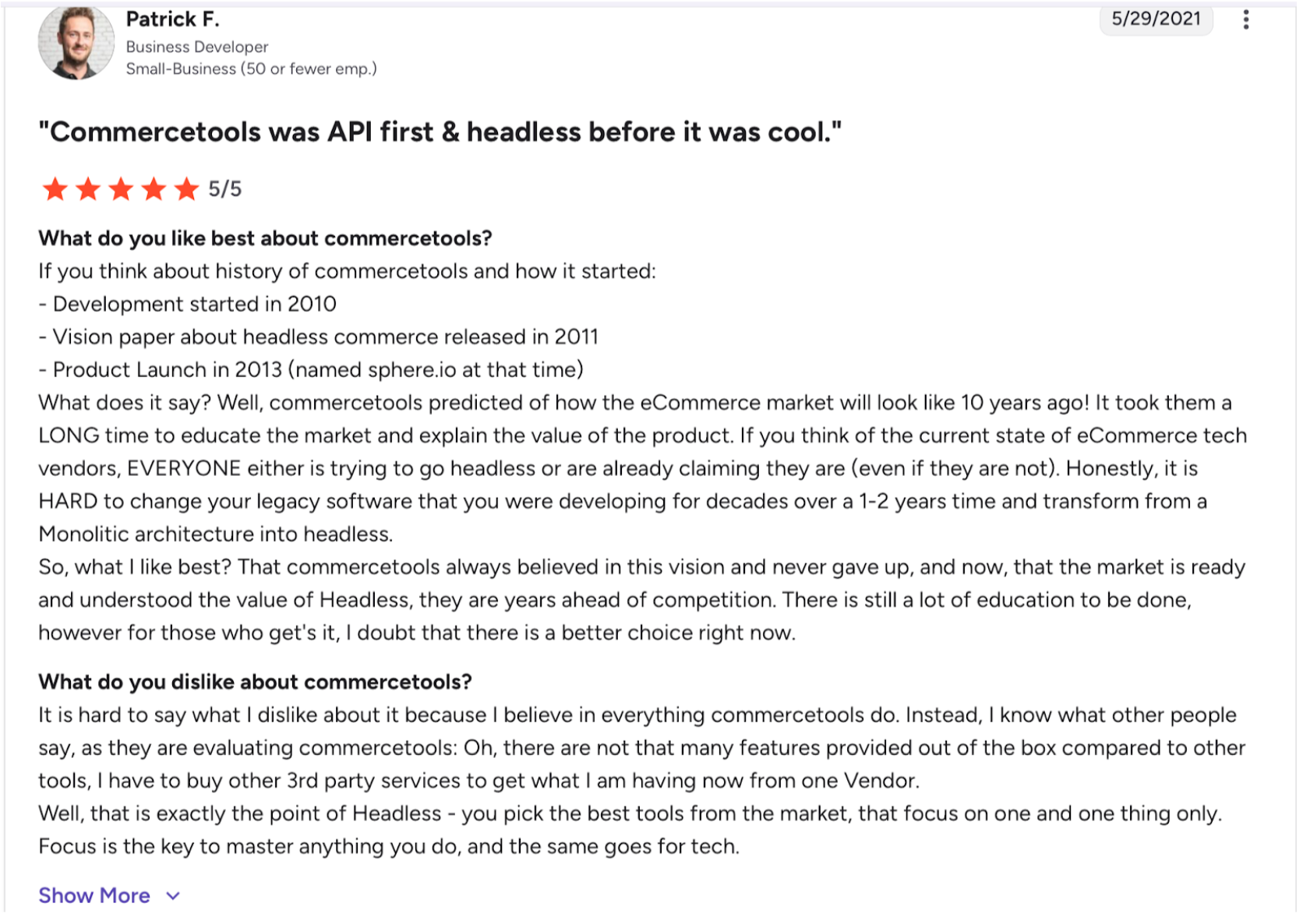
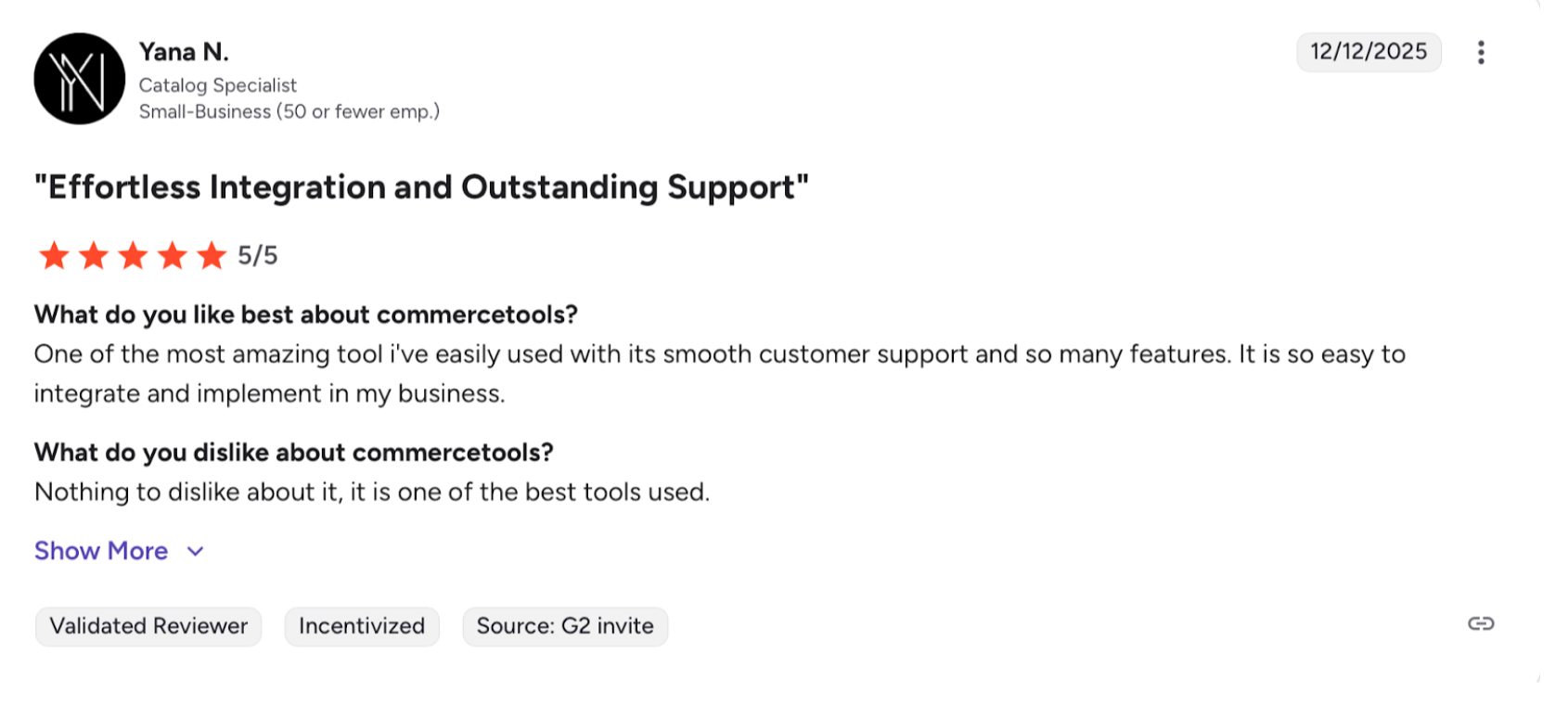
Users highlight that it was “API first and headless before it was cool,” with many saying it’s now years ahead of competitors. It’s also praised for easy integrations and strong support, making it ideal for building custom commerce setups.
However, some note fewer out of the box features and a steeper learning curve, meaning it works best with experienced developers.
Overall: Best suited for businesses that want flexibility and scalability over plug and play simplicity.
Founder
commercetools was founded by Dirk Hoerig, who envisioned a shift away from monolithic ecommerce platforms toward a modular, API driven approach.
This vision helped commercetools become one of the pioneers of composable commerce.
Famous Case Studies
commercetools powers some of the most advanced commerce implementations globally.
-
Audi → Unified global commerce experience
-
Sephora → Omnichannel personalization at scale
-
Danone → Multi brand, multi region commerce transformation
These case studies highlight how commercetools enables enterprise level digital transformation.

Pros
-
Enterprise grade scalability
-
Highly flexible and customizable
-
Strong composable commerce ecosystem
-
Trusted by global brands
-
Powerful API first architecture
Cons
-
Expensive for small to mid sized businesses
-
Requires strong developer resources
-
Longer implementation time compared to SaaS tools
Summary
commercetools is best suited for enterprise brands that need complete flexibility, scalability, and control over their commerce stack.With its composable architecture and API first approach, it allows businesses to build highly customized, future proof ecommerce systems without being limited by traditional platforms.
If you’re operating at scale, across multiple regions and channels, and need a platform that can handle complex commerce logic, commercetools is easily one of the most powerful Swell alternatives available in 2026.
3. Commerce Layer

Commerce Layer is a powerful API first commerce platform built for businesses that want to manage global ecommerce operations without being tied to a monolithic system.
Unlike traditional platforms, Commerce Layer is designed as a pure backend commerce engine, meaning it handles orders, pricing, inventory, and internationalization — while you build the frontend however you want.
This makes it especially attractive for brands operating across multiple markets, currencies, and regions, where flexibility and control are critical.
Over time, Commerce Layer has positioned itself as a lean but highly scalable alternative to platforms like Swell, focusing on simplicity, performance, and global first architecture.
Developer & Integration Ecosystem
Commerce Layer is not open source, but it offers a very clean and developer friendly API ecosystem.
-
Fully API first architecture
-
REST APIs with detailed documentation
-
SDKs for modern stacks (JavaScript, React, etc.)
-
Works seamlessly with CMS, frontend frameworks, and third party tools
Its simplicity is a big advantage — developers can ship faster without dealing with unnecessary complexity.
Core Features
Commerce Layer focuses on global commerce and operational simplicity.
-
API first commerce engine
Manage orders, carts, customers, and pricing via APIs -
Multi market & multi currency support
Built for international expansion from day one -
Inventory & order management
Centralized backend for operations -
Flexible pricing logic
Supports region based pricing and promotions -
Headless architecture
Use any frontend or CMS
Pricing
Commerce Layer uses a usage based pricing model.
-
No fixed plans publicly listed
-
Pricing depends on:
-
Number of orders
-
API usage
-
Features used
This makes it:
-
Scalable for growing brands
-
More cost efficient than enterprise platforms initially
-
But can increase as volume grows
Clients
Commerce Layer is trusted by several modern global brands, especially those with strong international presence.
-
Dolce & Gabbana
- Versace
-
Valentino
-
Luxottica
These brands rely on Commerce Layer to manage multi region ecommerce operations and complex pricing structures.
Custom Enterprise & B2B
Commerce Layer is strong for custom enterprise and global B2B use cases.
-
Multi market catalogs
-
Region specific pricing and tax handling
-
Integration with ERP, PIM, and CMS systems
-
Custom workflows for global operations
It’s particularly useful for businesses that need centralized control across distributed markets.
Reviews
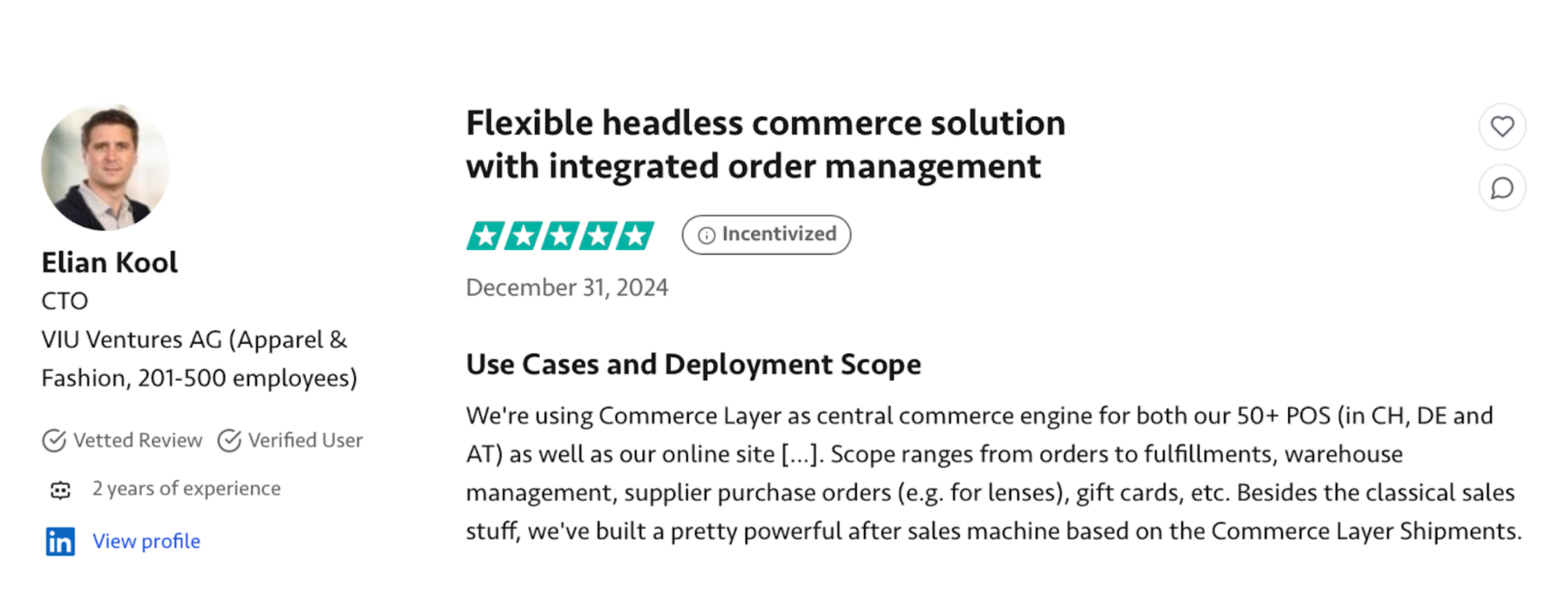
Commerce Layer is well rated among enterprise users, with strong feedback around flexibility and real world scalability.
Users highlight its ability to act as a central commerce engine across multiple channels, including online stores and large scale POS systems. It’s frequently praised for handling complex operations like order management, fulfillment, warehouse workflows, and after sales processes within a single headless setup.
Many reviewers also note that it enables building powerful, custom commerce infrastructures, especially for businesses operating across multiple regions and touchpoints.
Overall: Seen as a highly flexible and scalable solution, best suited for companies managing complex, multi channel commerce operations.
Founder
Commerce Layer was founded by Filippo Conforti, with a vision to simplify global commerce through APIs.
The goal was to create a platform where:
Commerce logic is handled centrally, while the frontend remains completely flexible.
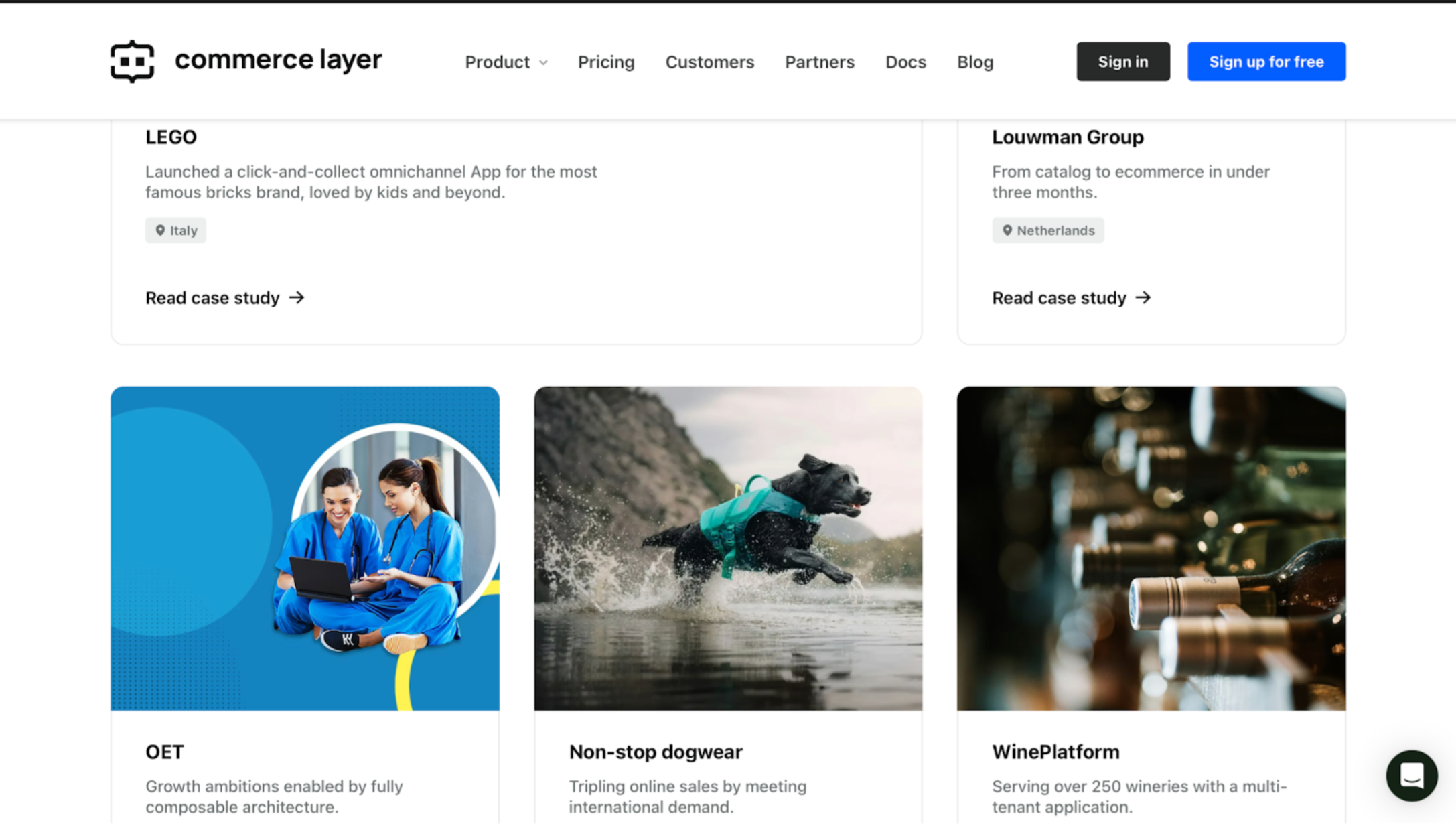
Famous Case Studies
Commerce Layer powers global ecommerce operations for premium brands.
-
Fashion brands scaling internationally
-
Multi region ecommerce architectures
-
High end retail with localized experiences
These implementations highlight its strength in global commerce orchestration.
Pros
-
Clean and simple API first architecture
-
Excellent for global, multi region commerce
-
Faster implementation than heavy enterprise tools
-
Flexible frontend freedom
-
Strong documentation
Cons
-
Not open source
-
Requires developer resources
-
Limited built in features compared to SaaS platforms
-
Costs scale with usage
Summary
Commerce Layer is best suited for brands that operate globally and need a clean, scalable backend to manage complex ecommerce operations.
With its API first design and strong international capabilities, it offers a powerful yet lightweight alternative to platforms like Swell and even heavier enterprise tools.
If your focus is on multi market expansion, flexibility, and fast development, Commerce Layer is one of the smartest choices in 2026.
Conclusion
Shopware is a strong platform, but it’s not always the best fit as businesses scale or move toward headless commerce.
The right alternative depends on your priorities:
-
Medusa JS → full control and flexibility
-
commercetools → enterprise scalability
-
Commerce Layer → global commerce
Choosing the right platform early can help you avoid complex migrations later.
Struggling to choose the right Headless CMS & Headless Commerce tech stack? We’ll help you pick the best solution for your business! Exclusive Offer: 20 Hours of Free Development & Consultation
Book a MeetingFrequently Asked Questions
Medusa for flexibility, commercetools for enterprise, and Commerce Layer for global operations.
Yes, Medusa JS is one of the strongest open source options.
commercetools is one of the most scalable enterprise platforms available.
Commerce Layer is simpler compared to enterprise heavy solutions.