

Words that inspire, ideas that spark,
stories that stay
7 Best Sanity CMS SaaS Websites for Design Inspiration (2026)
V. Srinidhi Reddy
Tuesday, April 21st, 20268 min read
Table of content
7 Best Sanity CMS SaaS Websites | Web Design Inspiration (2026)
Introduction
Sanity CMS has emerged as one of the most powerful headless CMS solutions for SaaS companies that require flexibility and scalability. Unlike traditional CMS platforms, it allows developers and content teams to work together using structured content models. This makes it easier to maintain consistency across pages while scaling rapidly.
Modern SaaS websites are no longer just informational—they are conversion engines, product demos, and brand storytelling platforms. Sanity enables all of this by offering real-time content editing and API-first architecture. As a result, teams can ship faster without compromising design quality.
Similar to curated inspiration collections , this list highlights the best Sanity-powered SaaS websites that successfully combine UX, performance, and branding. These examples are particularly useful if you are planning to build or redesign a SaaS product.
TL;DR (Quick Picks)
|
Website |
Best For |
Key Highlight |
|
Figma |
Product storytelling |
Clean UI with strong narrative |
|
Linear |
Minimal SaaS UX |
Fast and distraction-free |
|
Vercel |
Developer platforms |
Performance-first design |
|
Loom |
Conversion-focused SaaS |
Strong CTA and onboarding |
|
Notion |
Content-heavy platforms |
Structured modular content |
|
Raycast |
Premium UI design |
Polished interactions |
|
Sanity.io |
CMS showcase |
Real-time content editing |
1. Figma
Founders
Dylan Field, Evan Wallace
Overview
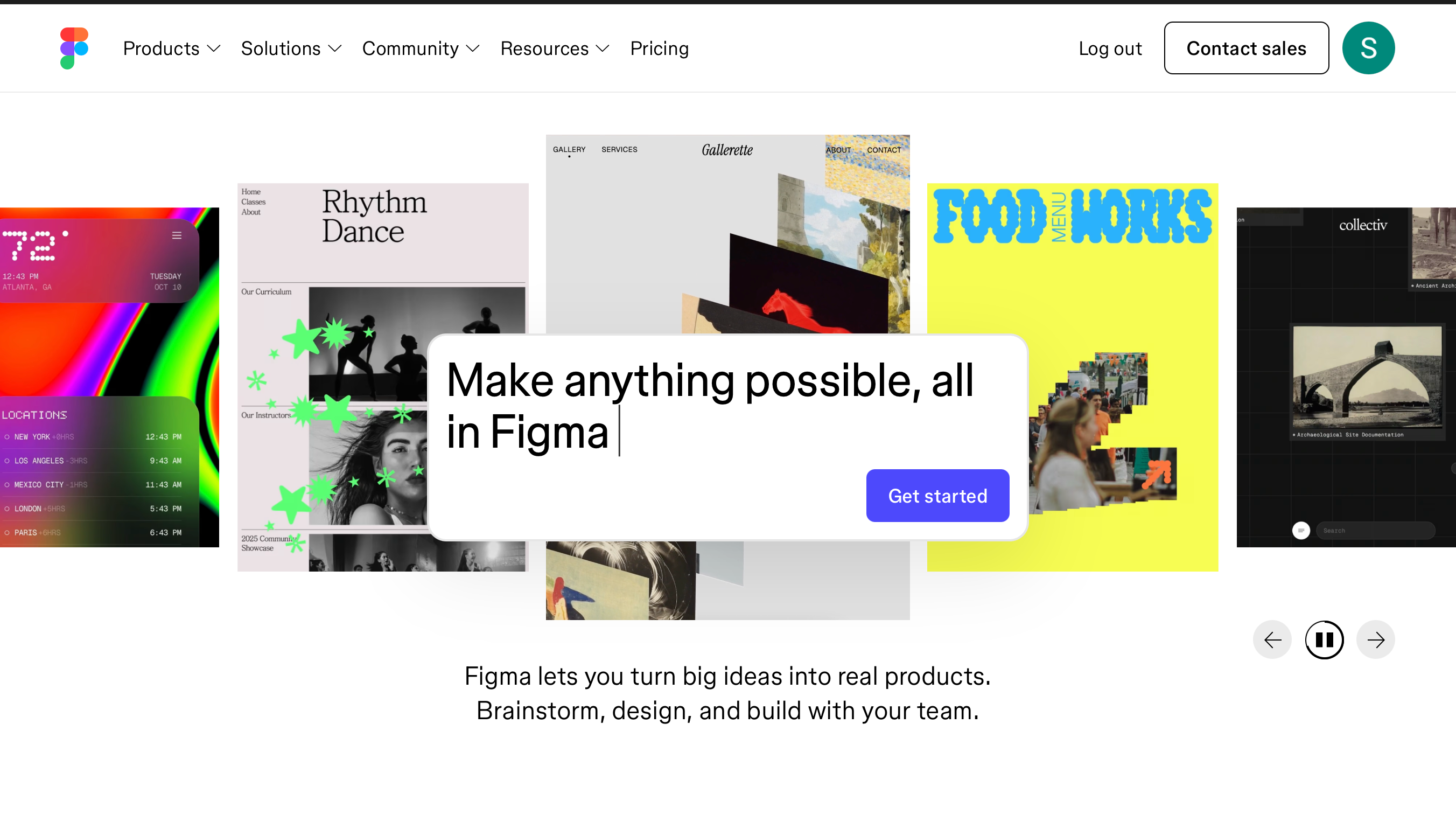
Figma’s website is a strong example of how to combine product storytelling with structured content. It uses modular sections that adapt seamlessly across landing pages, product pages, and enterprise content. This ensures consistency while allowing flexibility in design.
The website effectively balances visuals and information, making complex features easy to understand. It also uses interactive elements and clear hierarchy to guide users through the product experience. This makes it suitable for both new users and advanced teams.
Reviews
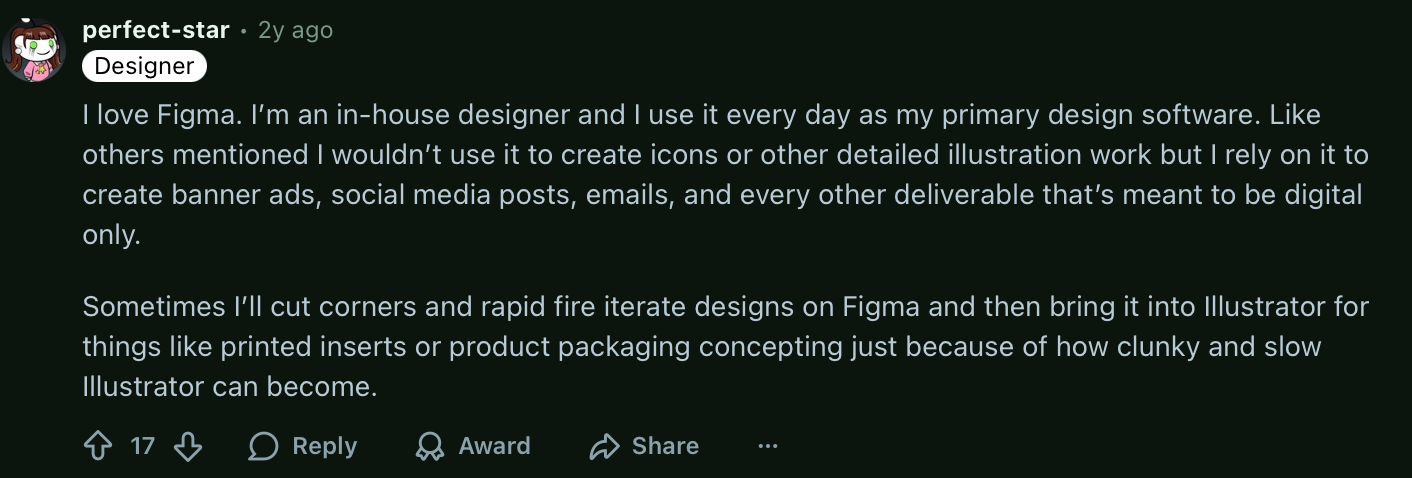
Figma’s website is widely praised for its clarity and usability across different user segments. Many users highlight how easily they can navigate through features without feeling overwhelmed. The structured layout helps communicate complex ideas in a simple way.
It is often considered one of the best SaaS websites for design inspiration. Review platforms frequently mention its balance between aesthetics and functionality. Overall, it sets a high standard for modern SaaS UX.
Clients
Microsoft
Uber
Airbnb
Pros
Clean and modern interface with strong hierarchy
Excellent storytelling and product positioning
Scalable content system for growth
Cons
Heavy visuals may affect slower devices
Some sections contain dense information
Summary
Figma’s website stands out for its ability to combine storytelling with scalability. It shows how structured content can support both marketing and product education effectively. Overall, it is one of the best references for SaaS teams focused on design and usability.
2. Linear
Founders
Karri Saarinen, Jori Lallo, Tuomas Artman
Overview
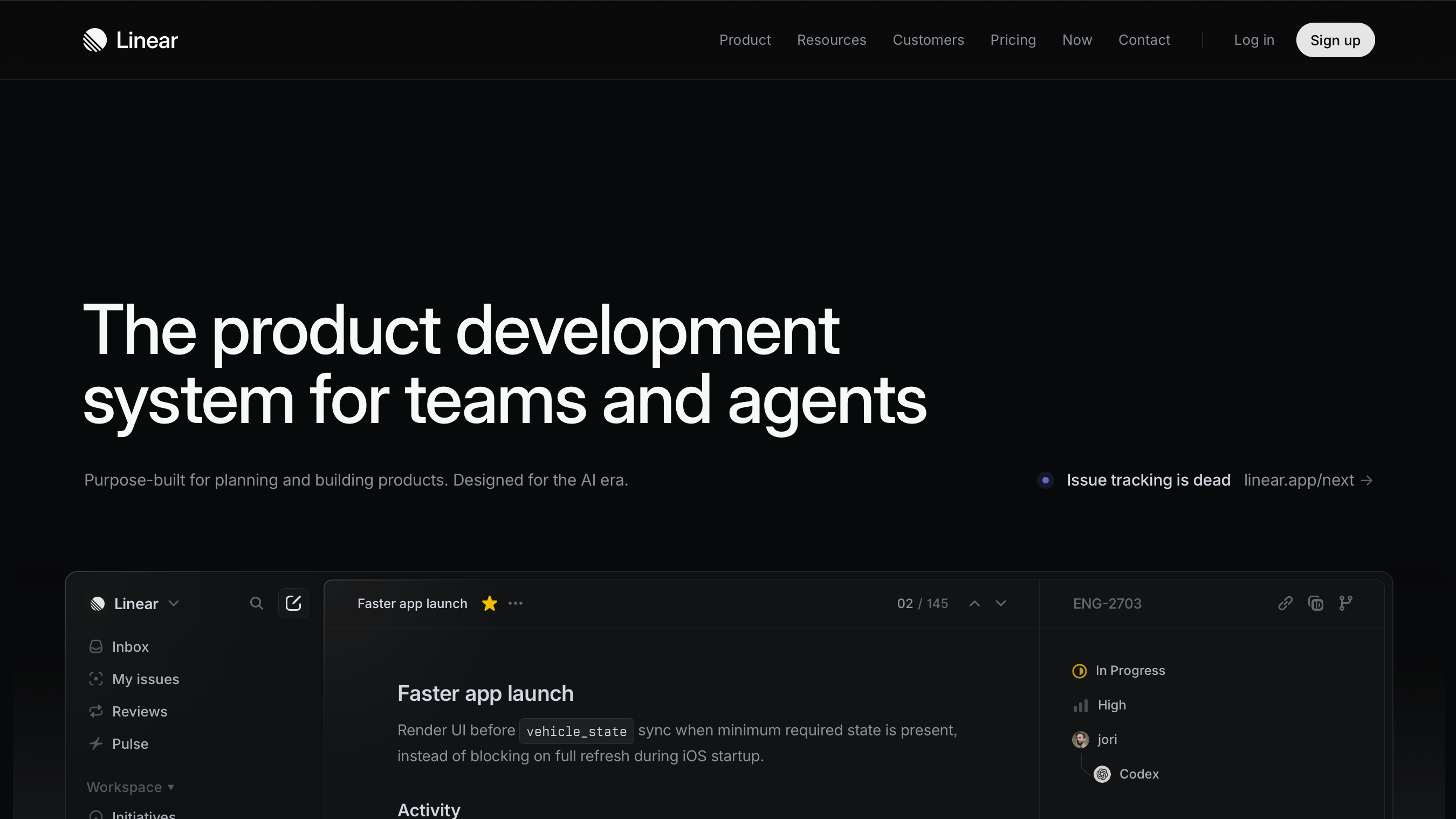
Linear’s website is built around simplicity and speed. It uses minimal design elements, allowing users to focus entirely on the product. The layout avoids unnecessary clutter, creating a smooth browsing experience.
Every interaction on the site feels intentional, from typography to animations. The performance is also a key highlight, with fast loading times across all pages. This reflects the product’s core philosophy of efficiency.
Reviews
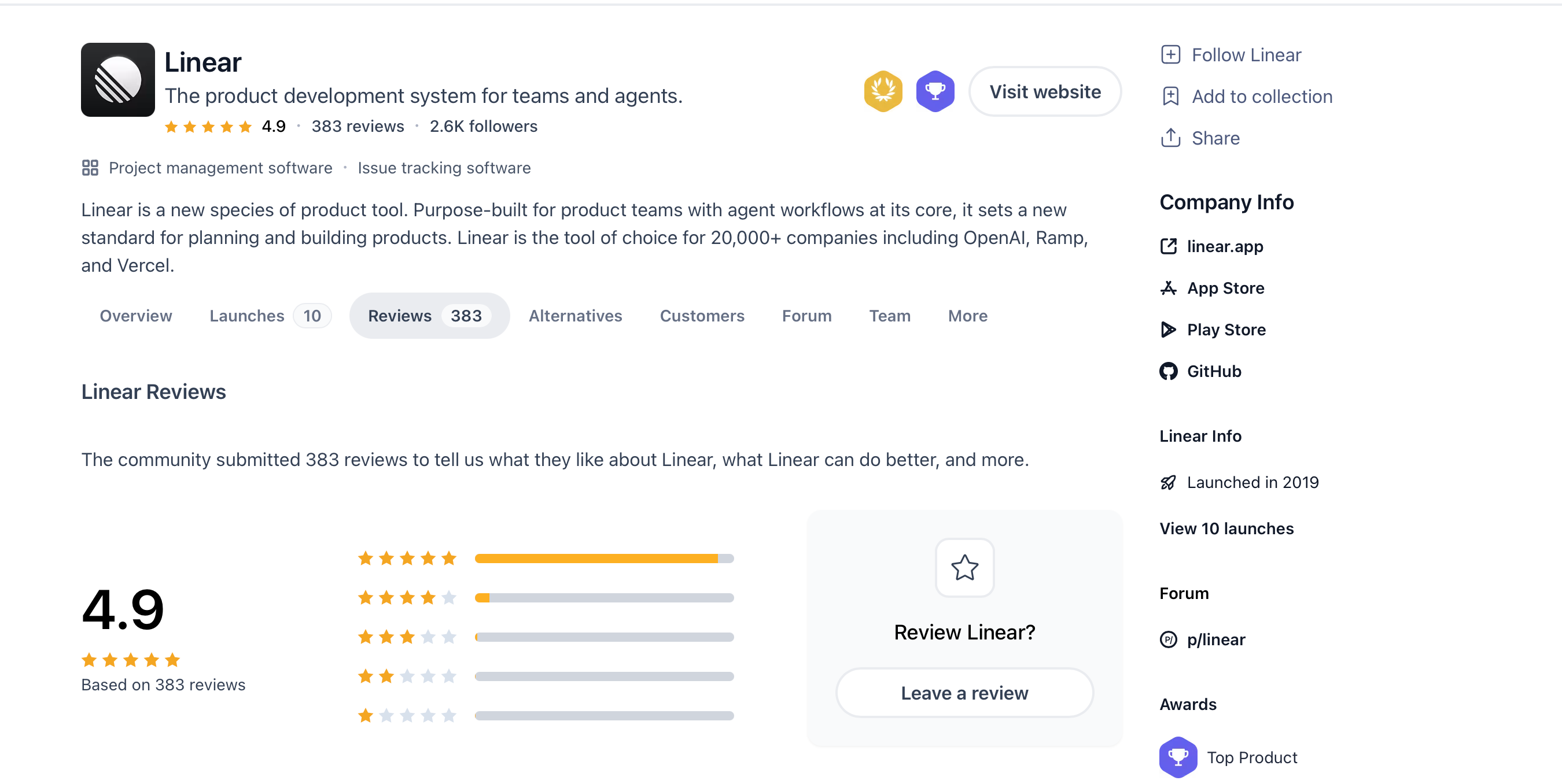
Users frequently praise Linear’s website for its clean design and fast performance. It is often referenced as one of the fastest SaaS websites available. Designers particularly appreciate the attention to detail and consistency.
Many reviews highlight how the minimal approach improves usability. The lack of distractions makes it easier to understand the product quickly. Overall, it is seen as a benchmark for modern minimal SaaS design.
Clients
Vercel
Cash App
Superhuman
Pros
Fast and responsive performance
Minimal and distraction-free design
Strong and consistent branding
Cons
Limited storytelling elements
Less suitable for beginners
Summary
Linear demonstrates how minimalism can lead to better performance and clarity. It proves that reducing complexity can improve user engagement. This makes it an ideal reference for startups focusing on speed and simplicity.
3. Vercel
Founders
Guillermo Rauch
Overview
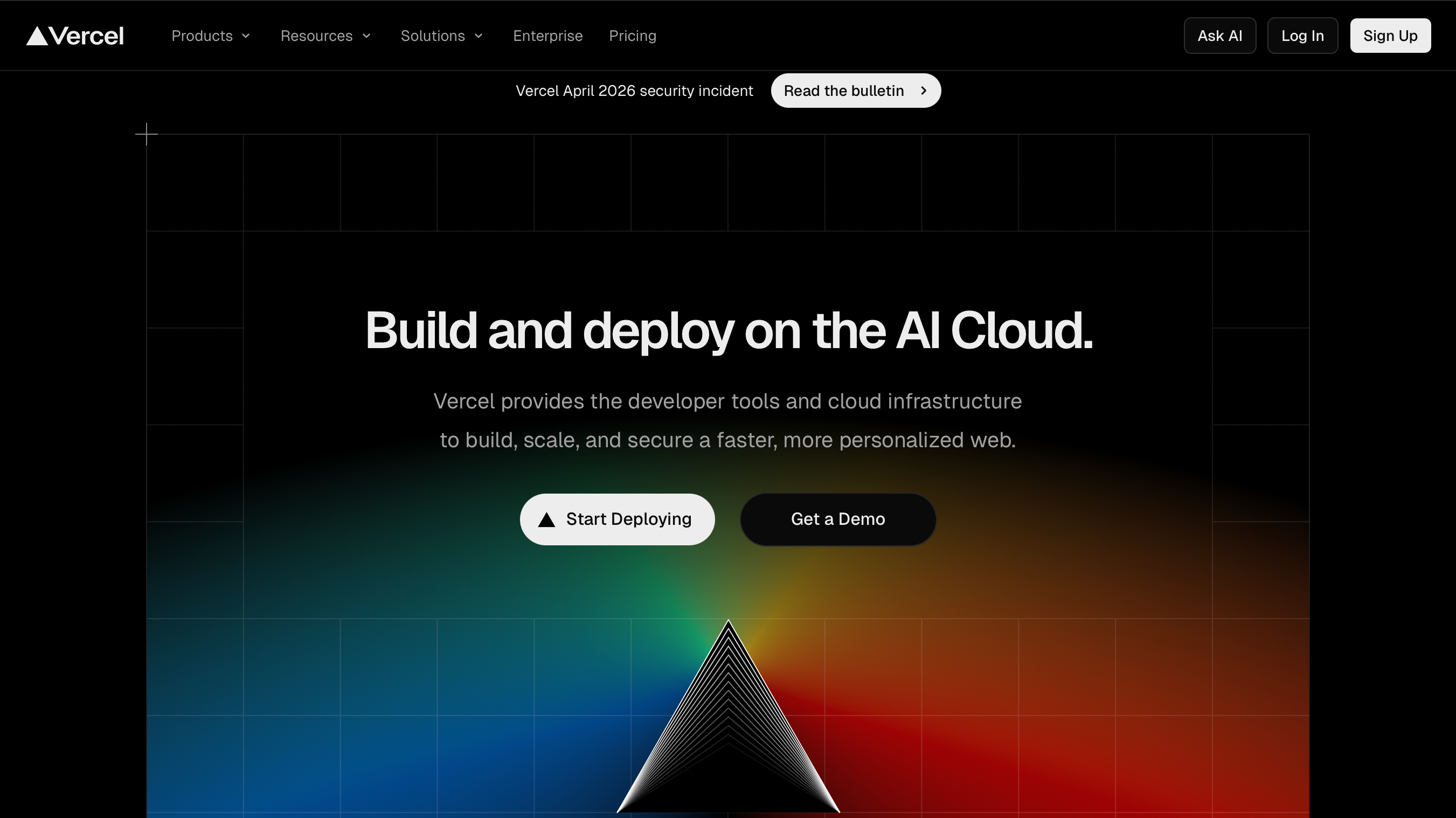
Vercel’s website is designed with developers as the primary audience. It presents technical information in a structured and easy-to-digest format. The layout is optimized for both product exploration and documentation.
Sanity CMS allows Vercel to manage large volumes of content efficiently. This includes documentation, product updates, and landing pages. The result is a seamless experience across different sections of the site.
Reviews
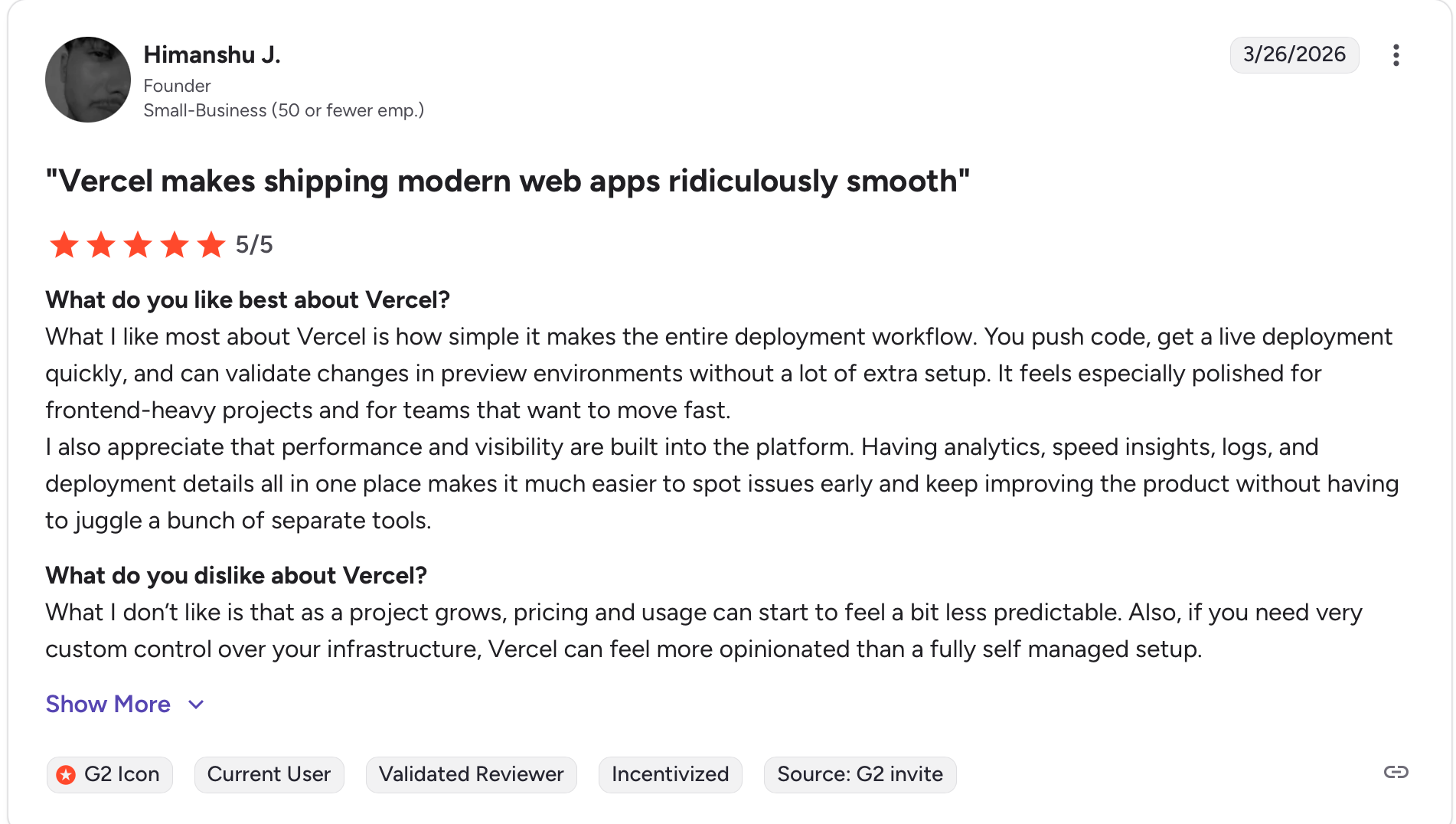
Developers consistently rate Vercel’s website highly for its clarity and performance. The site makes complex concepts easy to understand through structured content. It is also known for its fast loading speeds.
Many users appreciate the clean design combined with technical depth. Reviews often mention that it strikes a good balance between usability and functionality. It is widely regarded as a top-tier developer-focused website.
Clients
TikTok
Netflix
GitHub
Pros
Excellent performance and speed
Clear and structured documentation
Developer-friendly interface
Cons
Less appealing to non-technical users
Content can feel dense at times
Summary
Vercel is a strong example of a developer-first SaaS website. It shows how structured content can improve usability for technical audiences. Overall, it is ideal for platforms targeting developers and engineers.
4. Loom
Founders
Joe Thomas, Vinay Hiremath, Shahed Khan
Overview
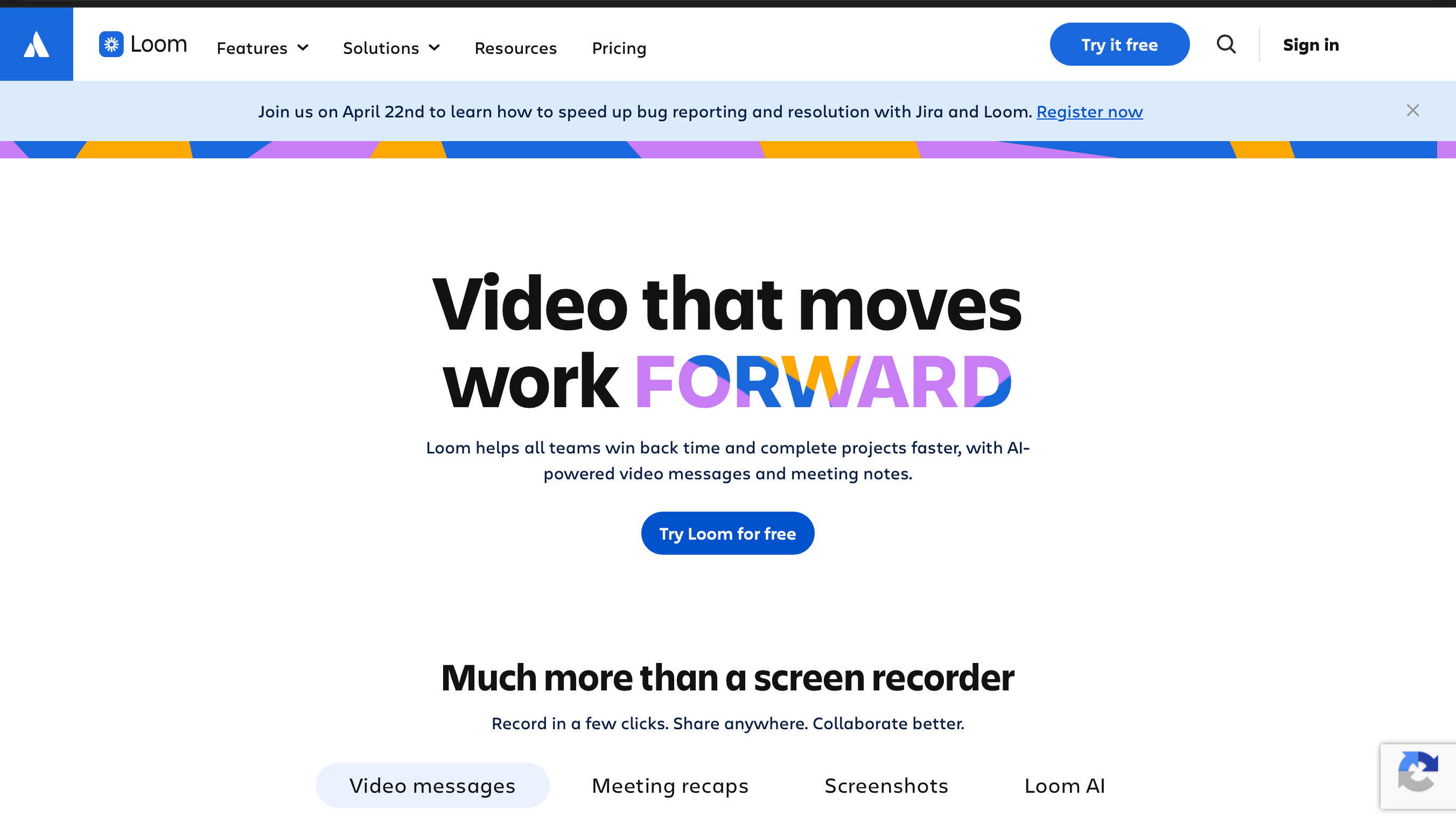
Loom’s website is designed to maximize conversions and user onboarding. It uses strong calls to action and clear messaging throughout the user journey. Video content plays a central role in demonstrating the product.
The layout guides users step-by-step, making it easy to understand the value proposition. Sanity CMS helps manage dynamic content such as videos and landing pages. This ensures consistency across marketing campaigns.
Reviews
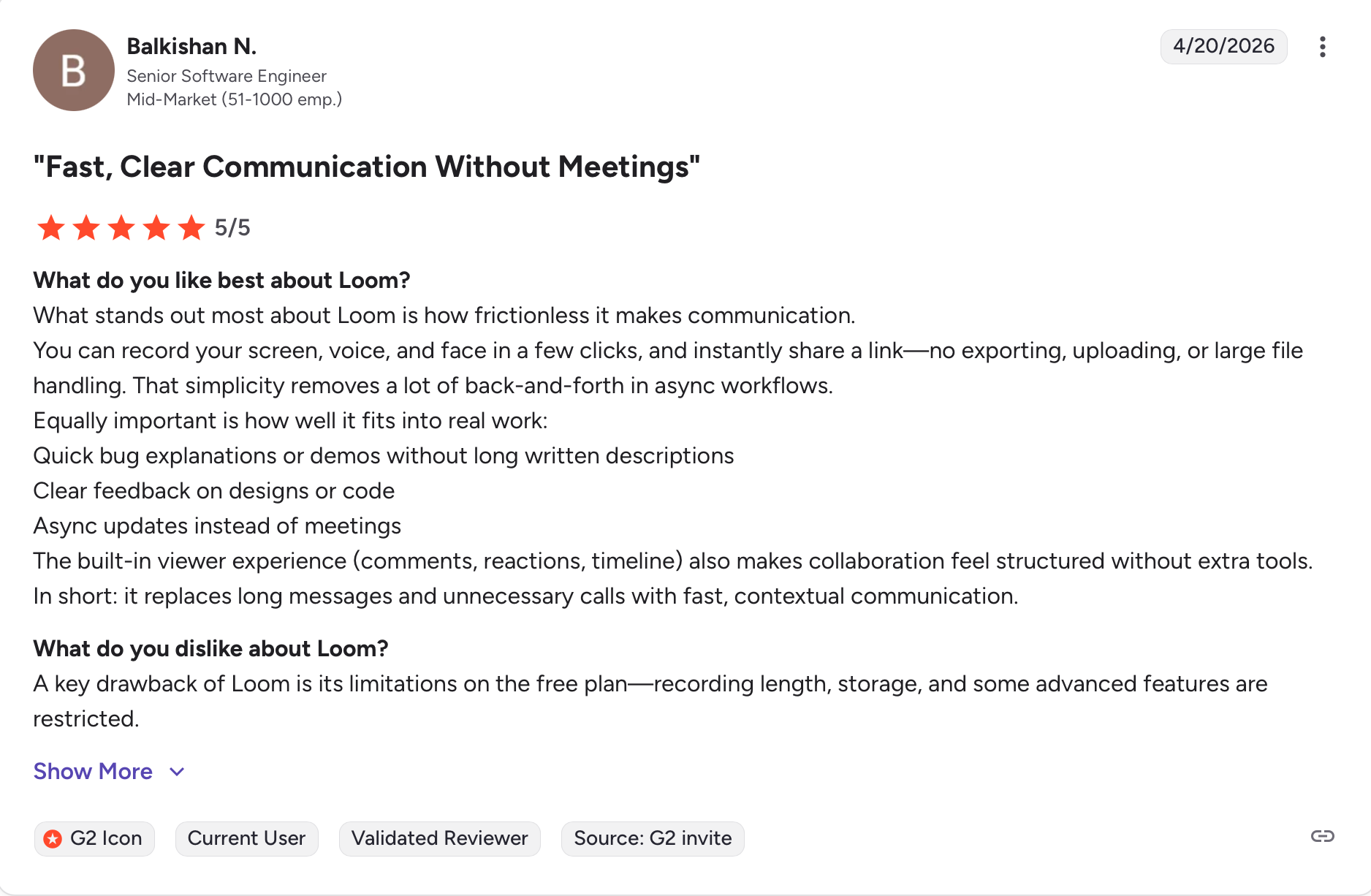
Users appreciate Loom’s straightforward messaging and intuitive layout. Many reviews highlight how easy it is to understand the product within minutes. The use of video is particularly effective.
The website is often praised for its conversion-focused design. It successfully balances information and action without overwhelming users. Overall, it is a strong example of SaaS marketing execution.
Clients
Atlassian
HubSpot
Netflix
Pros
Strong conversion-focused design
Effective use of video content
Clear and simple navigation
Cons
Repetitive layout structure
Limited visual uniqueness
Summary
Loom excels at guiding users from discovery to action. It shows how clear messaging and strong CTAs can improve conversions. This makes it a valuable reference for SaaS marketing teams.
5. Notion
Founders
Ivan Zhao
Overview
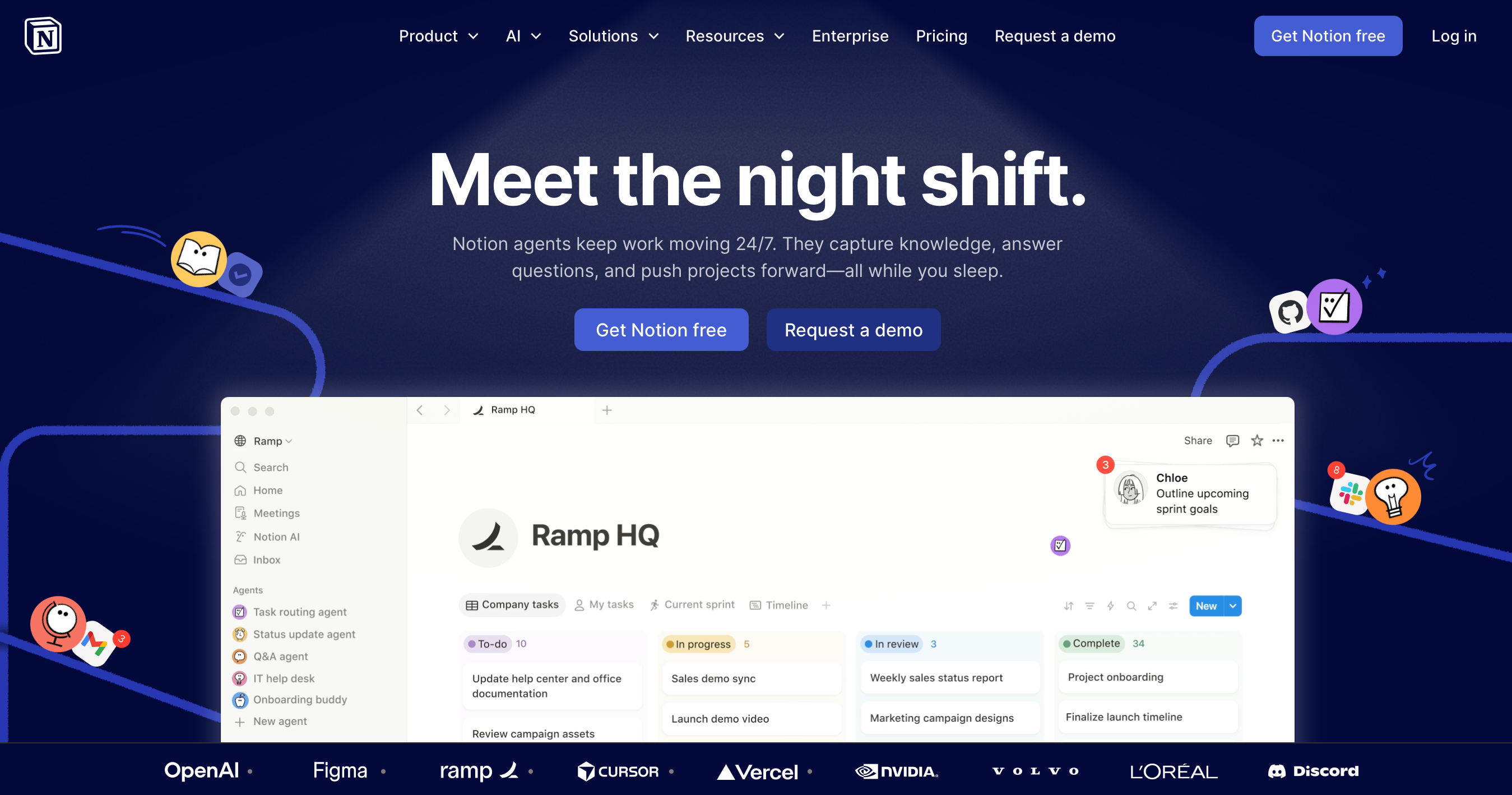
Notion’s website handles a large amount of content while maintaining clarity and organization. It uses a modular structure that reflects the product’s flexibility. This allows users to explore different use cases easily.
Sanity CMS enables scalable content management across multiple pages. The site supports different audiences, including individuals, teams, and enterprises. This makes it highly versatile.
Reviews
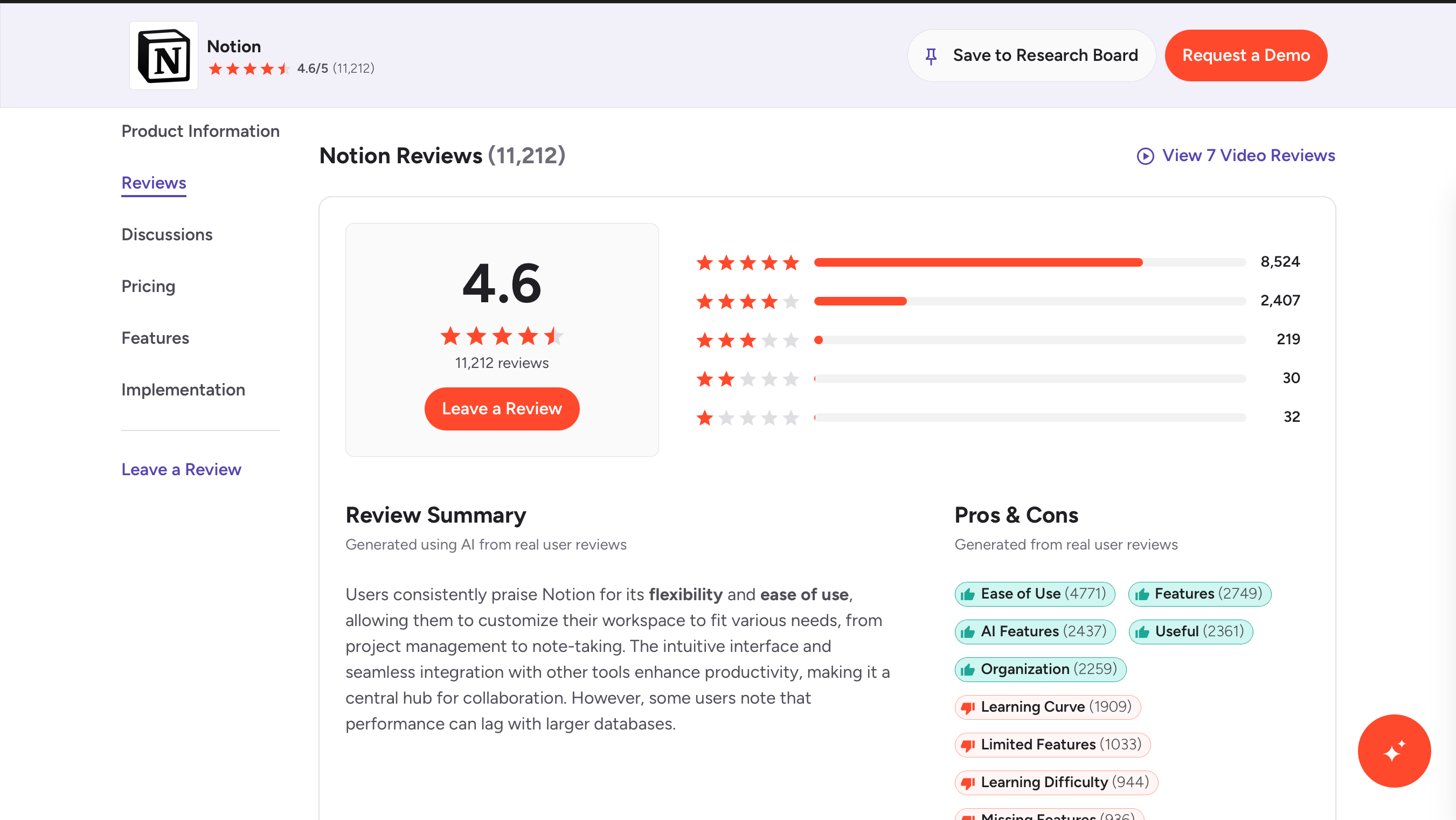
Notion’s website is widely praised for its structured content and usability. Users appreciate how it simplifies complex workflows. The layout makes it easy to navigate despite the large volume of information.
Many reviews highlight its clean design and flexibility. It is often used as a reference for content-heavy SaaS platforms. Overall, it performs well in both design and functionality.
Clients
Pixar
Spotify
Slack
Pros
Highly scalable content system
Clean and structured design
Flexible layout for multiple use cases
Cons
Can feel overwhelming initially
Deep navigation hierarchy
Summary
Notion demonstrates how to manage complex content effectively. It shows the importance of structure and clarity in large SaaS platforms. Overall, it is an excellent reference for content-driven products.
6. Raycast
Founders
Thomas Paul Mann, Petr Nikolaev
Overview
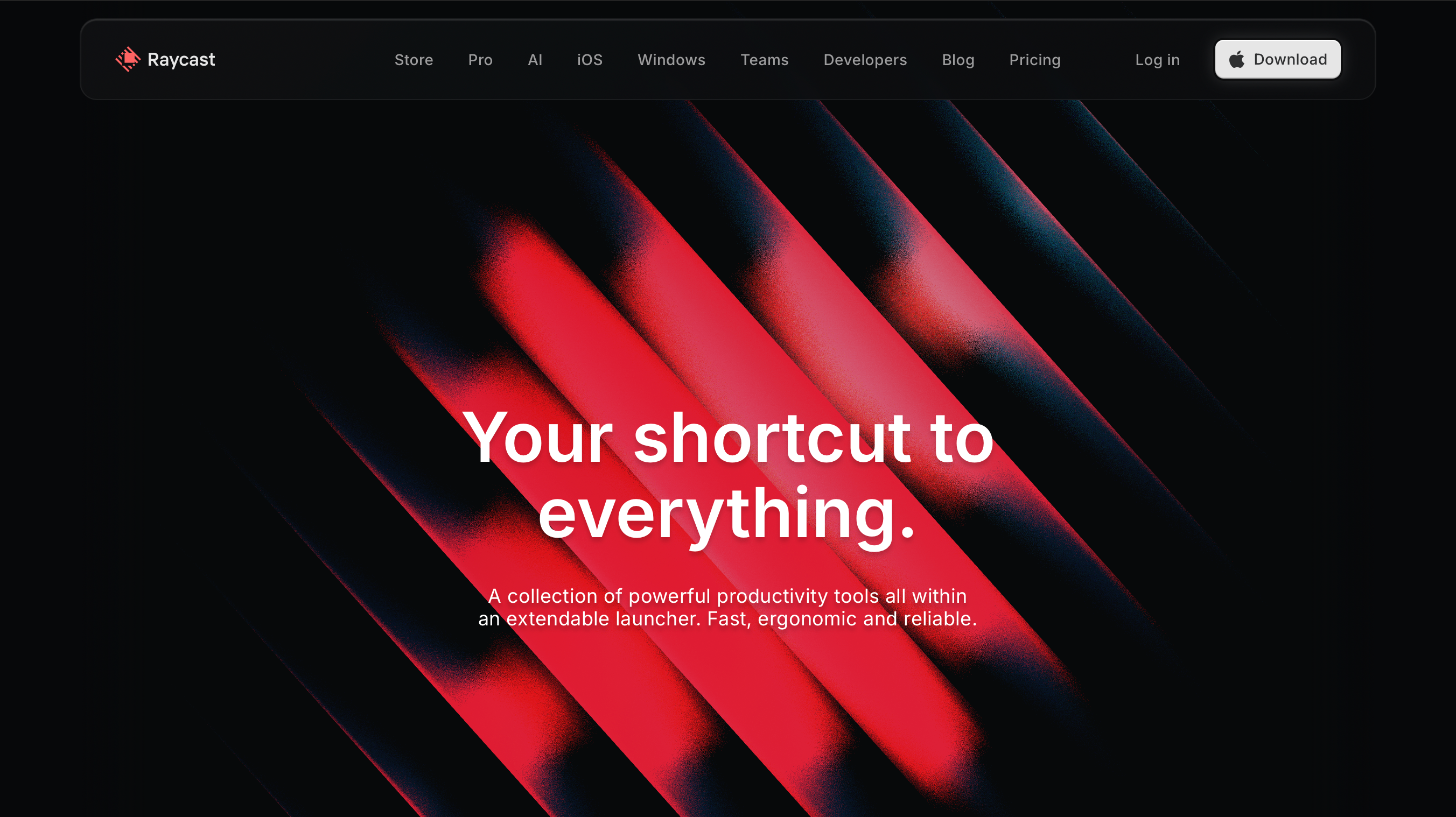
Raycast’s website focuses on delivering a premium and polished experience. The design aligns closely with its product, creating consistency across touchpoints. The interface is clean and modern.
The site uses smooth animations and strong visual hierarchy. Sanity CMS helps maintain consistency across updates. This ensures a seamless experience for users.
Reviews
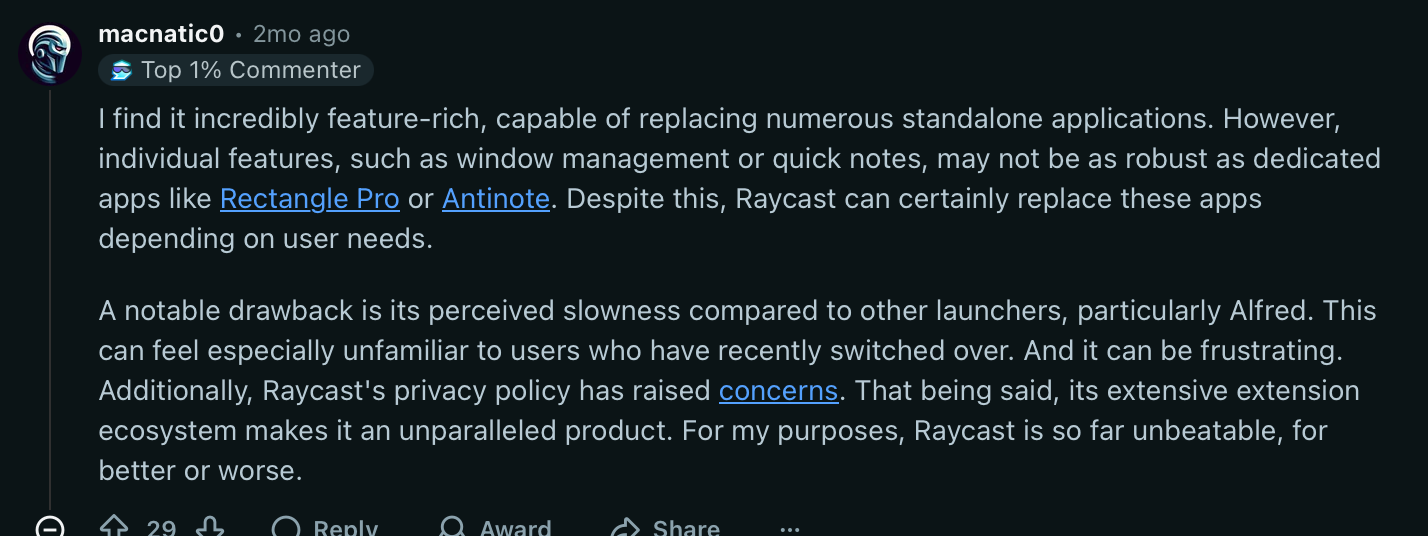
Users often praise Raycast’s website for its high-quality design and attention to detail. Many compare it to top-tier product websites in terms of visual polish. The interactions feel smooth and responsive.
The website is also appreciated for its simplicity and clarity. It communicates the product effectively without unnecessary complexity. Overall, it is well-regarded for its design quality.
Clients
Startups
Developers
Productivity users
Pros
Polished and modern design
Strong branding consistency
Smooth interactions
Cons
Limited audience scope
Less content depth
Summary
Raycast highlights the importance of design quality and branding. It shows how a polished interface can elevate user perception. This makes it a strong reference for premium SaaS products.
7. Sanity.io
Founders
Magnus Hillestad, Even Westvang
Overview
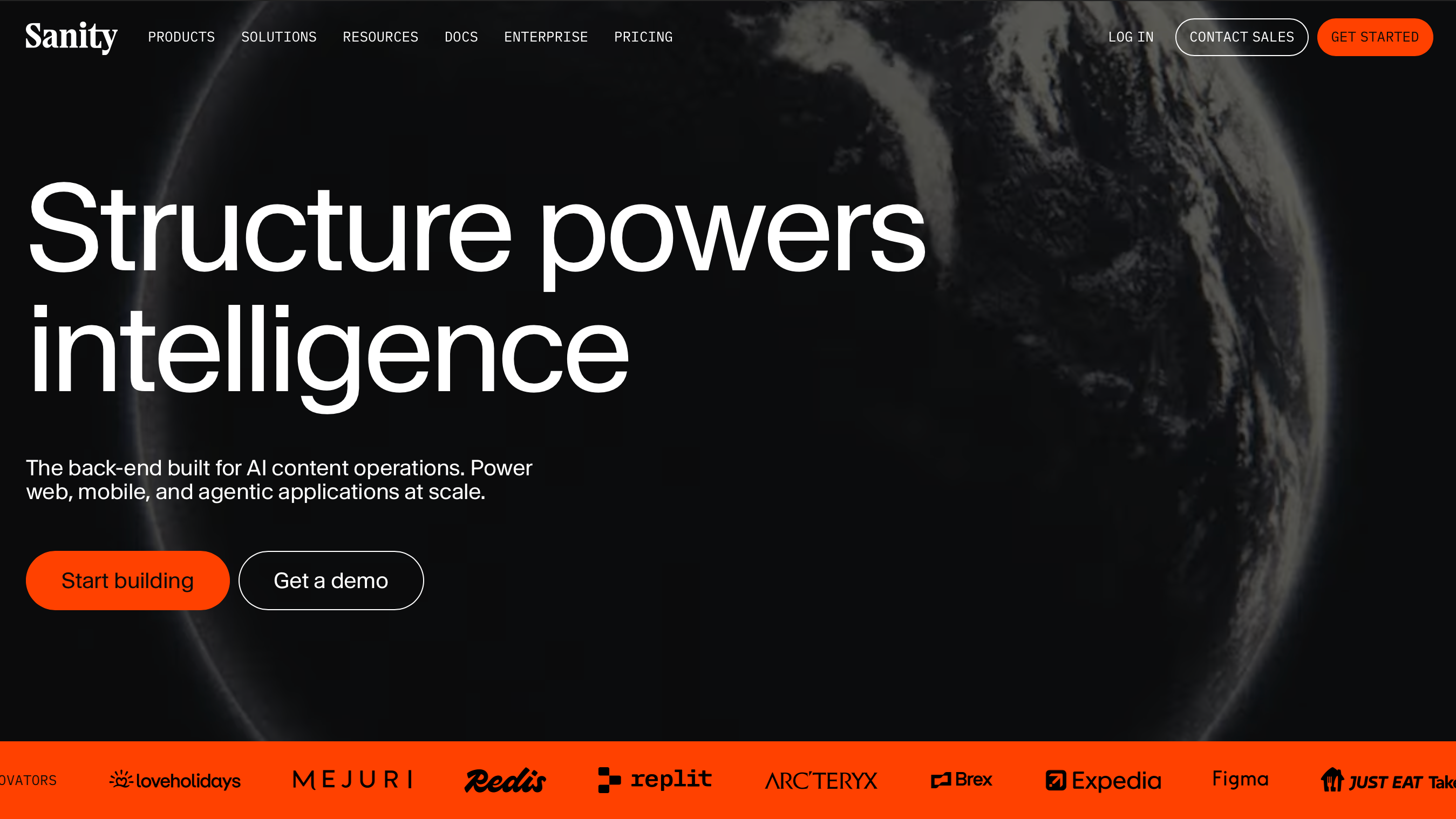
Sanity’s own website showcases the full capabilities of the platform. It includes real-time editing features, dynamic layouts, and detailed documentation. The design reflects its flexibility.
The website serves both as a marketing tool and a product demonstration. It highlights how structured content can power complex experiences. This makes it highly informative.
Reviews
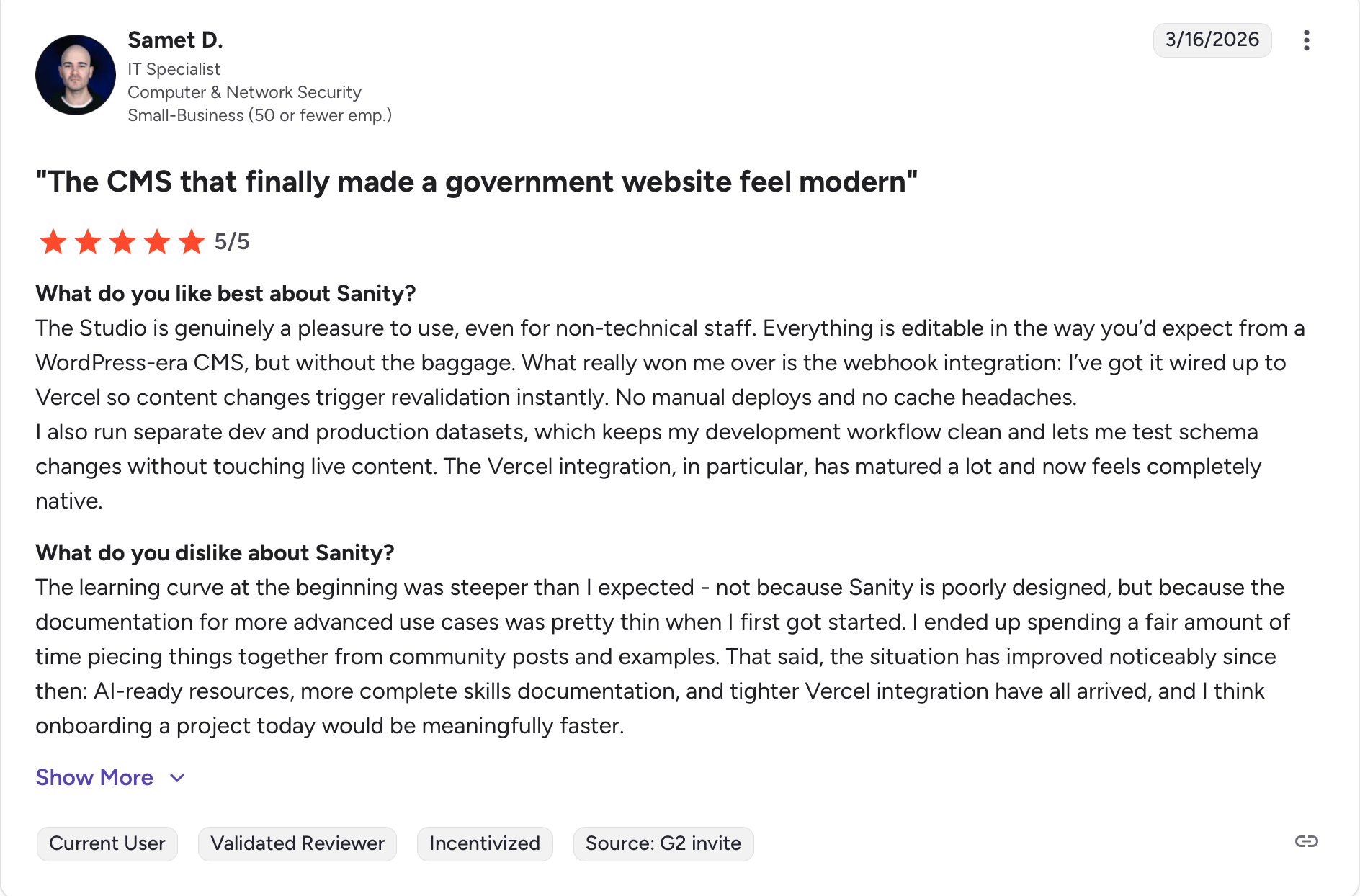
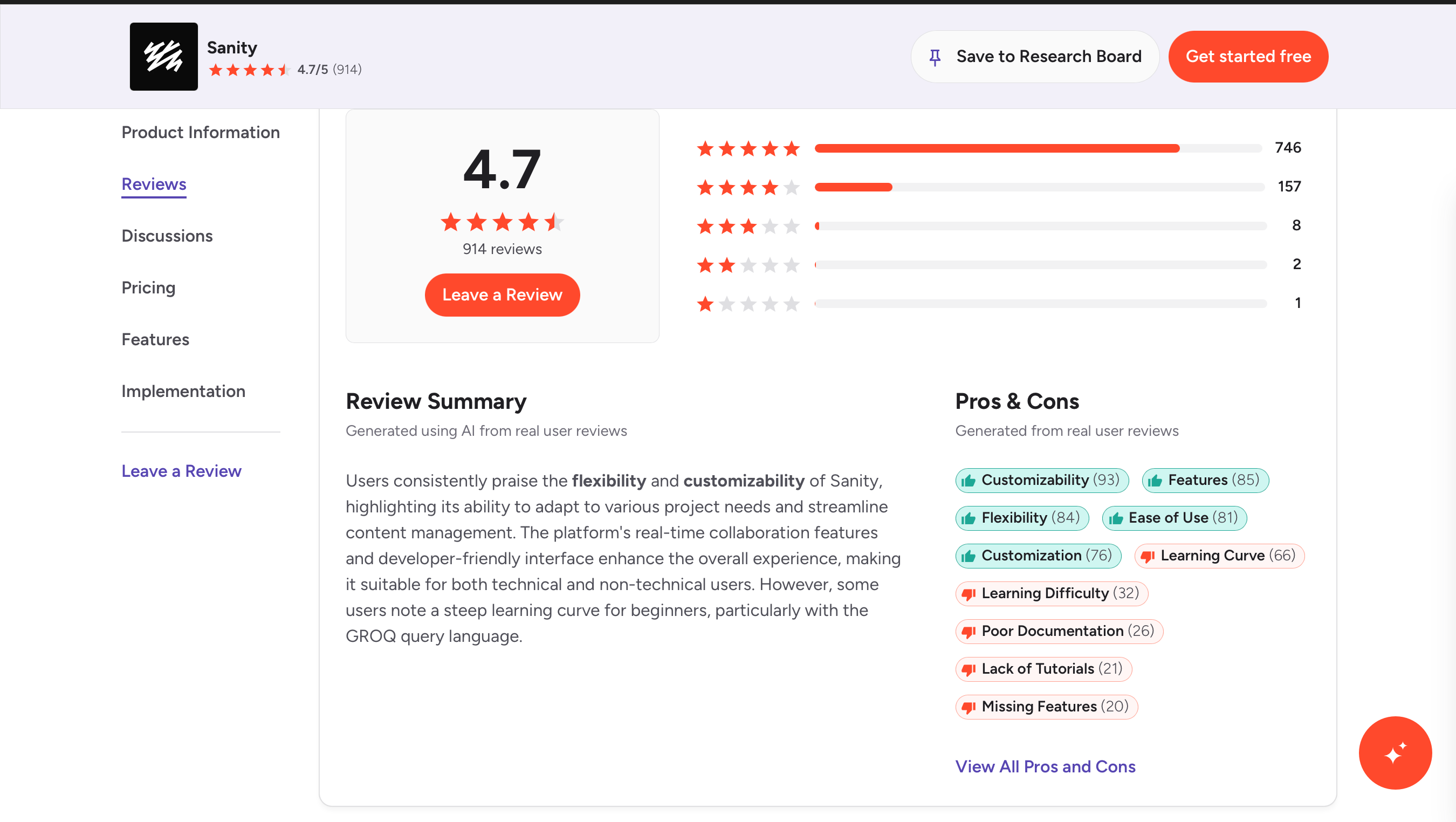
Sanity.io is highly rated for its innovation and flexibility. Developers appreciate the depth of documentation and features. Content teams also value its real-time editing capabilities.The website is often referenced as a benchmark for headless CMS platforms. It effectively demonstrates what the product can achieve. Overall, it is both functional and inspiring.
Clients
Nike
Sonos
National Geographic
Pros
Showcases platform capabilities
Flexible and scalable design
Strong developer resources
Cons
Complex for beginners
Information-heavy
Summary
Sanity.io serves as both a product showcase and a learning resource. It demonstrates the full potential of headless CMS architecture. Overall, it is essential inspiration for teams using Sanity.
How to Choose the Right Sanity CMS Website Inspiration
Choosing the right inspiration depends on your product goals, audience, and content needs. Different SaaS websites focus on different strengths such as performance, storytelling, or scalability. Understanding these differences is key.
If your focus is conversions, Loom is a strong example. For minimal and fast experiences, Linear is ideal. For content-heavy platforms, Notion provides a great reference.
You should also evaluate factors like performance, content structure, scalability, and user experience. These elements determine how effective your website will be in the long run.
Conclusion
Sanity CMS enables SaaS companies to build flexible, scalable, and high-performing websites. The examples in this list highlight how different brands use structured content to create engaging user experiences. Each website reflects a unique approach to design and functionality.
Common patterns across these websites include modular content systems, clear UI design, and performance optimization. These elements are critical for modern SaaS platforms. They ensure both usability and scalability.
As seen in curated inspiration collections , the best websites are those that align design with business goals. By studying these examples, teams can build more effective and future-ready SaaS experiences.
Struggling to choose the right Headless CMS & Headless Commerce tech stack? We’ll help you pick the best solution for your business! Exclusive Offer: 20 Hours of Free Development & Consultation
Book a MeetingFrequently Asked Questions
Sanity CMS is used to manage structured content for websites and applications. It is especially useful for headless architectures where flexibility and scalability are important.
Yes, Sanity is ideal for SaaS websites because it allows teams to create custom content models. This improves scalability and performance.
Yes, some technical knowledge is required, especially during the initial setup. However, content teams can use it easily once configured.
For modern applications, Sanity offers more flexibility and customization. Traditional CMS platforms may be easier to start with but are less scalable.