

Words that inspire, ideas that spark,
stories that stay
Best Alternatives to Sylius (2026)
V. Srinidhi Reddy
Thursday, April 23rd, 20267 min read
Table of content
Best Alternatives to Sylius (2026)
Introduction
Sylius is widely known for its flexibility and developer-friendly architecture. Built on Symfony, it is particularly popular among mid-sized and enterprise businesses that need highly customized ecommerce solutions. However, it requires strong technical expertise and has a smaller ecosystem compared to other platforms. (Nasio Themes)
As ecommerce evolves in 2026, many businesses are exploring alternatives that offer better scalability, easier implementation, or modern architectures like headless and composable commerce. Companies now prioritize speed, integrations, and omnichannel capabilities over heavy customization.
According to platform comparisons, popular alternatives include Shopify, BigCommerce, WooCommerce, and modern headless solutions like Medusa and Saleor. (G2)
In this guide, we break down the best Sylius alternatives based on use case, flexibility, and scalability.
TL;DR
|
Platform |
Best For |
Key Highlight |
|
Shopify |
All-in-one ecommerce |
Easy setup + scalability |
|
Shopware |
Enterprise + flexibility |
Composable commerce |
|
Medusa |
Open-source headless |
Developer-first architecture |
|
BigCommerce |
Scaling brands |
Built-in features |
|
Saleor |
Modern headless |
GraphQL + performance |
1. Shopify
Overview
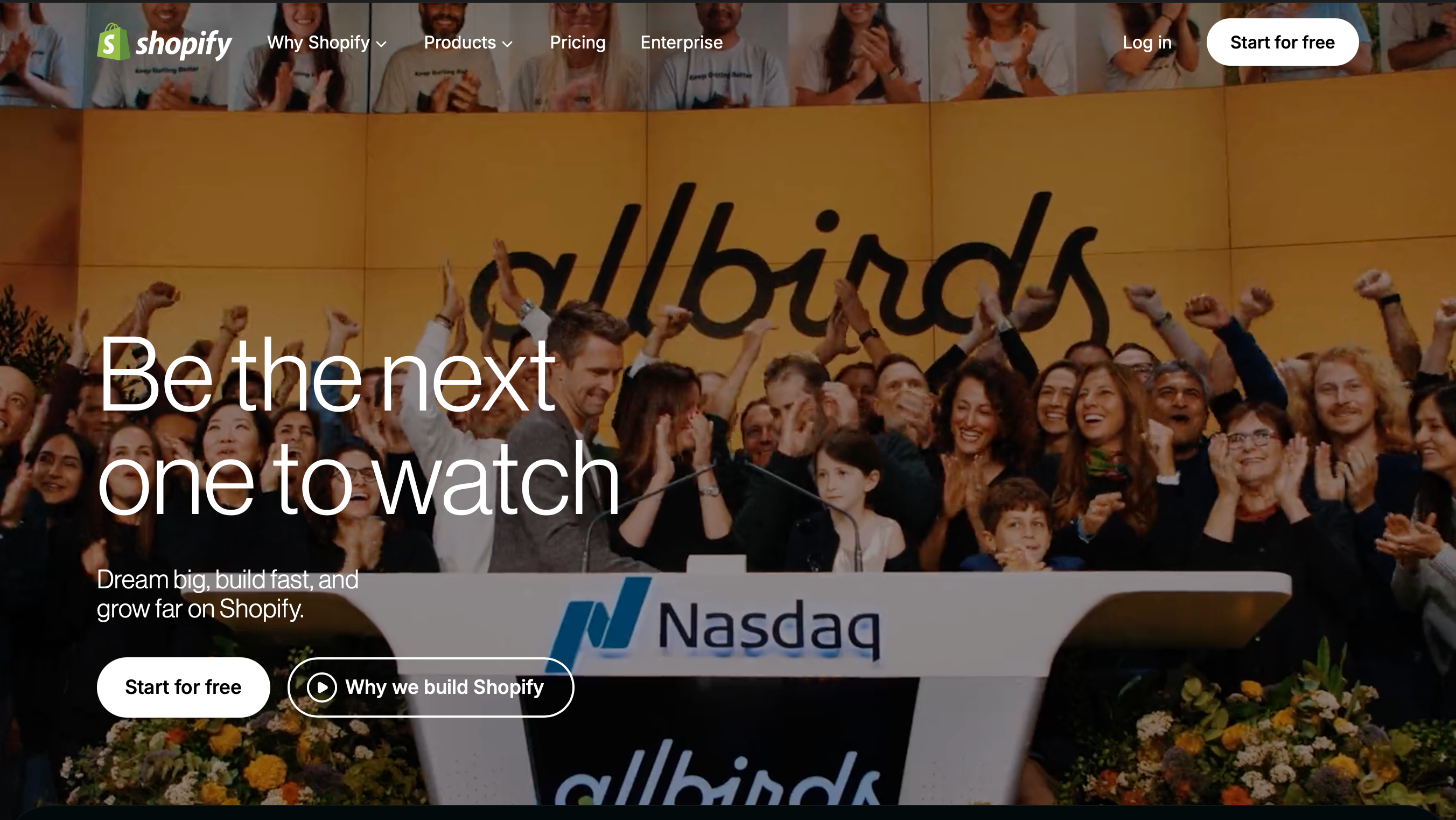
Shopify is the most widely adopted ecommerce platform globally and one of the easiest alternatives to Sylius. It is a fully hosted SaaS solution, meaning businesses do not need to manage infrastructure or backend complexity. This makes it highly accessible for both startups and large brands.
The platform offers built-in features for payments, inventory, marketing, and analytics. It also supports headless commerce through Shopify Hydrogen, allowing developers to build custom storefronts while using Shopify’s backend.
Reviews
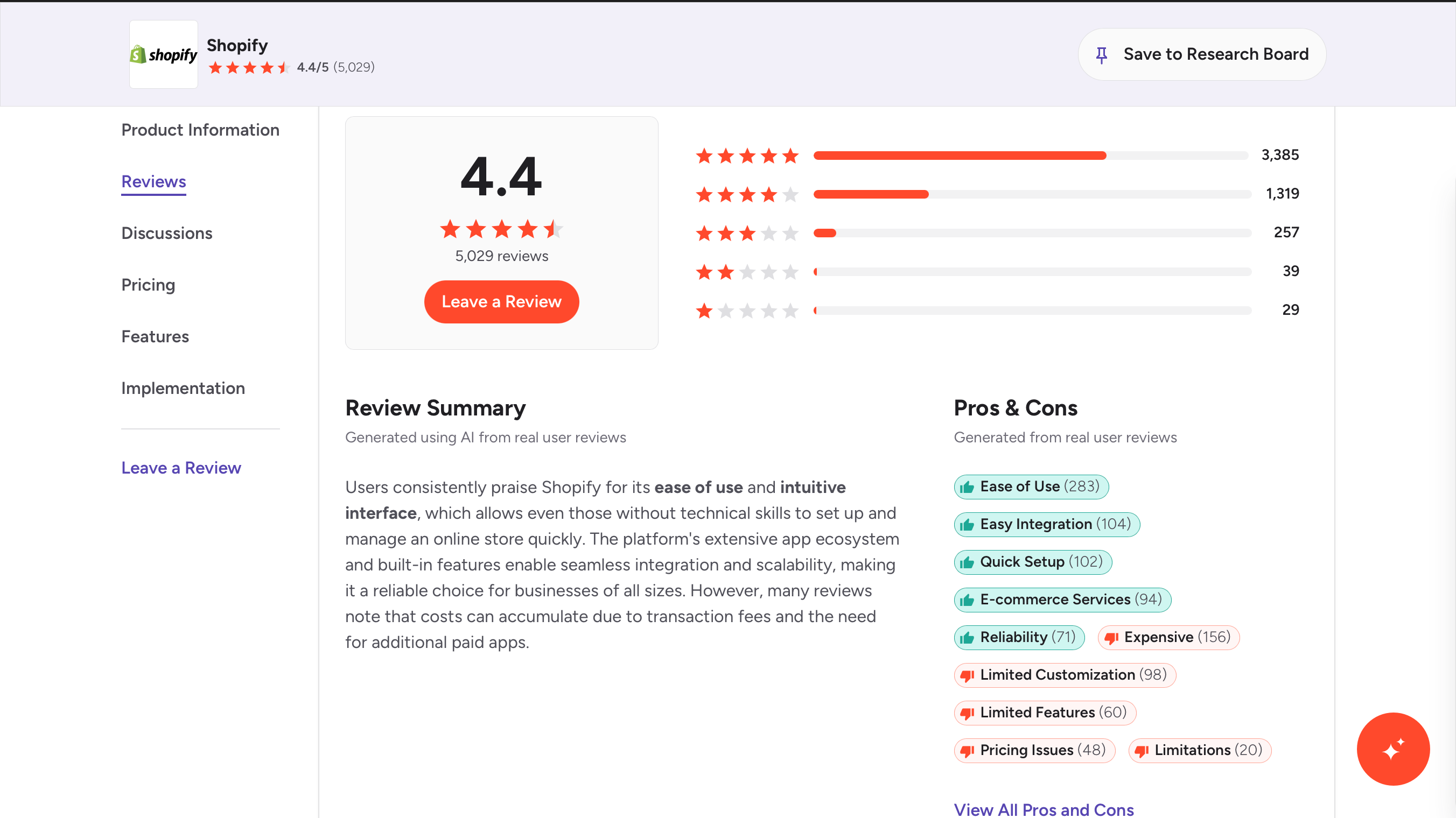
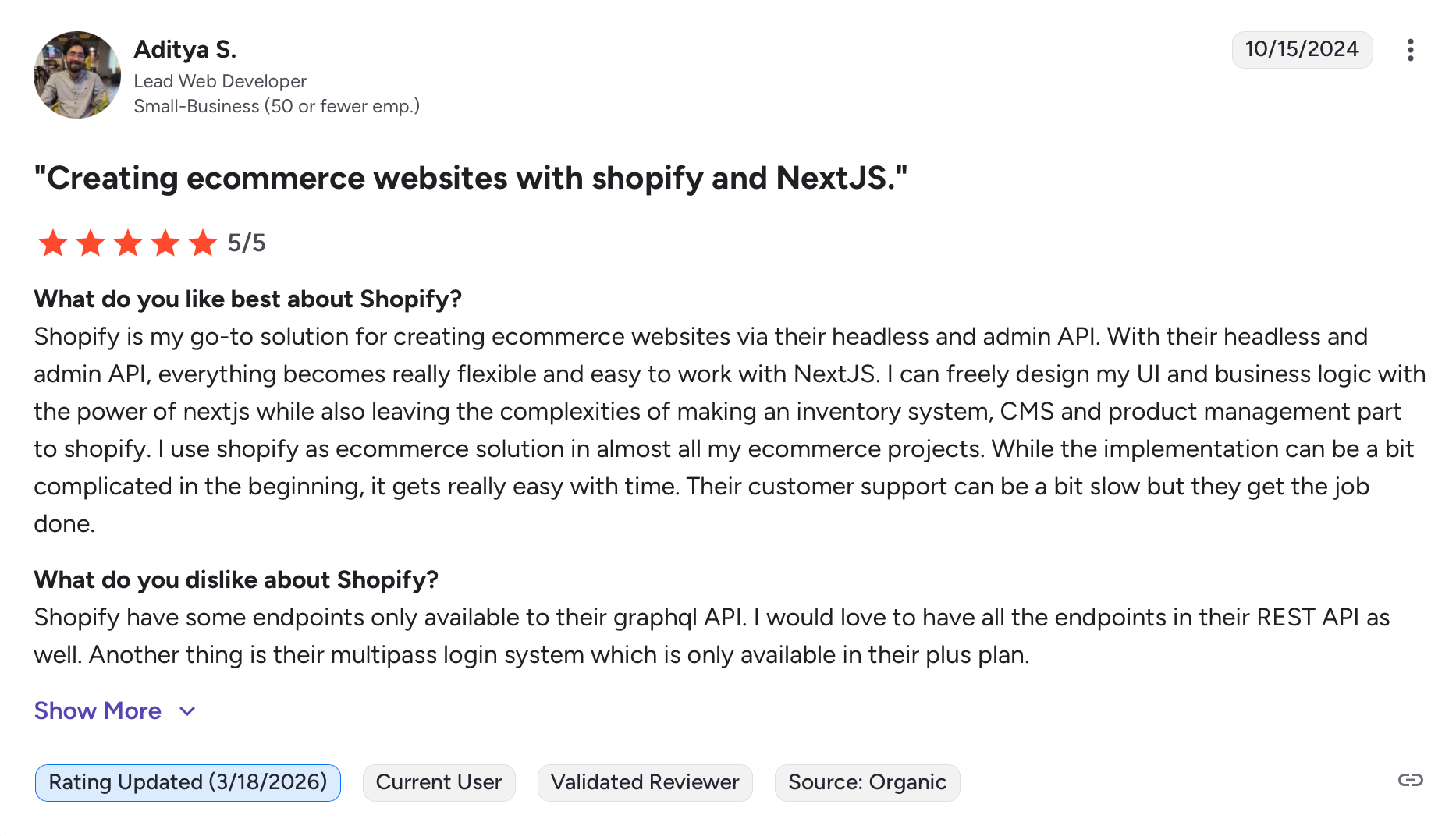
Shopify is consistently rated as the best overall ecommerce platform due to its ease of use and scalability. Many businesses choose it because it reduces development time and operational overhead.
Some users note limitations in deep customization compared to open-source platforms. Despite this, it remains the top choice for most ecommerce businesses.
Pros
Easy to use and deploy
Highly scalable
Large app ecosystem
Cons
Monthly costs
Limited backend flexibility
Summary
Shopify is the best alternative for businesses that want simplicity and scalability. It removes technical complexity while still supporting growth. Overall, it is ideal for most ecommerce use cases.
2. Shopware
Overview
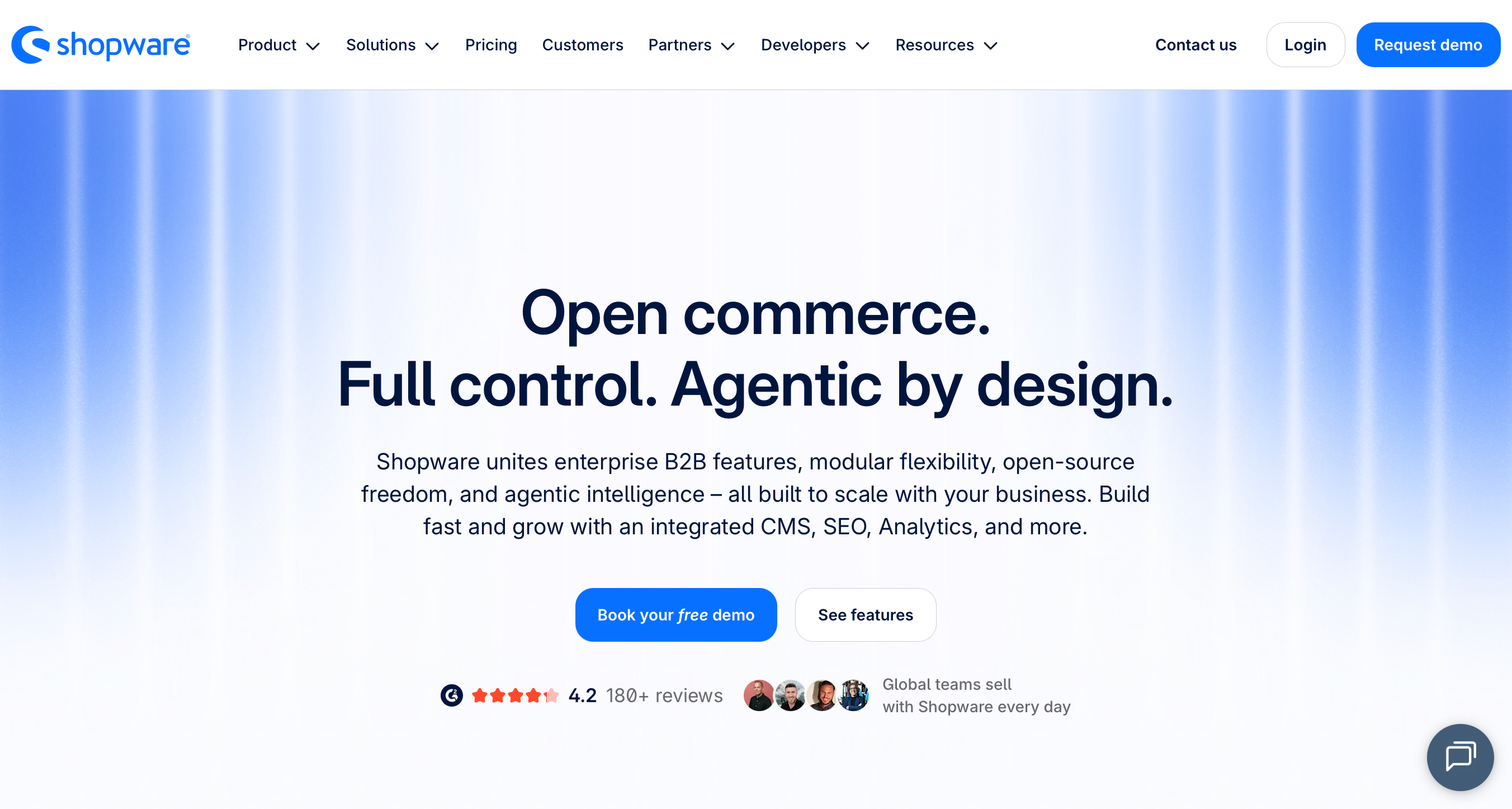
Shopware is a powerful open-source ecommerce platform that combines flexibility with enterprise features. It is often compared directly with Sylius due to its modular architecture and composable commerce approach.
The platform supports both traditional and headless setups. It includes built-in tools for B2B, multi-channel selling, and advanced customization.
Reviews
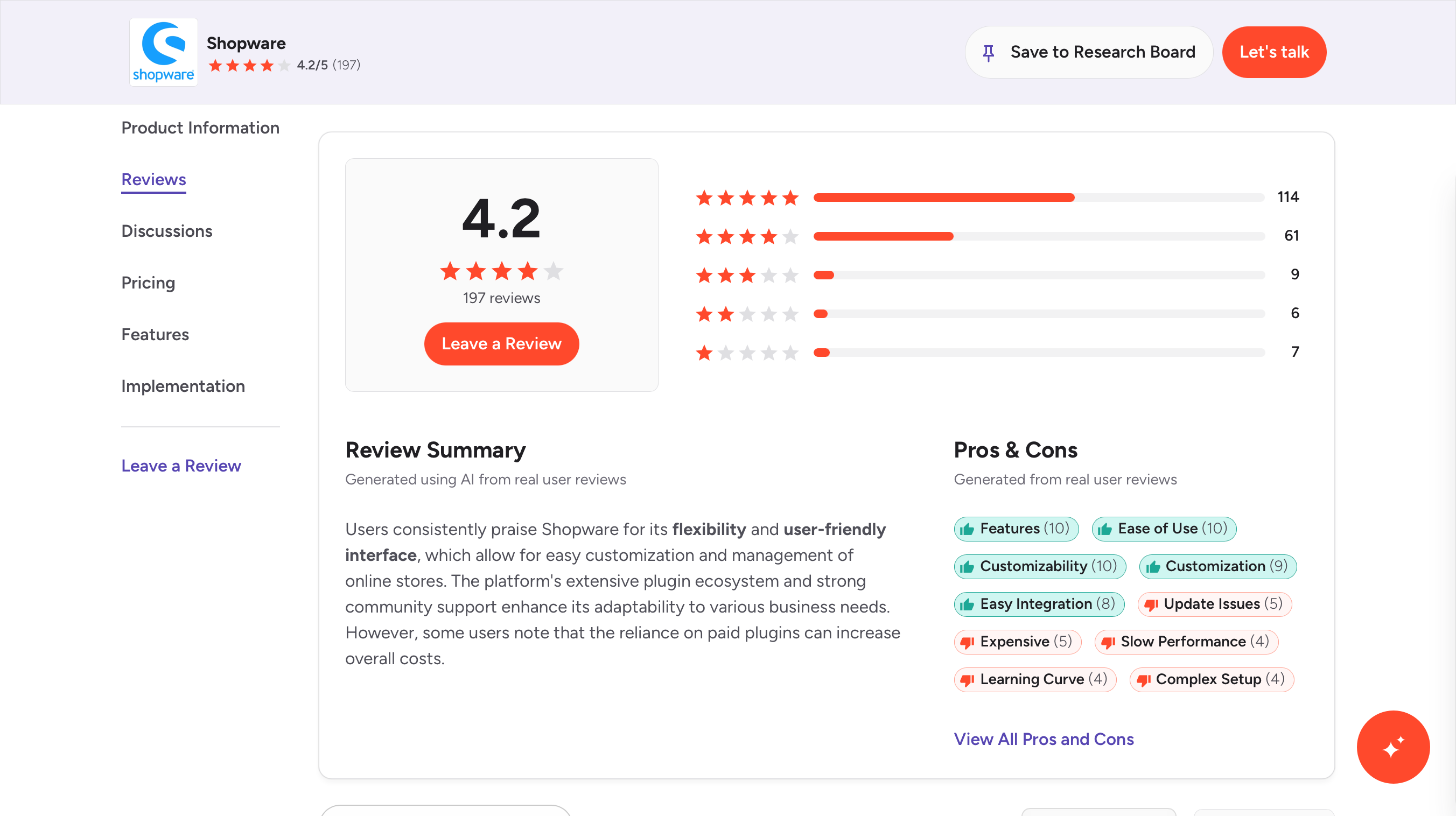
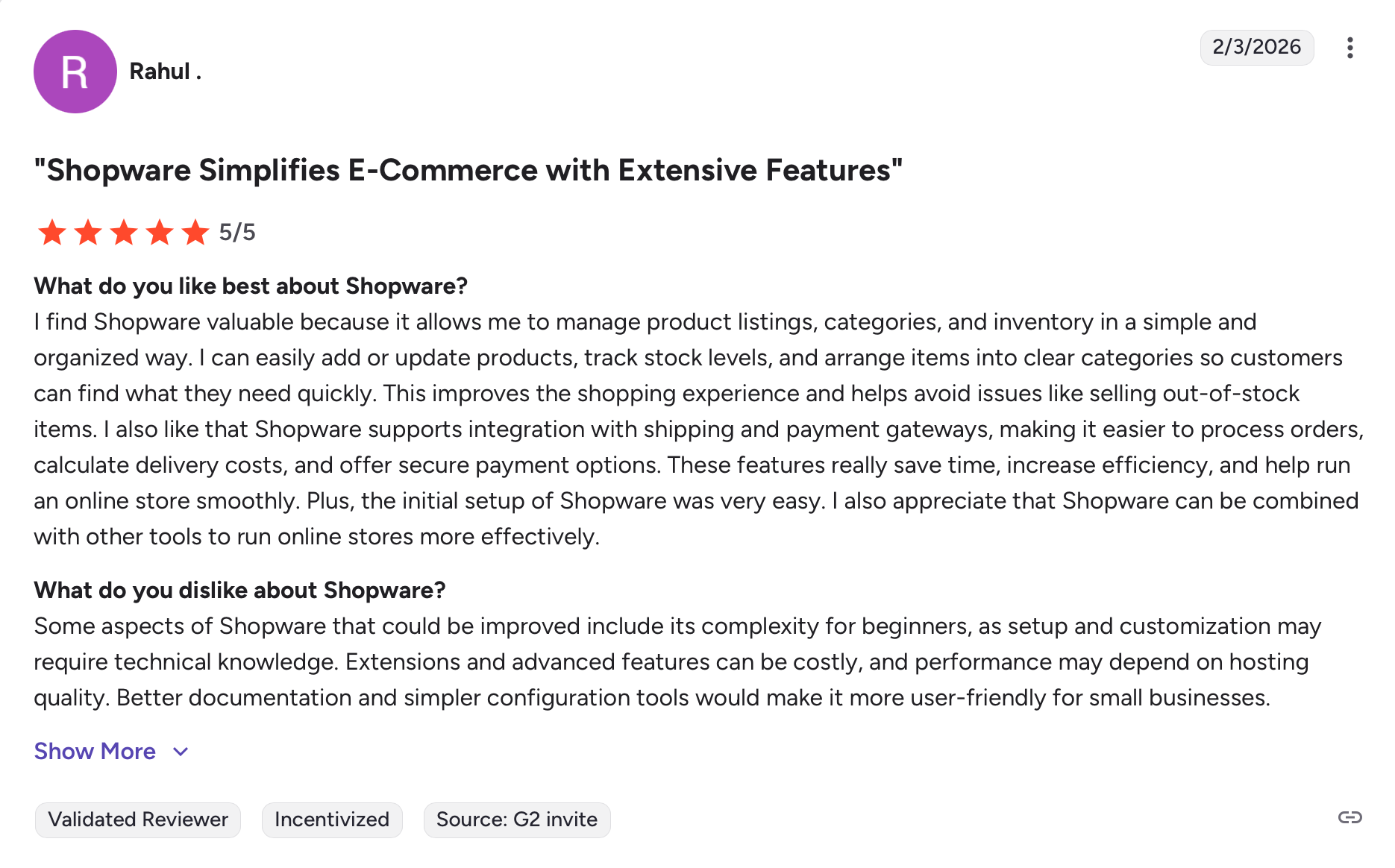
Shopware is praised for its balance between flexibility and usability. Many businesses prefer it over Sylius because it offers more out-of-the-box features. It is widely used in Europe and growing globally.
However, it still requires technical expertise for advanced implementations. Overall, it is a strong alternative for enterprise ecommerce.
Pros
Composable architecture
Strong built-in features
Flexible deployment
Cons
Requires development resources
Smaller ecosystem than Shopify
Summary
Shopware is ideal for businesses that want flexibility without starting from scratch. It offers a balance between customization and usability. Overall, it is a strong Sylius alternative for enterprise teams.
3. Medusa
Overview
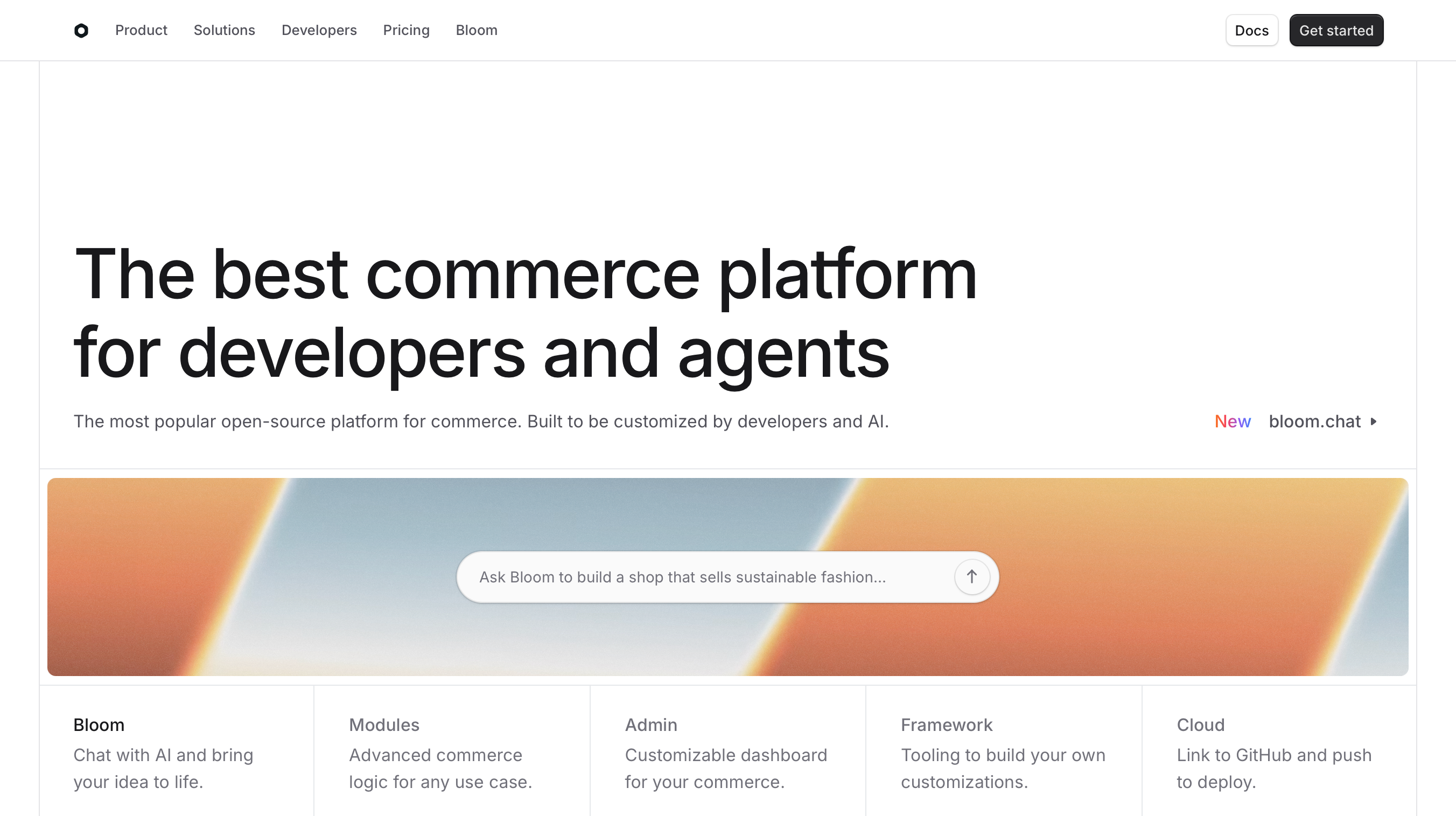
Medusa is a modern open-source headless ecommerce platform built with Node.js. It focuses on flexibility, speed, and developer experience. Like Sylius, it allows full customization but with a more modern tech stack.
The platform provides APIs for product management, carts, and orders. It integrates easily with third-party tools and frontend frameworks.
Developer & Open Source Ecosystem
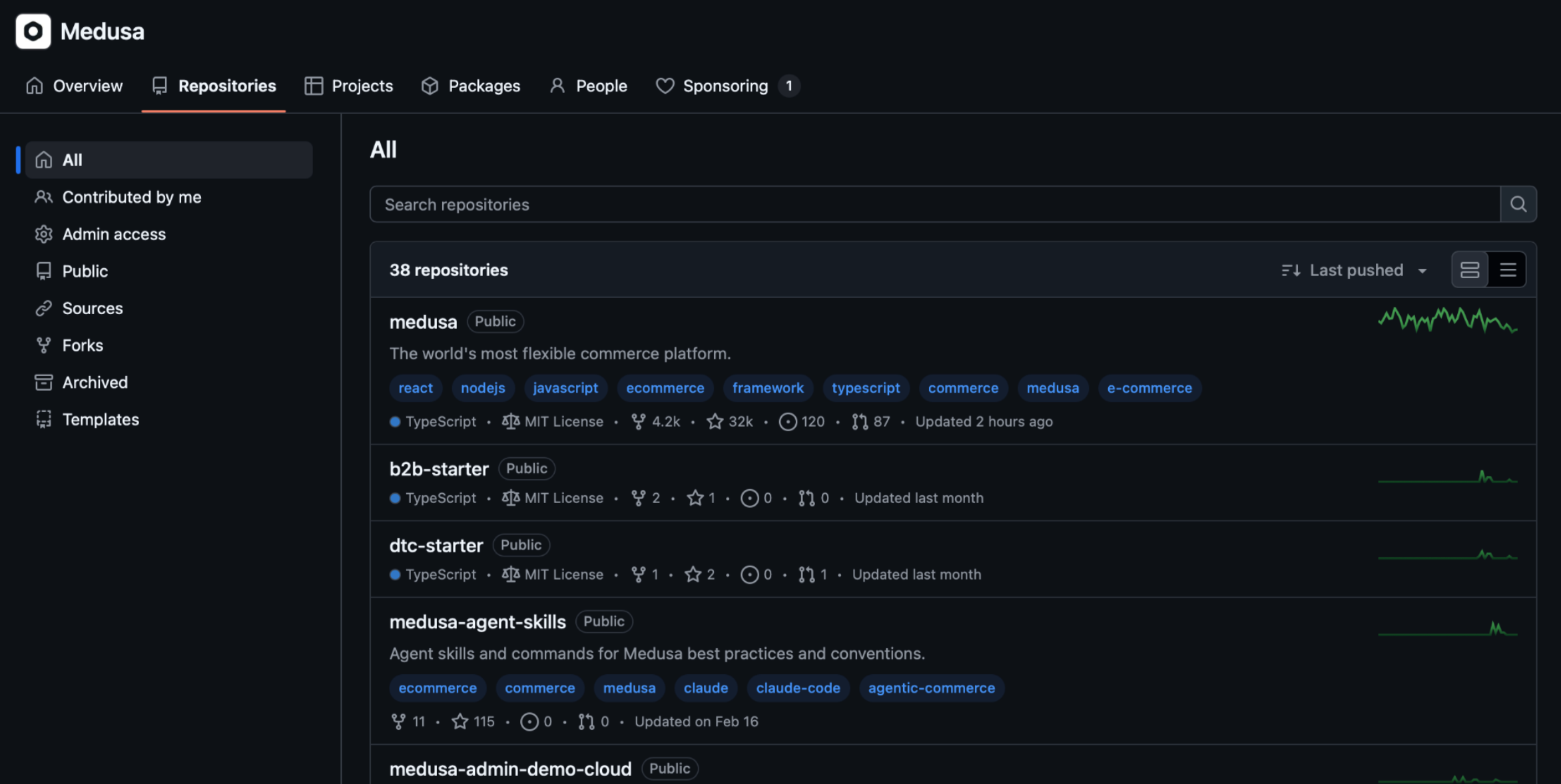
Medusa is fully open source and actively maintained.
-
GitHub: 18k+ stars (rapidly growing)
-
Fully customizable backend with plugin architecture
-
Extensive API support for custom storefronts
-
Active contributor community and frequent updates
This makes it ideal for teams that want complete ownership of their commerce stack rather than relying on closed SaaS systems.
Reviews
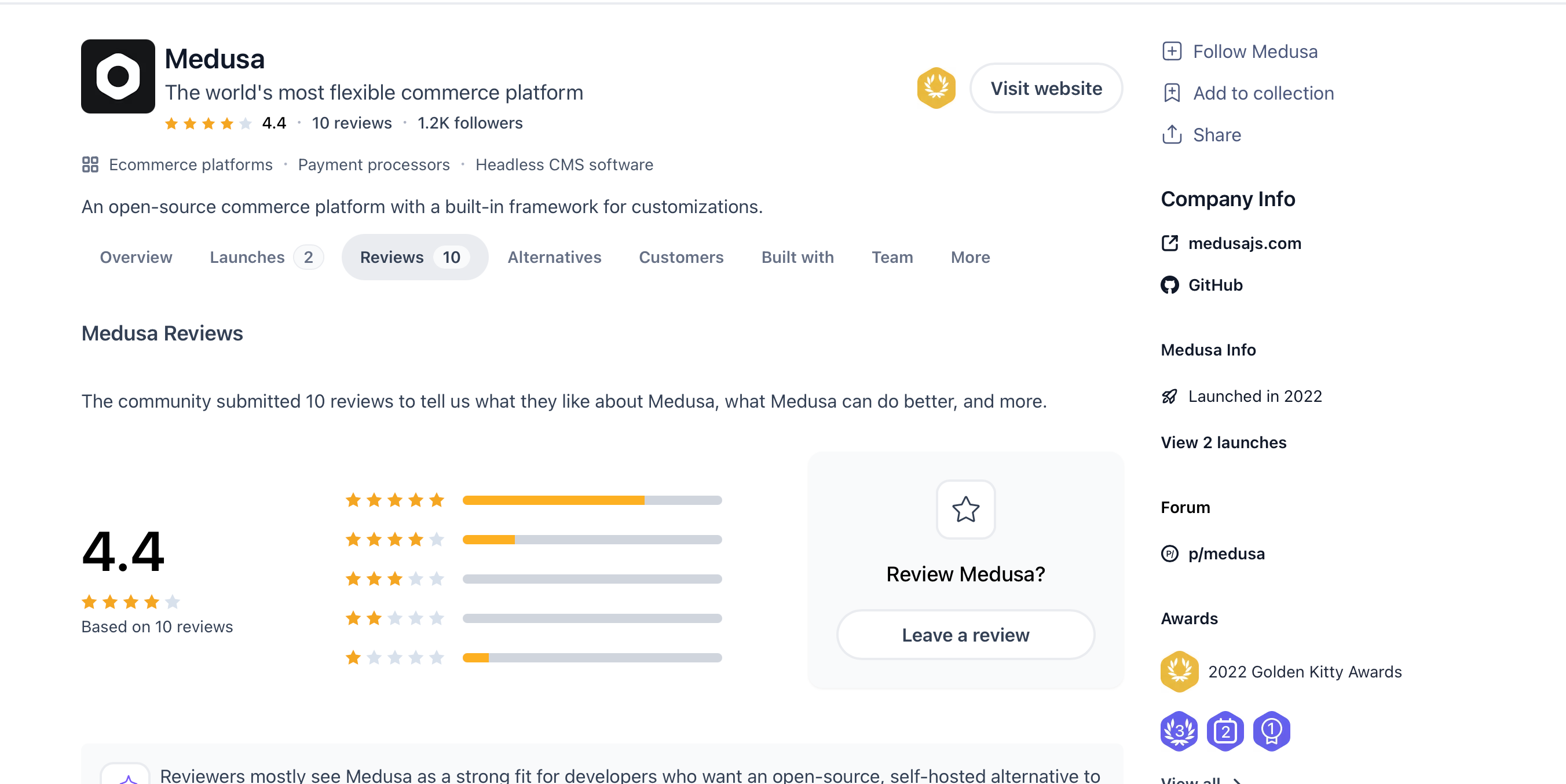
Medusa is gaining popularity among developers for its simplicity and extensibility. It is often recommended as a modern alternative to traditional platforms. (Webkul Software)
However, it requires development expertise and is still growing its ecosystem. Despite this, it is a strong choice for headless commerce.
Pros
Fully customizable
Modern architecture
Open-source
Cons
Requires developers
Smaller ecosystem
Summary
Medusa is ideal for teams building custom ecommerce solutions. It provides flexibility similar to Sylius with a modern approach. Overall, it is best for developer-led projects.
4. BigCommerce
Overview
BigCommerce is a SaaS ecommerce platform designed for scaling businesses. It offers many built-in features, reducing reliance on third-party apps. This makes it easier to manage compared to Sylius.
The platform supports headless commerce and integrates with various frontend frameworks. It is particularly useful for businesses with large catalogs.
Reviews
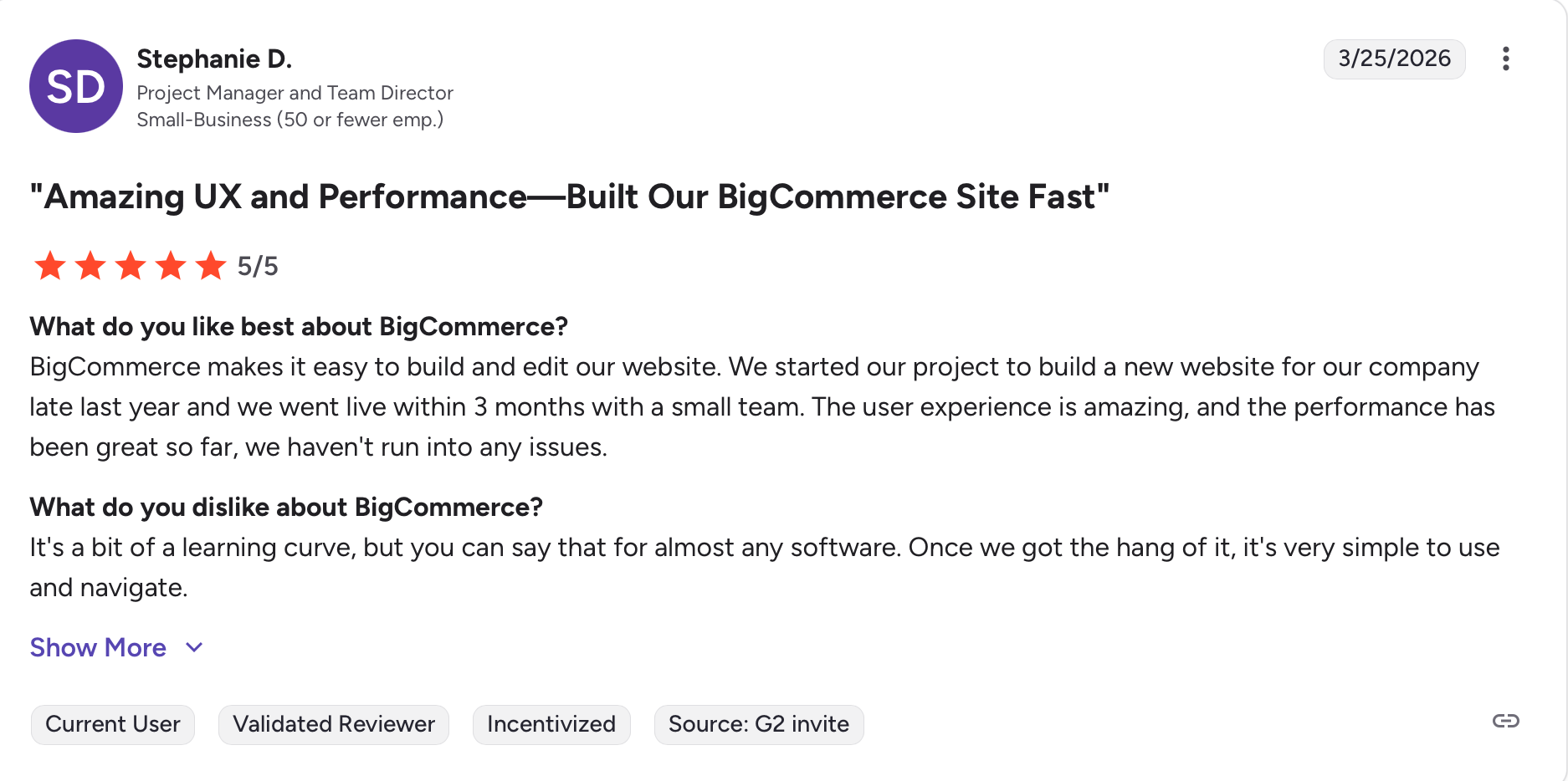
BigCommerce is known for its scalability and built-in functionality. Many businesses prefer it over open-source platforms because it reduces development effort. (G2)
However, it has a learning curve and less flexibility compared to fully open-source solutions.
Pros
Strong built-in features
Scalable
Headless support
Cons
Less customizable than open-source
Learning curve
Summary
BigCommerce is ideal for growing ecommerce brands. It provides powerful features without heavy development. Overall, it is a strong alternative for scaling businesses.
5. Saleor
Overview
Saleor is a modern headless ecommerce platform built with GraphQL and Python. It is designed for performance and scalability. Like Sylius, it is open-source and highly customizable.
The platform supports complex ecommerce use cases such as multi-channel selling and large product catalogs. It is widely used by tech-driven companies.
Clients
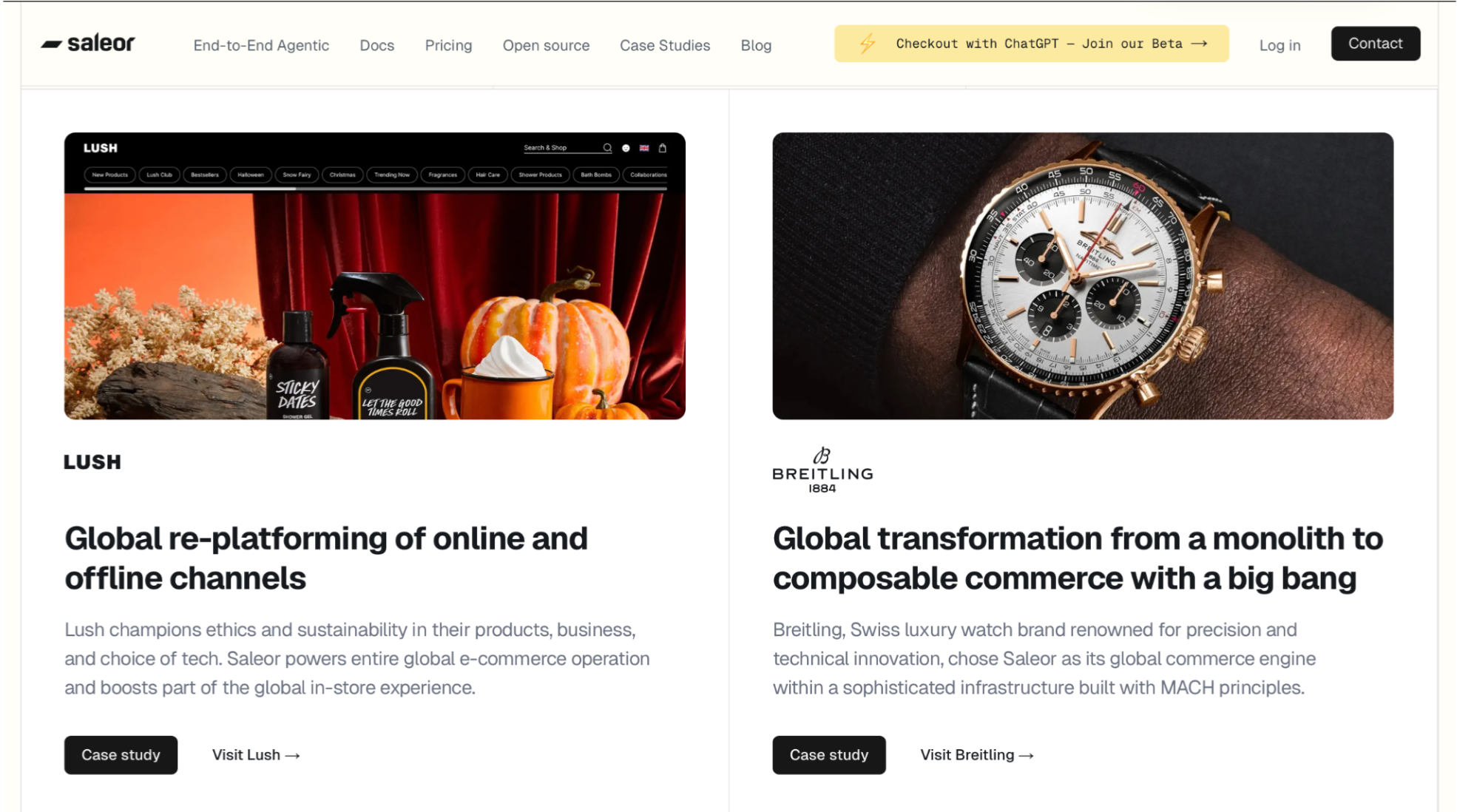
Saleor is used by a mix of modern brands and enterprise projects, especially those building headless storefronts.
-
Lush
-
Breitling
-
Specialized
These brands leverage Saleor for high performance, customized ecommerce experiences.
Custom Enterprise & B2B
Saleor is well suited for enterprise and advanced commerce use cases.
-
Multi channel commerce management
-
Custom checkout and workflows
-
Integration with CMS, ERP, and third party tools
-
Scalable architecture for large catalogs and traffic
Its GraphQL first approach makes it ideal for complex frontend driven experiences.
Reviews
Saleor is praised for its performance and modern architecture. Developers appreciate its API-first approach and flexibility.
However, it requires strong technical expertise and development resources.
Pros
API-first architecture
High performance
Flexible
Cons
Requires developers
Limited out-of-the-box features
Founder
Saleor was originally created by Patryk Zawadzki and later developed further by the Saleor core team.
The goal was to build a modern, open source commerce platform that aligns with current development practices and performance standards.
Famous Case Studies
Saleor powers several high performance ecommerce implementations.
-
Lush → Global headless commerce setup
-
Breitling → Premium ecommerce experience
-
Custom enterprise storefronts
These examples highlight its ability to handle complex, high performance ecommerce builds.
Summary
Saleor is best for enterprise and developer-focused teams. It offers modern headless capabilities and scalability. Overall, it is a future-ready alternative to Sylius.
Key Differences from Sylius
Sylius is highly flexible but requires Symfony expertise and has a smaller plugin ecosystem. Alternatives differ mainly in ease of use, scalability, and architecture.
SaaS platforms like Shopify and BigCommerce reduce complexity and speed up deployment. Open-source platforms like Shopware and Saleor provide flexibility similar to Sylius. Headless solutions like Medusa offer modern architectures.
The choice depends on your technical resources and business goals.
How to Choose the Right Alternative
Choosing the right alternative depends on your team and growth stage. If you want simplicity and fast deployment, Shopify is the best option. If you need flexibility, Shopware or Saleor are strong choices.
For modern headless architecture, Medusa is ideal. For scaling businesses with less development effort, BigCommerce works well.
You should also consider factors like scalability, ecosystem, and cost. These will determine long-term success.
Conclusion
Sylius remains a powerful platform for custom ecommerce solutions, but it is not the easiest option for every business. In 2026, many companies are moving toward platforms that offer better scalability, faster deployment, and modern architectures.
Shopify leads for simplicity, Shopware for flexibility, and Medusa/Saleor for headless commerce. BigCommerce provides a strong balance between features and usability.
Ultimately, the best alternative depends on your technical expertise and business needs. Choosing the right platform can significantly impact your ecommerce growth.
Struggling to choose the right Headless CMS & Headless Commerce tech stack? We’ll help you pick the best solution for your business! Exclusive Offer: 20 Hours of Free Development & Consultation
Book a MeetingFrequently Asked Questions
Shopify is the best overall alternative due to its ease of use and scalability.
Medusa and Saleor are strong modern headless alternatives.
Sylius offers more flexibility, but Shopify is easier to use and faster to deploy.
Yes, Shopware, Medusa, and Saleor are popular open-source alternatives.