

Words that inspire, ideas that spark,
stories that stay
Best Alternatives to Strapi CMS (2026)
V.Srinidhi Reddy
Friday, April 17th, 20266 min read
Table of content
Best Alternatives to Strapi CMS (2026 Guide)
Introduction
Strapi has been one of the most popular open-source headless CMS platforms for years. Built on Node.js, it gives developers a flexible API-driven backend and a decent admin panel.
However, as projects scale, many teams start looking for alternatives. The reasons vary—some want better developer experience, others need more flexibility or performance, and some simply want to avoid issues like plugin limitations or complex upgrades.
From real-world discussions, developers often mention challenges like bugs, documentation gaps, or complexity in larger projects, which pushes them to explore better options.
So if you're searching for a Strapi alternative, here are the best options in 2026, depending on your use case.
TL;DR
Strapi is still popular, but many teams move away from it because of scaling issues, plugin limitations, upgrade complexity, and developer experience frustrations.
Top Alternatives
- Directus → Best for database-first setups and teams wanting full backend/database control. Great if you already have structured data.
- Payload CMS → Best for TypeScript and Next.js developers. Fully code-first, developer-centric, and ideal for modern app architectures.
- Sanity → Best for flexible content modeling, real-time collaboration, and dynamic frontend frameworks like Next.js/Astro.
- Hygraph → Best for GraphQL-first applications and composable architectures. Strong performance and clean API structure.
- Storyblok → Best balance between developers and marketers thanks to its visual editor and component-based content system.
- KeystoneJS → Best for highly customized backend systems, SaaS apps, and complex application logic. More like a backend framework with CMS features.
1. Directus
Founders
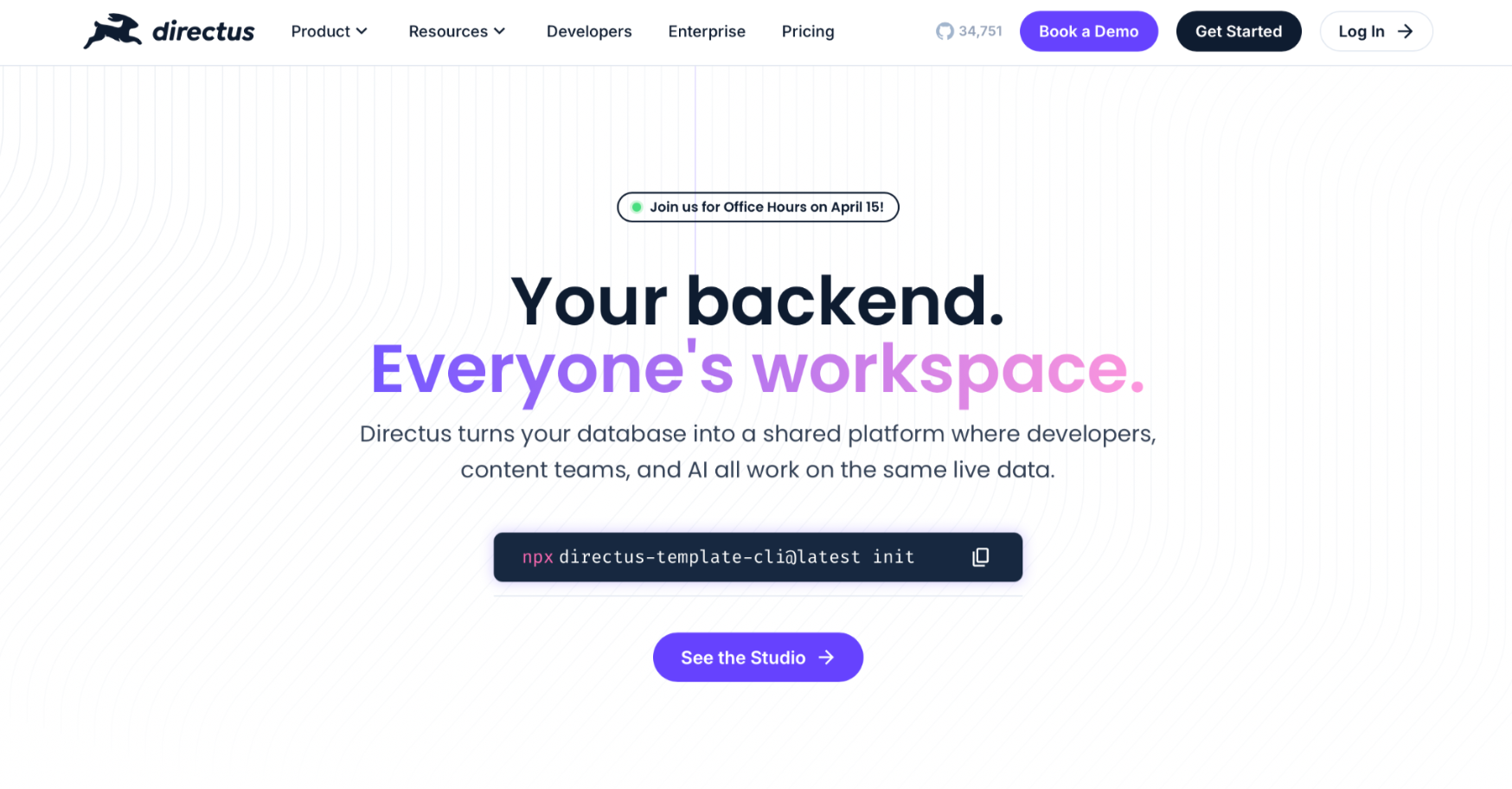
Directus was originally created by Ben Haynes, focusing on database-first content management.
Overview & Review
Directus takes a completely different approach compared to Sanity. Instead of creating a new content system, it sits directly on top of your existing database and turns it into a CMS.
This makes it incredibly powerful for projects where you already have structured data or need full control over your database architecture. For frameworks like Nuxt.js and Astro, Directus works seamlessly by exposing your data via REST or GraphQL APIs.
One of its biggest strengths is that it is non-opinionated about your database, meaning you can design your backend exactly the way you want.
Reddit Insight
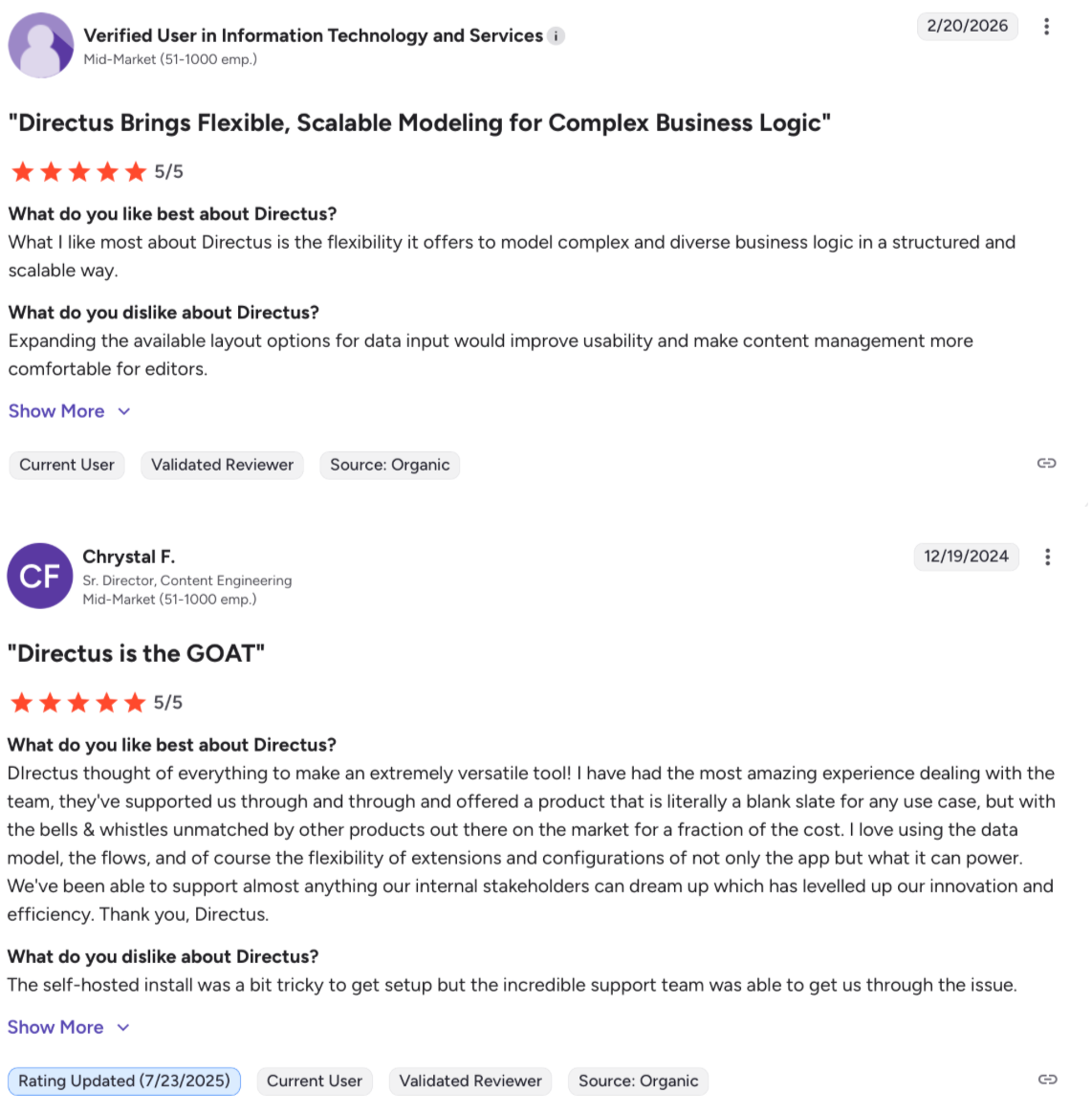
Developers often describe Directus as “perfect if you already have a database and want a CMS layer on top,” which highlights its unique positioning.
Final Take
Directus is ideal for teams that want database-level control and a highly customizable backend system.
2. Payload CMS
Founder
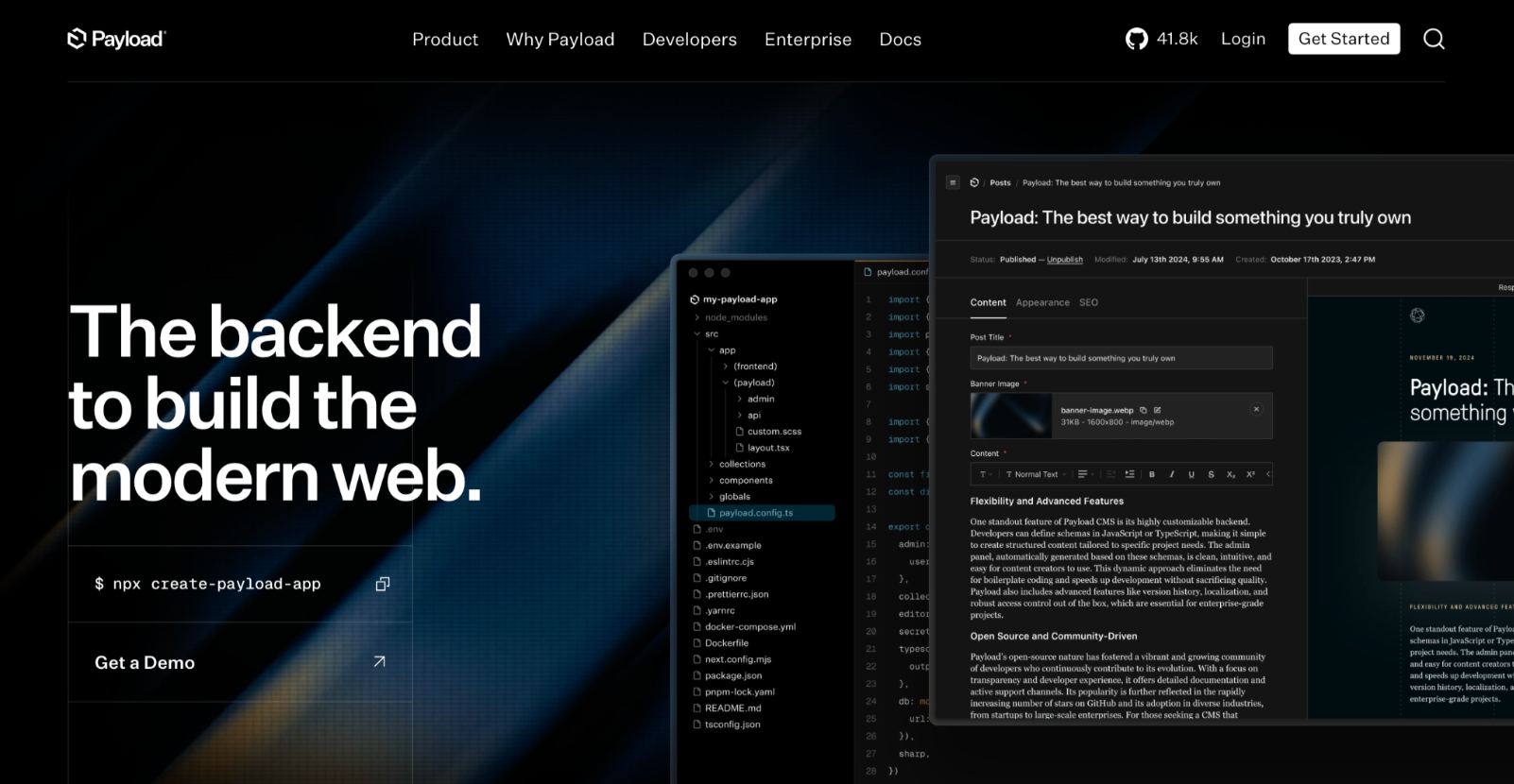
Payload CMS was created by James Mikrut, with a focus on modern developer workflows.
Overview & Review
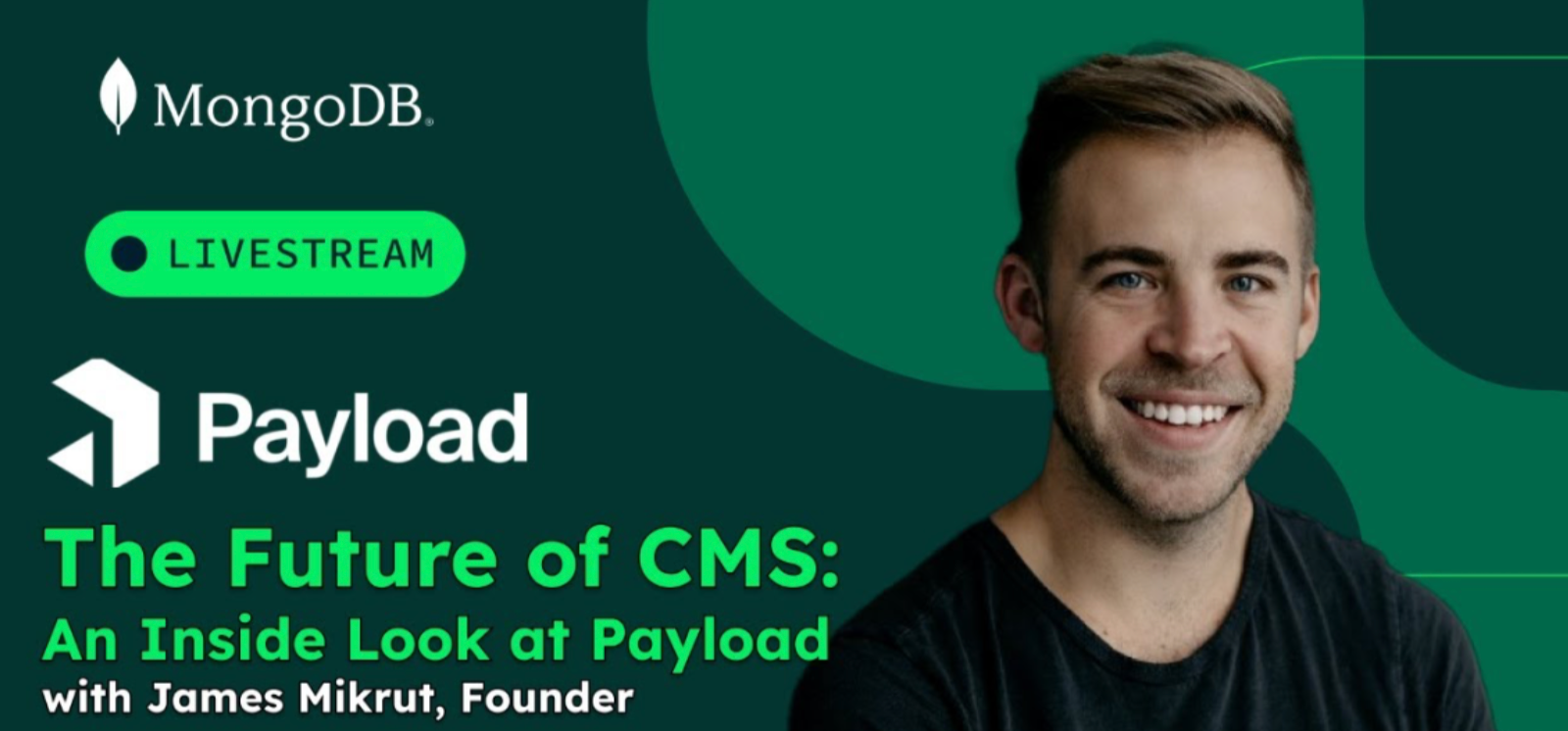
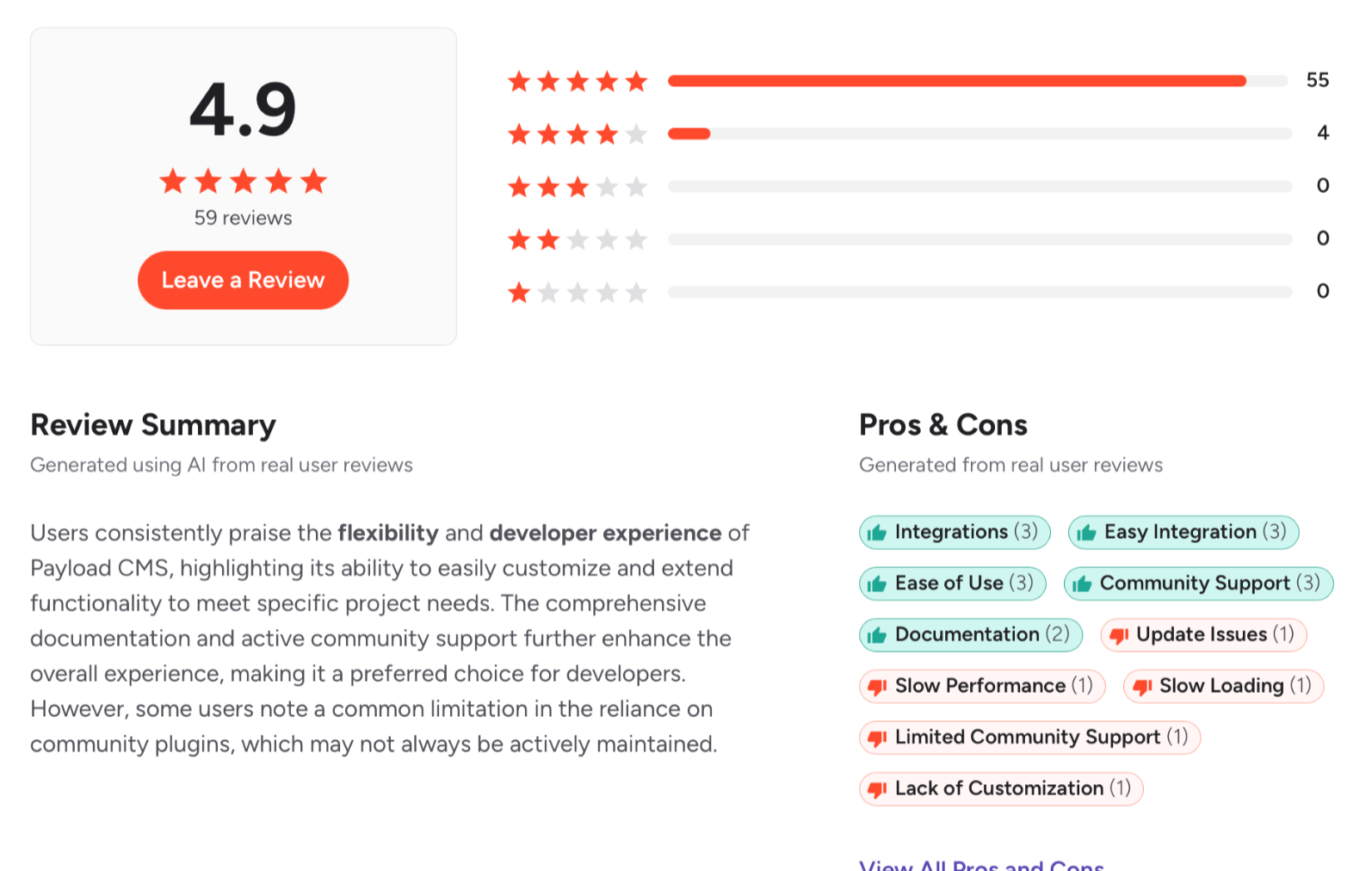
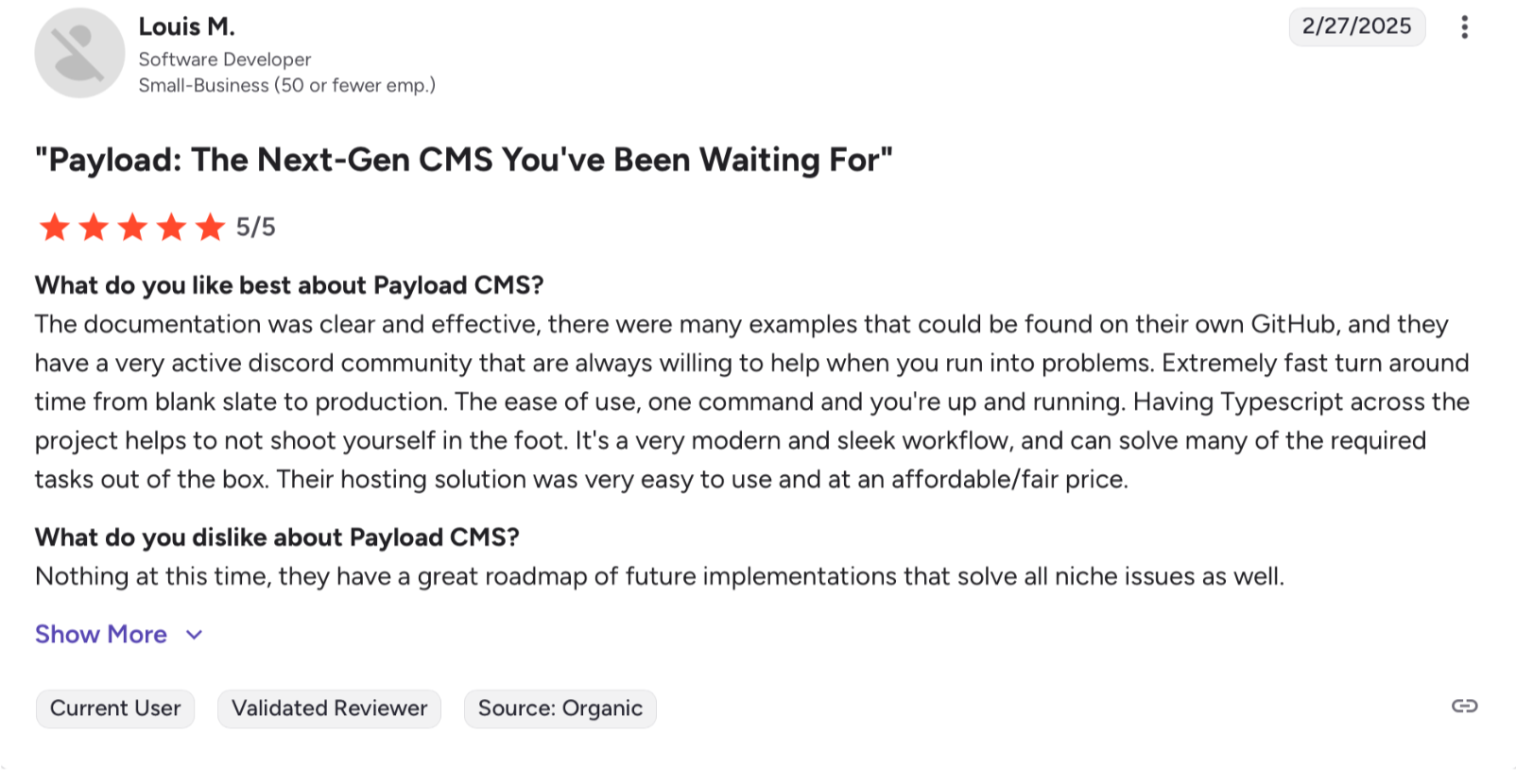
Payload CMS is rapidly becoming a favorite among developers, especially those working heavily with TypeScript. Unlike many CMS platforms, Payload is code-first, meaning your entire content model and backend logic live inside your codebase.
This makes it incredibly powerful for Next.js applications, where you want tight integration between frontend and backend. It also reduces the need for external tools since everything can be managed within a single environment.
Recent comparisons highlight Payload as the best choice for TypeScript-heavy projects and developer experience, especially when building complex applications.
Reviews
Developers often praise Payload for its “developer-first approach,” especially when compared to more UI-driven CMS platforms.
Final Take
Payload is best for teams that want full control, strong TypeScript support, and a code-first CMS architecture.
3. Sanity
Founders
Sanity was founded by Magnus Hillestad and Even Westvang, with a strong focus on developer-first content workflows.
Overview & Review
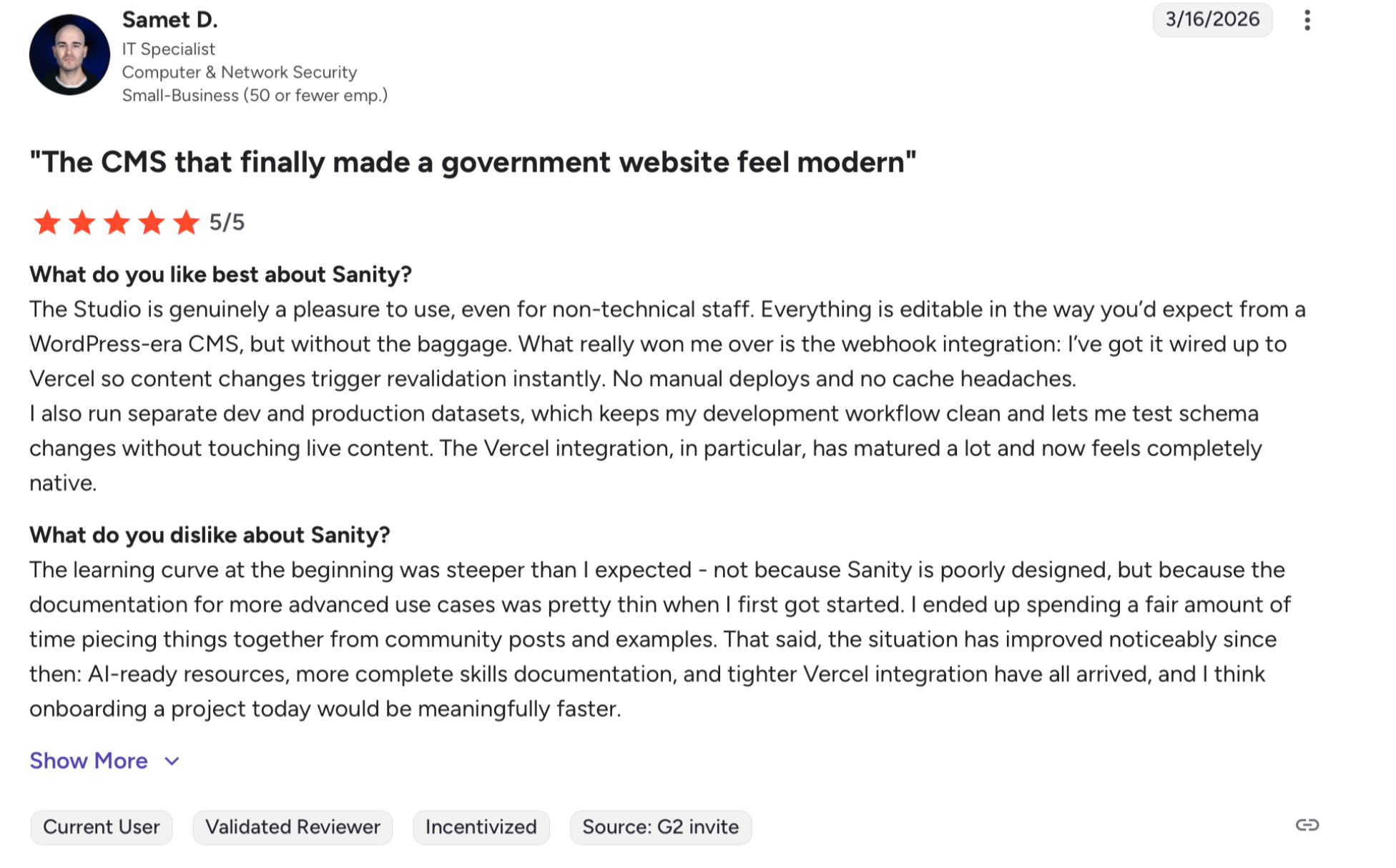
Sanity is widely considered one of the best headless CMS platforms for modern frameworks, especially Next.js. Its biggest strength lies in its flexible schema system and real-time collaboration features, which make it feel more like a live content database than a traditional CMS.
For Next.js and Astro projects, Sanity integrates extremely well thanks to its support for real-time updates, preview mode, and API-driven content delivery. Developers can define exactly how content is structured, which is critical when building dynamic applications.
According to industry comparisons, Sanity stands out for its custom schema builder and strong API capabilities, making it ideal for projects with complex data needs.
Reviews
Developers consistently recommend Sanity for flexibility. One common sentiment is that it allows you to “model anything,” which is a huge advantage for custom builds.
Final Take
Sanity is best for teams that want maximum flexibility, real-time collaboration, and strong integration with modern frameworks.
4. Hygraph (formerly GraphCMS)
Founders
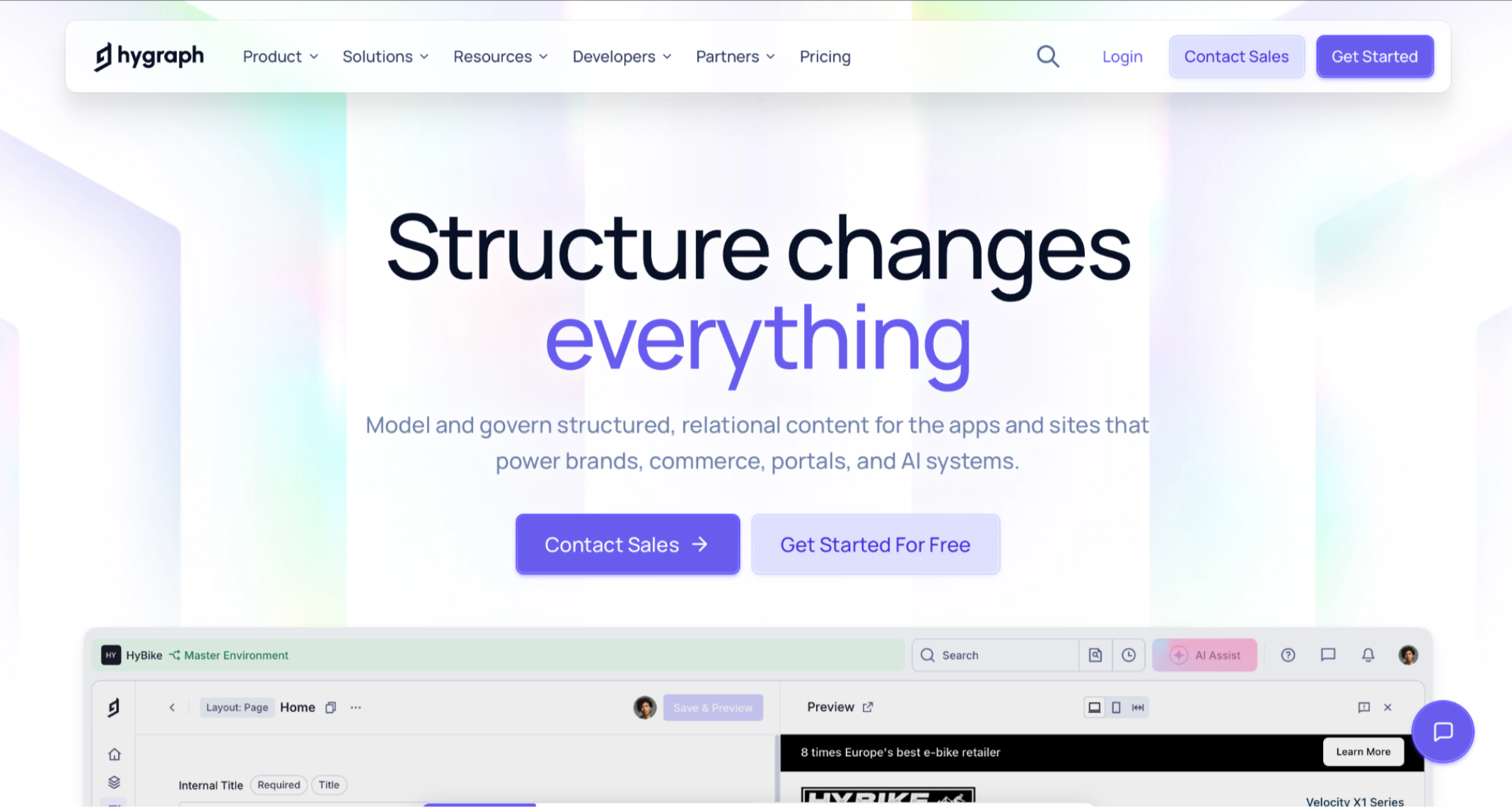
Hygraph was developed by the GraphCMS team, focusing on API-first and GraphQL-native content management.
Overview & Review
Hygraph stands out as a fully GraphQL-native headless CMS, meaning it is built entirely around GraphQL rather than supporting it as an add-on. This gives it a significant advantage for modern frontend frameworks like Next.js, React, and Svelte, where efficient data fetching is critical.
Unlike Strapi, which offers both REST and GraphQL, Hygraph’s GraphQL-first approach results in cleaner queries, better performance, and more predictable data structures. This is especially useful in large-scale applications where managing multiple API endpoints becomes complex.
Another major strength is its content federation capability, allowing teams to pull data from multiple sources (CMS, APIs, databases) into a single GraphQL layer. This makes Hygraph ideal for composable architectures and enterprise-level builds.
It also provides strong role-based permissions, localization features, and scalable content modeling, making it suitable for global applications.
Reviews
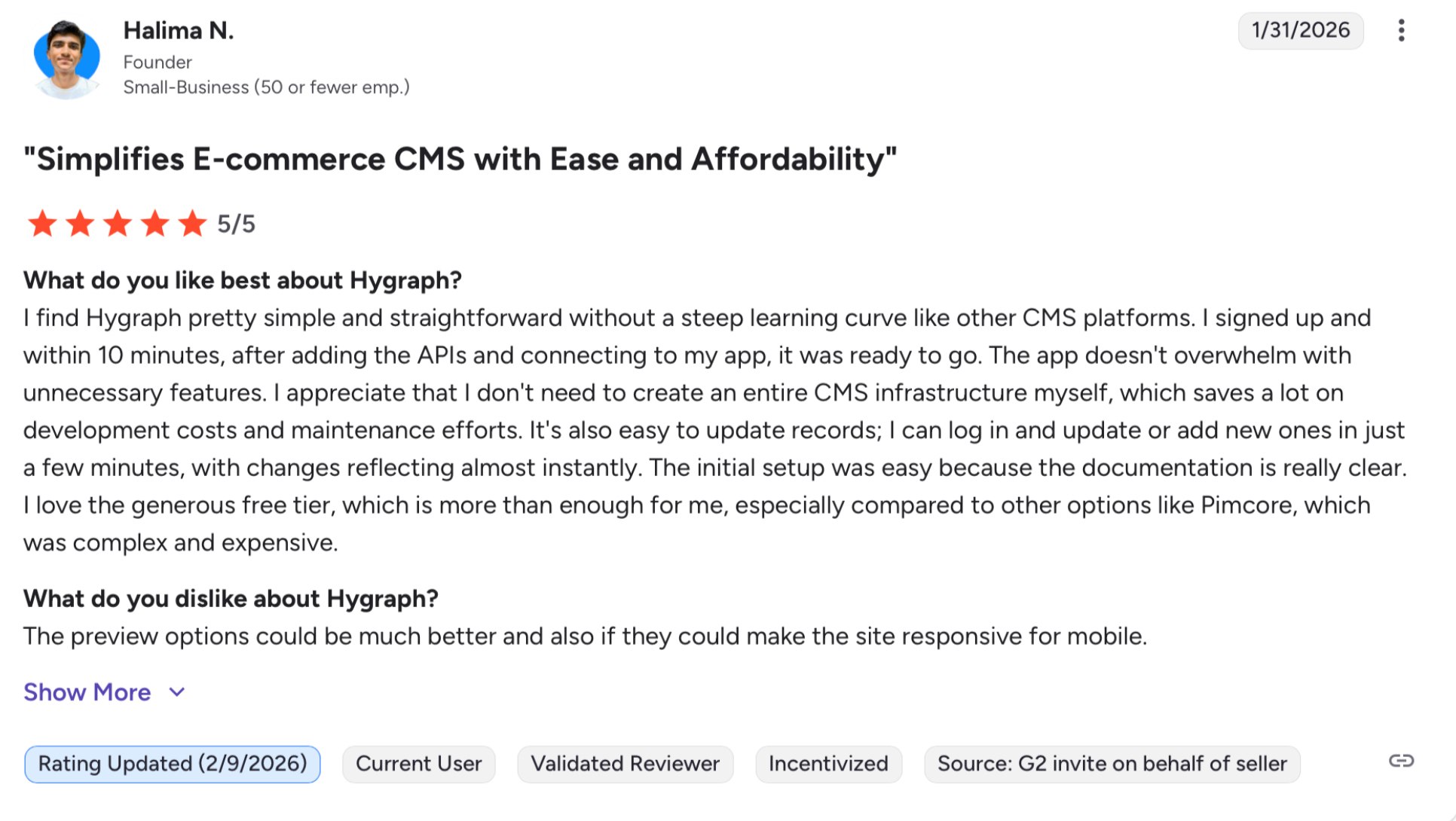
Developers often highlight Hygraph’s performance and clean API structure. A common sentiment is that it “feels natural if you're already working with GraphQL,” especially compared to hybrid CMS platforms.
Final Take
Hygraph is best for teams building GraphQL-first applications, especially where performance, scalability, and structured API queries are top priorities.
5. Storyblok
Founders
Storyblok was founded by Dominik Angerer and Alexander Feiglstorfer, with a vision to bridge the gap between developers and marketers.
Overview & Review
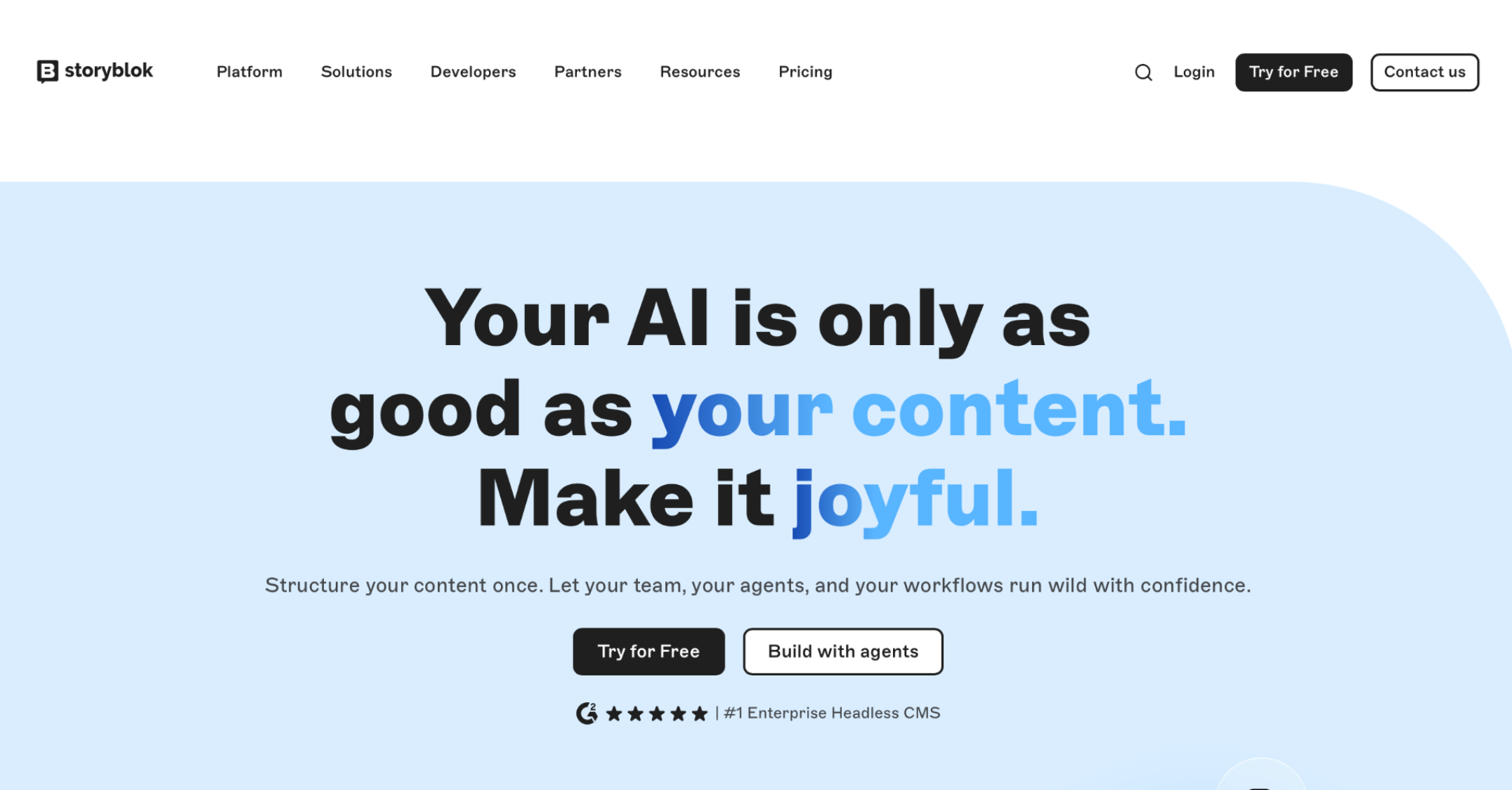
Storyblok is a hybrid headless CMS that combines the flexibility of a headless system with a visual editing experience, something most developer-focused CMS platforms lack.
Its biggest advantage over Strapi is the real-time visual editor, which allows marketers and content teams to see exactly how content will look while editing. This significantly reduces dependency on developers for everyday content updates.For developers, Storyblok still provides full flexibility through APIs, component-based content structures, and seamless integration with frameworks like Next.js, Nuxt, and Astro.
Another key strength is its component-based content approach, where content is structured as reusable blocks. This aligns well with modern frontend architectures and improves scalability for large projects.
It also offers internationalization, workflow management, and collaboration tools, making it a strong choice for teams with multiple stakeholders.
Reviews
Across developer and marketing communities, Storyblok is often praised for its balance. One common takeaway is that it “keeps developers happy while empowering marketing teams,” which is rare among CMS platforms.

6. KeystoneJS
Founder
KeystoneJS was created by Jed Watson.
Overview & Review
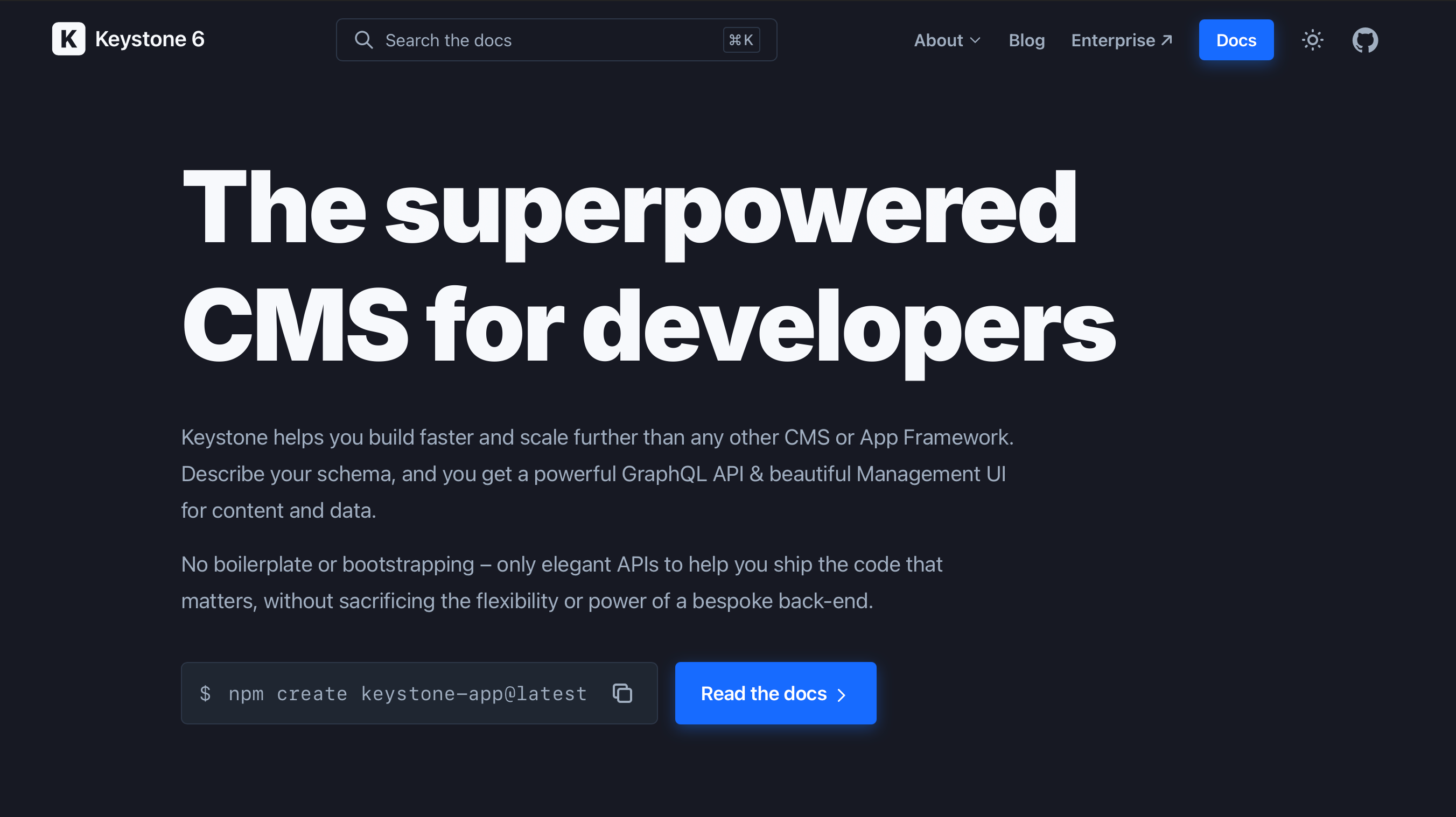
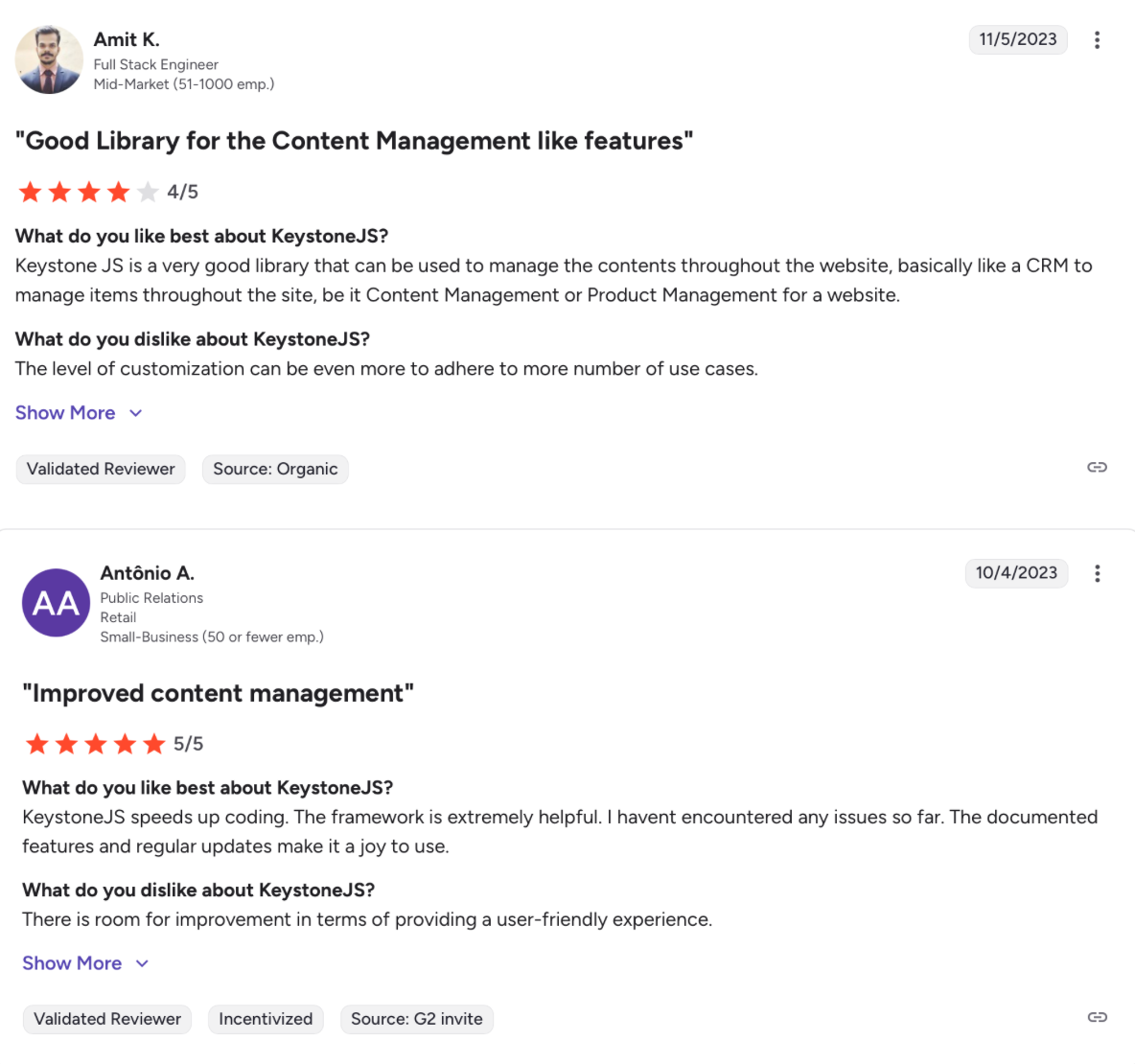
KeystoneJS is more than just a CMS—it’s a backend framework with CMS capabilities. Built around GraphQL and schema-driven development, it gives developers full control over how data is structured and managed.
It’s especially powerful for building custom SaaS platforms, internal tools, and complex applications, where a traditional CMS might feel limiting.
Because of its flexibility, Keystone comes with a steeper learning curve, but it rewards developers with unmatched customization.
Key Strengths
-
GraphQL-first architecture
-
Schema-driven development
-
Highly customizable backend
-
Ideal for complex applications
-
Strong developer control
Why It Stands Out
Keystone sits between a CMS and a backend framework, making it perfect for projects where you need both content management and deep application logic.
Summary
Best for developers building custom platforms, SaaS products, or advanced applications requiring full backend control.
Quick Comparision
| CMS | Best For | Biggest Strength |
|---|---|---|
| Directus | Database-first projects | Full DB control |
| Payload CMS | TypeScript + Next.js | Developer experience |
| Sanity | Flexible content systems | Real-time collaboration |
| Hygraph | GraphQL apps | GraphQL-native architecture |
| Storyblok | Marketing teams | Visual editor |
| KeystoneJS | Custom SaaS/apps | Backend flexibility |
Final Verdict
Strapi is still a strong CMS, but it’s no longer the default choice in 2026.
If you’re switching, the best alternative depends on what you care about most:
-
More control & simplicity → Directus
-
Developer-first & code-driven → Payload
-
Better editing experience → Sanity
-
GraphQL-first apps → Hygraph
-
Marketing-friendly CMS → Storyblok
-
Custom backend systems → Keystone
Struggling to choose the right Headless CMS & Headless Commerce tech stack? We’ll help you pick the best solution for your business! Exclusive Offer: 20 Hours of Free Development & Consultation
Book a MeetingFrequently Asked Questions
Top alternatives include Directus, Payload CMS, Sanity, Hygraph, Storyblok, and KeystoneJS. Each offers different strengths, from database control to GraphQL-first architecture and visual editing.
Developers often look for alternatives due to limitations in plugins, performance issues at scale, and complexity in upgrades or large projects.
Payload and KeystoneJS are best for developers who want full control and code-first architecture, while Directus is ideal for database-driven projects and Hygraph for GraphQL-first applications.