

Words that inspire, ideas that spark,
stories that stay
Best Print-on-Demand Apps for Shopify (2026)
V.Srinidhi Reddy
Monday, April 20th, 20267 min read
Table of content
Best Print-on-Demand Apps for Shopify (2026)
Introduction
Print-on-demand (POD) has completely transformed how brands launch and scale in 2026.
You no longer need inventory.
You don’t need upfront investment in stock.
And you don’t need a warehouse.
Instead, you can:
-
Design products
-
Sell instantly
-
And only produce when orders come in
For Shopify merchants, this means low risk, high flexibility, and fast experimentation.
From custom apparel and accessories to home decor and niche merchandise, POD apps make it possible to build entire brands without touching inventory.
The shift is clear:
The fastest-growing Shopify brands aren’t holding stock—they’re shipping creativity.
How to Choose a Shopify Print-on-Demand App
Before picking a POD app, ask yourself:
-
Do you care more about product quality or profit margins?
-
Are you targeting global shipping or a specific region?
-
Do you need fast fulfillment (2–5 days) or is slower okay?
-
Do you want branding (custom packaging, labels)?
-
Are you testing ideas or building a long-term brand?
In 2026, most Shopify POD users fall into 3 buckets:
Beginners & side hustlers:
Simple tools, free plans, fast setup, basic products.
Growing DTC brands:
Better branding, wider catalogs, faster shipping.
Established brands / Shopify Plus:
Premium quality, global fulfillment networks, custom branding, automation.
Keep this filter in mind while reading.
QUICK LIST
Printful, Printify, Gelato, Gooten, Teelaunch, Apliiq, Shopify print-on-demand apps, POD fulfillment platforms, custom apparel printing, dropshipping and POD tools, ecommerce fulfillment solutions, branded merchandise platforms, private label apparel services, global POD networks, Shopify apparel apps, print fulfillment automation, custom packaging solutions, DTC merchandise platforms, creator economy ecommerce tools, inventory-free ecommerce systems
TL;DR
- Best overall POD app → Printful
- Best for profit margins → Printify
- Best for global shipping speed → Gelato
- Best for automation & scaling → Gooten
- Best for beginners → Teelaunch
- Best for custom apparel brands → Apliiq
- Best for branding & premium quality → Printful
- Biggest POD trend in 2026 → Inventory-free and brand-driven ecommerce
Quick Comparison
|
App |
Best For |
Ease of Use |
Features |
Performance |
|
Printful |
Premium quality & branding |
High |
Very High |
High |
|
Printify |
Cost optimization & supplier choice |
Very High |
High |
High |
|
Gelato |
Global fulfillment & speed |
High |
Medium–High |
Very High |
|
Gooten |
Automation & scaling ops |
Medium |
High |
High |
|
Teelaunch |
Simple POD for beginners |
Very High |
Medium |
Medium–High |
|
Apliiq |
Custom apparel & private labels |
Medium |
High |
High |
1. Printful
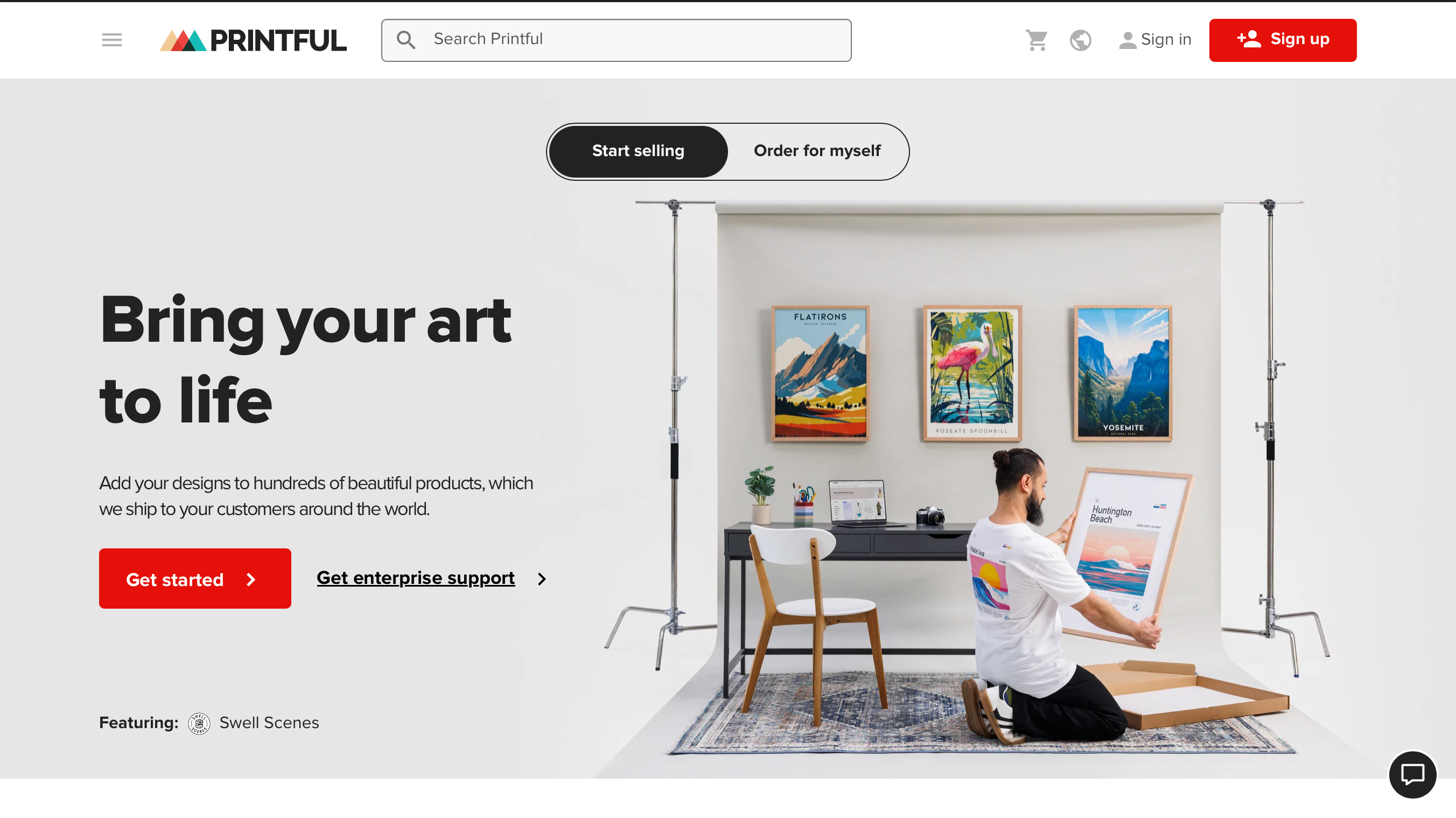
Printful is one of the most widely used Shopify POD platforms in 2026, known for premium quality, branding options, and reliability.
Core Features
-
Wide product catalog: apparel, accessories, home goods
-
Custom branding: labels, packaging inserts, pack-ins
-
High-quality printing (DTG, embroidery, sublimation)
-
Warehousing & fulfillment services
-
Mockup generator and design tools
Integrations & Setup
-
Native Shopify integration
-
Works with Etsy, Amazon, and other channels
-
Easy product sync and automated order fulfillment
Who Uses Printful?
-
DTC brands focused on quality
-
Fashion and lifestyle brands
-
Businesses building long-term branded stores
Reviews
-
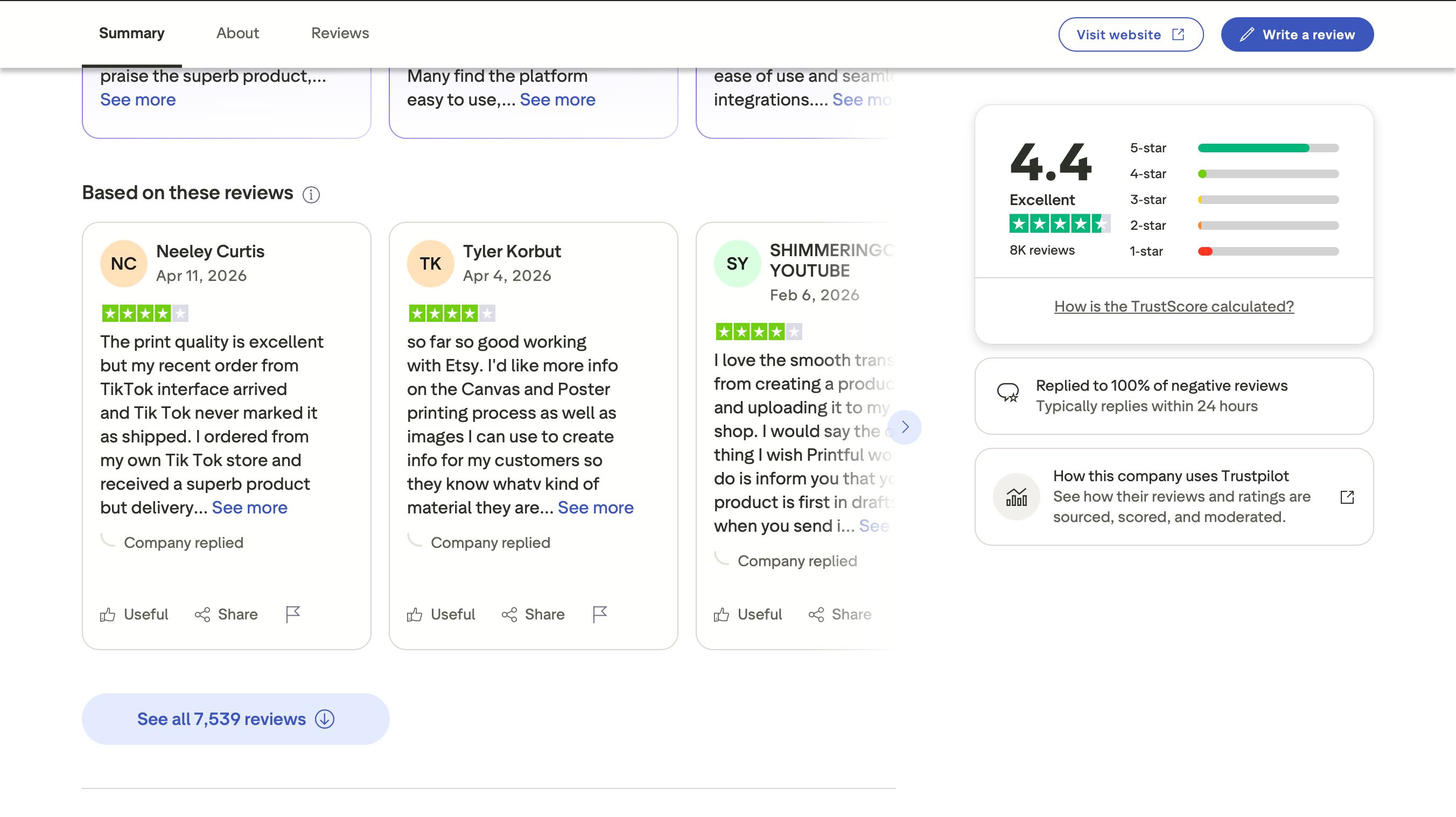
Shopify App Store rating: 4.4 / 5
-
Typical sentiment: “Best quality and branding, slightly higher cost but worth it.”
Pros
-
Premium product quality
-
Strong branding capabilities
-
Reliable fulfillment and support
Cons
-
Higher base pricing (lower margins)
-
Slightly longer fulfillment vs local suppliers
Summary
Printful is the best overall Shopify POD app for brands that prioritize quality, consistency, and long-term brand building.
2. Printify
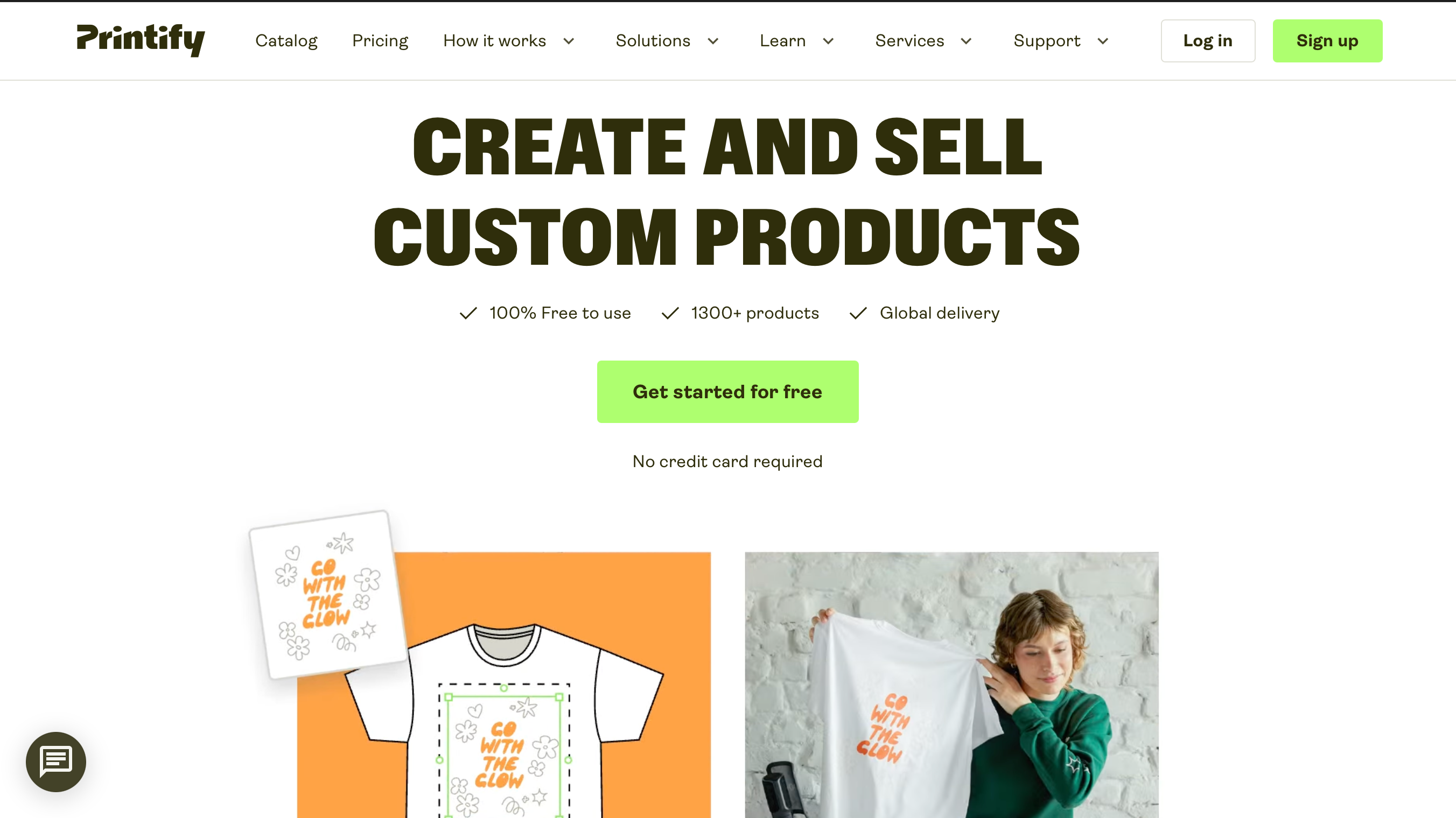
Printify stands out for its large supplier network, allowing you to choose vendors based on price, location, and quality.
Core Features
-
90+ print providers globally
-
Competitive pricing options
-
Large product catalog
-
Profit margin control via supplier selection
-
Bulk order discounts (Printify Premium)
Integrations & Setup
-
Direct Shopify integration
-
Easy supplier switching
-
Automated order routing
Who Uses Printify?
-
Dropshippers and margin-focused sellers
-
Entrepreneurs testing multiple niches
-
Stores prioritizing cost over branding
Reviews
-
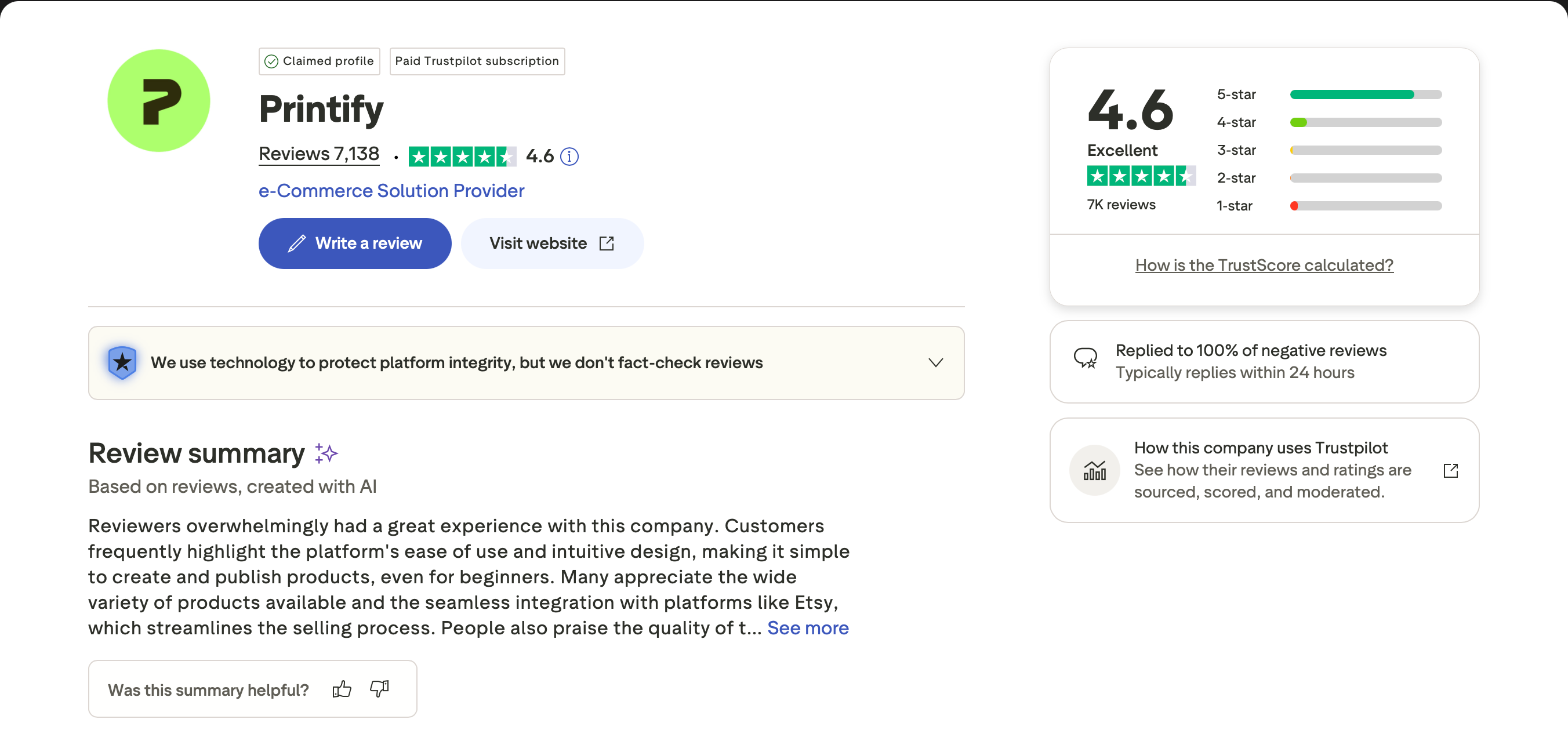
Typical sentiment: “Best margins if you choose the right supplier.”
Pros
-
Lower product costs
-
Flexible supplier options
-
Scalable for testing products
Cons
-
Quality varies by supplier
-
Branding options limited compared to Printful
Summary
Printify is ideal for profit-focused sellers who want flexibility in pricing and supplier selection.
3. Gelato
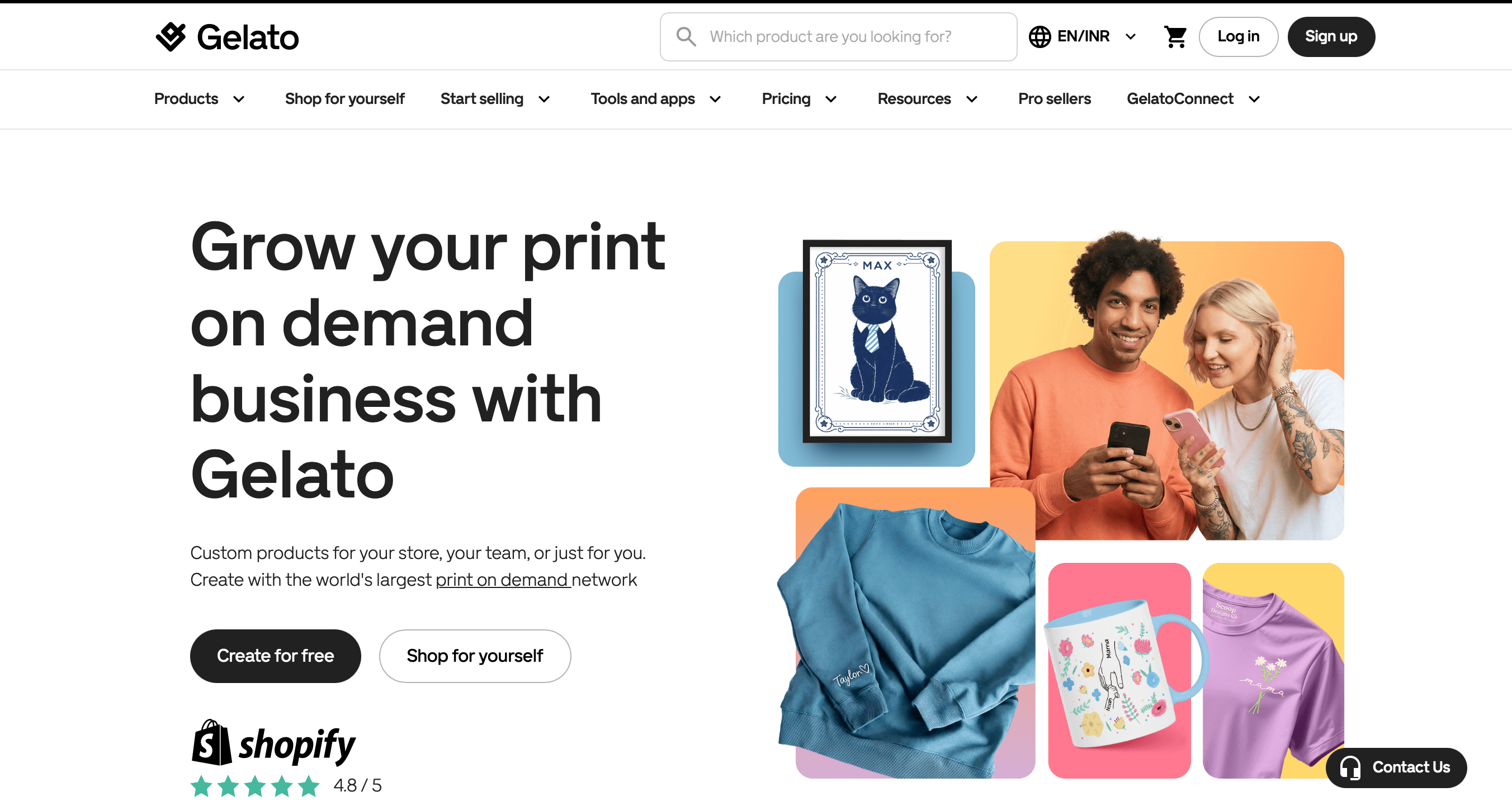
Gelato is built for local production in 30+ countries, making it one of the fastest POD platforms globally.
Core Features
-
Local production network (reduces shipping time)
-
Eco-friendly production model
-
Popular for wall art, posters, and stationery
-
Automatic routing to nearest production facility
Integrations & Setup
-
Shopify-native integration
-
Minimal setup required
-
Automatic order routing
Who Uses Gelato?
-
Global brands
-
Stores targeting EU, US, and international customers
-
Merchants prioritizing fast delivery
Reviews
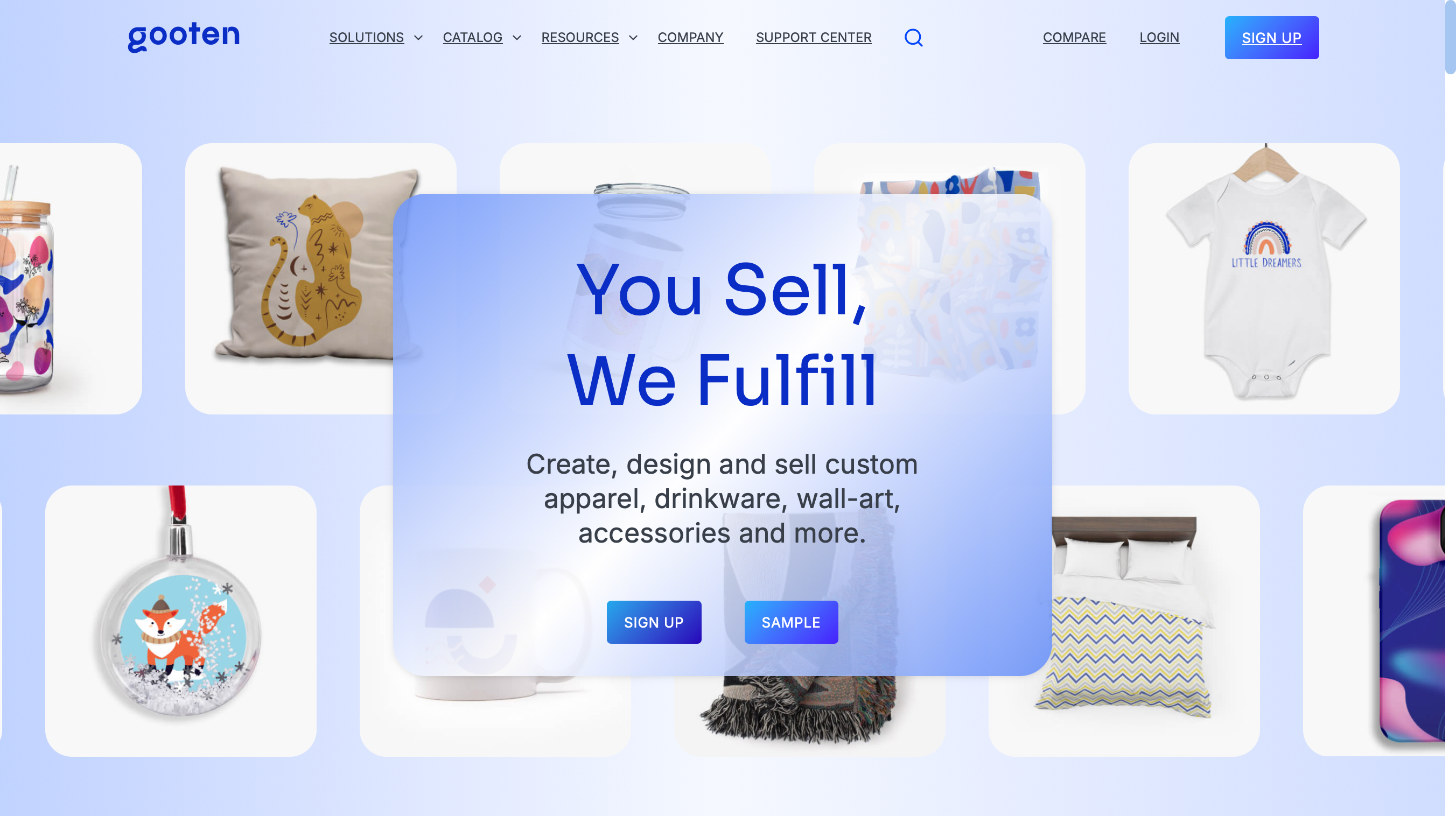
Gooten focuses on backend automation and operational efficiency, making it ideal for scaling stores.
Core Features
-
Automated order routing
-
Global manufacturing network
-
API-driven infrastructure
-
Wide product range including niche items
Integrations & Setup
-
Shopify integration
-
Strong backend automation tools
-
Works well with high-volume stores
Who Uses Gooten?
-
Scaling Shopify stores
-
High-order-volume businesses
-
Operations-focused teams
Reviews
-
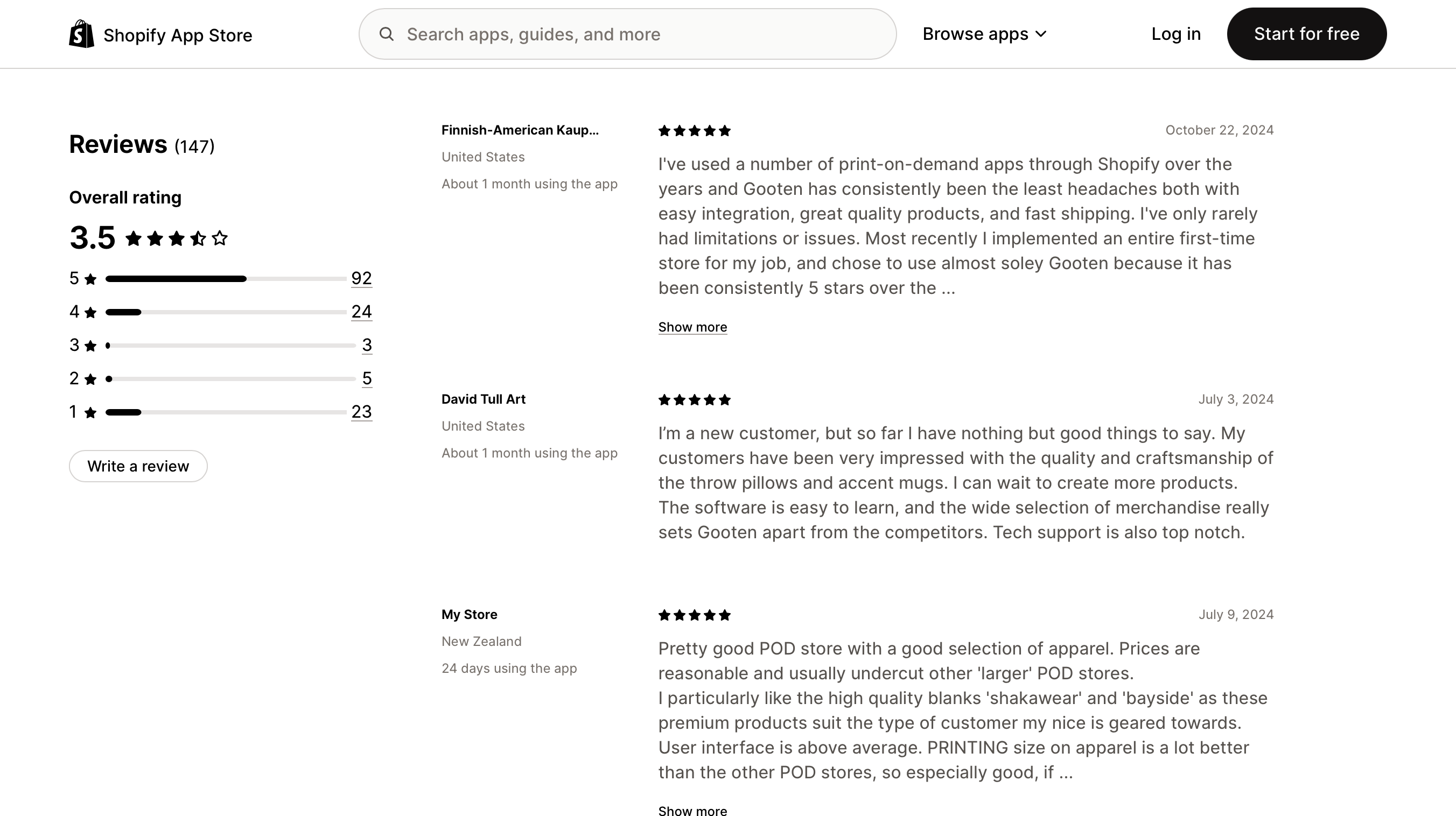
Rating: ~4.3–4.6 / 5
-
Typical sentiment: “Great backend system for scaling operations.”
Pros
-
Strong automation capabilities
-
Good for high-volume fulfillment
-
Scalable infrastructure
Cons
-
UI is less beginner-friendly
-
Setup takes more time
Summary
Gooten is best for scaling brands that need automation and operational efficiency.
5. Teelaunch
Teelaunch is a simple, beginner-friendly POD app that focuses on ease of use.
Core Features
-
Basic apparel and product catalog
-
Simple design and publishing tools
-
Fast setup process
-
Affordable pricing
Integrations & Setup
-
Easy Shopify integration
-
Minimal configuration needed
Who Uses Teelaunch?
-
Beginners and first-time sellers
-
Small Shopify stores
-
Side hustlers testing POD
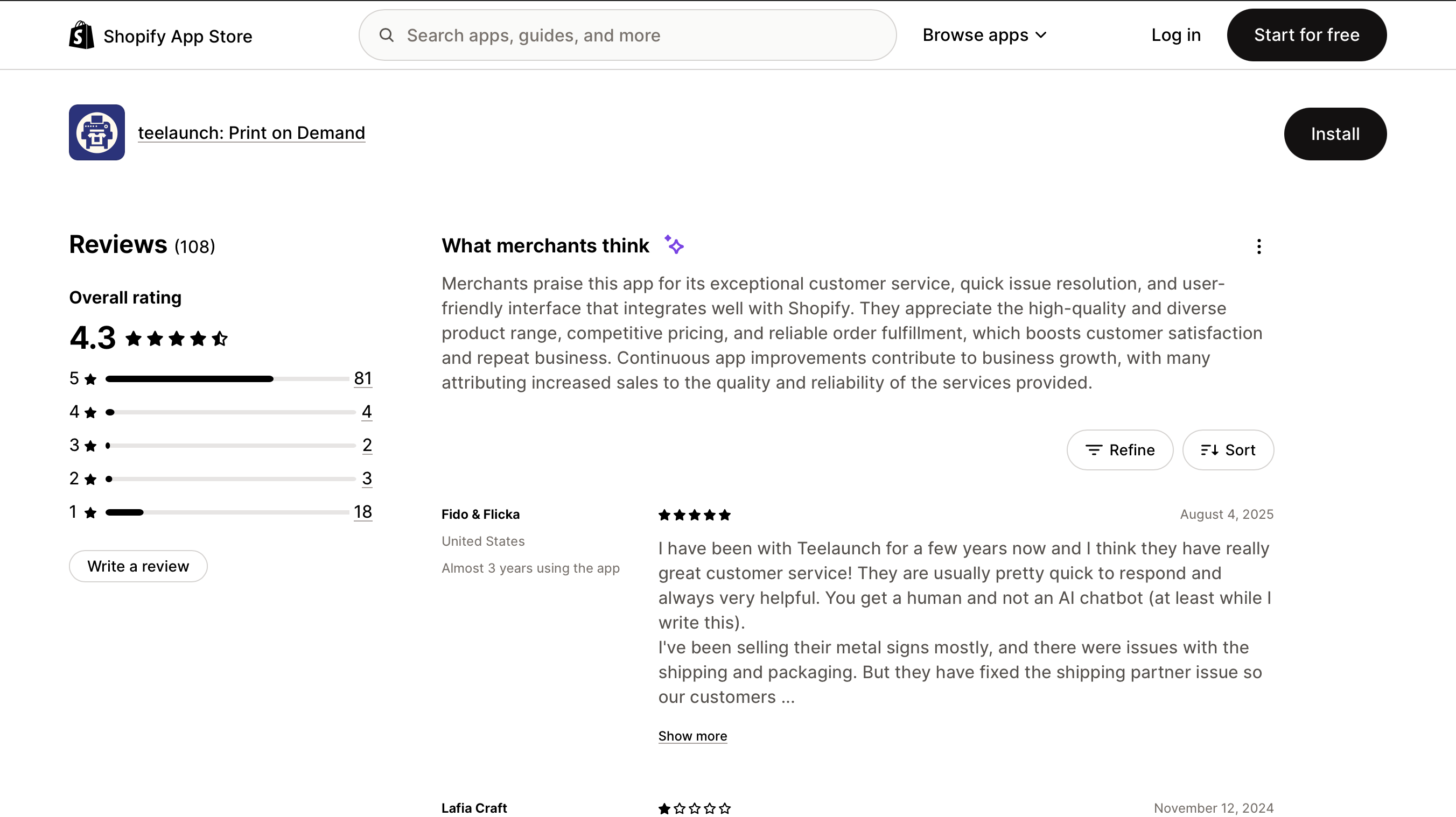
Reviews
-
Rating: ~4.5 / 5
-
Typical sentiment: “Super easy to get started.”
Pros
-
Very easy to use
-
Fast setup
-
Good for beginners
Cons
-
Limited product range
-
Fewer advanced features
Summary
Teelaunch is perfect for beginners who want a quick and simple POD setup.
6. Apliiq
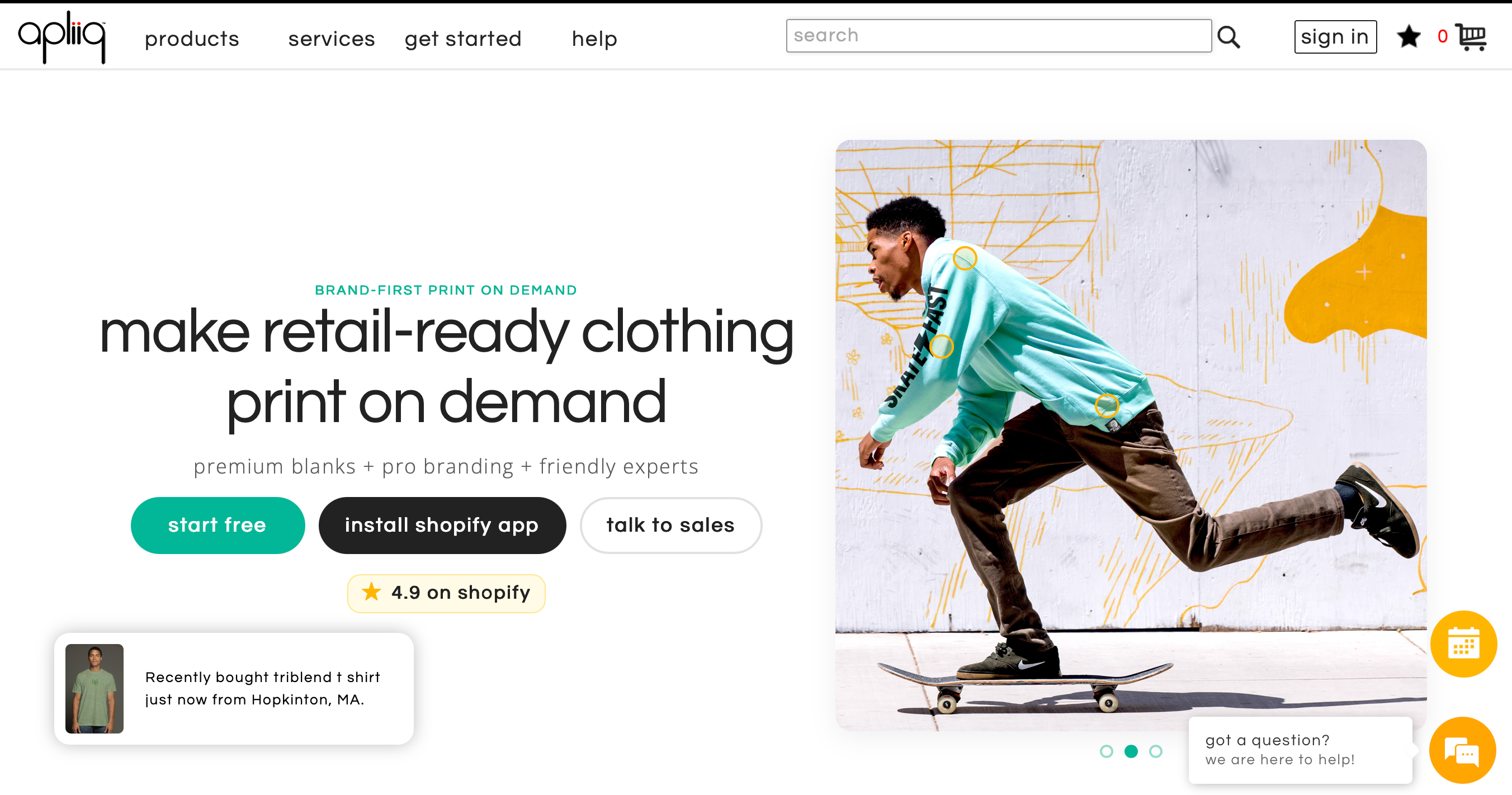
Apliiq specializes in premium apparel customization and private labeling, especially for fashion brands.
Core Features
-
Custom tags, labels, embroidery
-
Unique fabric customization
-
Streetwear-focused catalog
-
Advanced branding options
Integrations & Setup
-
Shopify integration
-
More manual setup compared to others
Who Uses Apliiq?
-
Fashion brands
-
Streetwear labels
-
Premium apparel businesses
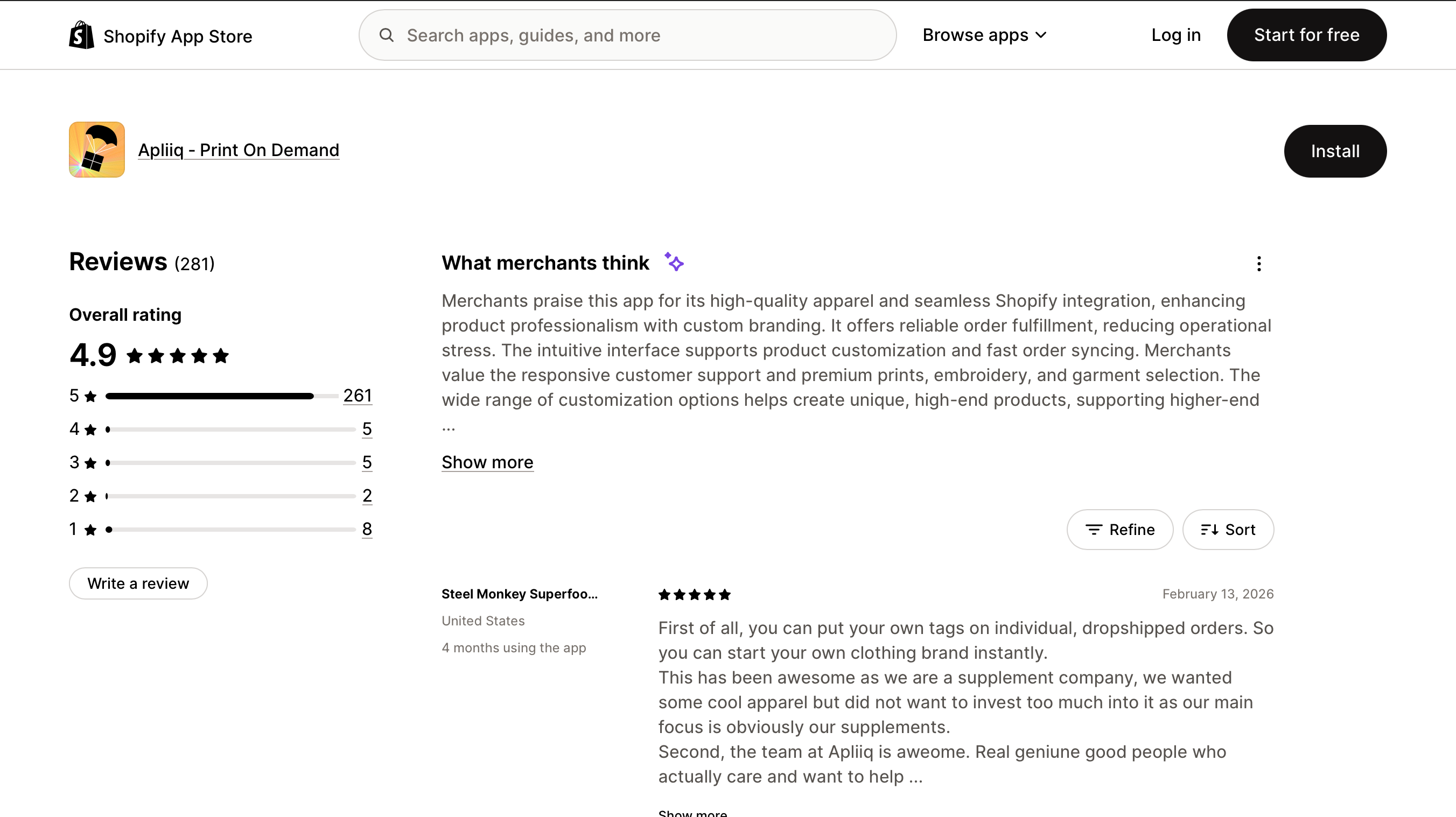
Reviews
-
Rating: ~4.5 / 5
-
Typical sentiment: “Best for building a real clothing brand.”
Pros
-
Strong branding and customization
-
High-quality apparel
-
Unique product differentiation
Cons
-
Higher pricing
-
Longer production times
Summary
Apliiq is best for serious apparel brands that want full customization and private labeling.
Final Conclusion
Print-on-demand is no longer just a side hustle—it’s a core eCommerce model in 2026.
The key is choosing the right platform based on your goals:
-
Printful → Best overall for quality & branding
-
Printify → Best for margins & supplier flexibility
-
Gelato → Best for global shipping speed
-
Gooten → Best for automation & scaling
-
Teelaunch → Best for beginners
-
Apliiq → Best for custom apparel brands
If you’re just starting → go simple.
If you’re scaling → optimize margins or automation.
If you’re building a brand → invest in quality and branding.
Because in POD, your product isn’t just the item it’s the experience.
Struggling to choose the right Headless CMS & Headless Commerce tech stack? We’ll help you pick the best solution for your business! Exclusive Offer: 20 Hours of Free Development & Consultation
Book a MeetingFrequently Asked Questions
Print-on-demand apps allow you to sell custom-designed products without holding inventory. Products are only manufactured and shipped after a customer places an order.
The best app depends on your goals:
-
Printful → Best for quality and branding
-
Printify → Best for profit margins
-
Gelato → Best for fast global shipping
Yes, POD can be highly profitable due to low upfront costs and no inventory risk. Profitability depends on pricing, niche selection, and marketing strategy.