

Words that inspire, ideas that spark,
stories that stay
Best Helpdesk Apps for Shopify and Shopify Plus in 2026
V.Srinidhi Reddy
Sunday, March 22nd, 20266 min read
Table of content
Best Helpdesk Apps for Shopify and Shopify Plus in 2026
Okay… before you jump into the list section, let’s talk about something.
When your Shopify store starts growing, support doesn’t stay “simple” for long. One day, it’s a few emails. Next week, it’s live chat, Instagram DMs, order status questions, refund requests, and “Where is my package?” messages all coming at once.
And the real problem: its context.
You’re opening Shopify in one tab. Gmail in another. Maybe a chat app somewhere else. You’re copying order numbers back and forth just to answer one simple question.
We all know that’s exhausting.
In 2026, you don’t need more tabs. You need one system that connects everything. A helpdesk that understands e-commerce. One that shows order data inside tickets, automates repetitive replies, and helps you respond faster without burning out your team.
Now, let’s look at the tools that actually make that happen.
Quick Overview of the Best Helpdesk Apps for Shopify and Shopify Plus in 2026
|
App |
Best For |
Starting Price |
Strongest Advantage |
Scales For |
|
Gorgias |
Shopify-focused brands |
~$10/mo |
Deep Shopify order data inside tickets |
Fast-growing Shopify & Plus stores |
|
Freshdesk |
Structured support teams |
$0 / ~$15 per agent |
Strong AI automation with Freddy |
SMB to enterprise |
|
Zendesk |
Enterprise & complex workflows |
~$19 per agent |
Advanced customization & analytics |
Large, multi-team brands |
|
Tidio |
Chat-first support teams |
Free / ~$29/mo |
AI chatbot + simple setup |
Small to mid-sized stores |
|
Re:amaze |
Ecommerce multichannel teams |
~$29 per agent |
Unified inbox + proactive cues |
Multi-brand Shopify stores |
Top Helpdesk Apps for Shopify and Shopify Plus in 2026
1) Gorgias
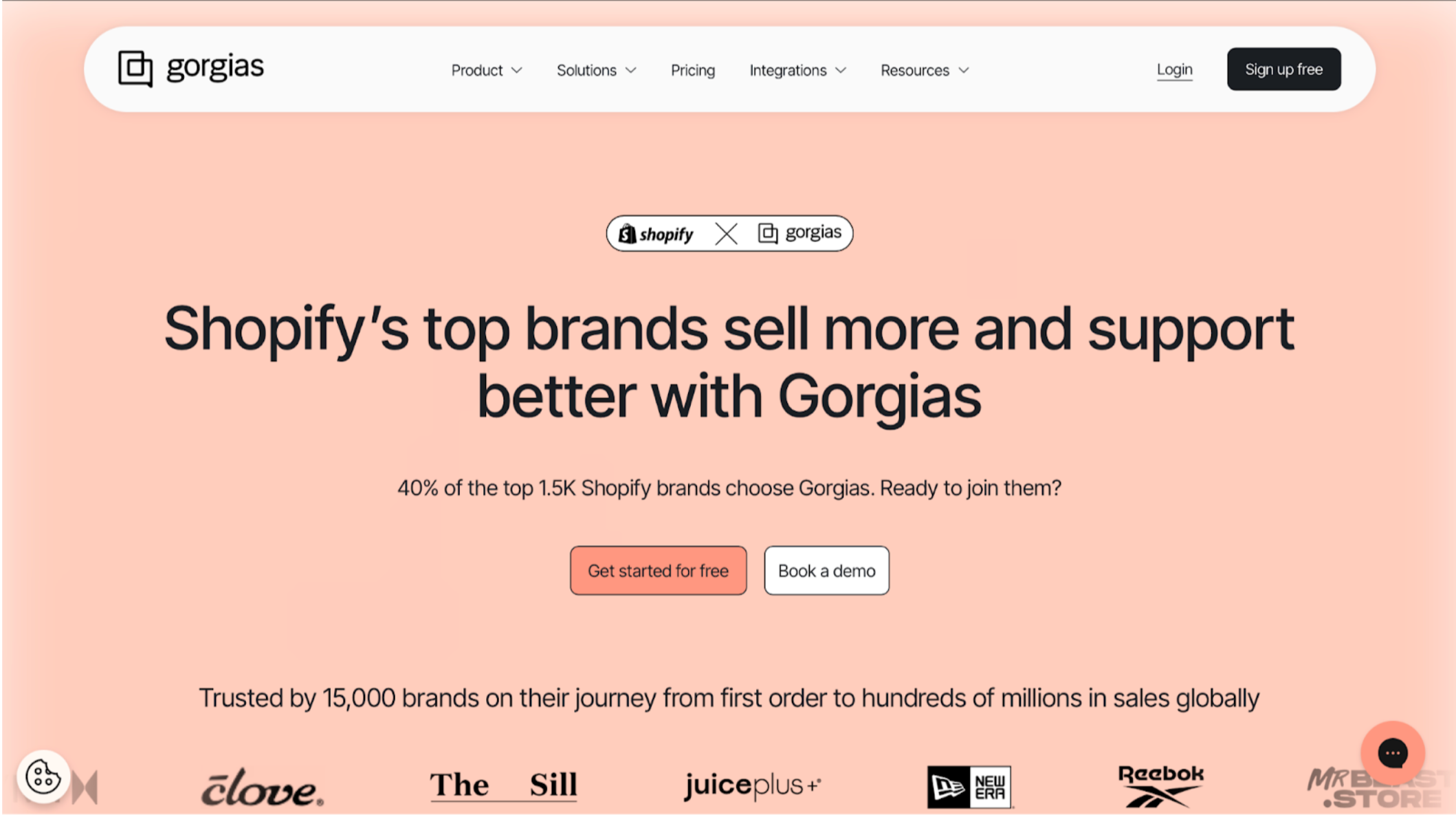
Gorgias centralizes customer support from email, chat, social, SMS & phone into one Shopify-native helpdesk. You see order history, customer data, macros, automation rules, sentiment tagging, and auto-responses right inside the ticket view, so teams resolve queries faster while boosting sales conversions. It’s especially great for ecommerce teams that need Shopify context without switching tabs.
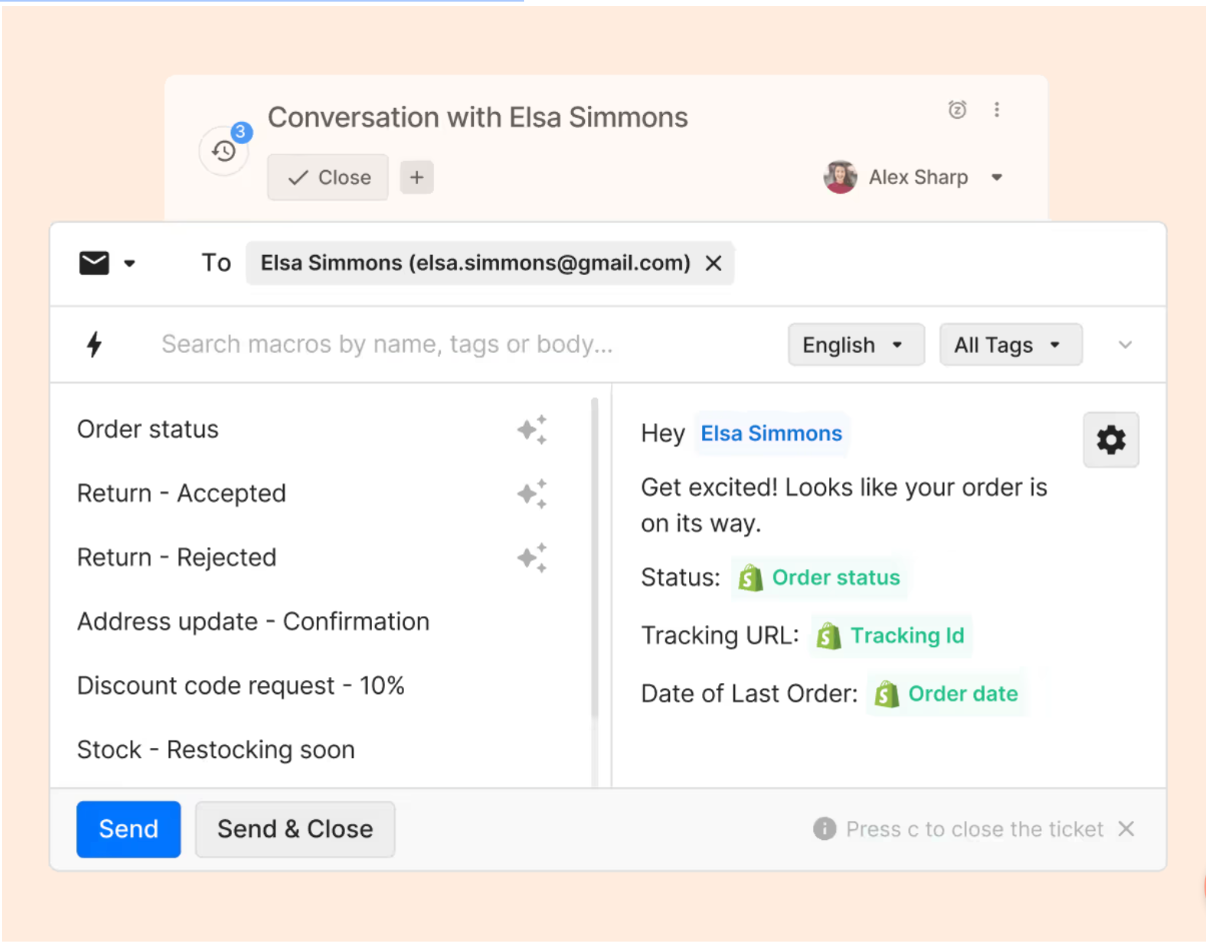
Key features:
-
Unified ticketing (email, live chat & social) in one Shopify-ready dashboard
-
Pre-built Shopify data & order context inside support tickets
-
Live chat with automated triggers to convert visitors
-
Macros & automation rules to handle repetitive inquiries
-
Intent & sentiment detection for smarter routing
-
Multi-store support under one account
Pricing:
-
Starter: ~$10/mo - 50 tickets included
-
Basic: ~$50/mo (300 tickets)
-
Pro: ~$300/mo (2,000 tickets)
-
Advanced: ~$750/mo (5,000 tickets)
-
Enterprise: Custom - high-volume brands & custom needs
Gorgias scales from startups to high-growth Shopify Plus stores with strong automation and Shopify-first support workflows.
Review
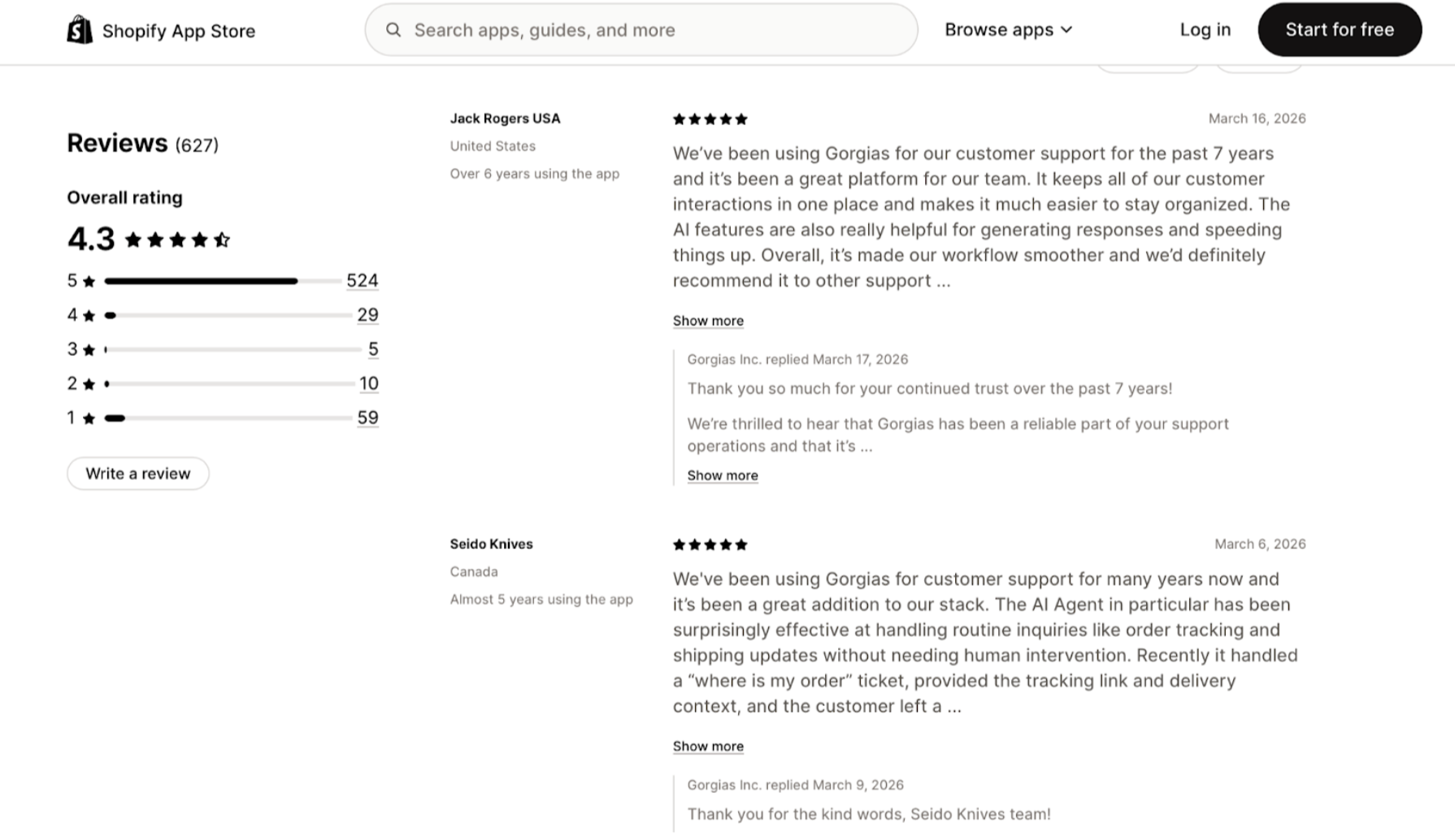
Gorgias is appreciated for centralizing customer interactions and simplifying support workflows for ecommerce teams. Users highlight its AI features that speed up responses and its ability to keep all conversations organized in one place. While generally reliable and effective, some users mention occasional delays in support response times as an area to improve.
Summary
Gorgias is a Shopify-native helpdesk designed to centralize customer support across email, chat, social, and more in one interface. It allows teams to access order data, automate responses, and manage customer interactions without switching tabs. With strong automation and ecommerce-focused features, it improves response speed and efficiency. It is best suited for fast-growing Shopify and Shopify Plus brands.
2) Freshdesk
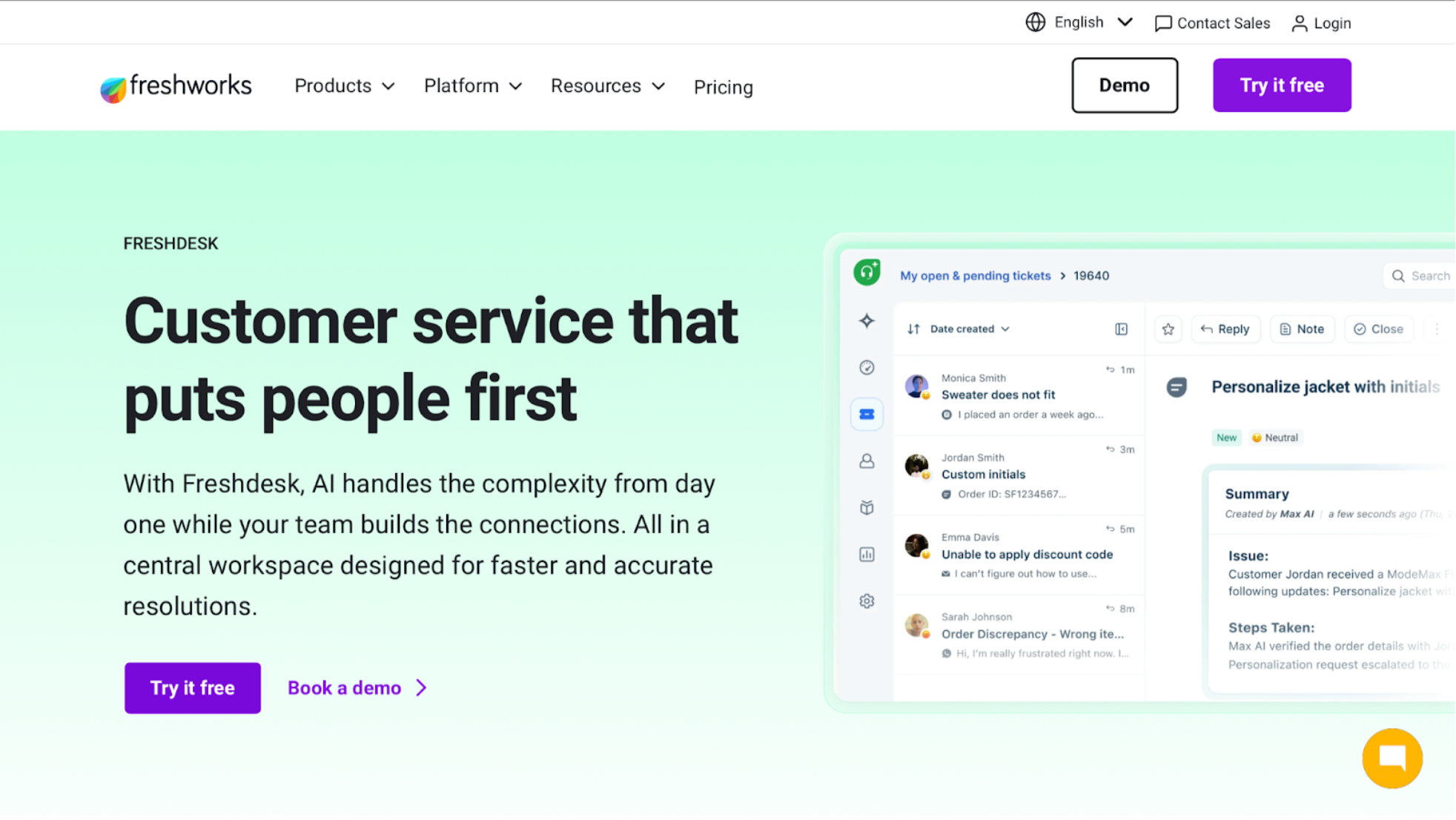
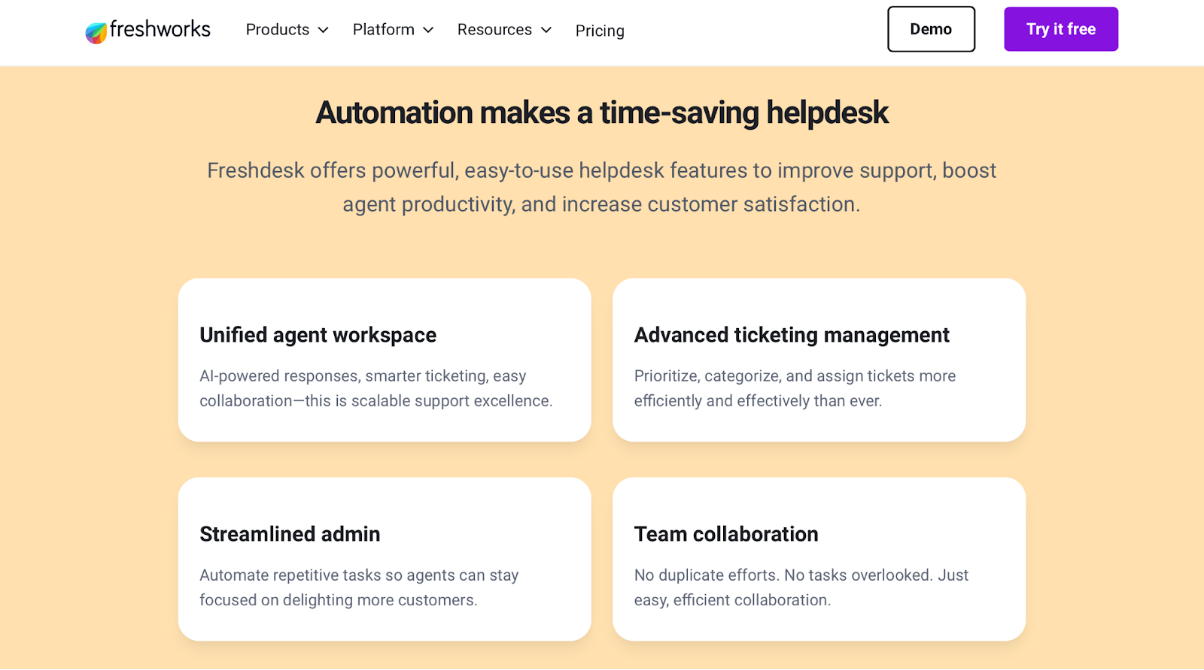
Freshdesk is a classic, scalable ticketing and helpdesk platform known for strong automation (Freddy AI), omnichannel support, and workflow customization. It centralizes email, chat, phone, social, and knowledge base into one support suite that grows with your business.
Key features:
-
AI-powered ticketing and automated workflows (Freddy AI)
-
Multichannel support (email, chat, phone & social)
-
Self-service portal + knowledge base
-
Automation rules & real-time reporting
-
Custom roles, SLA policies & security controls
-
Mobile apps for agents on the go
Pricing (per agent/per month):
-
Free Program: $0 - up to small team support basics
-
Growth: ~$15/agent - automation & reporting
-
Pro: ~$49/agent - custom roles, multilingual helpdesk
-
Enterprise: ~$79/agent - expanded controls & features
Freshdesk is flexible, ideal if you want both support ticketing and extended CRM integrations with lots of automation and AI capabilities.
Review
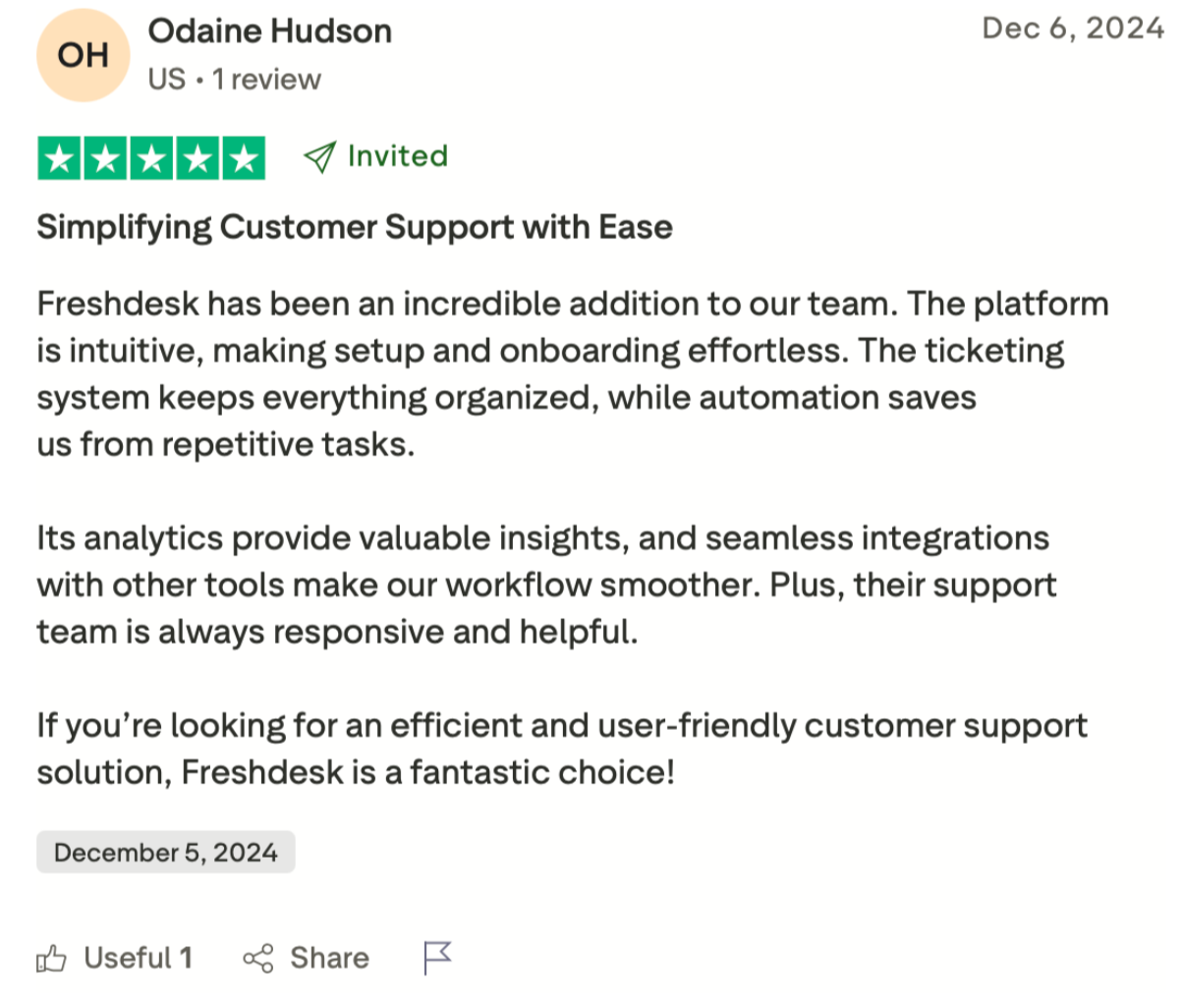
Freshdesk is highly regarded for its intuitive interface and ease of onboarding, making it a great choice for teams of all sizes. Users value its automation features that reduce repetitive tasks and its analytics that provide actionable insights. Combined with responsive support and smooth integrations, it is seen as a reliable and efficient helpdesk solution.
Summary
Freshdesk is a scalable helpdesk platform known for its strong automation and AI-powered workflows. It supports omnichannel communication across email, chat, phone, and social while offering customizable workflows and reporting. The platform is flexible and grows with your business needs. It is ideal for teams that want structured support operations with automation and CRM integrations.
3) Zendesk
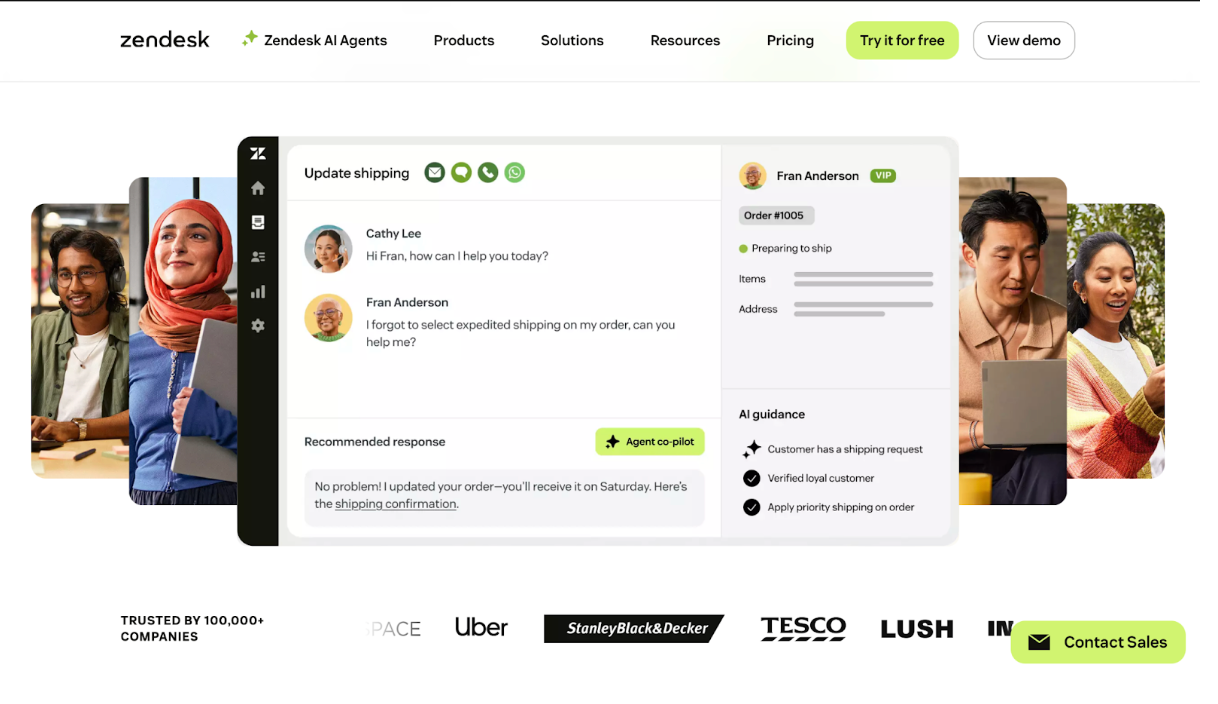
Zendesk is one of the most widely adopted helpdesk solutions, a mature, enterprise-ready platform with robust ticketing, omnichannel support, rich analytics, automation rules, and scalable workflows. Its integrations and customization make it a strong fit for complex support teams. It is trusted by leading global brands such as Airbnb, Uber, Shopify, and Slack, reflecting its strong enterprise credibility. Its adoption by high-growth companies highlights its ability to handle large-scale, customer-centric support with reliability and precision.
Key features:
-
Powerful omnichannel ticket management (email, chat, voice, social)
-
Workflow automation & SLA enforcement
-
Advanced analytics & custom reporting
-
AI bots and conversational automation
-
Skills-based routing & multi-brand support
Typical pricing (per agent/month):
-
Support Team: ~$19
-
Suite Team: ~$55
-
Suite Professional: ~$115
-
Enterprise & Add-ons: Custom / higher tiers
Zendesk is great for brands that need enterprise scale, deep customization, and multilingual support.
Review
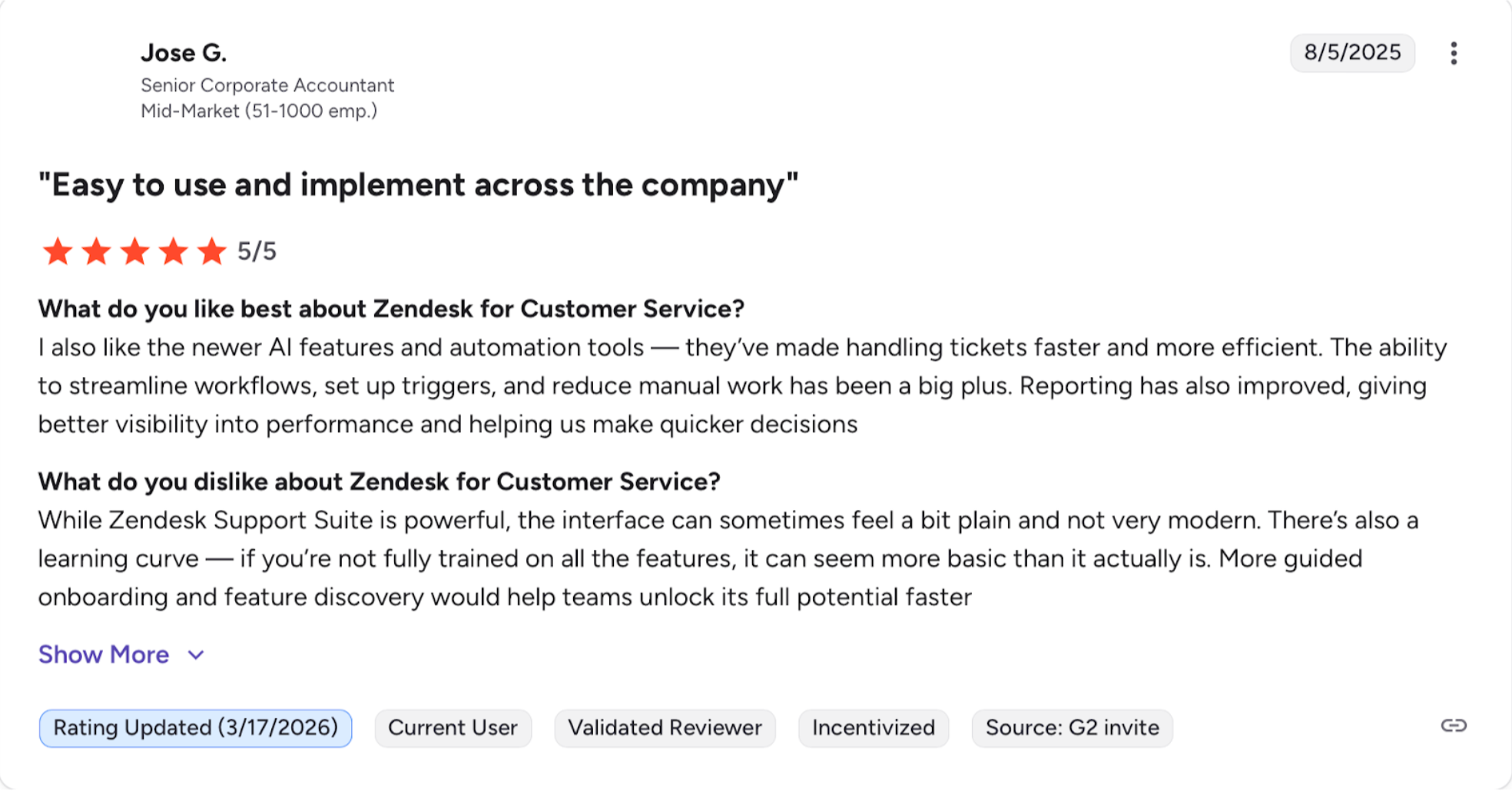
Users appreciate Zendesk’s strong automation, AI features, and workflow optimization that improve efficiency and reporting. However, some mention a learning curve and a slightly outdated interface.
Summary
Zendesk stands out as the best and scalable solution, offering advanced automation, deep analytics, and enterprise-level workflow management. It is best suited for growing brands that need a robust, all-in-one support system to handle complex operations efficiently.It’s an enterprise-grade support platform offering advanced ticketing, automation, and analytics capabilities. It supports omnichannel communication and highly customizable workflows for complex support operations. With powerful reporting and scalability, it is widely used by large teams. It is best suited for enterprises and brands with high-volume support needs.
4) Tidio
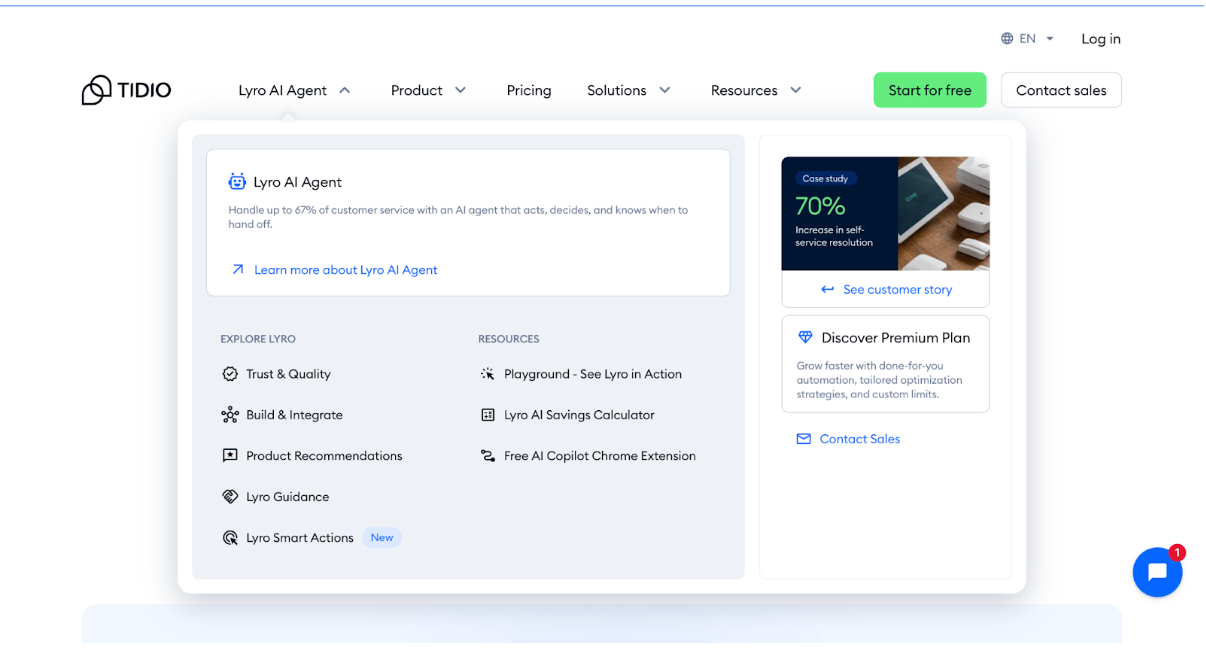
Tidio combines live chat, helpdesk & AI chatbot in one intuitive interface with a lighter footprint than larger support platforms. It’s especially strong for small to medium Shopify stores wanting chat-centric support that also generates tickets and handles basic automation.
Key features:
-
Native live chat with visitor tracking
-
AI chatbot (Lyro) that automates answers in your brand voice
-
Unified inbox for chat + email + social conversations
-
Smart automation & conversation tagging
-
Easy setup and customizable widget
-
Analytics and simple support tools
Pricing tiers:
-
Free Forever: Basic chat + 50 monthly conversations
-
Starter: ~$29/mo - more live chat/Ticket conversations
-
Growth: ~$59/mo - larger conversation limits + analytics
-
Plus / Premium: ~$749/mo+ - advanced business features
Tidio is perfect for smaller teams that want AI-chat + basic helpdesk without heavy admin overhead.
Review
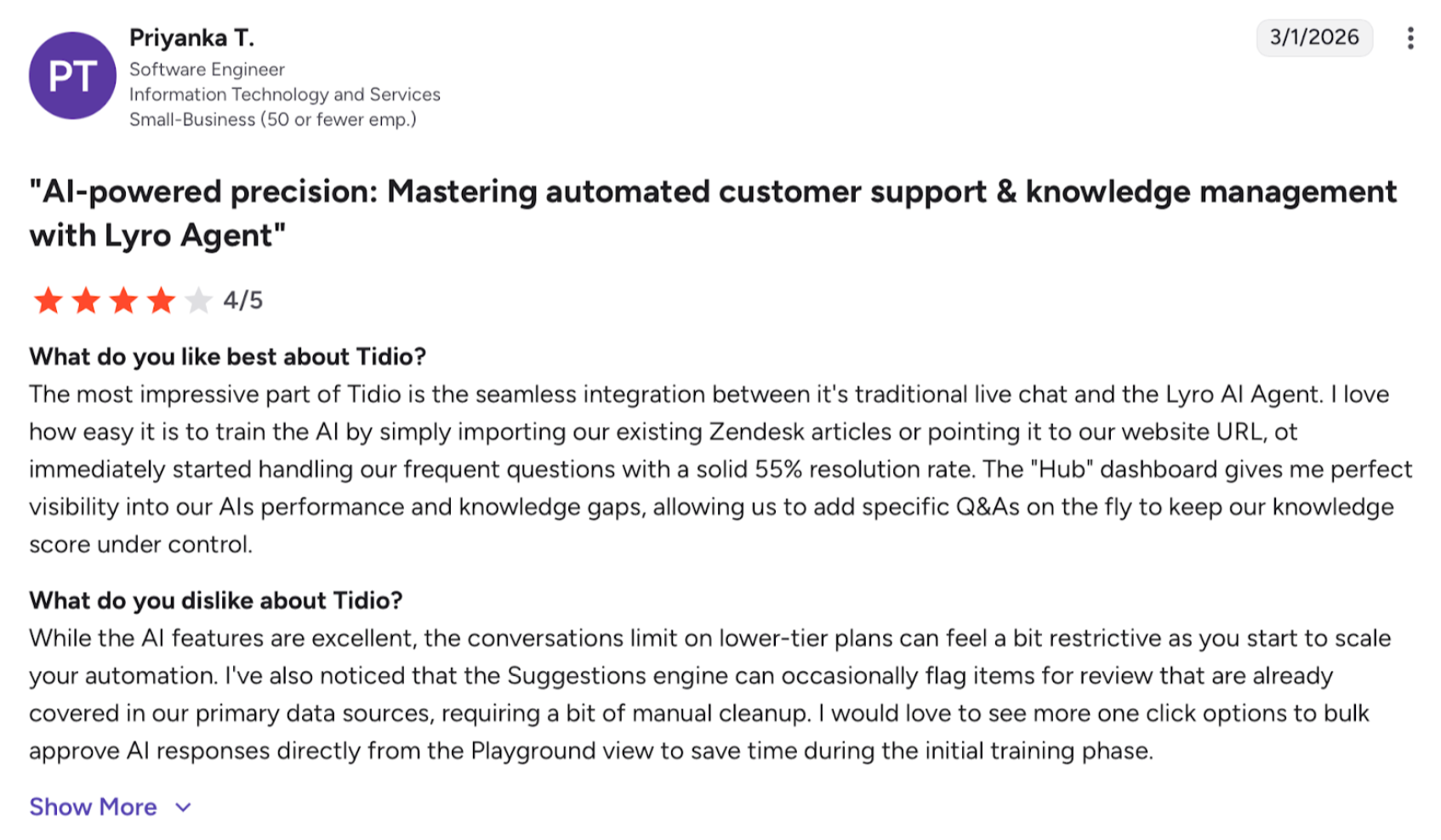
Tidio is praised for its strong AI capabilities, particularly the Lyro AI agent, which helps automate customer support efficiently. Users highlight its seamless integration with existing knowledge bases and its ability to resolve a significant portion of queries automatically. However, limitations in lower-tier plans and occasional need for manual AI training adjustments are noted as areas for improvement.
Summary
Tidio is a lightweight customer support tool that combines live chat, AI chatbots, and helpdesk features in one platform. It is easy to set up and allows businesses to automate conversations and engage customers in real time. With a simple interface and affordable pricing, it is accessible for smaller teams. It is ideal for brands prioritizing chat-first support and quick implementation.
5) Re:amaze
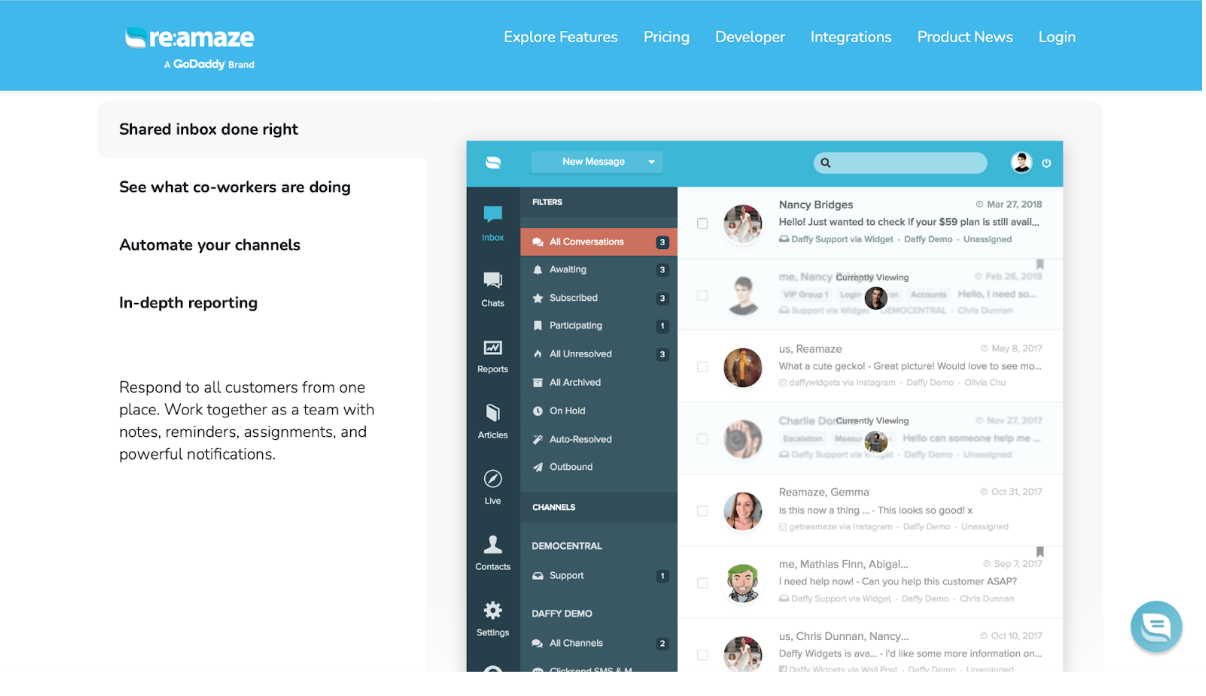
Re:amaze is a flexible, ecommerce-focused support platform that lets you manage email, live chat, social messaging, SMS, and more in one place while giving teams tools for automation and collaboration. It’s often praised for its intuitive dashboards and automation triggers.
Key features:
-
Unified inbox: chat, email, social & SMS in one feed
-
Automated workflows & macros to handle routine tasks
-
Custom roles & team collaboration tools
-
Cues (proactive messages & automated triggers)
-
Reporting & conversation tracking
-
Multibrand/ multi-site support
Pricing (from widely referenced models):
-
Basic: ~$29/agent/mo
-
Pro: ~$49/agent/mo
-
Plus: ~$69/agent/mo
-
Enterprise: ~$899/mo+ (premium & enterprise options)
Re:amaze is a strong contender if you want multichannel support + proactive engagement tools with Shopify integration.
Review
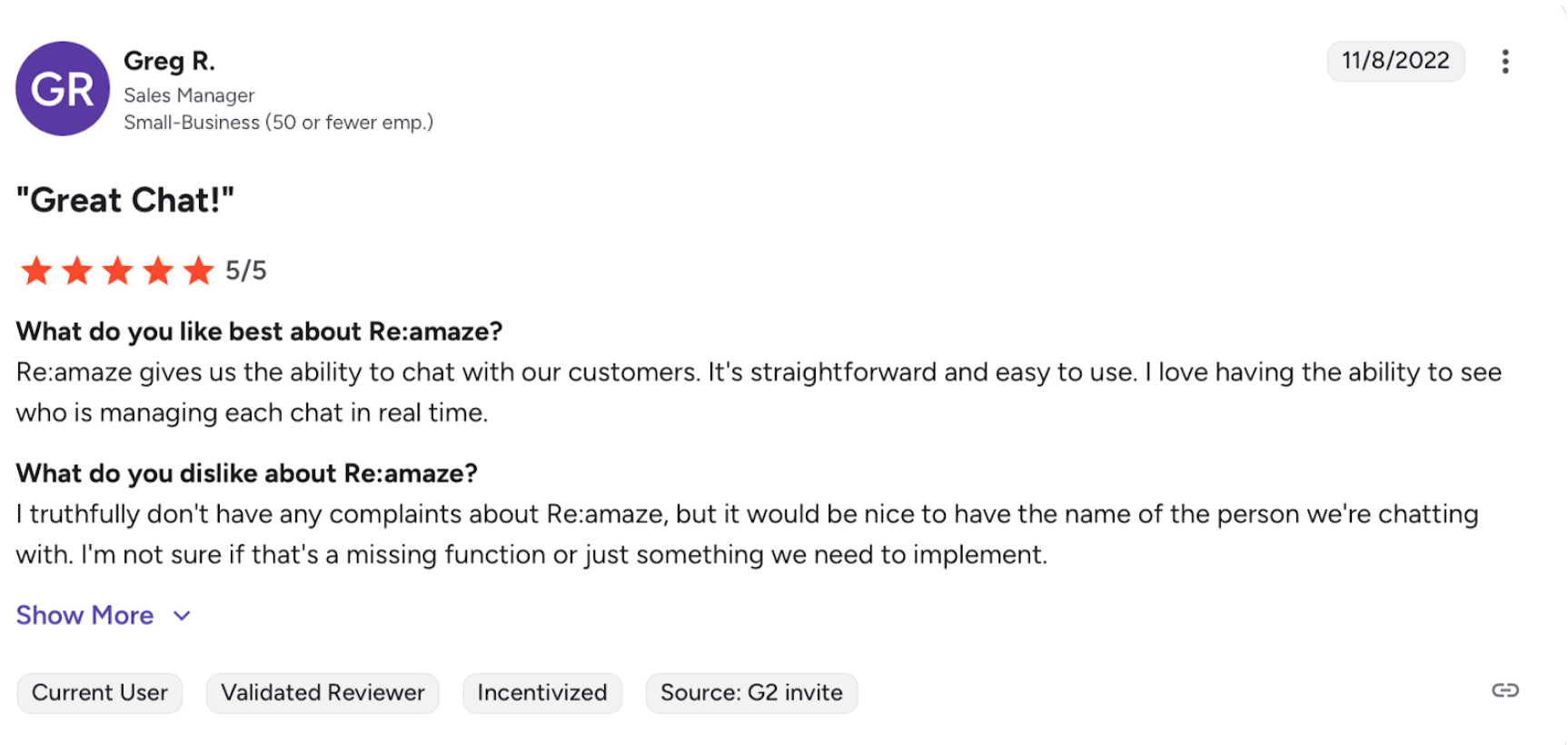
Re:amaze stands out as a simple yet effective customer support tool, especially for live chat. Users appreciate how easy it is to use and the ability to monitor conversations in real time, making team collaboration smoother. While overall satisfaction is high, a minor improvement users suggest is better visibility of agent identities during chats.
Summary
Re:amaze is an ecommerce-focused helpdesk that brings email, chat, social, and SMS into one unified inbox. It offers automation, collaboration tools, and proactive messaging features to improve customer engagement. The platform supports multi-brand and multi-store operations efficiently. It is best suited for Shopify businesses managing multiple channels and customer touchpoints.
Quick Tips to Choose the Right Helpdesk
-
If you want Shopify order data directly inside tickets, choose Gorgias.
-
If automation and structured workflows matter most, look at Freshdesk.
-
If you need enterprise scale and advanced reporting, Zendesk fits well.
-
If live chat and AI chatbot are your priority, Tidio is simple and fast.
-
If you manage multiple brands or stores, Reamaze gives flexibility.
Conclusion
At the end, you are going to choose how your customers experience your brand.
The right helpdesk makes support feel organized. It gives your team clarity. It helps you reply faster and with confidence. And when everything is connected in one place, you feel more in control of your growth.
Think about your stage right now. Are you just starting? Scaling quickly? Managing multiple stores? Pick the tool that supports where you are today and where you want to go next.
Because great support is not just about solving tickets. It is about building trust, one conversation at a time.
Struggling to choose the right Headless CMS & Headless Commerce tech stack? We’ll help you pick the best solution for your business! Exclusive Offer: 20 Hours of Free Development & Consultation
Book a MeetingFrequently Asked Questions
Gorgias is best for Shopify-native support, while Zendesk suits enterprise teams.
Yes, as your store grows, managing support across multiple channels manually becomes inefficient.
Look for a unified inbox, automation, Shopify integration, and multichannel support.
Yes, faster responses and better workflows improve customer satisfaction and retention.