

Words that inspire, ideas that spark,
stories that stay
Best Headless CMS for Self-Hosting in 2026 (With Reviews, Founders & Real Insights)
V.Srinidhi Reddy
Friday, April 17th, 20266 min read
Best Headless CMS for Self-Hosting in 2026 (With Reviews, Founders & Real Insights)
Introduction
If you're choosing a headless CMS in 2026, one of the biggest decisions is whether to go SaaS or self-hosted. And increasingly, serious teams are choosing self-hosted.
Why? Because self-hosting gives you full control over your data, infrastructure, and scalability, without worrying about vendor lock-in or pricing surprises.
This becomes even more important when you're building production-grade apps, multi-tenant systems, or high-performance websites using frameworks like Next.js, Nuxt.js, or Astro.
In this guide, we’ll break down the best self-hosted headless CMS platforms, including:
-
Directus (database-first)
-
Payload (code-first)
-
Strapi (ecosystem leader)
-
Plus a few underrated but powerful alternatives
Directus vs Payload vs Strapi (Quick Comparison)
|
CMS |
Approach |
Best For |
Flexibility |
Learning Curve |
|
Directus |
Database-first |
Existing DB systems |
Very High |
Medium |
|
Payload |
Code-first |
Dev-heavy apps |
Extremely High |
High |
|
Strapi |
Hybrid |
General use cases |
High |
Low–Medium |
|
Ghost |
API-first (content) |
Blogs/media |
Medium |
Low |
|
Keystone |
Framework-based |
Custom apps |
Very High |
High |
1. Directus
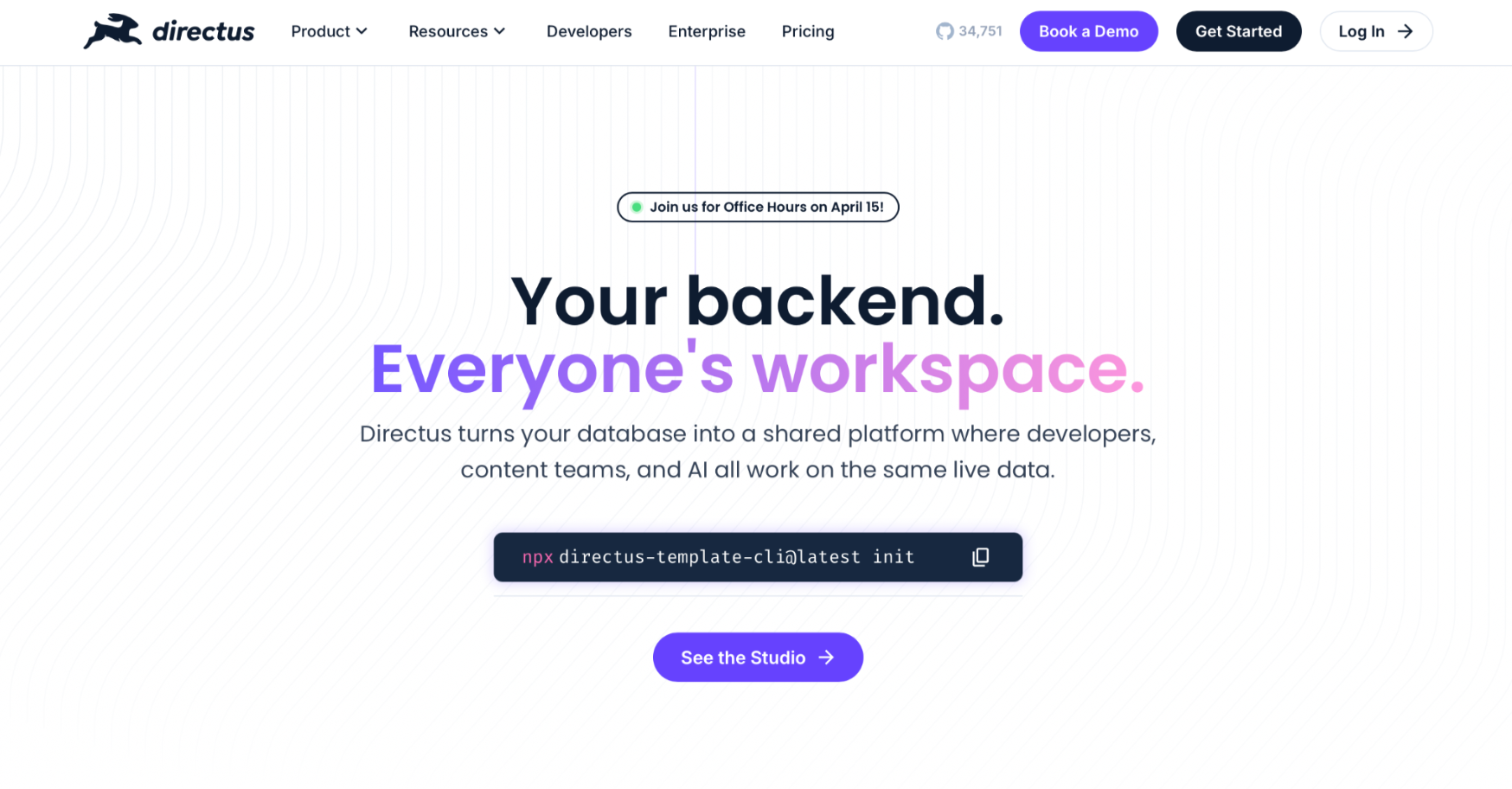
Founders
Directus was originally created by Ben Haynes, focusing on database-first content management.
Overview & Review
Directus takes a completely different approach compared to Sanity. Instead of creating a new content system, it sits directly on top of your existing database and turns it into a CMS.
This makes it incredibly powerful for projects where you already have structured data or need full control over your database architecture. For frameworks like Nuxt.js and Astro, Directus works seamlessly by exposing your data via REST or GraphQL APIs.
One of its biggest strengths is that it is non-opinionated about your database, meaning you can design your backend exactly the way you want.
Reddit Insight
Developers often describe Directus as “perfect if you already have a database and want a CMS layer on top,” which highlights its unique positioning.
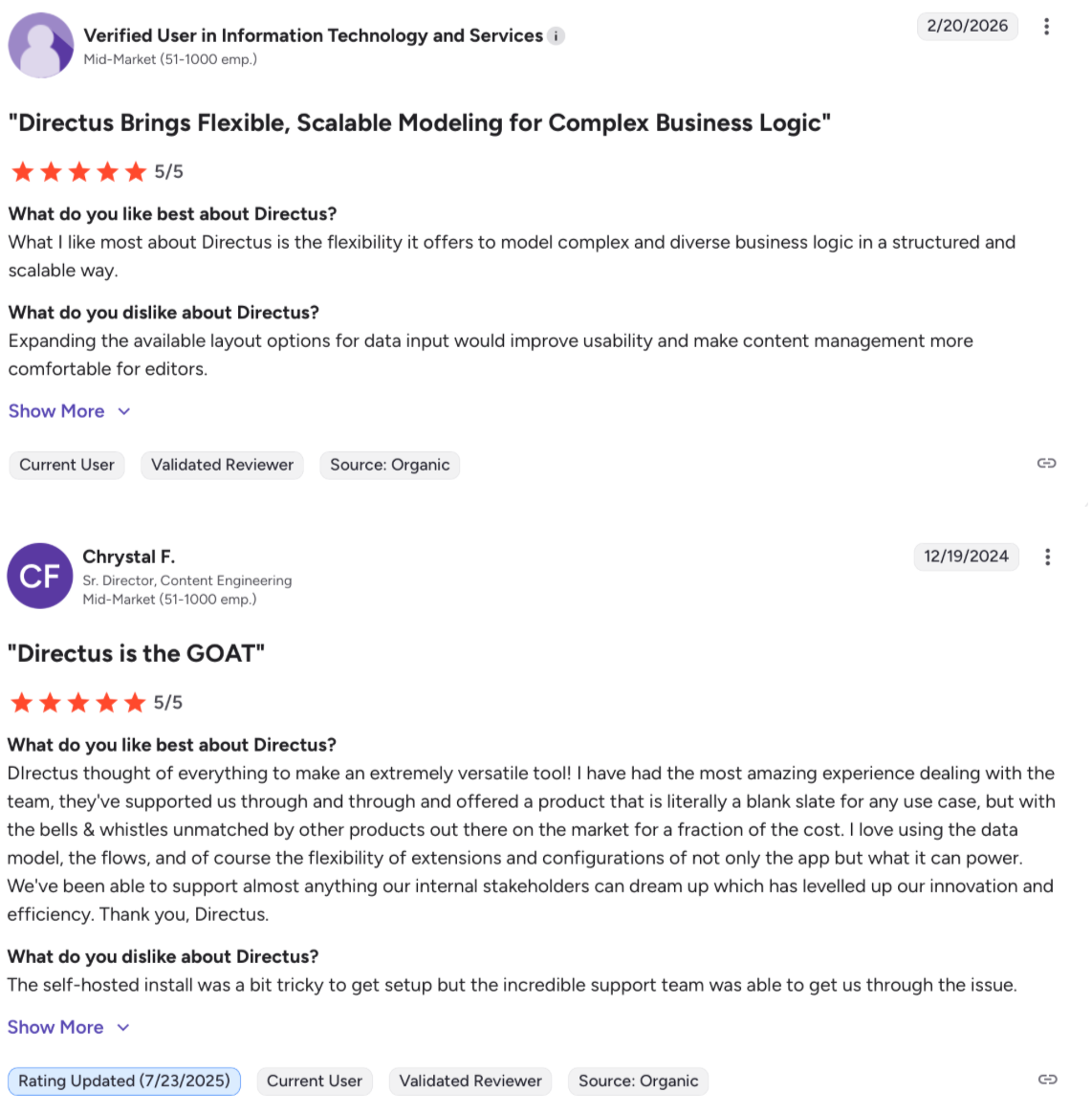
Final Take
Directus is ideal for teams that want database-level control and a highly customizable backend system.
2. Payload CMS
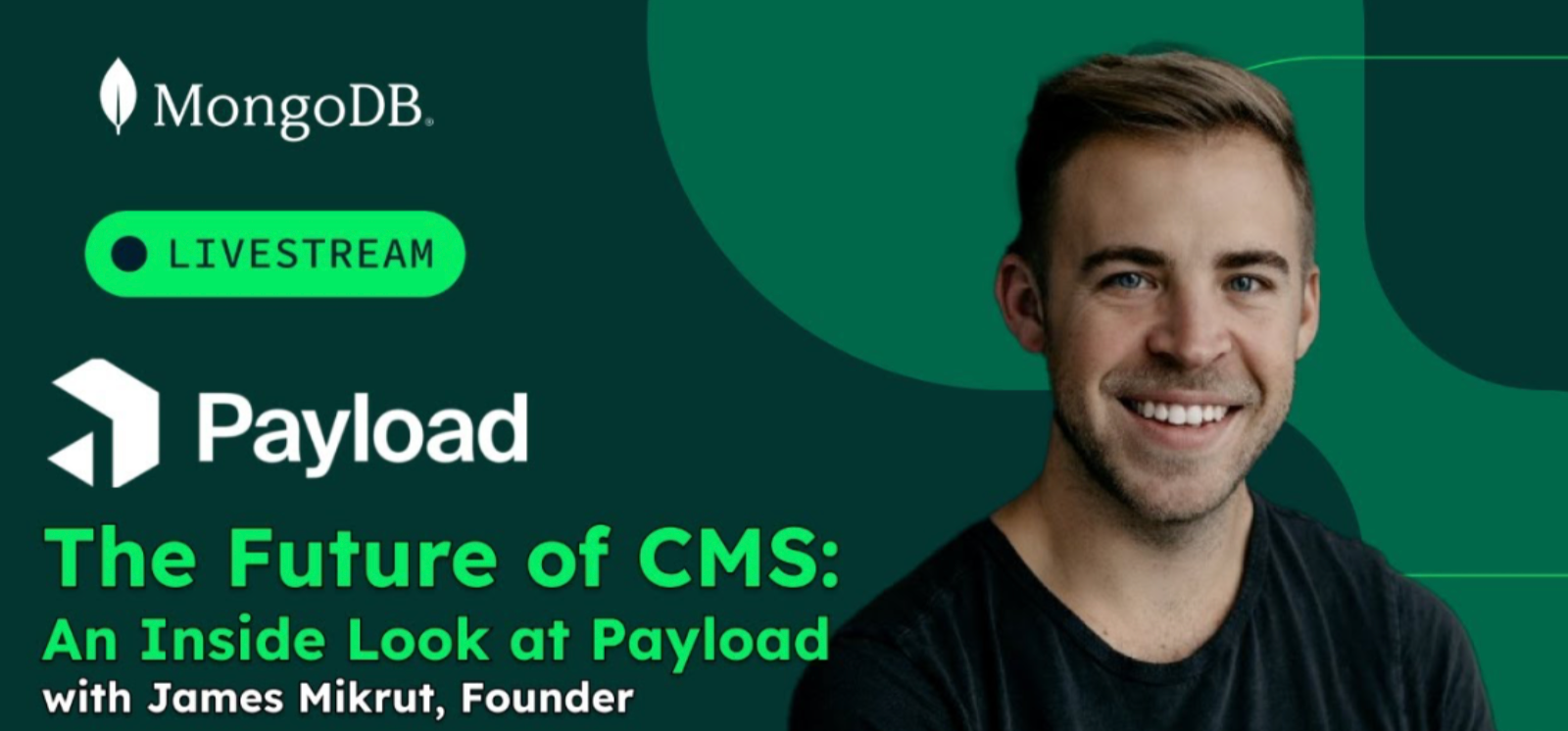
Founder
Payload CMS was created by James Mikrut, with a focus on modern developer workflows.
Overview & Review
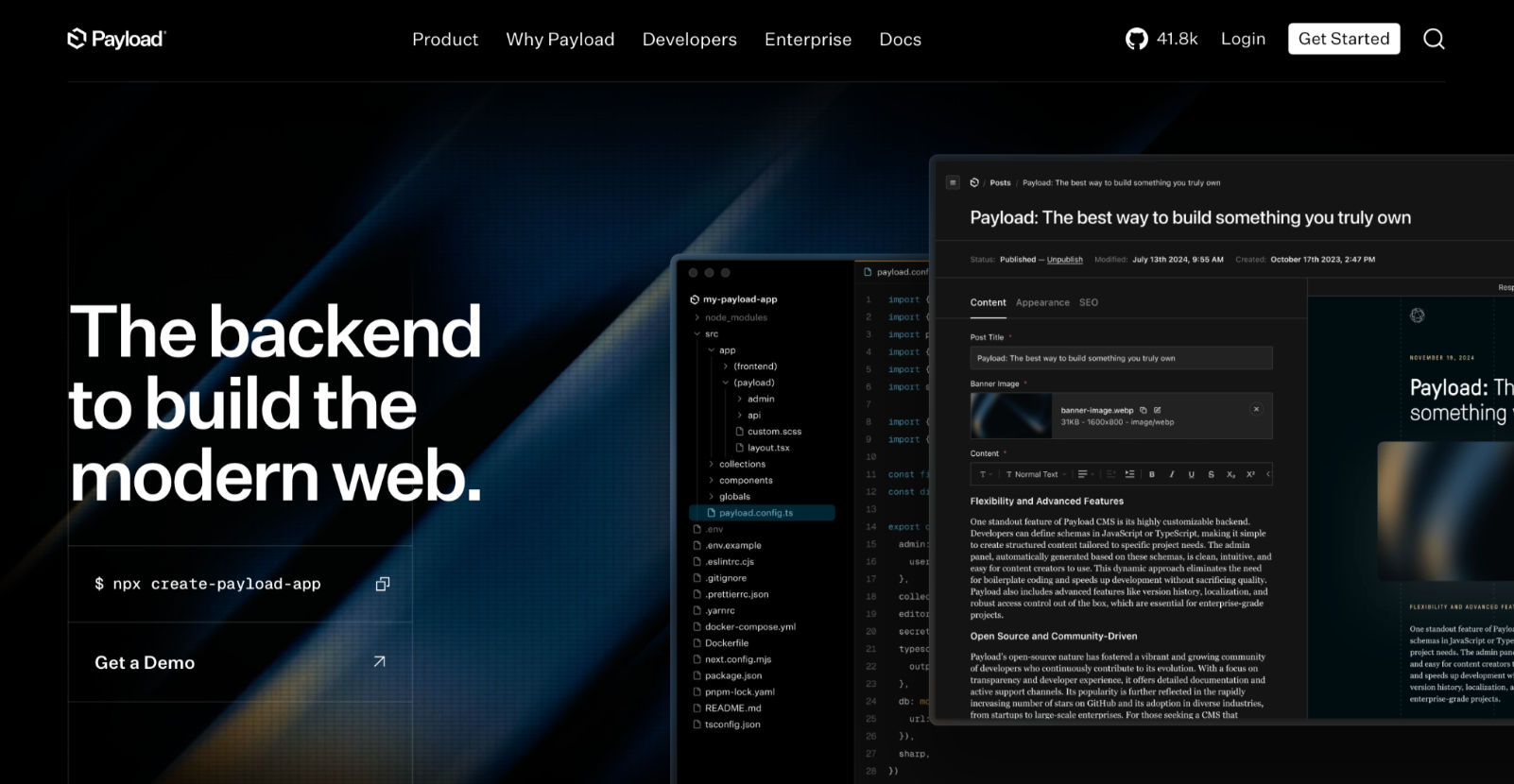
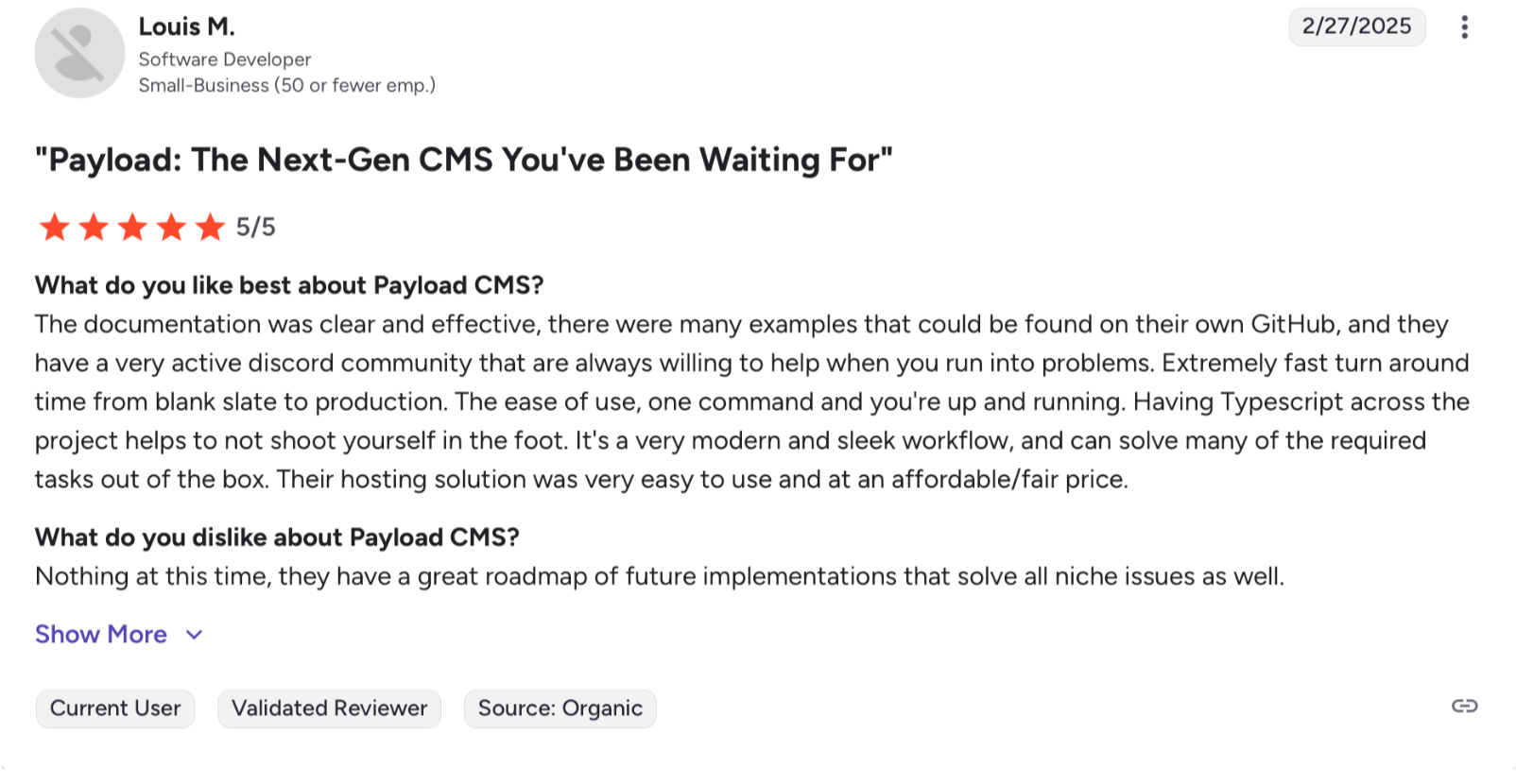
Payload CMS is rapidly becoming a favorite among developers, especially those working heavily with TypeScript. Unlike many CMS platforms, Payload is code-first, meaning your entire content model and backend logic live inside your codebase.
This makes it incredibly powerful for Next.js applications, where you want tight integration between frontend and backend. It also reduces the need for external tools since everything can be managed within a single environment.
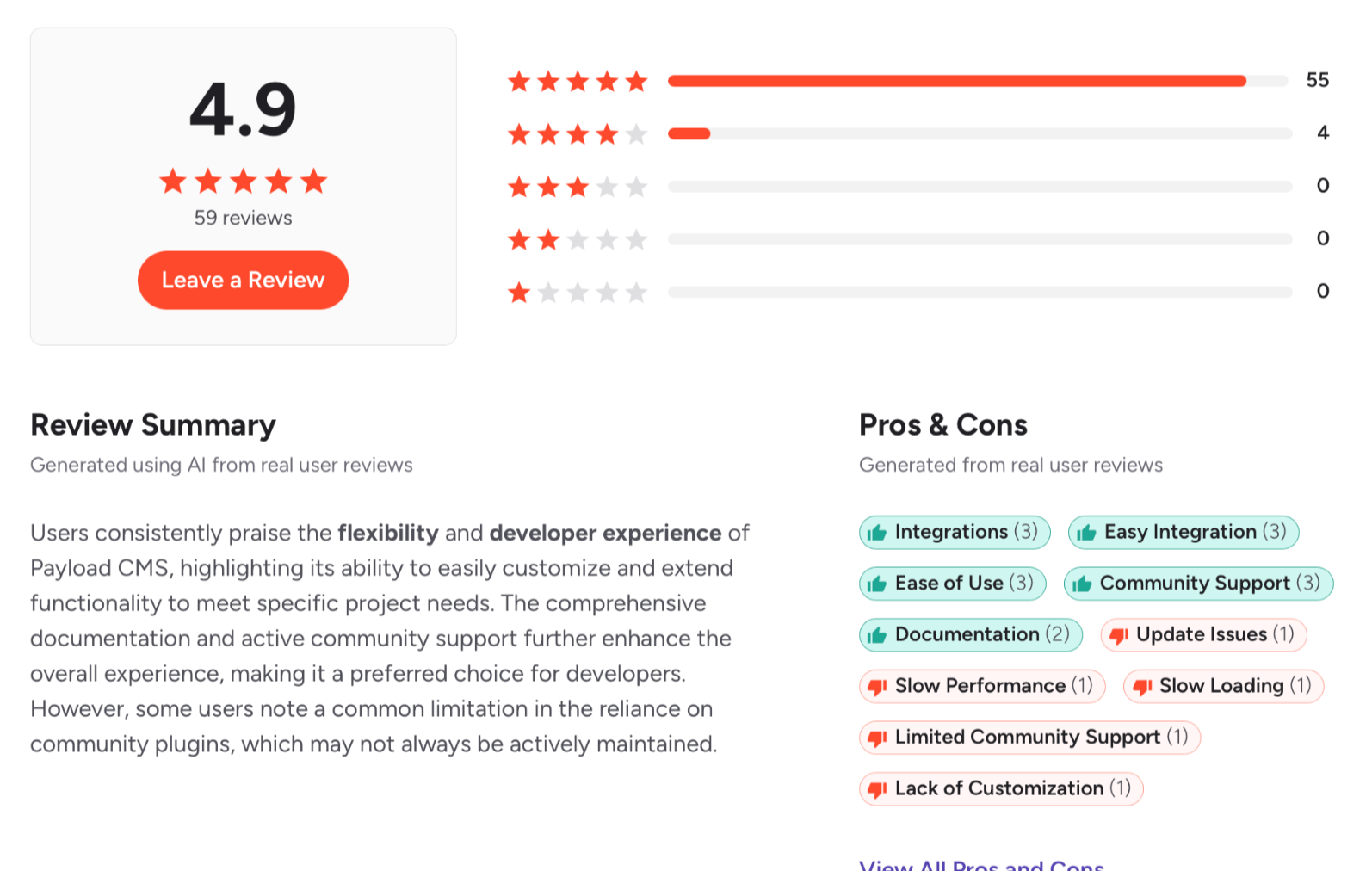
Recent comparisons highlight Payload as the best choice for TypeScript-heavy projects and developer experience, especially when building complex applications.
Reviews
Developers often praise Payload for its “developer-first approach,” especially when compared to more UI-driven CMS platforms.
Final Take
Payload is best for teams that want full control, strong TypeScript support, and a code-first CMS architecture.
3. Strapi
Founders
Strapi was created by Strapi, with contributions from a global open-source community.
Overview & Review
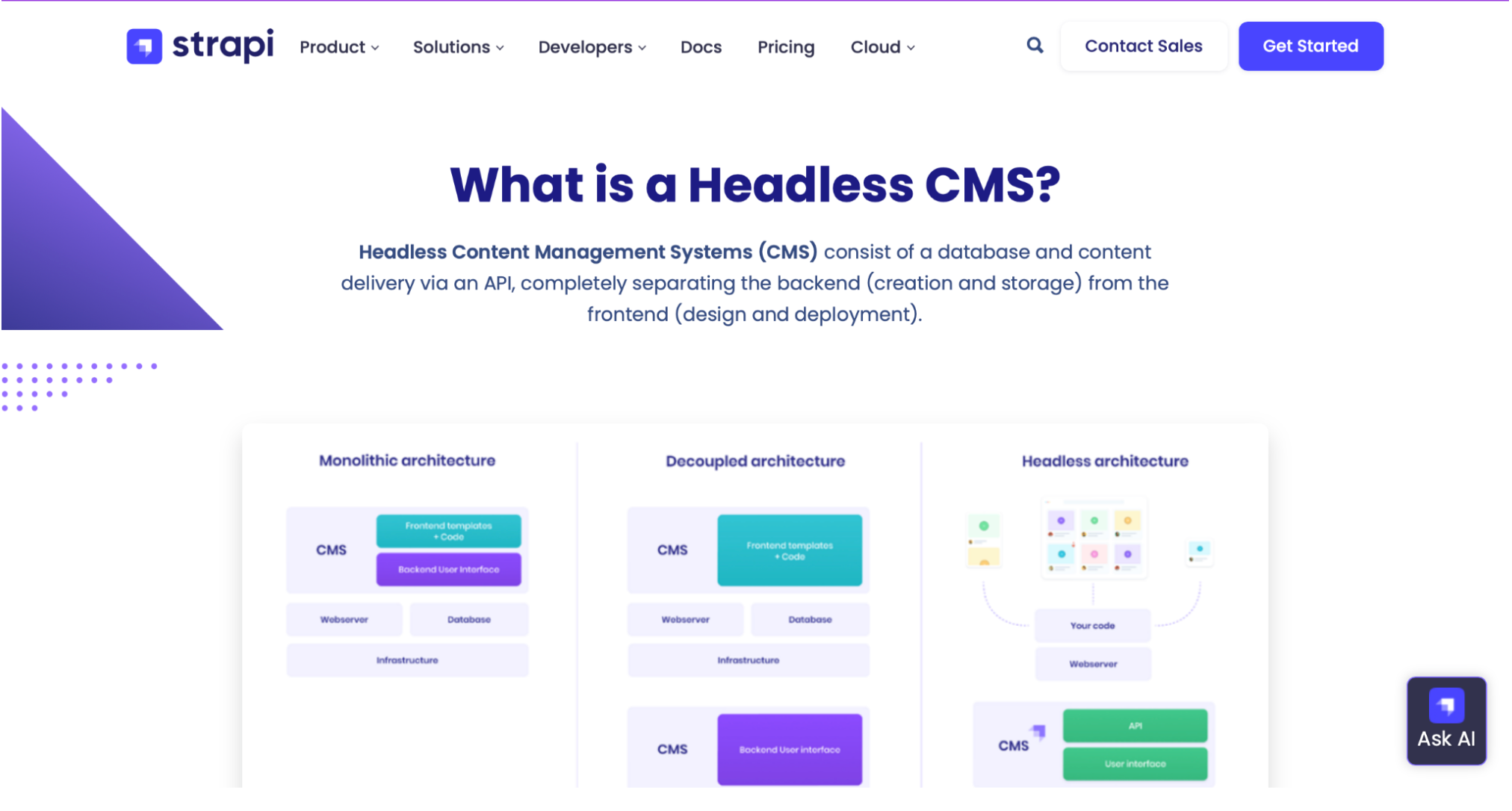
Strapi is one of the most popular open-source headless CMS platforms, known for its balance between ease of use and flexibility. It offers a visual admin panel for managing content while still allowing deep customization through code.
Unlike Payload (code-first) or Directus (database-first), Strapi follows a hybrid approach, making it accessible for beginners while still powerful enough for advanced use cases.
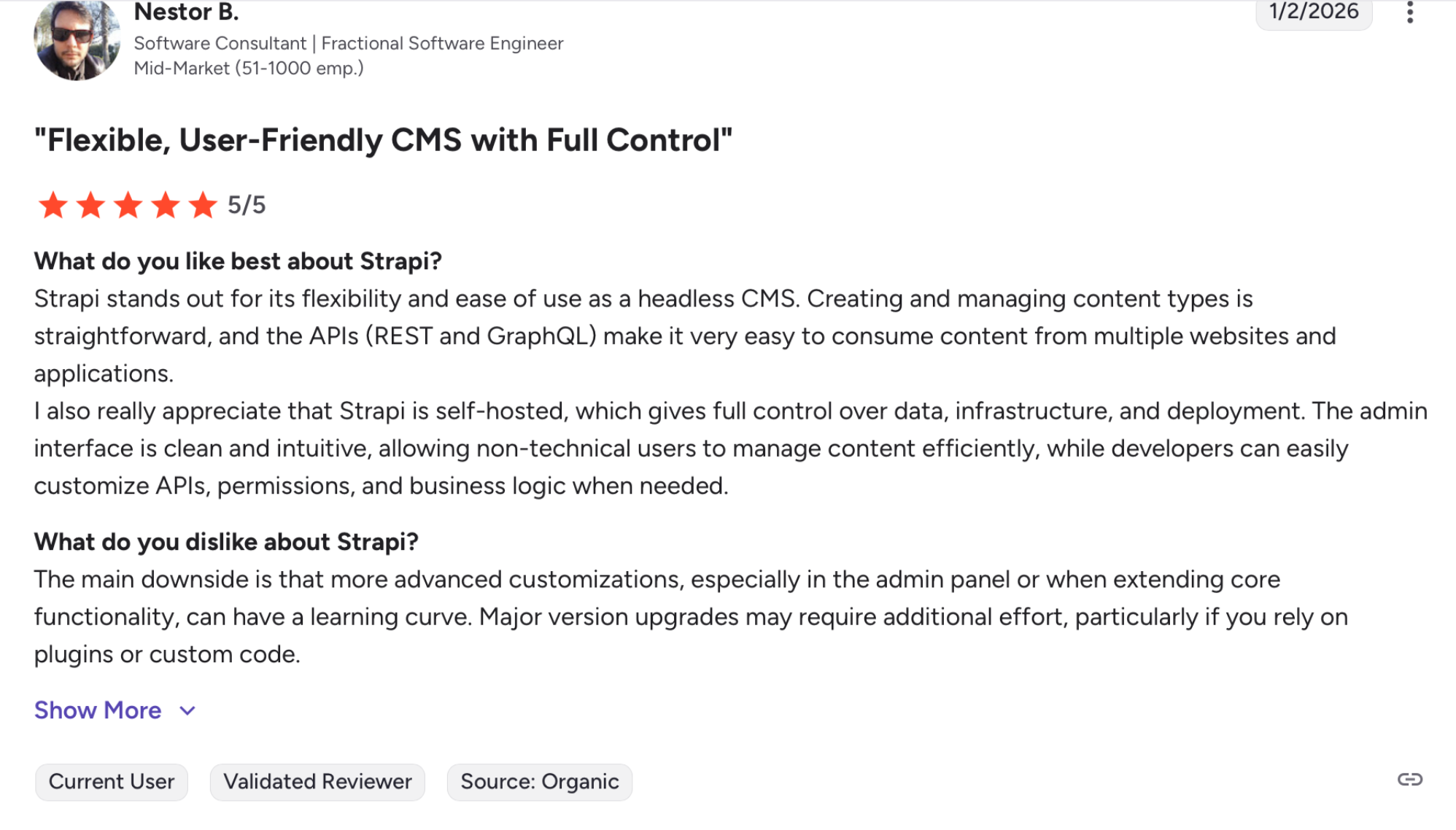
Its biggest advantage is its ecosystem—Strapi has a large plugin marketplace and strong community support, which significantly speeds up development.
Key Strengths
-
User-friendly admin dashboard
-
Large plugin ecosystem
-
REST and GraphQL support
-
Strong community and documentation
-
Flexible customization options
Why It Stands Out
Strapi is often the default choice for teams entering headless CMS because it reduces complexity without sacrificing flexibility.
Summary
Best for teams that want a balanced, beginner-friendly CMS with strong community support and scalability.
4. Ghost
Founder
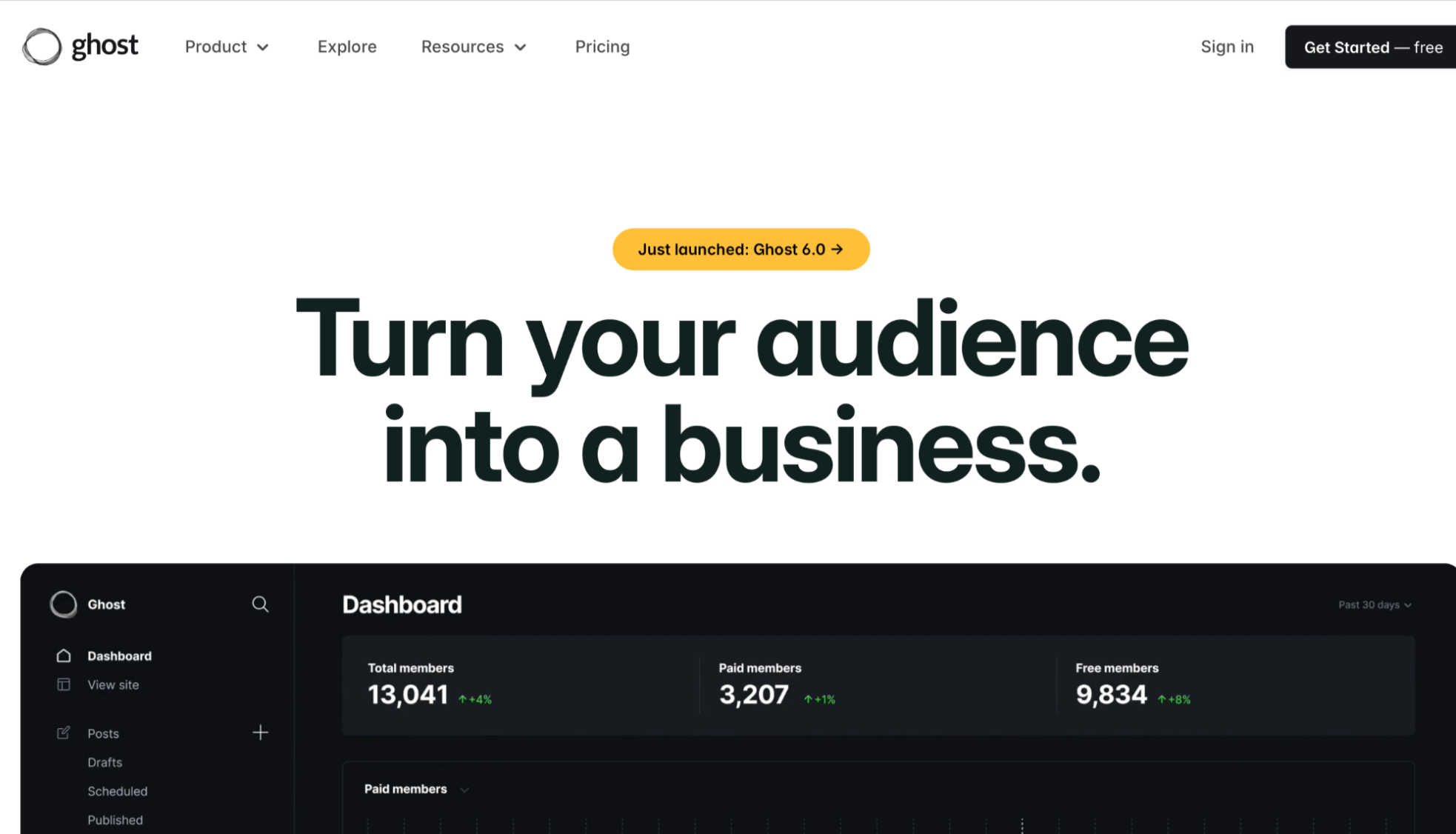
Ghost was founded by John O’Nolan.
Overview & Review
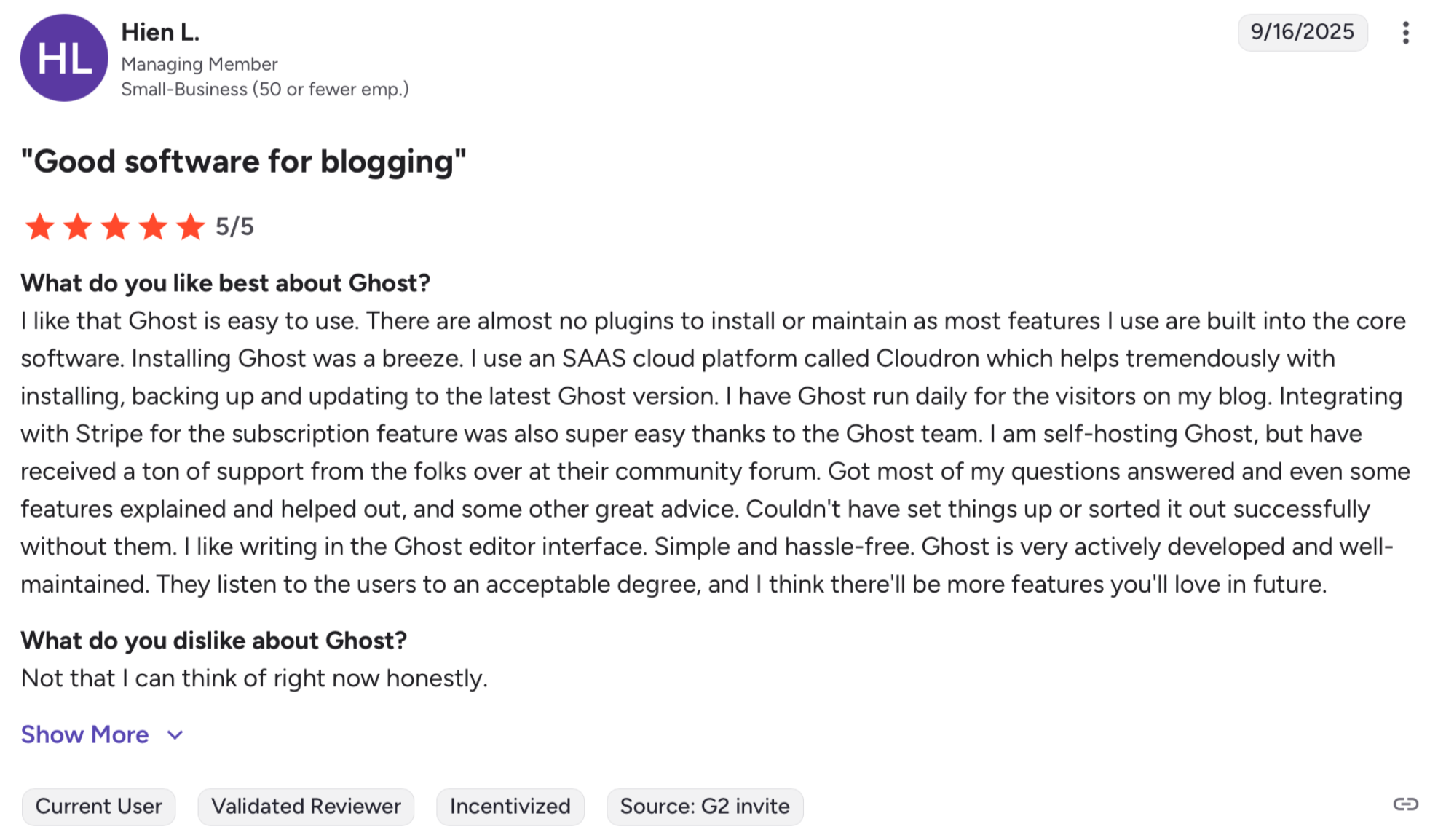
Ghost is a content-first, API-driven CMS designed primarily for publishing. Unlike other headless CMS platforms focused on flexibility, Ghost focuses on delivering a best-in-class writing and editorial experience.
It’s widely used for blogs, newsletters, and media platforms, with built-in features like memberships, subscriptions, and SEO optimization.While it doesn’t offer the same level of backend customization as Strapi or Payload, it excels in simplicity and performance for content-heavy use cases.
Key Strengths
-
Excellent writing and editorial experience
-
Built-in SEO and publishing tools
-
Memberships and subscription support
-
Clean and fast API
-
Optimized for content platforms
Why It Stands Out
Ghost is not trying to be everything—it’s designed to be the best publishing platform, and it delivers exceptionally well in that niche.
Summary
Best for blogs, media platforms, and content-driven websites that prioritize publishing experience over backend complexity.
4. KeystoneJS
Founder
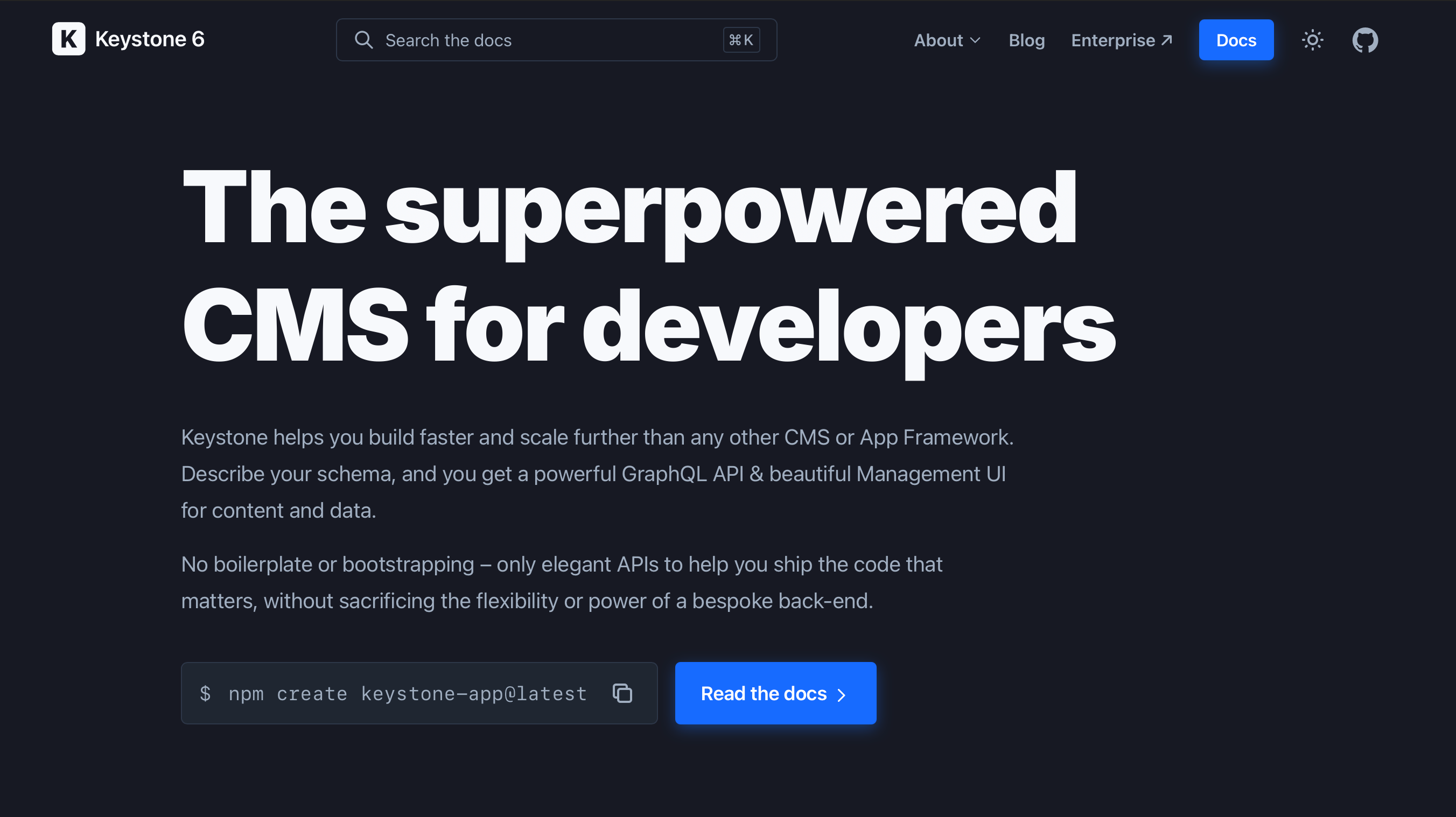
KeystoneJS was created by Jed Watson.
Overview & Review
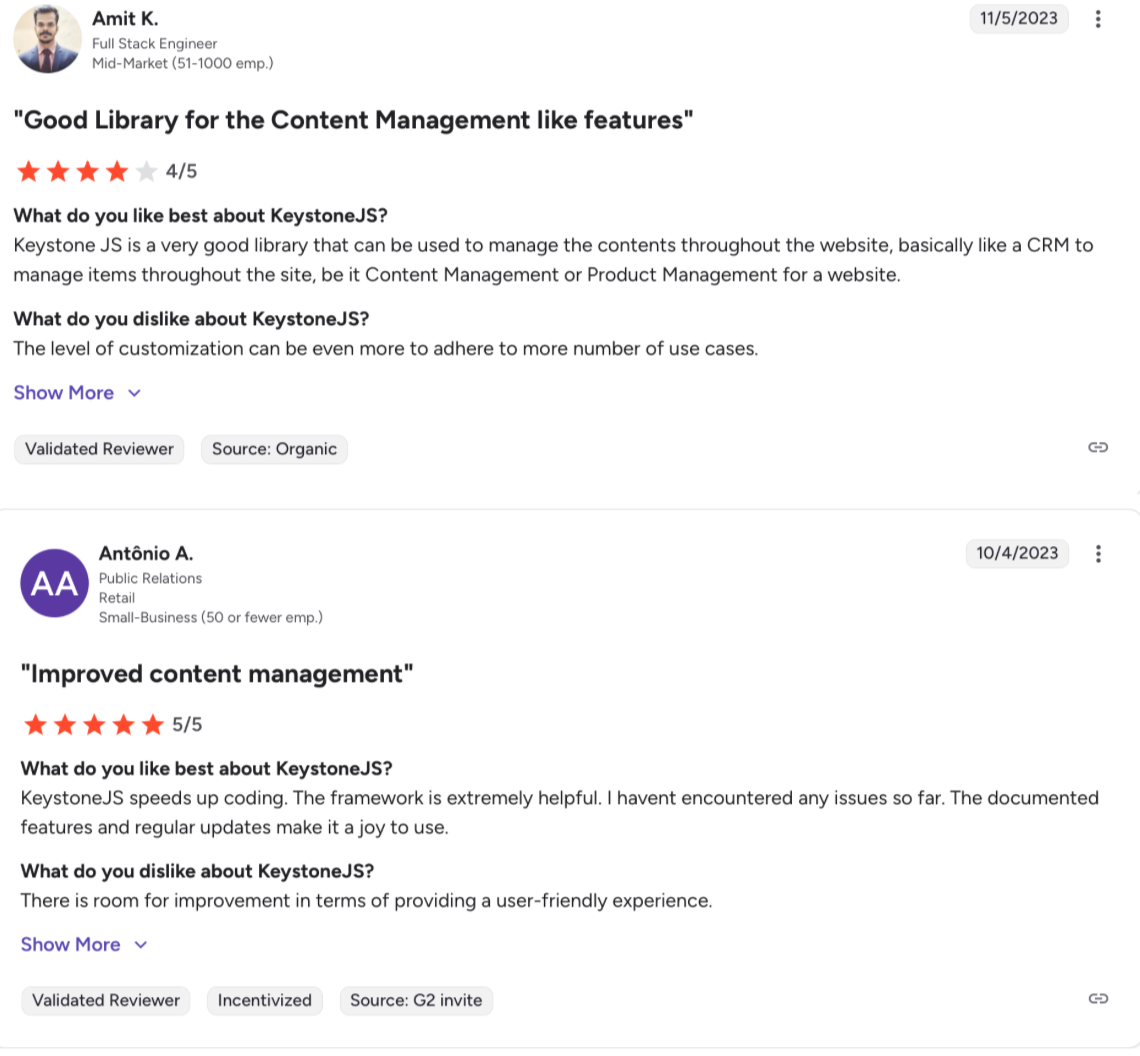
KeystoneJS is more than just a CMS—it’s a backend framework with CMS capabilities. Built around GraphQL and schema-driven development, it gives developers full control over how data is structured and managed.
It’s especially powerful for building custom SaaS platforms, internal tools, and complex applications, where a traditional CMS might feel limiting.
Because of its flexibility, Keystone comes with a steeper learning curve, but it rewards developers with unmatched customization.
Struggling to choose the right Headless CMS & Headless Commerce tech stack? We’ll help you pick the best solution for your business! Exclusive Offer: 20 Hours of Free Development & Consultation
Book a MeetingFrequently Asked Questions
Top options include Directus, Payload, Strapi, Ghost, and Keystone. Each serves different needs—Directus for database control, Payload for code-first development, and Strapi for a balanced, beginner-friendly approach.
Self-hosted CMS platforms provide full control over data, infrastructure, and scalability. They also help avoid vendor lock-in and unpredictable pricing, making them ideal for production-grade and scalable applications
Payload and Keystone are best for developers who want deep customization and code-level control, while Directus is ideal for teams working directly with existing databases.