10 Best Sanity CMS Websites for Design Inspiration (2026)
Sanity CMS has quietly become the backbone behind some of the most beautiful, high-performance, and content-rich websites today. From luxury eCommerce to editorial storytelling, Sanity enables fully custom frontends with structured content, making it a favorite for brands that care about design and scalability.
If you're building with Next.js, Shopify, or composable stacks — these examples will spark ideas instantly.
TL;DR
-
Best for eCommerce UX: Puma, Blueland
-
Best for storytelling: Kotn, The Feelist
-
Best for luxury design: D.S. & Durga, Teddy Baldassarre
-
Best for scalability: LifeWave, Velobici
Quick Comparison Table
| Website |
Best For |
UX Style |
Strength |
Rating |
| Puma |
Large-scale ecommerce |
Fast, modular |
Scalability + performance |
⭐⭐⭐⭐⭐ |
| Kotn |
Story-driven brands |
Minimal, editorial |
Clean storytelling UX |
⭐⭐⭐⭐⭐ |
| Blueland |
Conversion-focused ecommerce |
Structured, guided |
High-converting pages |
⭐⭐⭐⭐⭐ |
| D.S. & Durga |
Luxury experiences |
Immersive, artistic |
Strong brand storytelling |
⭐⭐⭐⭐⭐ |
| Teddy Baldassarre |
Premium retail |
Clean, structured |
Trust + usability |
⭐⭐⭐⭐ |
| The Feelist |
Editorial commerce |
Soft, content-first |
Engaging storytelling flow |
⭐⭐⭐⭐ |
| Shelter Market |
Complex catalogs |
Simple, practical |
Easy navigation |
⭐⭐⭐⭐ |
| Pursoma |
Wellness branding |
Calm, minimal |
Emotional UX |
⭐⭐⭐⭐ |
| Velobici |
Global ecommerce |
Consistent, scalable |
Multi-region UX |
⭐⭐⭐⭐⭐ |
| LifeWave |
Enterprise systems |
Structured |
Scalability + content ops |
⭐⭐⭐⭐⭐ |
1. Puma (Headless Commerce Experience)
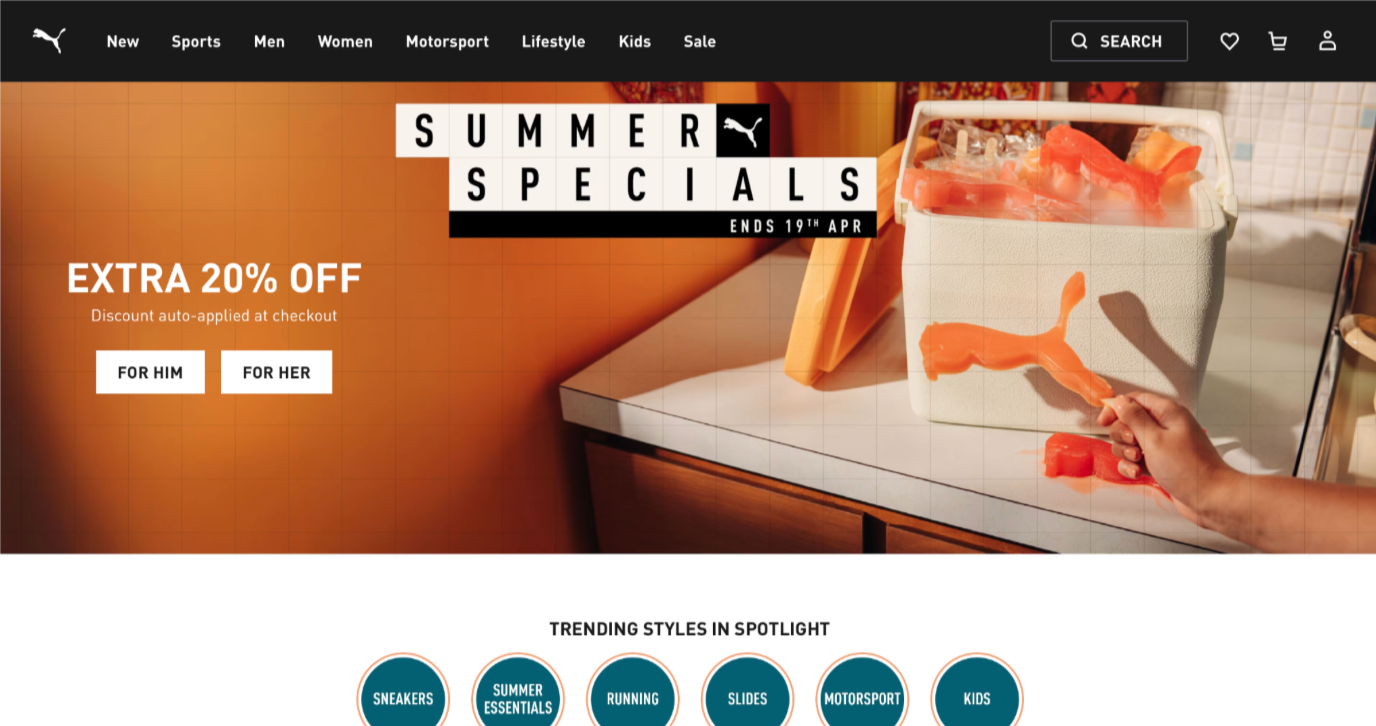
One of the most well-known Sanity-powered builds, Puma is a benchmark for modern headless commerce. The site combines performance, scalability, and storytelling to deliver a seamless brand experience across markets.
Built on a composable architecture, Puma uses Sanity as a centralized content system, allowing teams to manage massive volumes of content while maintaining consistency across regions and campaigns.
Key strengths
Modular landing page architecture
High-performance frontend experience
Global content scalability
Review
Puma stands out as one of the strongest real-world implementations of Sanity at enterprise scale. According to Sanity’s official case study, the platform acts as a “single source of truth for content”, enabling Puma to create faster campaigns and maintain a consistent global brand experience.
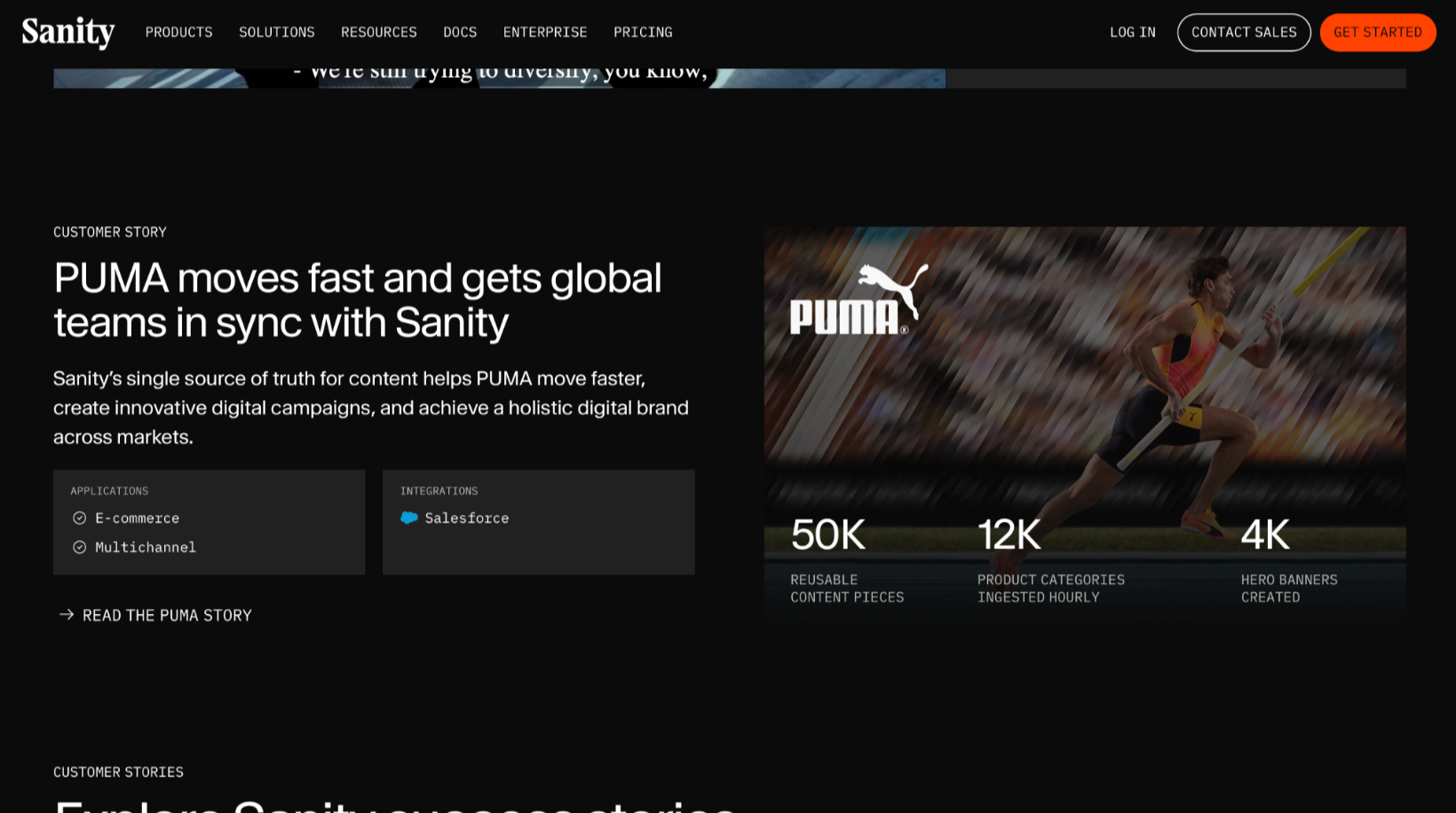
What’s especially impressive is the scale at which this operates. Puma manages tens of thousands of reusable content pieces and thousands of product categories, all structured in a way that allows teams to reuse and adapt content efficiently across regions.
From a performance standpoint, Puma’s shift to a headless, composable setup has also resulted in significantly faster load times and a more responsive user experience, a key advantage of decoupling frontend and backend systems.
Overall, the experience feels fast, flexible, and highly optimized and not just visually, but structurally behind the scenes. It’s a clear example of how Sanity enables both creative freedom and operational efficiency at scale.
Why it stands out
Clean product storytelling
Flexible content blocks
Lightning-fast UX
Summary
Puma shows how Sanity can power large-scale ecommerce experiences with speed, flexibility, and global consistency making it one of the best references for headless commerce in 2026.
2. Kotn (Minimalist Fashion UX)
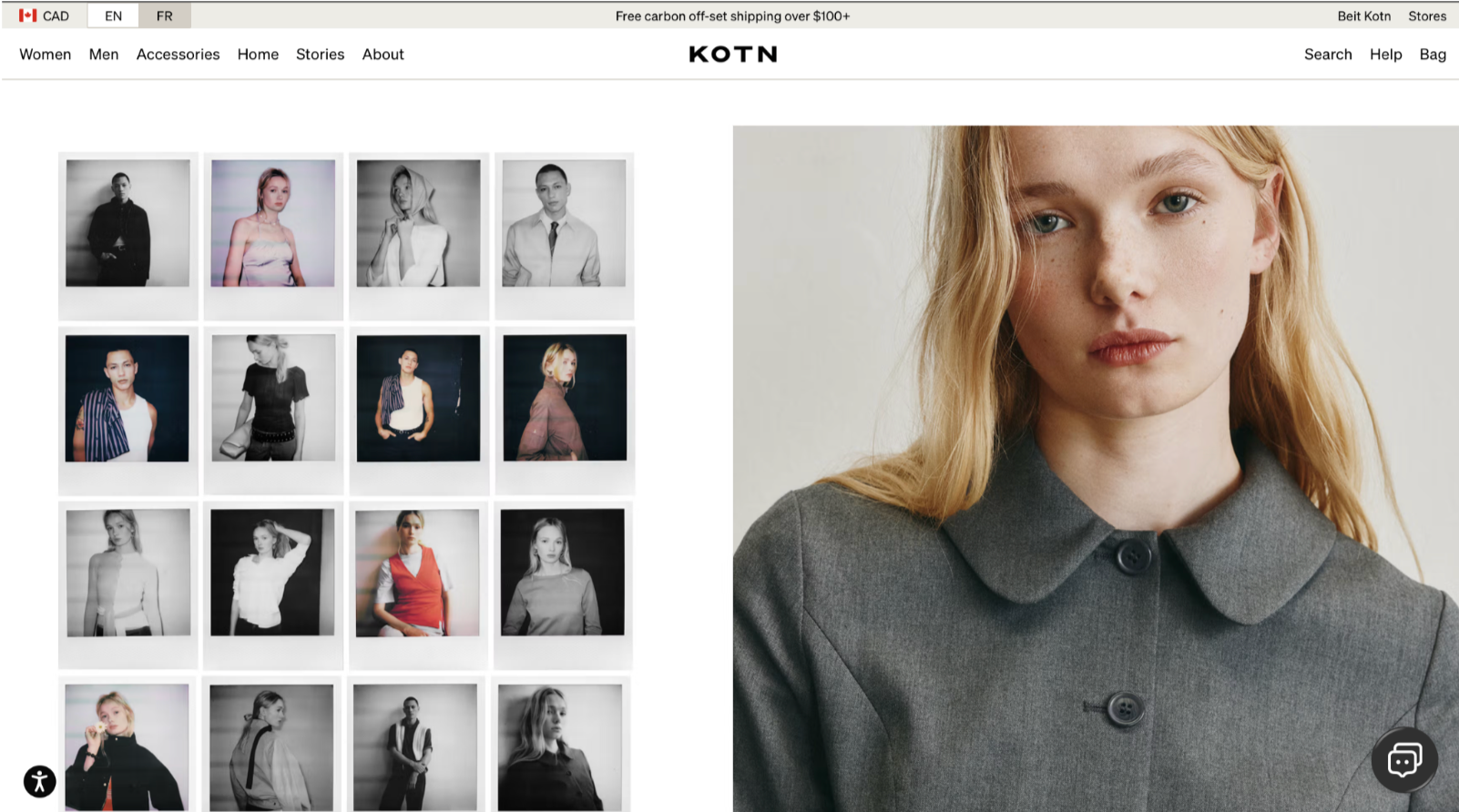
Kotn uses Sanity to power a content-first ecommerce experience that feels calm, intentional, and highly curated. Instead of following a traditional product-heavy layout, the site focuses on storytelling, allowing users to engage with the brand before making a purchase.
The design is minimal yet purposeful, with typography, spacing, and content flow doing most of the work. This creates a seamless transition between editorial content and product discovery.
Key strengths
Editorial-style design system
Content-driven user experience
Strong brand storytelling
Review
Kotn stands out as a strong example of how design simplicity can enhance user experience when supported by a flexible CMS like Sanity. The site has been featured on platforms like Awwwards, which highlights its focus on clean layout, typography, and overall user experience — making it a reliable source for screenshot-based validation.
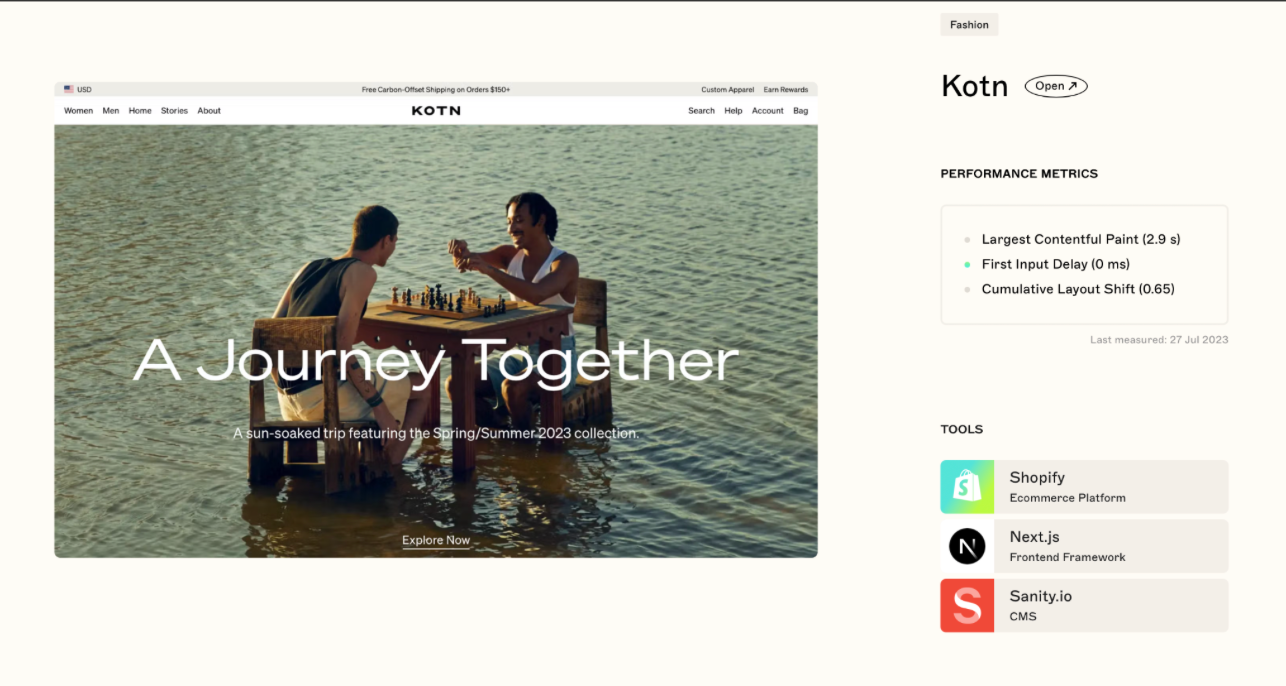
What makes Kotn particularly effective is how it structures content. Instead of separating storytelling and commerce, the site blends both seamlessly. Pages feel more like editorial pieces than product listings, which helps build a stronger emotional connection with users.
From a UX perspective, the experience feels intentional and distraction-free. There’s no clutter, no unnecessary elements — just a clear flow that guides users naturally through the brand story into product exploration. This is where Sanity plays a key role, enabling flexible content modeling that supports this kind of narrative-driven design.
Overall, Kotn proves that a well-structured content system can elevate even the simplest designs into something memorable and premium.
Why it stands out
Typography-driven layout
Seamless CMS storytelling
Intentional, minimal UX
Summary
Kotn is a perfect example of how Sanity enables brands to create clean, editorial-style ecommerce experiences that feel premium without being complex.
3. Blueland (High-Conversion Shopify + Sanity)
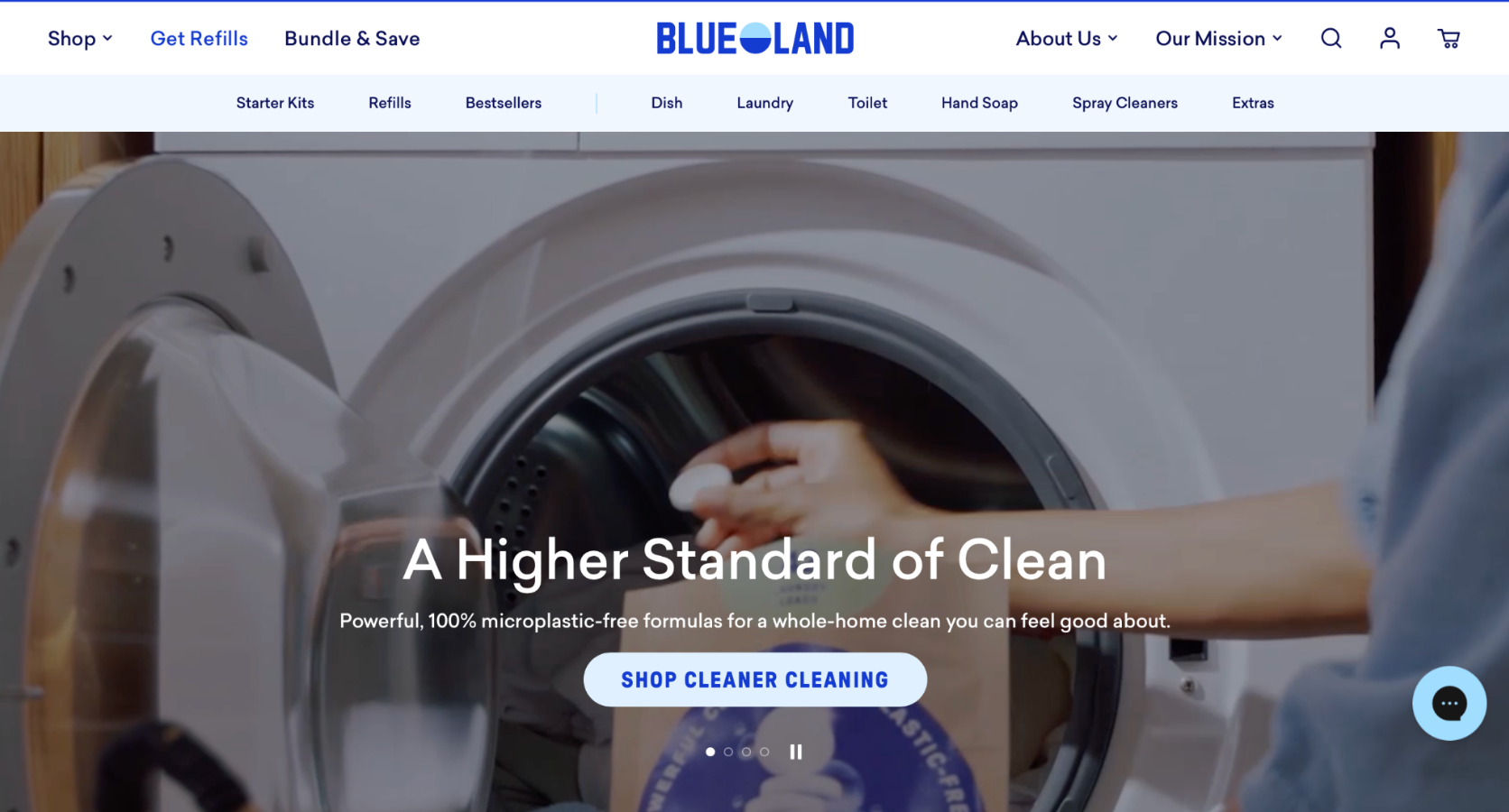
Blueland is a great example of how Sanity can be layered on top of Shopify to create a conversion-focused yet content-rich ecommerce experience. The site is designed not just to sell products, but to educate users about sustainability and product benefits.
Every page is structured to guide users through a clear journey — from understanding the problem to exploring the solution — making the experience both informative and action-driven.
Key strengths
Conversion-focused page structure
Educational content integration
Strong UX flow
Review
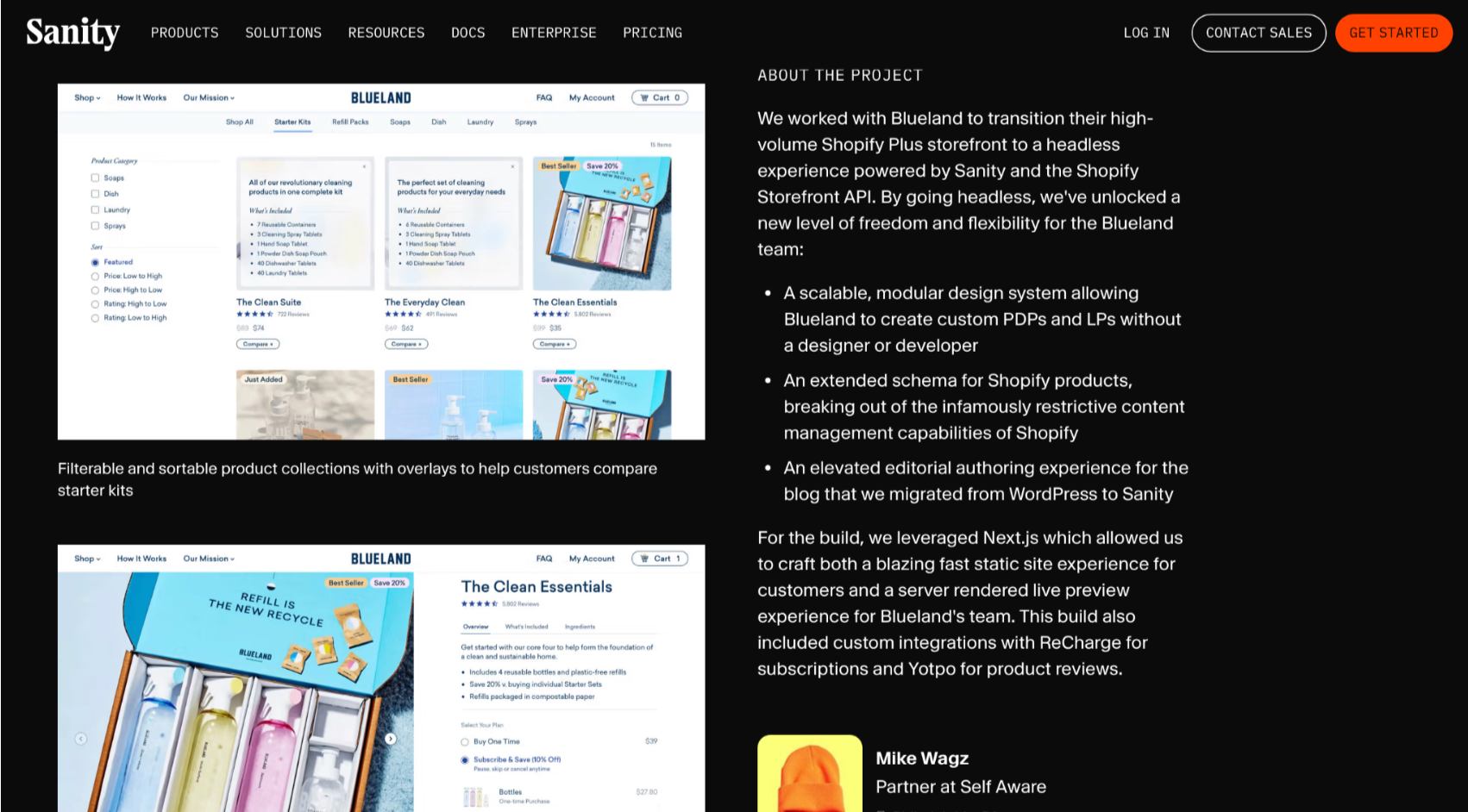
Blueland stands out for how effectively it combines storytelling with conversion optimization. The site has been featured across design and ecommerce inspiration platforms like SiteInspire, which highlights its strong layout structure and user experience — making it a solid reference for screenshots.
What makes Blueland particularly effective is how it uses content to drive decision-making. Instead of relying only on product visuals, the site clearly explains benefits, use cases, and environmental impact, helping users understand why the product matters. This creates a more informed and confident buying experience.
From a UX perspective, the flow feels highly intentional. Each section builds on the previous one — starting with awareness, moving into education, and ending with conversion. This kind of structured storytelling is where Sanity excels, allowing teams to organize and present content in a way that directly supports business goals.
Overall, Blueland proves that Sanity isn’t just useful for design-heavy sites — it’s equally powerful for building high-converting, content-driven ecommerce experiences.
Why it stands out
Clear visual hierarchy
High-converting landing pages
Strong messaging structure
Summary
Blueland shows how structured content and thoughtful UX can significantly improve ecommerce conversion while still maintaining a strong brand narrative.
4. D.S. & Durga (Luxury Product Experience)
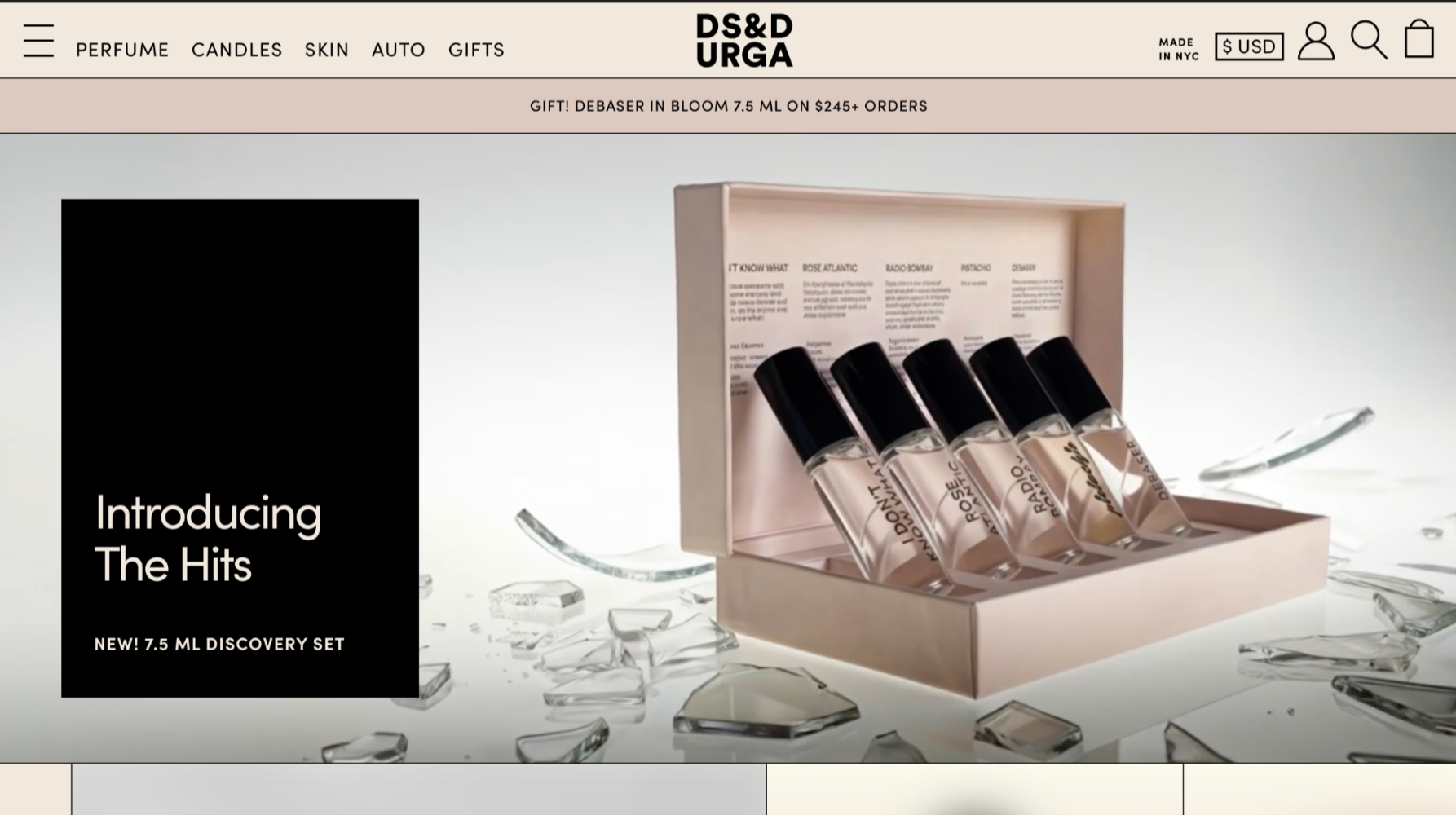
D.S. & Durga is a premium fragrance brand that uses Sanity to deliver a highly immersive and story-driven digital experience. Instead of focusing purely on selling products, the site builds a strong emotional connection through narrative, visuals, and atmosphere.
Each product is presented as more than just an item — it feels like a story, with content and design working together to create a distinct brand world.
Key strengths
Immersive storytelling design
High-impact visual experience
Unique product presentation
Review
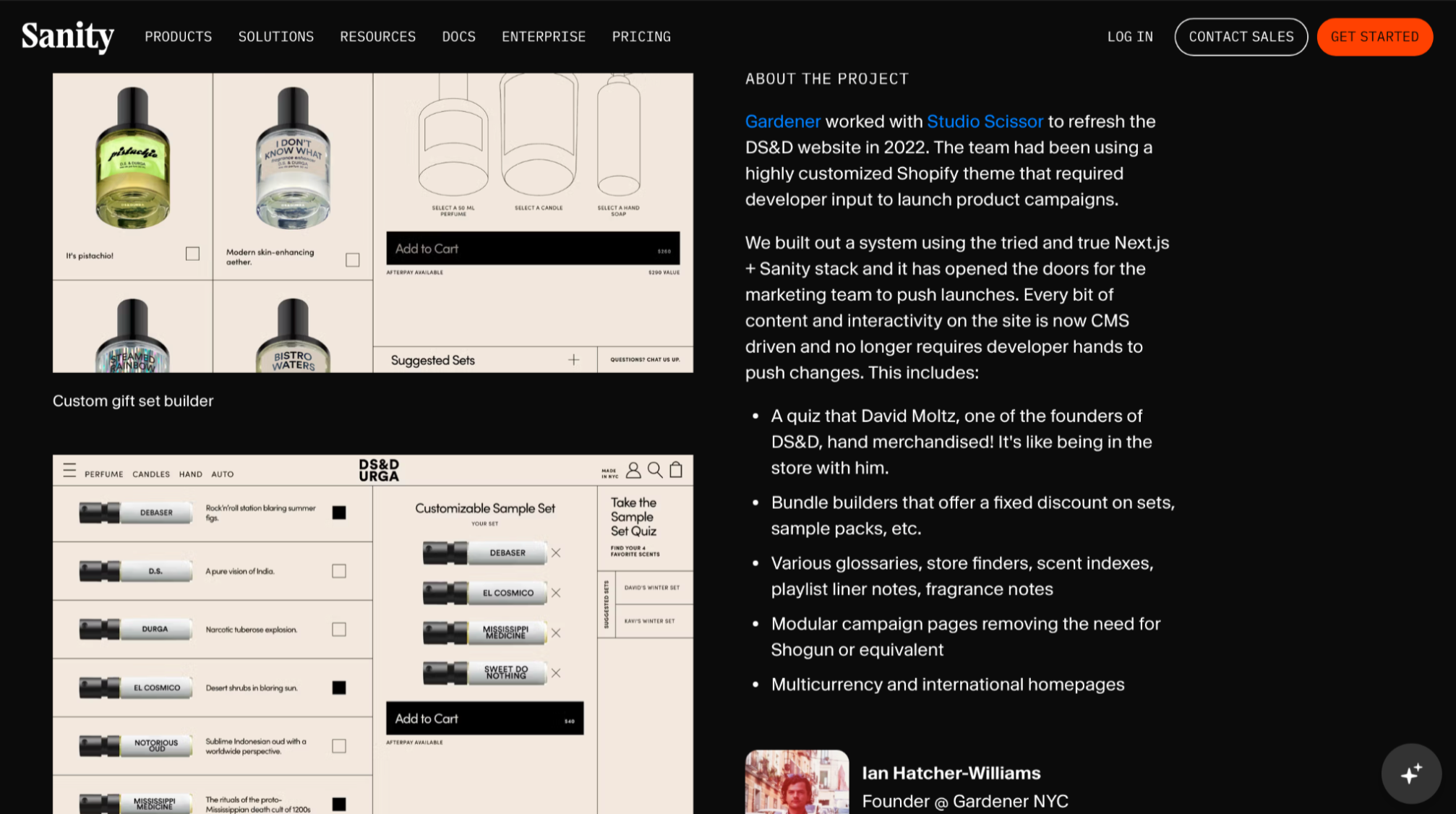
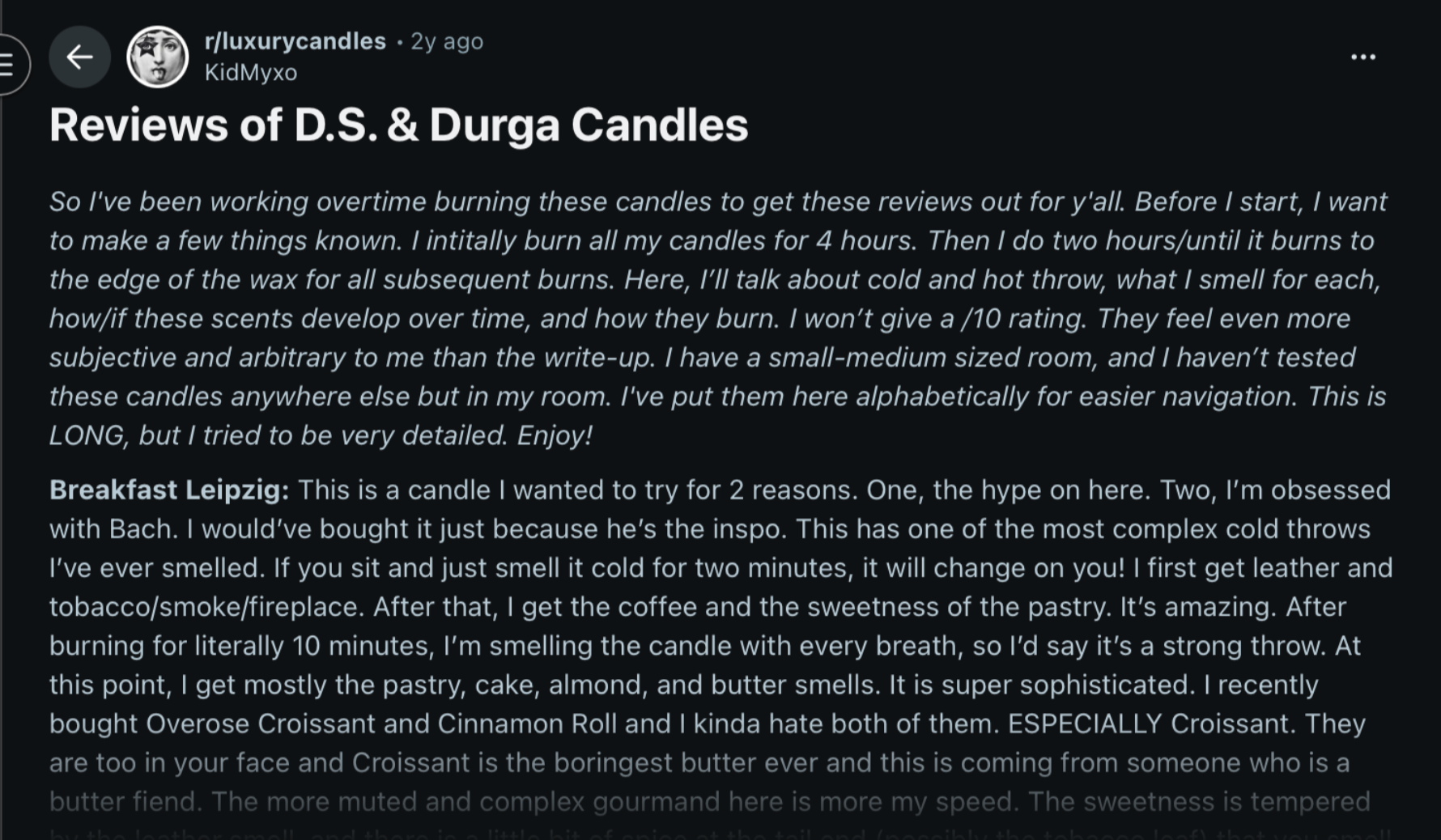
D.S. & Durga stands out as one of the most visually distinctive Sanity-powered websites, and it’s frequently featured on platforms like Awwwards, making it a strong source for screenshot-based validation.
What makes the site particularly impressive is how it prioritizes experience over traditional ecommerce structure. Instead of standard product grids and repetitive layouts, each section feels custom and expressive, reinforcing the brand’s identity.
From a UX perspective, the experience is intentionally less transactional and more exploratory. Users are encouraged to engage with the story behind each product, which creates a deeper emotional connection — something that’s especially important in luxury branding.
This level of creative freedom is made possible by Sanity’s flexible content structure. Unlike rigid CMS platforms, it allows brands to design unique content flows without being limited by templates.
Overall, D.S. & Durga proves that ecommerce doesn’t have to feel functional — it can be artistic, immersive, and memorable.
Why it stands out
Artistic, expressive layouts
Rich storytelling content blocks
Strong, distinctive brand voice
Summary
D.S. & Durga is a standout example of how Sanity enables luxury brands to create immersive digital experiences that go beyond traditional ecommerce design.
5. Teddy Baldassarre (Luxury Watch Retail)
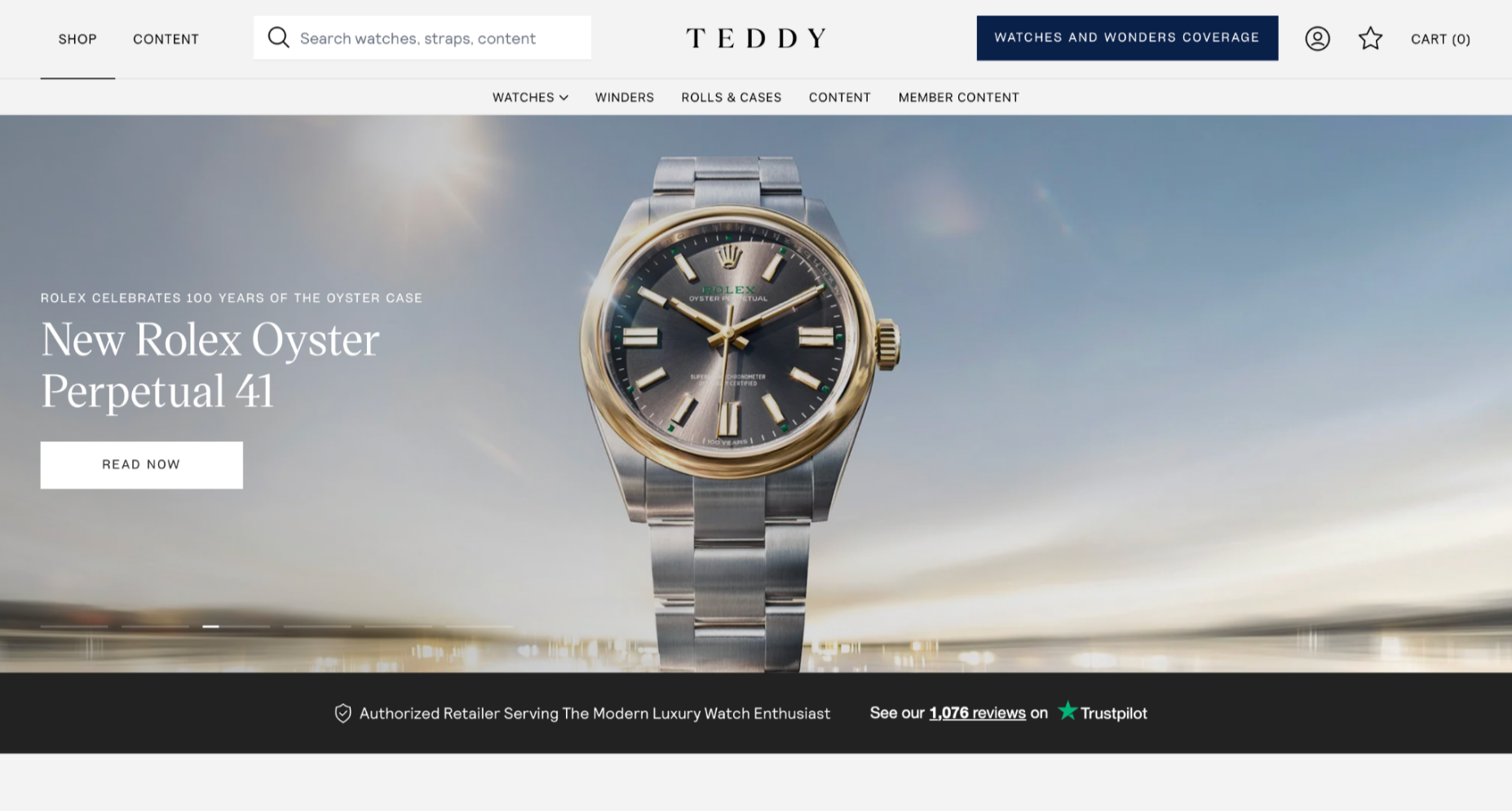
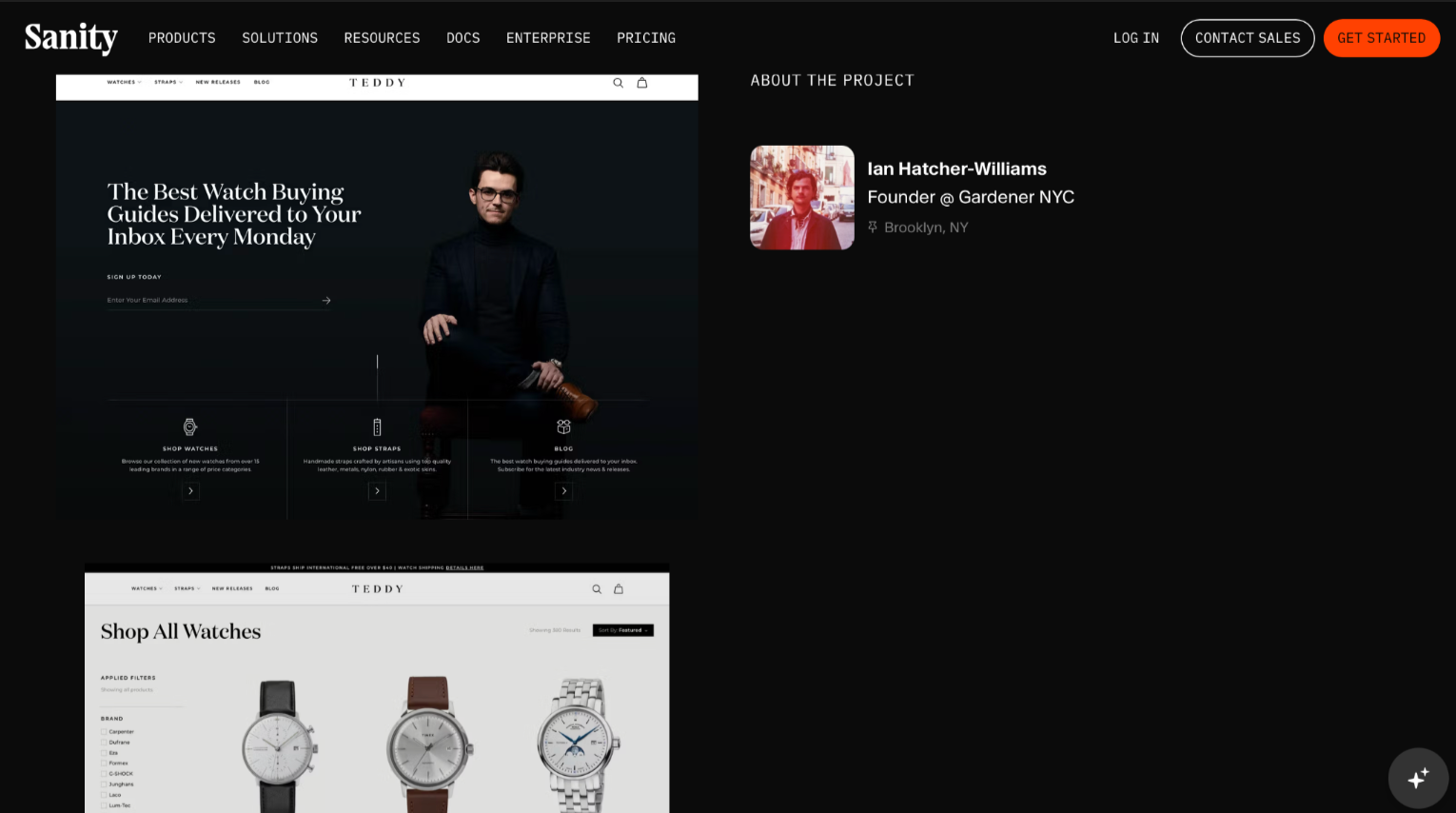
Teddy Baldassarre is a fast-growing luxury watch retailer that uses a headless architecture with Sanity to deliver a clean, structured, and trust-focused ecommerce experience. In a category where clarity and credibility are critical, the site focuses on making product discovery simple and intuitive.
The overall design avoids unnecessary complexity, prioritizing usability while still maintaining a premium look and feel.
Key strengths
Clean and structured UI
Strong product discovery experience
Trust-focused design approach
Review
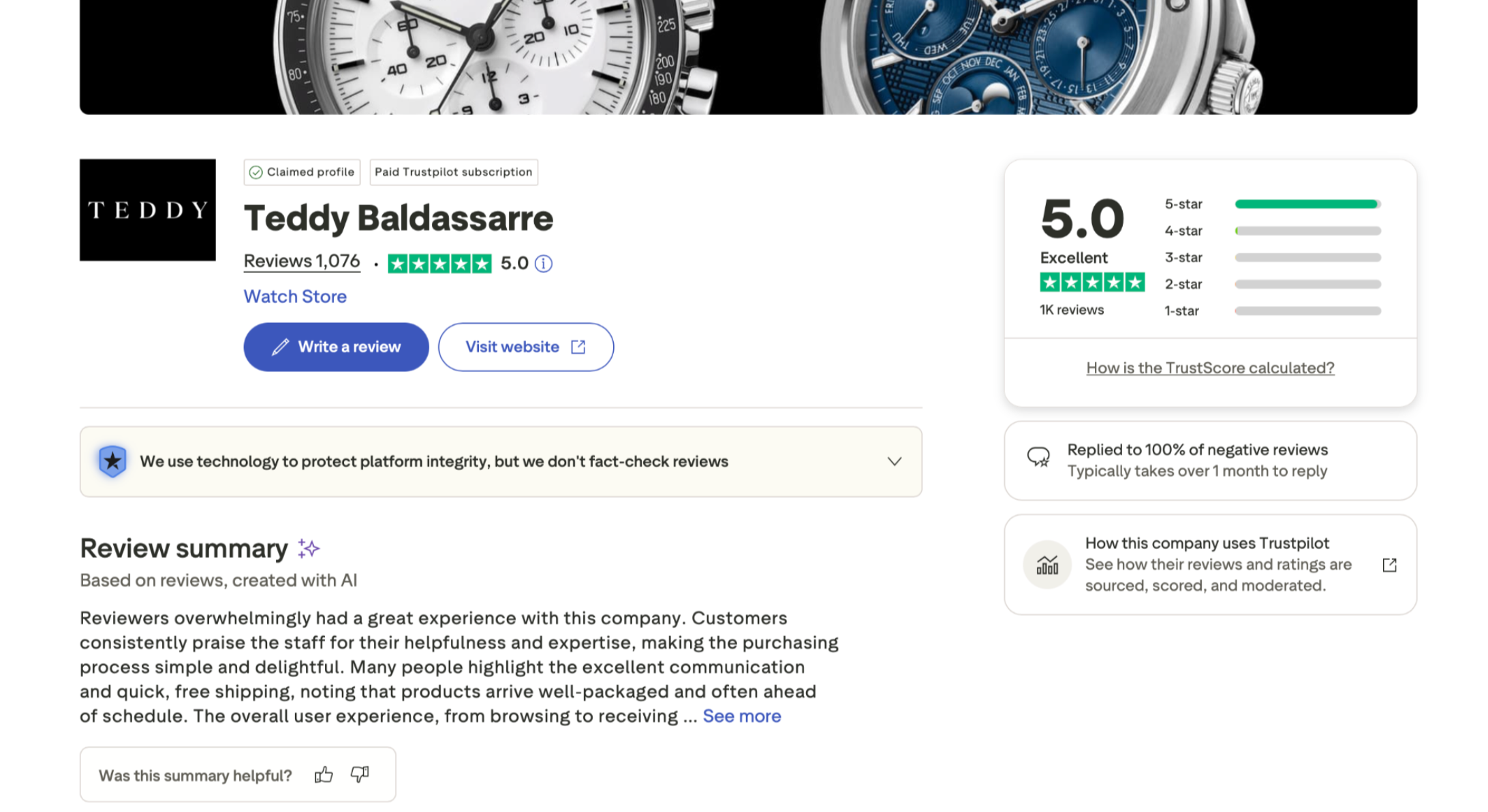
Teddy Baldassarre stands out for its balance between premium design and usability. Unlike many luxury ecommerce sites that lean heavily into visuals, this site focuses equally on clarity, navigation, and user confidence — which is essential in high-value purchase categories.
The product browsing experience is particularly strong. Filtering, sorting, and category navigation are all well-structured, allowing users to quickly find what they’re looking for without feeling overwhelmed. This is where a structured CMS like Sanity plays a key role, helping organize complex product data efficiently.
From a UX perspective, the site feels reliable and easy to use. Information is presented clearly, layouts are consistent, and the overall experience builds trust — which is a major factor in conversion for luxury products.
Overall, Teddy Baldassarre shows how Sanity can support clean, high-performing ecommerce experiences that prioritize usability without sacrificing brand perception.
Why it stands out
Premium feel without clutter
Strong product filtering UX
Clean, structured grid layouts
Summary
Teddy Baldassarre is a great example of how Sanity can power a refined, user-friendly ecommerce experience in a high-trust, luxury category.
6. The Feelist (Wellness + Editorial Commerce)
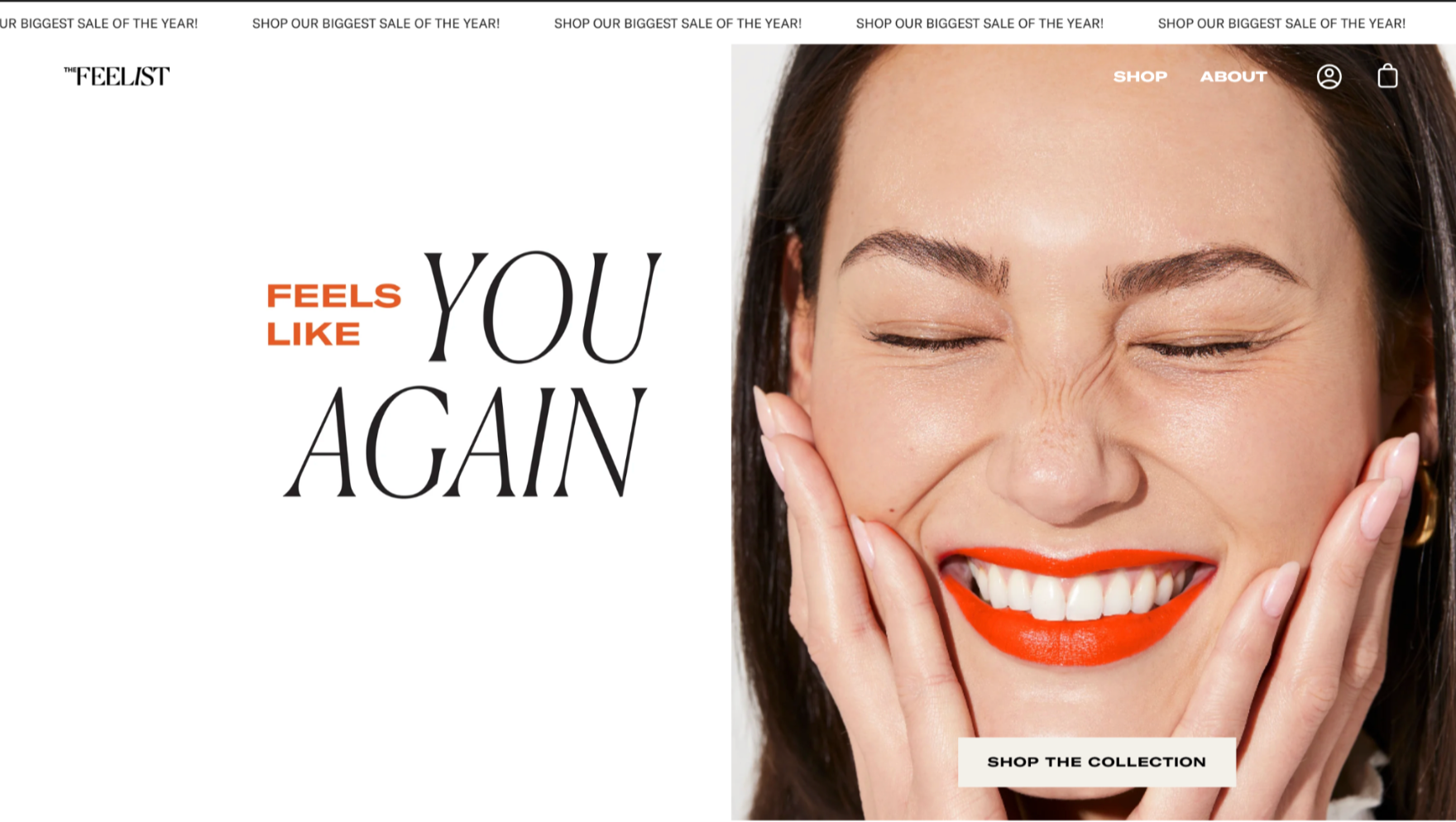
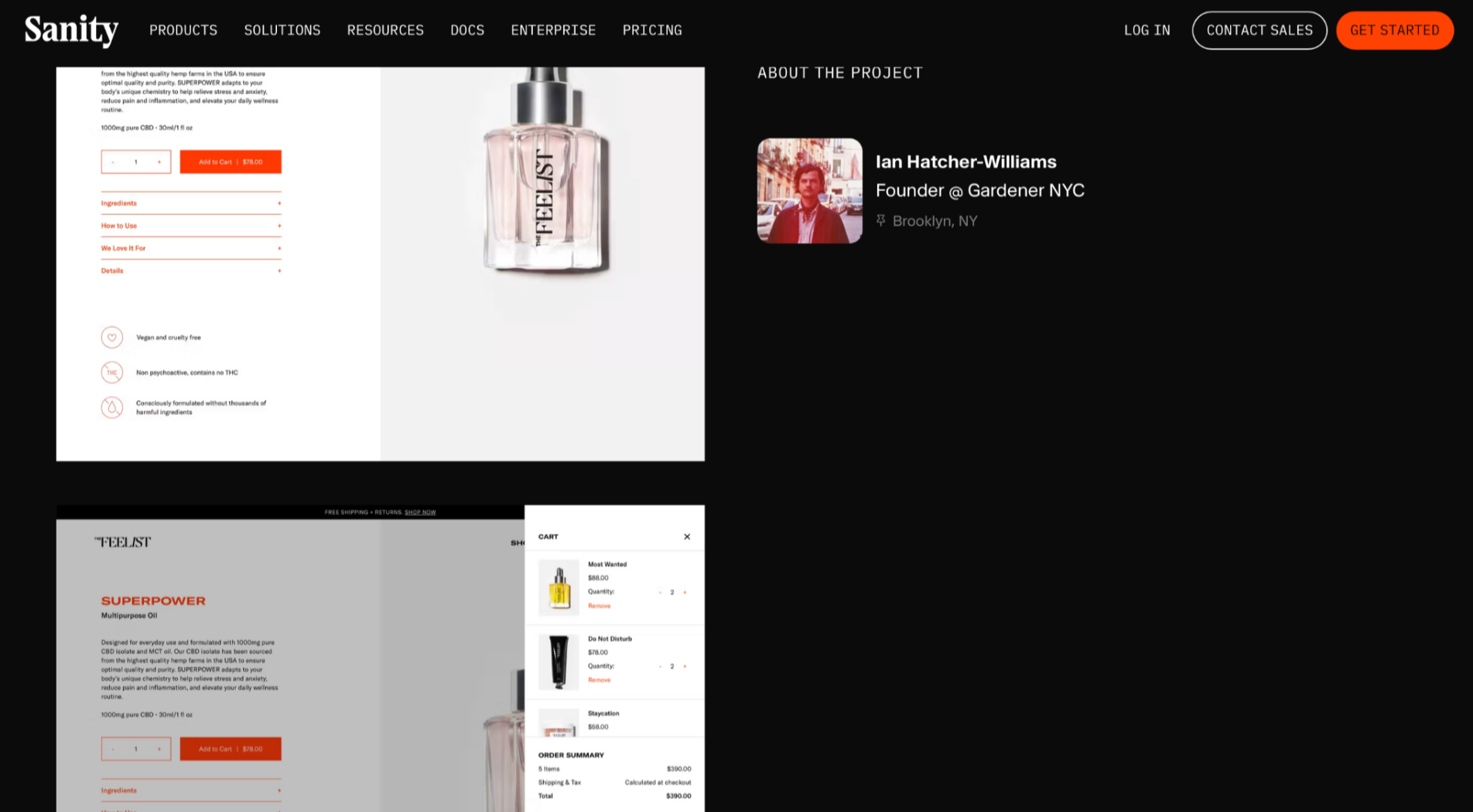
The Feelist blends content and commerce into a seamless editorial experience, making the site feel more like a digital magazine than a traditional ecommerce store. Powered by Sanity, it focuses on storytelling, mood, and brand narrative rather than aggressive selling.
The design is soft and intentional, guiding users through content before leading them into product exploration.
Key strengths
Editorial-style content structure
Strong storytelling approach
Cohesive visual identity
Review

The Feelist stands out for how naturally it integrates storytelling into the ecommerce experience. The site has been featured on platforms like SiteInspire, which highlights its strong editorial layout and overall design quality — making it a solid source for screenshots.
What makes the experience effective is its pacing. Instead of pushing users directly toward products, the site builds context through content — creating a more immersive and engaging journey. This approach works particularly well in the wellness space, where emotional connection and brand trust play a major role.
From a UX perspective, the flow feels smooth and intentional. Sections transition naturally, visuals are calming, and content is structured in a way that keeps users engaged without overwhelming them. This is where Sanity’s flexibility becomes important, allowing teams to create dynamic, narrative-driven layouts instead of rigid templates.
Overall, The Feelist shows how content-first design can transform ecommerce into a more engaging and experience-driven journey.
Why it stands out
Editorial-style layouts
Soft, cohesive branding
Immersive storytelling flow
Summary
The Feelist is a strong example of how Sanity enables brands to create content-driven ecommerce experiences that feel more like storytelling than selling.
7. Shelter Market (Complex UX Simplified)
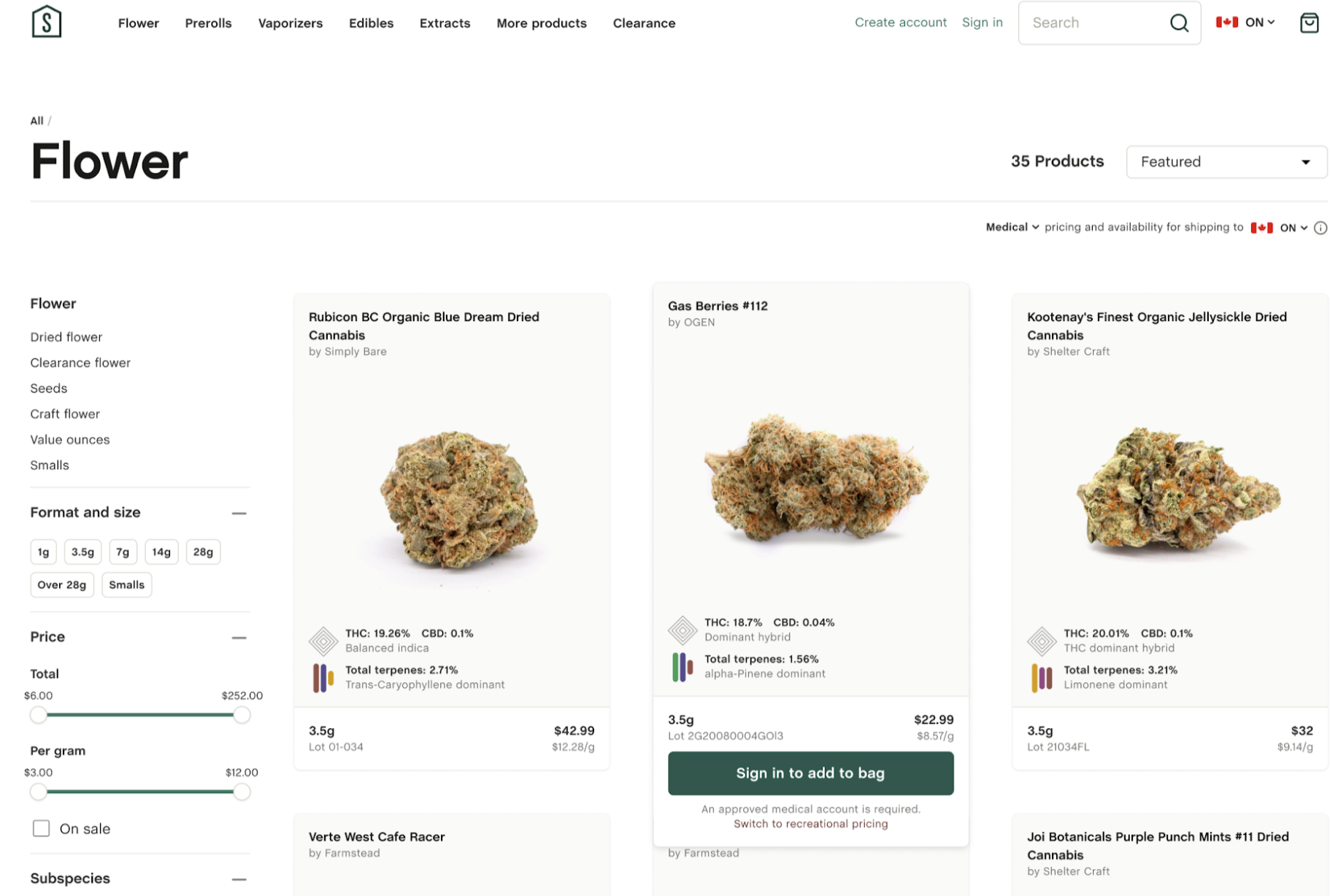
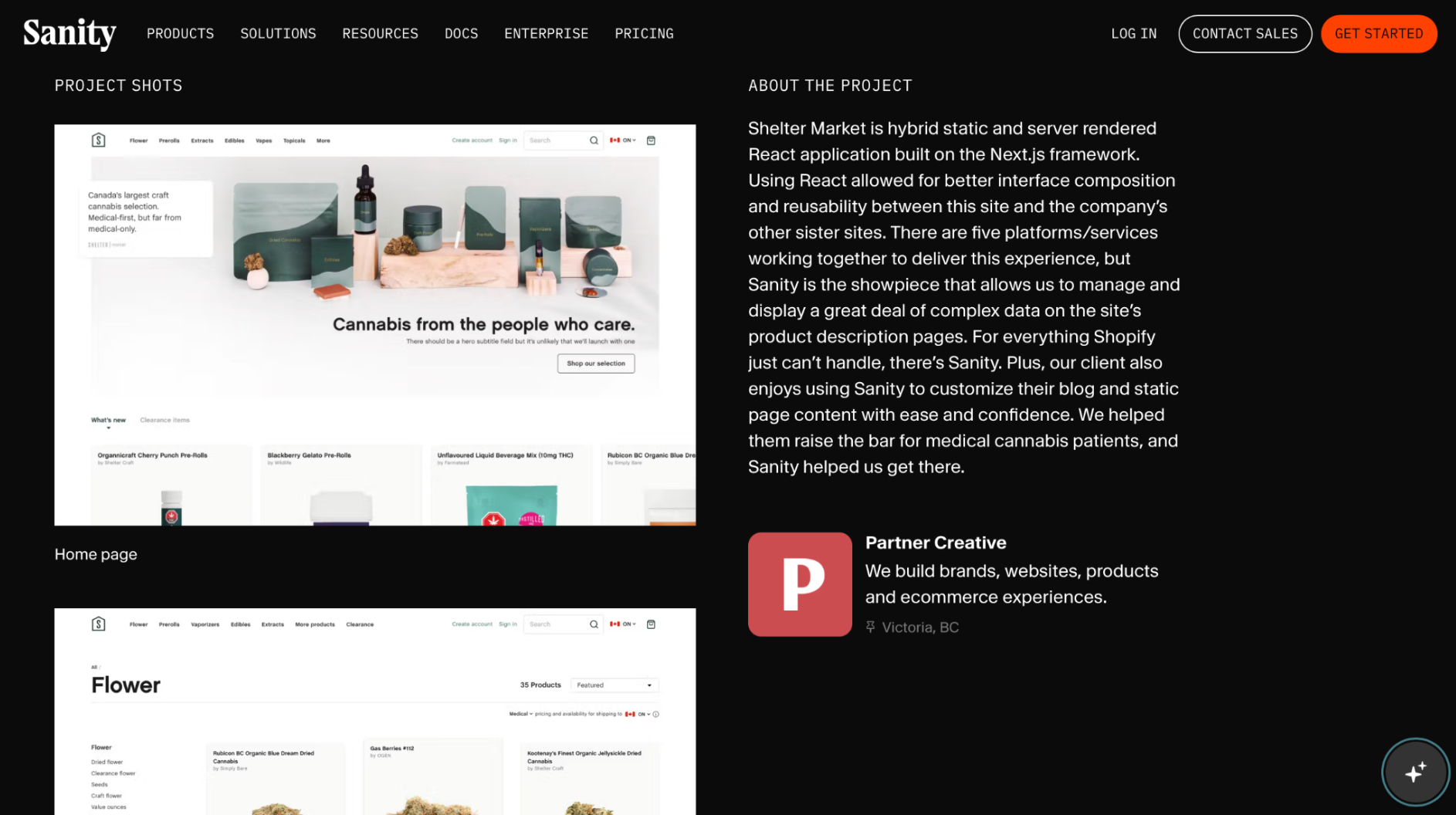
Shelter Market is a great example of how Sanity can handle complex product catalogs while still delivering a clean and intuitive user experience. The platform deals with a wide range of products and structured data, yet the interface remains simple and easy to navigate.
The focus here is not on visual experimentation, but on clarity, usability, and efficient content organization.
Key strengths
Structured content management
Clean and intuitive navigation
High usability across categories
Review

Shelter Market stands out for how effectively it simplifies complexity. Unlike many ecommerce sites with large catalogs that feel overwhelming, this site keeps everything structured and easy to explore.
The navigation system is particularly strong. Categories are clearly defined, and users can move through the site without confusion — which is often a challenge when dealing with diverse product types. This reflects the strength of Sanity as a structured CMS, where content can be organized in a way that directly supports usability.
From a UX perspective, the experience feels practical and efficient. There’s a clear focus on helping users find what they need quickly, rather than distracting them with unnecessary design elements. This makes the site especially effective for users who value speed and clarity.
Overall, Shelter Market demonstrates how Sanity can power complex ecommerce systems while keeping the front-end experience simple and user-friendly.
Why it stands out
Simplified navigation
Structured content usage
High usability
Summary
Shelter Market is a strong example of how Sanity helps manage complex data while maintaining a clean and intuitive user experience.
8. Pursoma (Natural Product Branding)
Pursoma uses Sanity to create a calm, sensory-driven ecommerce experience that aligns closely with its wellness-focused brand. The site emphasizes slow, intentional storytelling, allowing users to engage with the brand before exploring products.
The design feels organic and minimal, with a strong balance between product content and lifestyle storytelling.
Key strengths
Calm, brand-focused design
Balanced content and product flow
Strong visual storytelling
Review
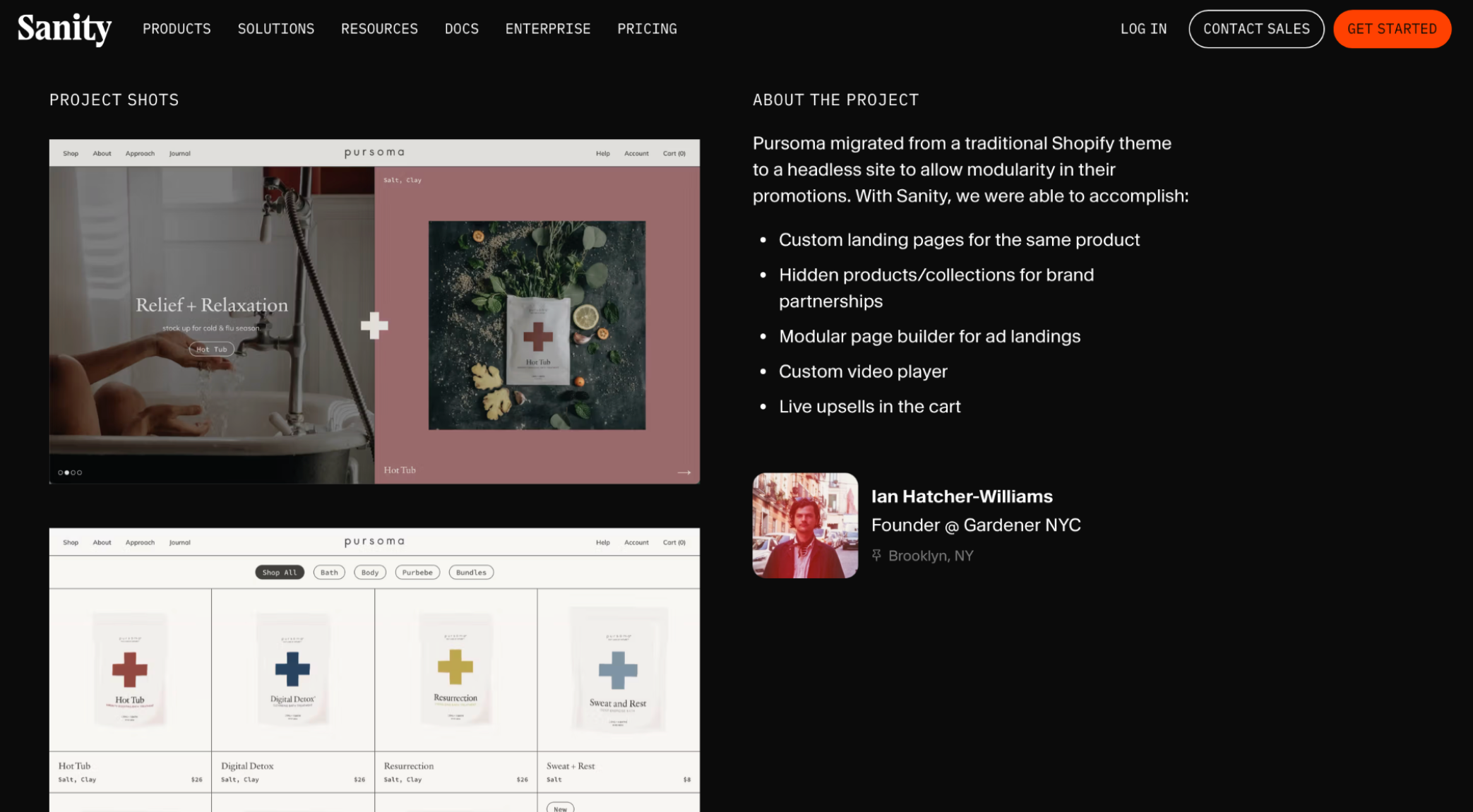
Pursoma stands out for its ability to translate a brand’s philosophy into a digital experience. The site has been featured on platforms like SiteInspire, making it a reliable reference for design and storytelling screenshots.
What makes the experience effective is its pacing and simplicity. The site doesn’t rush users toward conversion — instead, it builds a sense of trust and calm through visuals, spacing, and content flow. This approach works particularly well for wellness brands, where emotional connection is key.
From a UX perspective, the scrolling experience is smooth and immersive. Content unfolds gradually, guiding users through the brand story while subtly introducing products. This kind of storytelling is made possible by Sanity’s flexible content structure, which allows for more dynamic and narrative-driven layouts.
Overall, Pursoma shows how Sanity can support emotionally driven design while still maintaining a functional ecommerce experience.
Why it stands out
Soft, organic color palette
Scroll-based storytelling
Balanced product and lifestyle content
Summary
Pursoma is a great example of how Sanity enables brands to create calm, immersive experiences that prioritize storytelling and emotional connection.
9. Velobici (Global Commerce UX)
Velobici is a performance apparel brand that uses Sanity to scale its ecommerce experience across multiple regions. The site is built with a strong focus on structured content and localization, allowing it to maintain consistency while adapting to different markets.
Despite operating globally, the experience remains clean, cohesive, and easy to navigate.
Key strengths
Multi-region content management
Consistent design system
Scalable content structure
Review
Velobici stands out for how effectively it handles global ecommerce without compromising user experience. The site has been featured on platforms like SiteInspire, highlighting its clean design and structured layout — making it a useful source for screenshots.
What makes the site particularly strong is its approach to localization. Instead of feeling like separate regional sites stitched together, the experience remains consistent across markets. Content, products, and messaging are adapted smoothly, which is often a major challenge for global brands.
From a UX perspective, the site feels streamlined and predictable. Navigation, layouts, and product storytelling remain uniform, helping users feel familiar with the experience regardless of location. This is where Sanity’s structured content model plays a key role, enabling reusable content across regions.
Overall, Velobici demonstrates how Sanity supports scalable, international ecommerce experiences without losing design consistency.
Why it stands out
Multi-language UX
Consistent product storytelling
Scalable design system
Summary
Velobici is a strong example of how Sanity enables brands to scale globally while maintaining a seamless and consistent user experience.
10. LifeWave (Enterprise Sanity Implementation)
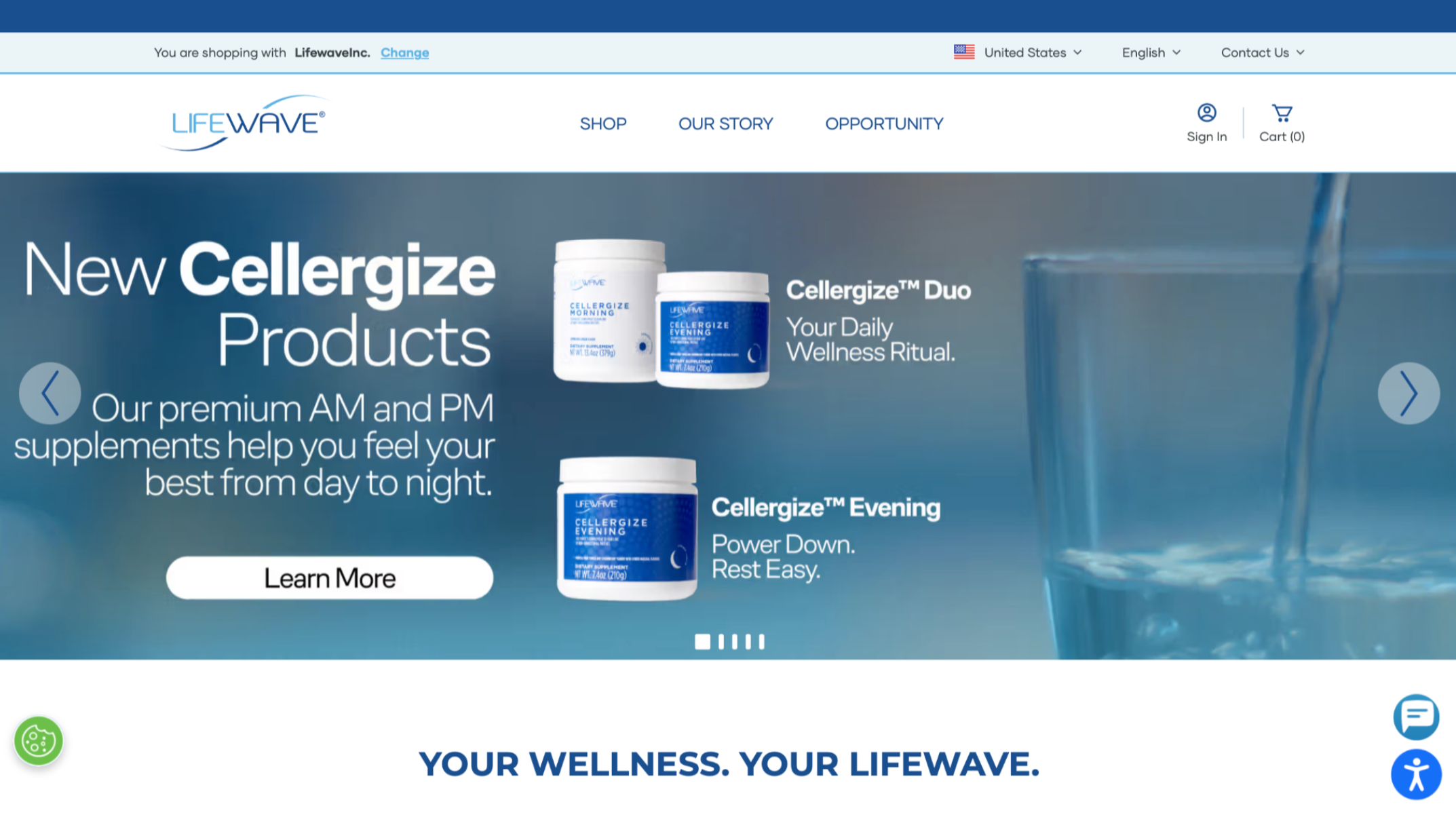
LifeWave is a global wellness company that uses Sanity to manage large-scale, multi-market digital experiences. The platform handles a high volume of content across regions, making consistency and scalability a top priority.
The focus here is less on visual experimentation and more on building a reliable, structured system that can support enterprise-level operations.
Key strengths
Enterprise-level scalability
Multi-market content management
Structured content architecture
Review
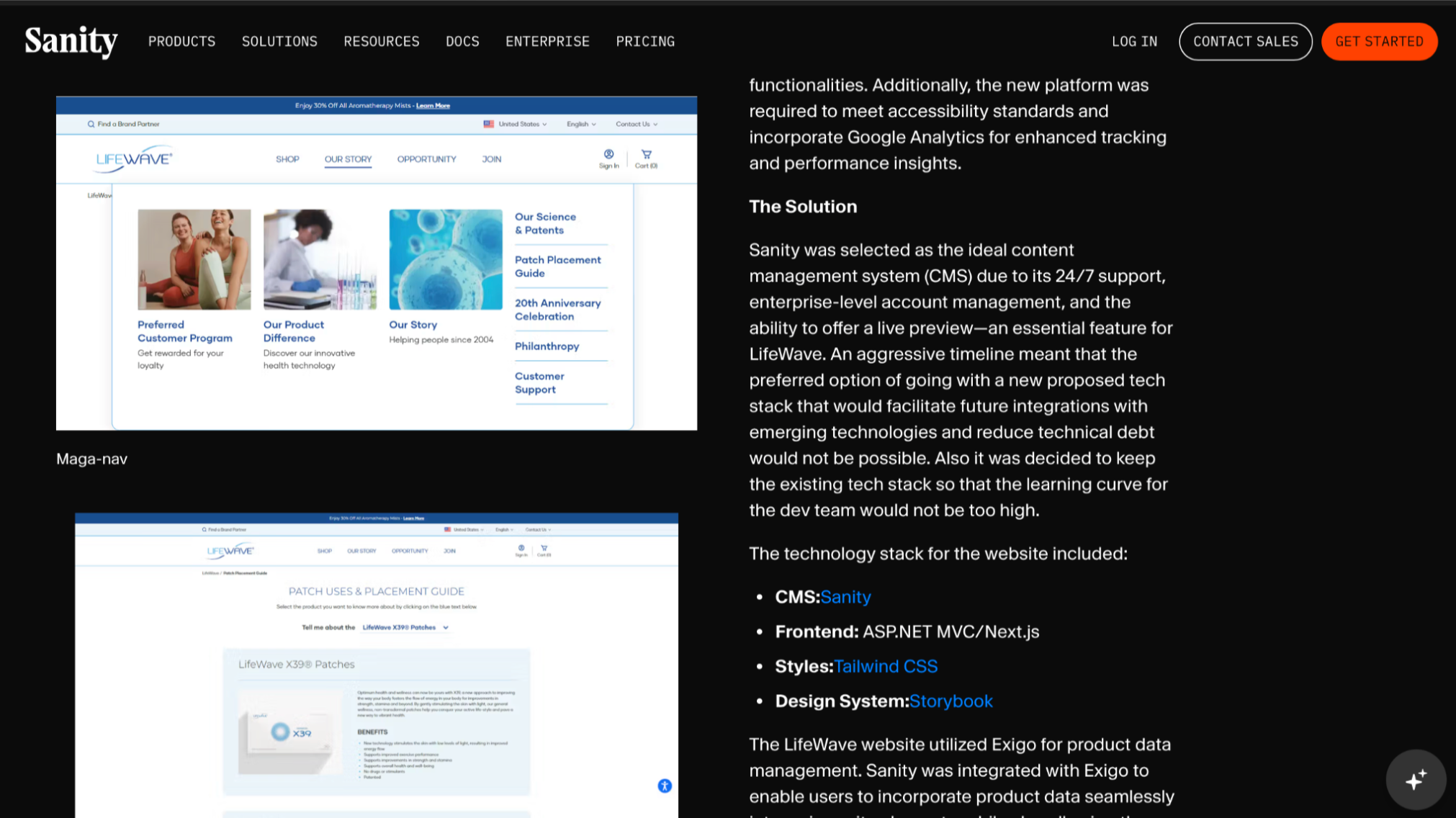
LifeWave stands out as a strong example of how Sanity performs in enterprise environments. The site has been featured in Sanity’s ecosystem and enterprise use cases, showing how the platform can handle complex content structures across multiple regions and teams.
What makes this implementation effective is its consistency. Despite operating across different markets, the experience remains unified, with a clear design system and structured content approach. This is critical for enterprise brands that need to maintain brand integrity at scale.
From a technical perspective, managing large volumes of content while keeping everything organized and reusable is one of Sanity’s biggest strengths. LifeWave demonstrates this well, using structured content to ensure efficiency across teams and markets.
Overall, the site highlights how Sanity is not just a design-focused CMS, but a powerful infrastructure tool for scaling content operations globally.
Why it stands out
Enterprise scalability
Multi-market consistency
Efficient content structure
Summary
LifeWave proves that Sanity can scale beyond design-focused websites and support complex, enterprise-level digital ecosystems.
Final Thoughts
What makes Sanity-powered sites stand out isn’t just the design — it’s the flexibility behind it. Unlike traditional CMS platforms, Sanity lets teams treat content as structured data, enabling fully custom, high-performance frontends across any channel.
That’s why you’ll see it powering everything from minimal fashion brands to complex global commerce systems.

