Best Inventory Management Apps for Shopify and Shopify Plus in India 2026
Okay, before you jump into the list…let’s talk about why inventory management has become one of the most important systems for Shopify brands in India.
Have you ever launched a festive sale during Diwali or a high-traffic campaign during Big Billion Days and seen orders spike across multiple channels at once? Between COD orders, multiple warehouses, marketplace integrations like Amazon and Flipkart, and offline retail sync, inventory in India moves fast.
Inventory today means real-time syncing, smart forecasting, bundle management, GST-ready reporting, and smooth warehouse coordination for growing D2C brands and Shopify Plus stores. The right system helps you stay in control while scaling confidently.
So before picking an app from the Shopify App Store, here are the best inventory management apps for Shopify and Shopify Plus in India for 2026, and who they work best for.
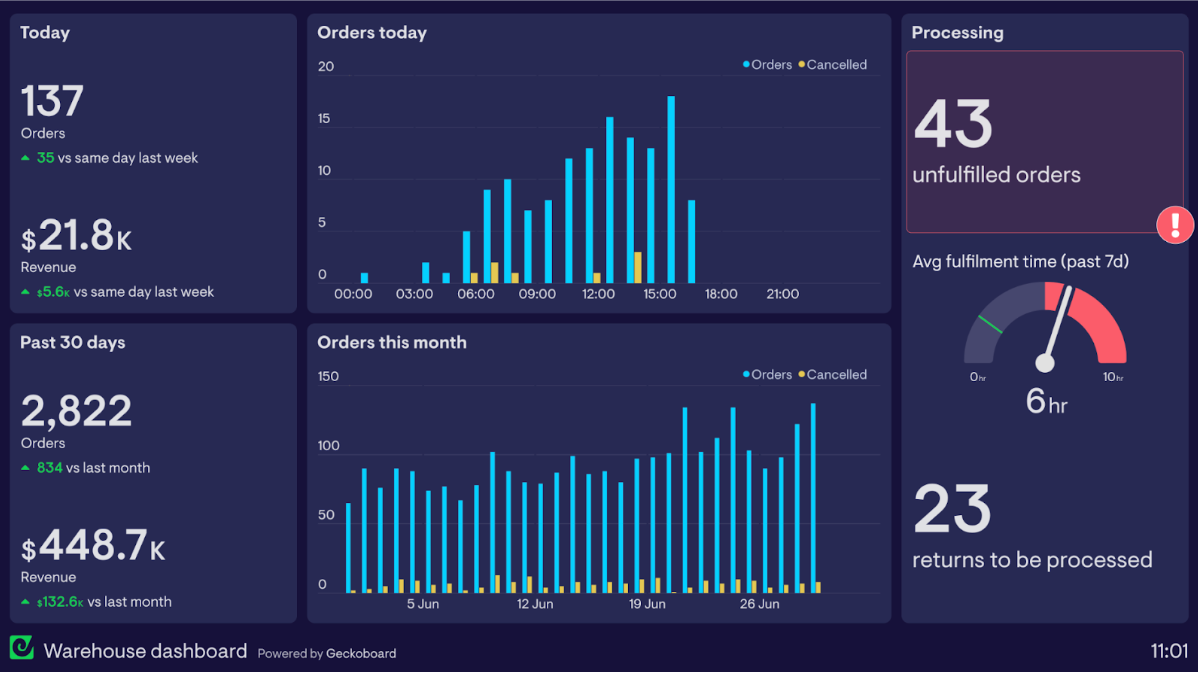
Inventory Management Apps for Shopify and Shopify Plus: Which One Should You Choose in India 2026
|
App
|
Best For
|
Starting Price
|
Key Strength
|
|
Sumtracker
|
Multi-channel D2C brands
|
~$49/month
|
Real-time sync with bundles and purchase orders
|
|
Unicommerce
|
Marketplace-heavy Indian brands
|
Custom pricing
|
Strong warehouse and logistics integrations
|
|
Katana
|
Manufacturing and BOM-driven brands
|
~$199/month
|
Production + inventory visibility in one system
|
|
Stock Sync
|
Supplier-based catalog stores
|
Free / Paid tiers
|
Automated supplier feed syncing
|
|
Inventory Planner
|
Forecast-driven scaling brands
|
Custom pricing
|
Advanced demand forecasting and reorder planning
|
Top Inventory Management Apps for Shopify and Shopify Plus in India 2026
1. Sumtracker
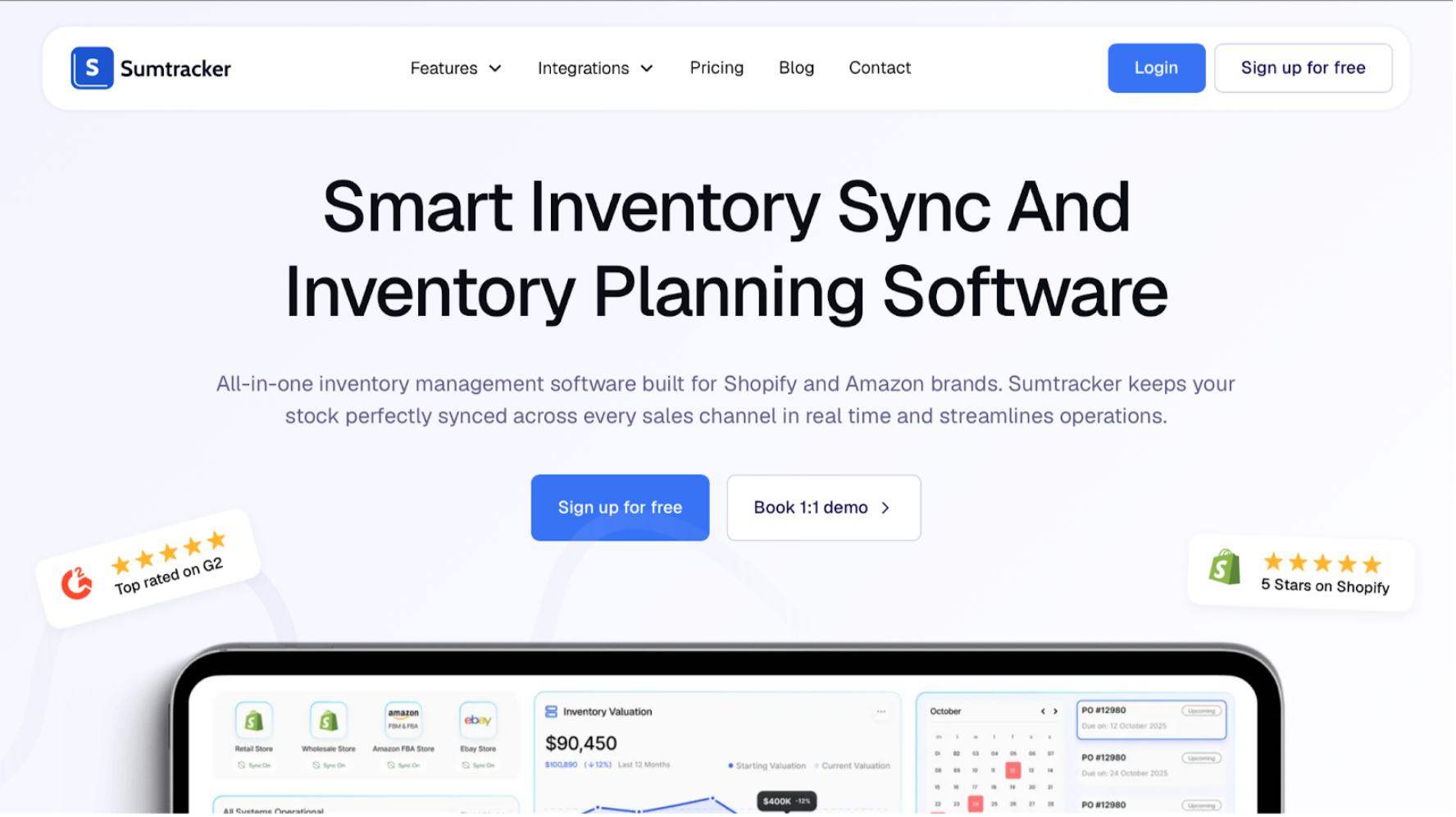
Sumtracker is built specifically for fast-growing Shopify brands managing inventory across multiple channels. It’s developed by a team focused on solving real-time inventory sync problems for D2C brands, especially those selling across Shopify, Amazon, and other platforms.
It has become a go-to choice for Indian brands because it understands multi-channel chaos + bundle complexity, without overcomplicating the interface.
Why it stands out in India:
Perfect for brands dealing with Flipkart + Amazon + Shopify overlap, where stock mismatches can quickly lead to overselling.
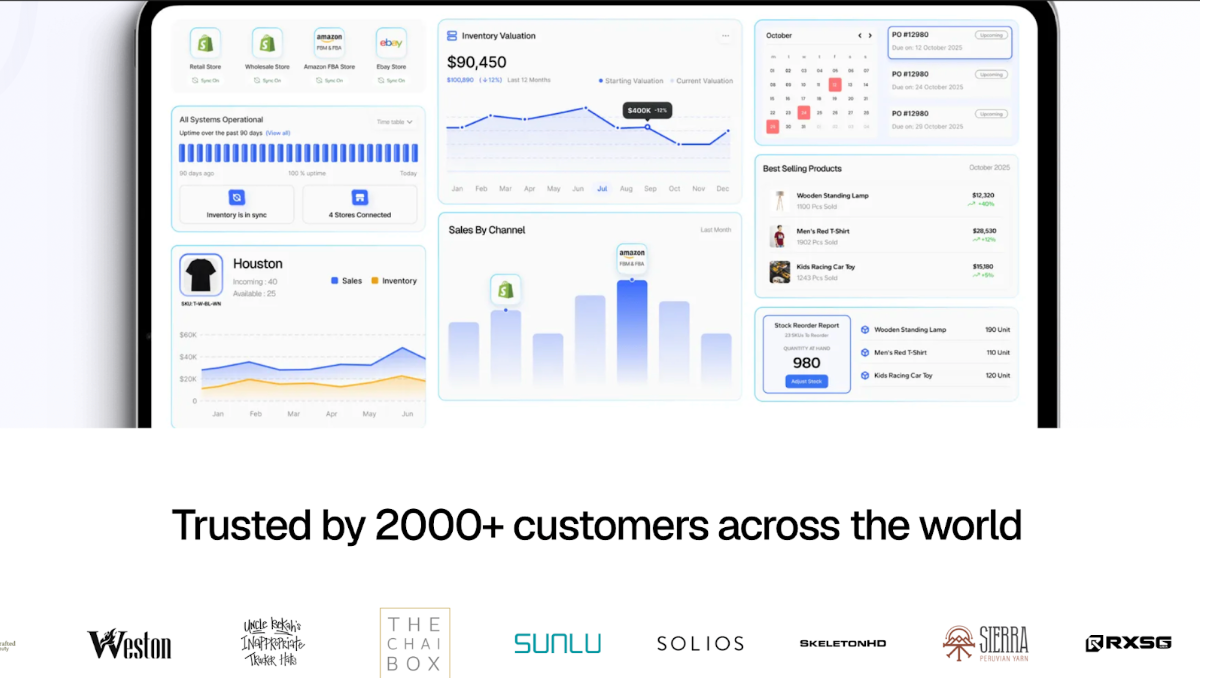
Key Features
-
Real-time two-way inventory syncing across stores and channels like Amazon.
-
Create and manage product bundles and kits automatically.
-
Purchase order creation, landed cost tracking and alerts.
-
Forecasting, sales & inventory reports plus stock alerts.
-
Multi-location inventory visibility and cycle counts.
Pricing
-
Starts at $49/month (around ₹4,000+/- depending on dollar–INR). Basic plan supports smaller order volumes.
-
Higher tier ~$99/month for more connected stores and API access.
-
14-day free trial + flexibility to upgrade or downgrade any time.
Reviews
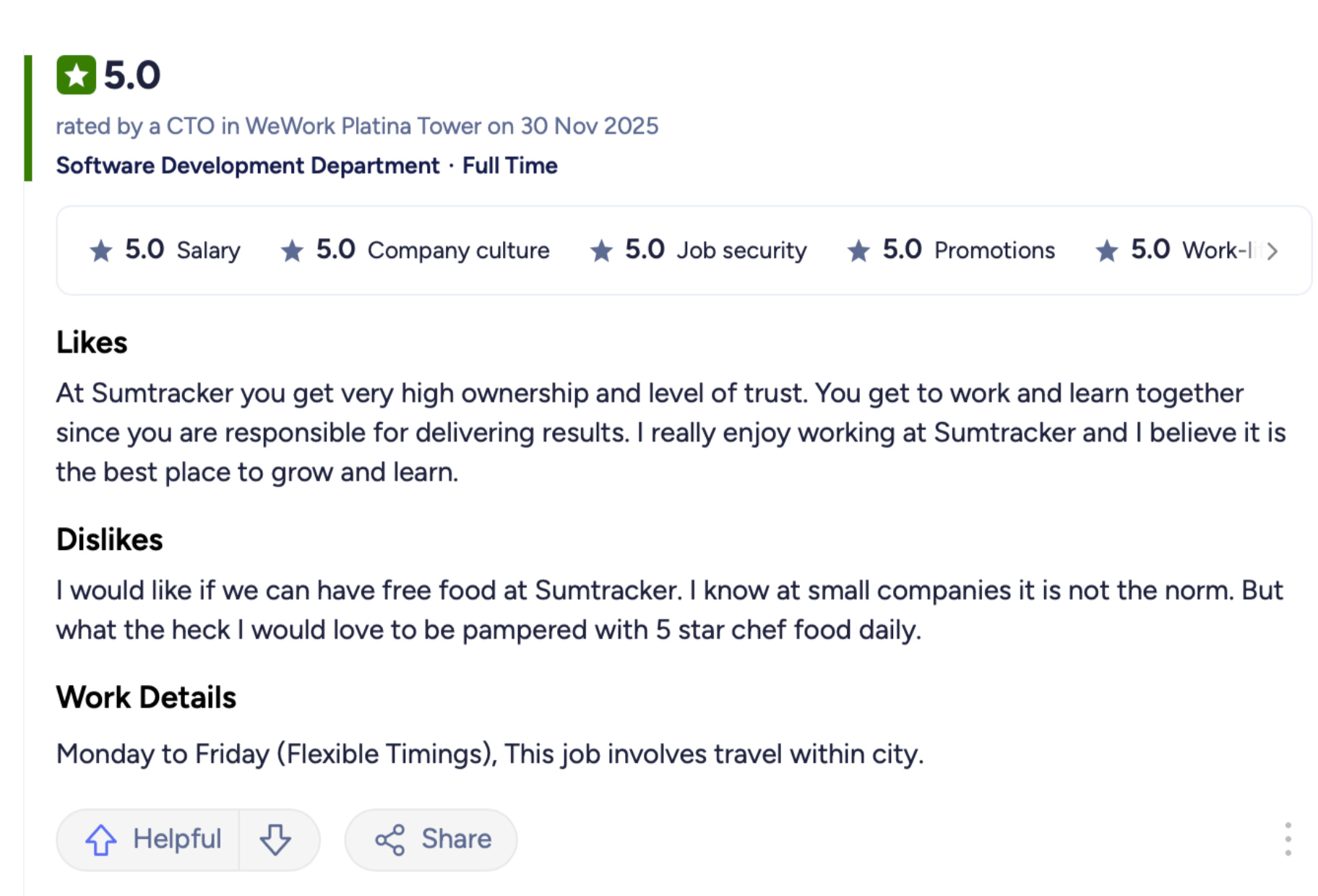
Employees highlight a strong culture of ownership, trust, and learning at Sumtracker. The environment encourages responsibility and growth, making it a great place to build skills while delivering real results. Team collaboration and hands-on experience are frequently appreciated. A minor downside mentioned is the lack of additional perks like meals, though overall satisfaction remains very high.
Summary
Sumtracker is built for fast-growing Shopify brands managing inventory across multiple sales channels. It provides real-time syncing to prevent stock mismatches and overselling. The platform efficiently handles bundles, purchase orders, and multi-location inventory. It is ideal for D2C brands selling across Shopify, Amazon, and Flipkart.
2. Unicommerce
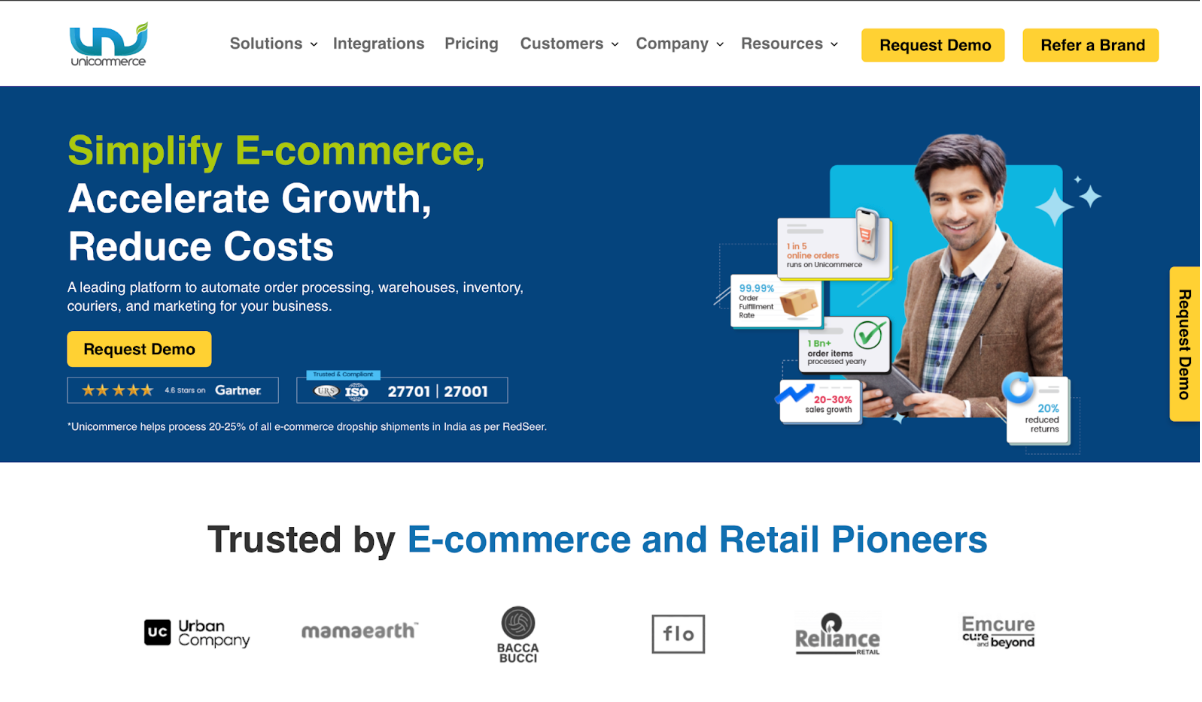
Unicommerce is one of India’s most established e-commerce infrastructure platforms. It has powered operations for major brands like FabIndia, Mamaearth, and Lenskart.
Built specifically for Indian logistics complexity, Unicommerce connects inventory, warehousing, and order management into one unified system.
Key Features
-
Centralized multi-location inventory tracking with granular detail.
-
Sync Shopify stock and orders for smooth fulfillment.
-
Order routing to the nearest warehouse for faster delivery.
-
Integration with 100+ logistics partners, helpful for Indian shipping networks.
Pricing
Review
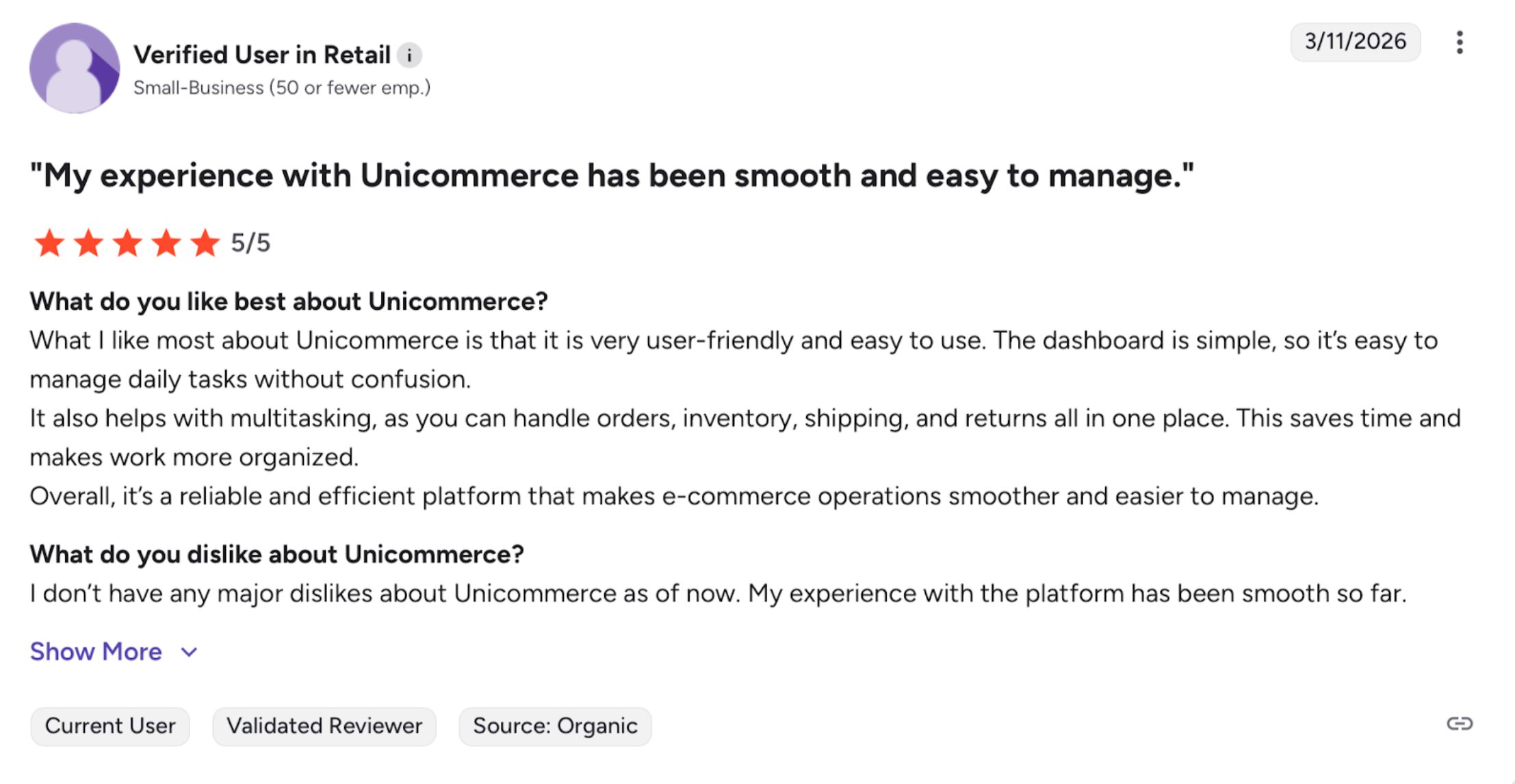
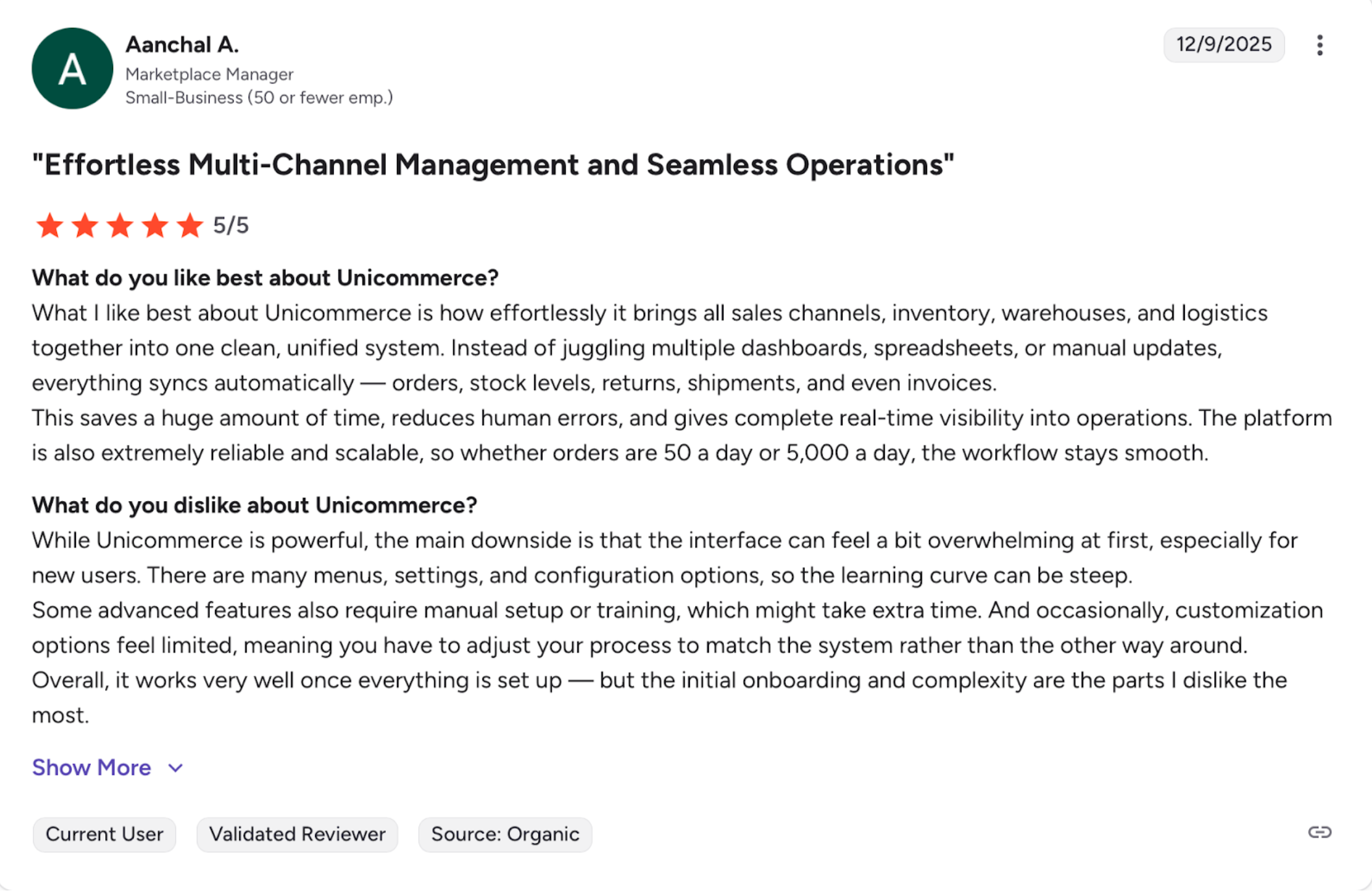
Users consistently praise Unicommerce for its ability to unify inventory, orders, warehouses, and logistics into one seamless system. It saves time, reduces manual errors, and provides strong real-time visibility across operations. The platform is considered reliable, scalable, and efficient even at high order volumes. However, some users mention an initial learning curve due to its complex interface and setup requirements
Summary
Unicommerce stands out as the best inventory solution, seamlessly connecting inventory, orders, warehouses, and logistics into one powerful system. Its scalability, real-time visibility, and operational efficiency make it a top choice for growing and enterprise Shopify brands.
It is a robust, India-focused platform that combines inventory, warehousing, and order management into one system. It is designed to handle complex logistics and multi-channel operations seamlessly. With strong integrations across marketplaces and logistics partners, it supports large-scale operations. It is best suited for enterprise and marketplace-heavy brands in India.
3. Katana
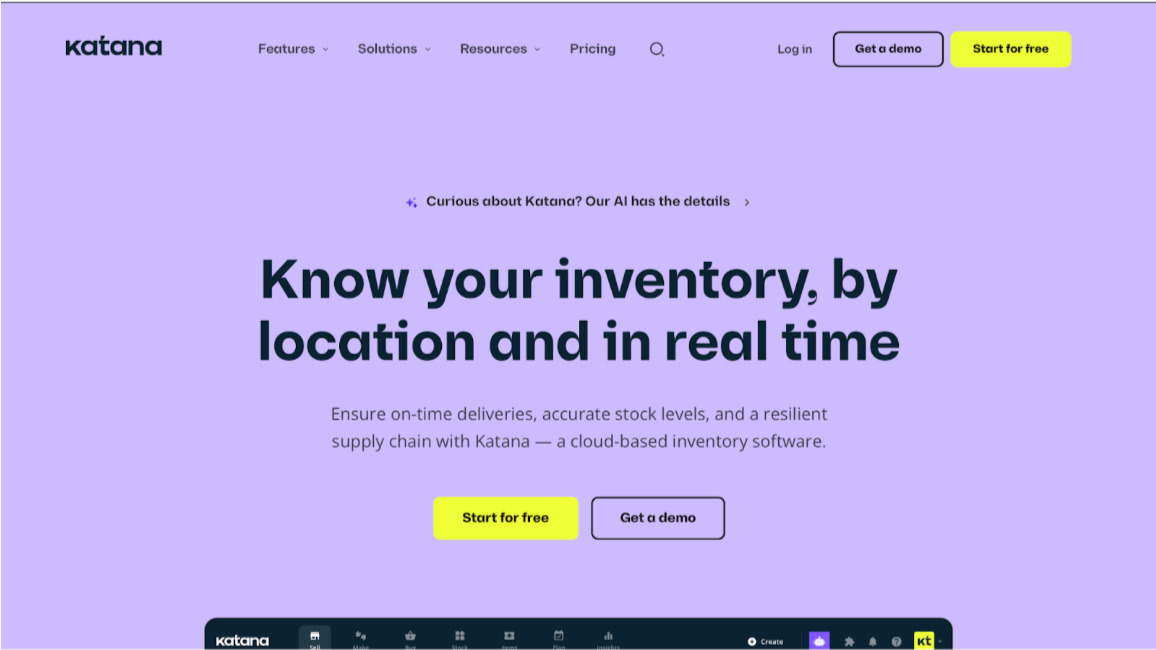

Katana was founded by Kristjan Vilosius, with a focus on helping product-based businesses manage manufacturing and inventory in one place.
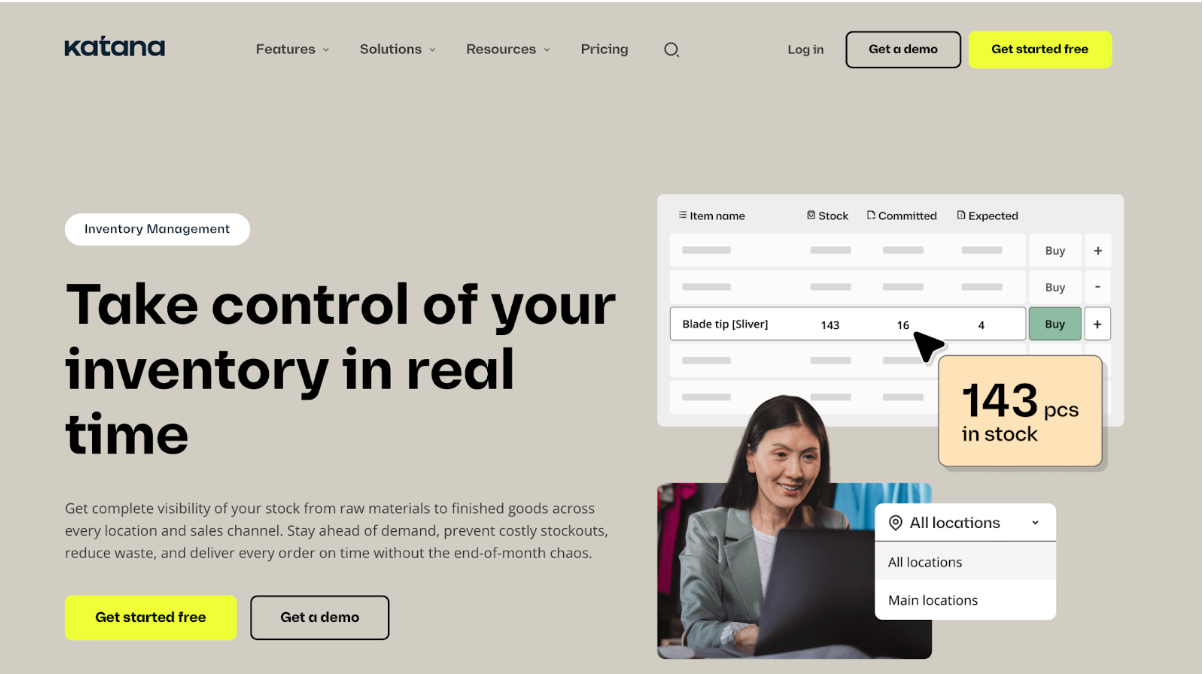
Katana is widely used by manufacturing-first Shopify brands that need visibility from raw materials to finished goods.
Why it stands out in India:
Ideal for brands in FMCG, cosmetics, and small-scale manufacturing, where production and inventory are tightly linked.
Key Features
-
Real-time inventory view across channels and warehouse locations.
-
Automated reorder points and smart stock planning tools.
-
Traceability: batch, serial numbers, barcode workflows and expiry tracking.
-
Shopify integration syncs orders and stock instantly.
Pricing
-
Plans start at around $199–$299 per month for basic inventory visibility.
-
Add-ons like advanced forecasting or warehouse tools increase monthly cost.
-
Free plan available to test core features.
Review
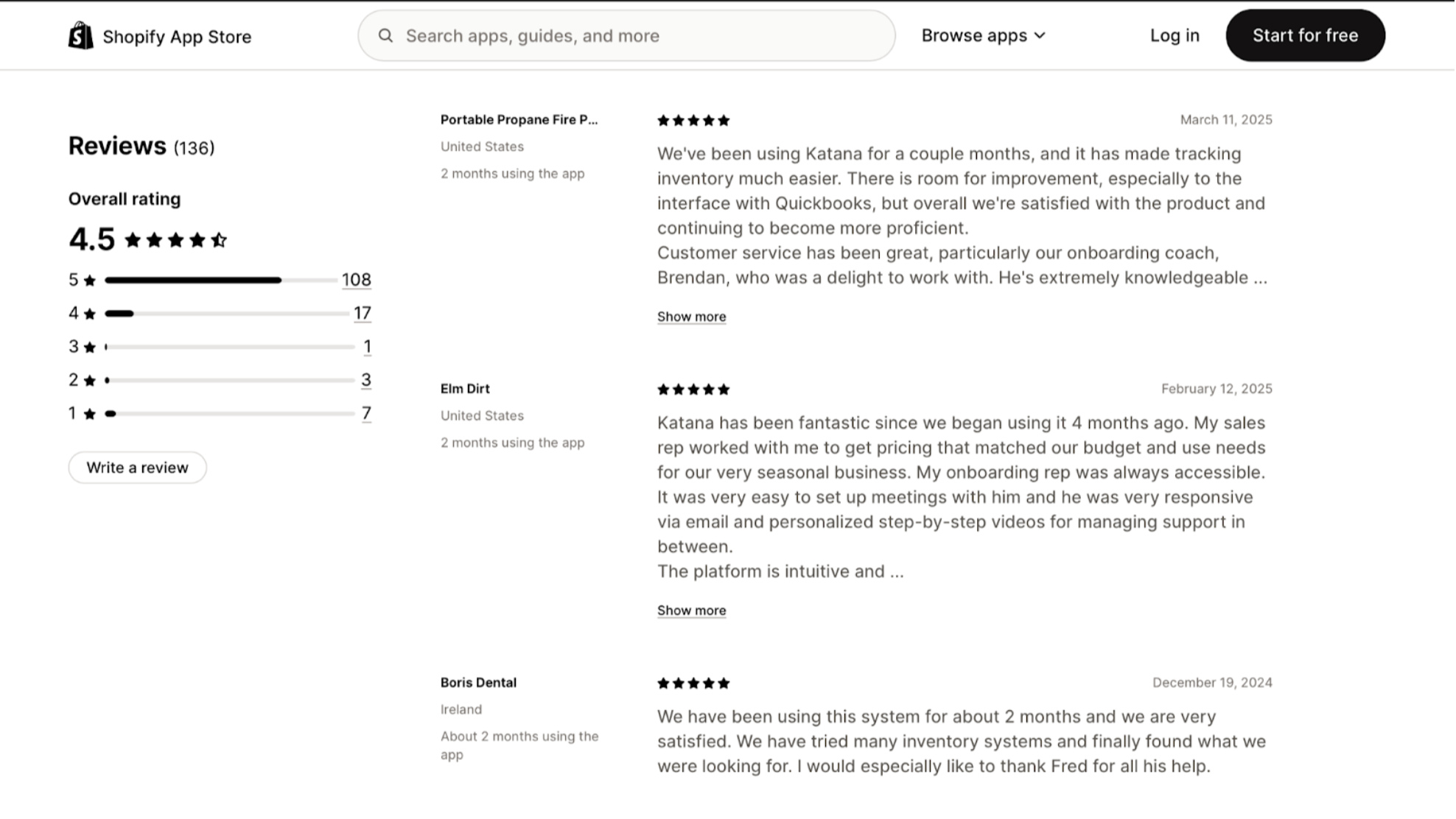
Users find Katana highly effective in simplifying inventory tracking and improving operational efficiency. The platform is appreciated for its ease of use, helpful onboarding support, and responsive customer service. Many reviewers highlight how quickly they were able to get started and see value. While overall satisfaction is high, some note minor areas for improvement in integrations and interface experience.
Summary
Katana is tailored for manufacturing-first brands that need production and inventory in one unified system. It offers real-time visibility from raw materials to finished goods. Features like batch tracking, BOM, and smart planning improve operational efficiency. It is perfect for FMCG, cosmetics, and production-driven Shopify brands.
4. Stock Sync
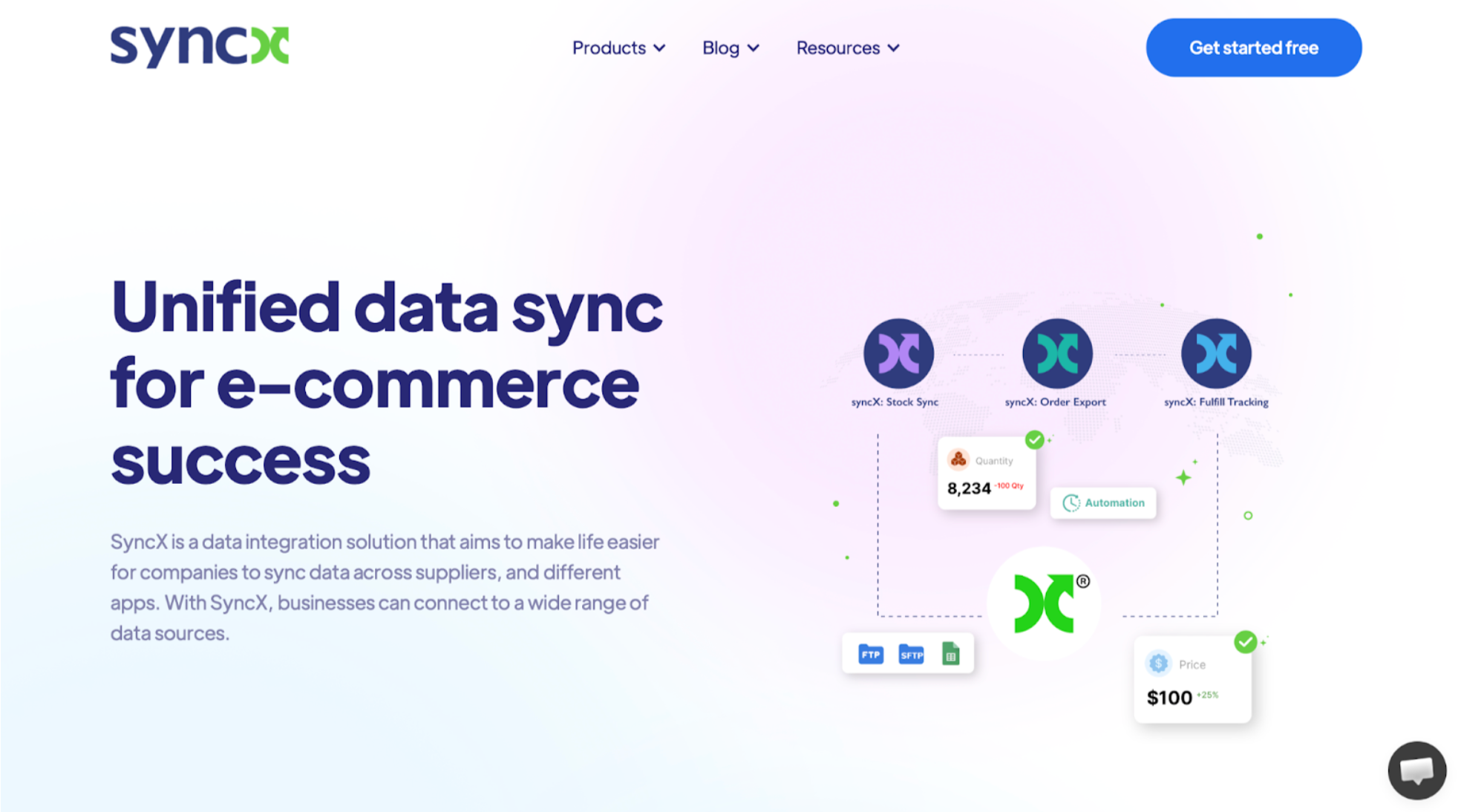
Stock Sync is built for merchants who rely on supplier feeds and external inventory sources. While not tied to a widely known founder brand, it has gained popularity for solving a very specific problem: automated stock syncing without manual work.
Why it stands out in India:
Great for dropshipping or supplier-heavy catalogs where inventory updates come from Excel sheets, vendors, or external feeds
Key Features
-
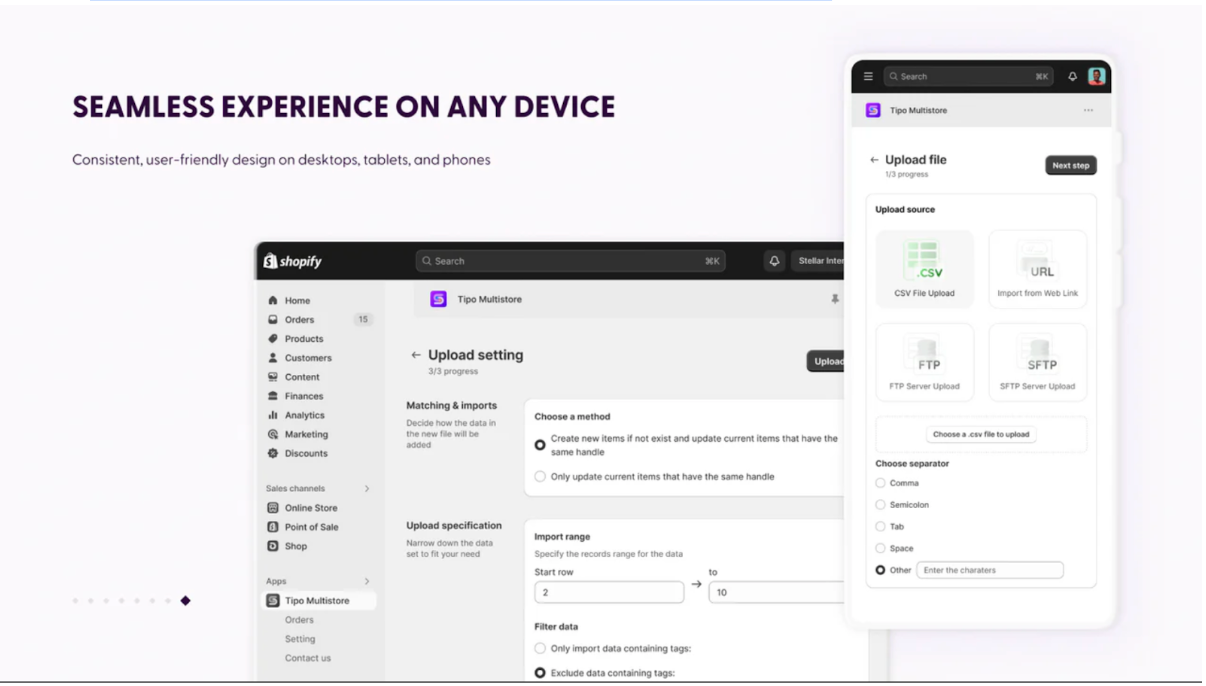
Auto-sync inventory levels and product data via various sources like CSV or Google Sheets.
-
Bulk updates and mapping rules for flexible workflows.
-
Support for multi-location stock syncing and variant mapping.
Pricing
Review
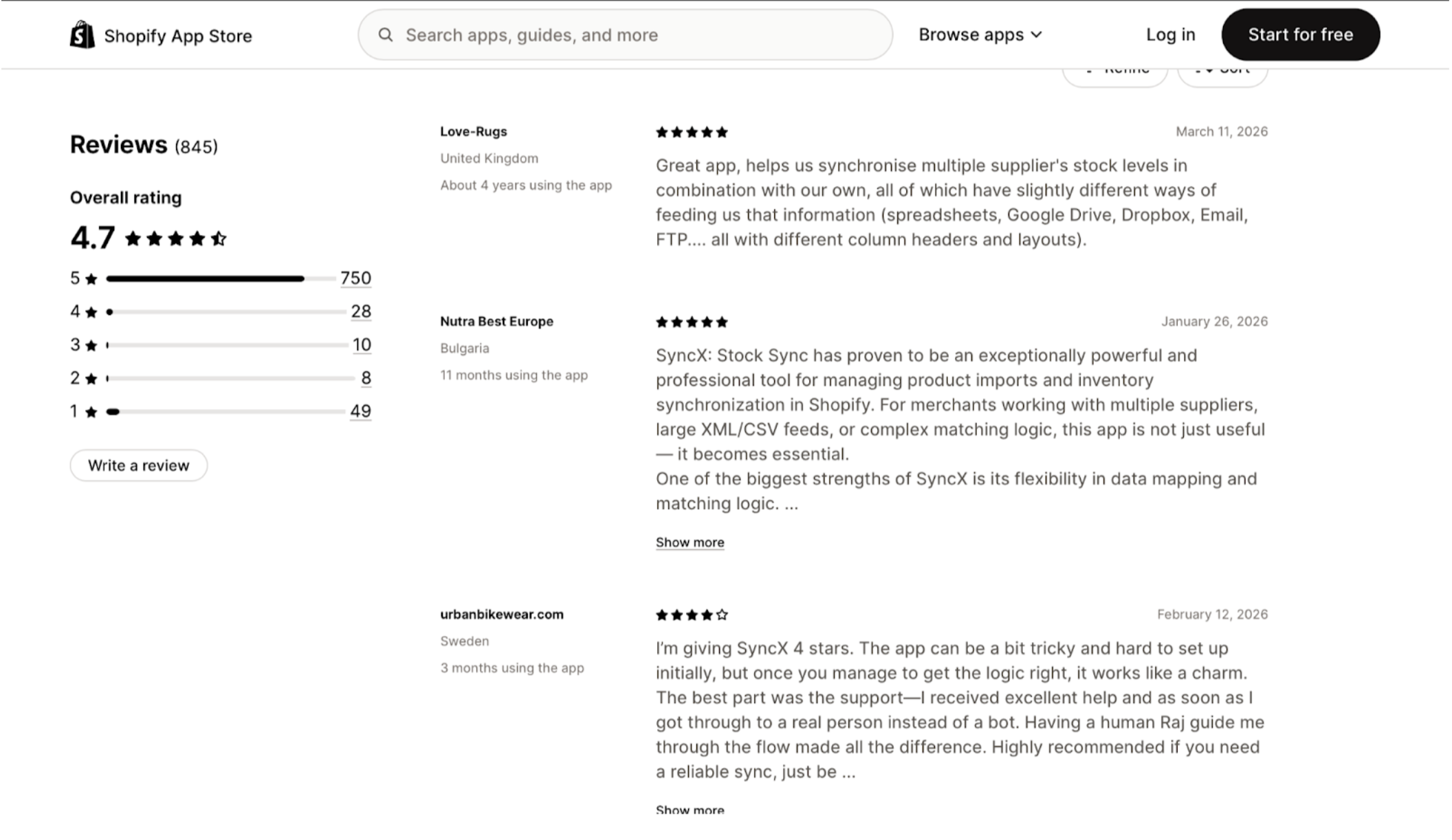
Stock Sync users appreciate its ability to sync inventory from multiple supplier sources with different formats. It is seen as a powerful tool for handling complex data feeds like spreadsheets, Google Drive, and FTP. Flexibility in mapping and automation is a major strength for businesses with large catalogs. Some users mention that initial setup can be tricky, but performance is excellent once configured.
Summary
Stock Sync is designed for stores that rely on supplier feeds and external inventory sources. It automates inventory updates through CSV, Google Sheets, and other integrations. The tool simplifies bulk updates and multi-source inventory management. It is great for dropshipping and supplier-heavy catalog businesses.
5. Inventory Planner
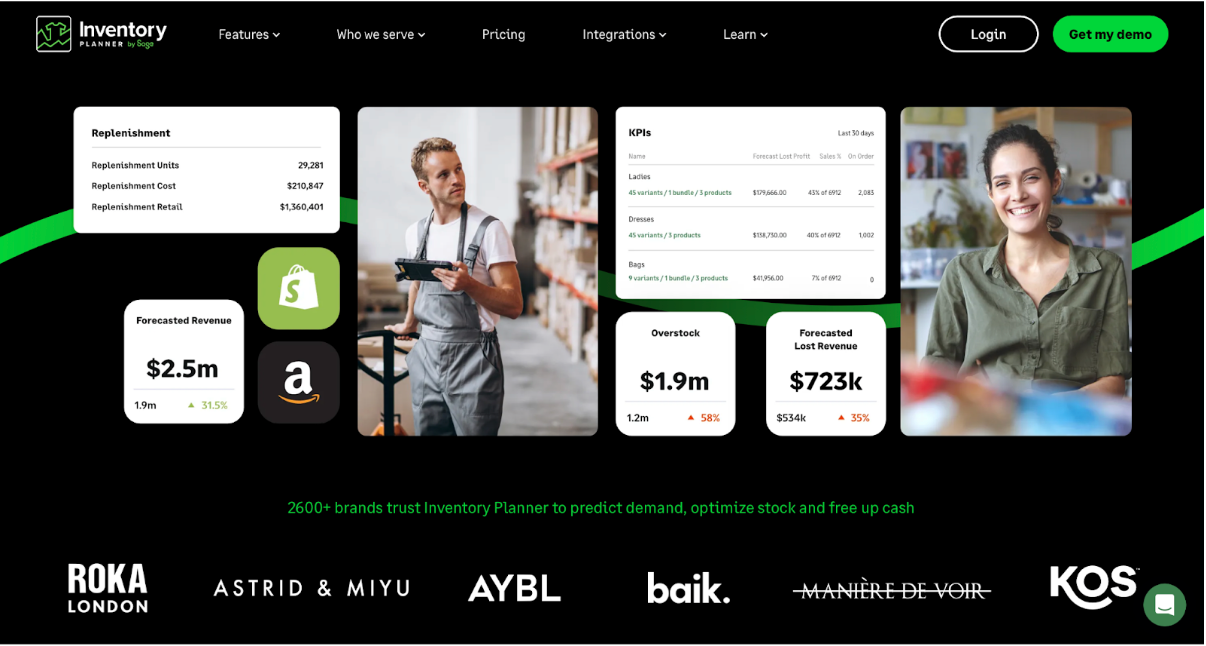
Inventory Planner (now part of Sage Group) focuses heavily on forecasting and demand planning. It’s used by scaling brands that want to move from reactive inventory management to predictive decision-making.
Key Features
-
Advanced demand forecasting that predicts what customers will buy.
-
Automated purchase order suggestions based on sales trends.
-
Multi-location planning, SKU-level reporting and analytics.
-
Deep visibility across channels and supplier lead times.
Pricing
Review
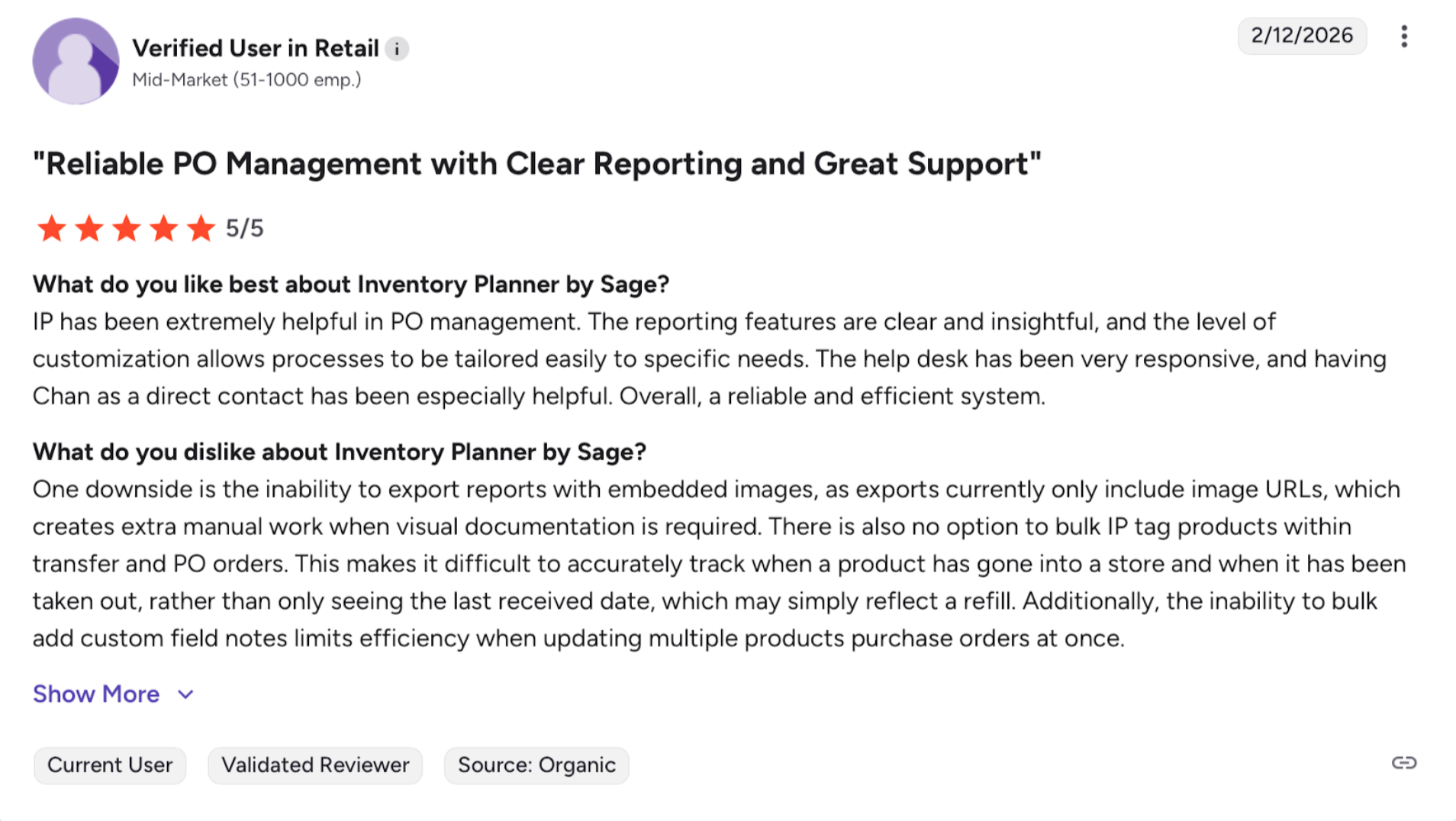
Users describe Inventory Planner as a reliable tool for managing purchase orders and gaining clear, insightful reporting. The platform’s customization and responsive support team are frequently praised. It helps streamline workflows and improve efficiency in inventory planning. However, some limitations around report exports and bulk actions can create additional manual work.
Summary
Inventory Planner focuses on forecasting and demand planning for scaling Shopify brands. It helps predict future sales and automate purchase decisions. The platform provides deep insights into SKU performance and inventory trends. It is best for brands looking to move from reactive to data-driven inventory management.
How to Choose the Right Inventory Management App for Shopify and Shopify Plus in India
-
If you sell across Shopify, Amazon, and Flipkart, choose real-time multi-channel syncing to avoid overselling during high-traffic campaigns.
-
If you manufacture products or manage raw materials, select tools with production workflows, BOM tracking, and batch-level inventory visibility.
-
If your sales spike during seasonal events like Diwali and sale festivals, prioritize forecasting and automated purchase planning features.
-
If you operate multiple warehouses across cities, pick software with smart order routing and location-level stock visibility.
-
If your catalog includes bundles or kits, ensure the app automatically adjusts component inventory after each order.
-
If you are scaling toward Shopify Plus, choose platforms with automation, API flexibility, and advanced analytics for operational control.
Conclusion
Now take a step back before installing any inventory tool.
Inventory for Shopify and Shopify Plus brands in India has moved far beyond stock counting. Every order, every warehouse movement, and every marketplace sync directly shapes your experience and revenue flow. When sales spike during festive seasons or major sale events, clarity in inventory keeps operations smooth and predictable.
The right system helps you see what is selling, where stock is moving, and when to reorder with confidence. It brings warehouses, bundles, forecasting, and multi-channel demand into one connected view.
As your brand grows across cities and platforms, strong inventory workflows create stability and speed together. Choose the tool that matches your scale today while supporting the growth you are building for tomorrow.

