

Words that inspire, ideas that spark,
stories that stay
10 Best HIPAA-Compliant Web Hosting Options (2026)
V.Srinidhi Reddy
Friday, April 17th, 20267 min read
Table of content
10 Best HIPAA-Compliant Web Hosting Options (2026)
AWS, Google Cloud, Azure, DigitalOcean & more
Introduction
When you're dealing with healthcare data, hosting isn’t just a technical choice — it’s a legal and security decision.
HIPAA (Health Insurance Portability and Accountability Act) requires strict standards for:
-
Data protection
-
Access control
-
Encryption
-
Audit trails
And not every hosting provider qualifies.
In fact, most “regular” hosting platforms aren’t compliant unless they:
-
Sign a Business Associate Agreement (BAA)
-
Offer secure infrastructure
-
Provide compliance-ready configurations
This guide covers the best HIPAA-compliant hosting providers in 2026, including enterprise cloud platforms and specialized healthcare hosting services.
TL;DR
-
Best overall: AWS
-
Best for Google ecosystem: Google Cloud
-
Best enterprise solution: Microsoft Azure
-
Best managed HIPAA hosting: Atlantic.Net
-
Best for simplicity: DigitalOcean
-
Best budget HIPAA hosting: HostDime
-
Best developer-friendly: Heroku (via Salesforce)
-
Best compliance-focused hosting: Rackspace
-
Best secure infrastructure: Liquid Web
-
Best niche healthcare hosting: TrueVault
Quick Comparison Table
|
Platform |
Best For |
Type |
Complexity |
Compliance Support |
|
AWS |
Enterprise cloud |
IaaS |
High |
⭐⭐⭐⭐⭐ |
|
Google Cloud |
Data + AI |
IaaS |
High |
⭐⭐⭐⭐⭐ |
|
Azure |
Enterprise integration |
IaaS |
High |
⭐⭐⭐⭐⭐ |
|
Atlantic.Net |
Managed HIPAA |
Managed |
Medium |
⭐⭐⭐⭐⭐ |
|
DigitalOcean |
Simplicity |
IaaS |
Medium |
⭐⭐⭐⭐ |
|
HostDime |
Budget HIPAA |
Managed |
Medium |
⭐⭐⭐⭐ |
|
Heroku |
Developer PaaS |
PaaS |
Easy |
⭐⭐⭐ |
|
Rackspace |
Managed cloud |
Managed |
High |
⭐⭐⭐⭐⭐ |
|
Liquid Web |
Secure hosting |
Managed |
Medium |
⭐⭐⭐⭐ |
|
TrueVault |
Healthcare APIs |
Specialized |
Medium |
⭐⭐⭐⭐⭐ |
1. AWS (Amazon Web Services)
Amazon Web Services is the most powerful enterprise cloud platform.
Key features:
-
Global infrastructure
-
Hundreds of services
-
Full backend + infra control
-
High reliability
Reviews
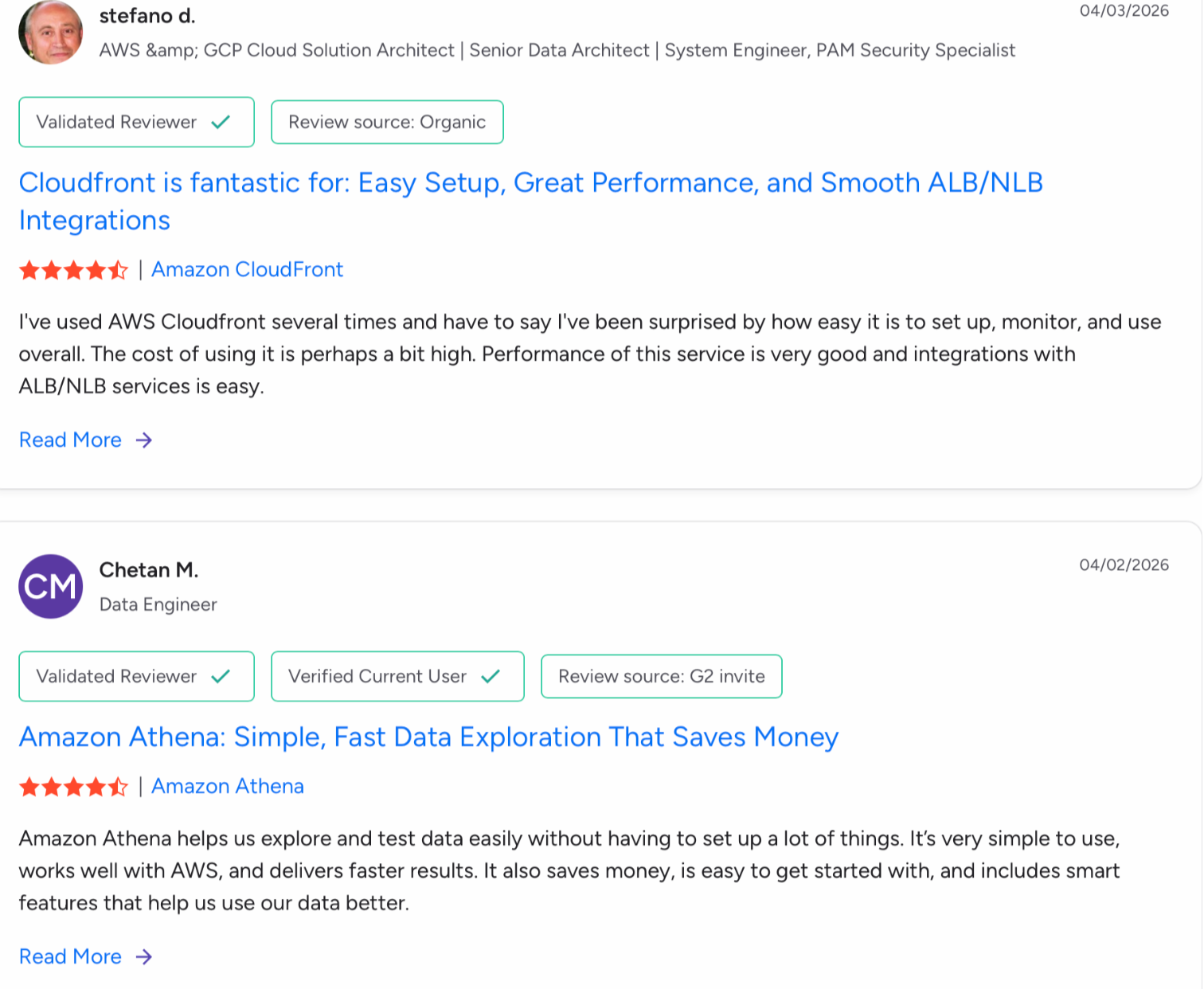
Amazon CloudFront is widely appreciated for its ease of setup, strong performance, and seamless integration within the AWS ecosystem. Users highlight how simple it is to configure and monitor, even for complex workloads, while still delivering fast and reliable content globally through its distributed edge network. This architecture helps reduce latency by serving content from locations closest to users, improving overall performance.
Another key strength is its smooth integration with services like load balancers (ALB/NLB) and other AWS tools, making it a natural choice for teams already working within AWS. However, some users mention that costs can be relatively high, especially as usage scales.
Amazon Athena, on the other hand, is praised for its simplicity and efficiency in data exploration. Users value how quickly they can query and analyze data without complex setup, making it ideal for teams that want fast insights with minimal infrastructure. Its serverless nature and ease of use help reduce operational overhead while still delivering strong performance.
Summary
AWS CloudFront and Amazon Athena together offer a powerful combination of performance and simplicity within the AWS ecosystem. CloudFront excels in fast, global content delivery with strong integrations, while Athena makes data exploration quick and cost-efficient. Both tools are highly effective for modern cloud architectures, though costs can increase with scale depending on usage.
2. Google Cloud Platform
Google Cloud Platform is ideal for data-heavy healthcare applications.
Key features:
-
BAA support
-
AI & machine learning tools
-
Secure infrastructure
-
Global network
Review
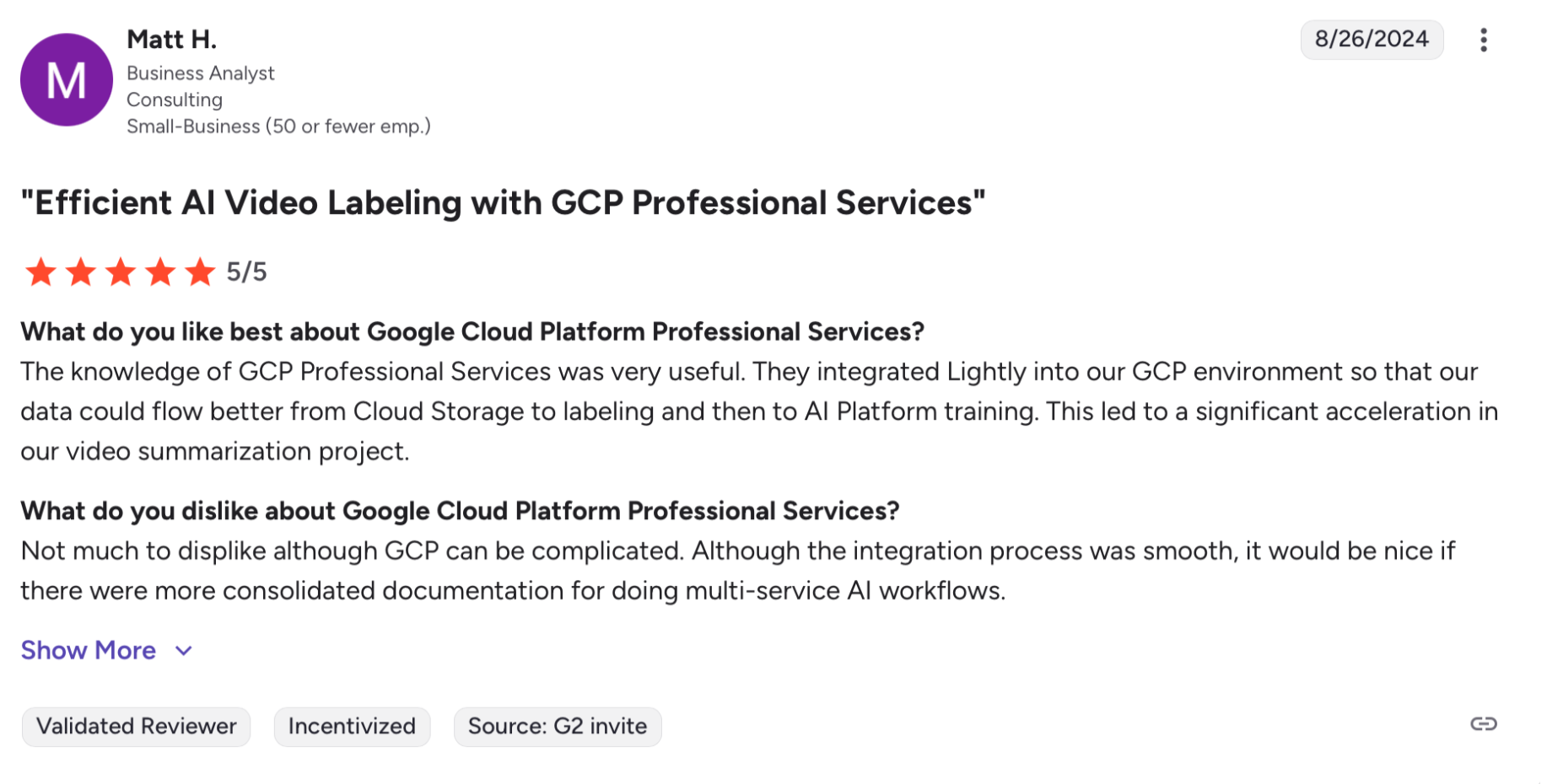
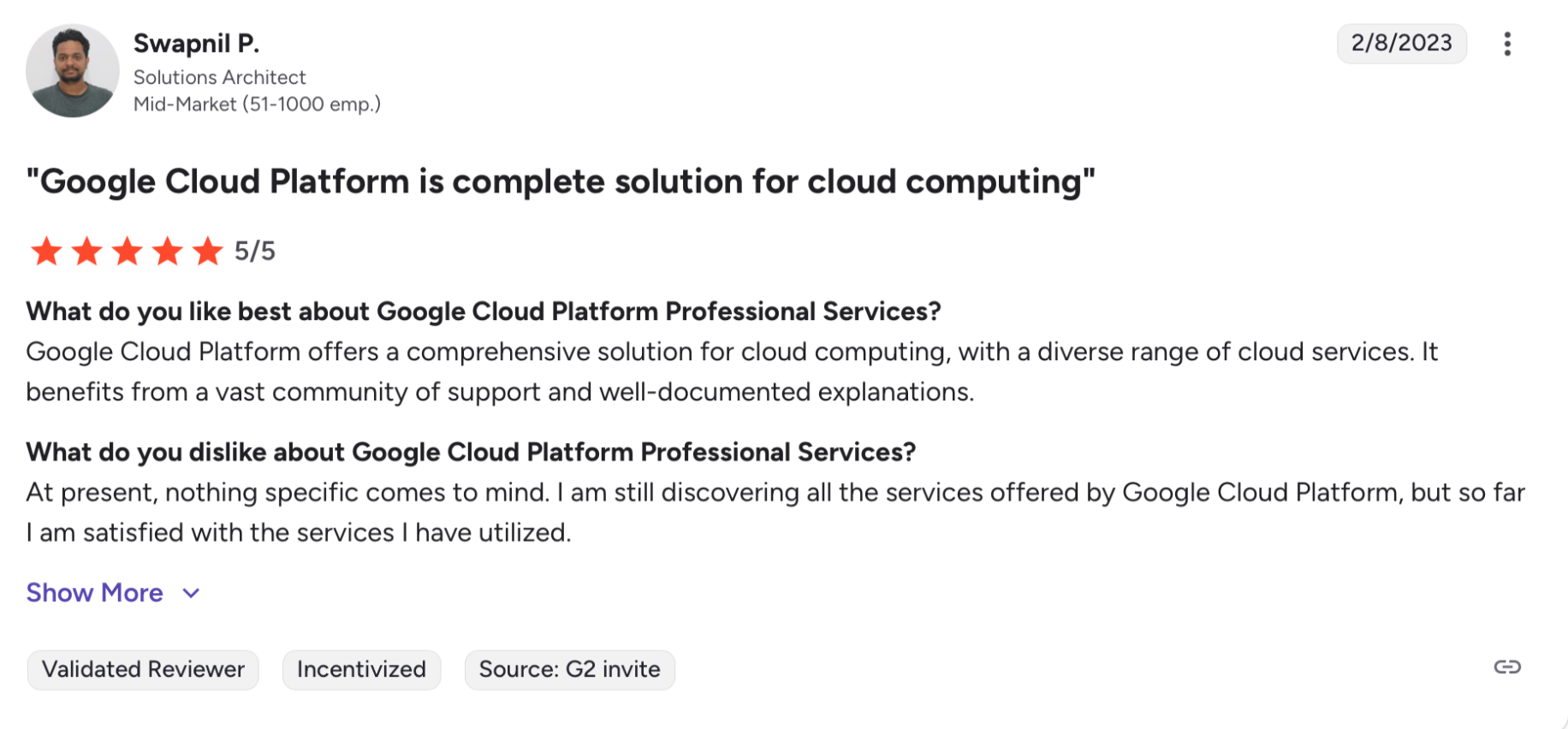
Users highlight Google Cloud Platform (GCP) Professional Services as highly effective for accelerating AI and data workflows, especially in use cases like video labeling and model training. The services integrate smoothly within the GCP ecosystem, enabling seamless data flow across tools like Cloud Storage and AI platforms, which significantly improves project speed and efficiency.
Another major strength is GCP’s comprehensive cloud offering and strong support ecosystem, with well-documented resources and an active community that helps teams implement solutions effectively.
On the downside, some users mention that GCP can feel complex, particularly when working across multiple services, and there is room for improvement in centralized documentation for multi-service workflows.
Summary
Overall, Google Cloud Platform Professional Services is a powerful and comprehensive solution for cloud and AI projects, offering seamless integrations and strong support, but may require time to navigate due to its complexity.
3. Microsoft Azure
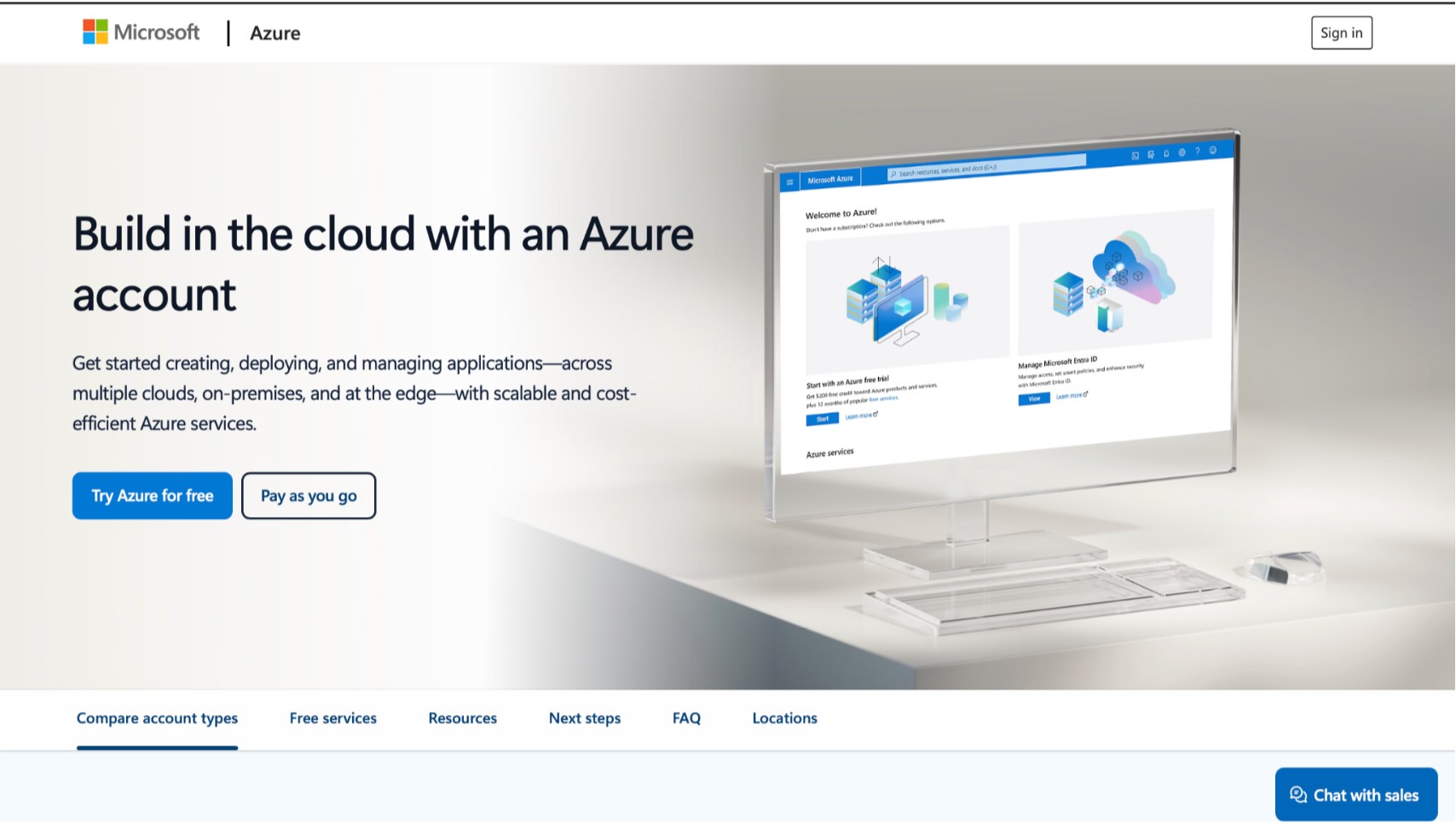
Microsoft Azure is widely used by enterprises and healthcare institutions.
Key features:
-
BAA support
-
Enterprise security
-
Integration with Microsoft ecosystem
Reviews
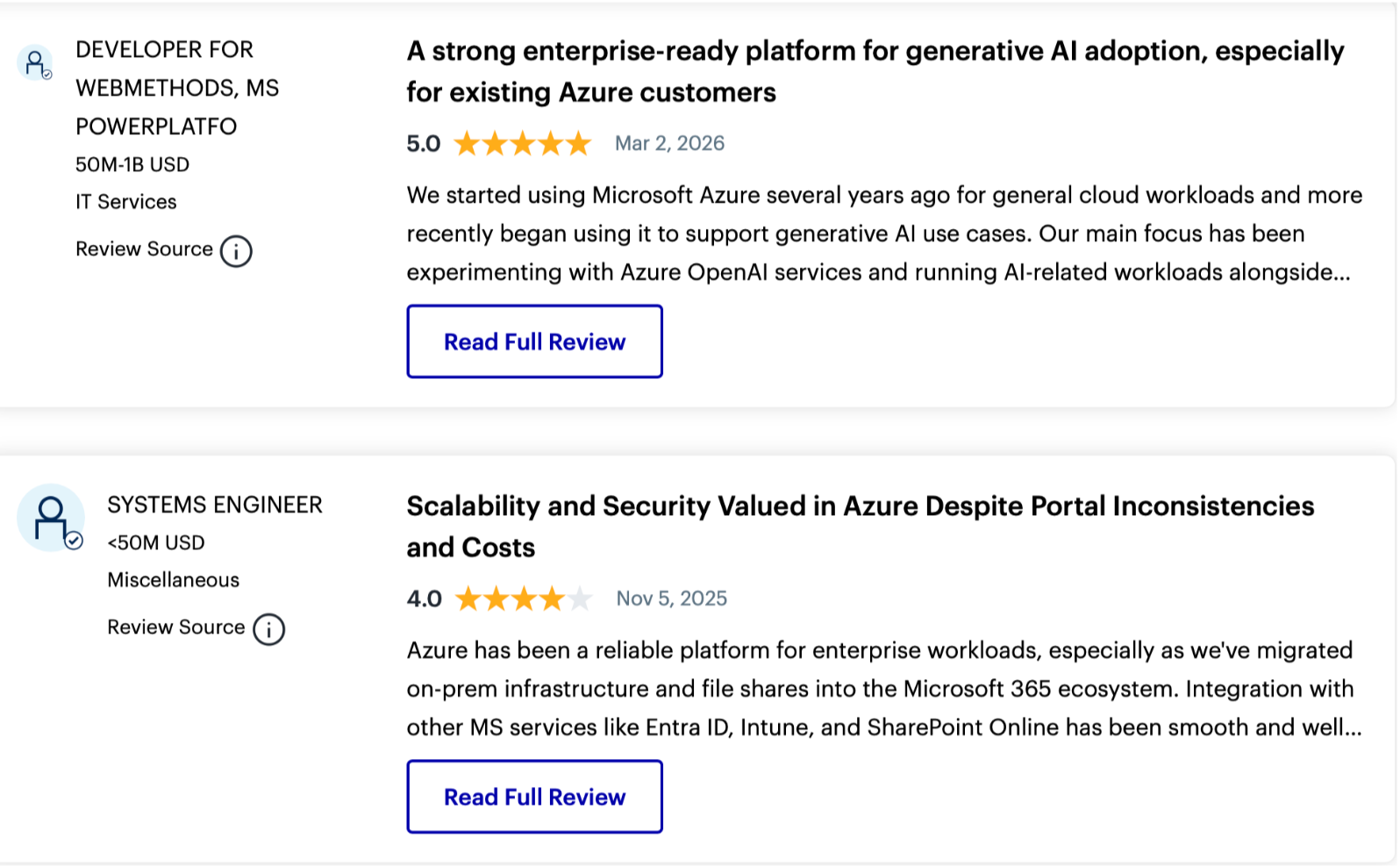
Microsoft Azure is highly regarded as a powerful, enterprise-ready cloud platform, especially for organizations already embedded in the Microsoft ecosystem. Users highlight its strong support for AI and generative AI workloads, particularly through services like Azure OpenAI, making it a compelling choice for modern, AI-driven applications. The platform excels in scalability, security, and seamless integration with tools like Microsoft 365, Entra ID, Intune, and SharePoint, enabling smooth enterprise migrations and unified workflows.
That said, some users note a few challenges. The Azure portal can feel inconsistent or complex at times, especially for new users navigating multiple services. Additionally, cost management can become tricky, with pricing structures that may scale quickly depending on usage. Despite these concerns, Azure remains a robust and reliable platform for large-scale deployments.
Pros:
-
Strong compliance support
-
Enterprise integrations
Cons:
-
Complex pricing
Summary
Overall, Azure is a feature-rich, scalable, and enterprise-focused cloud platform that stands out for its AI capabilities and deep Microsoft integrations, though it can present challenges in usability and cost management.
4. Atlantic.Net
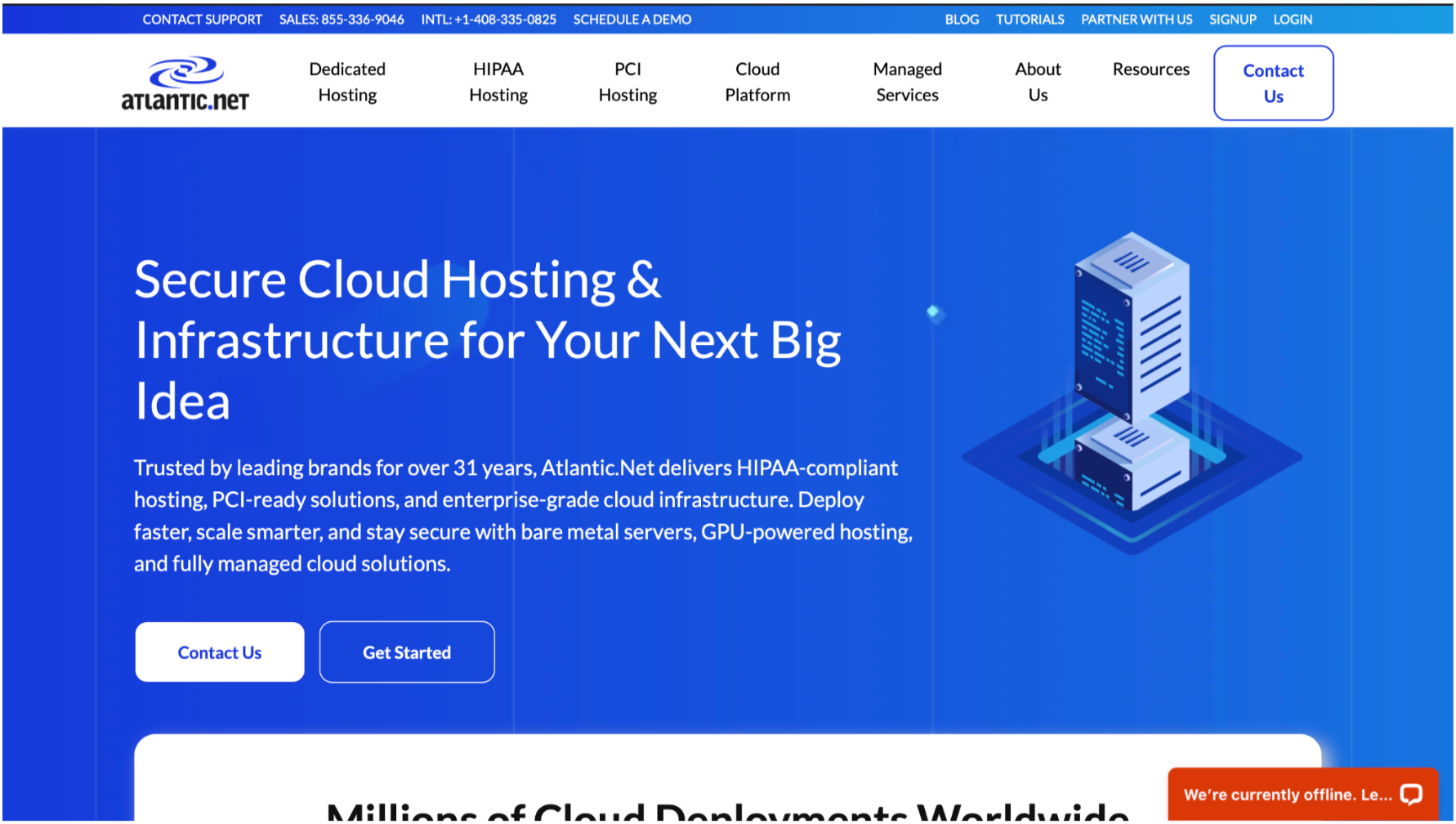
Atlantic.Net specializes in HIPAA-compliant hosting.
Key features:
-
Fully managed HIPAA environments
-
BAA included
-
Dedicated support
Reviews
Pros:
-
Easy compliance setup
-
Great support
Cons:
-
Less flexible than AWS
Summary
Best for managed HIPAA hosting without complexity.
5. DigitalOcean

DigitalOcean can be configured for HIPAA compliance.
Key features:
-
Simple UI
-
Predictable pricing
-
Developer-friendly
Reviews
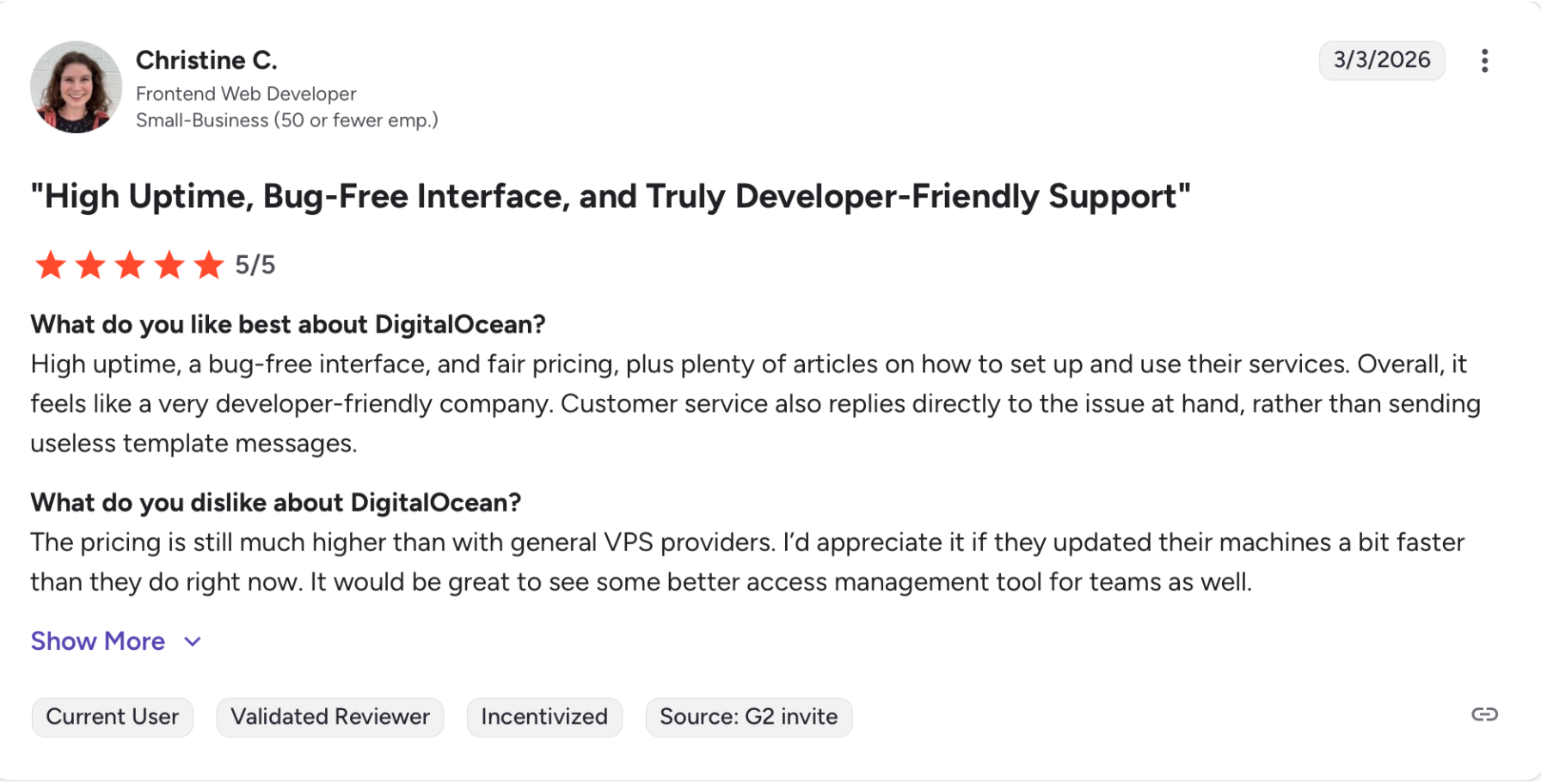
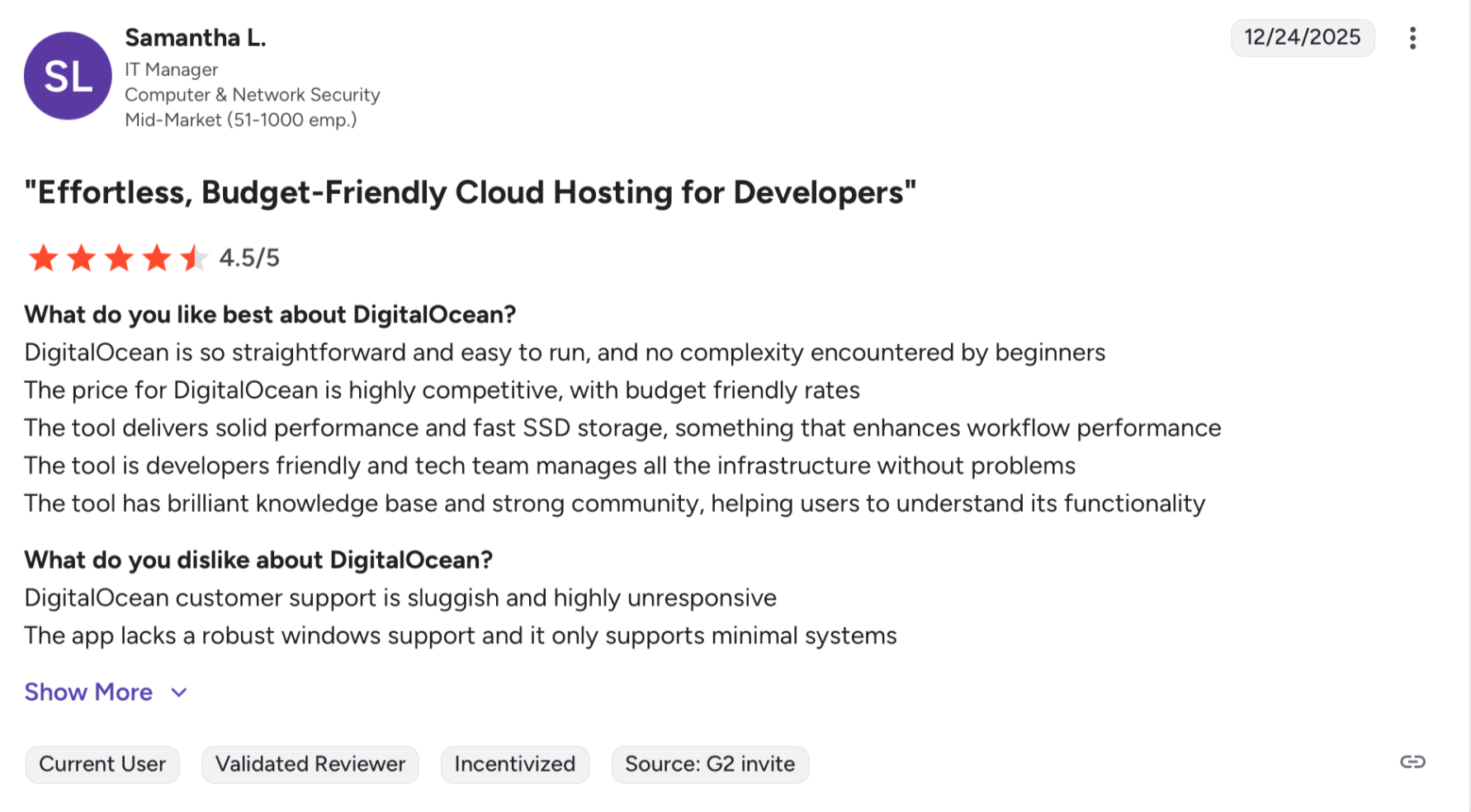
DigitalOcean is widely appreciated for its developer-friendly experience, simplicity, and reliable performance. Users highlight its high uptime, clean interface, and straightforward setup, making it easy to deploy and manage applications even for beginners. The platform’s extensive documentation and strong community support further enhance usability, helping developers quickly find solutions and learn best practices. Additionally, many users value its competitive pricing and solid SSD performance, which makes it a cost-effective choice for startups and small to mid-sized teams.
However, there are a few trade-offs. Some users feel that pricing can still be higher than basic VPS providers in certain cases. Others mention slower or less responsive customer support, especially when dealing with urgent issues. There are also limitations around Windows support and advanced access management tools, which may affect teams with more complex infrastructure needs.
Pros:
-
Easy to use
-
Affordable
Cons:
-
Requires manual compliance setup
Summary
Overall, DigitalOcean is a simple, reliable, and developer-focused cloud platform that balances performance, usability, and pricing well, though it may fall short in support responsiveness and advanced enterprise-level features.
6. Hostinger

HostDime offers HIPAA-compliant hosting solutions.
Key features:
-
Managed infrastructure
-
Compliance-ready servers
-
24/7 support
Reviews
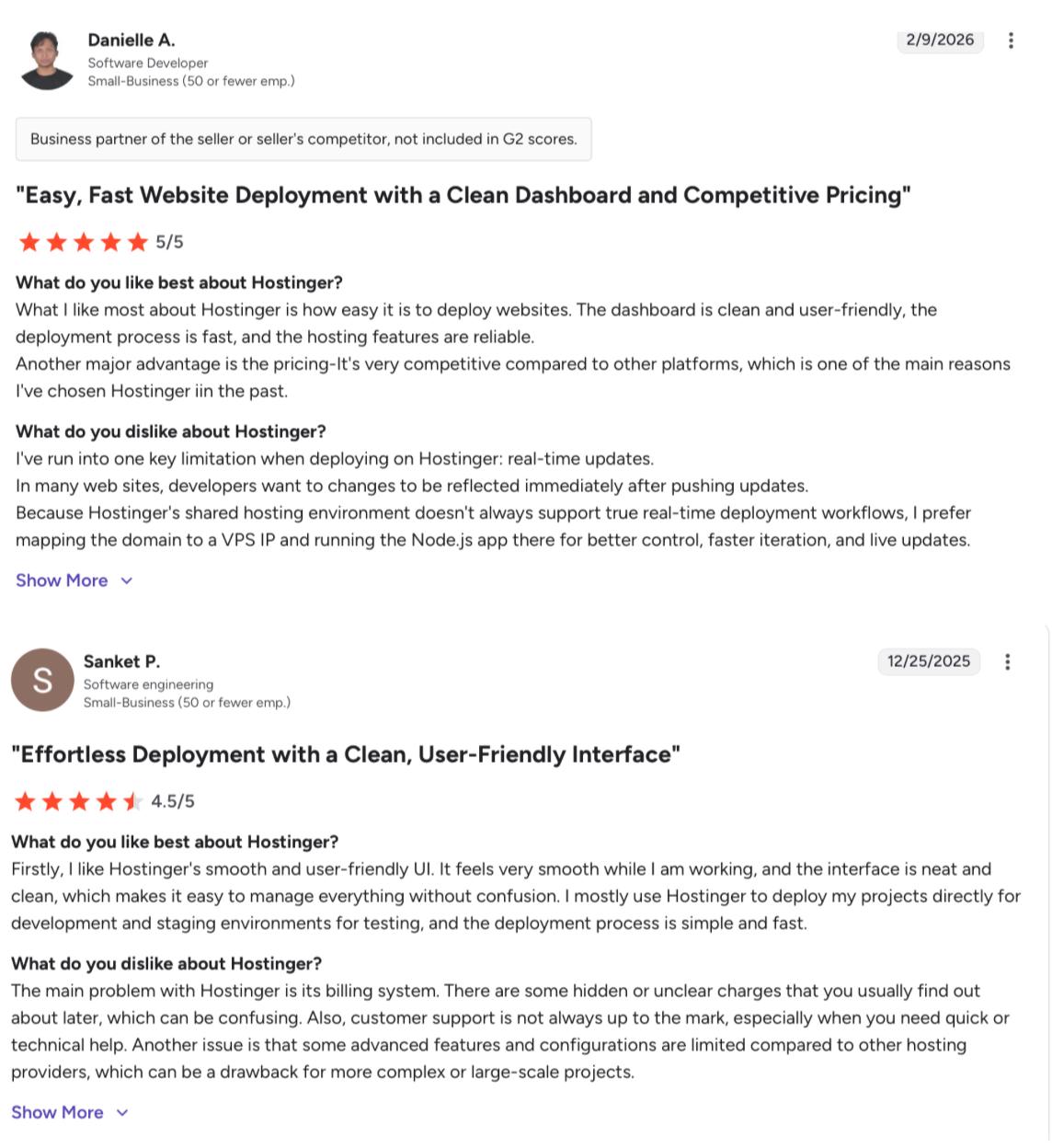
Users appreciate Hostinger for its ease of use and fast deployment, with a clean, intuitive dashboard that makes managing websites simple—even for beginners. The platform is also praised for its affordable pricing, making it an attractive choice for small businesses and developers looking for cost-effective hosting.
However, some limitations are noted. Real-time deployment capabilities can be restricted in shared hosting environments, which may slow down development workflows. Additionally, users mention billing transparency issues, occasional gaps in customer support responsiveness, and limited advanced features for more complex or large-scale projects.
Pros:
-
Affordable managed hosting
-
Reliable
Cons:
-
Less known brand
Summary
Overall, Hostinger is a budget-friendly and beginner-friendly hosting solution that excels in simplicity and quick setup, but may fall short for advanced use cases requiring greater control, scalability, and real-time deployment capabilities.
8. Heroku
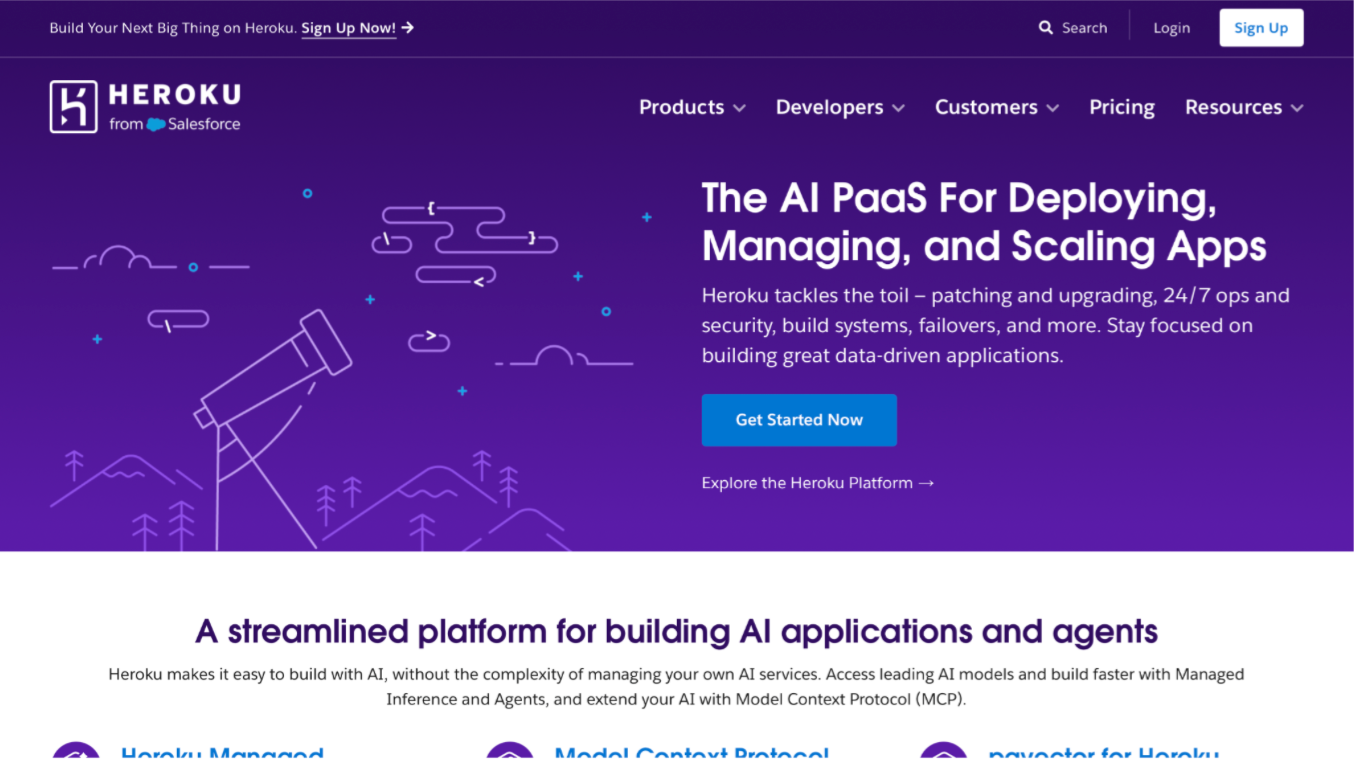
Heroku is a classic developer-friendly platform.
Key features:
-
Simple deployment
-
Add-ons ecosystem
-
Supports multiple languages
Reviews
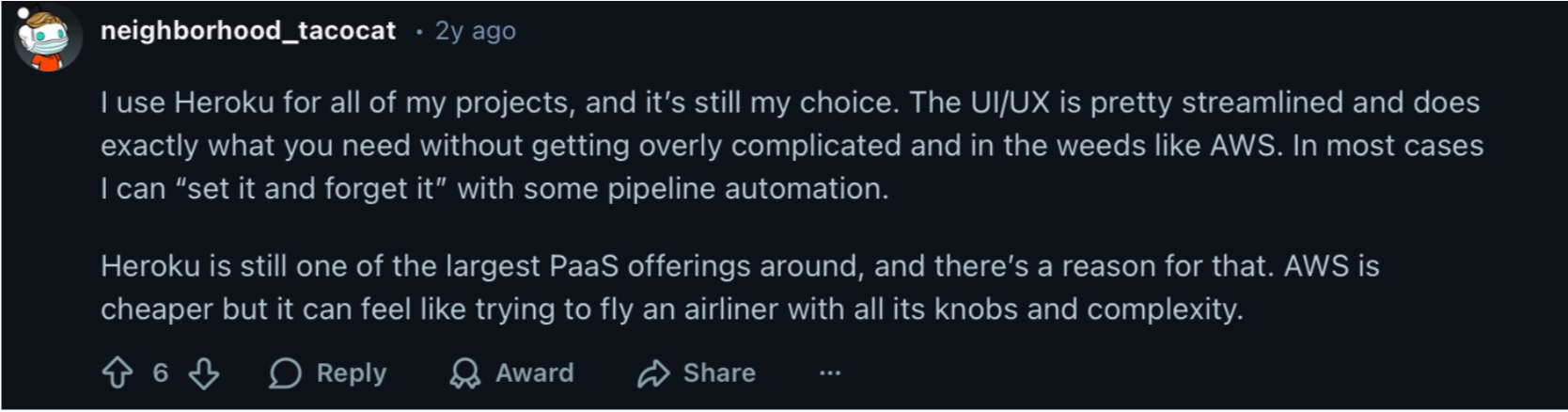
Users praise Heroku for its simplicity and developer-friendly experience, highlighting its clean UI/UX and “set it and forget it” deployment workflow with built-in pipeline automation. It allows teams—especially startups—to focus on building applications rather than managing infrastructure, as Heroku handles scaling, patching, and provisioning seamlessly.
However, some drawbacks include performance limitations for resource-heavy apps, dynos going idle on lower tiers (affecting availability), and vendor lock-in, which can make migration to other platforms more complex. While AWS may offer more control and lower costs, Heroku stands out for ease of use and reduced operational overhead.

Summary
Overall, Heroku is a simple and efficient PaaS solution ideal for startups and rapid development, but may not be the best fit for highly scalable or performance-intensive applications due to cost and flexibility limitations.
8. Rackspace
Rackspace Technology offers managed HIPAA solutions.
Key features:
-
Managed cloud services
-
Security-focused infrastructure
-
Compliance expertise
Reviews
Pros:
-
Strong support
-
Enterprise-grade
Cons:
-
Expensive
Summary
Best for fully managed enterprise hosting.
9. Liquid Web
Liquid Web provides secure hosting solutions.
Key features:
-
Dedicated servers
-
Managed hosting
-
Strong security
Reviews
Pros:
-
Reliable
-
Good support
Cons:
-
Limited scalability vs cloud
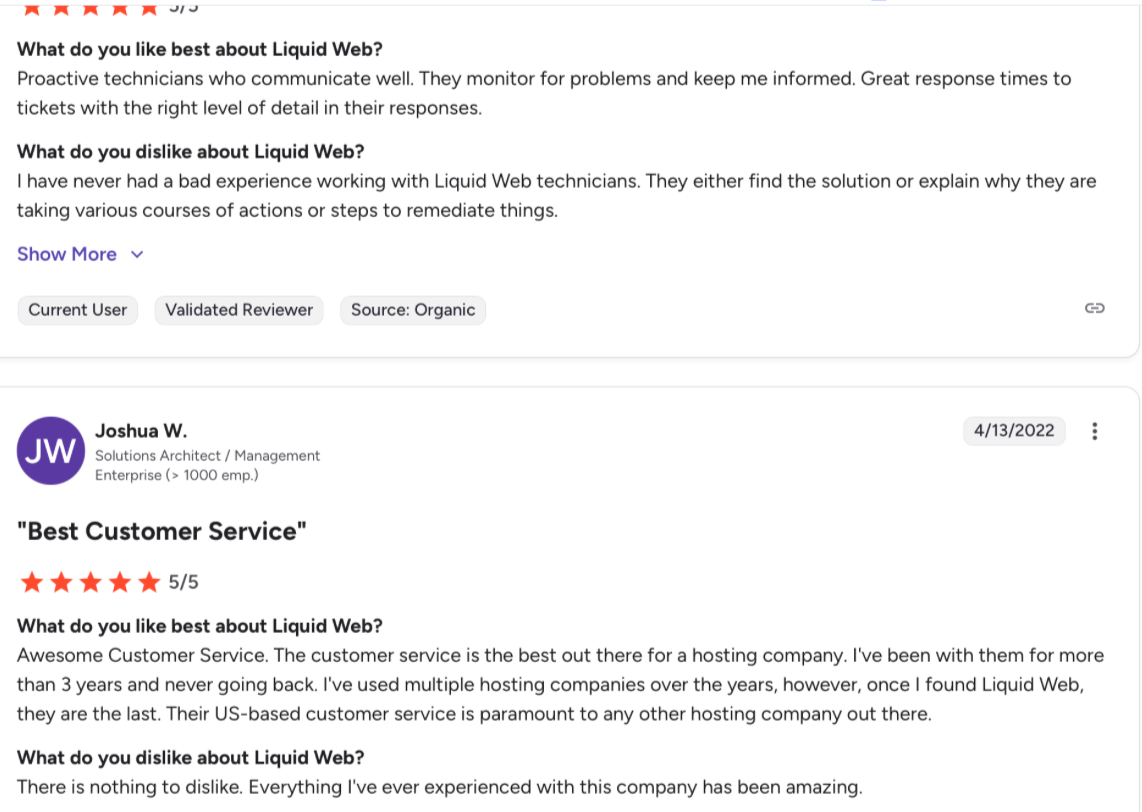
Users consistently praise Liquid Web for its exceptional customer support, highlighting proactive technicians who actively monitor systems, communicate clearly, and resolve issues quickly. Support teams are noted for providing detailed responses and keeping users informed throughout the process. Many long-term users emphasize reliability and responsiveness, often stating that Liquid Web stands out compared to other hosting providers they’ve used.
There are virtually no major complaints, with users reporting consistently positive experiences and high satisfaction with both service quality and support.
Summary
Overall, Liquid Web is a premium hosting provider known for industry-leading customer support and reliability, making it an excellent choice for businesses that prioritize responsive service and hands-on technical assistance.
10. TrueVault
TrueVault focuses on secure data storage and APIs.
Key features:
-
HIPAA-ready APIs
-
Secure data storage
-
Compliance-focused
Reviews
Pros:
-
Purpose-built for healthcare and sensitive data use cases
-
Simplifies HIPAA compliance and security requirements
-
Easy-to-use APIs for storing and managing protected data
-
Reduces the need to build custom security infrastructure
Cons:
-
Not a full hosting or application platform
-
Limited flexibility outside compliance-focused use cases
-
May require integration with other services for full app development
Summary
TrueVault is a highly focused solution for secure and compliant data handling, making it ideal for healthcare and regulated industries. While it doesn’t offer full application hosting, it excels at simplifying data security and compliance, allowing developers to build trustworthy applications without managing complex regulatory requirements themselves.
Final Verdict
-
Want full control → AWS
-
Want AI/data → Google Cloud
-
Want enterprise → Azure
-
Want managed → Atlantic.Net
Conclusion
Choosing a HIPAA-compliant hosting provider isn’t just about features — it’s about trust, security, and compliance.
Cloud giants like AWS, Google Cloud, and Azure dominate the space, while providers like Atlantic.Net and Rackspace simplify compliance for teams that don’t want to manage everything themselves.
Out of all ten, AWS is the best HIPAA-compliant hosting option.
Because it offers:
-
Industry-leading infrastructure
-
Full compliance support
-
Unlimited scalability
-
Global reliability
It’s not the simplest — but it’s the most trusted.
Struggling to choose the right Headless CMS & Headless Commerce tech stack? We’ll help you pick the best solution for your business! Exclusive Offer: 20 Hours of Free Development & Consultation
Book a MeetingFrequently Asked Questions
A provider must offer a BAA, encryption, access controls, and secure infrastructure.
AWS is the best overall due to its scalability and compliance support.
Usually no — most HIPAA setups require dedicated or cloud environments.
It can be configured for HIPAA, but requires manual setup and proper security practices.