

Words that inspire, ideas that spark,
stories that stay
Best Headless eCommerce Platforms for Next.js & Nuxt.js (2026 Guide)
V.Srinidhi Reddy
Friday, April 17th, 20268 min read
Table of content
Best Headless eCommerce Platforms for Next.js & Nuxt.js (2026 Guide)
Introduction
Modern frontend frameworks like Next.js and Nuxt.js are built for performance, flexibility, and composability—which is exactly why traditional monolithic eCommerce platforms don’t fit anymore.
Instead, developers are moving toward headless commerce platforms that separate the frontend from the backend and expose everything via APIs. This allows you to build lightning-fast storefronts while maintaining full control over business logic.
But not all headless platforms are built the same.
Some are open-source and developer-first, while others are enterprise SaaS platforms focused on scalability and speed.
In this guide, we’ll break down the best options in 2026.
Platform Comparison (Next.js / Nuxt.js Fit)
|
Platform |
Type |
Best For |
Flexibility |
Learning Curve |
|
Medusa |
Open-source |
Custom builds |
Very High |
Medium |
|
Saleor |
Open-source |
Enterprise APIs |
Very High |
High |
|
Vendure |
Open-source |
Structured backend |
High |
Medium |
|
Commerce Layer |
SaaS |
Global commerce |
High |
Medium |
|
commercetools |
SaaS |
Enterprise scale |
Very High |
High |
|
Swell |
SaaS |
Simplicity + headless |
Medium–High |
Low |
1. Medusa JS
Medusa JS is one of the fastest growing open source ecommerce platforms and a strong alternative for teams that want complete ownership of their commerce backend.
Unlike Commerce Layer, which operates as a SaaS platform with usage based pricing, Medusa is fully open source. This means you are not constrained by platform limitations, and you can customize every part of your commerce logic—from checkout flows to pricing systems.
Why It’s a Strong Alternative
Medusa is particularly appealing for teams that have outgrown structured platforms and need deeper customization. Instead of adapting your workflows to fit the platform, you can build the platform around your workflows.
This makes it ideal for:
-
Custom checkout experiences
-
Advanced pricing logic
-
Multi store or multi region setups
-
Unique business models
Developer & Open Source Ecosystem
-
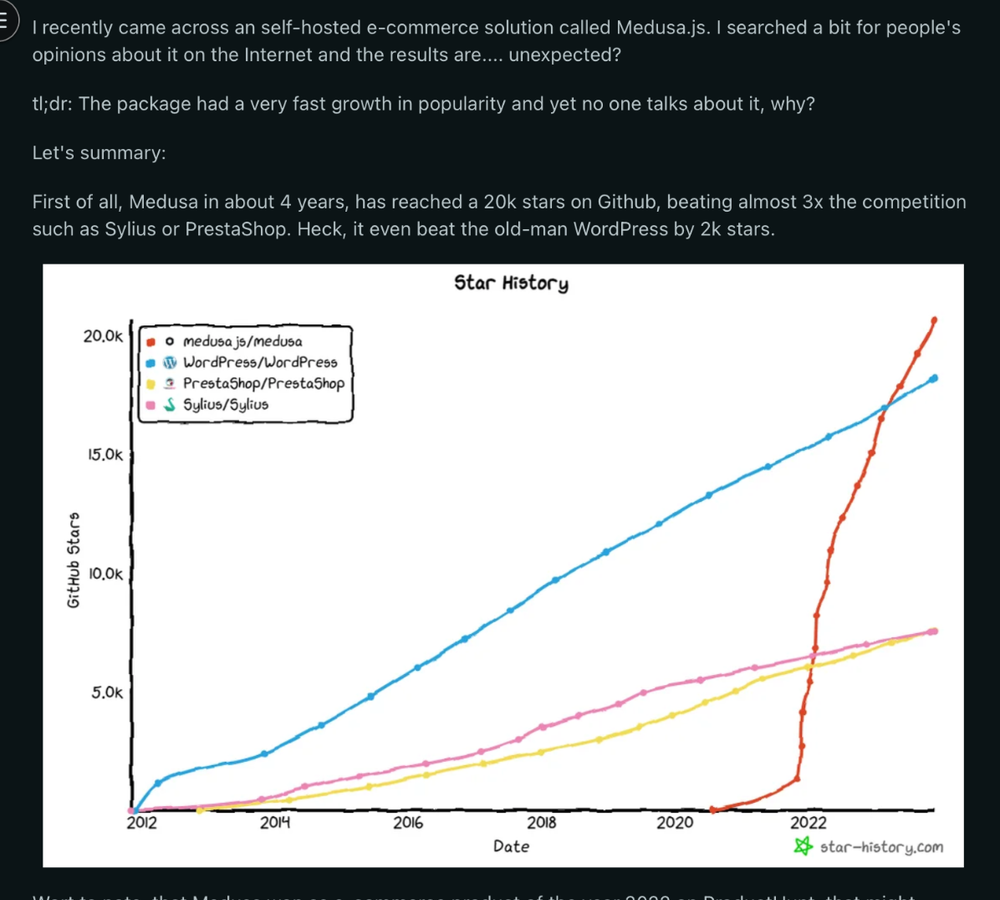
18k+ GitHub stars and growing
-
Plugin based architecture
-
Active contributor community
-
Extensive API support
Core Features
-
Modular backend architecture
-
API first commerce engine
-
Multi region and multi currency support
-
Fully customizable workflows
Pricing
-
Free (open source core)
-
Hosting costs depend on your infrastructure
-
Optional managed cloud offering
There are no transaction fees or revenue based cuts, which can significantly reduce long term costs.
Clients
Medusa is widely used by:
-
Developer led ecommerce teams
-
Headless commerce agencies
-
Fast growing DTC brands
Reviews
Medusa is highly regarded in the developer community for its flexibility and extensibility. Its credibility comes more from GitHub traction and real world adoption than traditional review platforms.
Pros
-
Fully open source
-
No platform lock in
-
Highly customizable
-
Strong developer ecosystem
Cons
-
Requires development resources
-
Not plug and play
-
Smaller ecosystem than SaaS platforms
Summary
Medusa JS is best suited for teams that want full control over their ecommerce infrastructure.
2. Saleor.io
Saleor is a modern, open source ecommerce platform built around a GraphQL first architecture, making it a strong choice for performance focused teams.
Why It’s a Strong Alternative
Saleor stands out for its modern tech stack and efficient data handling. Its GraphQL first approach allows developers to fetch exactly the data they need, improving frontend performance and flexibility.
Developer & Open Source Ecosystem
-
30k+ GitHub stars
-
Active open source community
-
Modern development stack
Core Features
-
GraphQL API
-
Headless architecture
-
Multi channel commerce support
-
Clean and modern admin dashboard
Pricing
-
Free (open source version)
-
Paid cloud version available
Clients
Saleor is used by brands such as:
-
Lush
-
Breitling
Reviews
Saleor is highly praised in the developer community.
-
Strong GitHub traction and community support
-
Developers love the GraphQL first architecture
-
Known for clean UI and modern stack
Common feedback:
-
Requires technical expertise
-
Setup can be complex for non developers
Pros
-
GraphQL first architecture
-
Open source flexibility
-
High performance
-
Modern tech stack
Cons
-
Requires developers
-
Setup complexity
-
Smaller ecosystem compared to larger platforms
Summary
Saleor is best suited for teams that prioritize performance and modern architecture.
3. Vendure.io
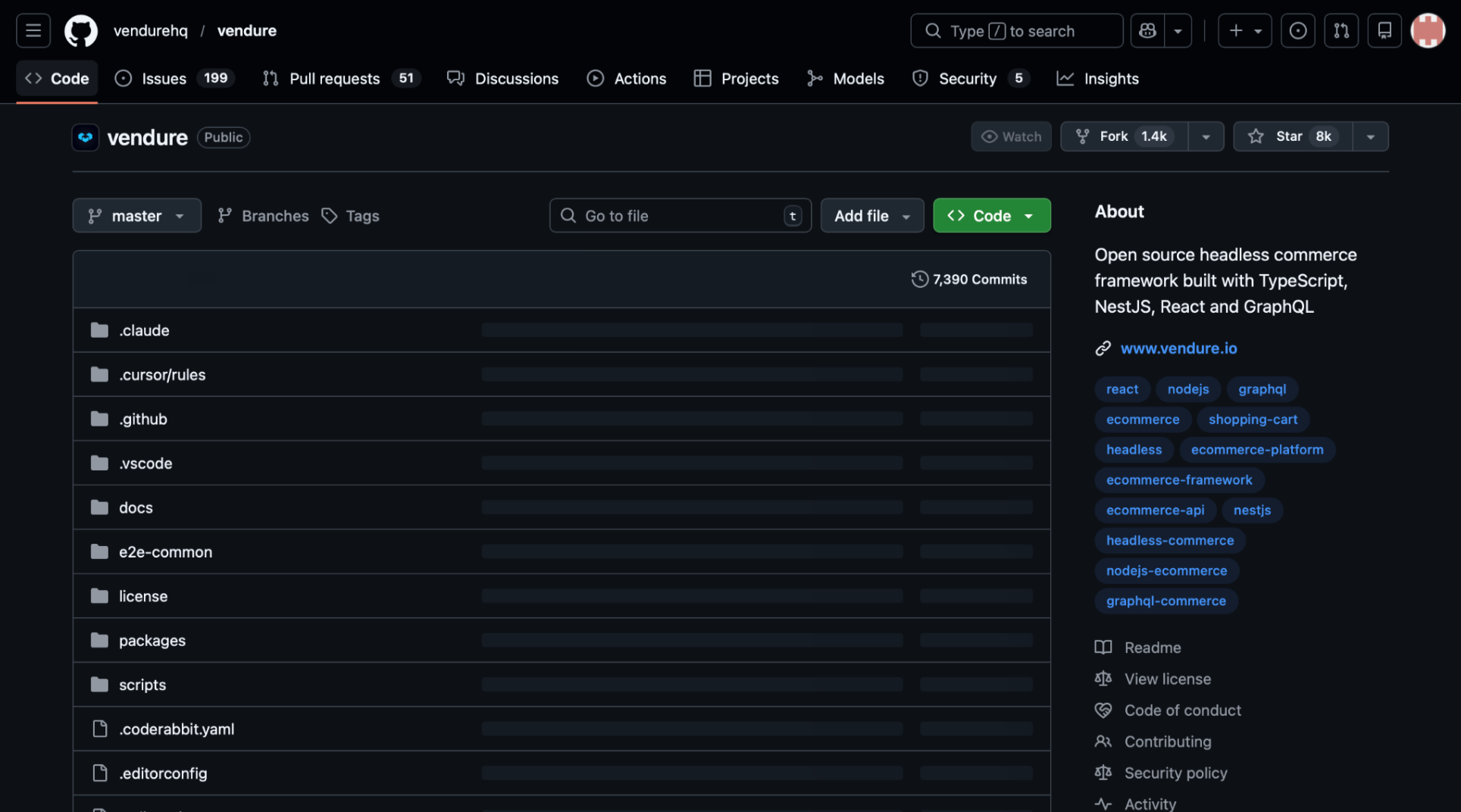
Vendure is a developer first, TypeScript based headless commerce framework built for teams that want deep customization without sacrificing structure or performance.
Unlike many ecommerce platforms that feel either too rigid or too abstract, Vendure strikes a strong balance — giving developers full control over backend logic while still providing a clean, well structured foundation to build on.
Built with Node.js and TypeScript, Vendure is especially appealing to modern development teams that want to work with familiar tools while building scalable commerce systems.
Over time, Vendure has positioned itself as a powerful alternative to platforms like Swell, particularly for teams that want flexibility without the chaos of completely unstructured systems.
Developer & Open Source Ecosystem
Vendure is fully open source and built with a strong focus on developer experience.
-
GitHub: 8k+ stars
-
Built with TypeScript + Node.js
-
Plugin based architecture for easy extensions
-
Active and growing developer community
Its structured approach makes it easier for developers to build complex systems without reinventing everything from scratch.
Core Features
Vendure focuses on flexibility, structure, and extensibility.
-
Plugin based architecture
Easily extend core functionality with custom plugins -
Headless commerce
Fully customizable frontend using any framework -
GraphQL API
Efficient and flexible data querying -
Multi channel support
Manage multiple storefronts from one backend -
Built in admin dashboard
Clean UI for managing products, orders, and customers
Pricing
Vendure follows an open core model.
-
Free (Open Source) → Full core platform access
-
Vendure Cloud (Paid) → Managed hosting and enterprise features
-
Custom pricing for advanced enterprise needs
This means:
-
No upfront platform cost
-
Pay only when scaling or using managed services
Clients
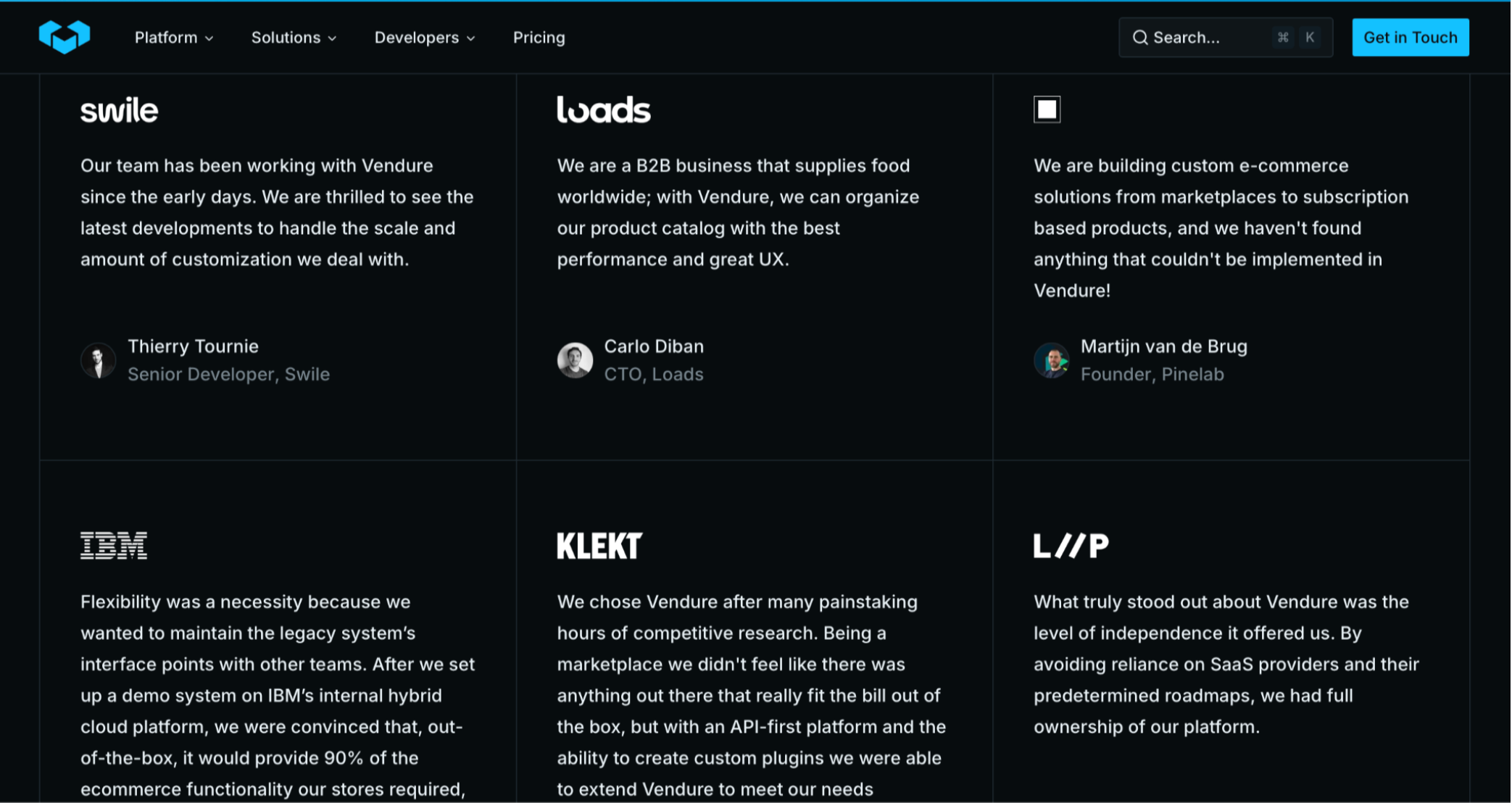
Vendure is used by developer led teams, agencies, and growing ecommerce brands building custom commerce solutions.
While it doesn’t heavily market large enterprise logos, it is widely adopted in:
-
Custom headless builds
-
Agency led ecommerce projects
-
Scalable backend commerce systems
Custom Enterprise & B2B
Vendure is particularly strong for custom enterprise and B2B use cases.
-
Custom pricing and promotions
-
Role based access control
-
Multi channel and multi store setups
-
Deep backend customization via plugins
-
Integration with ERP, CMS, and other systems
Its structured architecture makes it easier to manage complexity at scale.
Reviews
Vendure is highly appreciated within the developer community.
-
Praised for clean architecture and extensibility
-
Developers like the TypeScript first approach
-
Known for being easier to work with than many open source alternatives
Common feedback:
-
Requires development expertise
-
Smaller ecosystem compared to larger platforms
Founder
Vendure was created by Michael Bromley, a developer focused on building scalable and maintainable commerce systems.
Vendure was designed to solve a key problem:
How do you build highly customizable ecommerce systems without creating unmanageable complexity?
Famous Case Studies
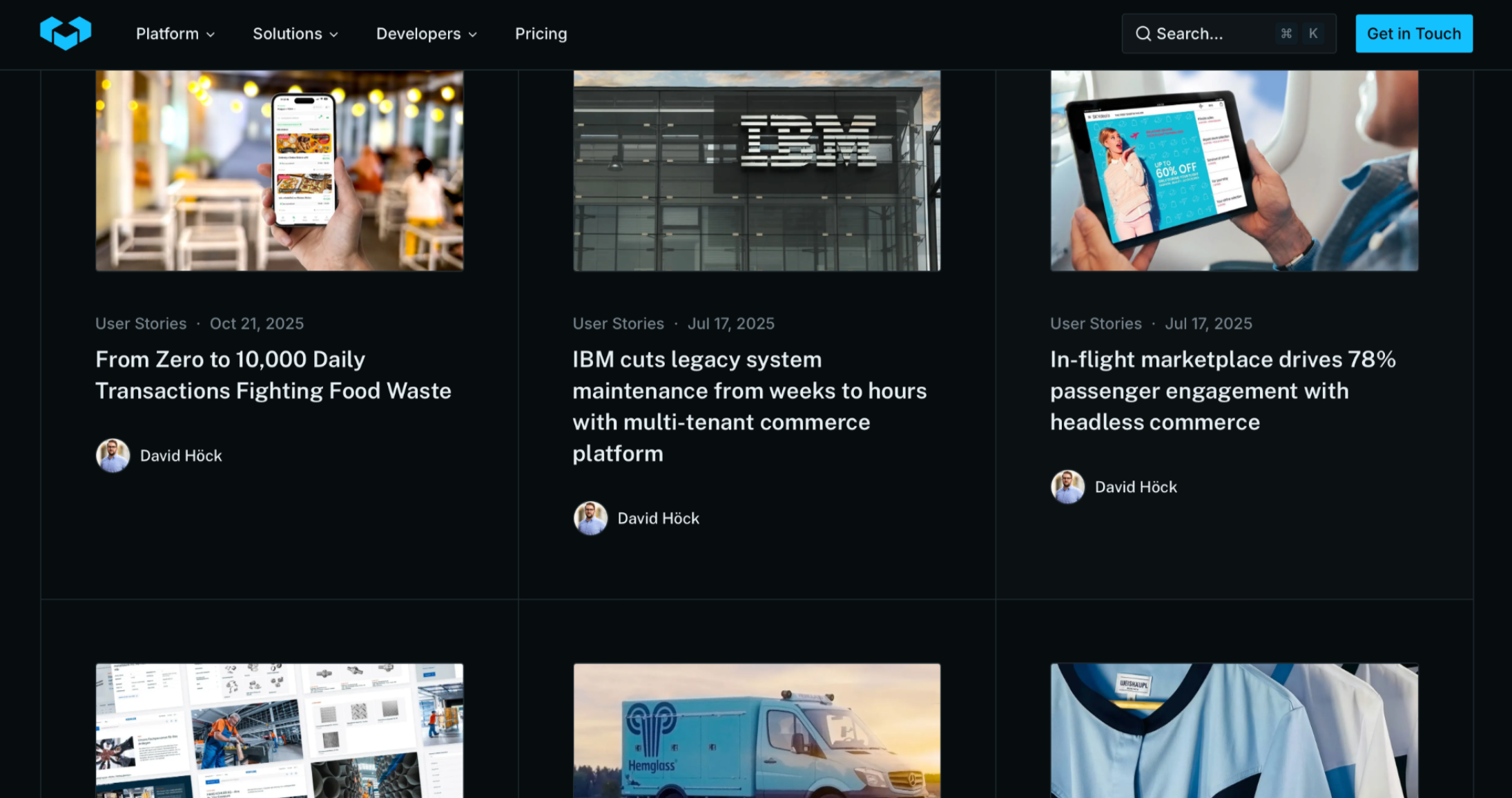
Vendure is commonly used in:
-
Custom ecommerce platforms
-
Headless commerce builds
-
Multi channel commerce systems
-
Agency driven enterprise projects
These implementations highlight its strength in structured, scalable backend development.
Pros
-
Fully open source
-
TypeScript first (great developer experience)
-
Clean and structured architecture
-
Highly customizable via plugins
-
Built in admin dashboard
Cons
-
Requires developers
-
Smaller ecosystem vs Shopify
-
Less plug and play compared to SaaS platforms
-
Limited mainstream adoption (still growing)
4. Commerce Layer
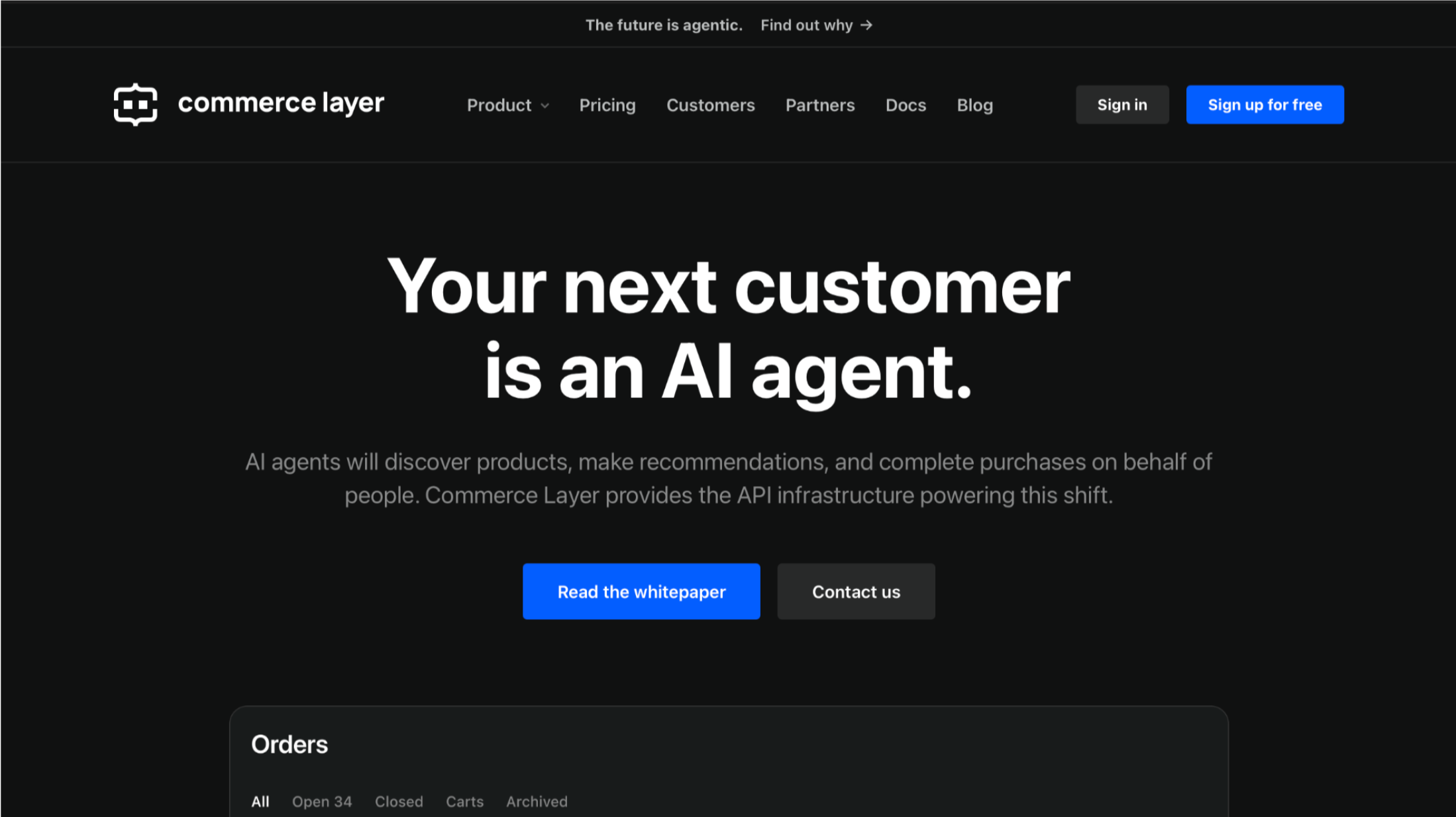
Commerce Layer is a powerful API first commerce platform built for businesses that want to manage global ecommerce operations without being tied to a monolithic system.
Unlike traditional platforms, Commerce Layer is designed as a pure backend commerce engine, meaning it handles orders, pricing, inventory, and internationalization — while you build the frontend however you want.
This makes it especially attractive for brands operating across multiple markets, currencies, and regions, where flexibility and control are critical.
Over time, Commerce Layer has positioned itself as a lean but highly scalable alternative to platforms like Swell, focusing on simplicity, performance, and global first architecture.
Developer & Integration Ecosystem
Commerce Layer is not open source, but it offers a very clean and developer friendly API ecosystem.
-
Fully API first architecture
-
REST APIs with detailed documentation
-
SDKs for modern stacks (JavaScript, React, etc.)
-
Works seamlessly with CMS, frontend frameworks, and third party tools
Its simplicity is a big advantage — developers can ship faster without dealing with unnecessary complexity.
Core Features
Commerce Layer focuses on global commerce and operational simplicity.
-
API first commerce engine
Manage orders, carts, customers, and pricing via APIs -
Multi market & multi currency support
Built for international expansion from day one -
Inventory & order management
Centralized backend for operations -
Flexible pricing logic
Supports region based pricing and promotions -
Headless architecture
Use any frontend or CMS
Pricing
Commerce Layer uses a usage based pricing model.
-
No fixed plans publicly listed
-
Pricing depends on:
-
Number of orders
-
API usage
-
Features used
This makes it:
-
Scalable for growing brands
-
More cost efficient than enterprise platforms initially
-
But can increase as volume grows
Clients
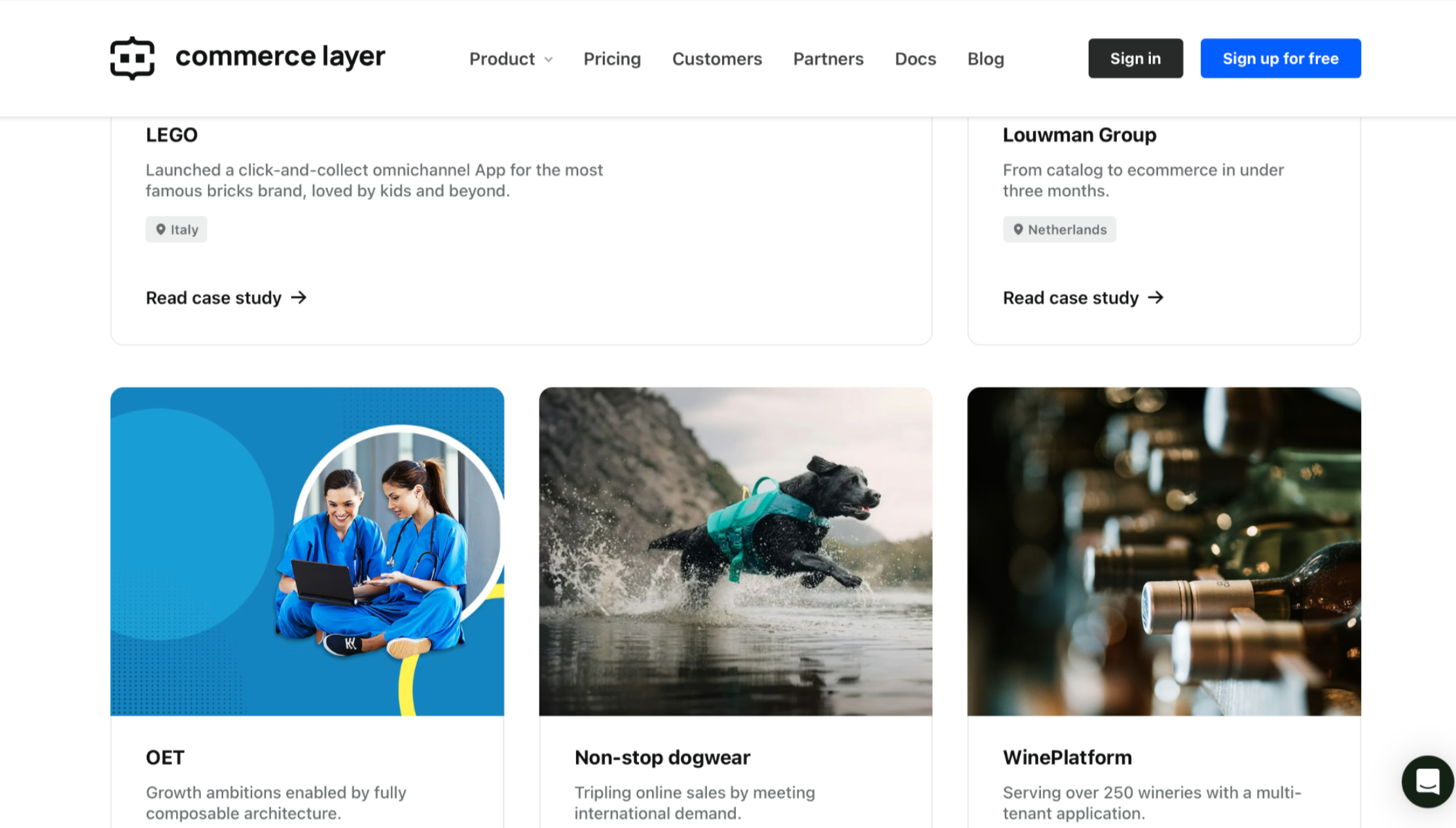
Commerce Layer is trusted by several modern global brands, especially those with strong international presence.
-
Dolce & Gabbana
-
Versace
-
Valentino
-
Luxottica
These brands rely on Commerce Layer to manage multi region ecommerce operations and complex pricing structures.
Custom Enterprise & B2B
Commerce Layer is strong for custom enterprise and global B2B use cases.
-
Multi market catalogs
-
Region specific pricing and tax handling
-
Integration with ERP, PIM, and CMS systems
-
Custom workflows for global operations
It’s particularly useful for businesses that need centralized control across distributed markets.
Reviews
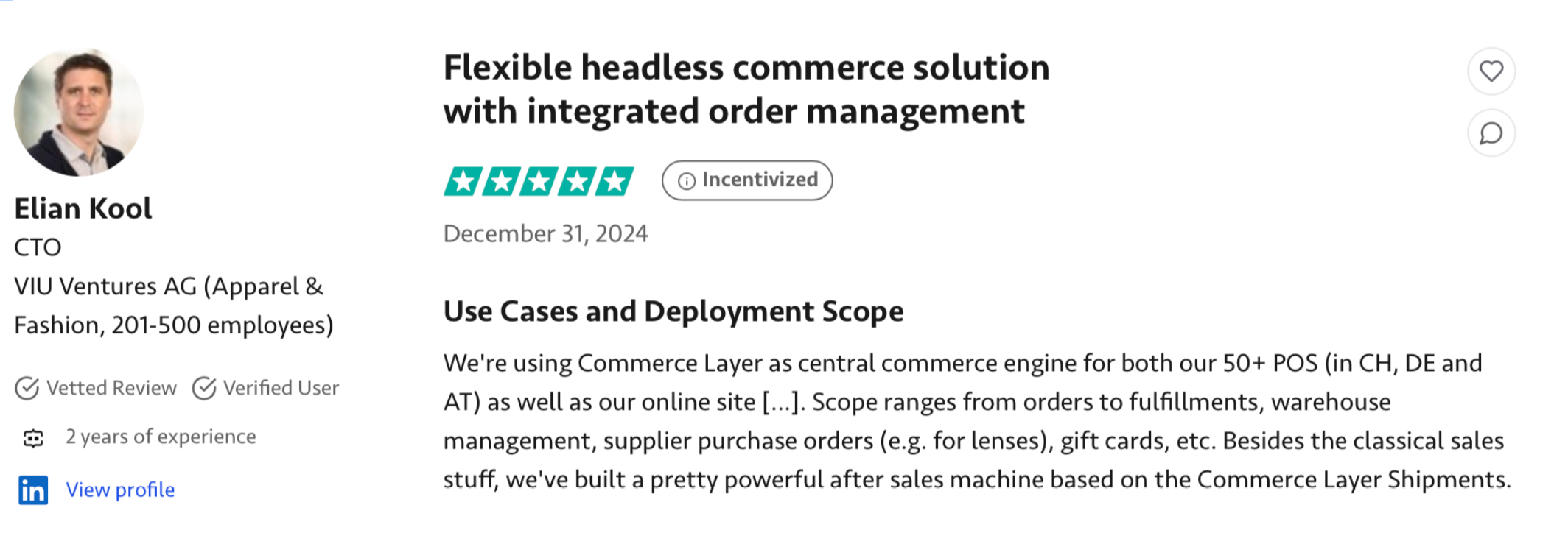
Commerce Layer is well rated among enterprise users, with strong feedback around flexibility and real world scalability.
Users highlight its ability to act as a central commerce engine across multiple channels, including online stores and large scale POS systems. It’s frequently praised for handling complex operations like order management, fulfillment, warehouse workflows, and after sales processes within a single headless setup.
Many reviewers also note that it enables building powerful, custom commerce infrastructures, especially for businesses operating across multiple regions and touchpoints.
Overall: Seen as a highly flexible and scalable solution, best suited for companies managing complex, multi channel commerce operations.
Founder
Commerce Layer was founded by Filippo Conforti, with a vision to simplify global commerce through APIs.
The goal was to create a platform where:
Commerce logic is handled centrally, while the frontend remains completely flexible.
Famous Case Studies
Commerce Layer powers global ecommerce operations for premium brands.
-
Fashion brands scaling internationally
-
Multi region ecommerce architectures
-
High end retail with localized experiences
These implementations highlight its strength in global commerce orchestration.
Pros
-
Clean and simple API first architecture
-
Excellent for global, multi region commerce
-
Faster implementation than heavy enterprise tools
-
Flexible frontend freedom
-
Strong documentation
Cons
-
Not open source
-
Requires developer resources
-
Limited built in features compared to SaaS platforms
-
Costs scale with usage
Summary
Commerce Layer is best suited for brands that operate globally and need a clean, scalable backend to manage complex ecommerce operations.
With its API first design and strong international capabilities, it offers a powerful yet lightweight alternative to platforms like Swell and even heavier enterprise tools.
If your focus is on multi market expansion, flexibility, and fast development, Commerce Layer is one of the smartest choices in 2026.
5. commercetools

commercetools is one of the most established players in the composable commerce space, designed for enterprises that need flexibility, scalability, and full control over their commerce infrastructure.
Unlike traditional ecommerce platforms that come with rigid structures, commercetools is built on a headless, API first architecture, allowing businesses to assemble their commerce stack exactly how they want. This makes it a preferred choice for large scale brands that operate across multiple markets, channels, and regions.
Over time, commercetools has positioned itself as a leader in enterprise commerce, powering complex global ecommerce operations with high performance and reliability.
The platform is widely used by enterprise brands that require custom workflows, multi channel experiences, and scalable infrastructure, making it one of the strongest Swell alternatives in 2026.
Developer & Integration Ecosystem
commercetools is not open source, but it offers one of the most powerful developer ecosystems in the industry.
-
Fully API first and microservices based architecture
-
Extensive SDKs and developer tooling
-
Supports modern frontend frameworks (React, Vue, etc.)
-
Designed for composable commerce (integrates with best in class tools)
This allows enterprises to build highly customized commerce experiences without backend limitations.
Core Features
commercetools focuses on enterprise grade scalability and flexibility.
-
Composable commerce architecture
Build your stack using best of breed services -
API first design
Everything is accessible and customizable via APIs -
Multi region & multi currency support
Built for global commerce operations -
Omnichannel capabilities
Deliver consistent experiences across web, mobile, POS, and marketplaces -
High scalability & performance
Handles large transaction volumes with ease
Pricing

commercetools follows a custom enterprise pricing model.
-
No fixed pricing tiers
-
Pricing depends on:
-
API usage
-
Order volume
-
Regions and scale
This means:
-
Best suited for mid market to enterprise brands
-
Not ideal for small stores due to higher cost and complexity
Clients
commercetools is trusted by major global brands, highlighting its enterprise credibility.
-
Audi
-
Danone
-
Sephora
-
Bang & Olufsen
-
Ulta Beauty
These brands use commercetools to power complex, large scale ecommerce operations across multiple regions.

Custom Enterprise & B2B
This is where commercetools truly excels.
-
Advanced B2B workflows
-
Custom catalogs and pricing models
-
Multi store and multi brand setups
-
Role based access and account management
-
Deep integrations with ERP, CRM, and PIM systems
It is built for organizations that need full control over complex commerce logic at scale.
Reviews
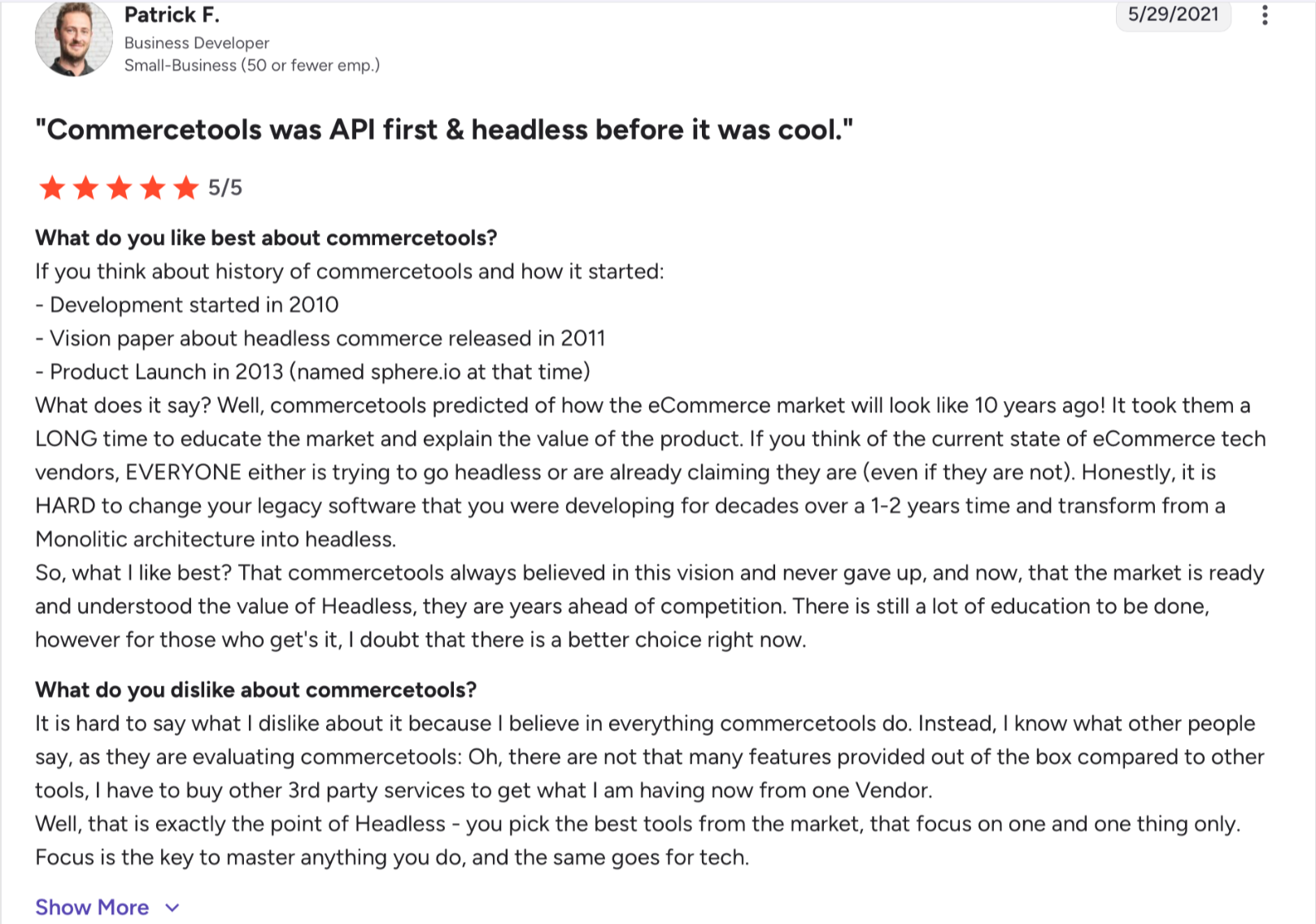
commercetools is highly rated in enterprise commerce.
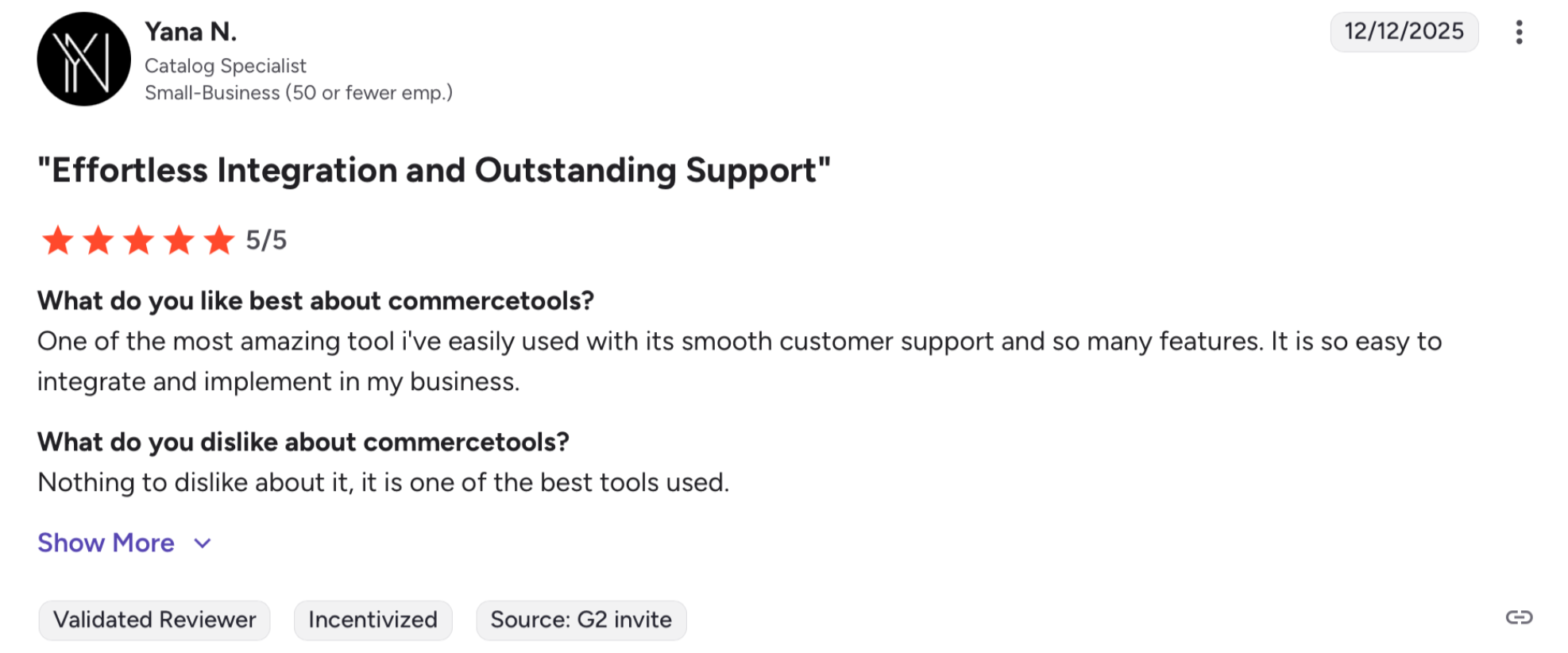
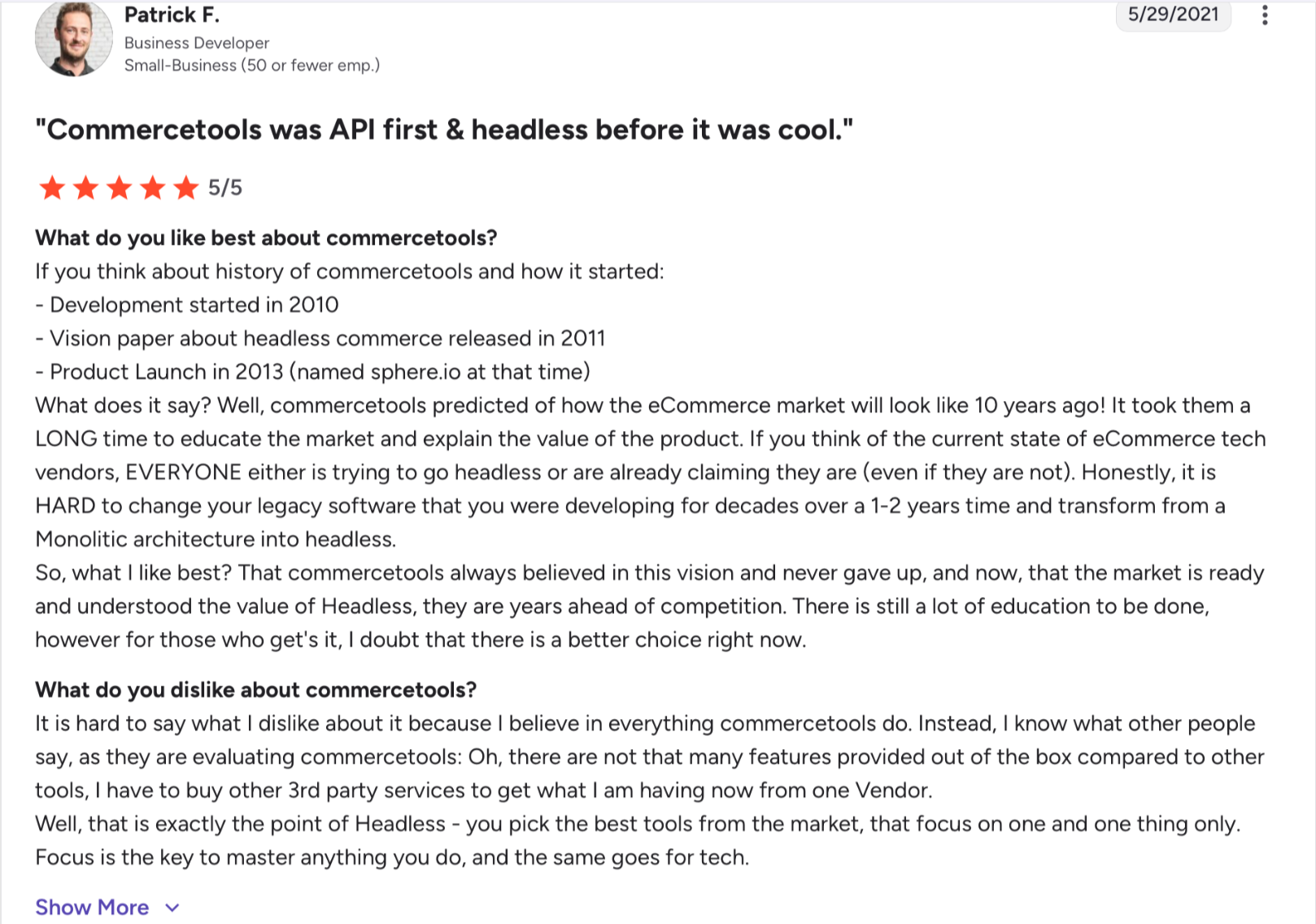
Users highlight that it was “API first and headless before it was cool,” with many saying it’s now years ahead of competitors. It’s also praised for easy integrations and strong support, making it ideal for building custom commerce setups.
However, some note fewer out of the box features and a steeper learning curve, meaning it works best with experienced developers.
Overall: Best suited for businesses that want flexibility and scalability over plug and play simplicity.
Founder
commercetools was founded by Dirk Hoerig, who envisioned a shift away from monolithic ecommerce platforms toward a modular, API driven approach.
This vision helped commercetools become one of the pioneers of composable commerce.
Famous Case Studies
commercetools powers some of the most advanced commerce implementations globally.
-
Audi → Unified global commerce experience
-
Sephora → Omnichannel personalization at scale
-
Danone → Multi brand, multi region commerce transformation
These case studies highlight how commercetools enables enterprise level digital transformation.

Pros
-
Enterprise grade scalability
-
Highly flexible and customizable
-
Strong composable commerce ecosystem
-
Trusted by global brands
-
Powerful API first architecture
Cons
-
Expensive for small to mid sized businesses
-
Requires strong developer resources
-
Longer implementation time compared to SaaS tools
Summary
commercetools is best suited for enterprise brands that need complete flexibility, scalability, and control over their commerce stack.With its composable architecture and API first approach, it allows businesses to build highly customized, future proof ecommerce systems without being limited by traditional platforms.
If you’re operating at scale, across multiple regions and channels, and need a platform that can handle complex commerce logic, commercetools is easily one of the most powerful Swell alternatives available in 2026.
6. Swell
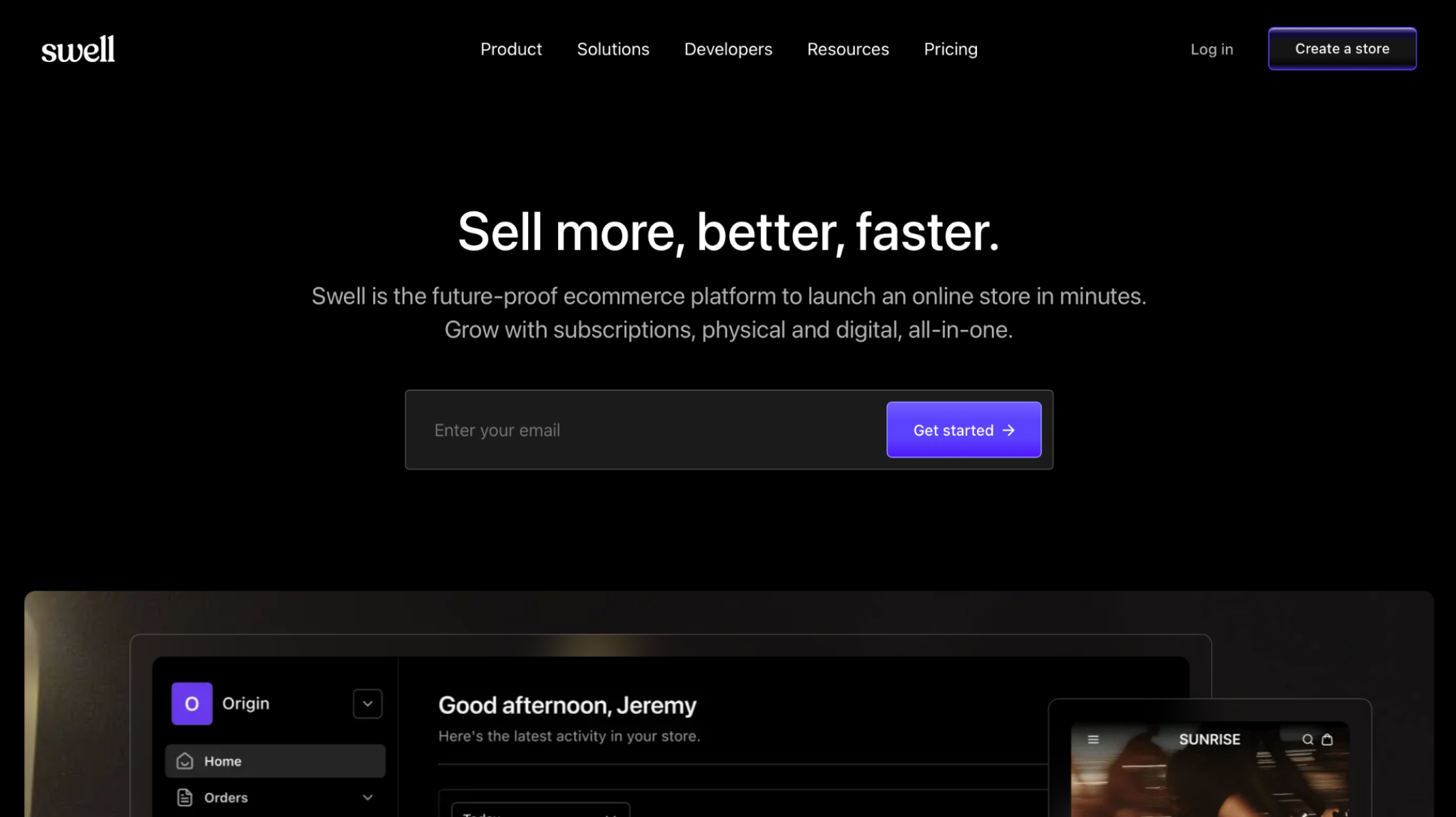
Swell is a headless commerce platform that offers a balance between flexibility and ease of use, making it a strong alternative for teams that don’t want the complexity of enterprise tools.
Why It’s a Strong Alternative
Swell provides many of the benefits of headless commerce without requiring the same level of technical investment as platforms like commercetools.
It’s particularly useful for brands that want:
-
Faster time to market
-
Custom storefronts
-
Subscription based models
Developer Ecosystem
-
API first architecture
-
Easy integrations
-
Faster implementation compared to enterprise platforms
Core Features
-
Subscription and recurring billing support
-
Custom checkout and workflows
-
Headless frontend flexibility
-
Built in ecommerce features
Pricing
-
SaaS based pricing
-
Scales with usage
Clients
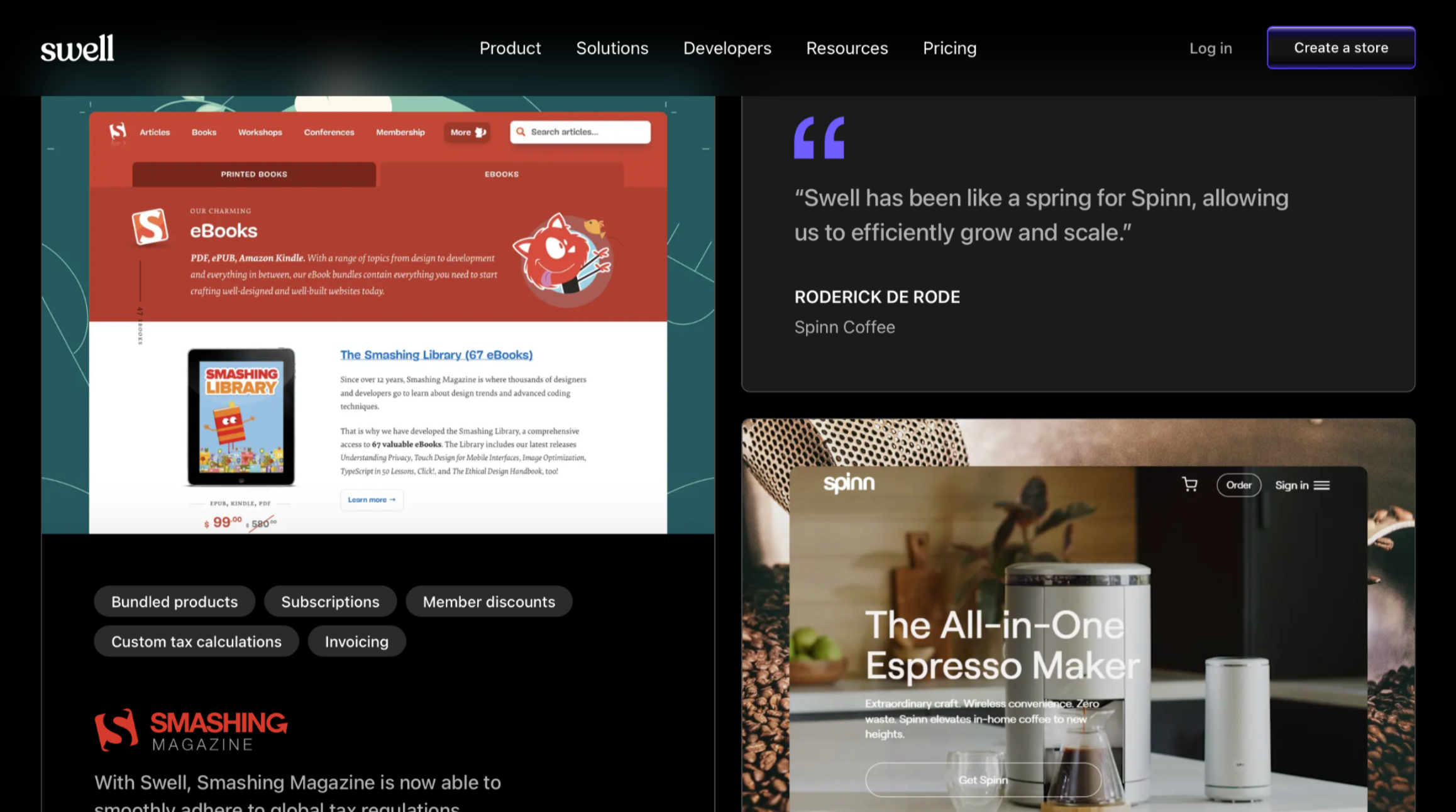
Swell is commonly used by:
-
DTC brands
-
Subscription based businesses
Reviews
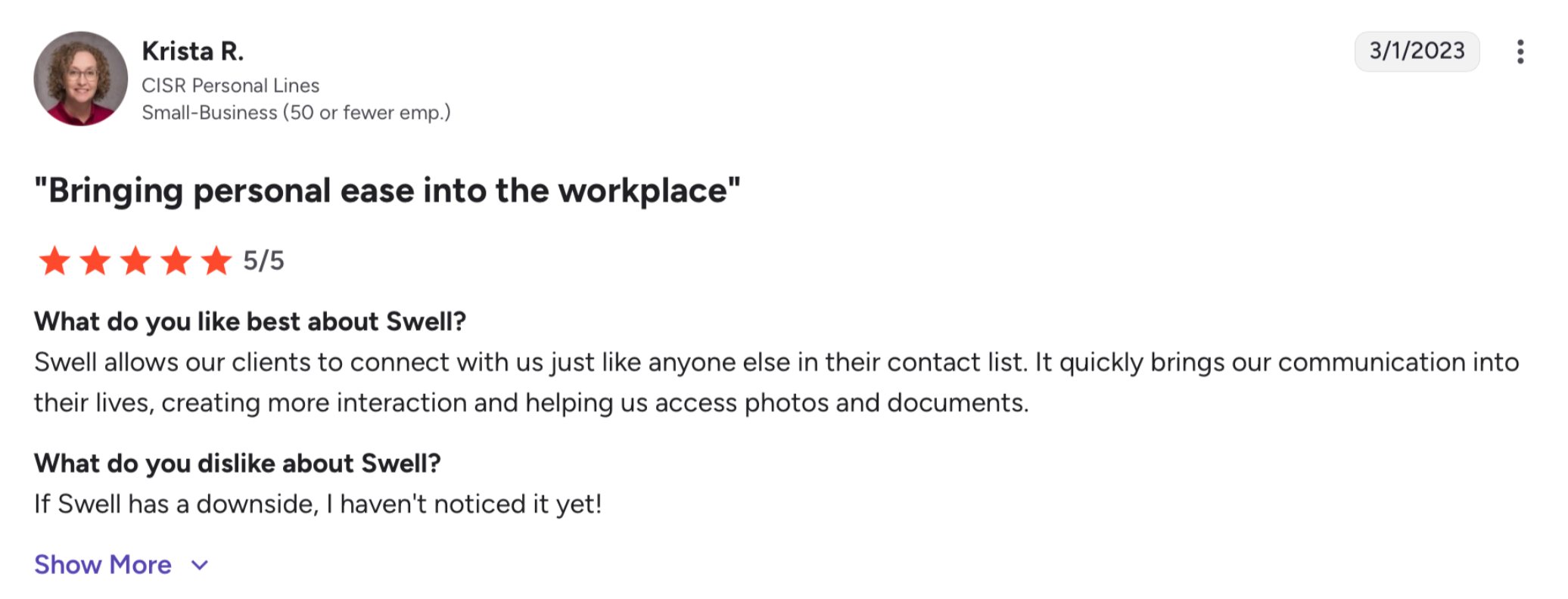
Swell receives strong positive feedback on G2, especially from small to mid sized businesses.
Users frequently highlight its ease of use and automation capabilities, noting that once set up, many processes—like review collection and communication—run smoothly with minimal manual effort. The platform is often described as user friendly and well organized on the backend, making it easy to manage responses and workflows.
Another commonly praised aspect is how Swell helps businesses improve customer interaction, allowing seamless communication and better engagement through features like messaging and document sharing.
In terms of drawbacks, feedback is relatively minor. Some users mention limited filtering or customization options in certain areas, but overall, most reviewers report little to no major issues.
Overall: Swell is seen as a reliable, easy to use platform that excels in automation and customer engagement, particularly for growing businesses.
Pros
-
Easier to implement
-
Good balance of flexibility and usability
-
Built in features reduce development effort
Cons
-
SaaS lock in
-
Limited deep customization
-
Costs increase with scale
Summary
Swell is ideal for businesses that want a flexible, headless solution without the complexity of enterprise platforms.
What Developers Say
Across developer discussions and Reddit:
-
Medusa is loved for flexibility and no vendor lock-in
-
Saleor is praised for GraphQL and scalability
-
Vendure is appreciated for clean architecture
-
commercetools is seen as powerful but expensive
One key trend:
Most developers choose based on control vs speed of implementation, not just features.
Final Verdict
Choosing the best headless eCommerce platform for Next.js or Nuxt.js depends on your priorities.
If you want full control and customization, Medusa or Vendure are excellent choices. If you’re building a large-scale, API-driven system, Saleor or commerce tools are better suited. And if you want speed and simplicity, Swell or Commerce Layer provide a strong balance.
The biggest shift in 2026 is clear:
Modern eCommerce is no longer about platforms—it’s about composable architecture powered by APIs and frontend frameworks.
Struggling to choose the right Headless CMS & Headless Commerce tech stack? We’ll help you pick the best solution for your business! Exclusive Offer: 20 Hours of Free Development & Consultation
Book a MeetingFrequently Asked Questions
No, there is no CMS that is inherently HIPAA-compliant. Compliance depends on infrastructure, hosting, security configurations, and legal agreements like BAAs—not just the CMS itself.
For enterprise SaaS, Kontent.ai and Contentstack are strong choices due to built-in governance and managed infrastructure. For full control, Directus, Payload, and Strapi are better options.
Webiny is one of the best options for AWS-based HIPAA setups because it is built on serverless architecture and allows full control over security, encryption, and infrastructure configuration.