

Words that inspire, ideas that spark,
stories that stay
8 Best Enterprise Web Hosting Platforms (2026)
V.Srinidhi Reddy
Friday, April 17th, 20267 min read
Table of content
8 Best Enterprise Web Hosting Platforms (2026)
Introduction
Enterprise web hosting in 2026 isn’t just about servers — it’s about speed, scalability, developer experience, and global performance.
Traditional hosting is being replaced by:
-
Edge computing
-
Serverless architecture
-
Git-based deployments
-
Fully managed cloud platforms
If you're building modern apps (SaaS, marketplaces, headless commerce), choosing the right hosting platform directly impacts performance, cost, and scalability.
This guide breaks down the 8 best enterprise web hosting platforms, starting with the current leader: Vercel.
TL;DR
-
Best overall: Vercel
-
Best enterprise cloud: AWS
-
Best edge network: Cloudflare
-
Best JAMstack: Netlify
-
Best full-stack simplicity: Render
-
Best hybrid cloud: DigitalOcean
-
Best Firebase ecosystem: Google Firebase
-
Best enterprise PaaS: Heroku
Quick Comparison Table
|
Platform |
Best For |
Type |
Complexity |
Scalability |
|
Vercel |
Frontend + edge apps |
PaaS |
Easy |
⭐⭐⭐⭐⭐ |
|
AWS |
Enterprise infrastructure |
IaaS |
Hard |
⭐⭐⭐⭐⭐ |
|
Cloudflare |
Edge & CDN |
Edge platform |
Medium |
⭐⭐⭐⭐⭐ |
|
Netlify |
JAMstack apps |
PaaS |
Easy |
⭐⭐⭐⭐ |
|
Render |
Full-stack apps |
PaaS |
Easy |
⭐⭐⭐⭐ |
|
DigitalOcean |
Simple cloud |
IaaS/PaaS |
Medium |
⭐⭐⭐⭐ |
|
Firebase |
Backend + hosting |
BaaS |
Medium |
⭐⭐⭐⭐ |
|
Heroku |
Developer PaaS |
PaaS |
Easy |
⭐⭐⭐ |
1. Vercel
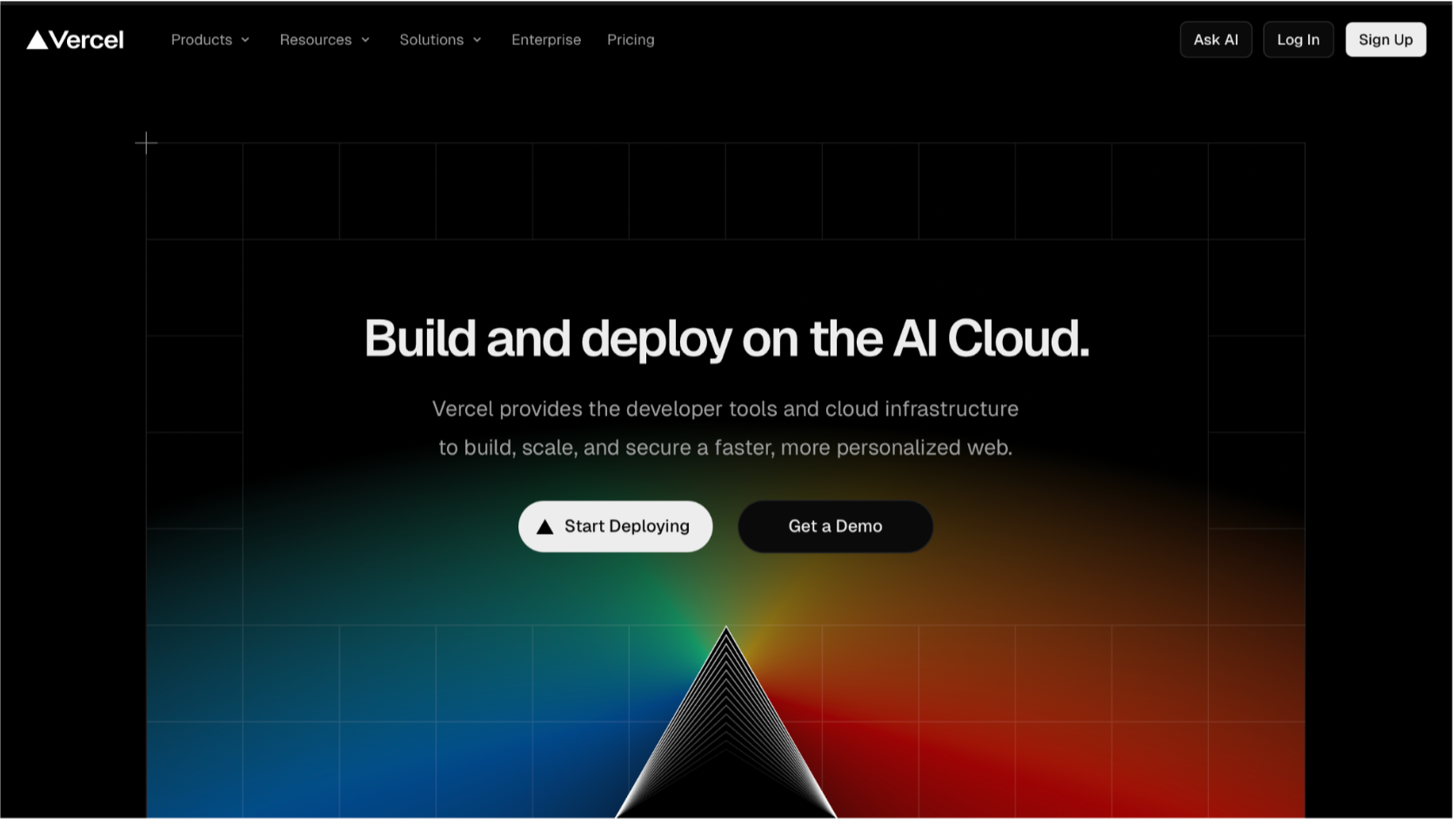
Vercel is the gold standard for modern frontend and edge hosting in 2026.
It’s built specifically for frameworks like Next.js and focuses on performance, simplicity, and global delivery.
Key features:
-
Edge network with global CDN
-
Server-side rendering (SSR) & ISR
-
Git-based deployments
-
Built-in analytics & performance tools
-
Seamless Next.js integration
Pricing:
-
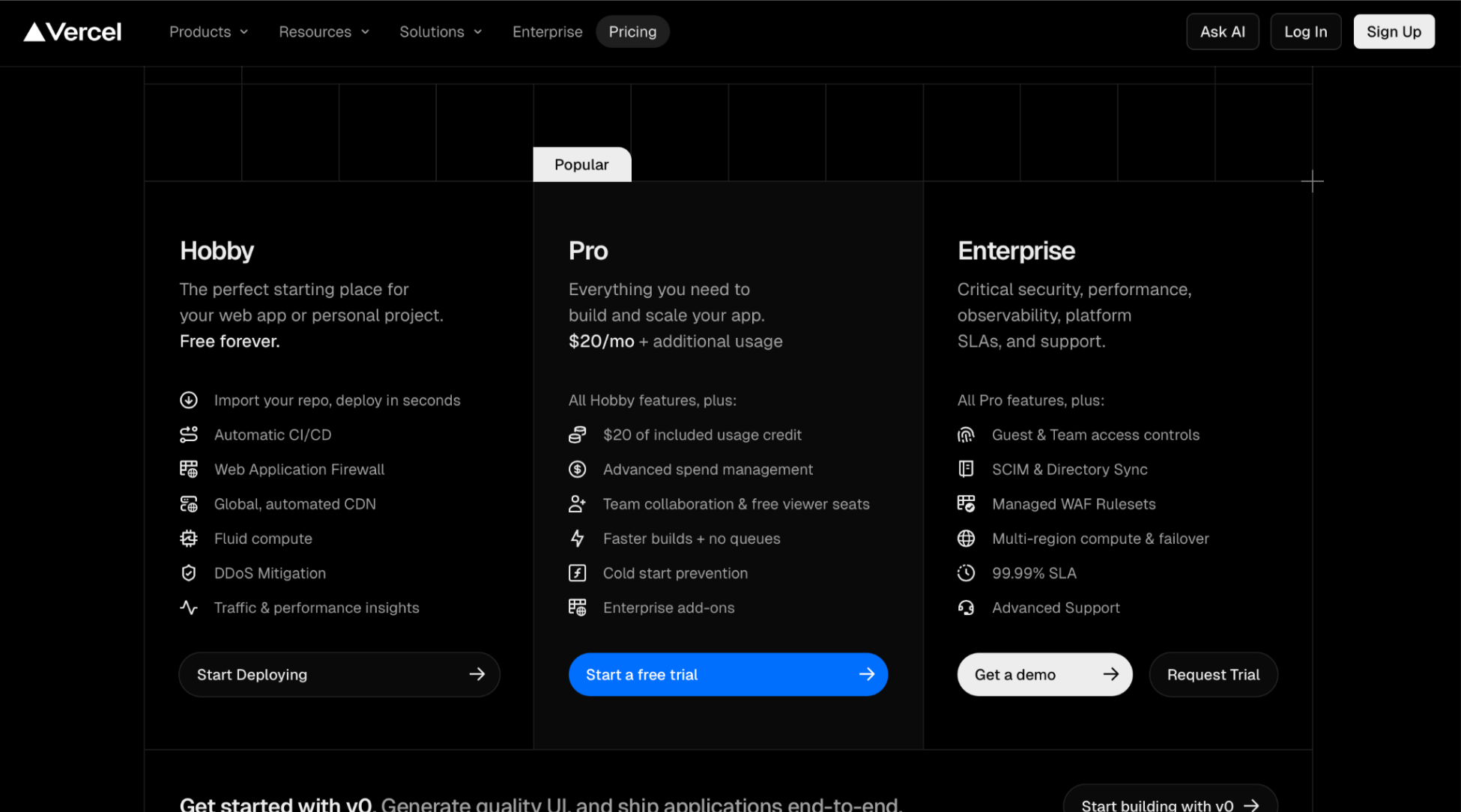
Free (hobby)
-
Pro: ~$20/user/month
-
Enterprise: Custom
Review
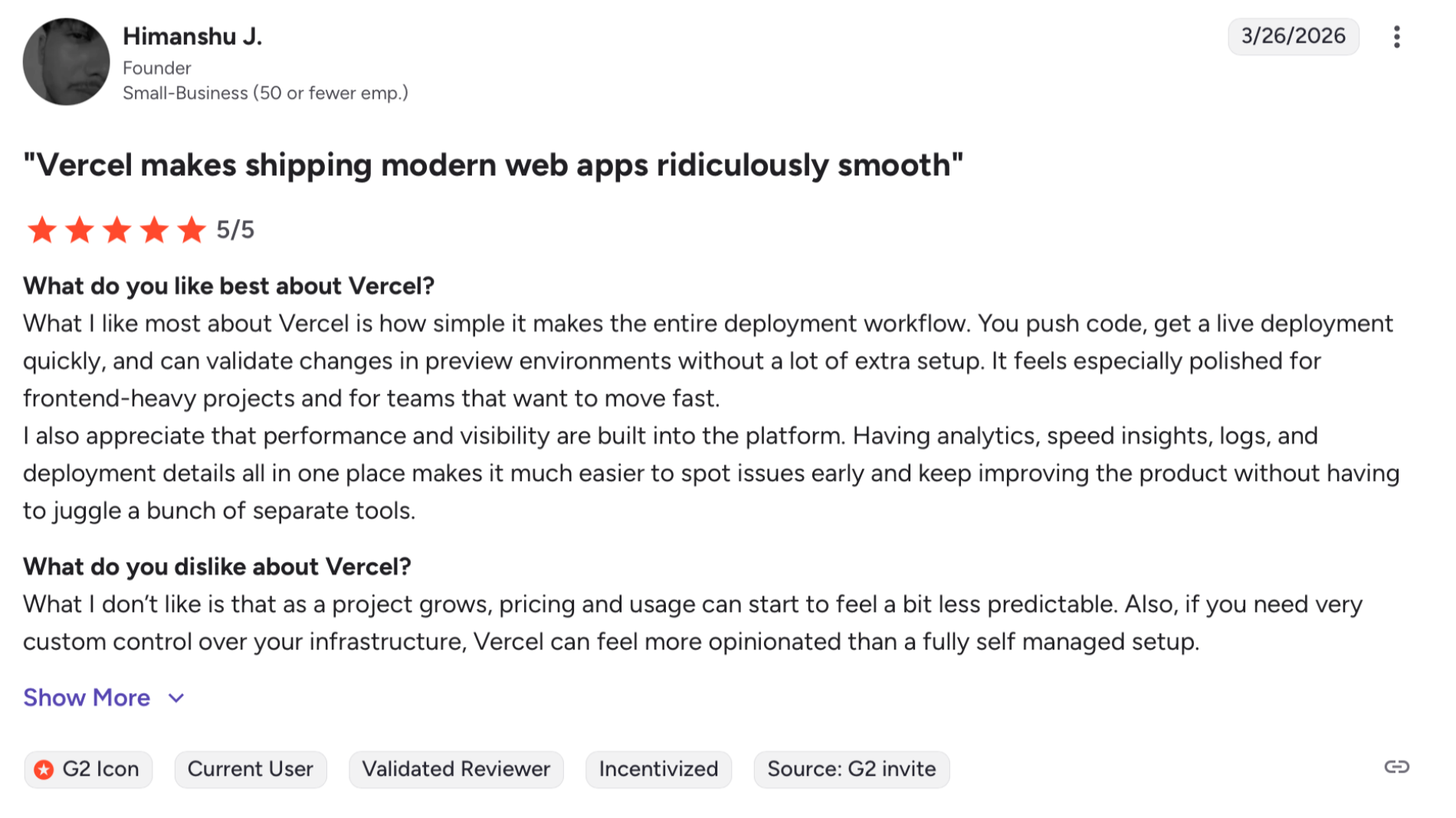
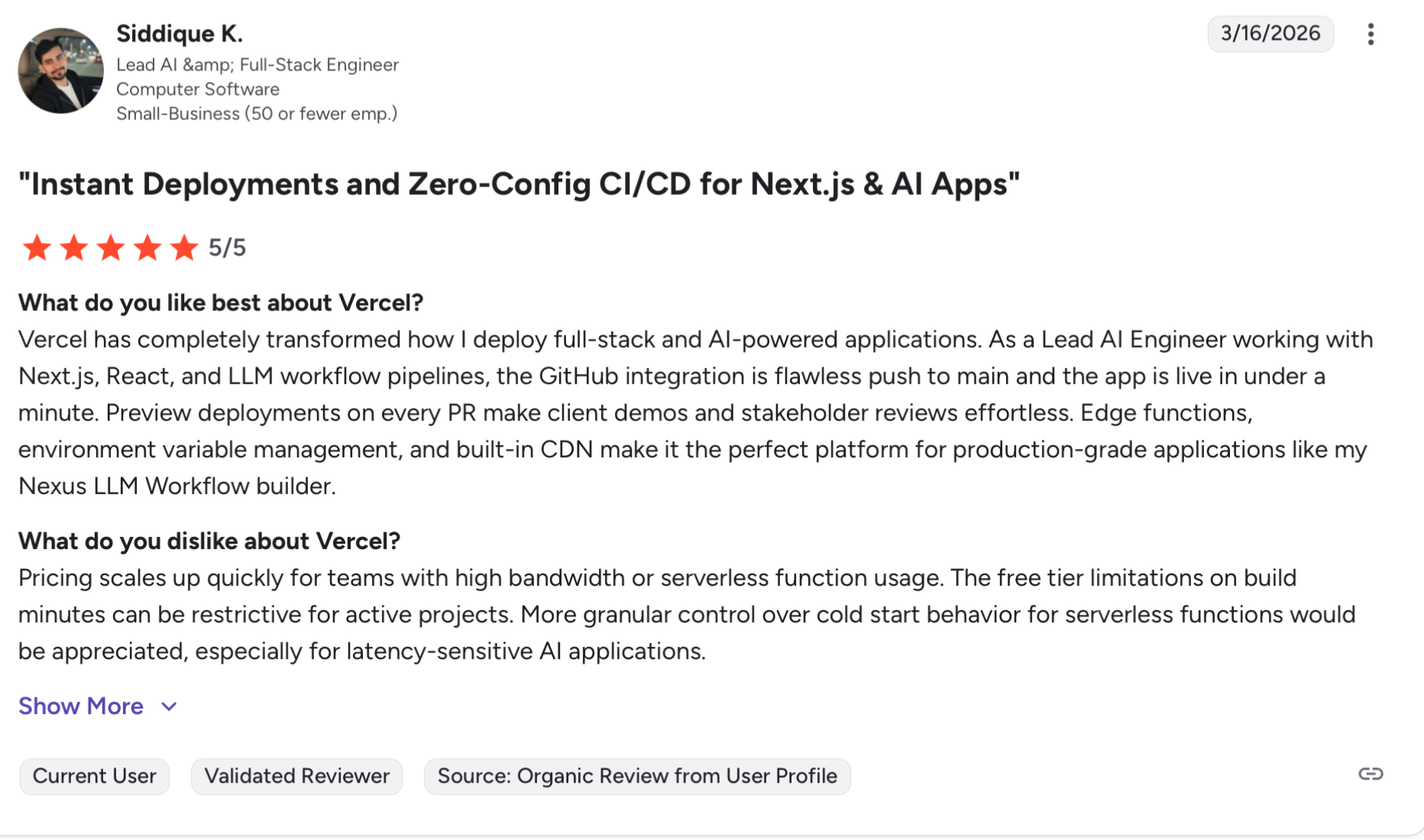
Vercel is widely praised for its seamless deployment experience and developer-friendly workflow, especially for modern web applications built with frameworks like Next.js. Users highlight how easy it is to deploy applications—simply pushing code can trigger instant live deployments, along with preview environments for every pull request, making collaboration and testing effortless.
The platform stands out for its strong performance and built-in tooling. Features like edge functions, integrated CDN, analytics, logs, and environment management help teams ship faster while maintaining high visibility and control over their applications. Developers also appreciate its smooth GitHub integration and ability to handle full-stack and AI-powered applications efficiently.
Another key advantage is how streamlined and intuitive the overall experience feels, reducing the need for multiple tools and simplifying the development lifecycle.
However, some users note that pricing can scale quickly with higher usage, particularly for bandwidth and serverless functions. There are also concerns around limited control over infrastructure and certain performance aspects like cold starts, which may impact more complex or latency-sensitive applications.
Summary
Vercel stands out as the best platform among modern deployment and frontend solutions, offering unmatched speed, simplicity, and developer experience. With its seamless CI/CD, instant deployments, and built-in performance optimization, it enables teams to ship faster than any alternative. While pricing and control can be considerations at scale, its overall efficiency, ecosystem, and ease of use make it the top choice for building and deploying modern web applications.
2. AWS (Amazon Web Services)
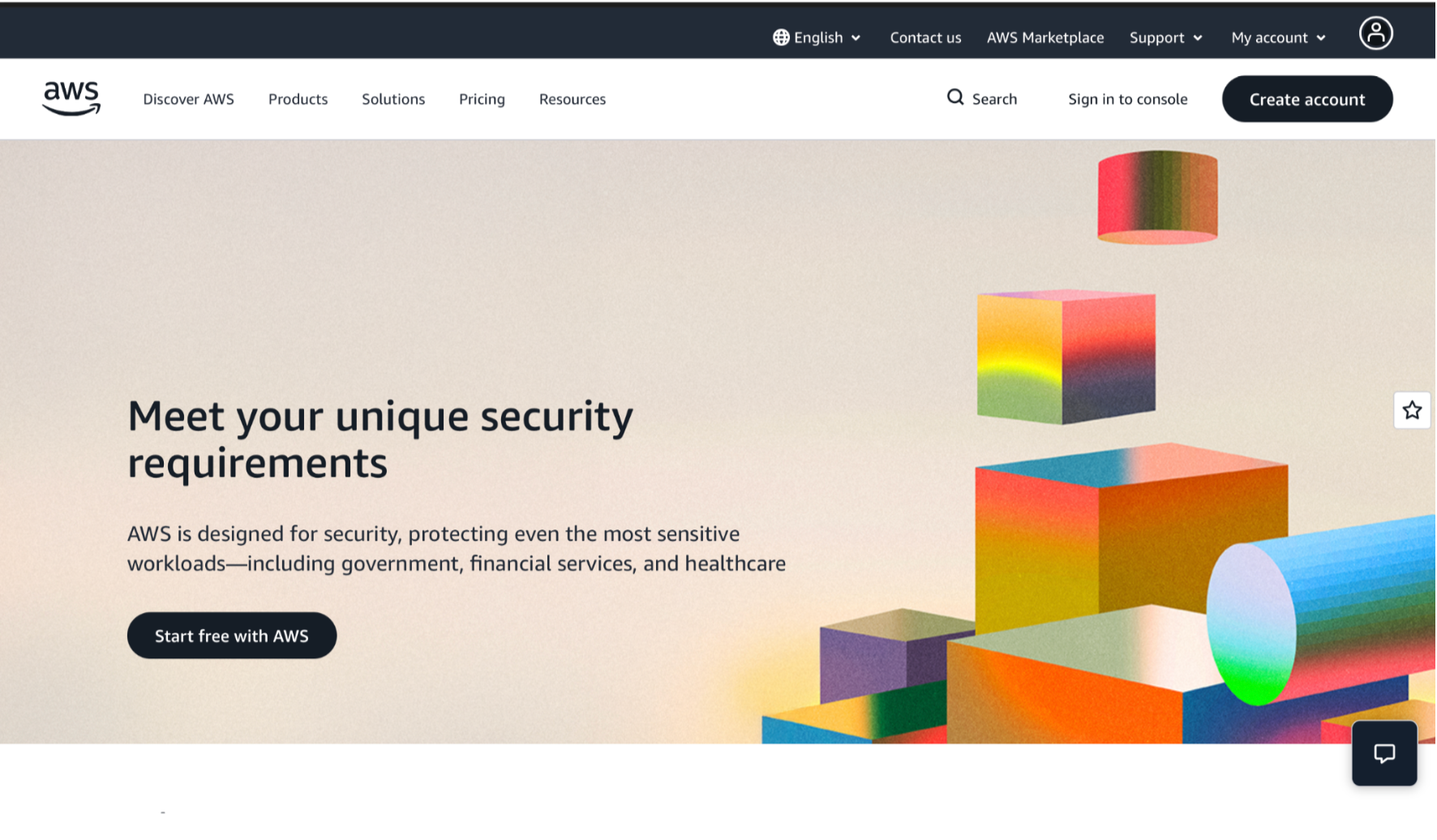
Amazon Web Services is the most powerful enterprise cloud platform.
Key features:
-
Global infrastructure
-
Hundreds of services
-
Full backend + infra control
-
High reliability
Reviews
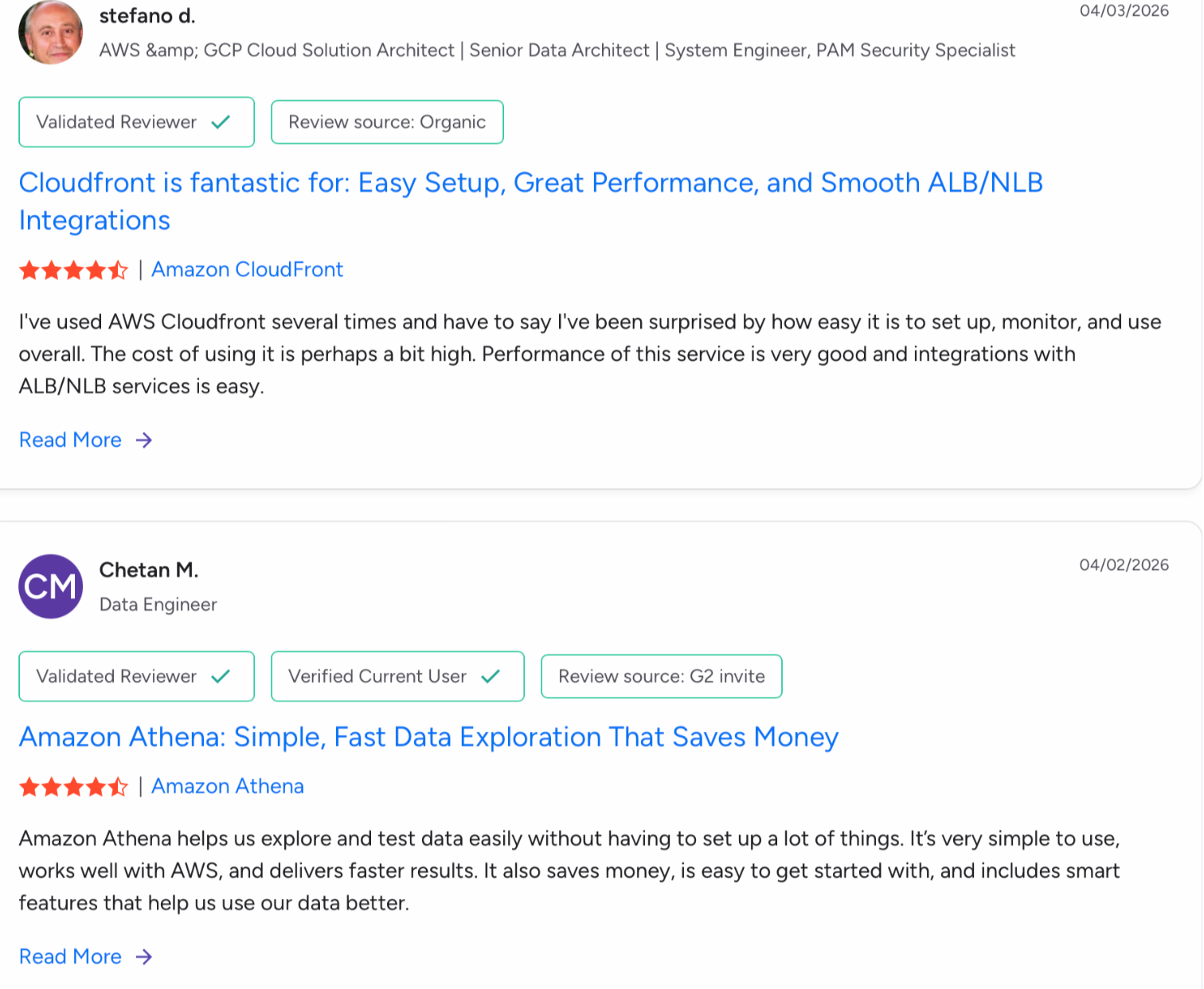
Amazon CloudFront is widely appreciated for its ease of setup, strong performance, and seamless integration within the AWS ecosystem. Users highlight how simple it is to configure and monitor, even for complex workloads, while still delivering fast and reliable content globally through its distributed edge network. This architecture helps reduce latency by serving content from locations closest to users, improving overall performance.
Another key strength is its smooth integration with services like load balancers (ALB/NLB) and other AWS tools, making it a natural choice for teams already working within AWS. However, some users mention that costs can be relatively high, especially as usage scales.
Amazon Athena, on the other hand, is praised for its simplicity and efficiency in data exploration. Users value how quickly they can query and analyze data without complex setup, making it ideal for teams that want fast insights with minimal infrastructure. Its serverless nature and ease of use help reduce operational overhead while still delivering strong performance.
Summary
AWS CloudFront and Amazon Athena together offer a powerful combination of performance and simplicity within the AWS ecosystem. CloudFront excels in fast, global content delivery with strong integrations, while Athena makes data exploration quick and cost-efficient. Both tools are highly effective for modern cloud architectures, though costs can increase with scale depending on usage.
3. Cloudflare
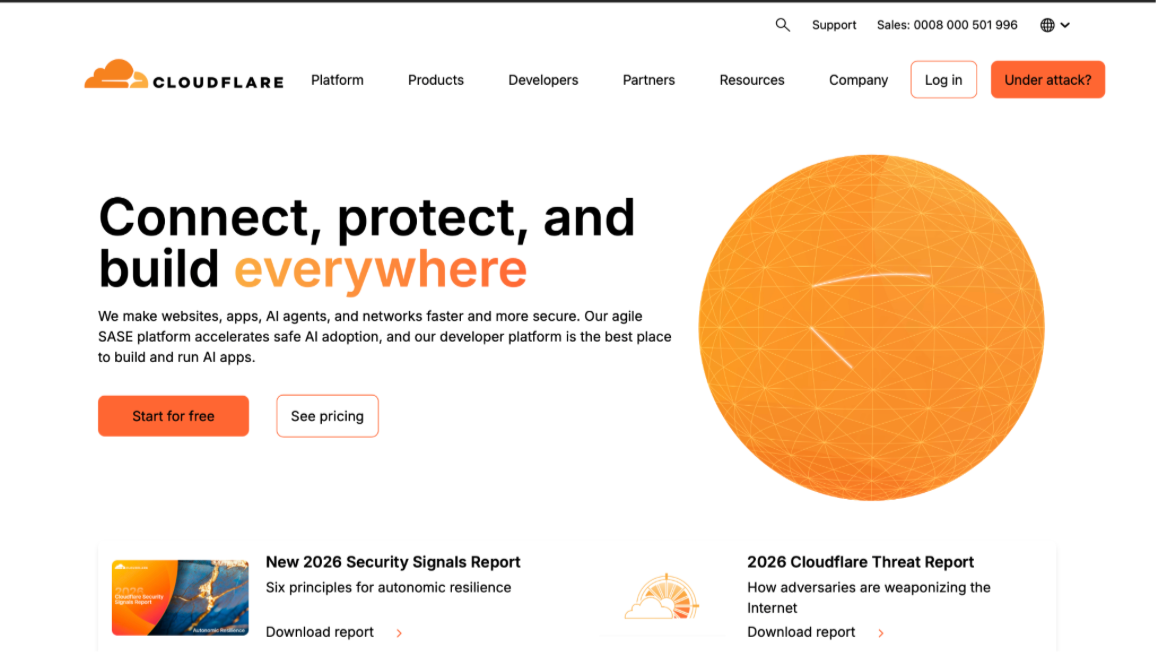
Cloudflare is leading the shift toward edge computing.
Key features:
-
Edge functions (Workers)
-
Global CDN
-
Security + DDoS protection
-
Serverless apps
Founders
Cloudflare was founded in 2009 by Matthew Prince, Michelle Zatlyn, and Lee Holloway. Matthew Prince serves as CEO and leads the company’s overall vision and strategy, while Michelle Zatlyn, President and COO, drives operations, growth, and partnerships. Lee Holloway, the technical co-founder and former CTO, played a key role in building the early infrastructure and core technology behind Cloudflare’s global network. Together, they combined expertise in business, operations, and engineering to build one of the leading web performance and security platforms today.

Reviews
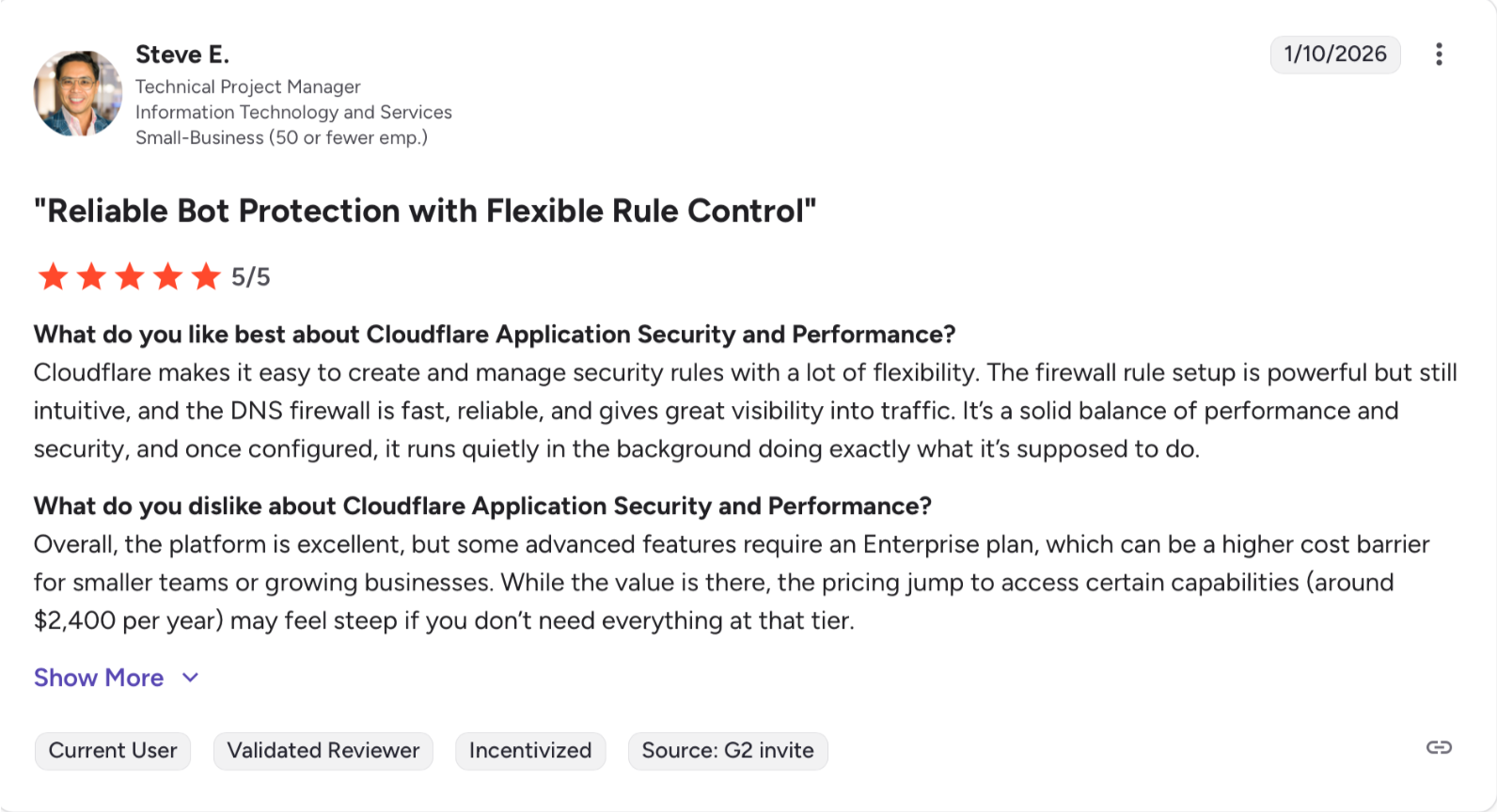
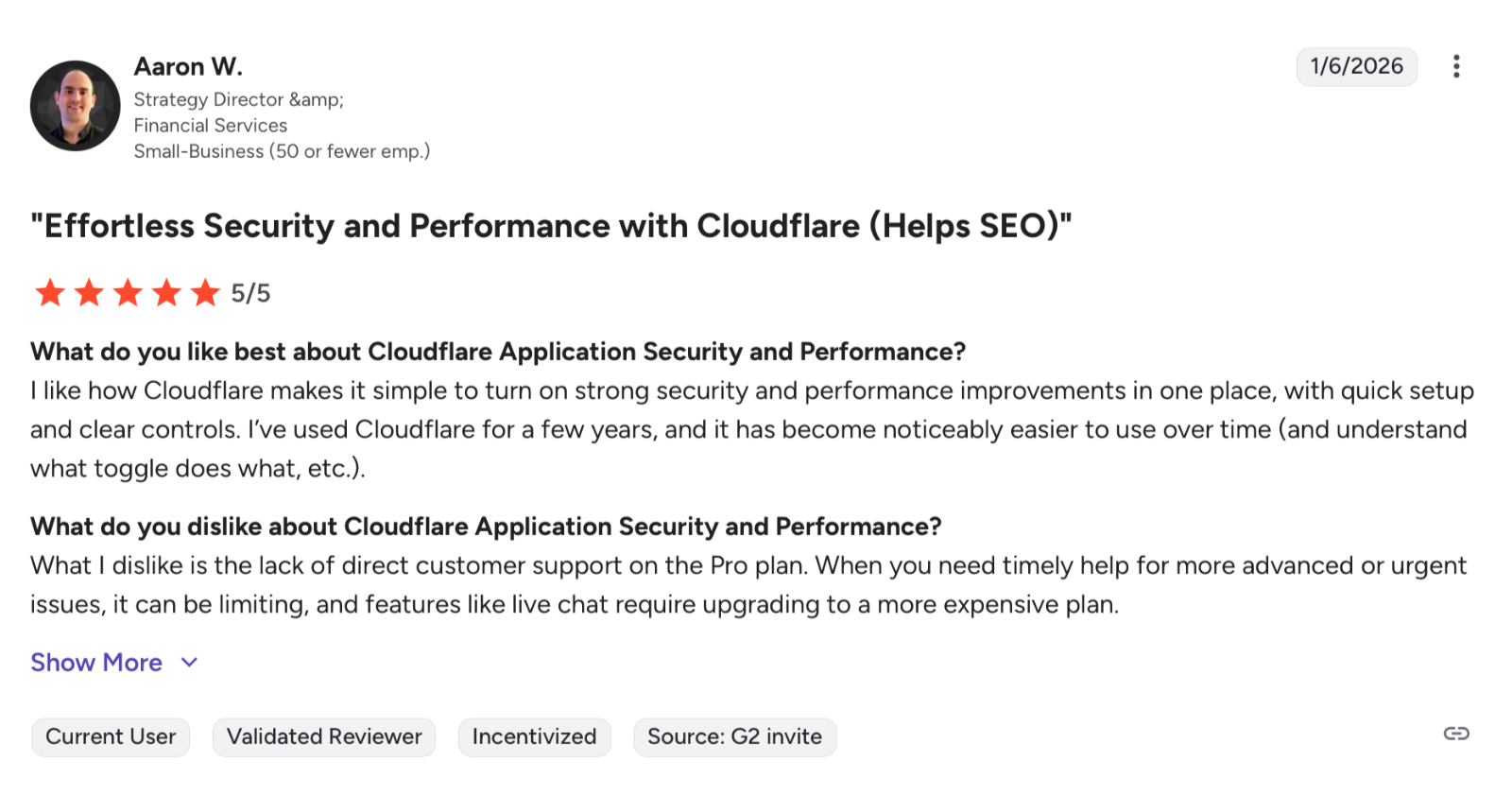
Cloudflare is widely praised for delivering a strong balance of security and performance through an easy-to-use and flexible platform. Users highlight how simple it is to set up and manage firewall rules, with powerful yet intuitive controls that provide clear visibility into traffic and threats. Features like DNS protection, bot mitigation, and performance optimization work seamlessly in the background, making it a reliable solution once configured.
Another key advantage is how effortlessly Cloudflare combines multiple capabilities—security, speed, and SEO improvements—into a single platform. Users appreciate the quick setup, centralized controls, and continuous improvements that make the platform easier to use over time. Its ability to enhance website performance while strengthening protection is a major reason why many teams rely on it.
However, some limitations are noted. Advanced features often require higher-tier plans, which can become costly for smaller teams. Additionally, support options on lower plans may be limited, and access to faster or more direct assistance typically requires upgrading.
Summary
Cloudflare stands out as a powerful all-in-one platform for web security and performance, offering ease of use, strong protection, and noticeable speed improvements. While pricing and support limitations can be a concern at higher tiers, its overall value, reliability, and simplicity make it a top choice for businesses of all sizes.
4. Netlify
Netlify is a strong Vercel competitor.
Key features:
-
Git-based deployment
-
Built-in forms & identity
-
Serverless functions
-
Plugin ecosystem
Reviews
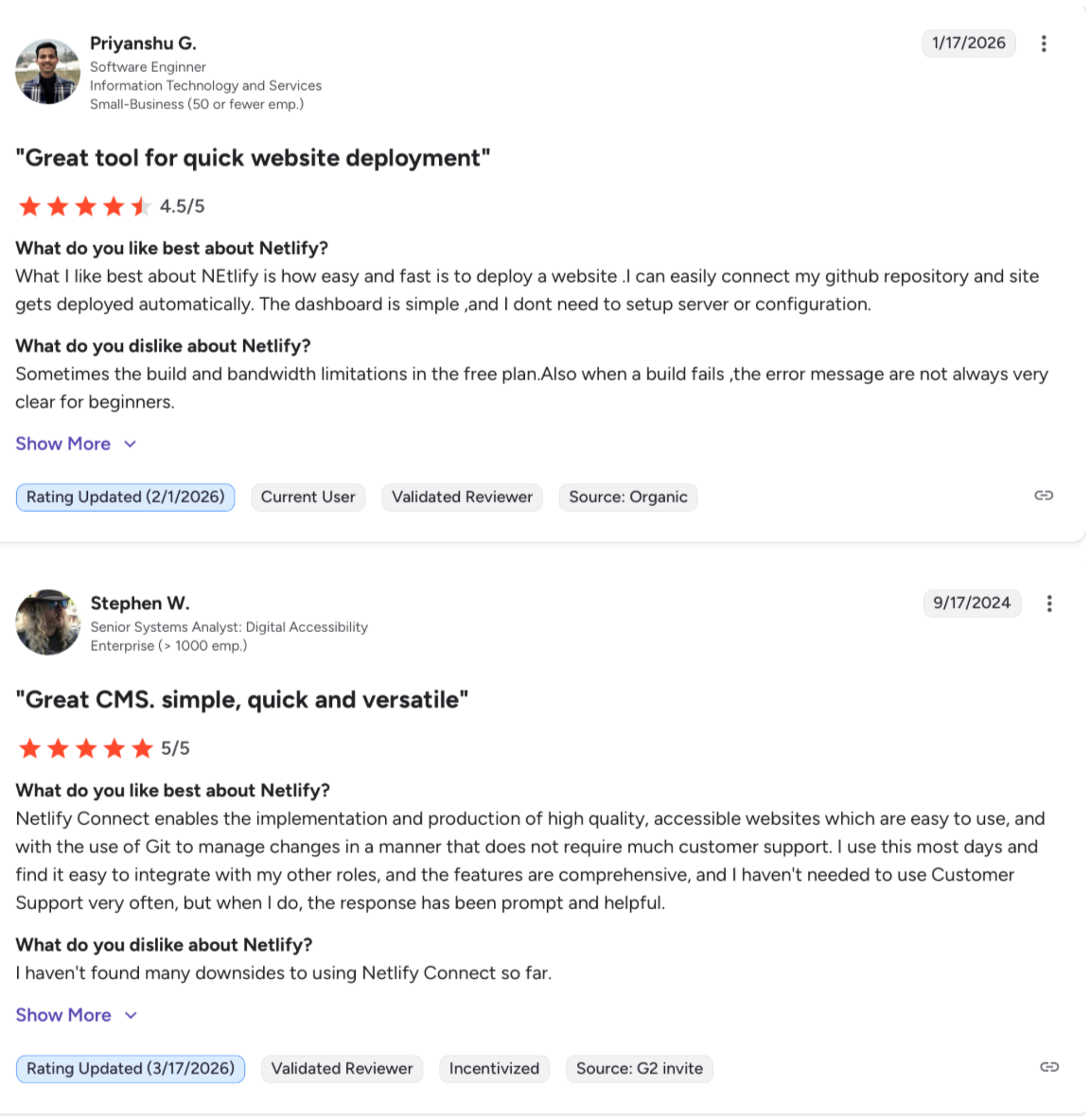
Netlify is widely appreciated for its simplicity and speed when it comes to website deployment. Users highlight how easy it is to connect a GitHub repository and automatically deploy websites without needing to manage servers or complex configurations. The platform’s intuitive dashboard and streamlined workflow make it especially appealing for developers looking to launch projects quickly.
Another major strength is its versatility and developer experience. Netlify supports modern workflows with Git-based deployments, making it easy to manage updates and collaborate across teams. Users also value features like built-in performance tools, integrations, and the ability to create high-quality, accessible websites with minimal effort. Customer support is generally responsive and helpful when needed.
However, some limitations are noted. The free plan includes restrictions on build minutes and bandwidth, which can become a constraint for growing projects. Additionally, error messages during failed builds may not always be clear for beginners, creating a slight learning curve.
Summary
Netlify is a fast, user-friendly platform ideal for developers and teams looking for quick deployments and a smooth workflow. While free-tier limitations and occasional debugging challenges exist, its ease of use, flexibility, and strong developer experience make it a popular choice for modern web projects.
5. Render
Render is a modern alternative to Heroku.
Key features:
-
Full-stack hosting
-
Background workers
-
Managed databases
-
Easy deployment
Reviews
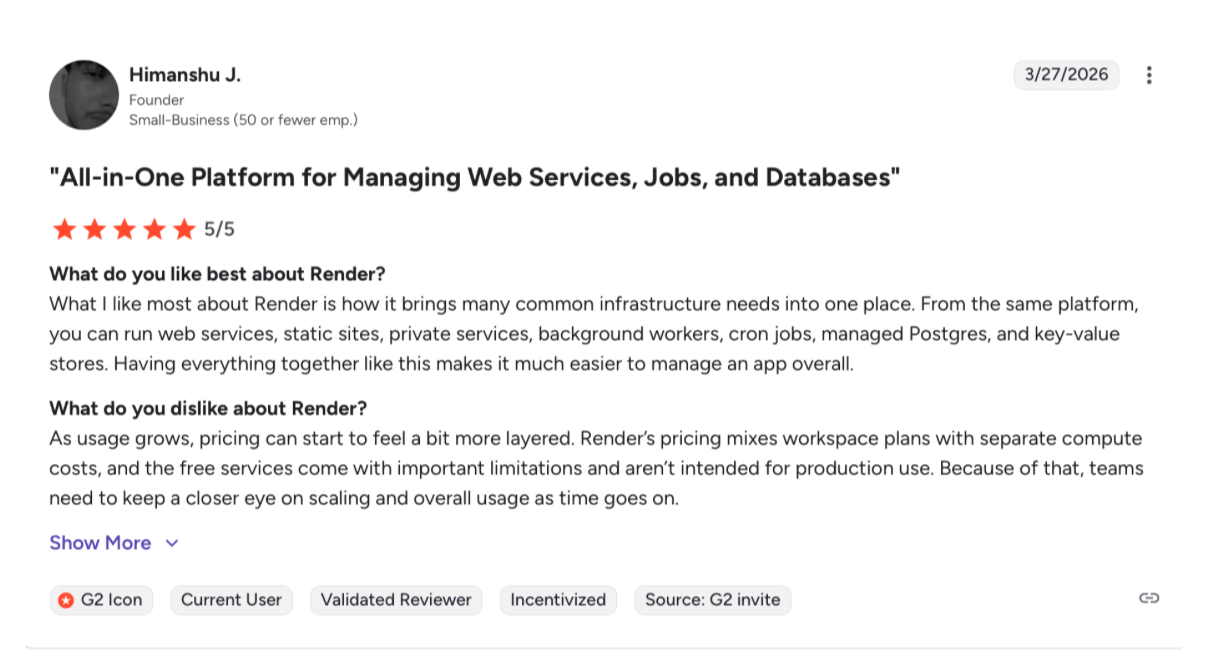
Render is highly regarded as an all-in-one platform that simplifies infrastructure management by bringing multiple services into a single place. Users highlight its ability to handle web services, static sites, background workers, cron jobs, and managed databases from one dashboard, making it much easier to manage applications without juggling multiple tools.
One of its biggest strengths is convenience and consolidation. By combining hosting, databases, and background processing into a unified platform, Render reduces operational complexity and streamlines workflows for developers and teams.
However, some users note that pricing can become more complex as usage grows. The combination of workspace plans and compute-based costs may feel layered, and free-tier services come with limitations that are not suitable for production environments. As a result, teams need to monitor scaling and usage closely.
Summary
Render is a powerful all-in-one platform for managing modern applications, offering simplicity and convenience by consolidating infrastructure into a single solution. While it excels in ease of use and unified management, pricing and scaling considerations may require careful planning as projects grow.
6. DigitalOcean App Platform
DigitalOcean offers a simpler cloud experience.
Key features:
-
App Platform (PaaS)
-
Droplets (VMs)
-
Managed databases
-
Predictable pricing
Reviews
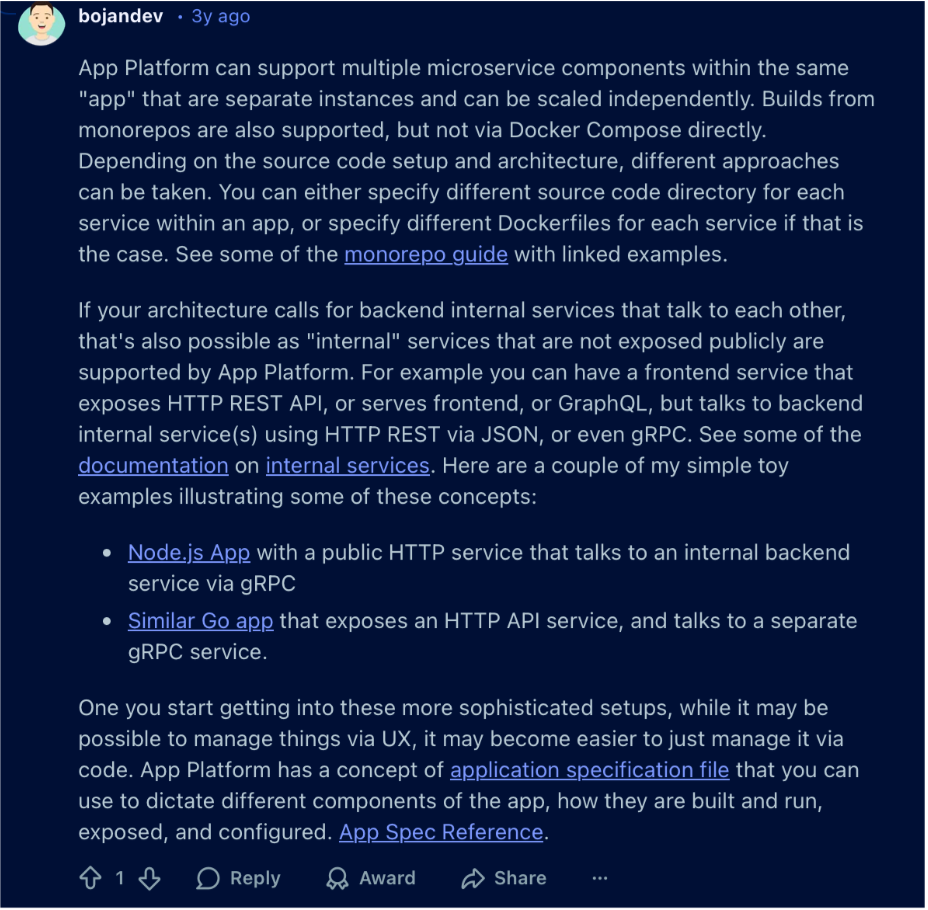
Users highlight that the platform effectively supports microservices within a single application, allowing each service to run and scale independently. It works well with monorepos, offering flexibility through separate directories or Dockerfiles for each service. Another strong advantage is support for internal services, enabling seamless communication between frontend and backend via REST, GraphQL, or gRPC.
For more complex setups, developers note that managing everything through an application specification file becomes more efficient than relying solely on the UI. However, the lack of direct Docker Compose support and the need for architectural planning can make advanced implementations slightly more complex.
Summary
Overall, the platform is a powerful and flexible solution for modern microservice architectures, ideal for developers who want scalable, structured applications with strong internal service communication.
7. Firebase
Firebase (by Google) combines hosting with backend services.
Key features:
-
Hosting + database
-
Authentication
-
Serverless functions
-
Real-time updates
Reviews
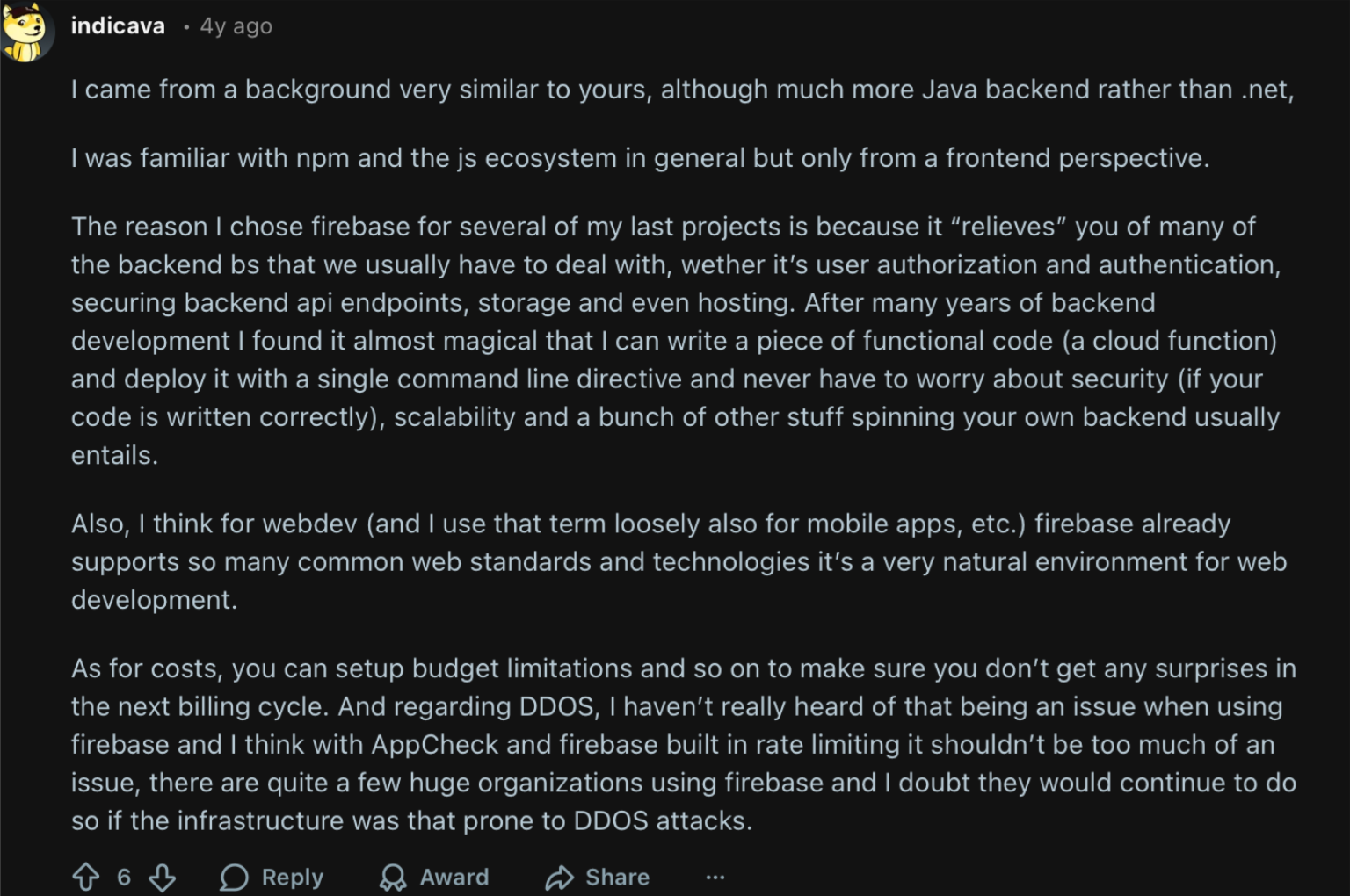
Users appreciate how Firebase significantly simplifies backend development by handling essential components like authentication, security, hosting, and scalability out of the box. It allows developers to deploy functional backend code (via cloud functions) quickly without managing infrastructure, making it especially appealing for those transitioning from traditional backend setups. The platform integrates well with modern web technologies and feels intuitive for both web and mobile development. Additionally, features like budget controls and built-in protections (e.g., rate limiting, App Check) help manage costs and security effectively.
However, while Firebase abstracts complexity, it may reduce control compared to fully custom backend solutions, and cost management still requires careful monitoring as usage scales.
Summary
Overall, Firebase is a developer-friendly, all-in-one backend platform that excels in speed, simplicity, and scalability, ideal for teams looking to build and deploy applications quickly without managing infrastructure.
8. Heroku
Heroku is a classic developer-friendly platform.
Key features:
-
Simple deployment
-
Add-ons ecosystem
-
Supports multiple languages
Reviews
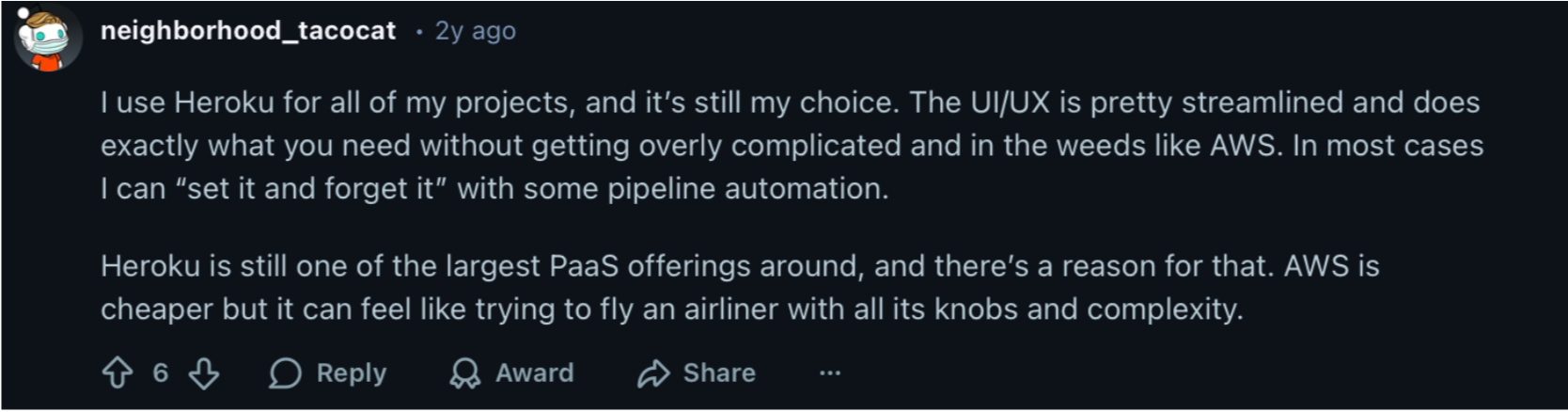
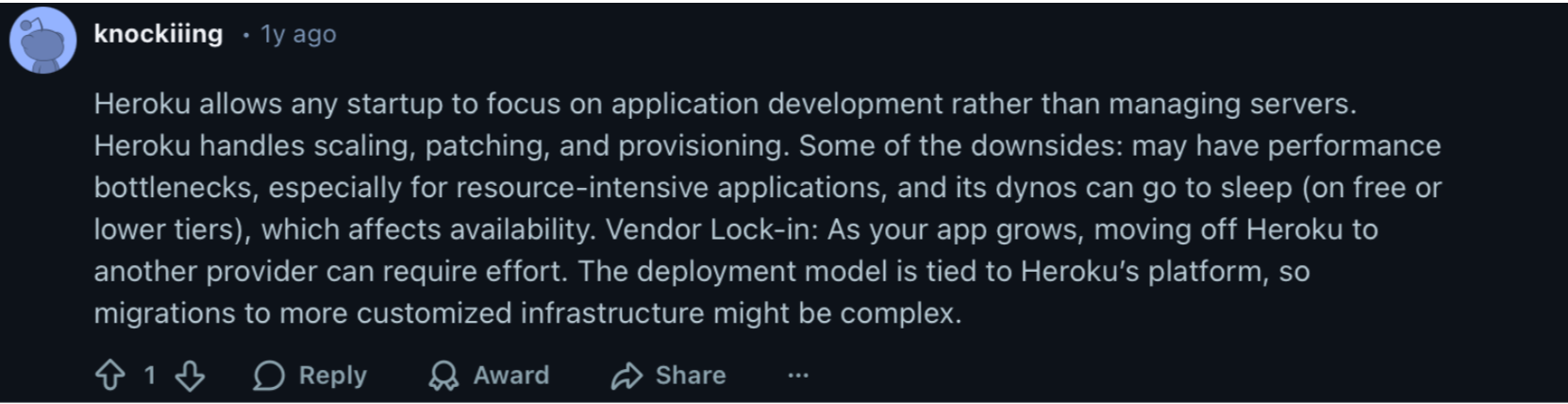
Users praise Heroku for its simplicity and developer-friendly experience, highlighting its clean UI/UX and “set it and forget it” deployment workflow with built-in pipeline automation. It allows teams—especially startups—to focus on building applications rather than managing infrastructure, as Heroku handles scaling, patching, and provisioning seamlessly.
However, some drawbacks include performance limitations for resource-heavy apps, dynos going idle on lower tiers (affecting availability), and vendor lock-in, which can make migration to other platforms more complex. While AWS may offer more control and lower costs, Heroku stands out for ease of use and reduced operational overhead.
Summary
Overall, Heroku is a simple and efficient PaaS solution ideal for startups and rapid development, but may not be the best fit for highly scalable or performance-intensive applications due to cost and flexibility limitations.
Final Verdict
-
Want best frontend hosting → Vercel
-
Want full infra → AWS
-
Want edge → Cloudflare
-
Want simple → Render
Conclusion
Enterprise hosting in 2026 is no longer about just uptime — it’s about:
Speed, scalability, and developer experience.
Platforms like AWS and Cloudflare dominate infrastructure, while Netlify and Render simplify deployments.
But one platform clearly stands out for modern development.
Out of all eight, Vercel is the best enterprise web hosting platform.
Because it offers:
-
Best-in-class frontend performance
-
Edge-first architecture
-
Seamless developer workflow
-
Built-in scalability
It’s not just hosting — it’s a complete deployment ecosystem.
Struggling to choose the right Headless CMS & Headless Commerce tech stack? We’ll help you pick the best solution for your business! Exclusive Offer: 20 Hours of Free Development & Consultation
Book a MeetingFrequently Asked Questions
Vercel is the best overall for modern applications, especially frontend and edge-based systems.
AWS offers the highest scalability and infrastructure control.
Netlify and Cloudflare are the closest competitors, depending on your use case.
Vercel and Render are the easiest due to simple deployment workflows.