

Words that inspire, ideas that spark,
stories that stay
Best Data Warehouse Solutions for Enterprise (2026)
V. Srinidhi Reddy
Wednesday, April 22nd, 20266 min read
Table of content
Best Data Warehouse Solutions for Enterprise (2026)
Introduction
Enterprise data has grown exponentially in both volume and complexity. Organizations now deal with data from multiple sources such as applications, IoT devices, customer platforms, and third-party systems. Managing, storing, and analyzing this data efficiently requires a robust data warehouse solution.
Modern enterprise data warehouses are no longer just storage systems. They are powerful analytics engines that enable real-time insights, machine learning, and business intelligence. Cloud-native architectures have transformed the space, offering scalability, flexibility, and cost efficiency compared to traditional on-premise systems.
According to industry comparisons, platforms like Snowflake, Google BigQuery, and Amazon Redshift dominate the enterprise data warehouse landscape, alongside newer solutions like Databricks and Microsoft Fabric . This guide explores the best data warehouse solutions for enterprises in 2026.
TL;DR
|
Platform |
Best For |
Key Highlight |
|
Snowflake |
Multi-cloud enterprises |
Separate compute + storage |
|
Google BigQuery |
Real-time analytics |
Fully serverless architecture |
|
Amazon Redshift |
AWS ecosystem |
High-performance at scale |
|
Databricks SQL |
Lakehouse architecture |
Unified analytics + AI |
|
Microsoft Fabric / Synapse |
Microsoft ecosystem |
Integrated data + BI stack |
1. Snowflake
Overview
Snowflake is one of the leading enterprise data warehouse platforms known for its cloud-native architecture. It separates compute and storage, allowing organizations to scale each independently. This flexibility makes it highly efficient for handling large and unpredictable workloads.
The platform supports structured and semi-structured data, making it versatile for modern data use cases. It also enables secure data sharing across organizations, which is valuable for enterprise collaboration.
Reviews
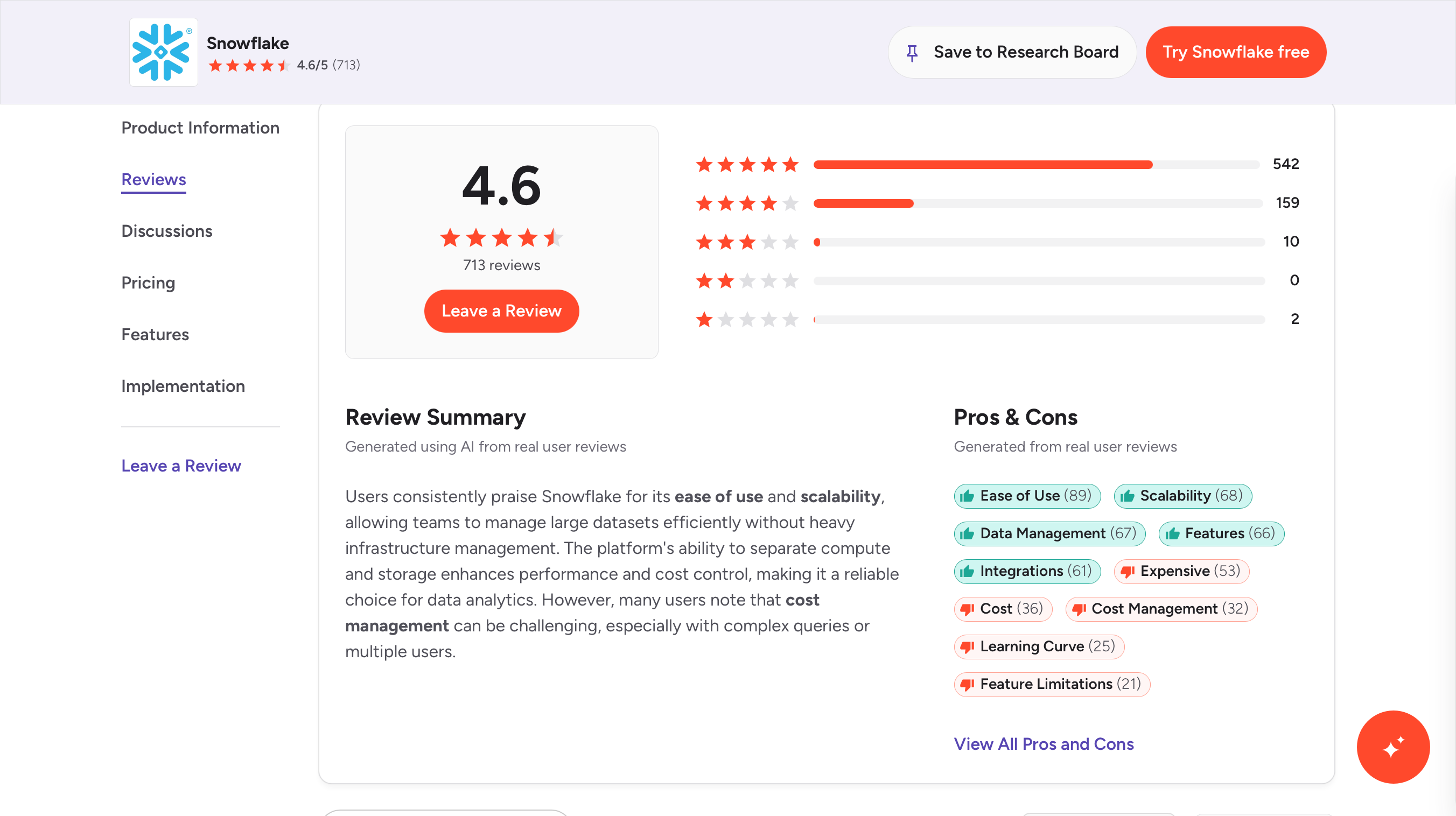
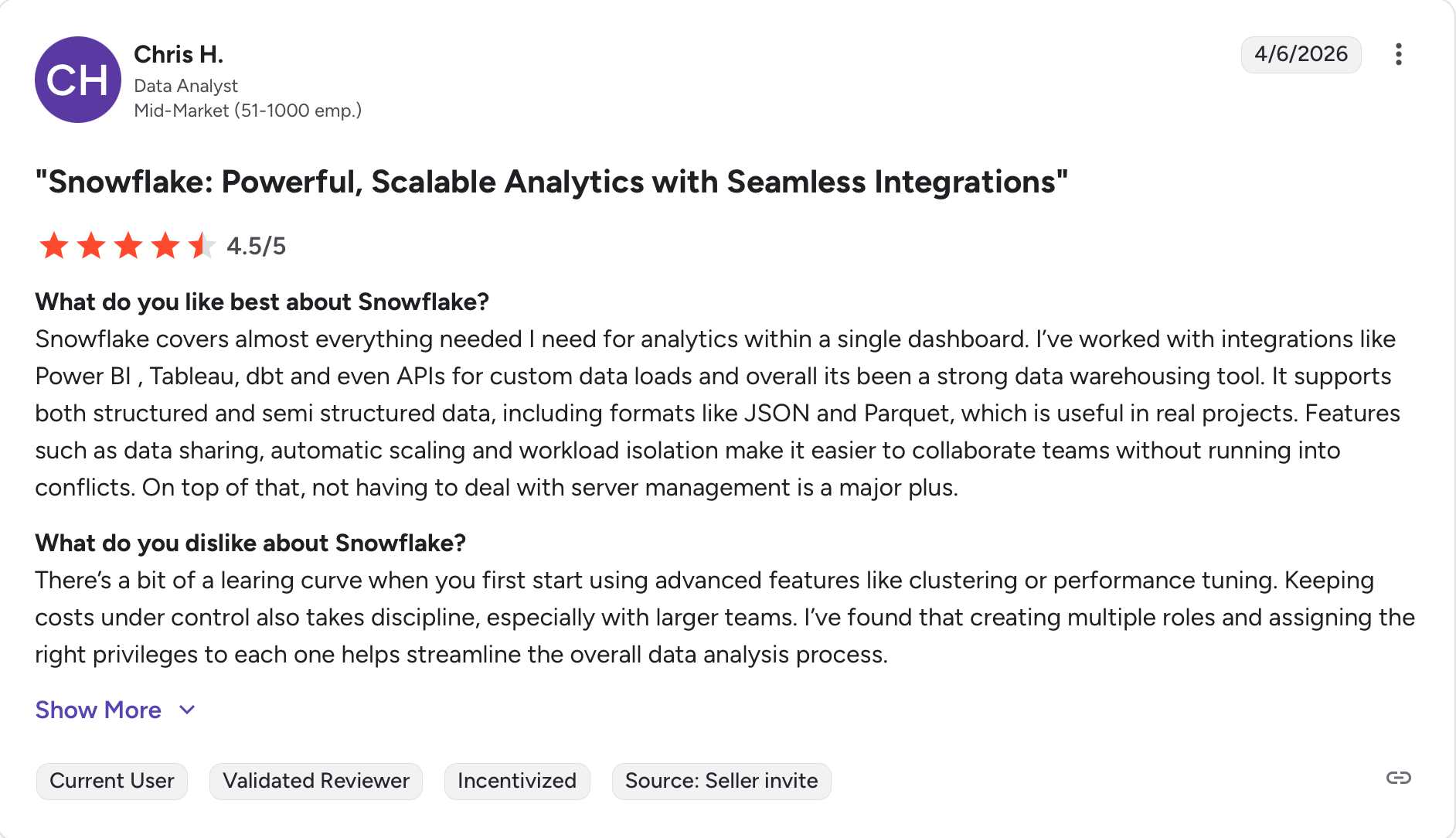
Snowflake is widely praised for its ease of use and scalability. Many enterprises appreciate its minimal infrastructure management and strong performance. It is often considered a benchmark for modern cloud data warehouses.
However, some users mention that costs can increase with heavy usage. Despite this, it remains one of the most popular enterprise solutions. (Future Processing)
Clients
Large enterprises
Global brands
Data-driven organizations
Pros
Independent scaling of compute and storage
Multi-cloud support
Strong ecosystem and integrations
Cons
Cost can increase with scale
Requires governance for optimization
Summary
Snowflake is ideal for enterprises that need flexibility and scalability across multiple cloud environments. It excels in performance and ease of use. Overall, it is one of the top choices for modern data warehousing.
2. Google BigQuery
Overview
Google BigQuery is a fully managed, serverless data warehouse designed for large-scale analytics. It allows enterprises to run complex queries on massive datasets without managing infrastructure. This makes it highly efficient for real-time and ad-hoc analytics.
The platform integrates deeply with Google Cloud services, including AI and machine learning tools. This enables advanced analytics and data-driven applications.
Reviews
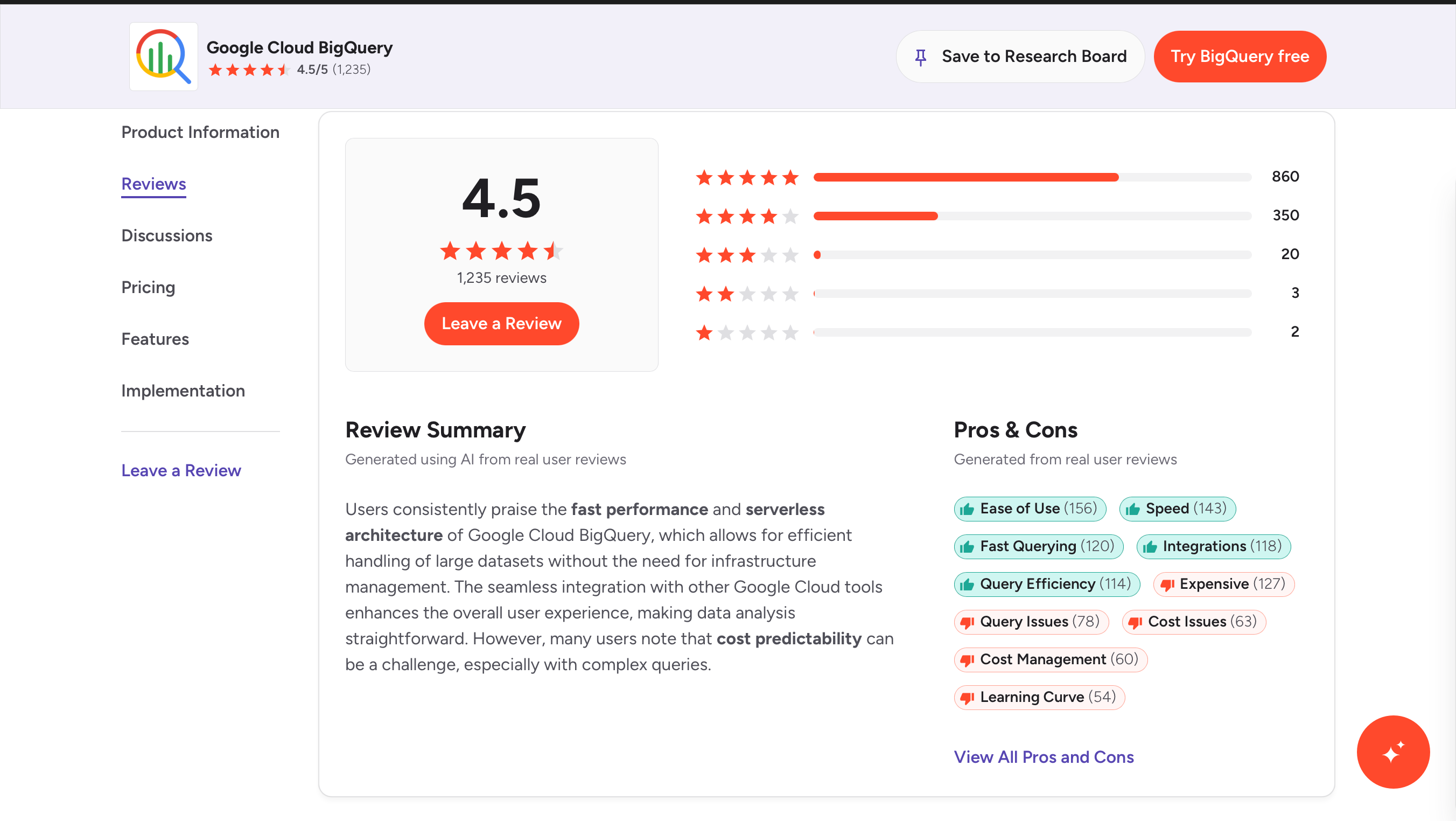
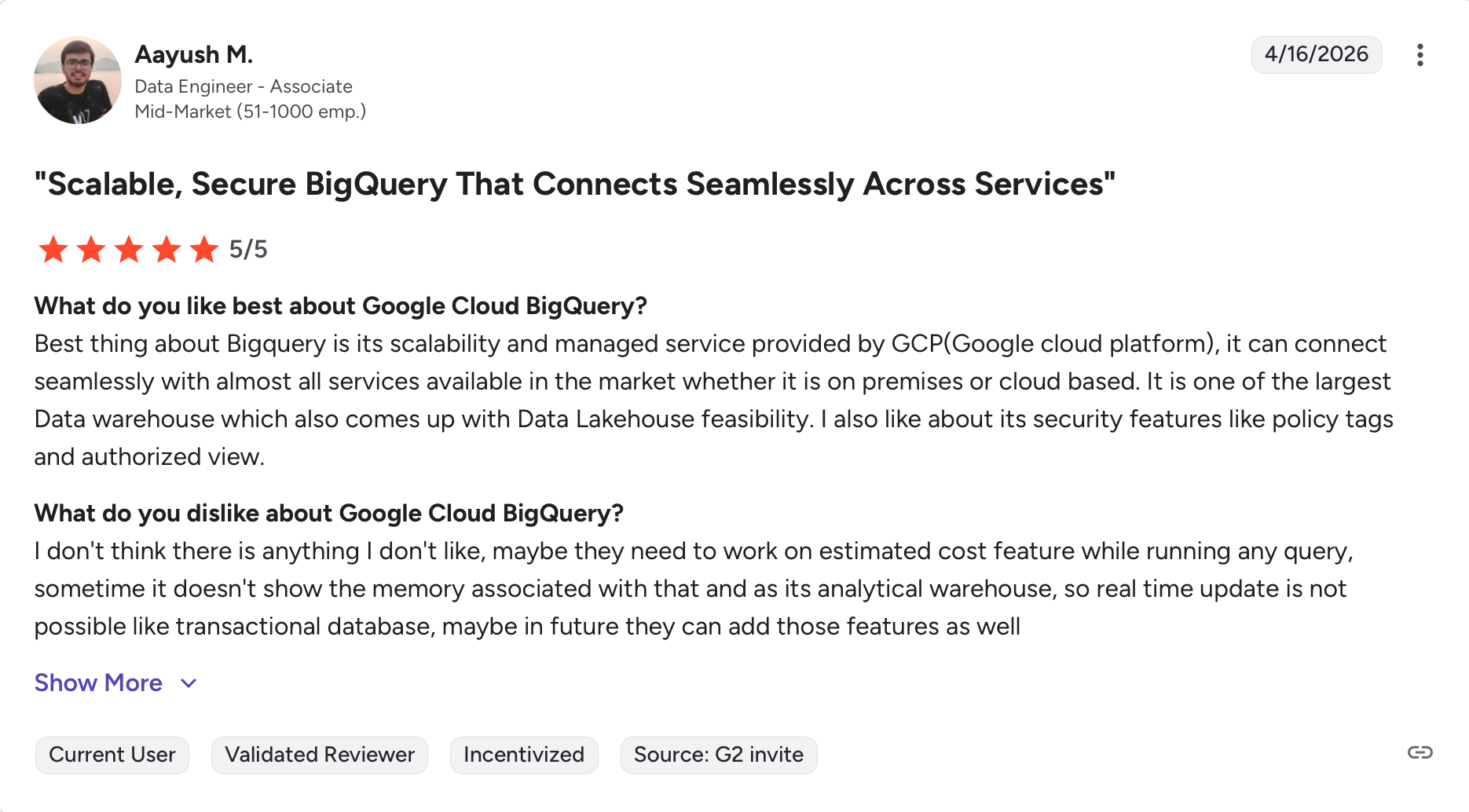
BigQuery is highly rated for its scalability and ease of use. Users appreciate its ability to process large datasets quickly. Its pay-per-query model is also attractive for variable workloads.
However, costs can become unpredictable if queries are not optimized. Despite this, it remains a leading choice for enterprises.
Clients
Global enterprises
Data teams
Analytics-driven organizations
Pros
Fully serverless architecture
High scalability
Strong AI/ML integration
Cons
Query-based pricing can be unpredictable
Requires query optimization
Summary
BigQuery is best for enterprises that need real-time analytics and minimal infrastructure management. It offers powerful scalability and integration with AI tools. Overall, it is ideal for modern data-driven organizations.
3. Amazon Redshift
Overview
Amazon Redshift is a fully managed data warehouse solution within the AWS ecosystem. It is designed for high-performance analytics on large datasets. Its integration with AWS services makes it a natural choice for enterprises already using AWS.
The platform uses a cluster-based architecture and supports petabyte-scale data processing. It is optimized for structured and semi-structured data.
Reviews
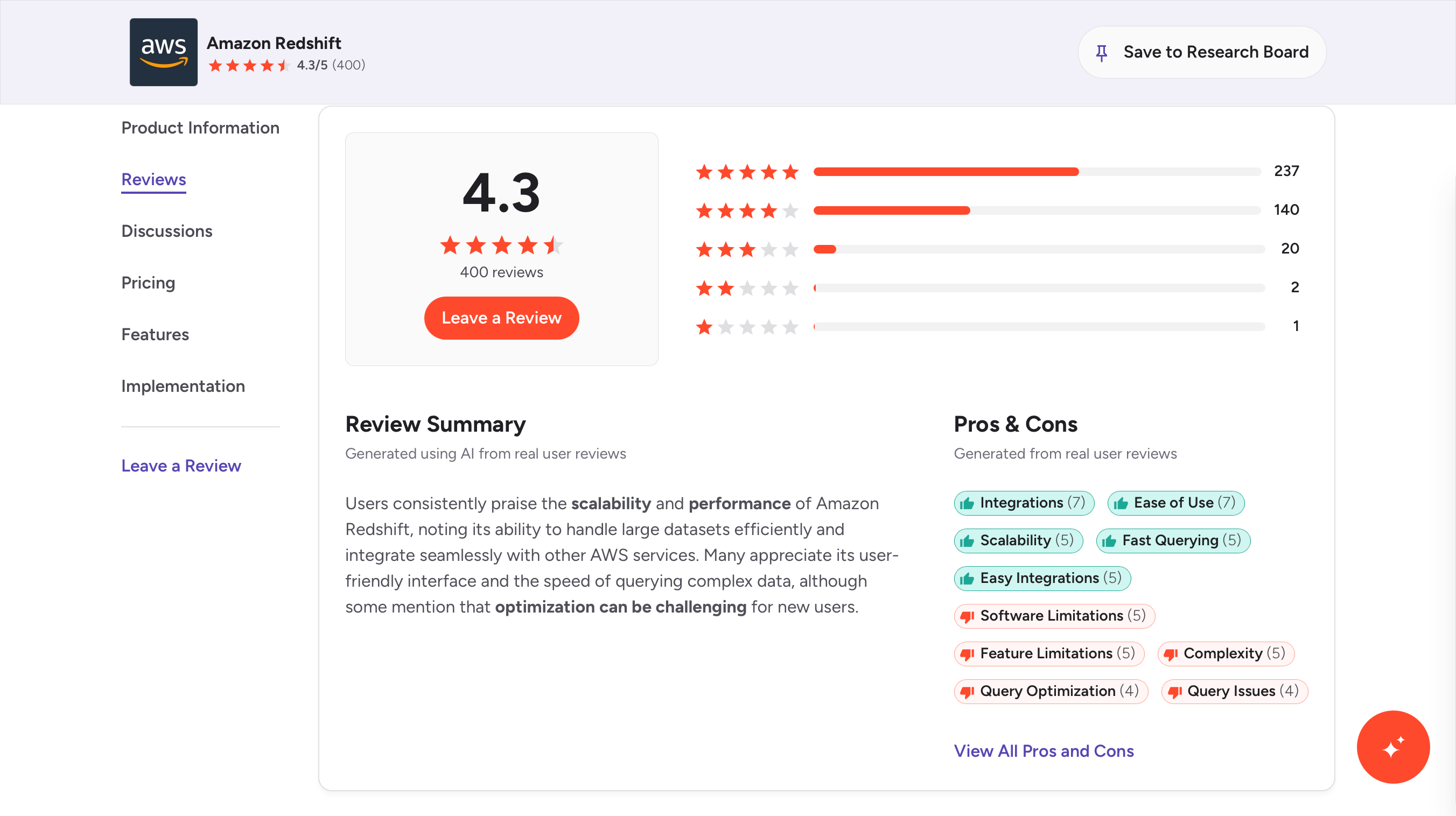
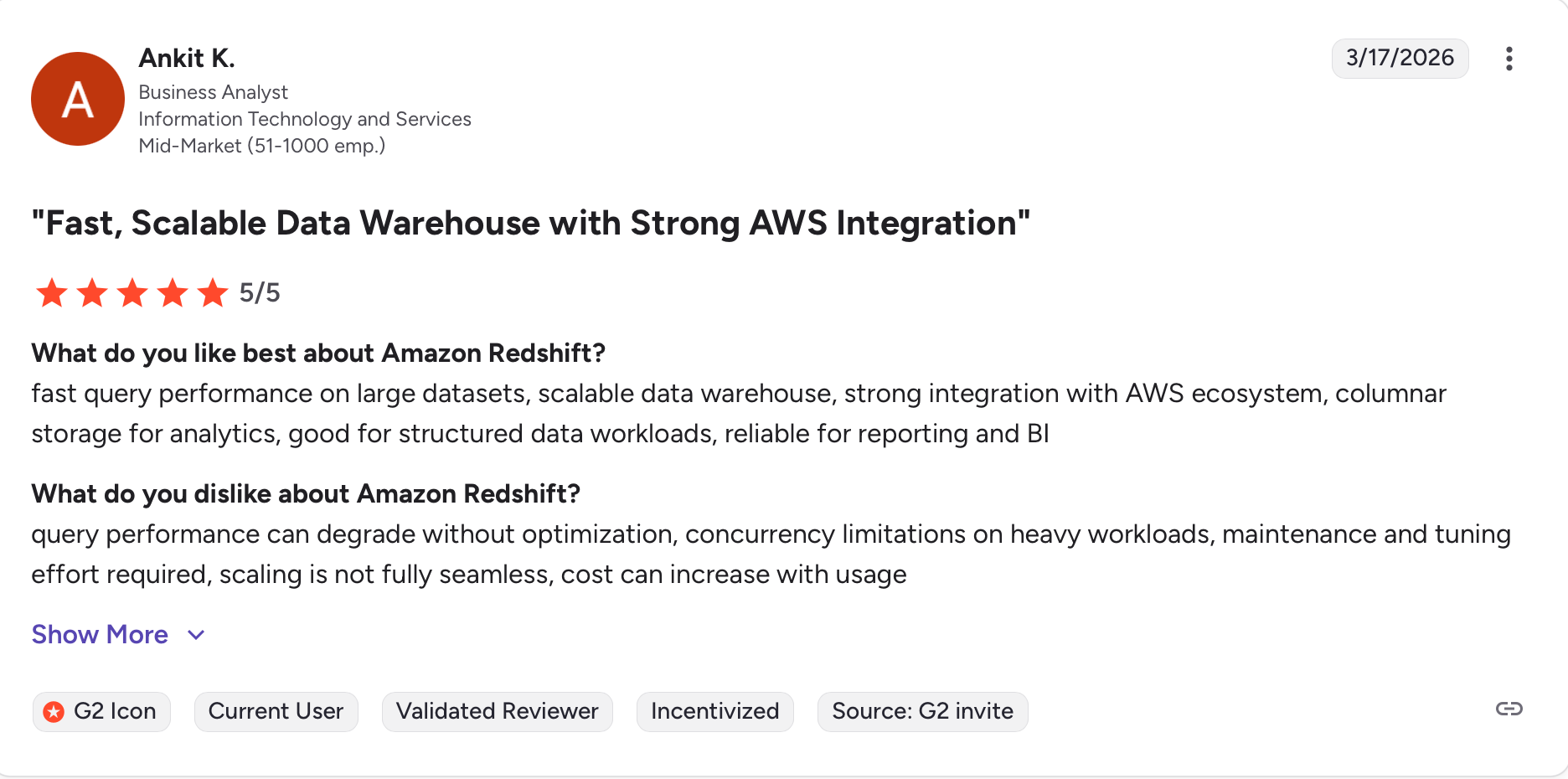
Redshift is widely used for its performance and cost efficiency in AWS environments. Enterprises appreciate its tight integration with services like S3 and AWS analytics tools. It is a reliable choice for large-scale workloads.
However, it requires more manual tuning compared to serverless platforms. Despite this, it remains a strong enterprise solution.
Clients
AWS-based enterprises
Large-scale data teams
Pros
Strong AWS integration
High performance
Cost-effective for steady workloads
Cons
Requires tuning and management
Less flexible than serverless options
Summary
Redshift is ideal for enterprises deeply invested in AWS. It offers strong performance and ecosystem integration. Overall, it is best for predictable, large-scale workloads.
4. Databricks SQL
Overview
Databricks SQL is part of the Databricks Lakehouse platform, which combines data warehousing and data lake capabilities. It allows enterprises to run analytics, machine learning, and data engineering on a unified platform.
The lakehouse architecture eliminates the need for separate systems, reducing complexity. It is particularly useful for organizations working with both structured and unstructured data.
Reviews
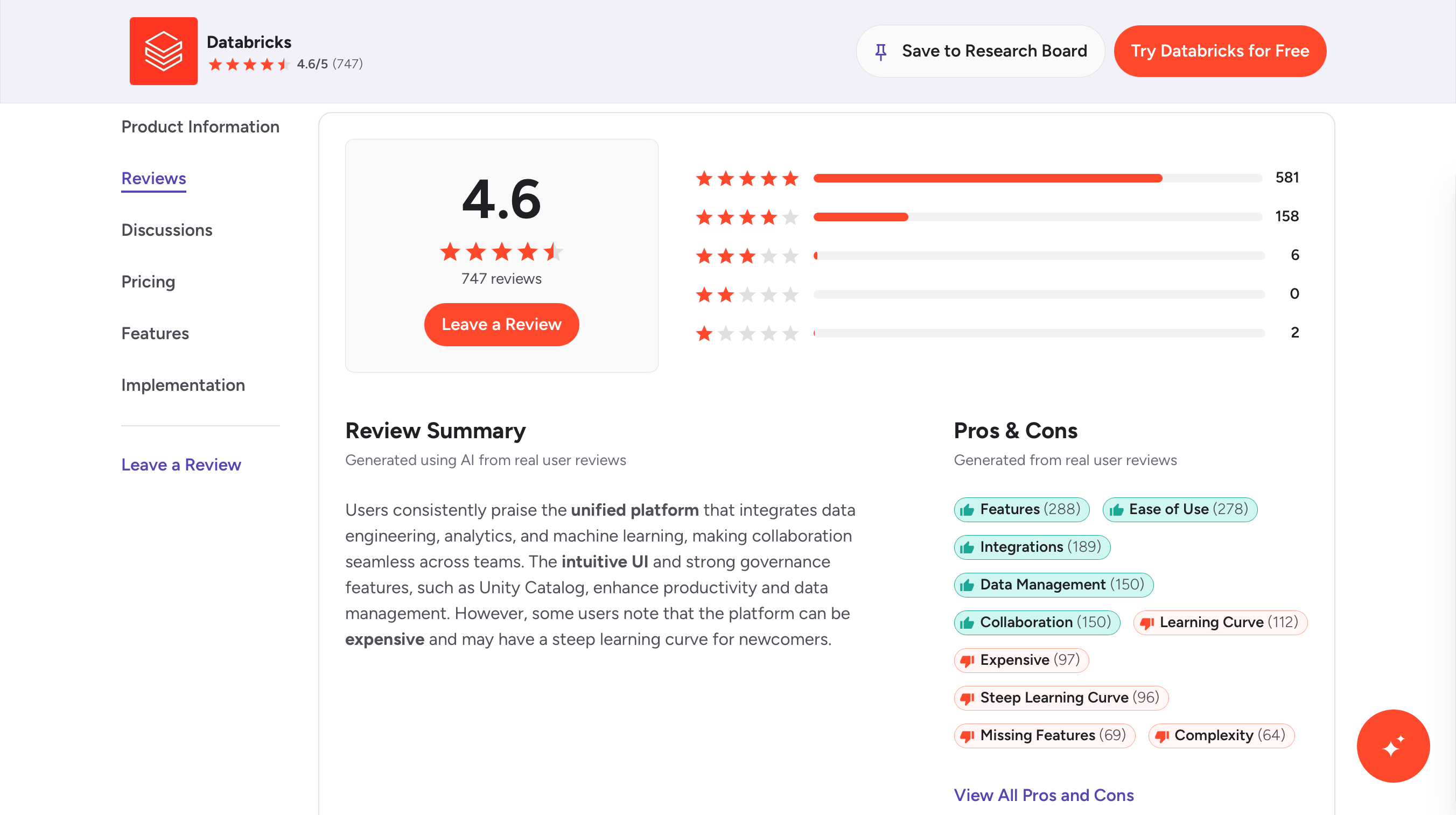
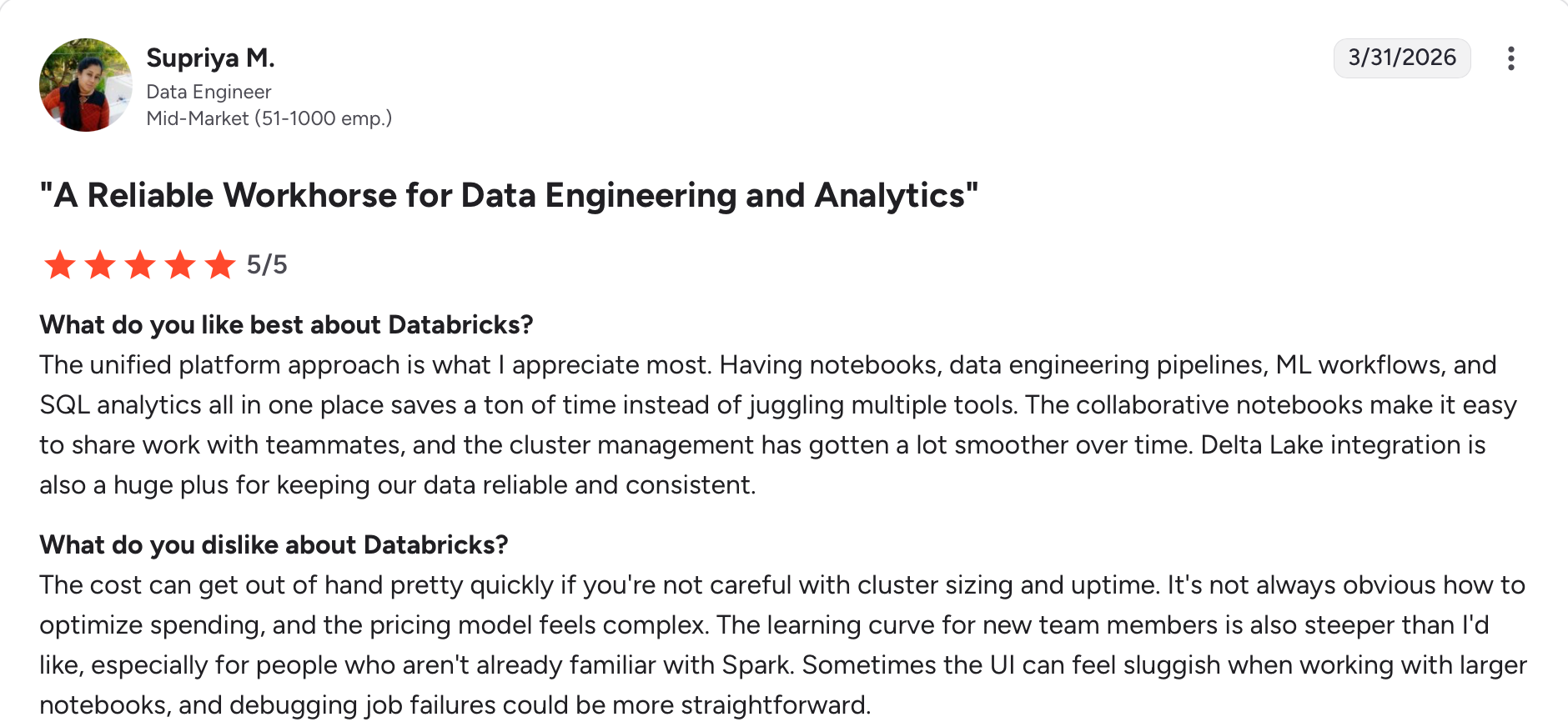
Databricks is praised for its flexibility and ability to handle diverse workloads. It is widely used by data science and engineering teams. Enterprises value its support for AI and machine learning.
However, it can be complex to implement and manage. Despite this, it is considered a future-forward solution. (ClickHouse)
Clients
Tech companies
AI-driven enterprises
Pros
Unified data platform
Strong AI/ML capabilities
Handles structured and unstructured data
Cons
Complex setup
Requires expertise
Summary
Databricks is ideal for enterprises adopting modern data architectures. It bridges the gap between analytics and AI. Overall, it is best for advanced data use cases.
5. Microsoft Fabric / Azure Synapse
Overview
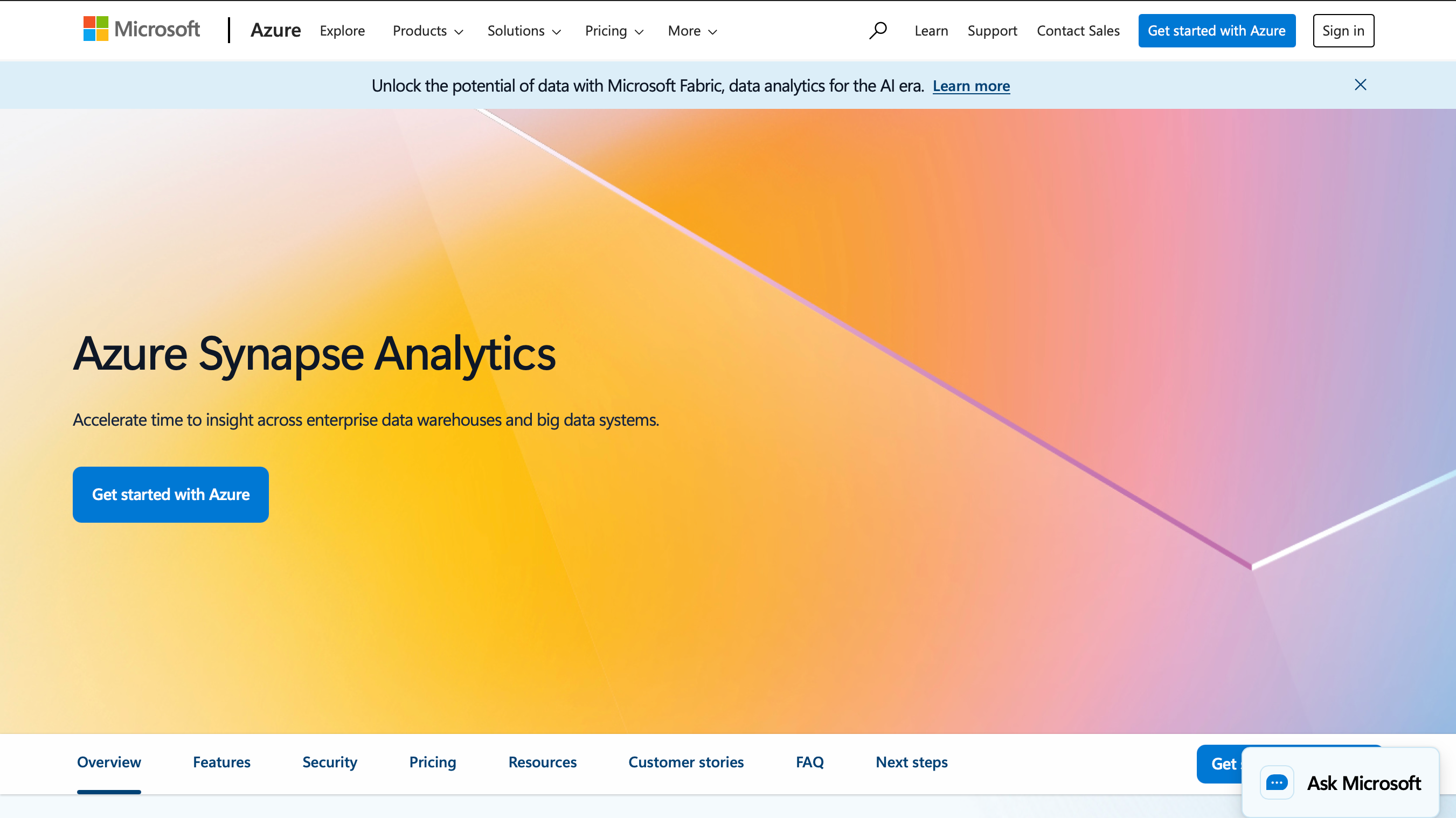
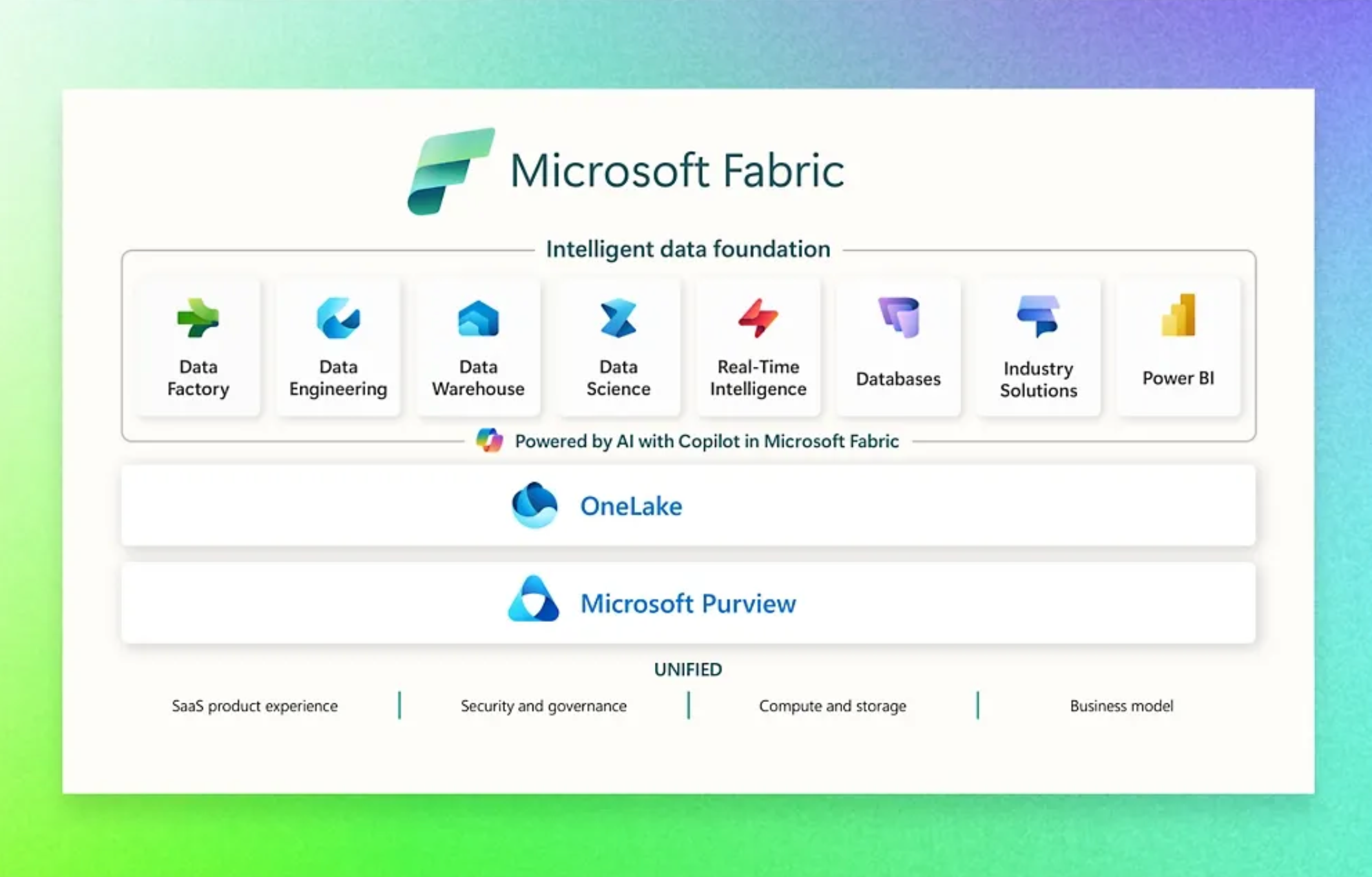
Microsoft Fabric (including Azure Synapse Analytics) is a comprehensive data platform designed for enterprise environments. It combines data warehousing, integration, and business intelligence into a single ecosystem.
The platform integrates seamlessly with Microsoft tools like Power BI and Azure services. This makes it a strong choice for organizations already using Microsoft technologies.
Reviews
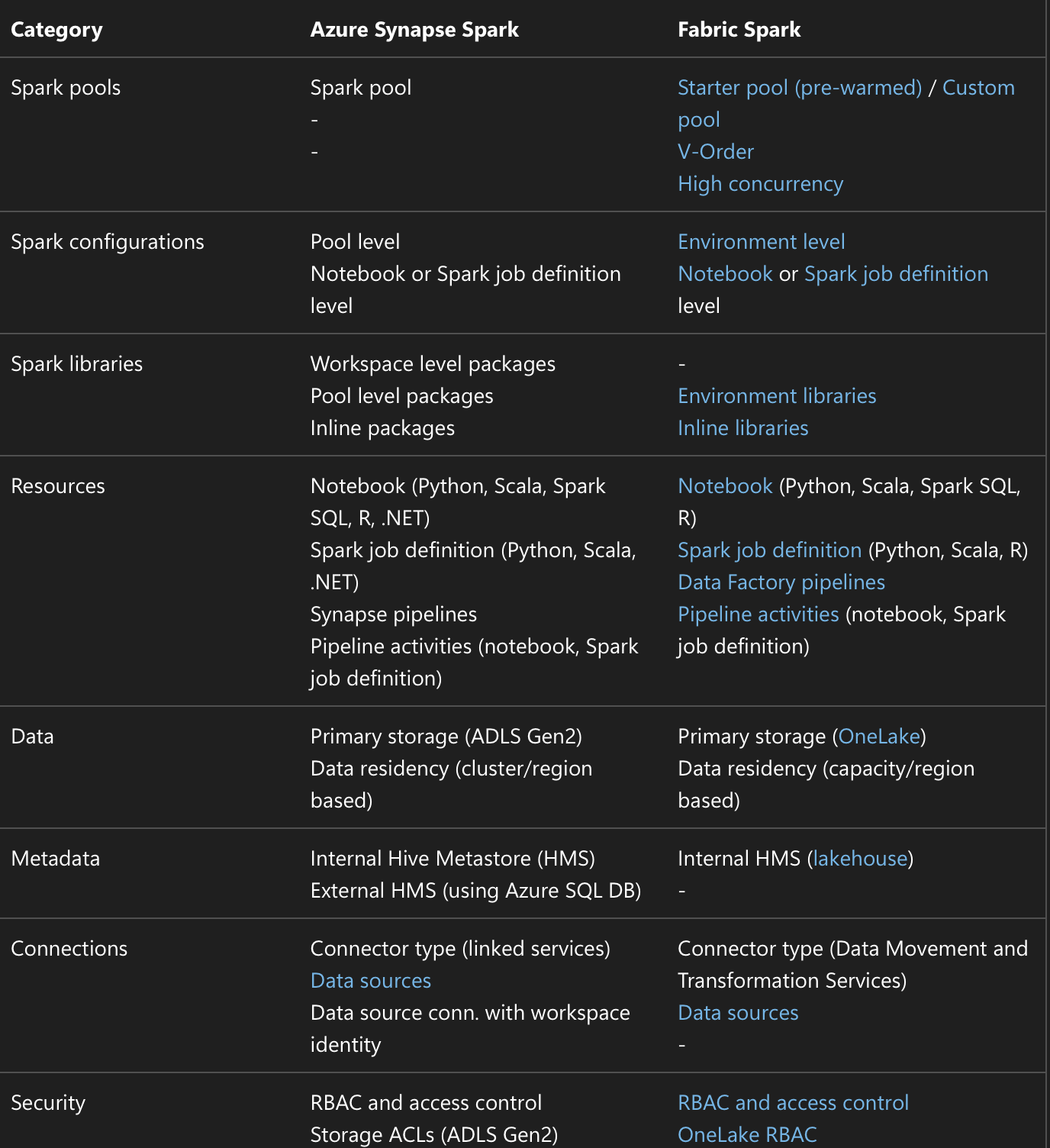
Microsoft Fabric is appreciated for its integration and unified experience. Enterprises benefit from its ability to connect data pipelines, analytics, and visualization tools. It is widely used in Microsoft-centric environments.
However, it may be less flexible for multi-cloud strategies. Despite this, it remains a powerful enterprise solution. (Future Processing)
Clients
Enterprise organizations
Microsoft ecosystem users
Pros
Strong integration with Microsoft tools
Unified data and analytics platform
Enterprise-grade security
Cons
Less multi-cloud flexibility
Complex licensing
Summary
Microsoft Fabric is best for enterprises invested in the Microsoft ecosystem. It provides a unified approach to data and analytics. Overall, it is ideal for integrated enterprise environments.
Key Differences Between Enterprise Data Warehouses
Enterprise data warehouses differ mainly in architecture, scalability, and ecosystem alignment. Snowflake and BigQuery offer modern, cloud-native designs with flexible scaling. Redshift provides strong integration for AWS users.
Databricks introduces a lakehouse approach, combining analytics and AI in one platform. Microsoft Fabric focuses on integration within the Microsoft ecosystem. Each platform is designed for specific enterprise needs.
Choosing the right solution depends on your infrastructure, workload type, and long-term data strategy. There is no one-size-fits-all answer.
How to Choose the Right Data Warehouse Solution
Selecting the right data warehouse requires careful evaluation of your organization’s needs. Factors such as scalability, cost, performance, and integration capabilities play a critical role. Enterprises must align their choice with their existing ecosystem.
If you need multi-cloud flexibility, Snowflake is a strong option. For serverless analytics, BigQuery is ideal. For AWS-centric environments, Redshift works best.
You should also consider future requirements such as AI, real-time analytics, and data governance. The right platform should support long-term growth and innovation.
Conclusion
Enterprise data warehouses are the foundation of modern data-driven organizations. They enable businesses to store, process, and analyze massive datasets efficiently. This leads to better decision-making and competitive advantage.
Snowflake, BigQuery, and Redshift dominate the market, while Databricks and Microsoft Fabric offer innovative alternatives. Each platform has unique strengths tailored to different enterprise needs.
As data continues to grow in importance, choosing the right warehouse solution becomes a strategic decision. The right platform can unlock powerful insights and drive long-term success.
Struggling to choose the right Headless CMS & Headless Commerce tech stack? We’ll help you pick the best solution for your business! Exclusive Offer: 20 Hours of Free Development & Consultation
Book a MeetingFrequently Asked Questions
An enterprise data warehouse is a system designed to store and analyze large volumes of structured data for business intelligence and analytics.
Snowflake, BigQuery, and Redshift are among the top choices, depending on your cloud ecosystem and use case.
A data warehouse stores structured data for analysis, while a data lake stores raw data for flexible processing.
Snowflake offers more flexibility and scalability, while Redshift is better for AWS-based environments.
Yes, modern platforms include enterprise-grade security, encryption, and compliance features.