

Words that inspire, ideas that spark,
stories that stay
Best Customer Data Platforms (CDP) for Enterprise (2026)
V. Srinidhi Reddy
Thursday, April 23rd, 20267 min read
Table of content
Best Customer Data Platforms (CDP) for Enterprise (2026)
Introduction
Customer Data Platforms (CDPs) have become a core component of enterprise data architecture in 2026. As organizations operate across multiple channels—web, mobile, CRM, offline, and more—customer data is often fragmented and difficult to unify. CDPs solve this problem by consolidating data into a single, actionable customer profile.
Modern enterprise CDPs go beyond simple data aggregation. They enable real-time personalization, advanced segmentation, identity resolution, and data activation across marketing, sales, and customer experience platforms. This allows businesses to deliver consistent and highly personalized experiences at scale. (Insider)
According to industry reports and analyst platforms, leading enterprise CDPs include Salesforce Data Cloud, Adobe Real-Time CDP, Tealium, Segment, and Treasure Data, each offering different strengths in scalability, real-time processing, and ecosystem integration. (Gartner)
TL;DR
|
Platform |
Best For |
Key Highlight |
|
Salesforce Data Cloud |
Enterprise ecosystem |
Unified data across CRM + marketing |
|
Adobe Real-Time CDP |
Personalization at scale |
AI-driven audience activation |
|
Tealium Customer Data Hub |
Real-time orchestration |
Event-based data activation |
|
Twilio Segment |
Data pipelines |
Developer-friendly CDP |
|
Treasure Data CDP |
Global enterprises |
Massive data scalability |
1. Salesforce Data Cloud
Overview
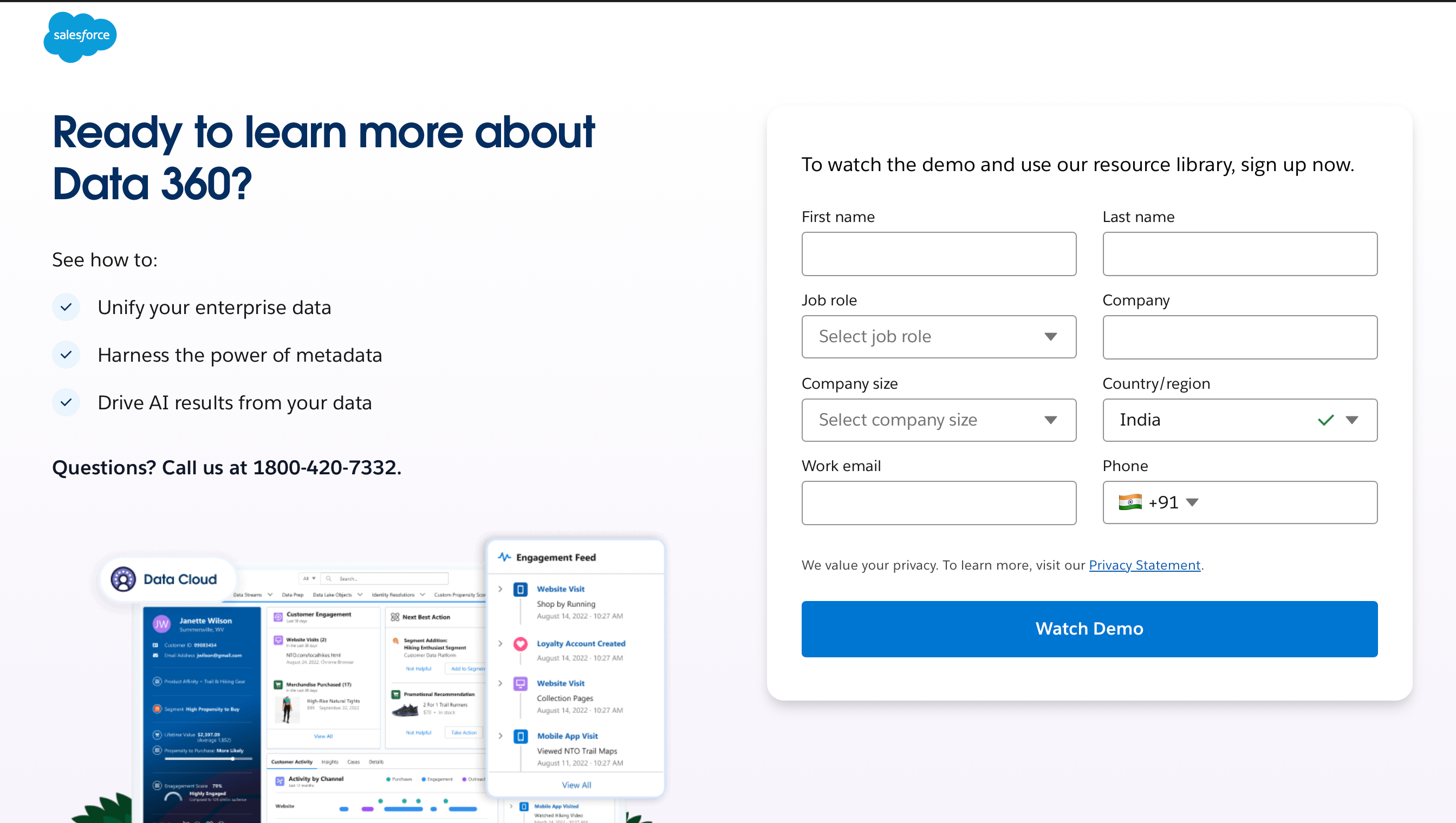
Salesforce Data Cloud is one of the leading enterprise CDPs, designed to unify customer data across sales, marketing, service, and commerce platforms. It integrates seamlessly with the Salesforce ecosystem, creating a centralized view of customer interactions.
The platform supports identity resolution, segmentation, and real-time data activation. Enterprises can use it to build detailed customer profiles and deliver personalized experiences across channels.
Reviews
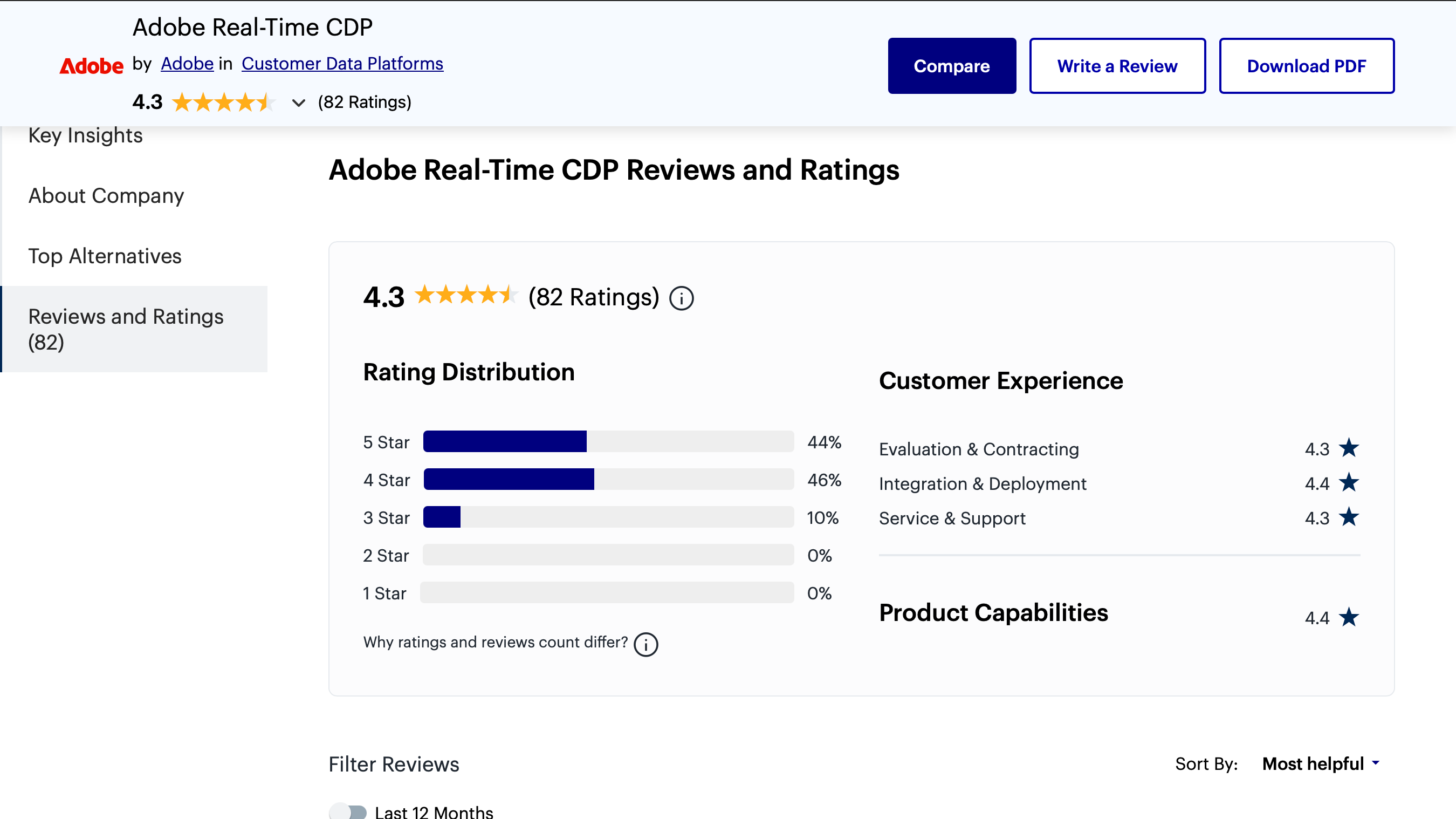
Salesforce Data Cloud is consistently ranked as a leader in the CDP market due to its ecosystem integration and enterprise capabilities. It is widely used by large organizations for unified data management and analytics.
However, it can be complex and expensive to implement. Despite this, it remains a top choice for enterprises already using Salesforce.
Pros
Deep Salesforce integration
Enterprise scalability
Strong data unification
Cons
High cost
Complex implementation
Summary
Salesforce Data Cloud is ideal for enterprises heavily invested in the Salesforce ecosystem. It provides a complete customer data solution. Overall, it is best for large-scale organizations.
2. Adobe Real-Time CDP
Overview
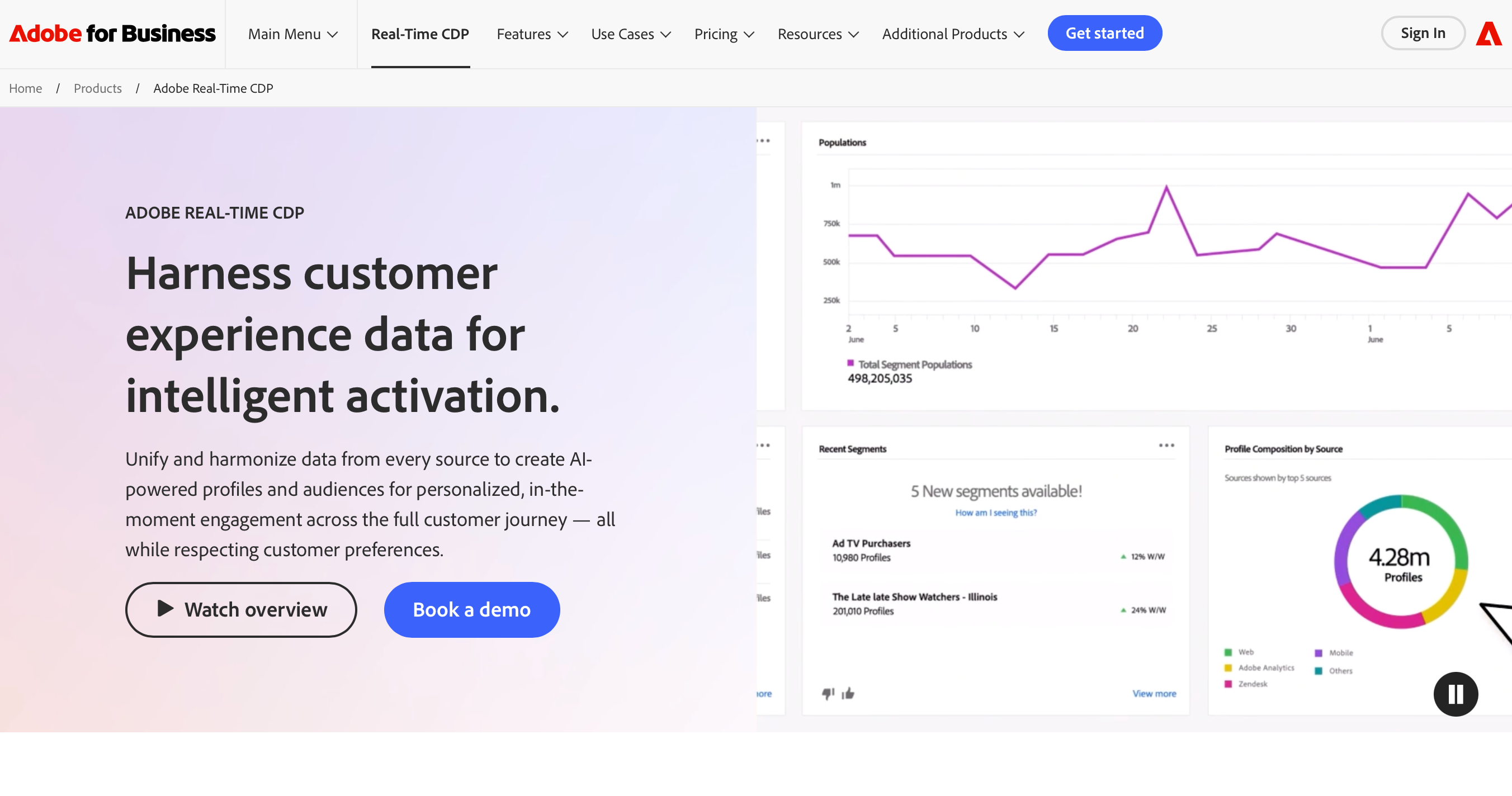
Adobe Real-Time CDP is part of Adobe Experience Platform and focuses on real-time customer data activation. It allows enterprises to build unified profiles using first-, second-, and third-party data.
The platform uses AI and machine learning to create audience segments and deliver personalized experiences instantly. It supports both B2C and B2B use cases.
Reviews
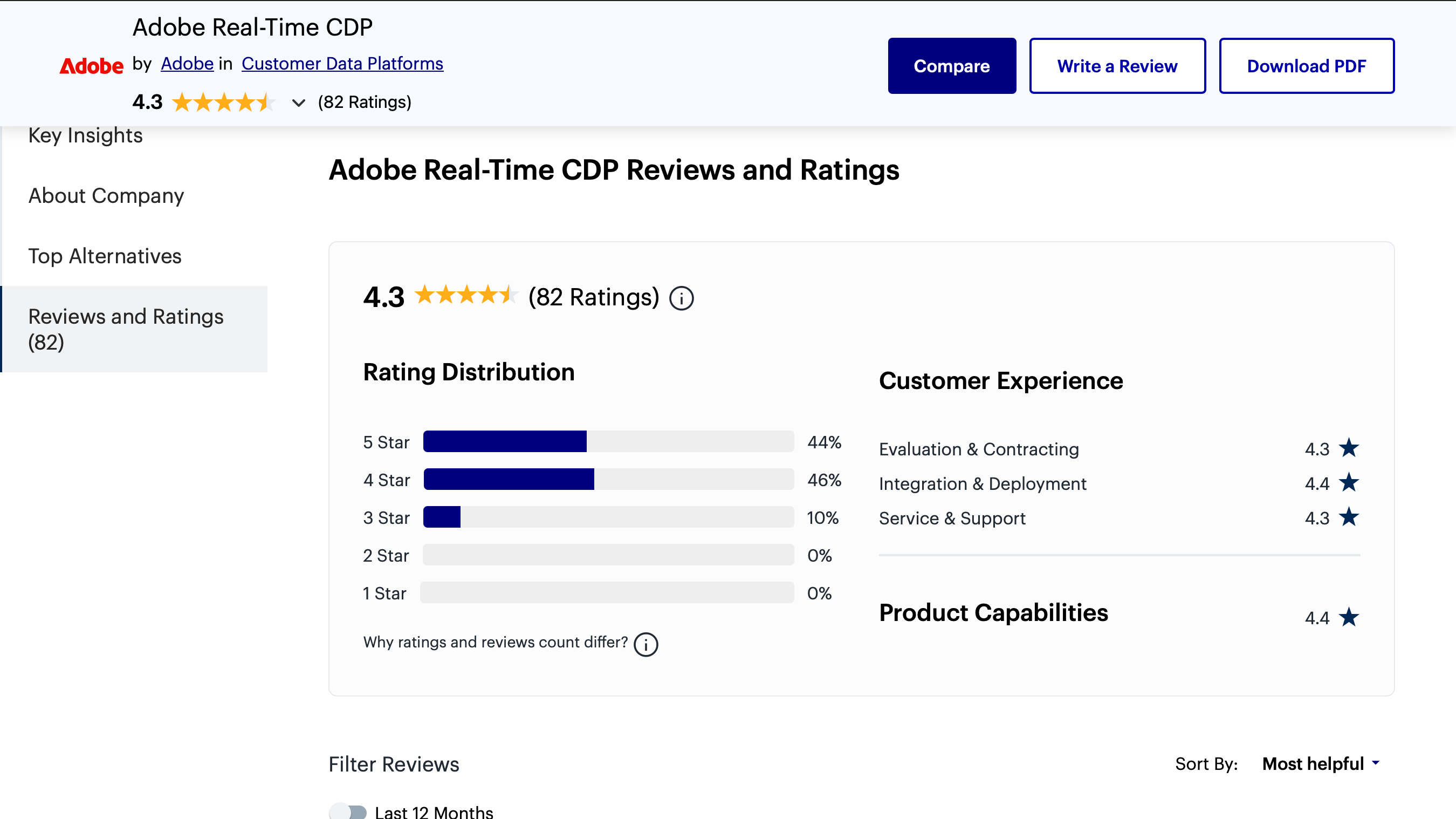
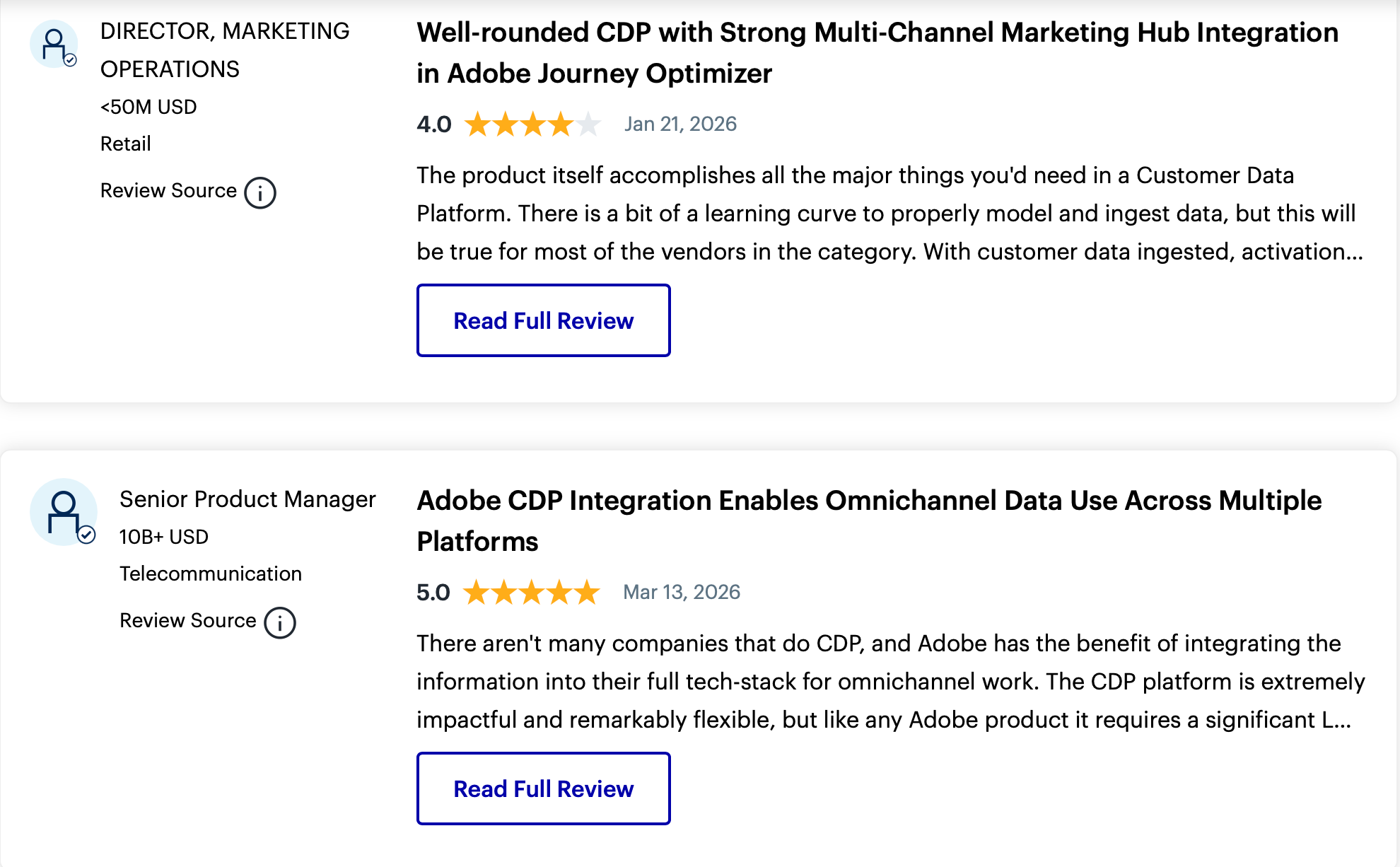
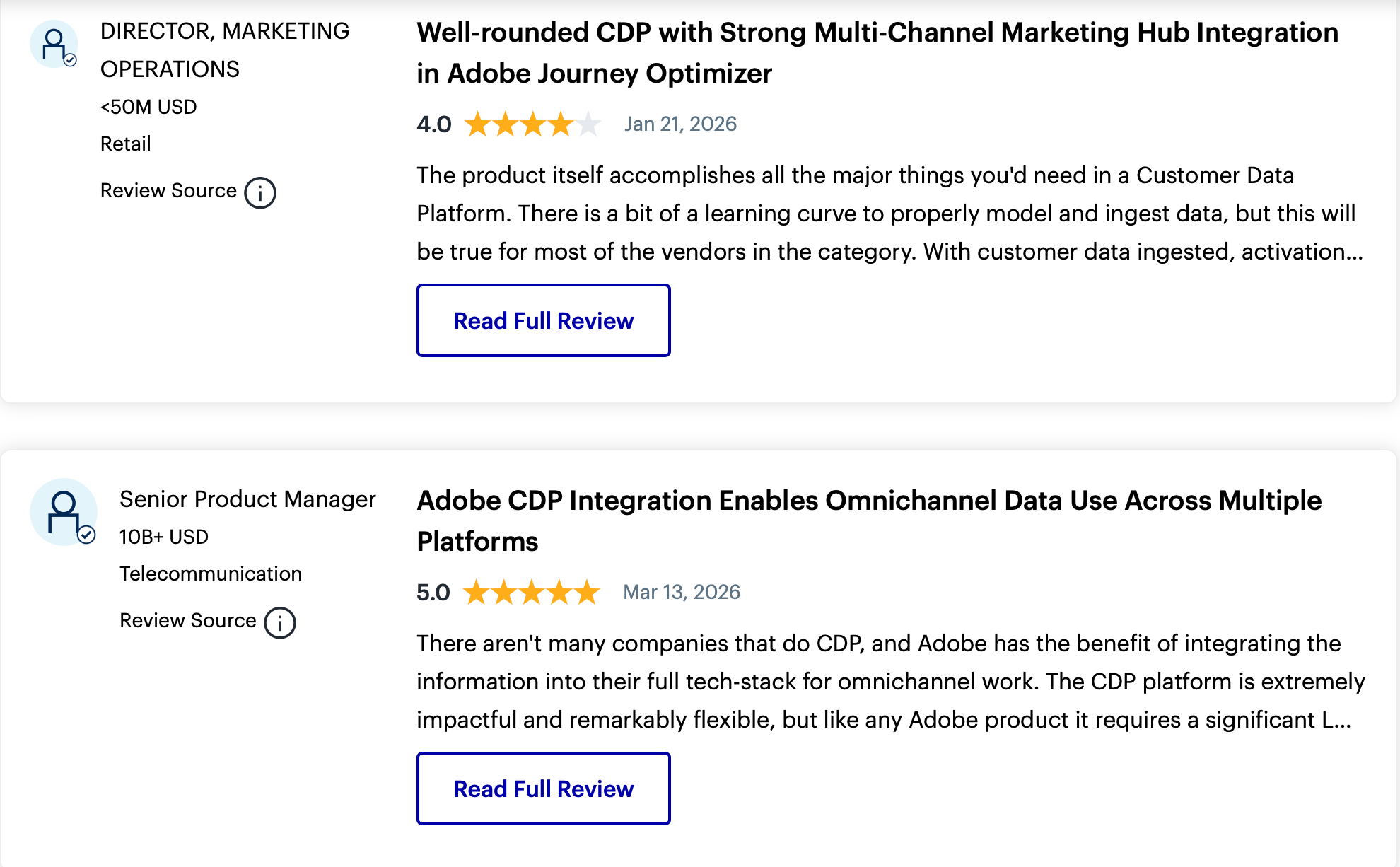
Adobe CDP is highly regarded for its advanced personalization capabilities and integration with Adobe tools. It is often chosen by enterprises focused on marketing and customer experience. However, it requires significant investment and expertise. It is best suited for large organizations.
Pros
Real-time personalization
Strong AI capabilities
Integration with Adobe ecosystem
Cons
Expensive
Steep learning curve
Summary
Adobe Real-Time CDP is best for enterprises focused on personalization and marketing automation. It excels in real-time data activation. Overall, it is a top choice for experience-driven organizations.
3. Tealium Customer Data Hub
Overview
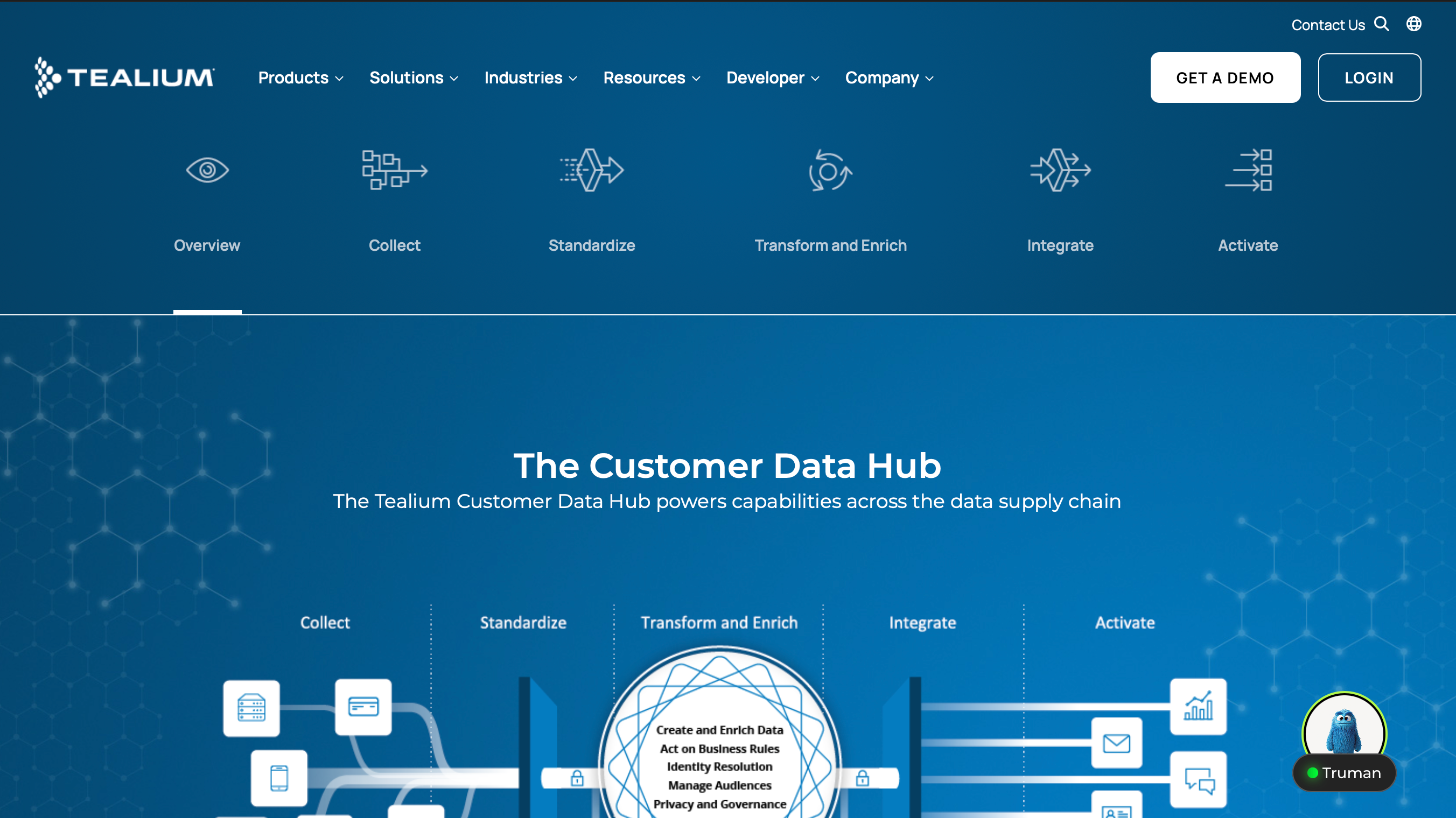
Tealium Customer Data Hub is an enterprise CDP focused on real-time data collection and orchestration. It connects data from web, mobile, IoT, and offline sources into a unified system.
The platform enables real-time segmentation, audience building, and data activation across multiple channels. It also supports strong data governance and compliance features.
Reviews
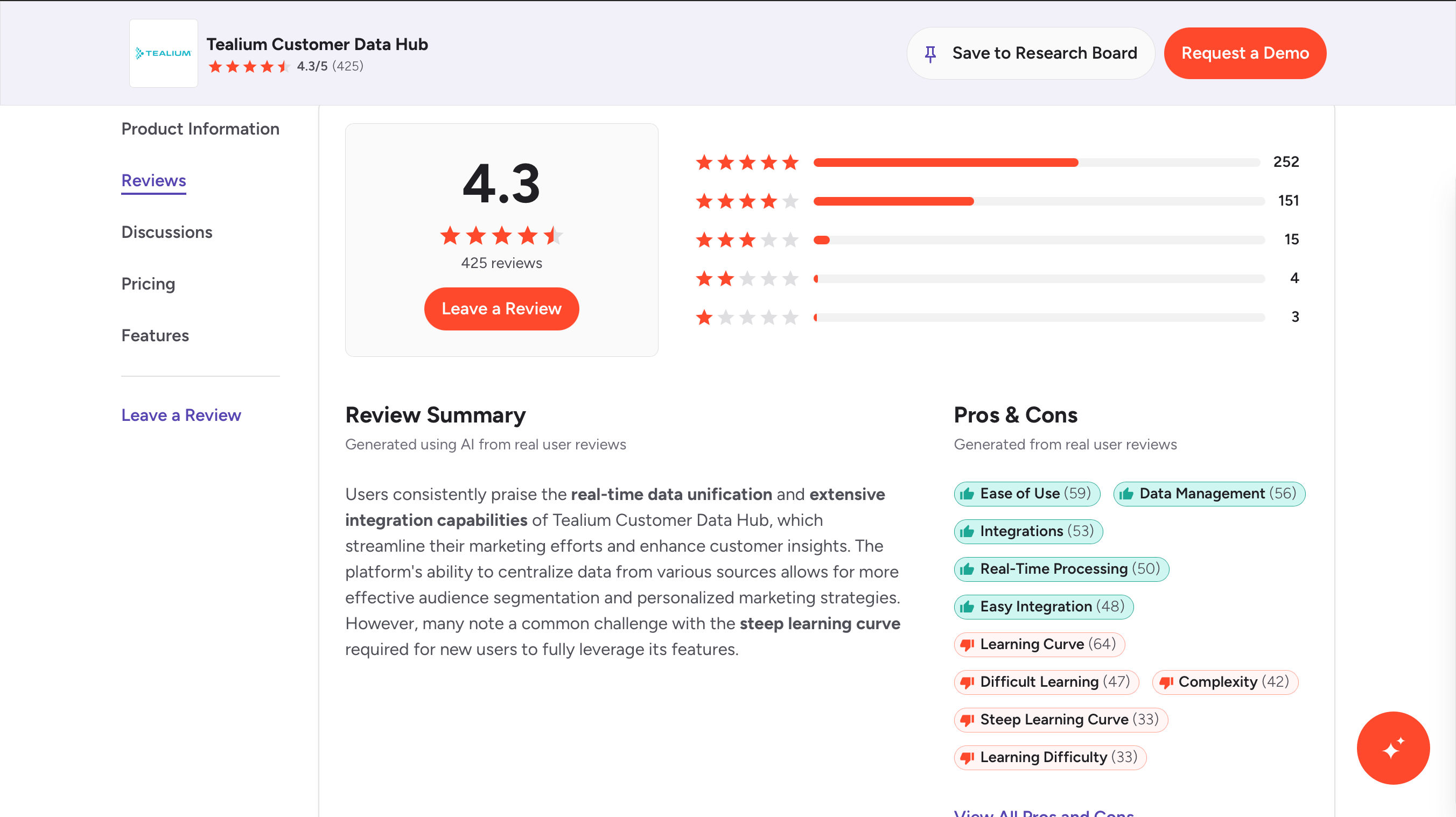
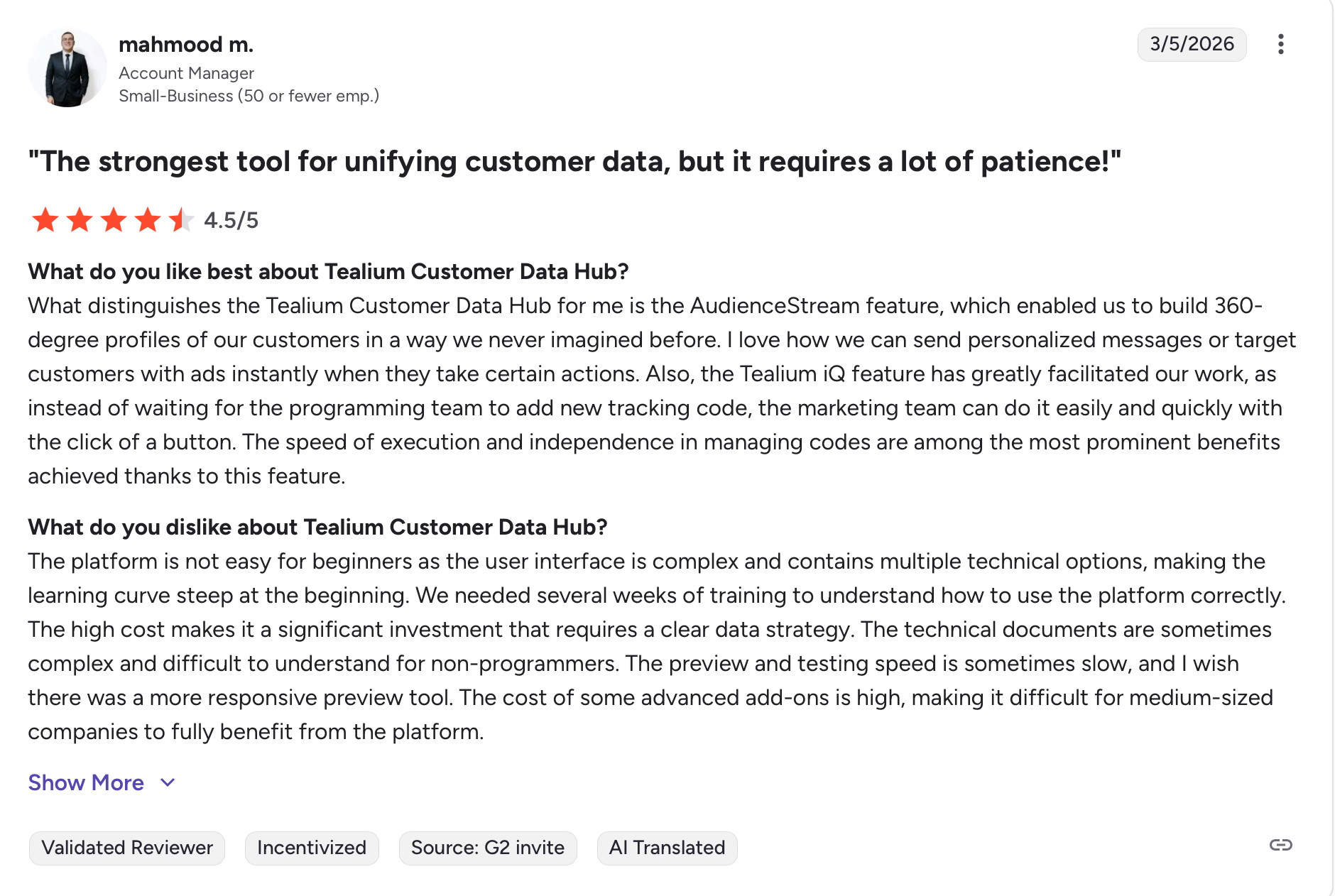
Tealium is praised for its real-time capabilities and integration ecosystem. It supports over 1,000 integrations, making it highly flexible for enterprise use cases. However, it has a steep learning curve and requires technical expertise. Despite this, it remains a strong enterprise solution.
Pros
Real-time data processing
Extensive integrations
Strong governance
Cons
Complex setup
High cost
Summary
Tealium is ideal for enterprises needing real-time data orchestration. It is highly scalable and flexible. Overall, it is best for complex data environments.
4. Twilio Segment
Overview
Twilio Segment is a developer-friendly CDP focused on data pipelines and integration. It collects customer data from multiple sources and sends it to analytics, marketing, and storage tools.
It acts as a central data layer, helping enterprises manage and unify customer data efficiently. It is widely used in modern data stacks.
Reviews
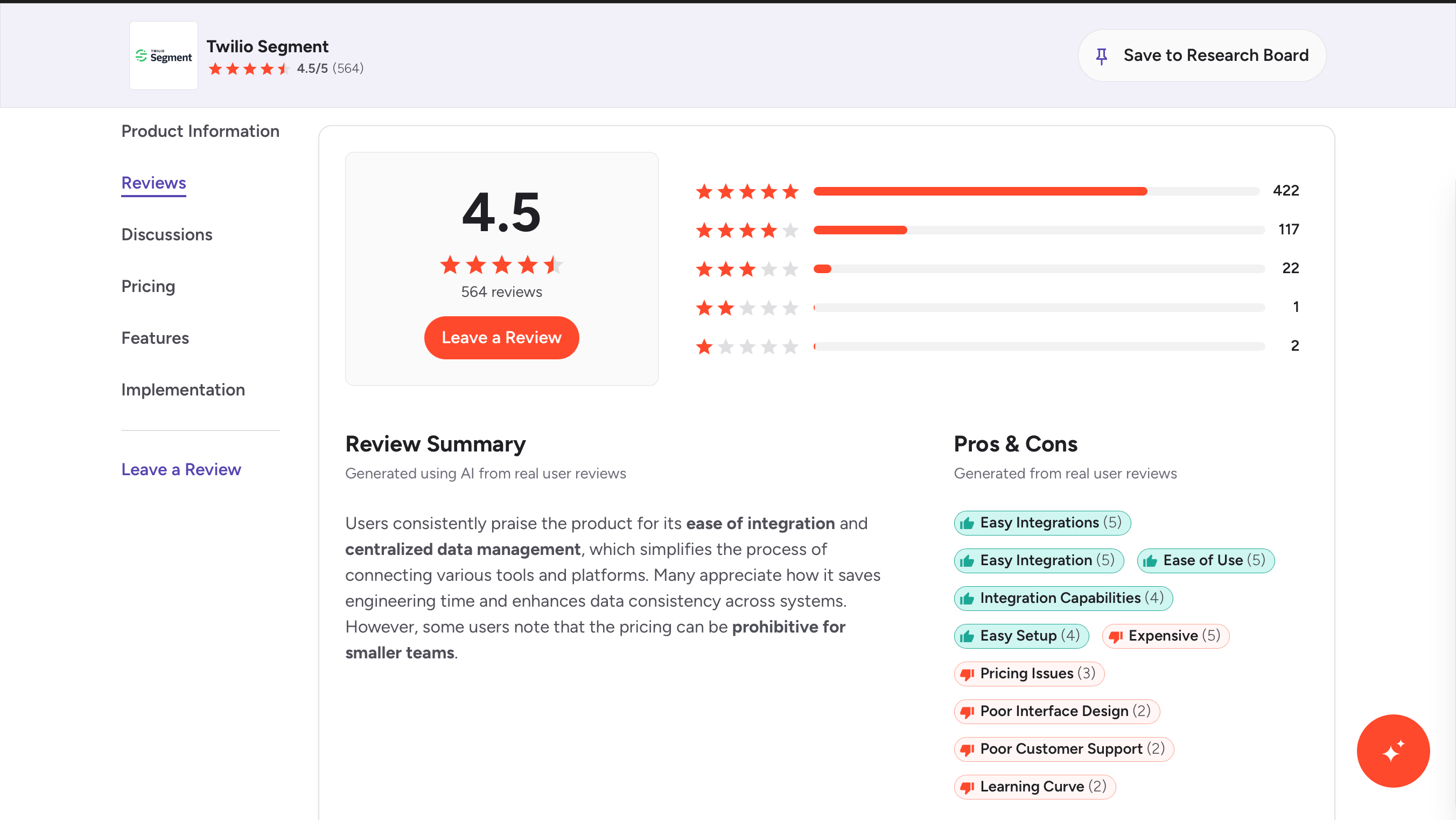
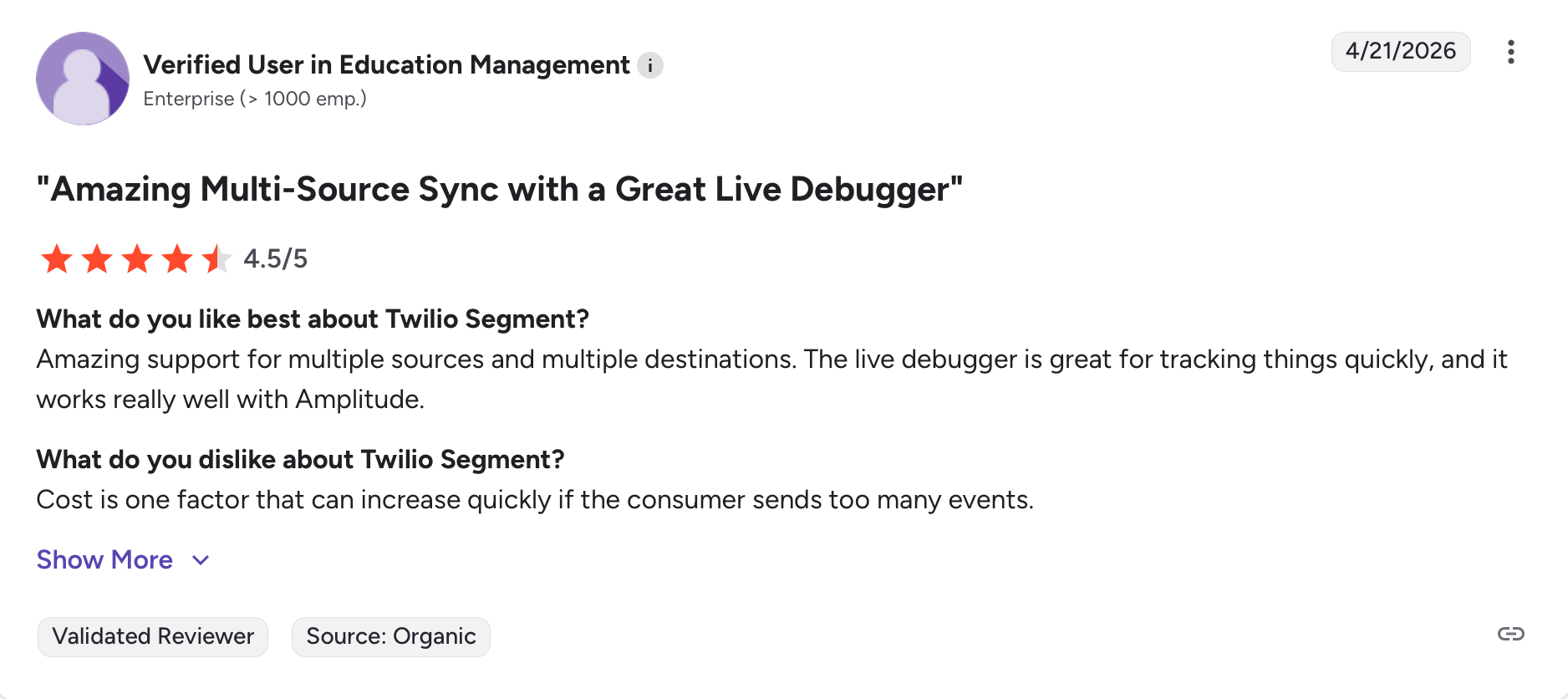
Segment is highly rated for its flexibility and ease of integration. It is particularly popular among tech-driven companies and SaaS businesses. (Gartner)However, it may require additional tools for full activation capabilities. Despite this, it is a foundational CDP.
Pros
Strong data pipelines
Developer-friendly
Wide integrations
Cons
Requires technical setup
Limited built-in activation
Summary
Segment is best for enterprises building modern data stacks. It excels in data integration and management. Overall, it is ideal for tech-driven teams.
5. Treasure Data CDP
Overview
Treasure Data CDP is designed for large enterprises handling massive volumes of customer data. It focuses on data unification, segmentation, and activation at scale.
The platform supports real-time and batch processing, making it suitable for complex enterprise environments. It also emphasizes data governance and compliance.
Reviews
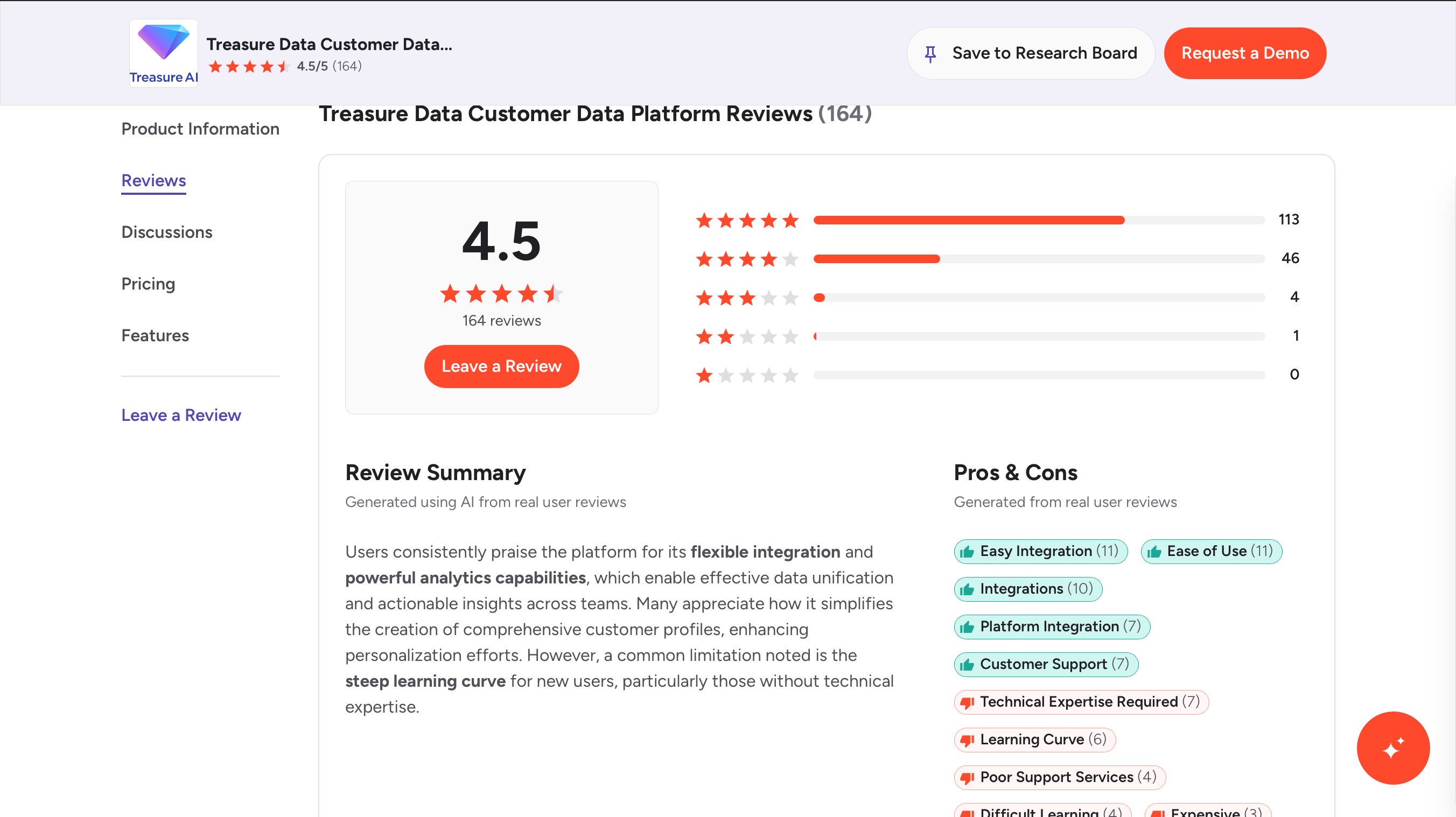
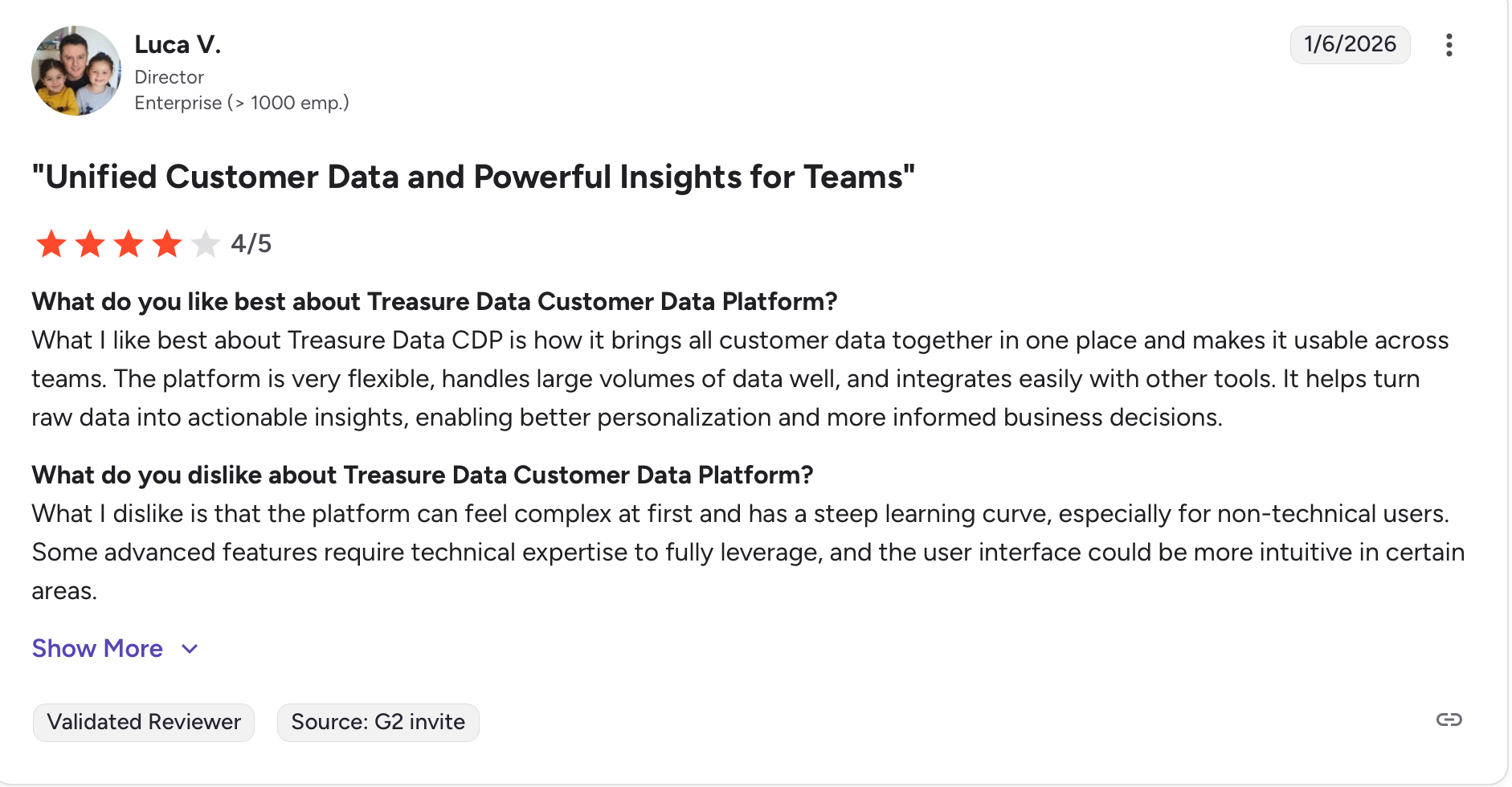
Treasure Data is highly rated for its scalability and ability to handle large datasets. It is widely used by global enterprises with complex data needs. However, it requires expertise and investment to implement effectively.
Pros
Handles massive datasets
Strong enterprise features
Global scalability
Cons
Complex implementation
High cost
Summary
Treasure Data is ideal for global enterprises with large data volumes. It provides powerful data unification capabilities. Overall, it is best for complex organizations.
Key Differences Between Enterprise CDPs
Enterprise CDPs differ mainly in architecture, real-time capabilities, and ecosystem integration. Salesforce and Adobe focus on ecosystem-driven solutions, while Segment emphasizes data pipelines.
Tealium and Treasure Data focus on real-time orchestration and scalability. Each platform is designed for specific enterprise needs.
Choosing the right CDP depends on your existing infrastructure, data complexity, and business goals.
How to Choose the Right Enterprise CDP
Selecting the right CDP requires evaluating several factors. These include scalability, real-time processing, integration capabilities, and cost. Enterprises must align their choice with their existing tech stack.
If you use Salesforce, Salesforce Data Cloud is a natural choice. For marketing-focused organizations, Adobe CDP works best. For data pipelines, Segment is ideal.
You should also consider future needs such as AI, privacy compliance, and omnichannel support. The right CDP should support long-term growth.
Conclusion
Customer Data Platforms are essential for enterprise businesses in 2026. They unify customer data, enable personalization, and improve decision-making. This leads to better customer experiences and higher revenue.
Salesforce Data Cloud, Adobe CDP, Tealium, Segment, and Treasure Data stand out as the top enterprise platforms. Each offers unique strengths tailored to different use cases.
As data continues to grow in importance, CDPs will play a central role in enterprise strategy. Choosing the right platform can provide a significant competitive advantage.
Struggling to choose the right Headless CMS & Headless Commerce tech stack? We’ll help you pick the best solution for your business! Exclusive Offer: 20 Hours of Free Development & Consultation
Book a MeetingFrequently Asked Questions
An enterprise CDP is a platform that unifies customer data from multiple sources to create a single customer profile.
Salesforce Data Cloud and Adobe CDP are among the top choices for enterprise use.
A CDP unifies data from multiple sources, while a CRM focuses on managing customer relationships.
Yes, enterprise CDPs can be costly depending on features and scale.