

Words that inspire, ideas that spark,
stories that stay
Best Digital Commerce Platforms for Wholesale (2026)
V. Srinidhi Reddy
Thursday, May 14th, 20265 min read
Table of content
Best Digital Commerce Platforms for Wholesale (2026 Guide)
Introduction
Wholesale businesses are rapidly shifting toward digital commerce platforms to streamline operations and scale globally. In 2026, buyers expect the same seamless experience as B2C ecommerce—but with B2B logic like bulk pricing, custom catalogs, and negotiated terms layered in.
Modern wholesale platforms must handle complex requirements such as customer-specific pricing, minimum order quantities, multi-warehouse inventory, and ERP integrations. Without these capabilities, businesses struggle with inefficiencies, manual processes, and poor customer experiences.
As the global B2B ecommerce market continues to grow rapidly, choosing the right platform has become a strategic decision. Leading platforms like Adobe Commerce, Shopify Plus, Shopware, and BigCommerce dominate the wholesale landscape due to their scalability and feature depth.
TL;DR (Quick Picks)
|
Platform |
Best For |
Key Highlight |
|
Adobe Commerce |
Complex wholesale operations |
Deep customization + ERP integrations |
|
Shopify Plus |
Fast-growing wholesalers |
Easy deployment + B2B features |
|
BigCommerce |
Hybrid wholesale + retail |
Open SaaS + flexibility |
|
Shopware |
European wholesale businesses |
Modular + ERP connectivity |
|
SAP Commerce Cloud |
Enterprise wholesale |
End-to-end enterprise commerce |
1. Adobe Commerce
Overview
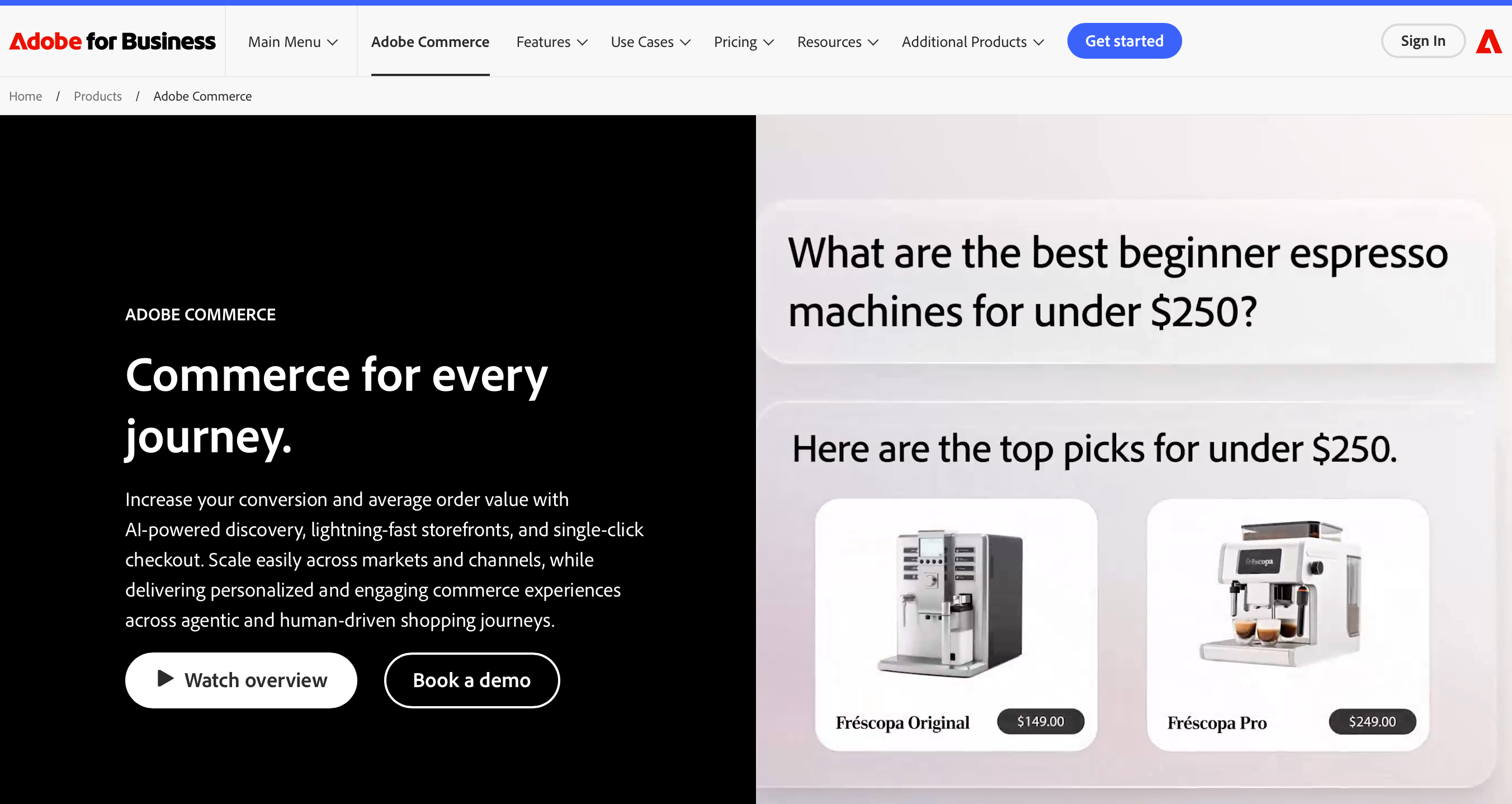
Adobe Commerce (Magento) is one of the most powerful digital commerce platforms for wholesale businesses. It is designed to handle complex product catalogs, multi-tier pricing, and custom workflows. This makes it ideal for enterprises with large-scale wholesale operations.
The platform offers deep integration with ERP systems like SAP and Microsoft Dynamics. It also supports advanced features such as customer-specific catalogs, bulk ordering, and multi-store management.
Reviews
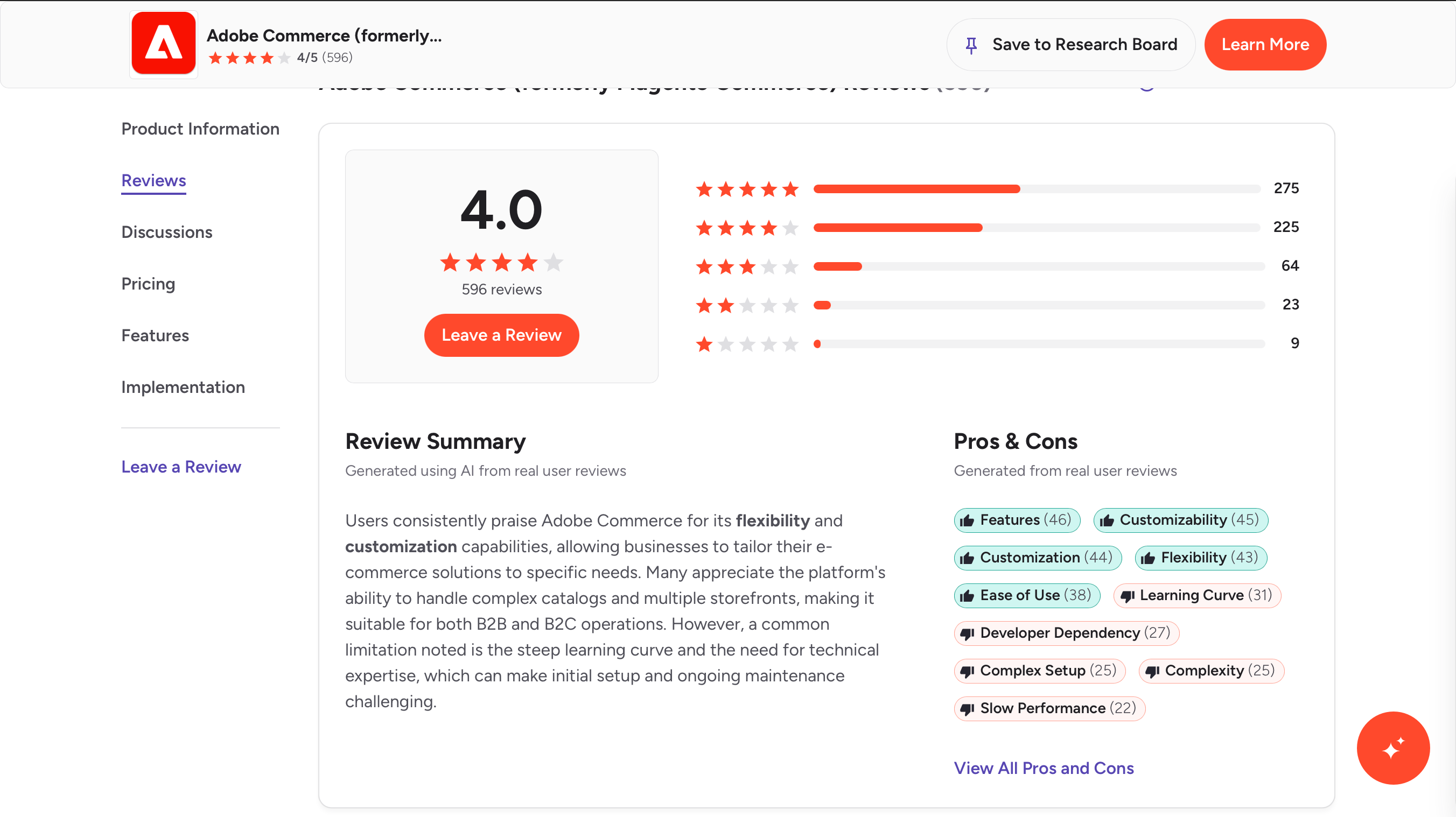
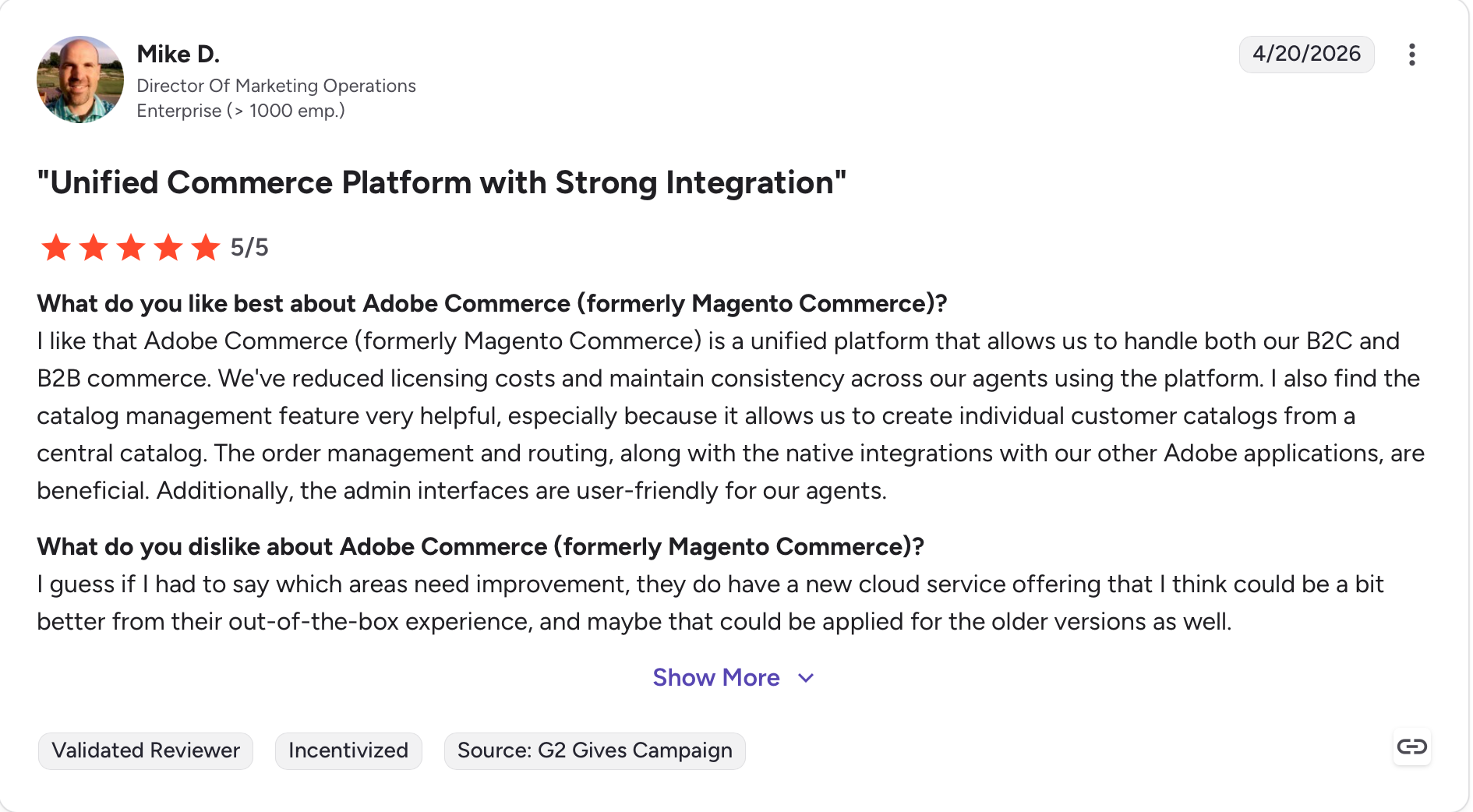
Adobe Commerce is widely recognized for its flexibility and scalability in wholesale environments. Businesses with complex requirements often choose it for its ability to support customization and integrations.
However, it requires significant development resources and longer implementation timelines.
Pros
Highly customizable
Strong ERP integrations
Handles complex B2B workflows
Cons
High implementation cost
Requires technical expertise
Summary
Adobe Commerce is best for enterprise wholesalers with complex needs. It offers unmatched flexibility and scalability. Overall, it is ideal for large, global wholesale businesses.
2. Shopify Plus
Overview
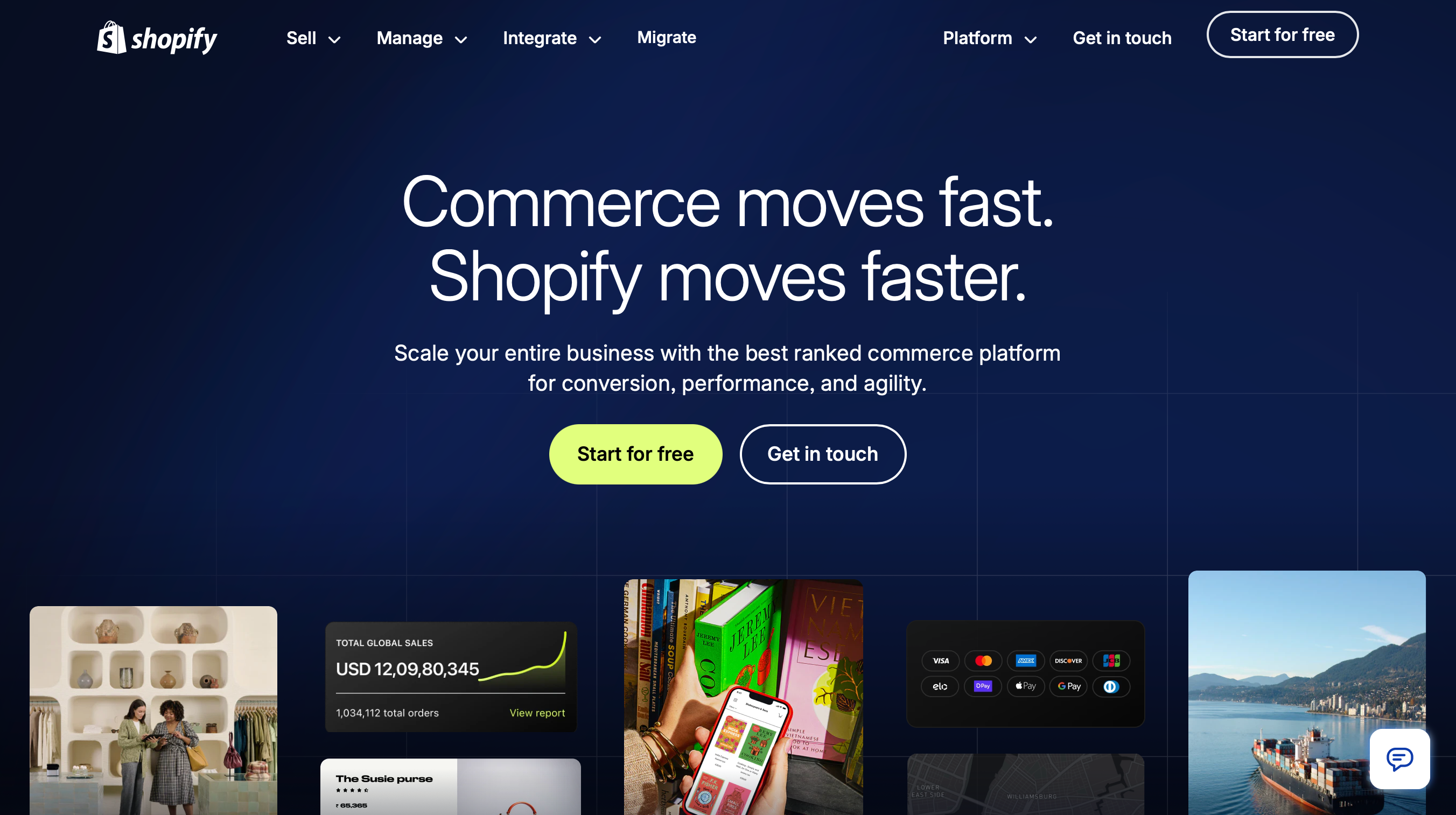
Shopify Plus is a leading SaaS commerce platform that has expanded into wholesale and B2B commerce. It provides built-in features such as custom pricing, company accounts, and bulk ordering.
The platform is known for its ease of use and fast deployment. Businesses can launch quickly and scale without heavy technical investment.
Reviews
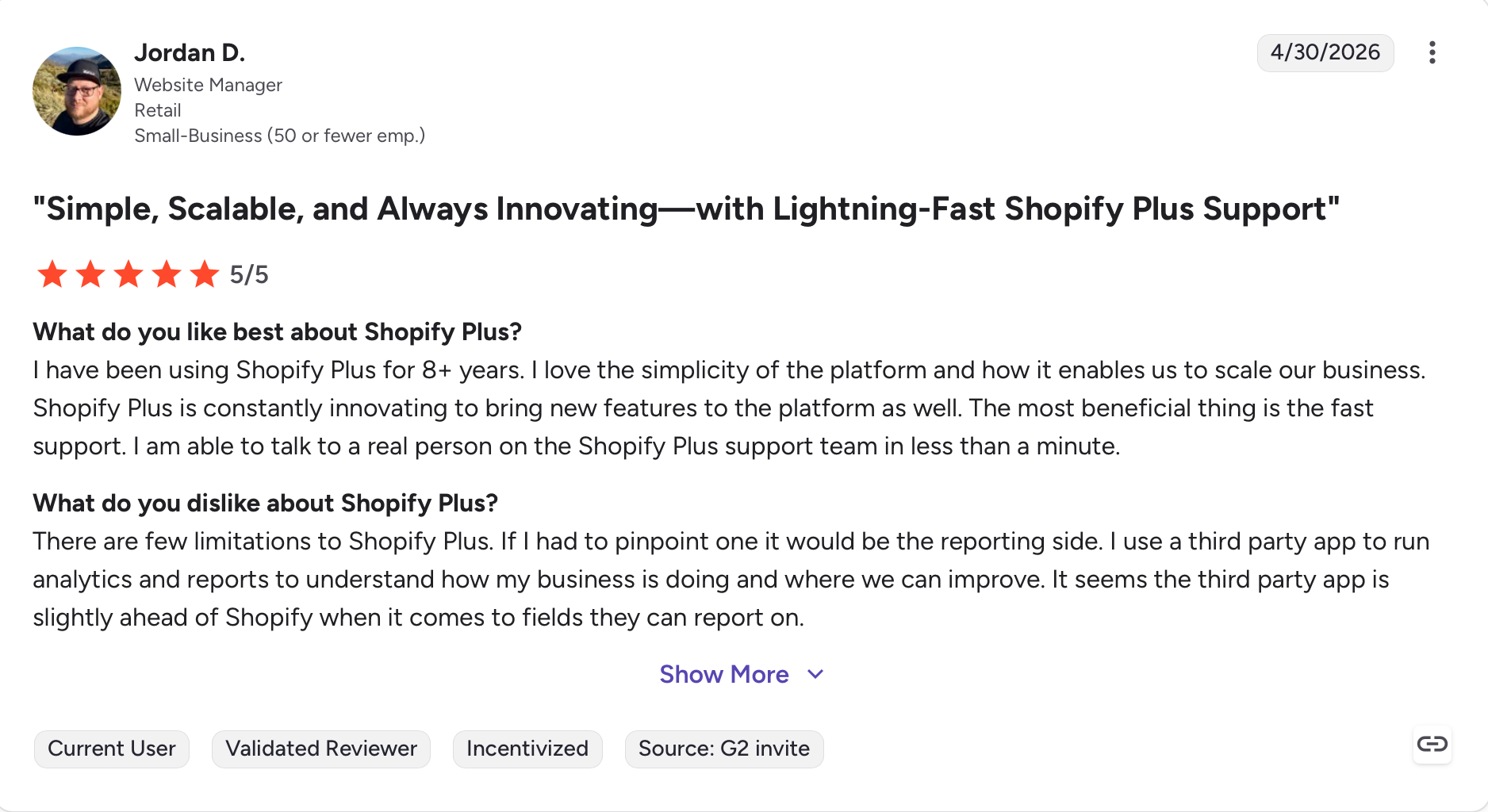
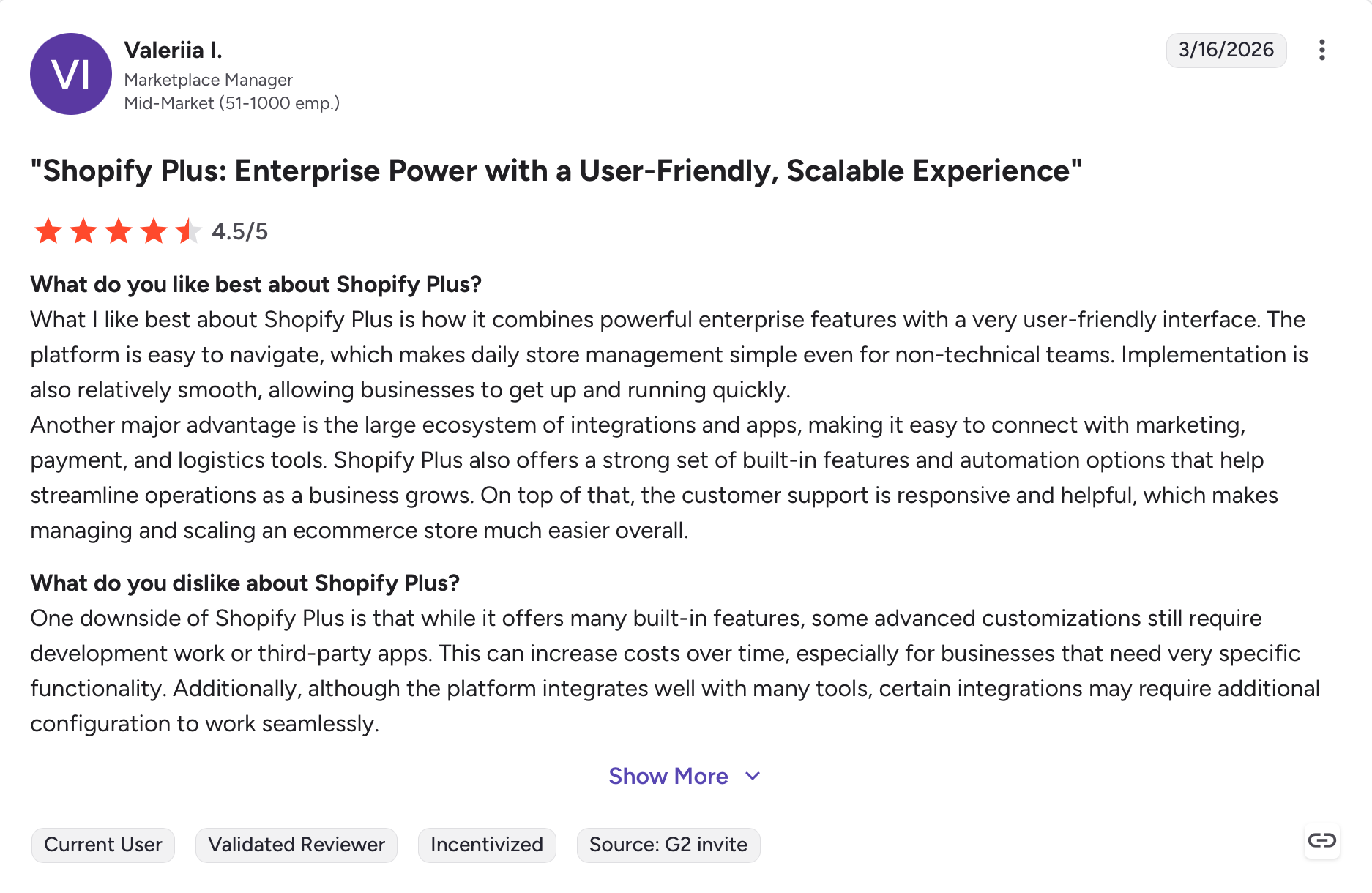
Shopify Plus is often recommended for mid-market wholesalers due to its simplicity and strong ecosystem. It enables businesses to manage both B2B and D2C operations in a single platform.
However, its B2B capabilities are still evolving compared to more specialized platforms.
Pros
Easy to use
Fast implementation
Strong app ecosystem
Cons
Limited backend customization
Relies on apps for advanced features
Summary
Shopify Plus is ideal for wholesalers looking for speed and simplicity. It balances usability with scalability. Overall, it is best for growing wholesale businesses.
3. BigCommerce (B2B Edition)
Overview
BigCommerce is a SaaS platform with strong B2B and wholesale capabilities. It offers features such as customer groups, price lists, and bulk discounts out of the box.
Its open API architecture allows businesses to integrate with ERP, CRM, and other systems. This makes it suitable for wholesalers needing flexibility without full custom development.
Reviews
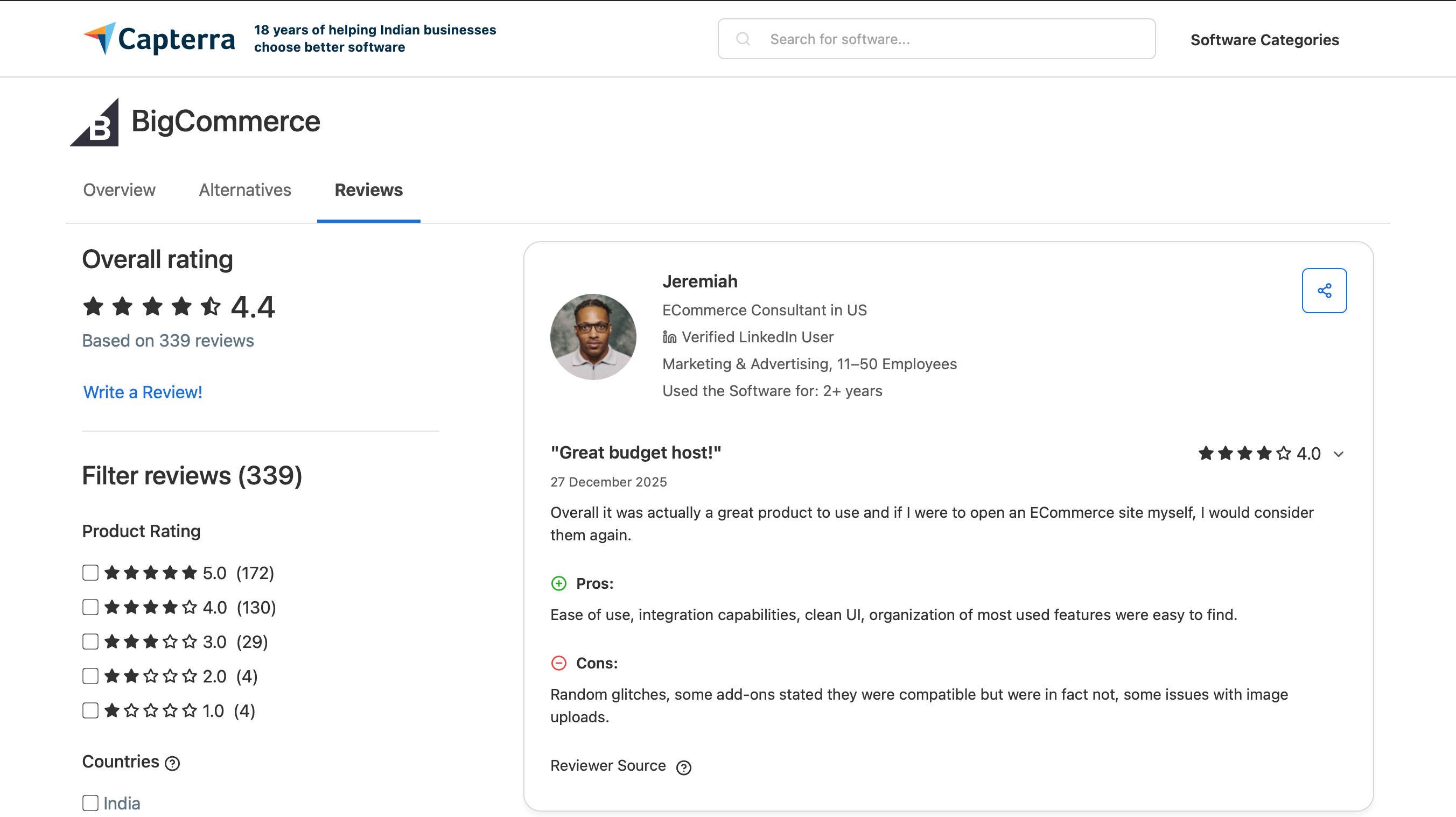
BigCommerce is widely praised for its scalability and built-in features. It is often chosen by businesses that want a balance between ease of use and customization. (Atwix)
Pros
Open SaaS architecture
Strong B2B features
Good integrations
Cons
Learning curve
Less flexible than open-source
Summary
BigCommerce is ideal for wholesalers with hybrid B2B and B2C models. It offers flexibility with ease of use. Overall, it is a strong mid-to-enterprise solution.
4. Shopware
Overview
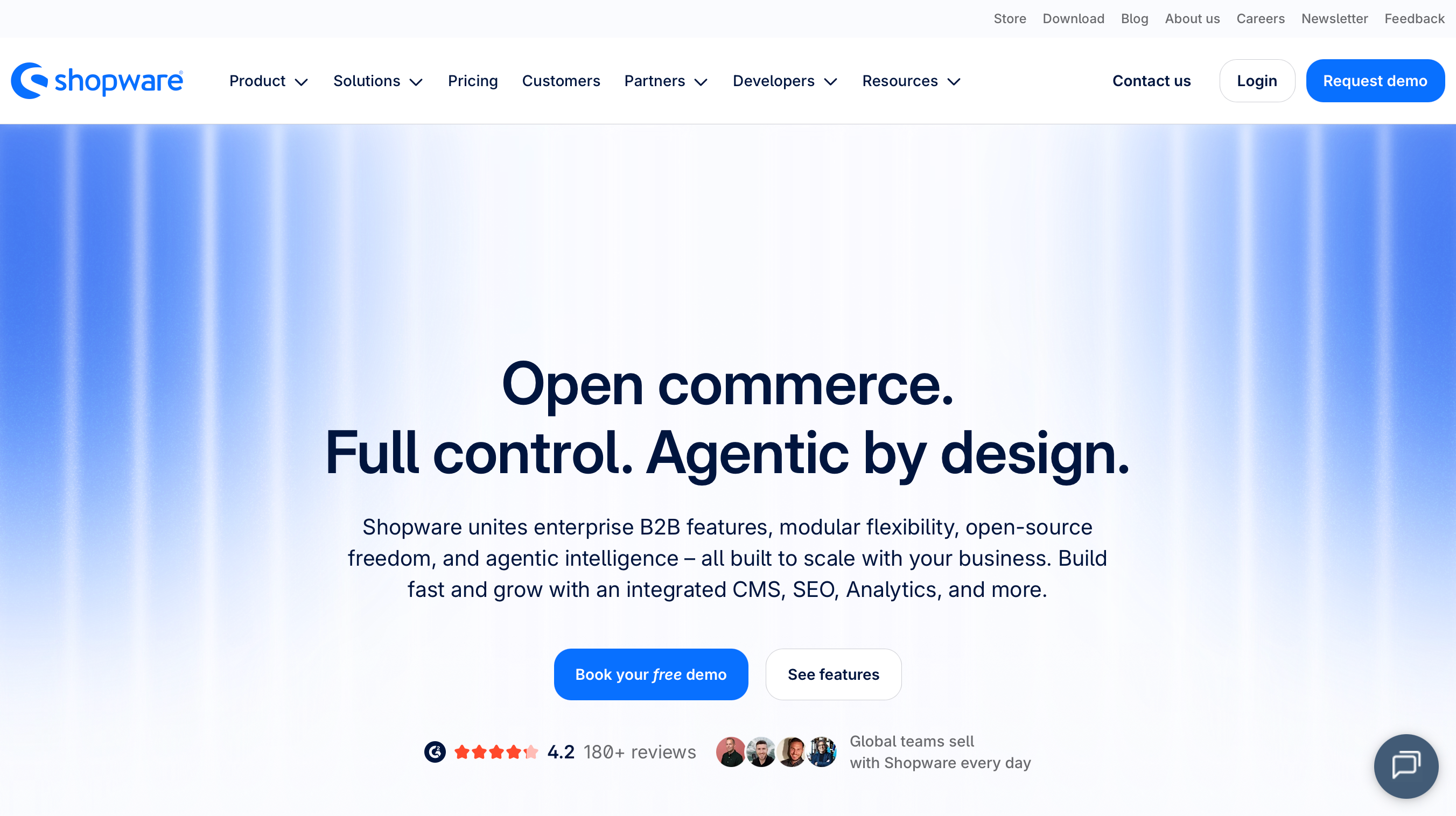
Shopware is a modern, open-source commerce platform popular in Europe. It provides strong B2B features, including custom pricing, workflows, and ERP integrations.
Its modular architecture allows businesses to build tailored wholesale experiences. It is particularly useful for companies operating in European markets.
Reviews
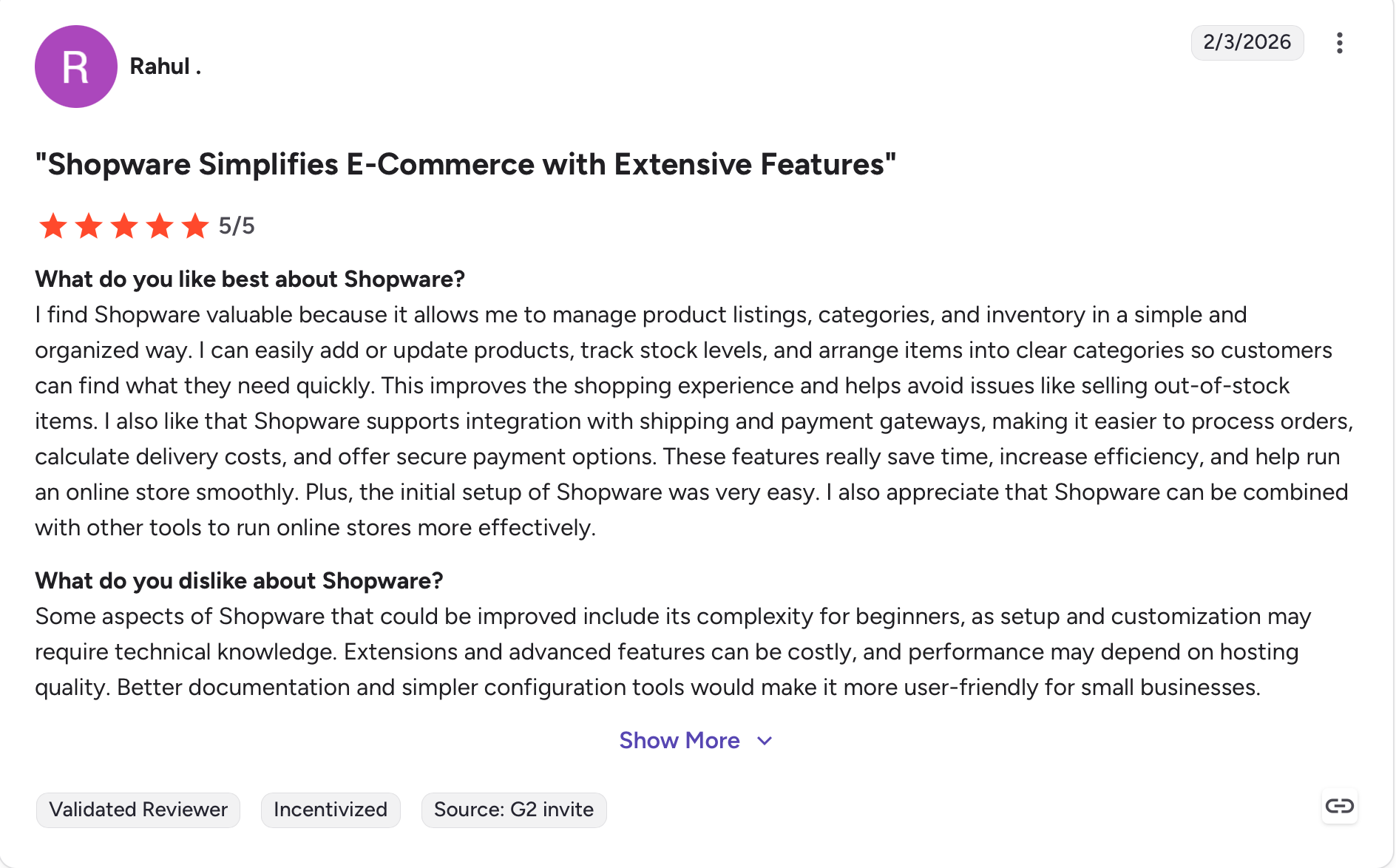
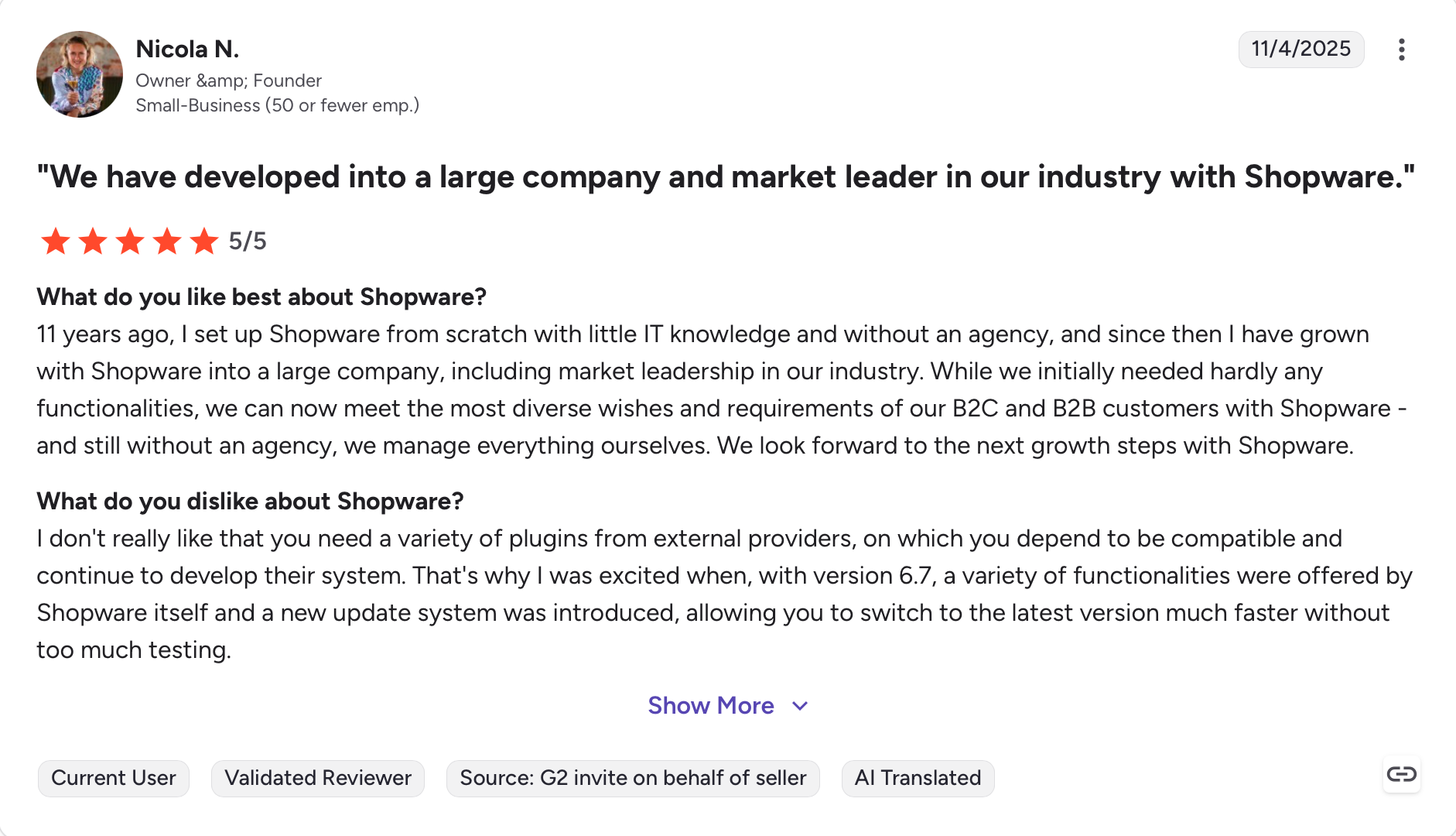
Shopware is praised for its balance between flexibility and usability. It is often compared to Adobe Commerce but with a more modern interface and faster deployment. (Atwix)
Pros
Open-source flexibility
Modern architecture
Strong ERP connectivity
Cons
Smaller global ecosystem
Requires development
Summary
Shopware is ideal for wholesalers seeking flexibility with a modern stack. It is especially strong in Europe. Overall, it is a powerful alternative to traditional platforms.
5. SAP Commerce Cloud
Overview
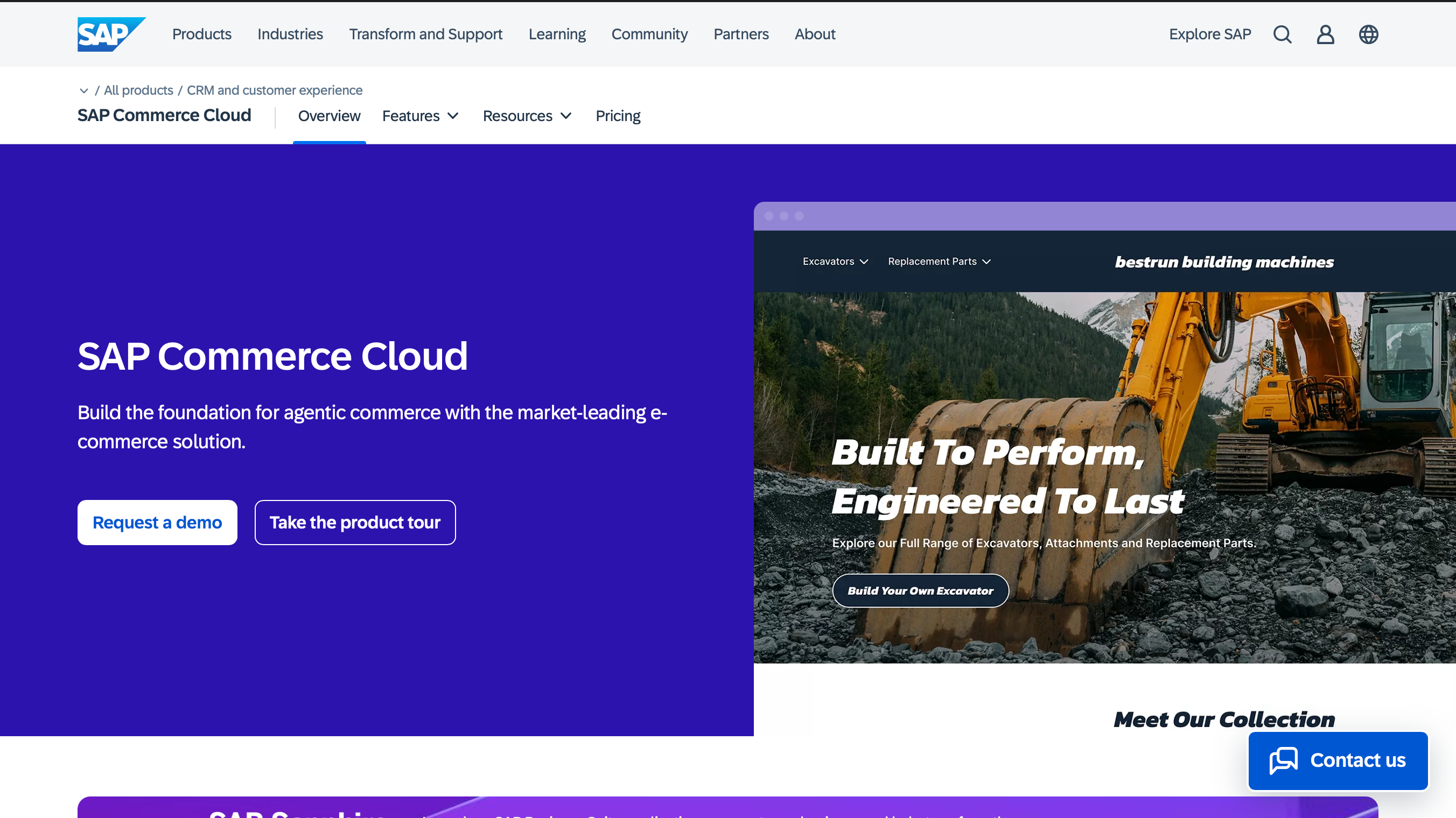
SAP Commerce Cloud is an enterprise-grade digital commerce platform designed for large wholesale businesses. It integrates deeply with SAP ERP systems, enabling seamless data flow across operations.
The platform supports complex pricing, product configurations, and multi-channel commerce. It also provides advanced analytics and personalization.
Reviews
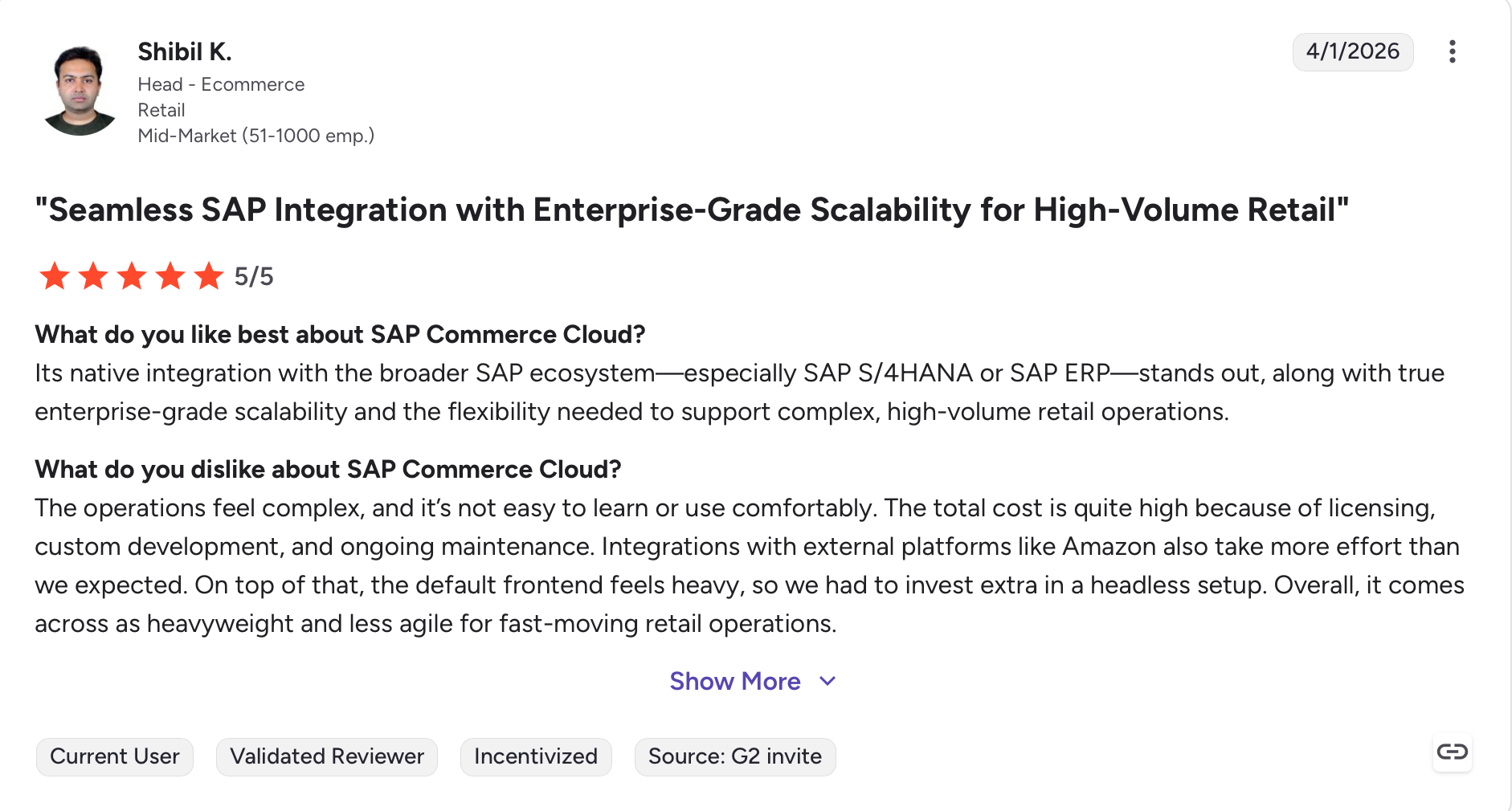
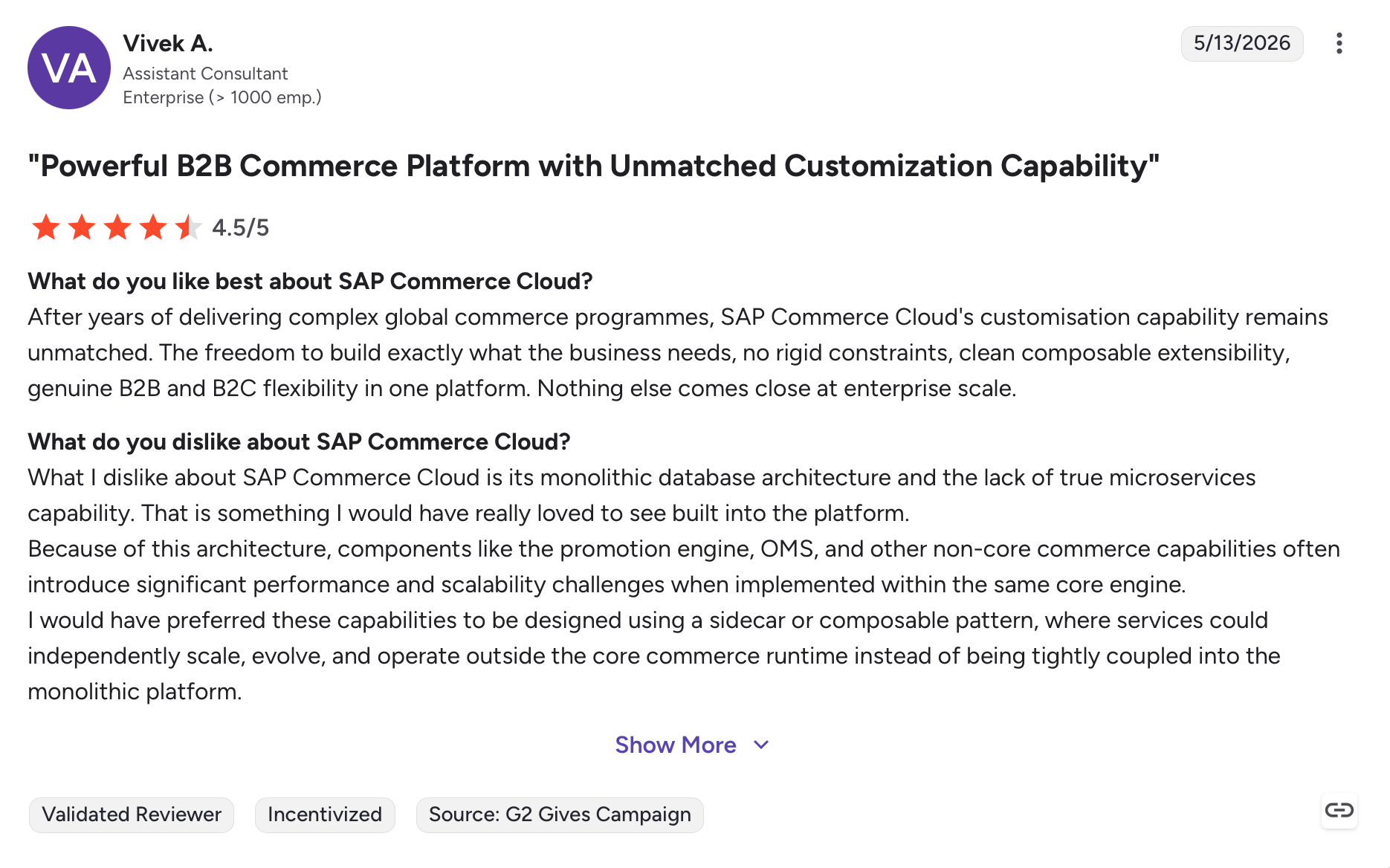
SAP Commerce Cloud is widely used by large enterprises due to its scalability and integration capabilities. It is often considered a top choice for global wholesale operations. (Orienteed)
Pros
Enterprise scalability
Deep SAP integration
Advanced features
Cons
High cost
Complex implementation
Summary
SAP Commerce Cloud is best for large wholesale enterprises. It offers a complete commerce solution. Overall, it is ideal for global operations.
Product Comparison Table
|
Feature |
Adobe Commerce |
Shopify Plus |
BigCommerce |
Shopware |
SAP Commerce Cloud |
|
Best For |
Complex wholesale |
Fast-growing wholesalers |
Hybrid B2B/B2C |
Modular commerce |
Enterprise wholesale |
|
Custom Pricing |
Advanced |
Strong |
Strong |
Strong |
Advanced |
|
ERP Integration |
Excellent |
Strong |
Strong |
Excellent |
Excellent |
|
Ease of Use |
Moderate |
High |
Moderate |
Moderate |
Low |
|
Scalability |
Very High |
Very High |
High |
High |
Very High |
|
Implementation Time |
Slow |
Fast |
Moderate |
Moderate |
Slow |
Key Features Required for Wholesale Platforms
Wholesale commerce platforms must support features that go beyond traditional ecommerce. These include custom pricing by customer group, bulk ordering, and flexible payment terms such as Net 30 or Net 60.
They should also integrate with ERP systems to ensure real-time inventory and order management. This is critical for maintaining accuracy and efficiency across operations.
Additionally, features like quick reordering, account management, and multi-channel selling are essential for modern wholesale businesses.
How to Choose the Right Wholesale Commerce Platform
Choosing the right platform depends on your business size, complexity, and growth goals.
-
For enterprise wholesale operations → Adobe Commerce or SAP Commerce Cloud
-
For fast-growing wholesalers → Shopify Plus
-
For flexible SaaS solutions → BigCommerce
-
For modern modular architecture → Shopware
You should also evaluate integration capabilities, scalability, and total cost of ownership. The right platform should support long-term growth.
Conclusion
Digital commerce platforms are transforming wholesale businesses in 2026. They enable automation, improve efficiency, and enhance customer experience. Without them, scaling becomes difficult.
Adobe Commerce, Shopify Plus, and BigCommerce lead the market, while Shopware and SAP Commerce Cloud offer strong alternatives. Each platform serves different use cases depending on complexity and scale.
Choosing the right platform is a strategic decision. The right solution can significantly improve operations, customer satisfaction, and long-term growth.
Struggling to choose the right Headless CMS & Headless Commerce tech stack? We’ll help you pick the best solution for your business! Exclusive Offer: 20 Hours of Free Development & Consultation
Book a MeetingFrequently Asked Questions
It is a platform designed for B2B transactions, supporting bulk orders, custom pricing, and business accounts.
Adobe Commerce and SAP Commerce Cloud are best for enterprises, while Shopify Plus is ideal for growing businesses.
Custom pricing, bulk ordering, ERP integration, and multi-channel support.
Enterprise platforms can be costly but provide strong ROI through efficiency.
Yes, most modern platforms support multi-currency, multi-language, and global fulfillment.