

Words that inspire, ideas that spark,
stories that stay
Best CDP Platforms for Shopify & Shopify Plus (2026)
V. Srinidhi Reddy
Wednesday, April 22nd, 20266 min read
Table of content
Best CDP Platforms for Shopify & Shopify Plus (2026)
Introduction
Customer Data Platforms (CDPs) have become essential for Shopify and Shopify Plus businesses looking to unify customer data across multiple touchpoints. As ecommerce grows more complex, brands interact with customers through websites, mobile apps, email, ads, and support channels. Without a CDP, this data remains fragmented and difficult to use effectively.
A CDP solves this by collecting, unifying, and activating customer data into a single profile. This enables better personalization, smarter marketing campaigns, and improved customer experiences. For Shopify stores, this means higher conversion rates, better retention, and more efficient operations.
According to industry comparisons, leading CDPs help businesses unify data from multiple sources, create real-time customer profiles, and activate that data across marketing and analytics tools . In this guide, we explore the best CDP platforms for Shopify in 2026.
TL;DR
|
Platform |
Best For |
Key Highlight |
|
Segment |
Developer-friendly CDP |
Clean data pipelines + integrations |
|
Tealium |
Enterprise CDP |
Real-time data orchestration |
|
mParticle |
Mobile + omnichannel |
Data unification across platforms |
|
Bloomreach |
Ecommerce personalization |
CDP + marketing automation |
|
Salesforce Data Cloud |
Enterprise ecosystem |
Unified data across CRM + commerce |
1. Twilio Segment
Overview
Segment is one of the most popular CDPs, especially for Shopify brands with modern tech stacks. It acts as a central data pipeline, collecting customer data from websites, apps, and servers, and sending it to various tools like analytics, marketing platforms, and CRMs.
Its developer-friendly architecture makes it easy to implement and scale. Shopify stores can use Segment to unify customer interactions and build a single source of truth. This helps improve personalization and decision-making.
Reviews
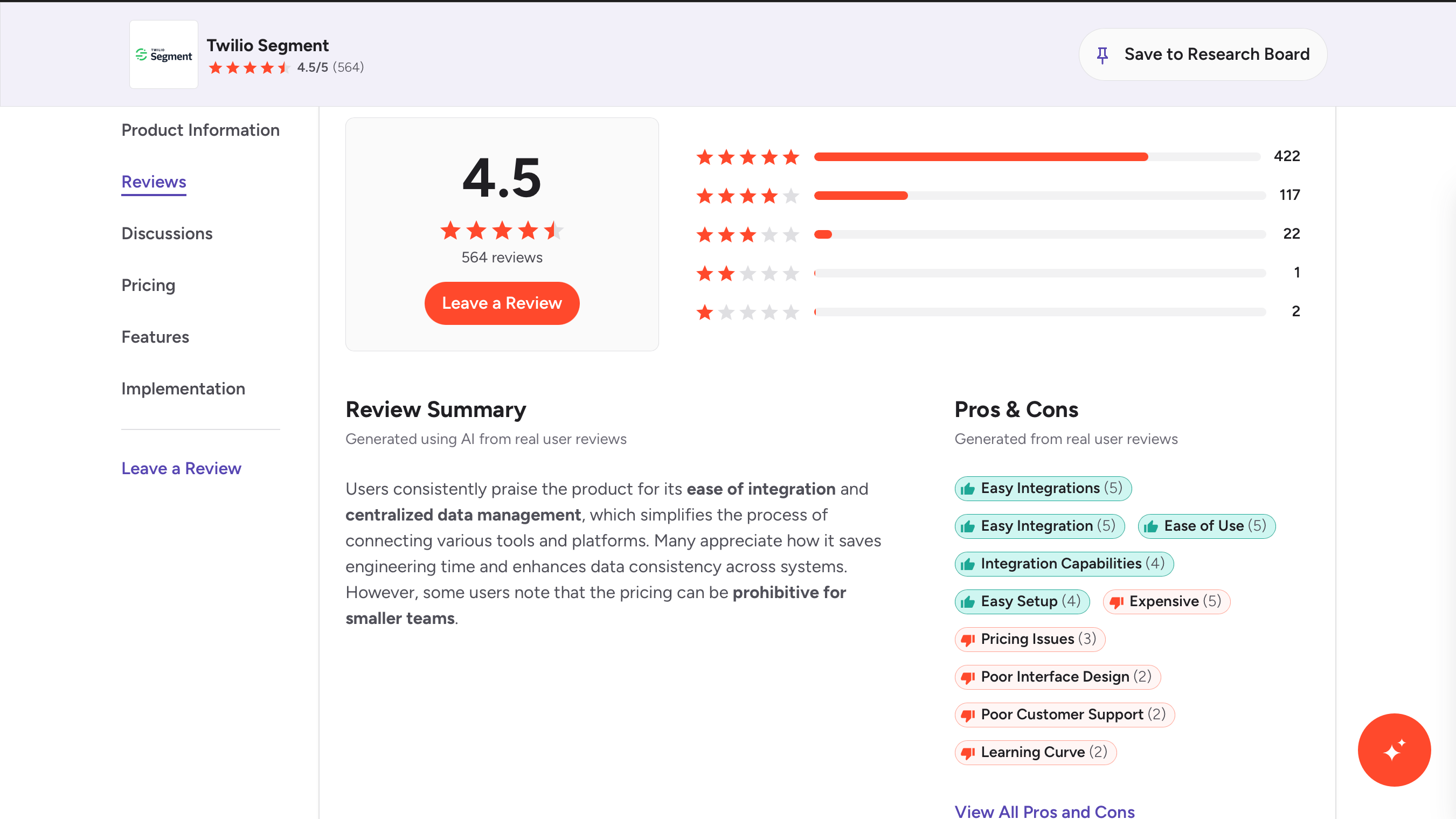
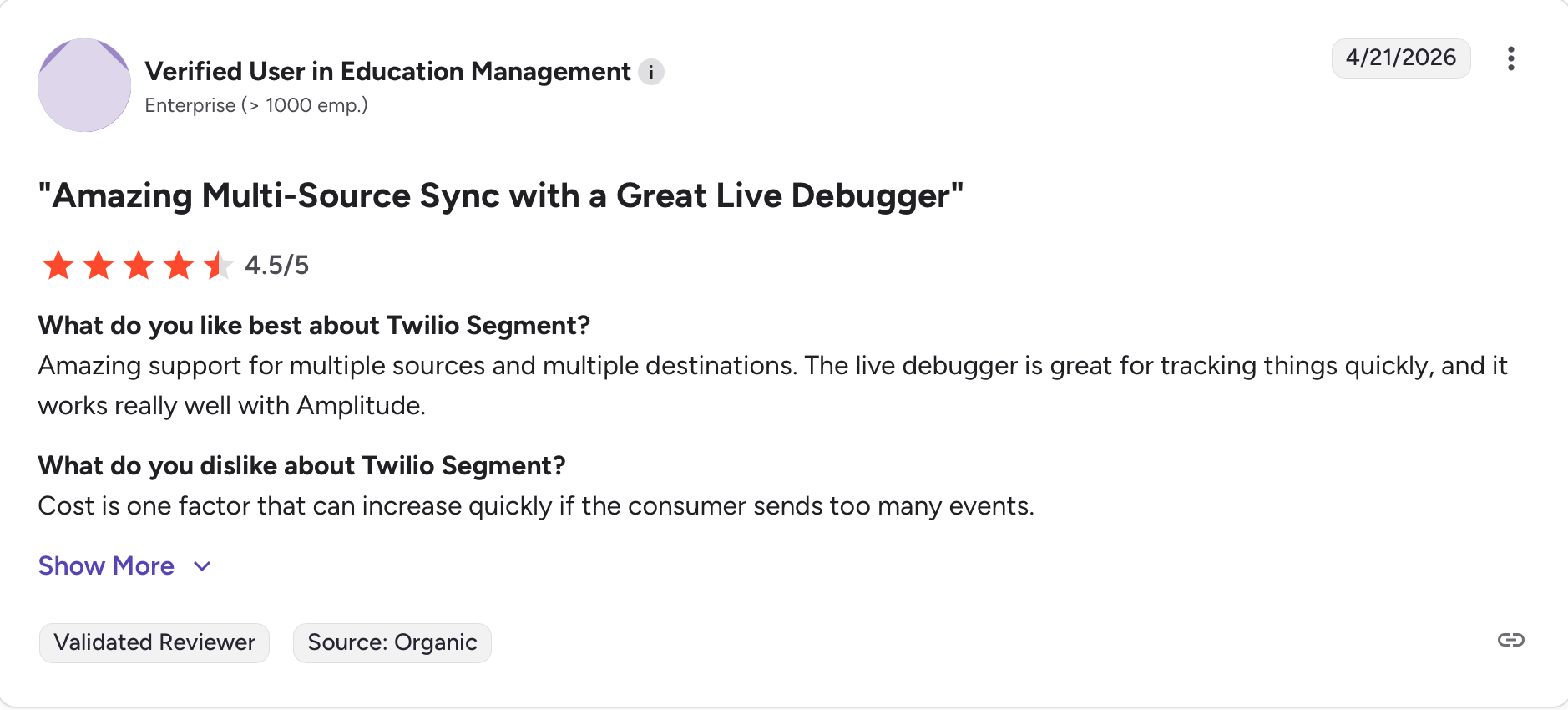
Segment is widely praised for its flexibility and ease of integration. Many users highlight how it simplifies data management across multiple tools. It is especially popular among startups and mid-sized businesses.
It is often described as the “data layer” for modern SaaS and ecommerce stacks. However, advanced use cases may require technical expertise. Overall, it is highly regarded for reliability.
Clients
Instacart
Peloton
Levi’s
Pros
Strong integration ecosystem
Developer-friendly
Real-time data pipelines
Cons
Requires technical setup
Costs increase with scale
Summary
Segment is ideal for Shopify brands that want a flexible and scalable data infrastructure. It excels in connecting tools and managing data pipelines. Overall, it is best for modern, tech-driven teams.
2. Tealium Customer Data Hub
Overview
Tealium is a powerful enterprise CDP designed for real-time data orchestration. It collects customer data from websites, mobile apps, and offline sources, then standardizes and activates it across systems. This makes it highly suitable for Shopify Plus businesses.
The platform includes features like audience segmentation, tag management, and machine learning. It enables brands to deliver personalized experiences in real time. It also supports a large number of integrations.
Reviews
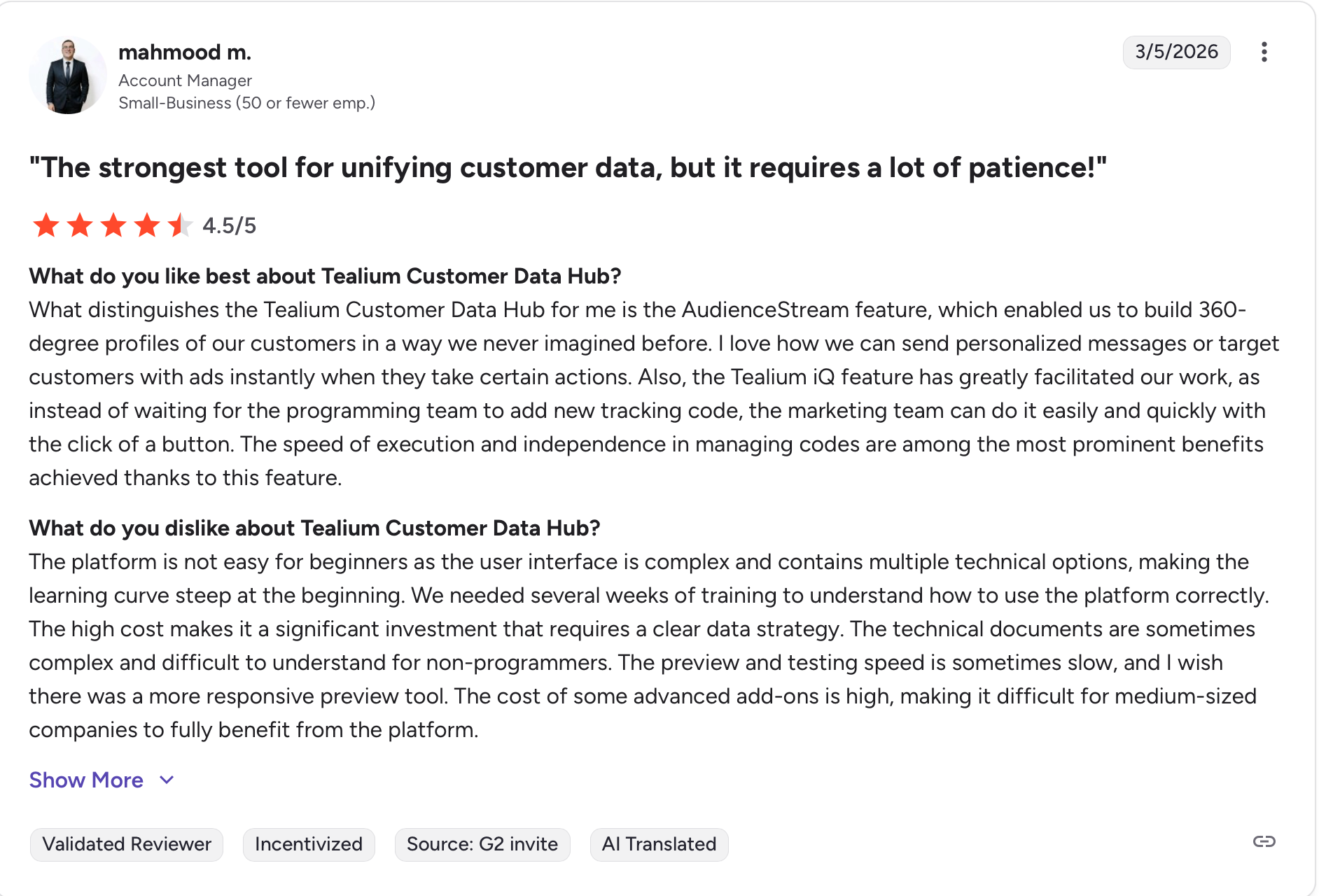
Tealium is highly rated for its scalability and real-time capabilities. Enterprises appreciate its ability to handle complex data environments. It is often used by large organizations with advanced needs.
However, it has a steep learning curve and requires technical expertise. Despite this, it is considered one of the most powerful CDPs available.
Clients
Large enterprises
Retail brands
Financial services
Pros
Real-time data processing
Large integration ecosystem
Strong data governance
Cons
Complex setup
High cost
Summary
Tealium is best for Shopify Plus and enterprise businesses. It provides deep capabilities for data orchestration and personalization. Overall, it is ideal for complex and large-scale operations.
3. mParticle
Overview
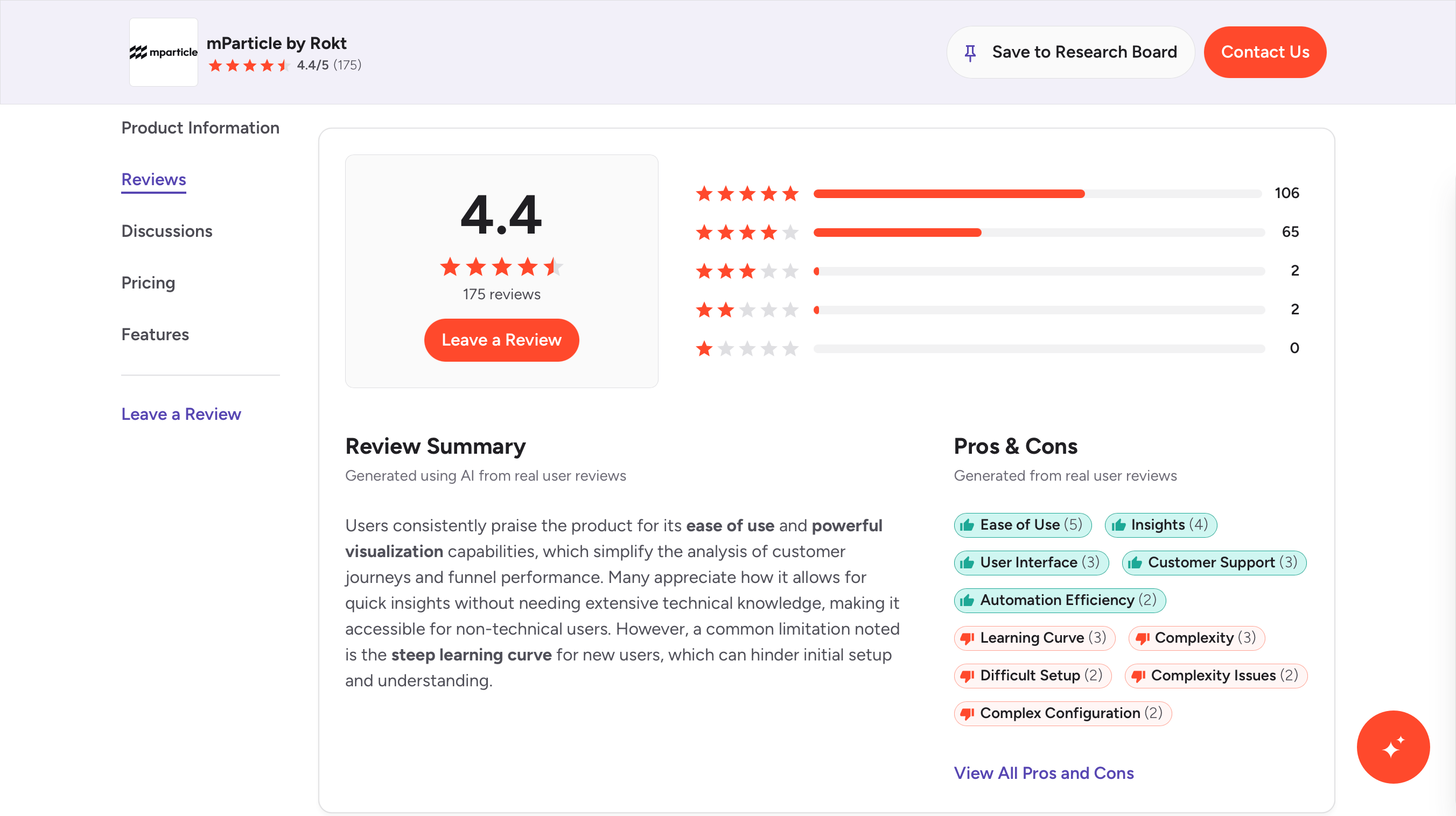
mParticle is a CDP focused on unifying customer data across multiple platforms, especially mobile and web. It helps businesses collect, clean, and enrich data before sending it to other systems. This ensures consistency and accuracy.
The platform also offers segmentation and audience management features. Shopify brands can use it to create unified customer profiles and improve targeting. It is particularly useful for omnichannel strategies.
Reviews
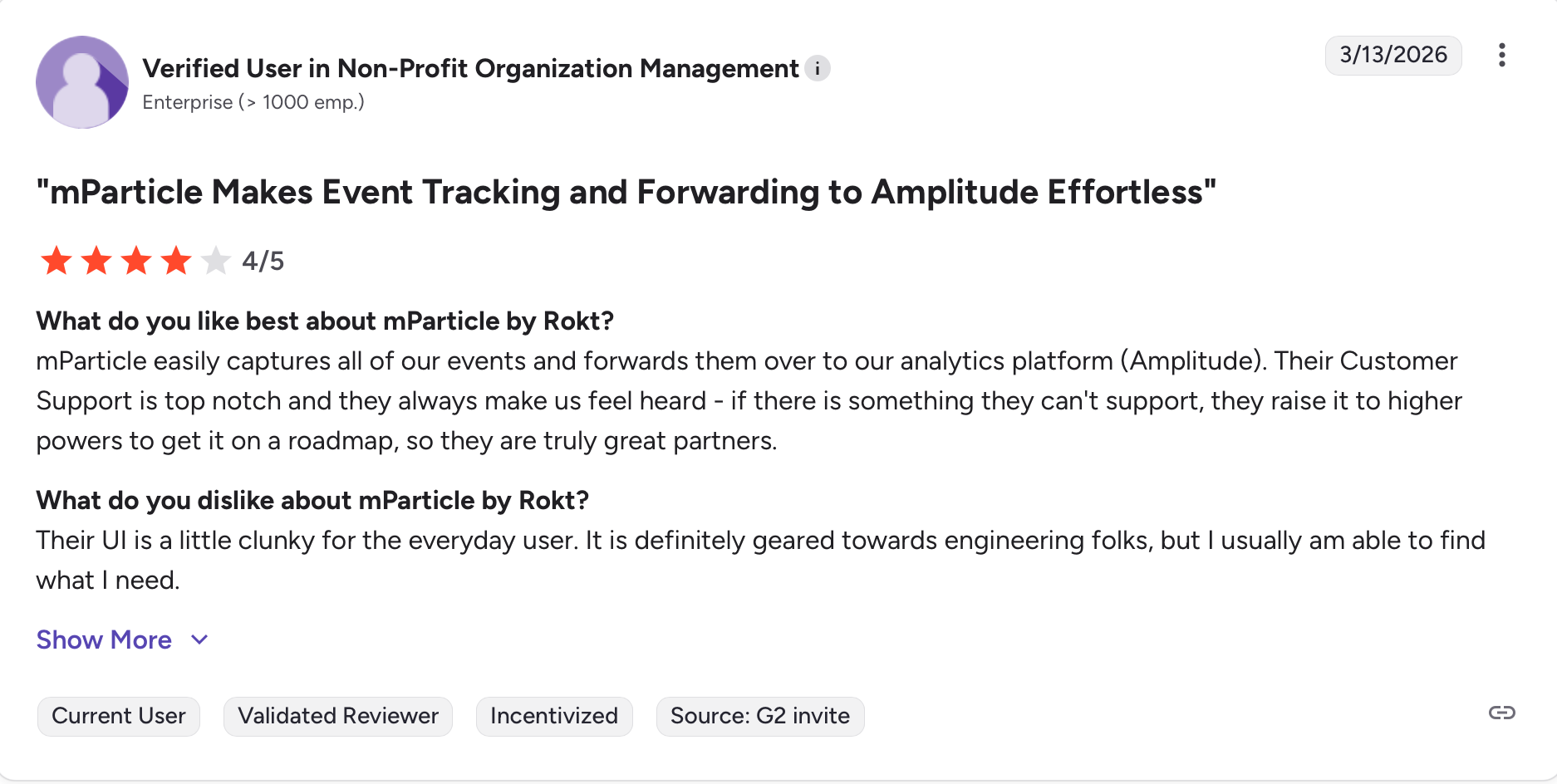
mParticle is praised for its data quality and integration capabilities. Users appreciate its ability to standardize and manage data effectively. It is often used by companies with complex data requirements.
Some users mention that it is less intuitive compared to simpler tools. Despite this, it remains a strong choice for data-driven teams (TrustRadius).
Clients
Airbnb
Spotify
HBO
Pros
Strong data unification
Omnichannel support
Reliable integrations
Cons
Learning curve
Requires technical setup
Summary
mParticle is ideal for Shopify brands with complex data ecosystems. It ensures clean and consistent data across platforms. Overall, it is best for omnichannel businesses.
4. Bloomreach Engagement
Overview
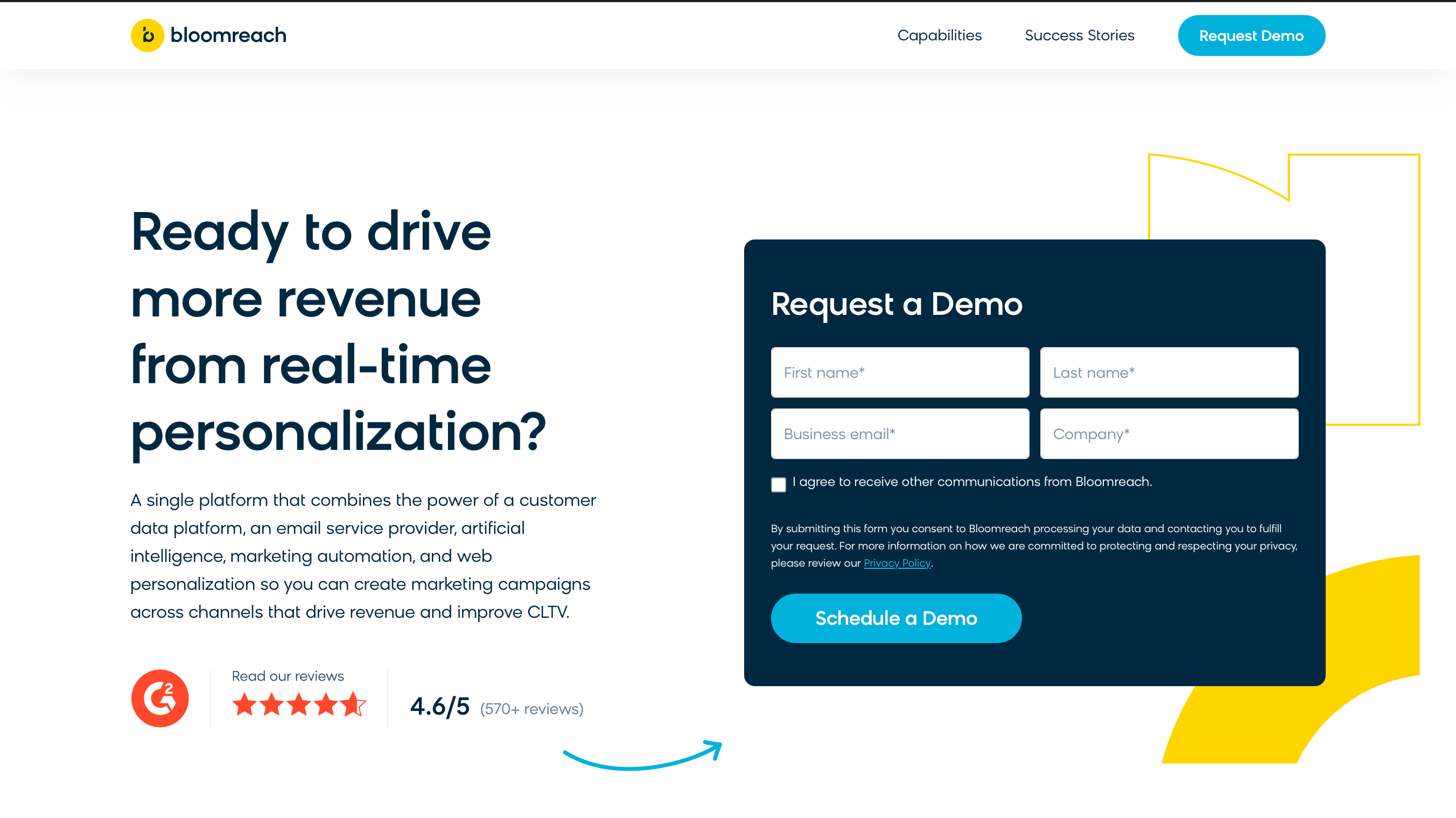
Bloomreach combines CDP capabilities with marketing automation and personalization. It allows Shopify stores to collect customer data, segment audiences, and run campaigns from a single platform. This makes it a powerful all-in-one solution.
The platform focuses heavily on ecommerce use cases, including product recommendations and personalized messaging. It helps brands improve customer experience and drive revenue.
Reviews
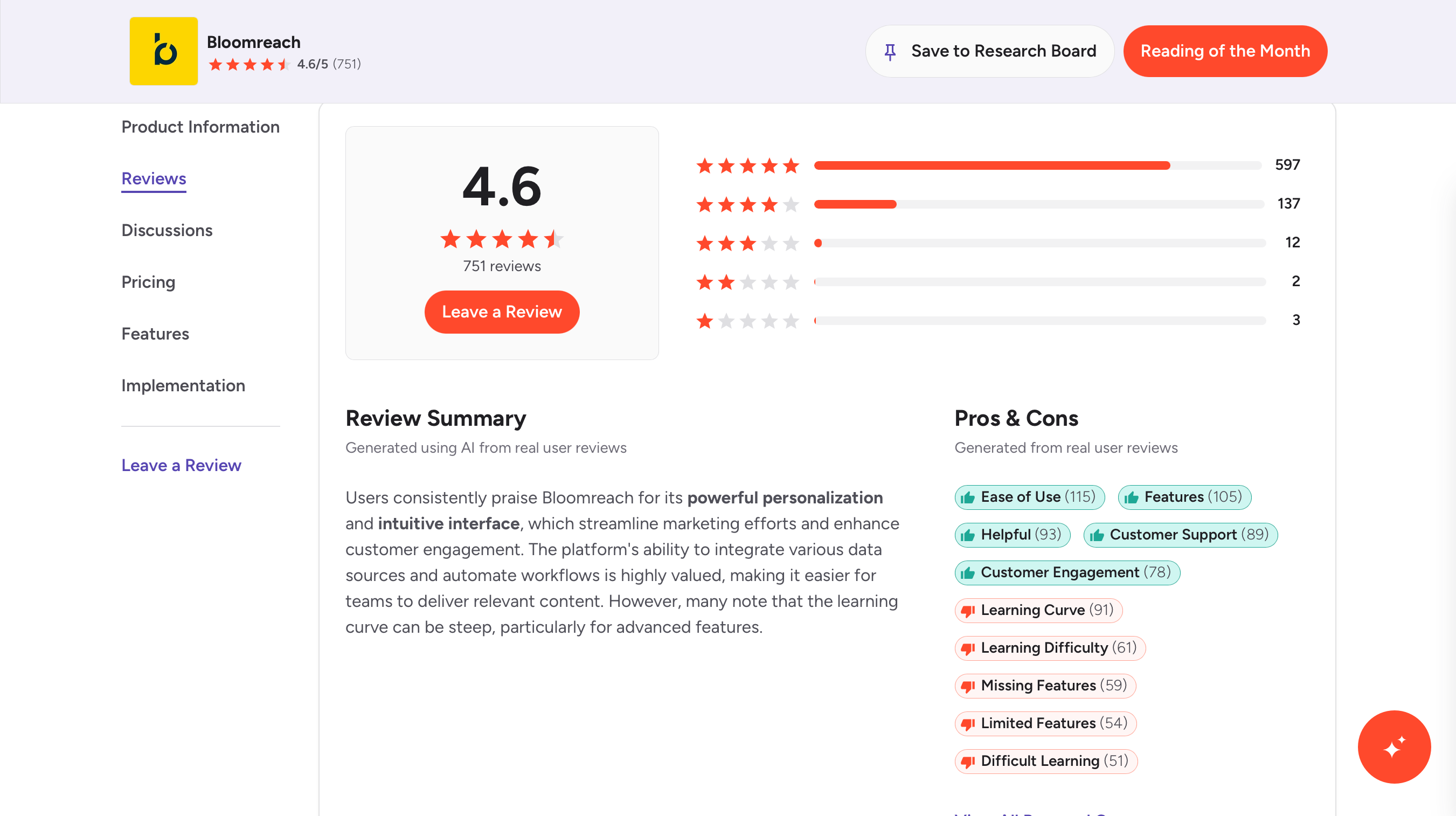
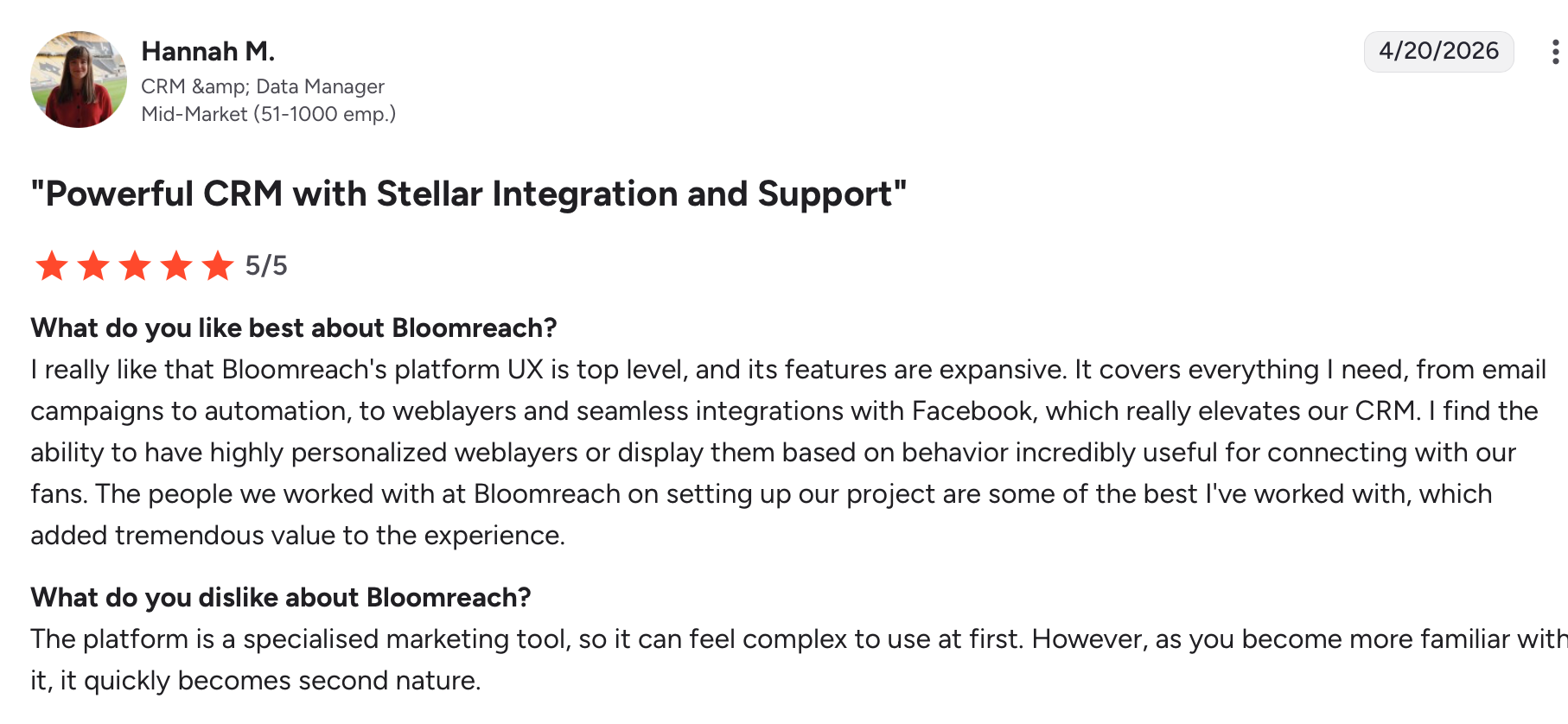
Bloomreach is widely appreciated for its ecommerce focus and flexibility. Users highlight its ability to combine data and execution in one platform. It is often recommended for DTC brands.
However, it may not be as flexible as pure CDPs for custom setups. Despite this, it performs well for ecommerce-specific needs (Gartner).
Clients
Ecommerce brands
Retail companies
Pros
All-in-one solution
Strong personalization
Ecommerce-focused
Cons
Less flexible for custom stacks
Pricing can scale
Summary
Bloomreach is ideal for Shopify brands that want both CDP and marketing automation. It simplifies workflows and improves personalization. Overall, it is a strong choice for ecommerce growth.
5. Salesforce Data Cloud
Overview
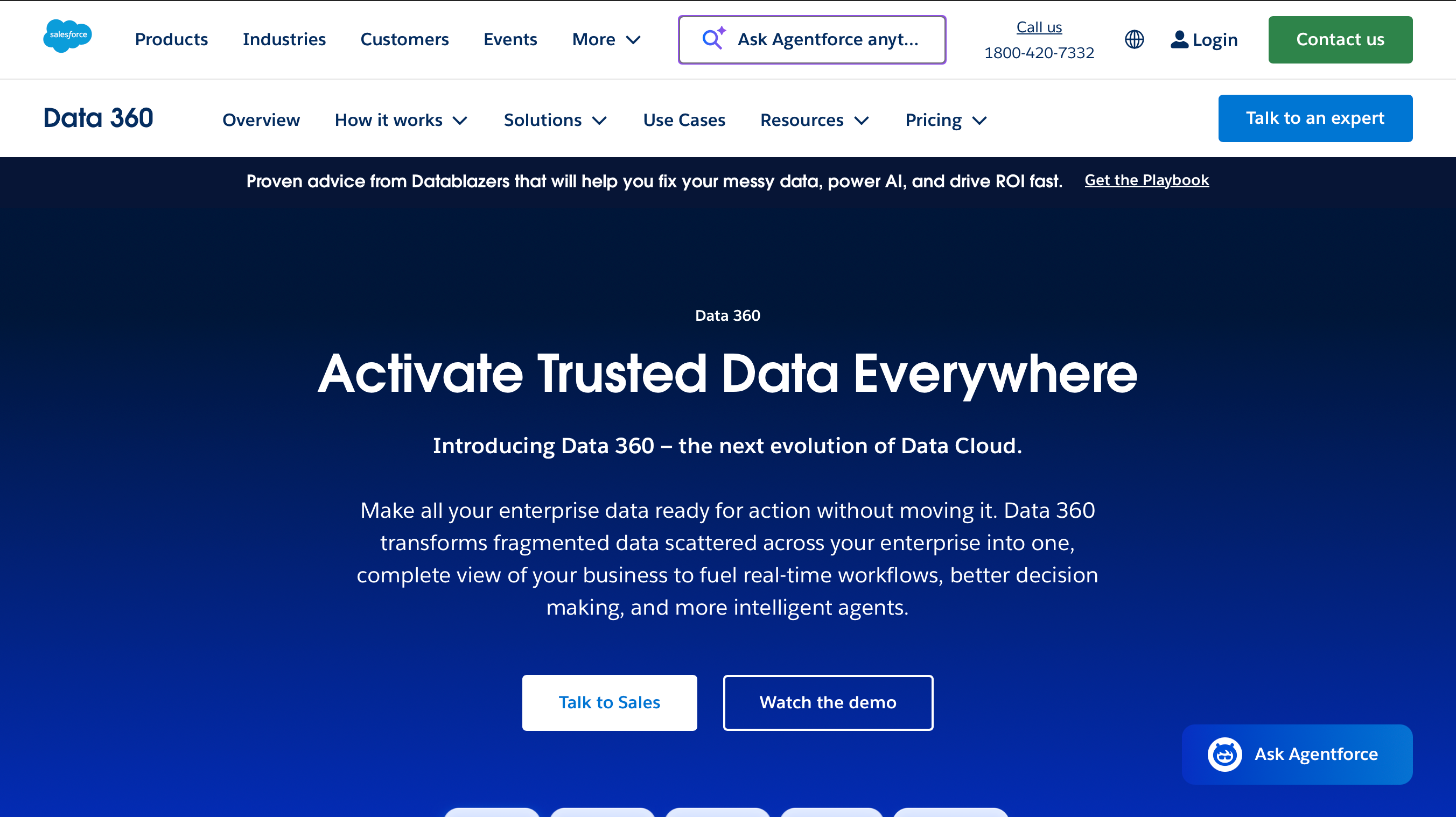
Salesforce Data Cloud is an enterprise CDP that integrates deeply with the Salesforce ecosystem. It unifies customer data from marketing, sales, service, and commerce platforms. This creates a complete view of the customer journey.
The platform supports identity resolution, segmentation, and real-time activation. Shopify Plus brands can use it to connect their ecommerce data with CRM and marketing systems.
Reviews
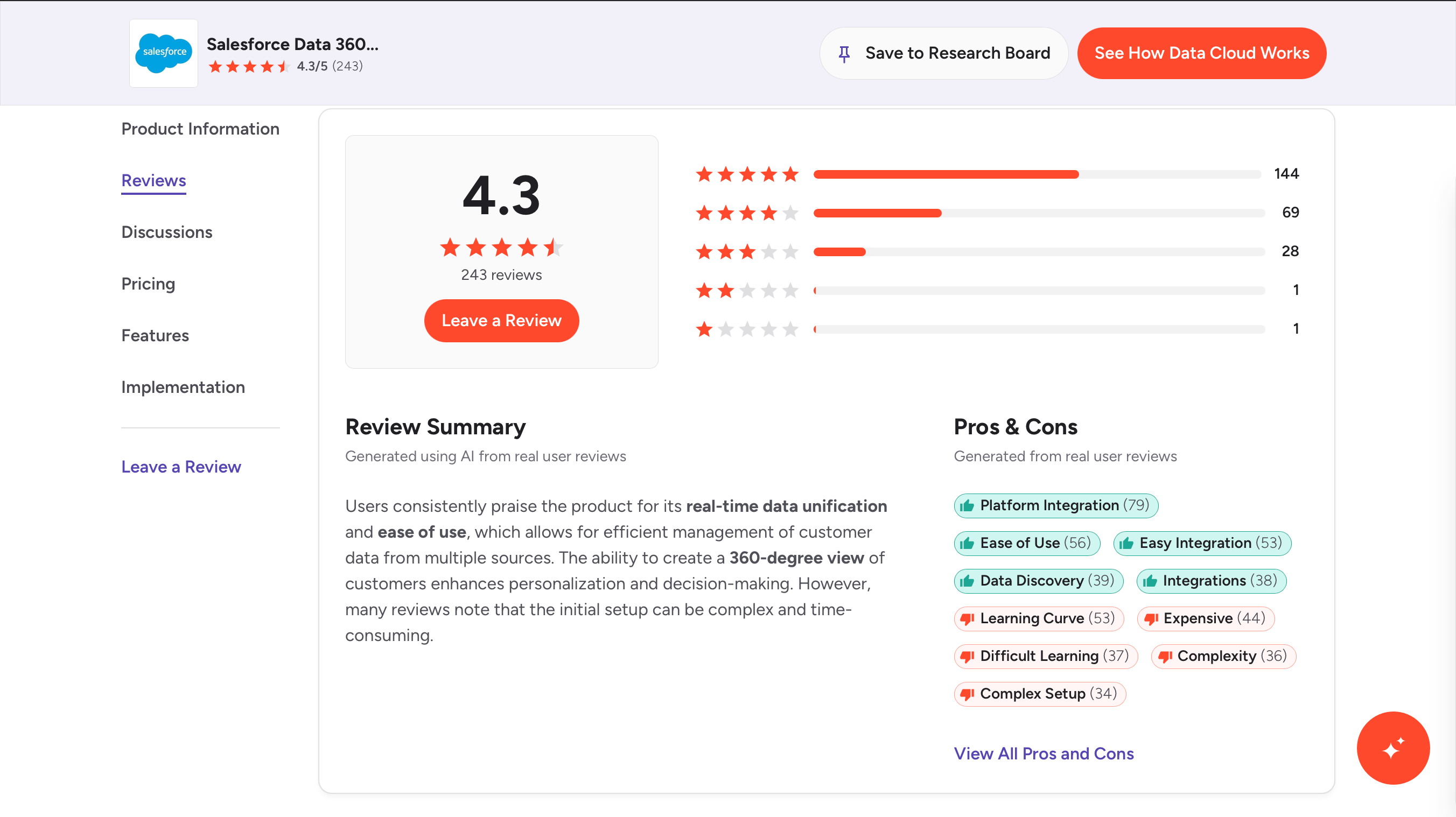
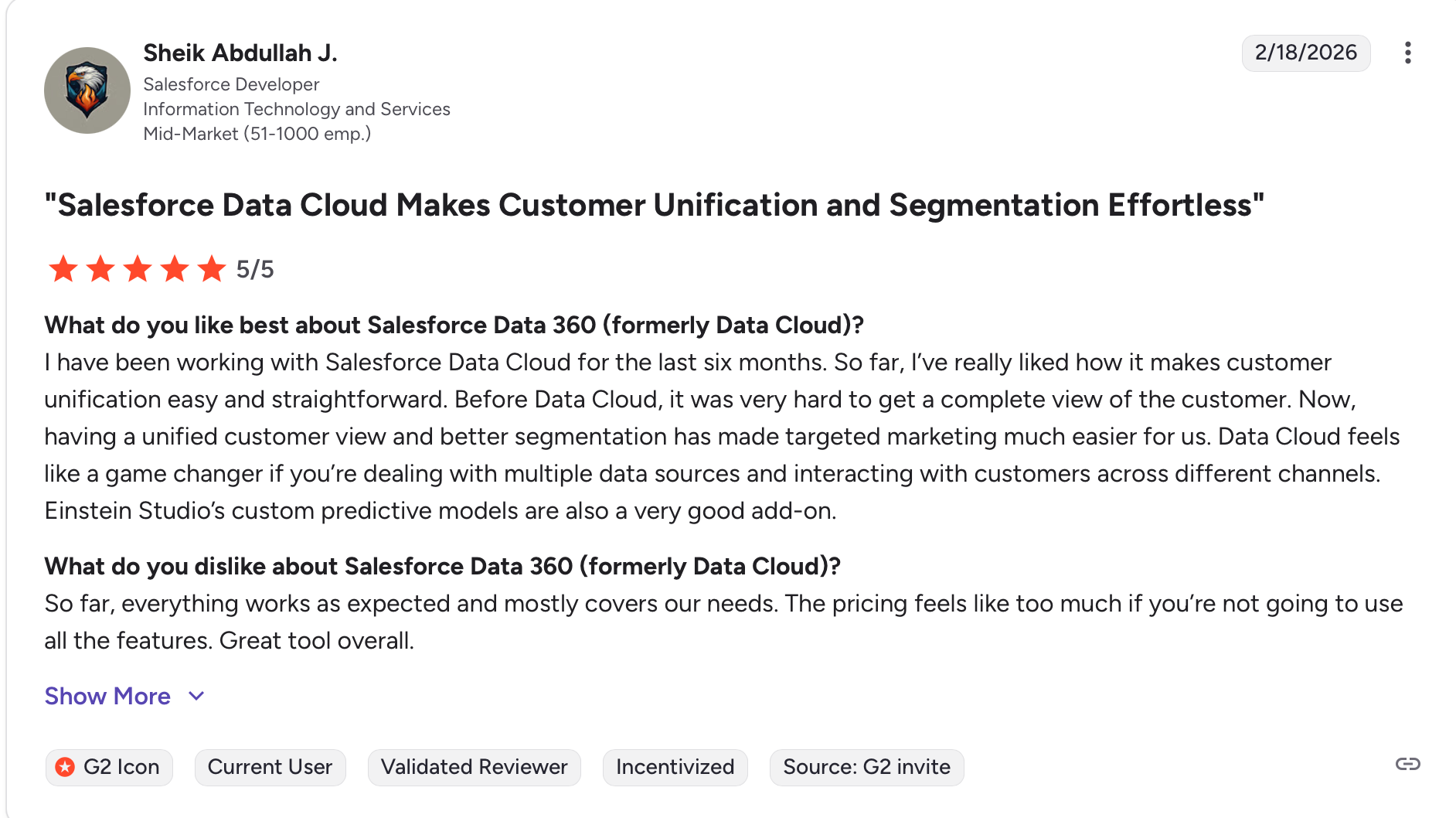
Salesforce Data Cloud is highly regarded for its enterprise capabilities and ecosystem integration. Businesses appreciate its ability to unify data across departments. It is often used by large organizations.
However, it requires significant investment and setup. Smaller businesses may find it complex. Overall, it is best suited for enterprise use (Gartner).
Clients
Enterprise companies
Global brands
Pros
Deep Salesforce integration
Unified data across systems
Advanced segmentation
Cons
Expensive
Complex implementation
Summary
Salesforce Data Cloud is best for large Shopify Plus businesses. It provides a complete view of customer data across the organization. Overall, it is ideal for enterprise ecosystems.
How to Choose the Right CDP for Shopify
Choosing the right CDP depends on your business size, technical capabilities, and goals. Smaller brands may prioritize ease of use, while larger businesses require scalability and advanced features. Understanding your requirements is essential.
If you need a flexible data pipeline, Segment is a strong choice. For enterprise-level orchestration, Tealium works best. For omnichannel data management, mParticle is ideal.
You should also consider integration capabilities, real-time processing, and pricing. These factors determine how effectively the CDP will support your growth. The right platform can significantly improve personalization and performance.
Conclusion
CDPs are becoming essential for Shopify and Shopify Plus businesses in 2026. They help unify customer data, improve personalization, and drive better decision-making. This leads to higher conversions and customer satisfaction.
Segment, Tealium, and mParticle stand out for their core CDP capabilities. Bloomreach adds ecommerce-focused features, while Salesforce Data Cloud provides enterprise-level integration.
As ecommerce continues to evolve, CDPs will play an even bigger role in data-driven growth. Choosing the right platform can give your Shopify store a strong competitive advantage.
Struggling to choose the right Headless CMS & Headless Commerce tech stack? We’ll help you pick the best solution for your business! Exclusive Offer: 20 Hours of Free Development & Consultation
Book a MeetingFrequently Asked Questions
A CDP collects and unifies customer data from multiple sources to create a single customer profile.
To improve personalization, marketing efficiency, and customer experience.
Tealium and Salesforce Data Cloud are best for enterprise-level Shopify Plus stores.