

Words that inspire, ideas that spark,
stories that stay
Best eCommerce Platforms for CBD in 2026 (With Reviews, Founders & Real Insights)
V.Srinidhi Reddy
Friday, April 17th, 20265 min read
Table of content
Best eCommerce Platforms for CBD in 2026 (With Reviews, Founders & Real Insights)
Introduction
Selling CBD online is slightly easier than cannabis—but it still comes with strict compliance rules, payment gateway limitations, and platform restrictions. Unlike THC products, CBD is legal in many regions, but platforms still treat it as a high-risk category, especially when it comes to payments, advertising, and shipping.
That’s why choosing the right platform is critical. In 2026, CBD brands are moving toward two main directions:
-
Headless/open-source platforms for full control
-
CBD-friendly SaaS platforms for easier setup
In this guide, we’ll break down the best eCommerce platforms for CBD, including modern composable solutions and specialized SaaS tools.
1. Medusa
Founders
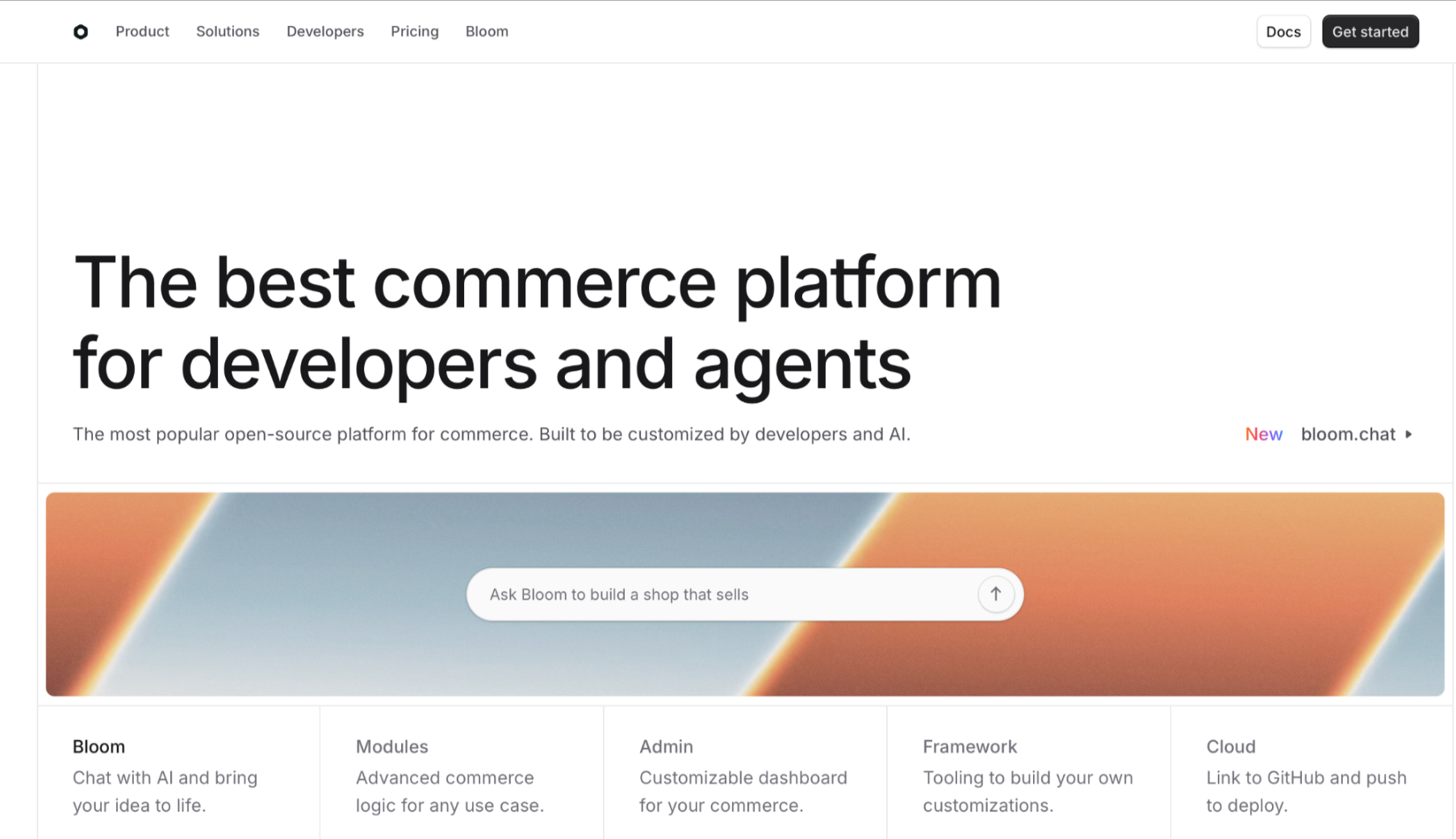
Medusa was built by Oliver Nassar and the Medusa core team.

Overview & Review
Medusa is one of the most flexible ecommerce platforms available today, especially for businesses that need complete control over how their store operates. Being fully open-source and API-first, it allows developers to build custom commerce experiences without being restricted by platform rules.
Unlike Wix, which is designed for simplicity, Medusa is built for flexibility and scalability. It gives you full control over both the backend and frontend, making it ideal for businesses that require custom checkout flows, integrations, or unique workflows.
This level of control is particularly valuable for growing brands that don’t want to rely on a closed platform. However, it does come with a trade-off—it requires a development team to set up and maintain.
Developer & Open Source Ecosystem
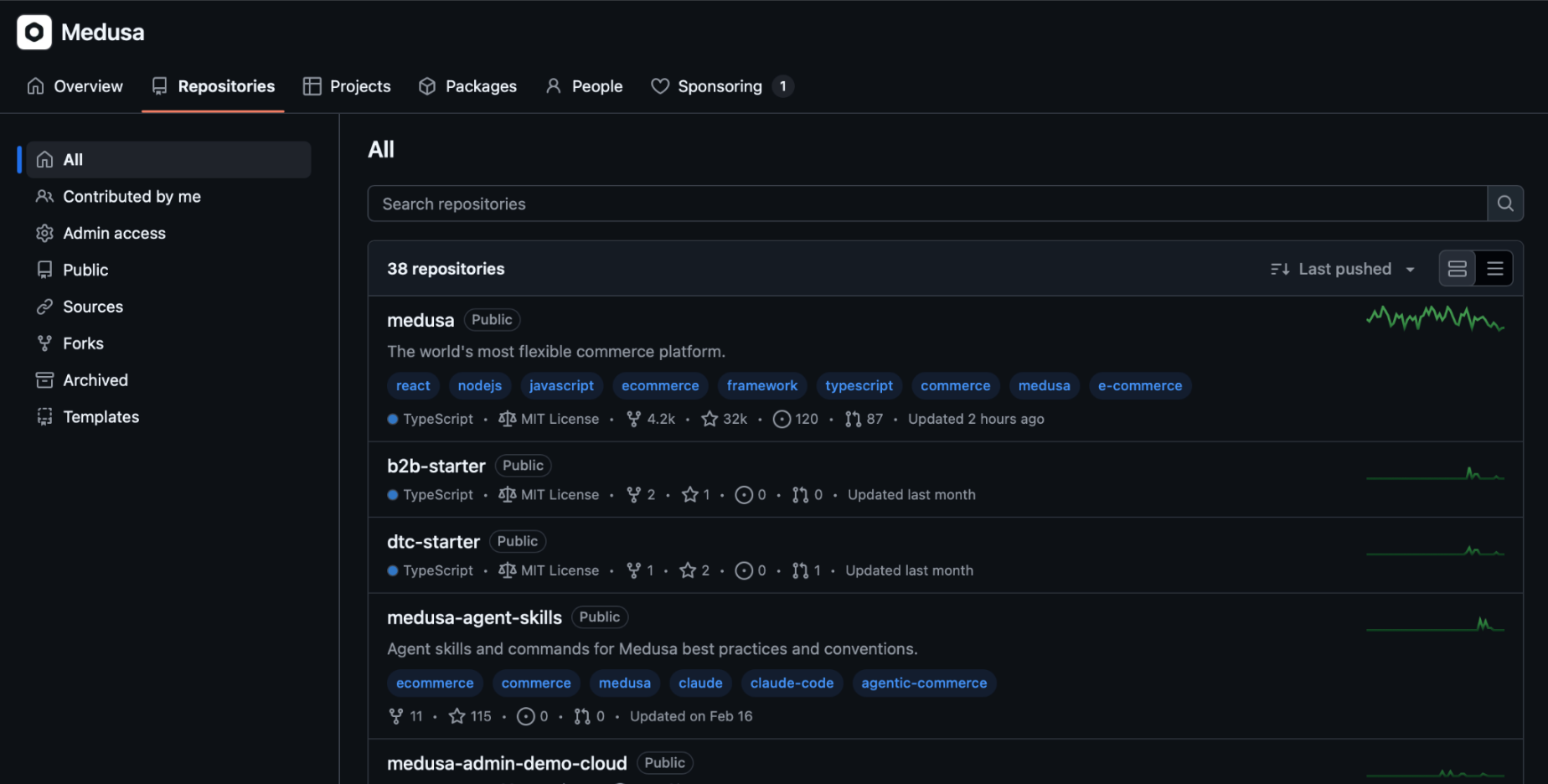
Medusa is fully open source and actively maintained.
-
GitHub: 18k+ stars (rapidly growing)
-
Fully customizable backend with plugin architecture
-
Extensive API support for custom storefronts
-
Active contributor community and frequent updates
This makes it ideal for teams that want complete ownership of their commerce stack rather than relying on closed SaaS systems.
Core Features
Medusa focuses on flexibility, customization, and developer experience.
-
Modular architecture
Build only what you need using plugins and custom modules -
API first commerce
Easily connect with any frontend (Next.js, React, mobile apps, etc.) -
Custom workflows & logic
Full control over checkout, cart, pricing, and order management -
Multi region & multi currency support
Built for global commerce use cases -
Self hosted or cloud deployment
Gives full control over infrastructure and scaling
Reviews
Medusa is highly appreciated in the developer community for its flexibility and modern architecture.
-
Strong GitHub engagement and community support
-
Positive feedback on extensibility and ease of customization
-
Frequently compared to Shopify alternatives in headless setups
Unlike SaaS tools, Medusa doesn’t rely heavily on G2 style reviews — its credibility comes from developer adoption and open source traction.
Reddit Insight
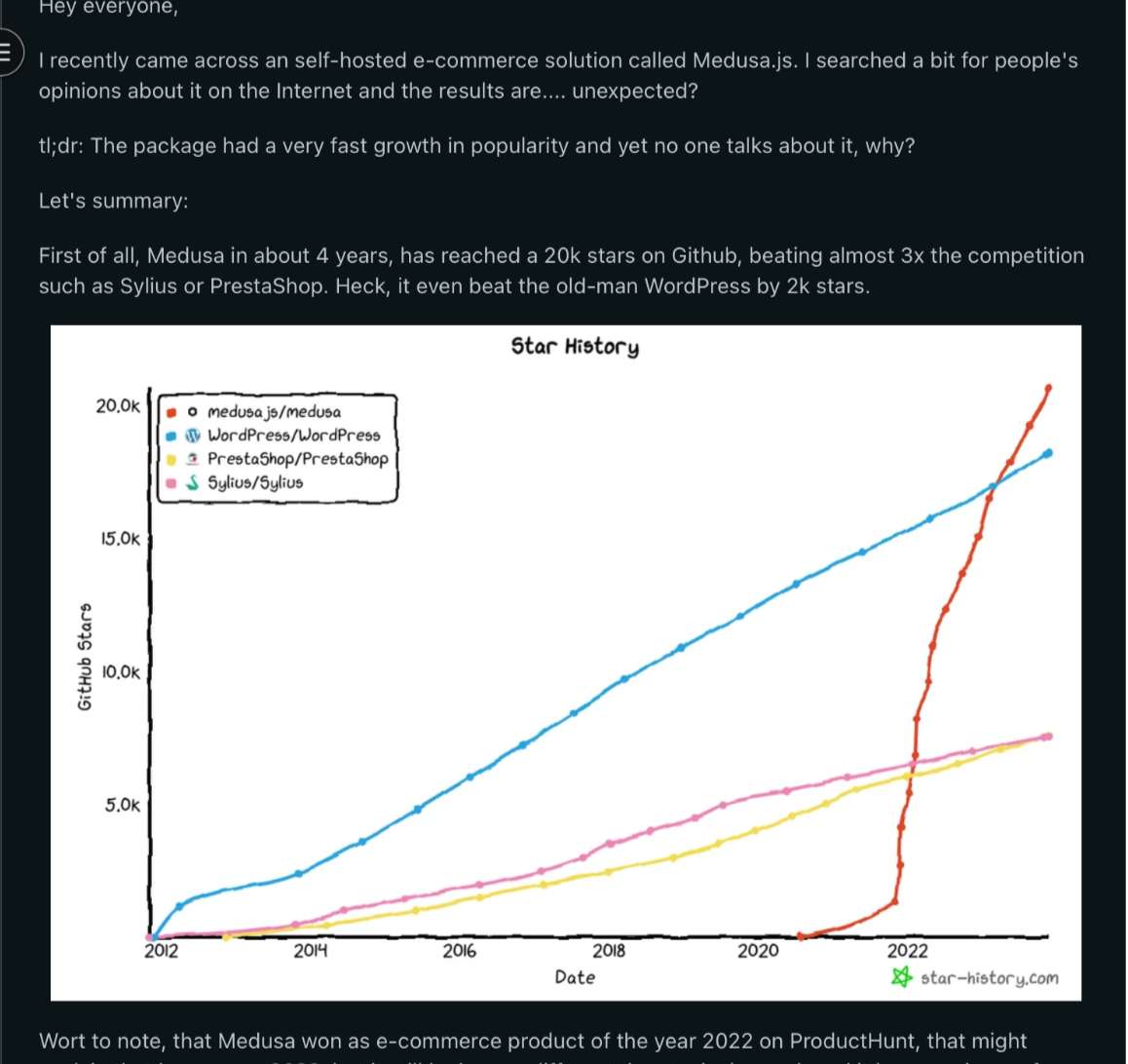
Developers often highlight Medusa’s flexibility, especially for projects where standard ecommerce platforms feel too limiting.
Final Take
Medusa is best for businesses that want full control, customization, and long-term scalability beyond what Wix can offer.
2. Saleor
Founders
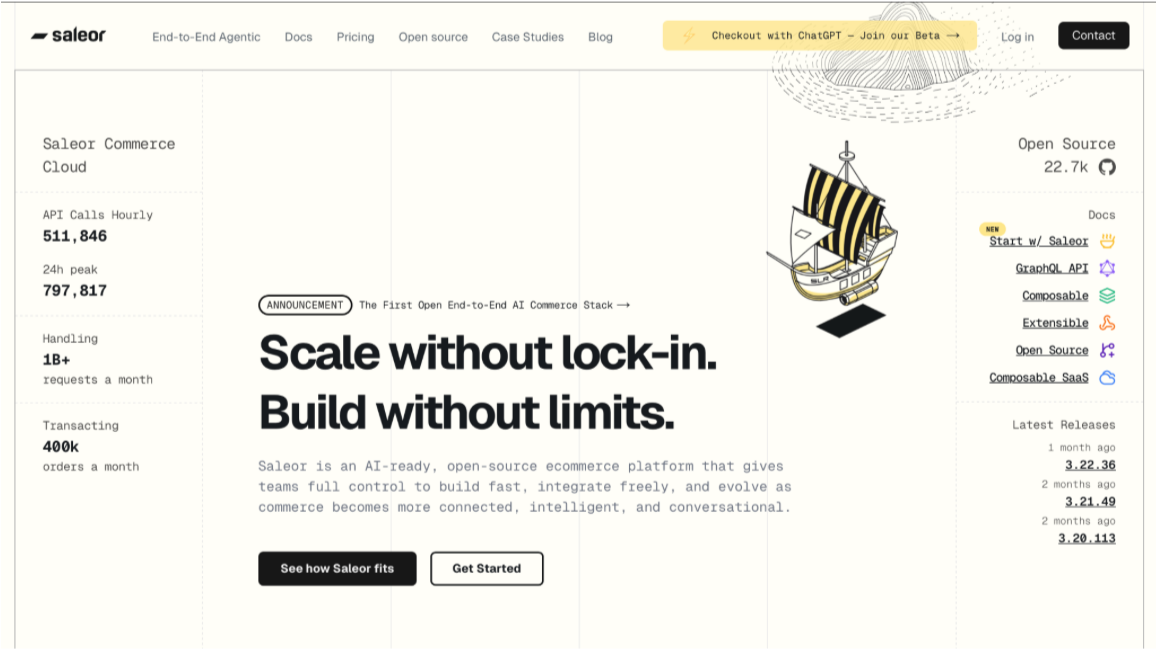
Saleor was created by Patryk Zawadzki and an active open-source community.
Overview & Review
Saleor is a modern, high-performance ecommerce platform built around GraphQL, making it a strong choice for businesses that prioritize speed, scalability, and clean architecture.
Compared to Wix, Saleor offers significantly more flexibility and is better suited for handling large catalogs, high traffic, and multi-channel selling. It’s designed for brands that are planning to scale and need a more robust backend to support growth.
However, like Medusa, it is not a plug-and-play solution. It requires proper development resources to fully unlock its potential, which may not be ideal for beginners.
Developer & Open Source Ecosystem
Saleor is fully open source with a strong and active developer community.
-
GitHub: 30k+ stars
-
GraphQL first architecture (core strength)
-
Rich developer tooling and APIs
-
Strong community and contributor base
It is widely adopted by developers who prefer modern stacks and efficient data handling.
Core Features
Saleor focuses on performance, flexibility, and modern architecture.
-
GraphQL first commerce engine
Faster and more efficient data querying -
Headless architecture
Fully customizable frontend with any framework -
Multi channel & multi region support
Manage multiple storefronts from one backend -
Extensible backend
Customize workflows, logic, and integrations -
Modern dashboard UI
Clean admin experience compared to many open source tools
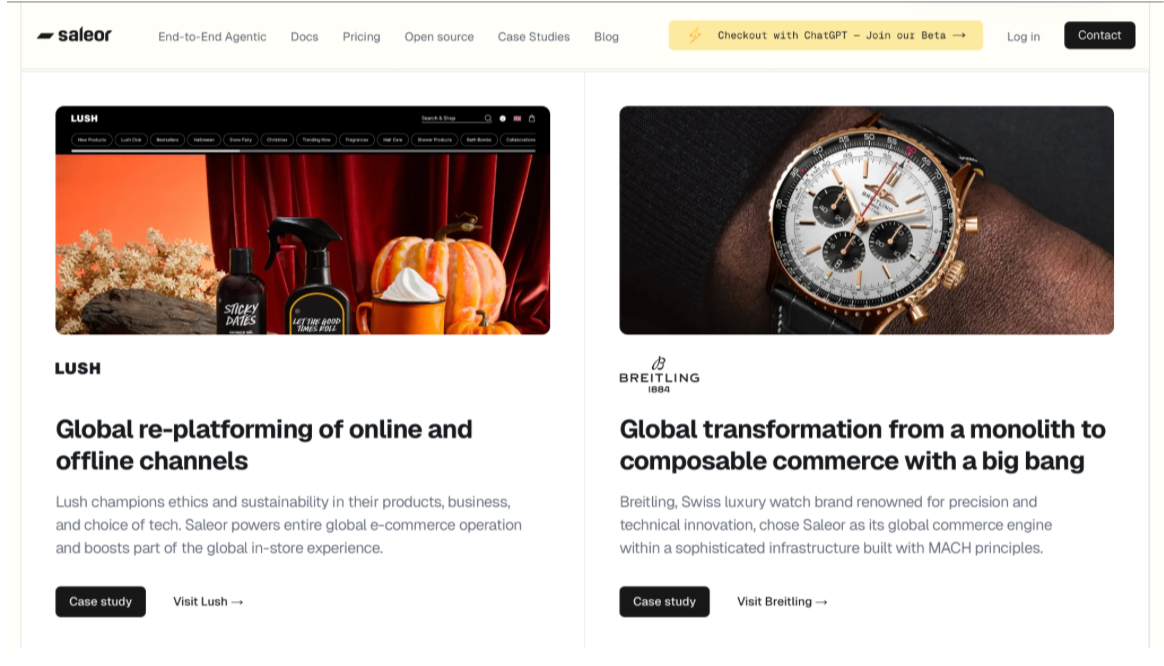
Famous Case Studies
Saleor powers several high performance ecommerce implementations.
-
Lush → Global headless commerce setup
-
Breitling → Premium ecommerce experience
-
Custom enterprise storefronts
These examples highlight its ability to handle complex, high performance ecommerce builds.
Reddit Insight
Developers frequently compare Saleor with Medusa, noting that while both are powerful, Saleor stands out for performance and modern architecture.
Final Take
Saleor is ideal for businesses aiming for high growth, performance, and scalable commerce infrastructure.
3. Vendure
Founder
Vendure was created by Michael Bromley.
Overview & Review
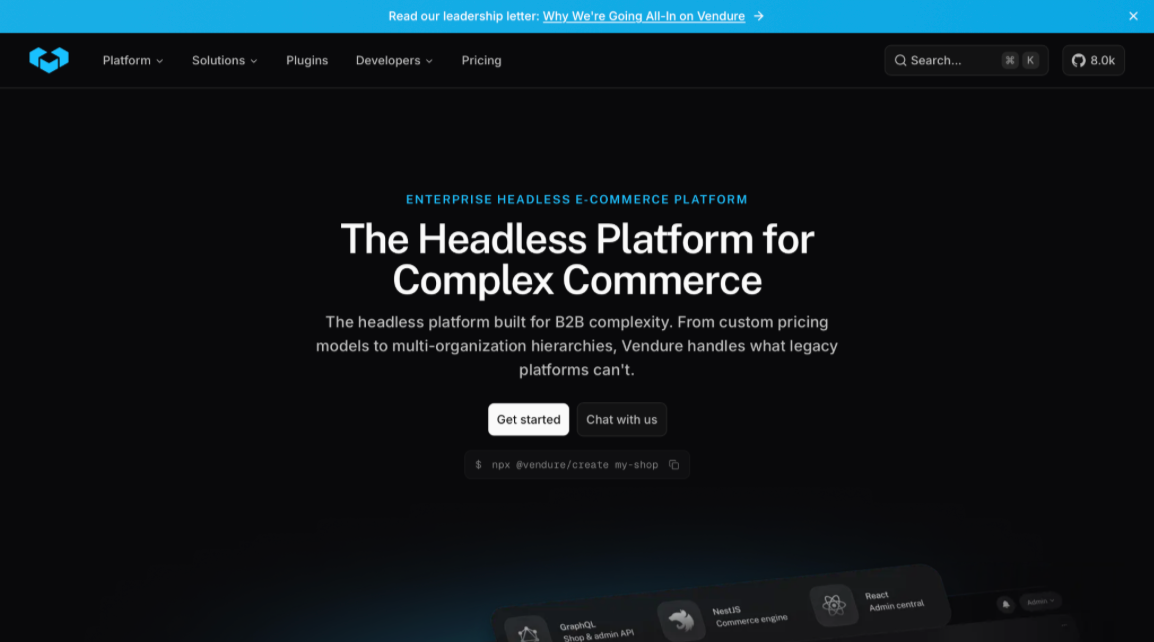
Vendure is a developer-first headless commerce framework built with a strong focus on structure and maintainability. It strikes a balance between flexibility and organization, making it easier to build complex ecommerce systems without things becoming messy.
For businesses outgrowing Wix, Vendure offers far more control over backend logic, integrations, and workflows. It is especially useful when you need to connect with custom payment providers, logistics systems, or internal tools.
Compared to Medusa, Vendure is often seen as more structured, but slightly less beginner-friendly. It’s designed for teams that value clean architecture and long-term scalability.
Developer & Open Source Ecosystem
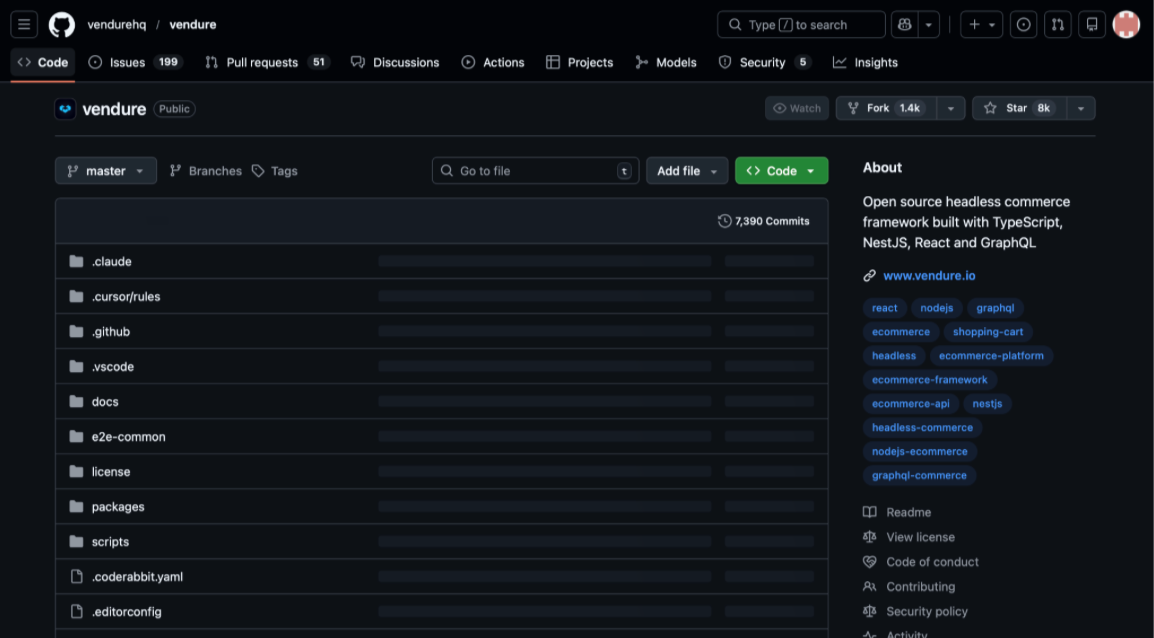
Vendure is fully open source and built with a strong focus on developer experience.
-
GitHub: 8k+ stars
-
Built with TypeScript + Node.js
-
Plugin based architecture for easy extensions
-
Active and growing developer community
Its structured approach makes it easier for developers to build complex systems without reinventing everything from scratch.
Core Features
Vendure focuses on flexibility, structure, and extensibility.
-
Plugin based architecture
Easily extend core functionality with custom plugins -
Headless commerce
Fully customizable frontend using any framework -
GraphQL API
Efficient and flexible data querying -
Multi channel support
Manage multiple storefronts from one backend -
Built in admin dashboard
Clean UI for managing products, orders, and customers
Reddit Insight
In developer discussions, Vendure is often recommended for complex builds where structure and maintainability are important.
Final Take
Vendure is best for businesses that want a structured, customizable backend with strong long-term scalability.
4. Shopify

Founders
Shopify was founded by Tobias Lütke, Daniel Weinand, and Scott Lake.
Overview & Review
Shopify is one of the most powerful ecommerce platforms available and a major step up from Wix when it comes to selling online.
While Wix offers basic ecommerce features, Shopify is built entirely around commerce. It provides a much more reliable system for managing products, payments, inventory, and scaling operations as your business grows.
Many businesses start with Wix and eventually migrate to Shopify once they need better performance and more advanced ecommerce capabilities. Shopify also offers a massive ecosystem of apps, making it easy to extend functionality without building everything from scratch.
That said, it’s still a closed platform. This means less flexibility compared to open-source solutions and increasing costs as you rely more on apps and third-party tools.
Reddit Insight
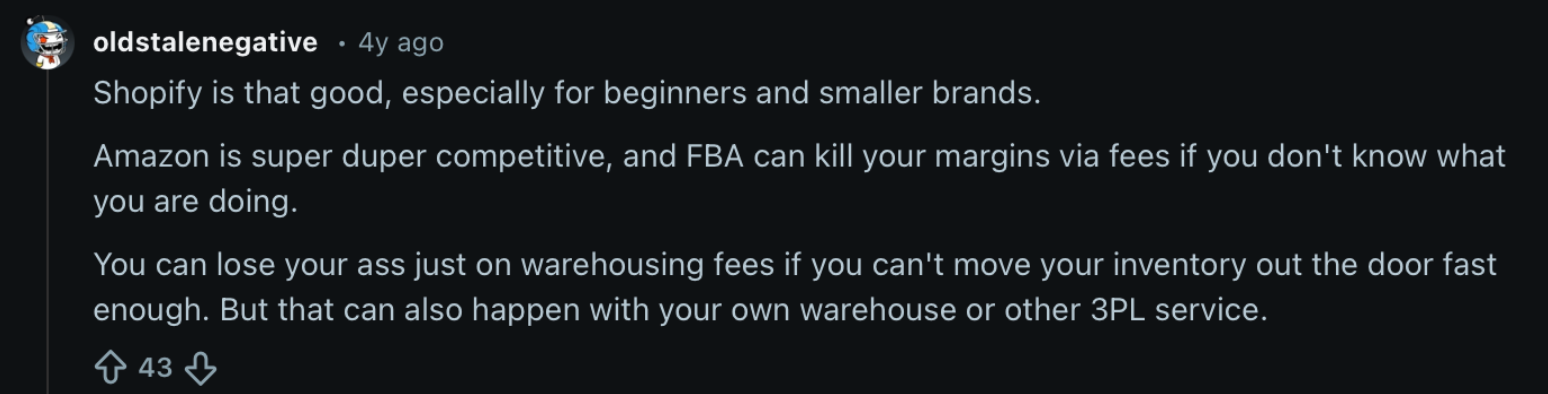
Shopify is consistently recommended as the go-to platform for serious ecommerce businesses, especially for users outgrowing Wix.
Final Take
Shopify is best for businesses focused on building and scaling an online store with ease and reliability, without needing deep technical customization.
If you want, I can now:
-
Make Squarespace, Webflow, Wor
5 CBD-Specific SaaS Platforms (e.g., Meadow, Tymber)
Overview & Review
CBD-specific SaaS platforms are designed to handle compliance, payments, and operations out of the box. Platforms like Meadow and Tymber are particularly useful for brands that don’t want to deal with technical complexity.
These platforms often include built-in compliance tools, POS systems, and integrations tailored for regulated products, making them ideal for physical + online hybrid businesses.
However, they come with limitations in customization and can be more expensive in the long run.
Reddit Insight
In cannabis and CBD communities, these platforms are often recommended for simplicity, especially for dispensaries and retail-focused businesses.
Final Take
CBD SaaS platforms are best for businesses that want an all-in-one, compliance-ready solution with minimal development effort.
Final Verdict
Choosing the right CBD eCommerce platform depends on how much control and scalability you need.
If your priority is full control and compliance flexibility, open-source platforms like Medusa, Saleor, and Vendure are the best options. They allow you to build exactly what your business needs without platform restrictions.
If your priority is ease of use and faster launch, Shopify or CBD-specific SaaS platforms are better choices—but they come with limitations in flexibility and long-term scalability.
The biggest shift in 2026 is clear:
Serious CBD brands are moving toward headless and composable commerce to avoid restrictions and future-proof their business.
Struggling to choose the right Headless CMS & Headless Commerce tech stack? We’ll help you pick the best solution for your business! Exclusive Offer: 20 Hours of Free Development & Consultation
Book a MeetingFrequently Asked Questions
Top platforms include Medusa, Saleor, Vendure, Shopify, and CBD-specific SaaS solutions like Meadow and Tymber. Each offers different levels of flexibility, scalability, and compliance support.
Shopify can work for CBD businesses and is widely used due to its ease of use and strong ecosystem. However, it is a closed platform with limitations in customization and increasing costs due to apps and third-party integrations.
Open-source platforms like Medusa, Saleor, and Vendure are best for scalability and full control. They allow businesses to build custom workflows and avoid platform restrictions, making them ideal for long-term growth.