

Words that inspire, ideas that spark,
stories that stay
Best B2B eCommerce Platforms for Manufacturers (2026)
V. Srindhi Reddy
Thursday, May 14th, 20266 min read
Table of content
Best B2B eCommerce Platforms for Manufacturers (2026 Guide)
Introduction
B2B ecommerce has become a critical growth channel for manufacturers in 2026. Instead of relying solely on distributors or sales reps, manufacturers are increasingly adopting digital commerce platforms to sell directly to businesses. This shift improves efficiency, reduces costs, and enhances customer experience.
Manufacturers have unique requirements compared to traditional ecommerce businesses. They deal with complex pricing structures, bulk ordering, custom product configurations, and deep ERP integrations. Modern B2B platforms are designed to handle these complexities while enabling self-service buying and automation.
Industry data shows that manufacturers, wholesalers, and distributors are among the primary adopters of B2B ecommerce platforms, especially for handling negotiated pricing, recurring orders, and multi-location fulfillment. In this guide, we explore the best B2B ecommerce platforms for manufacturers in 2026.
TL;DR (Quick Picks)
| Platform | Best For | Key Highlight |
|---|---|---|
| Adobe Commerce (Magento) | Complex manufacturing | Deep customization + ERP integration |
| Shopify Plus | Fast scaling manufacturers | Easy deployment + B2B features |
| SAP Commerce Cloud | Enterprise manufacturers | End-to-end enterprise commerce |
| BigCommerce B2B Edition | Hybrid B2B/B2C | Open SaaS + flexibility |
| Shopware | European manufacturers | Open-source + modular commerce |
1. Adobe Commerce
Overview
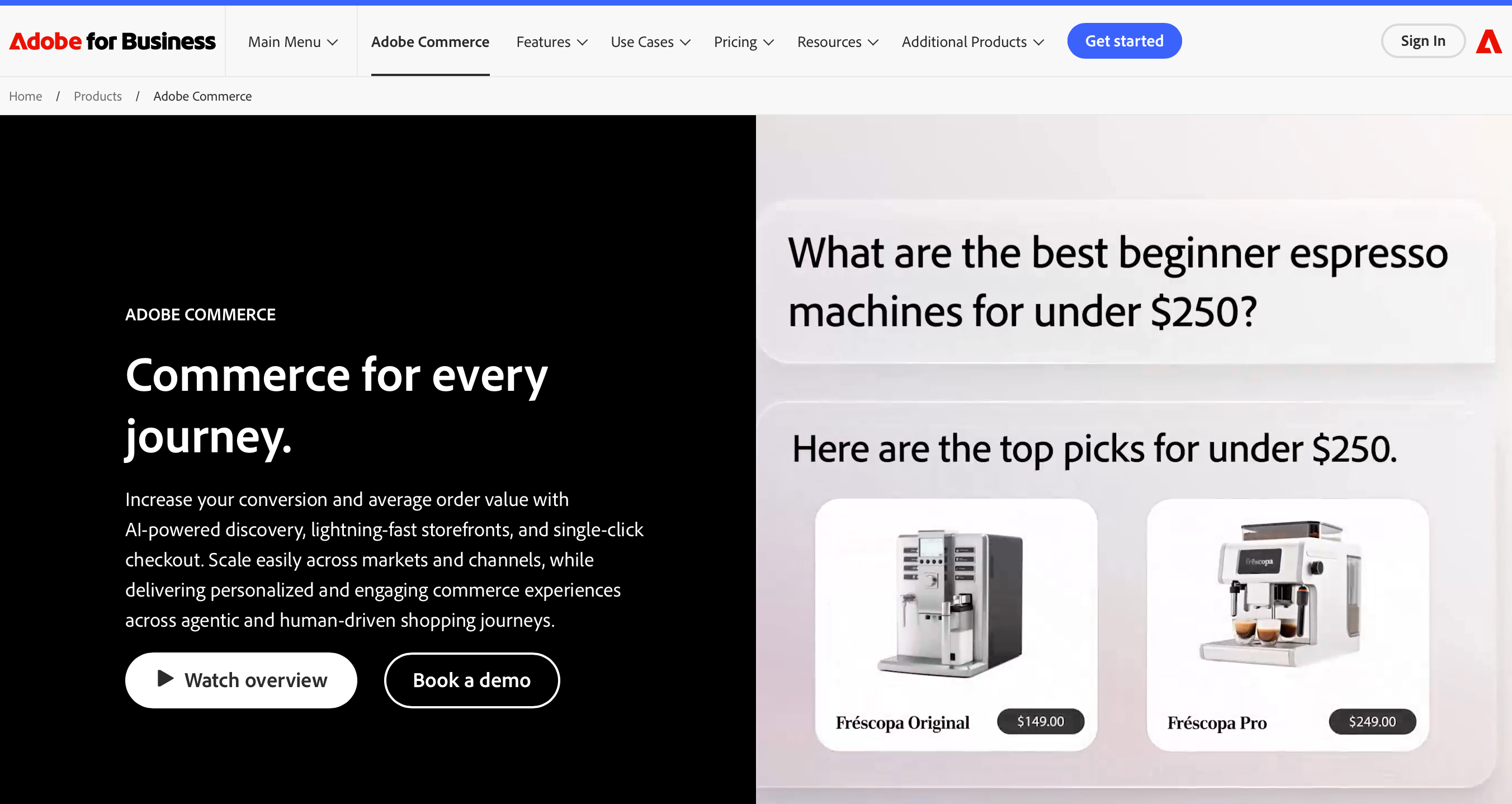
Adobe Commerce (formerly Magento) is one of the most powerful B2B ecommerce platforms for manufacturers. It is designed for businesses with complex product catalogs, pricing models, and workflows. Manufacturers can create custom product configurations, manage bulk orders, and support multiple customer segments.
The platform offers deep integration capabilities with ERP systems, making it ideal for manufacturing operations. It also supports multi-storefront and global commerce, which is essential for large-scale manufacturers.
Reviews
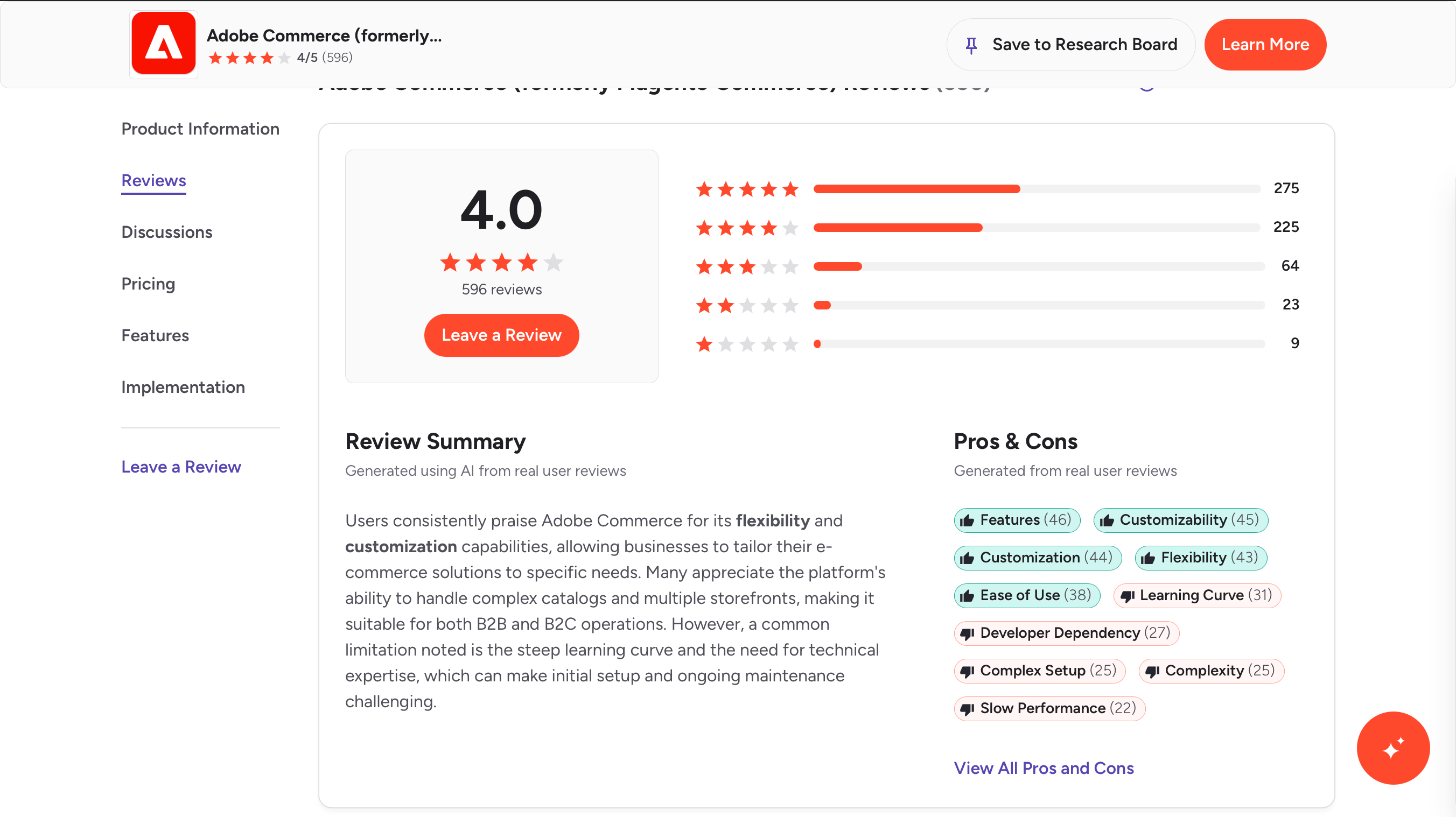
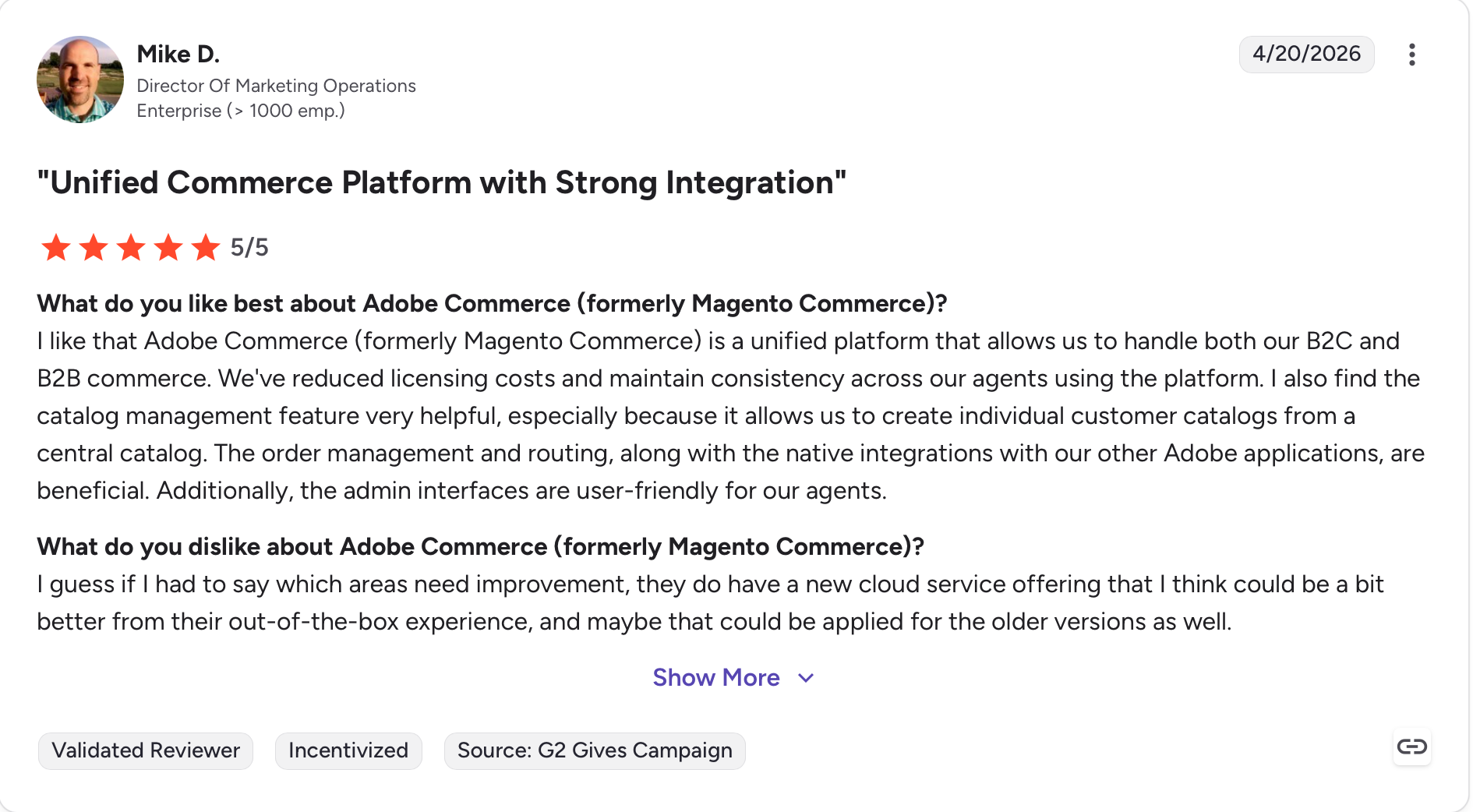
Adobe Commerce is widely recognized for its flexibility and ability to handle complex B2B requirements. It is often recommended for enterprise manufacturers with advanced customization needs.
However, it requires significant development resources and longer implementation timelines.
Pros
-
Highly customizable
-
Strong ERP integration
-
Handles complex catalogs
Cons
-
Complex implementation
-
High development cost
Summary
Adobe Commerce is best for manufacturers with complex workflows and large product catalogs. It offers unmatched flexibility and scalability. Overall, it is ideal for enterprise-level manufacturing businesses.
2. Shopify Plus
Overview
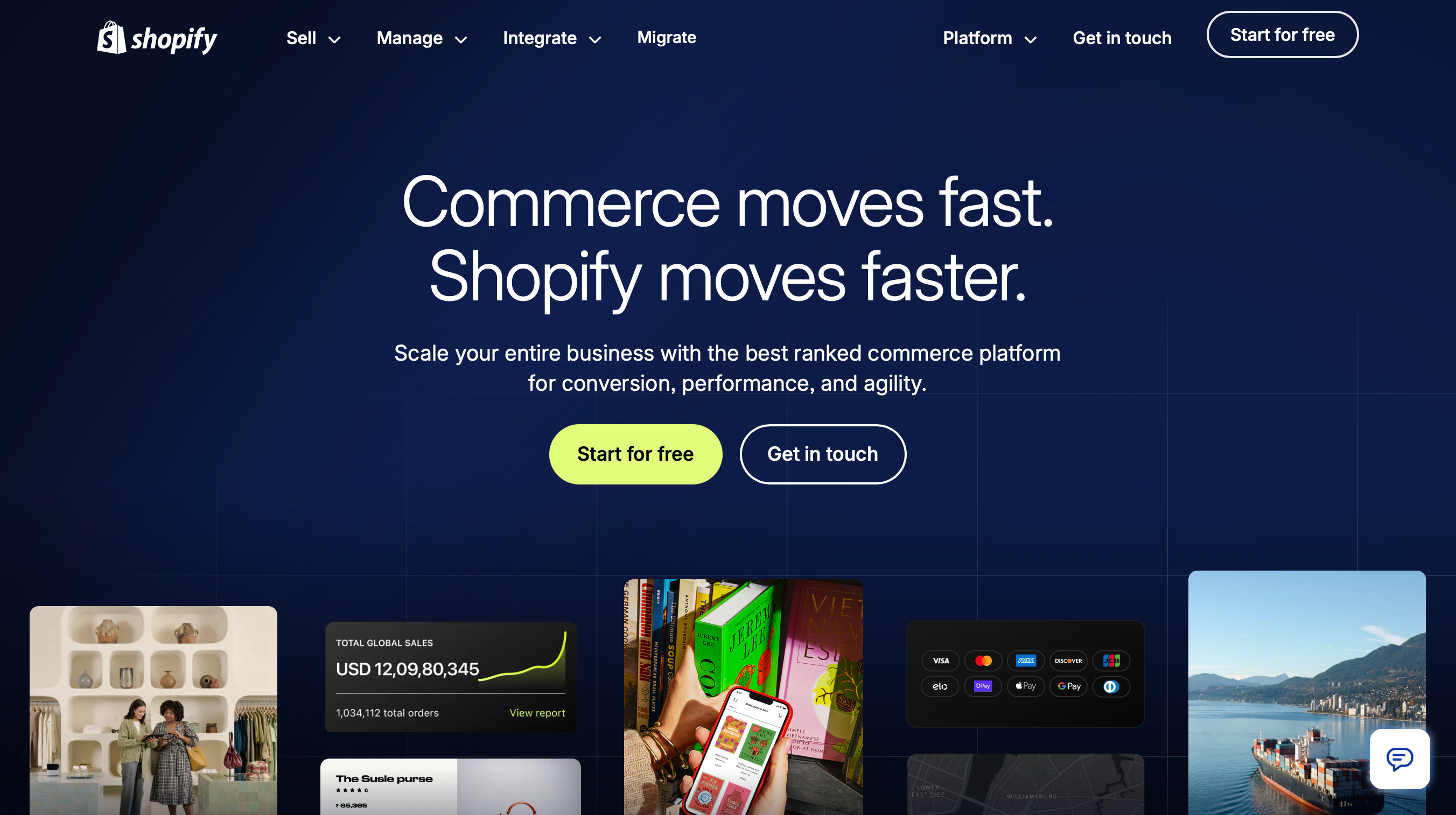
Shopify Plus is a leading SaaS ecommerce platform that has expanded into B2B commerce. It offers built-in B2B features such as company accounts, custom pricing, and bulk ordering. This makes it suitable for manufacturers transitioning to digital commerce.
The platform is known for its ease of use and fast deployment. Manufacturers can launch quickly without heavy technical investment while still scaling globally.
Reviews
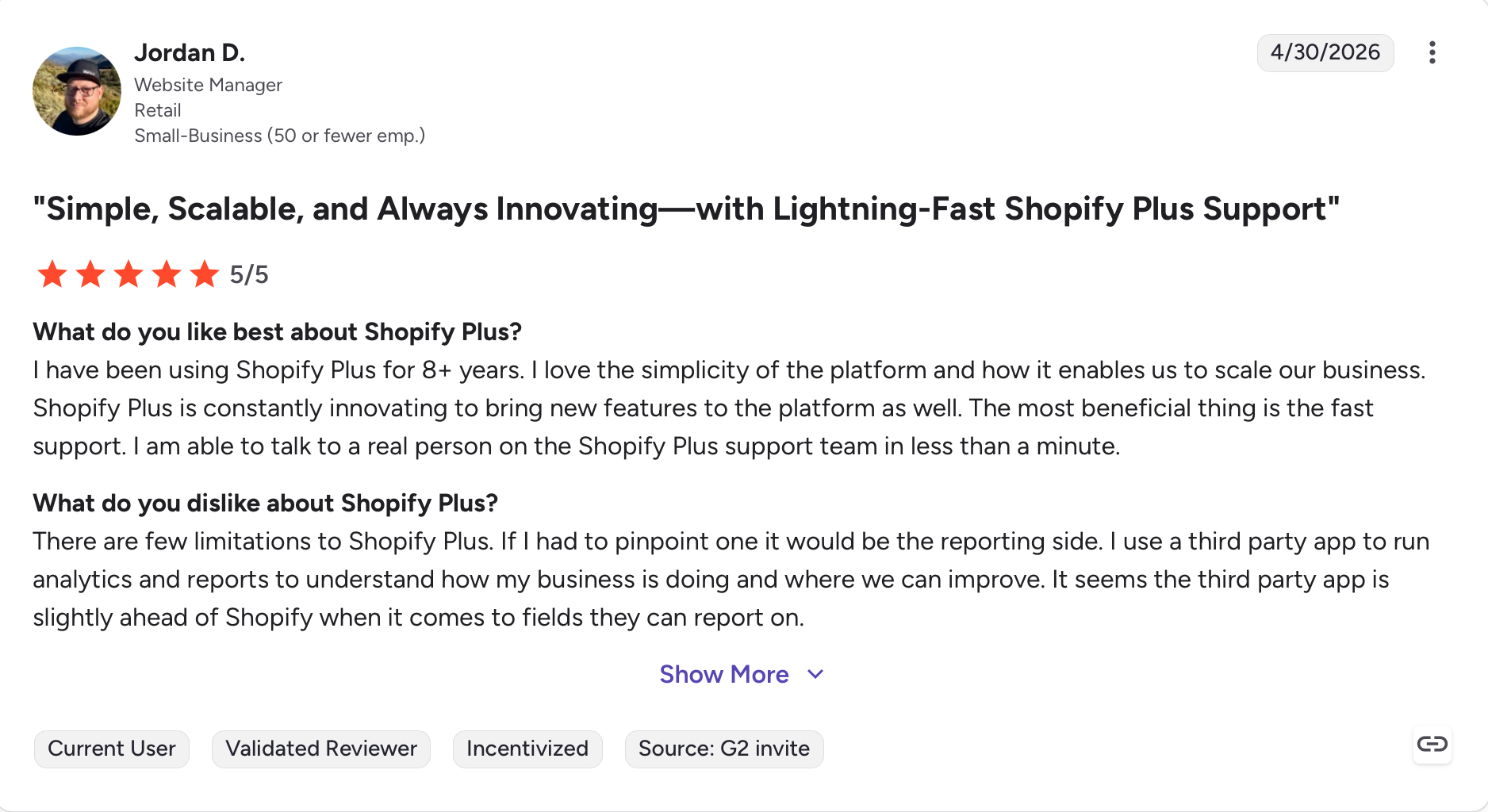
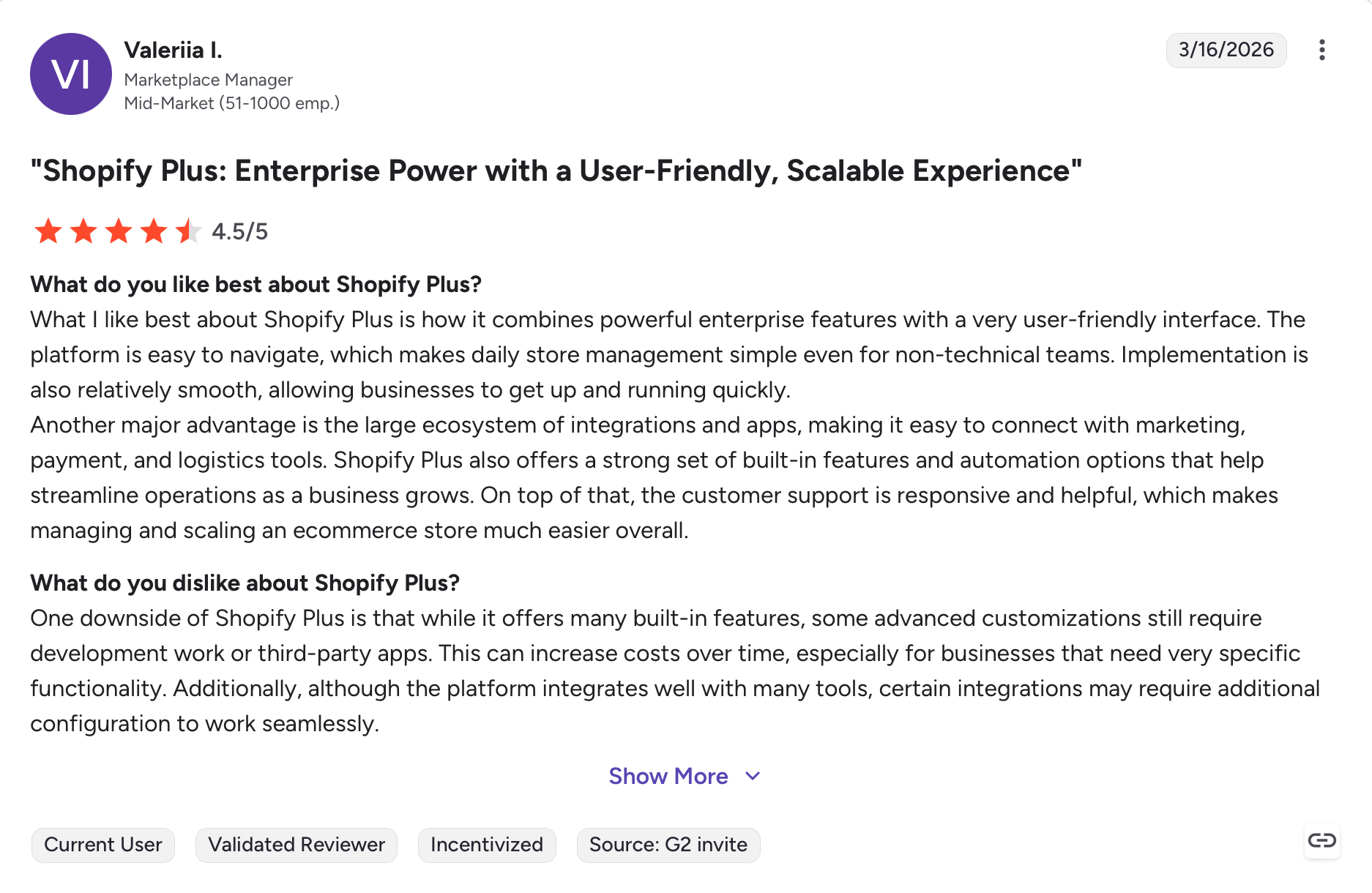
Shopify Plus is often ranked as one of the fastest platforms to implement, with deployment timelines as short as 2–4 months.
It is widely adopted by businesses that want to combine B2B and D2C operations in a single platform.
Pros
-
Fast implementation
-
Easy to use
-
Strong ecosystem
Cons
-
Limited backend customization
-
App dependency
Summary
Shopify Plus is ideal for manufacturers looking for speed and scalability. It simplifies ecommerce operations while supporting growth. Overall, it is best for mid-market and scaling manufacturers.
3. SAP Commerce Cloud
Overview
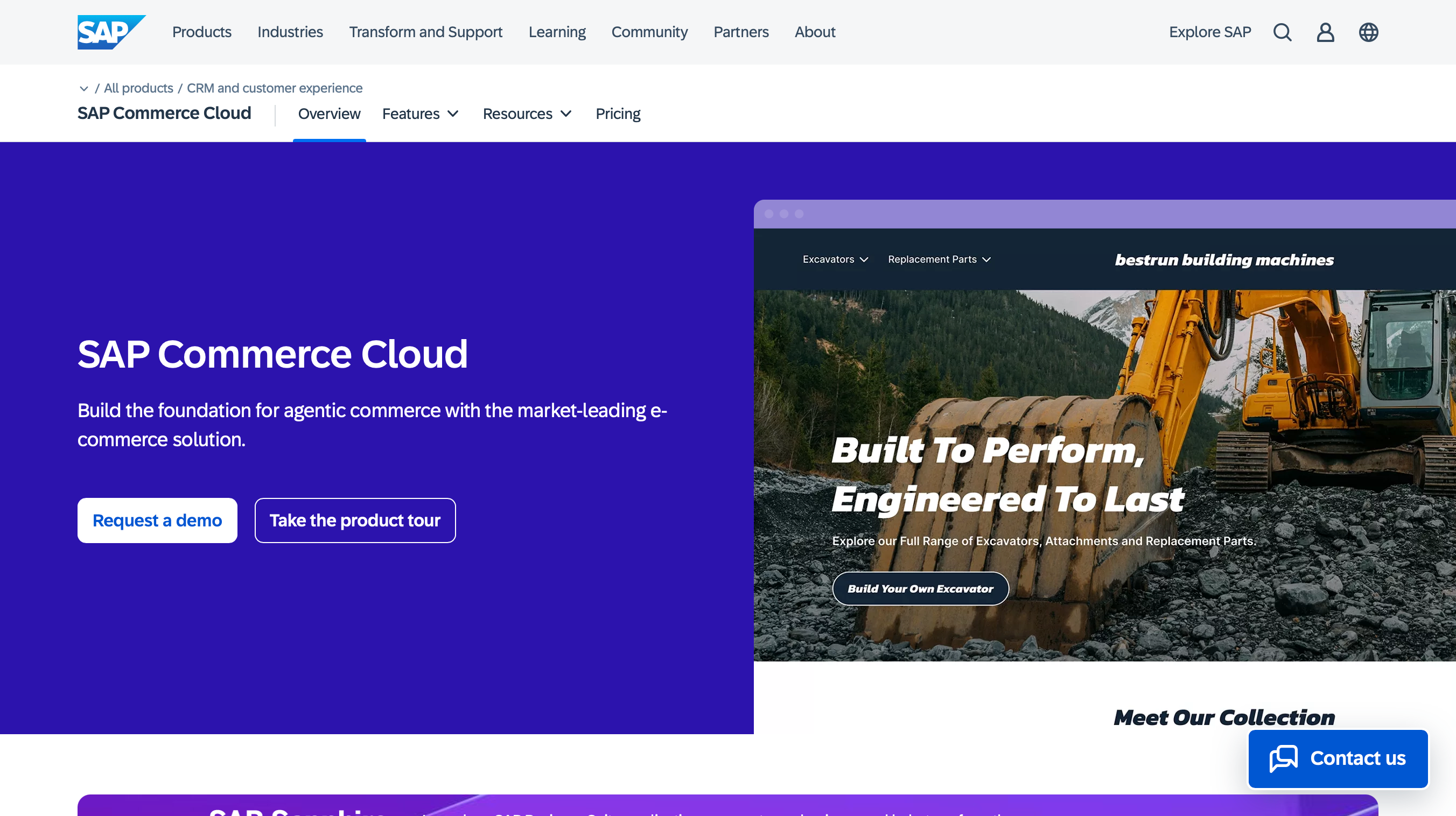
SAP Commerce Cloud is an enterprise-grade B2B ecommerce platform designed for large manufacturers and global organizations. It integrates deeply with SAP ERP systems, enabling seamless data flow across operations.
The platform supports complex pricing, product configurations, and multi-channel commerce. It also provides advanced analytics and personalization capabilities.
Reviews
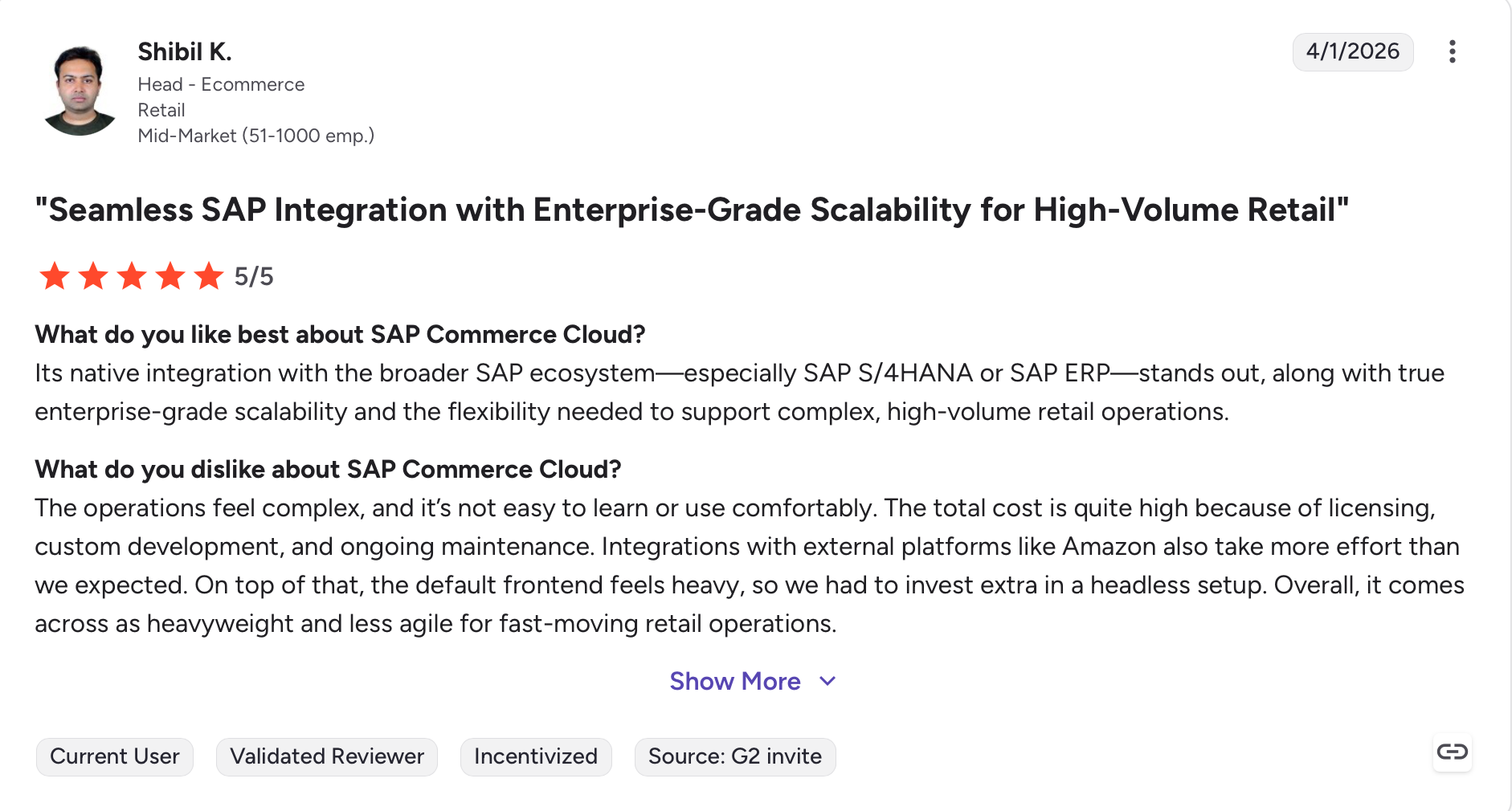
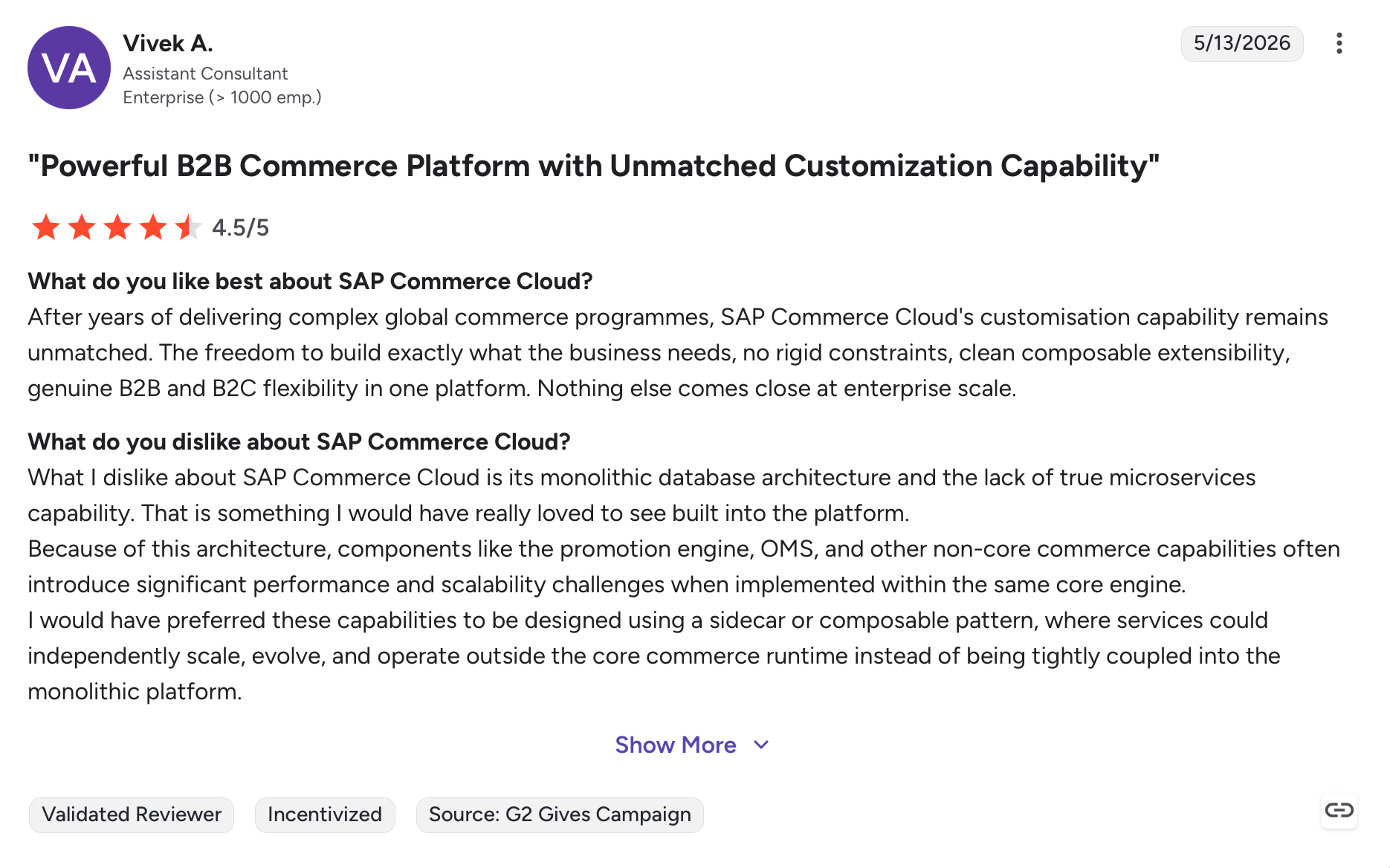
SAP Commerce Cloud is widely used by large enterprises for managing complex B2B operations. It is often considered one of the top enterprise ecommerce platforms alongside Adobe Commerce and Salesforce Commerce Cloud.
However, it requires significant investment and expertise.
Pros
-
Enterprise scalability
-
Deep SAP integration
-
Advanced features
Cons
-
High cost
-
Complex implementation
Summary
SAP Commerce Cloud is best for large manufacturers with global operations. It provides a complete enterprise commerce solution. Overall, it is ideal for complex and large-scale businesses.
4. BigCommerce (B2B Edition)
Overview
BigCommerce B2B Edition is a SaaS platform designed for both B2B and B2C commerce. It offers built-in B2B features such as customer groups, price lists, and bulk pricing. This makes it suitable for manufacturers with hybrid business models.
The platform uses an open API architecture, allowing businesses to integrate with ERP, CRM, and other systems. It also supports headless commerce.
Reviews
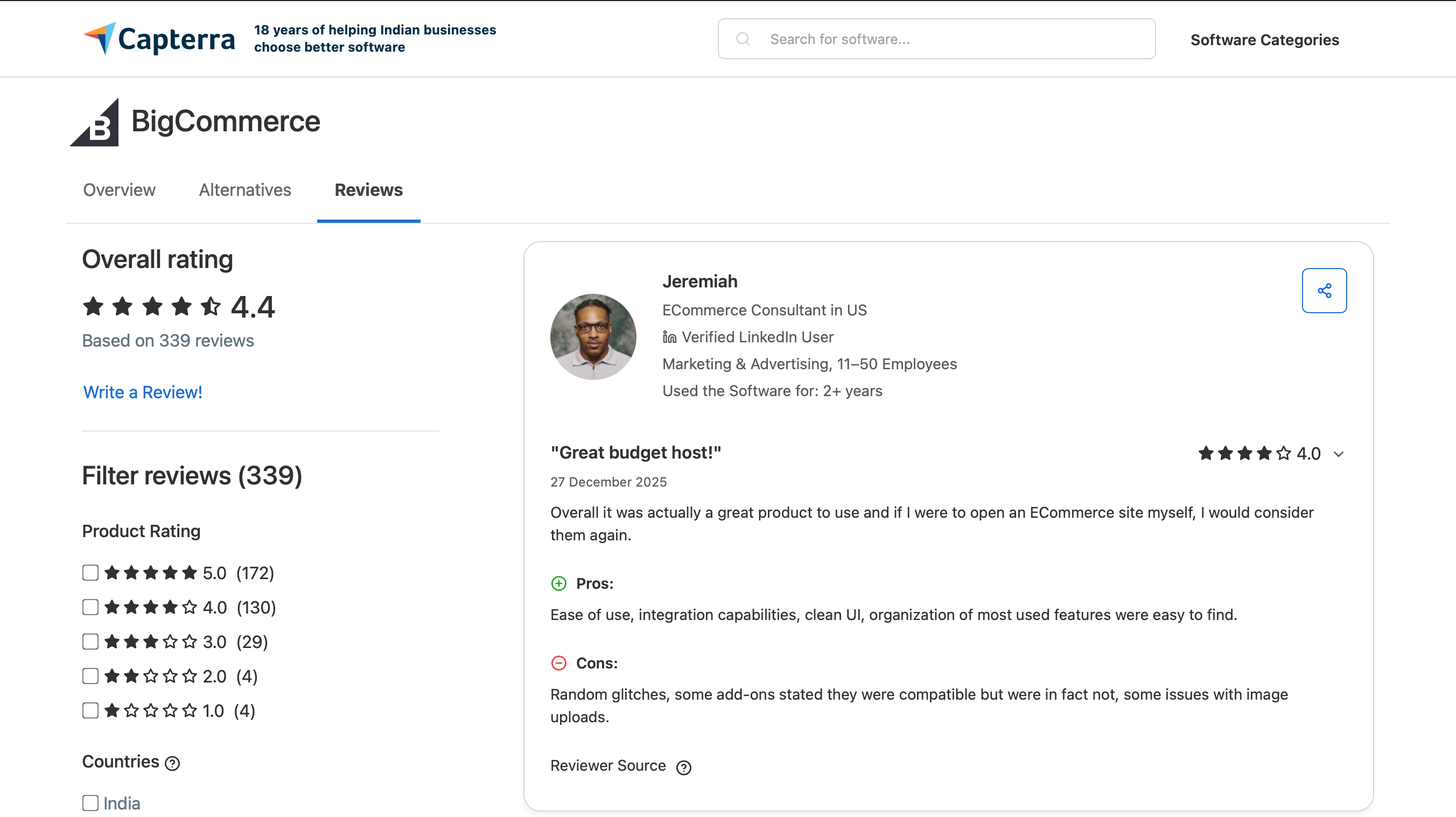
BigCommerce is recognized for its open architecture and ability to support hybrid B2B/B2C models. It is often recommended for businesses that need flexibility without full custom development.
Pros
-
Open SaaS architecture
-
Strong integrations
-
Built-in B2B features
Cons
-
Learning curve
-
Less flexible than open-source
Summary
BigCommerce is ideal for manufacturers operating both B2B and D2C channels. It offers flexibility with ease of use. Overall, it is a balanced platform for growth.
5. Shopware
Overview
Shopware is a modern ecommerce platform with strong B2B capabilities, particularly popular in Europe. It offers a modular, API-first architecture that allows manufacturers to build custom commerce experiences.
The platform supports complex product catalogs, multi-channel selling, and ERP integrations. It is suitable for both mid-market and enterprise manufacturers.
Reviews
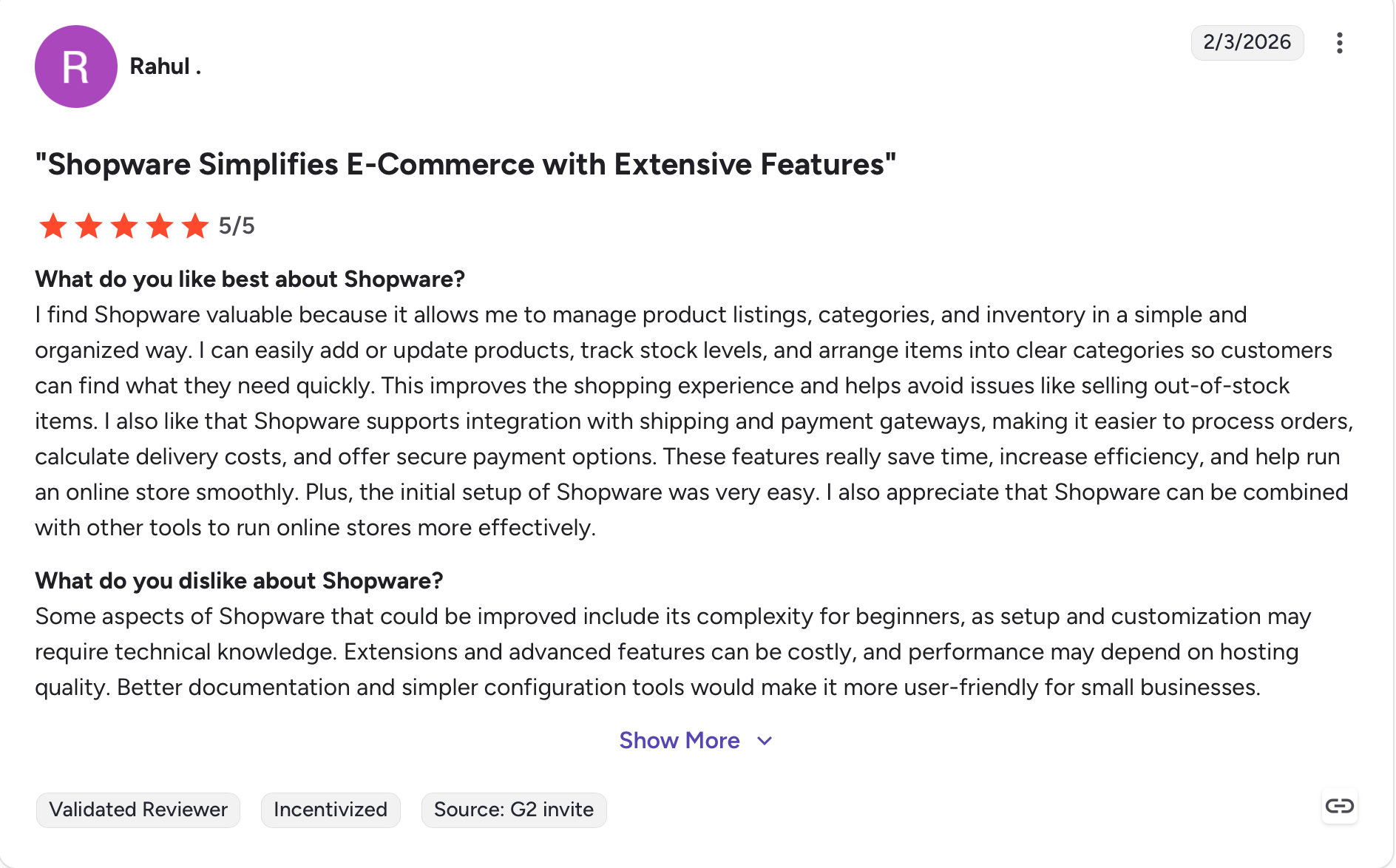
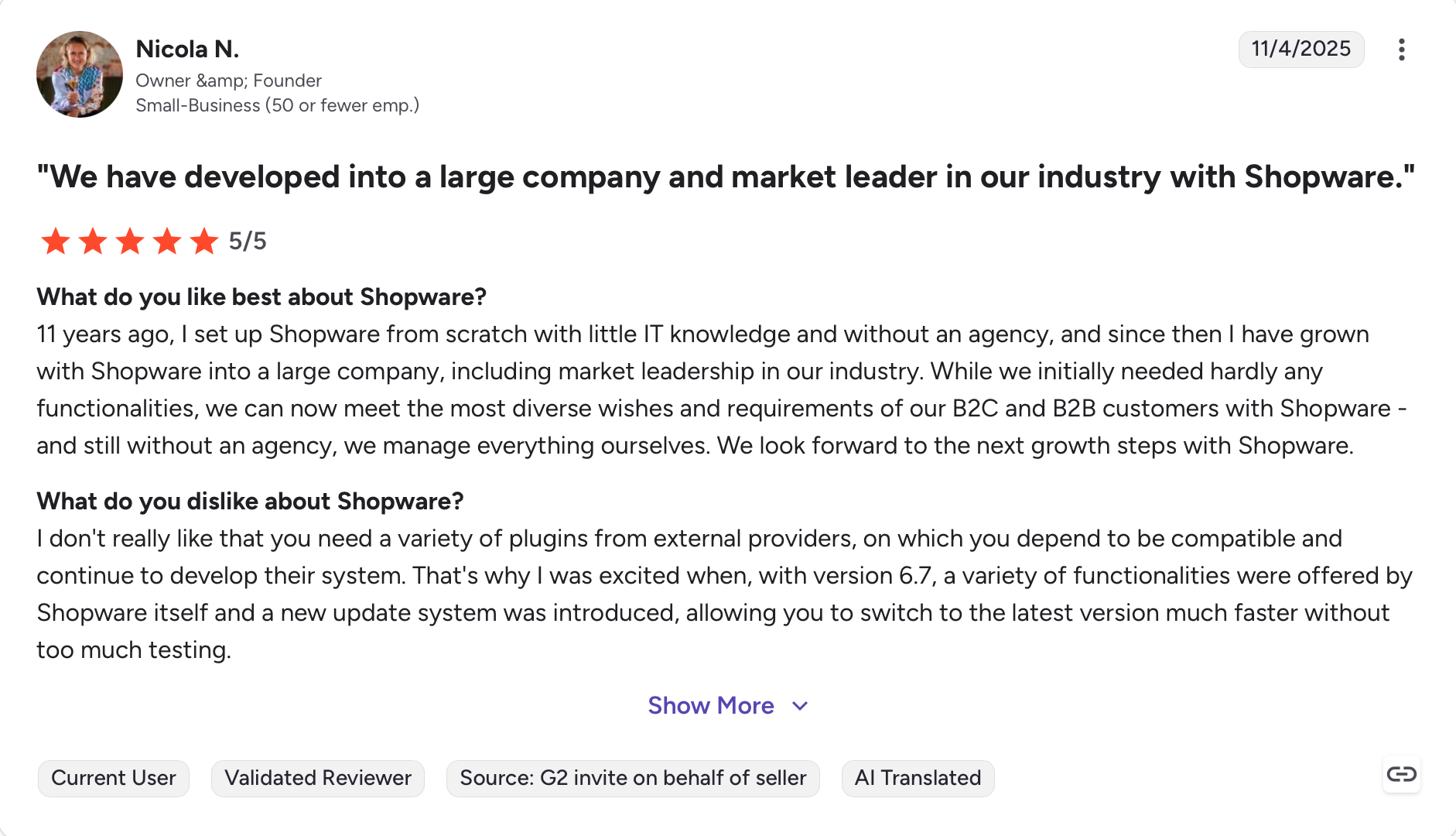
Shopware is praised for its flexibility and modern architecture. It is often compared to Adobe Commerce but with a more user-friendly approach.
Pros
-
Open-source flexibility
-
Modern architecture
-
Strong B2B features
Cons
-
Smaller ecosystem
-
Requires development
Summary
Shopware is ideal for manufacturers seeking flexibility with a modern stack. It is especially strong in European markets. Overall, it is a strong alternative to traditional platforms.
Product Comparison Table
| Platform | Best For | Key Highlight |
|---|---|---|
| Adobe Commerce (Magento) | Complex manufacturing | Deep customization + ERP integration |
| Shopify Plus | Fast scaling manufacturers | Easy deployment + B2B features |
| SAP Commerce Cloud | Enterprise manufacturers | End-to-end enterprise commerce |
| BigCommerce B2B Edition | Hybrid B2B/B2C | Open SaaS + flexibility |
| Shopware | European manufacturers | Open-source + modular commerce |
Key Requirements for Manufacturers
Manufacturers need features that go beyond standard ecommerce. These include custom pricing, bulk ordering, product configuration, and ERP integration. Platforms must also support multi-location inventory and global operations.
Unlike D2C brands, manufacturers often deal with long-term customer relationships and recurring orders. This requires strong account management and automation capabilities.
Choosing a platform that aligns with these needs is essential for long-term success.
How to Choose the Right Platform
-
For enterprise manufacturers with complex needs → Adobe Commerce or SAP Commerce Cloud
-
For fast-growing manufacturers → Shopify Plus
-
For hybrid B2B + D2C models → BigCommerce
-
For flexible, modern architecture → Shopware
You should also consider integration capabilities, scalability, and total cost of ownership. The right platform should support your growth for years.
Conclusion
B2B ecommerce platforms are transforming how manufacturers sell and scale in 2026. They enable digital sales, improve efficiency, and enhance customer experience. Without them, manufacturers risk falling behind in a rapidly evolving market.
Adobe Commerce, Shopify Plus, and SAP Commerce Cloud lead the market for manufacturing-focused B2B commerce, while BigCommerce and Shopware offer strong alternatives for flexible growth strategies.
Ultimately, the best platform is the one that aligns with your business model, operational complexity, and digital transformation goals.
Struggling to choose the right Headless CMS & Headless Commerce tech stack? We’ll help you pick the best solution for your business! Exclusive Offer: 20 Hours of Free Development & Consultation
Book a MeetingFrequently Asked Questions
Adobe Commerce and SAP Commerce Cloud are best for enterprise manufacturers, while Shopify Plus is ideal for scaling businesses.
Yes, they help streamline sales, improve efficiency, and support digital transformation.
Shopify Plus is the fastest to deploy compared to other platforms.
Custom pricing, bulk ordering, ERP integration, and multi-channel support.