

Words that inspire, ideas that spark,
stories that stay
Top 4 Best Shopify & Shopify Plus Upsell apps 2026
Vipul Uthaiah
Friday, February 20th, 20265 min read
Table of content
Too many options and links ???makes you feeelll 👇

So according to us what’s Best Upsell For Shopify in 2026?
This publication is compiled from multiple highly curated and thoroughly researched sources on the best Upsell Plugin for shopify in 2026, including Reddit, Quora, , Clutch.co reviews, and ChatGPT, along with a manually prepared list of companies working with leading global brands..
Lately, every time I search for something like:
“best Shopify apps for reviews”
“best Shopify apps for conversions”
“best Shopify apps for upsells”
“Shopify review app recommendation Reddit”
the results all feel the same like they were written by an LLM and optimized purely to push an app. It’s not even subtle anymore.
Typical pattern:
Post / article / thread: “What’s the best Shopify app for [basic ecommerce function]?”
Top response: “I had the exact same issue, and [App X] solved it perfectly. I’ve been using it for years with zero problems, highly recommended!”
Then you check the app and realize it was launched a few days ago, has generic branding, and zero real footprint outside of SEO articles and Reddit comments.
This isn’t just Reddit it’s Google search results, blog roundups, and even asking ChatGPT. Everything feels engineered for promotion rather than honest comparison. I miss when searching for tools actually surfaced real user experiences, tradeoffs, and criticism instead of thinly disguised marketing. Maybe it’s time to log off (or stop trusting search results altogether).
Nevertheless, let’s start with this: why should you read this?
We’ve been working with Shopify and Shopify Plus for years. During that time, we’ve tested the best customization strategis offers, upsells, cross-sells, full-funnel optimization, and advanced A/B testing. We’ve implemented high-performing segmentation strategies for offers and built solutions specifically designed for Shopify stores.
We’ve worked with early-stage brands and scaled businesses doing over $100M+ in revenue. So when it comes to knowing the best upsell apps for Shopify and Shopify Plus yes, we know what we’re talking about.
We’re top-rated on Upwork for Shopify with a 100% success score and have built and optimized numerous Shopify stores.
Now, let’s get into the best upsell apps for Shopify.
4 Best Shopify & Shopify Plus Upsell apps 2026 Ways to Increase AOV
Upsell.com ( formerly ReConvert )
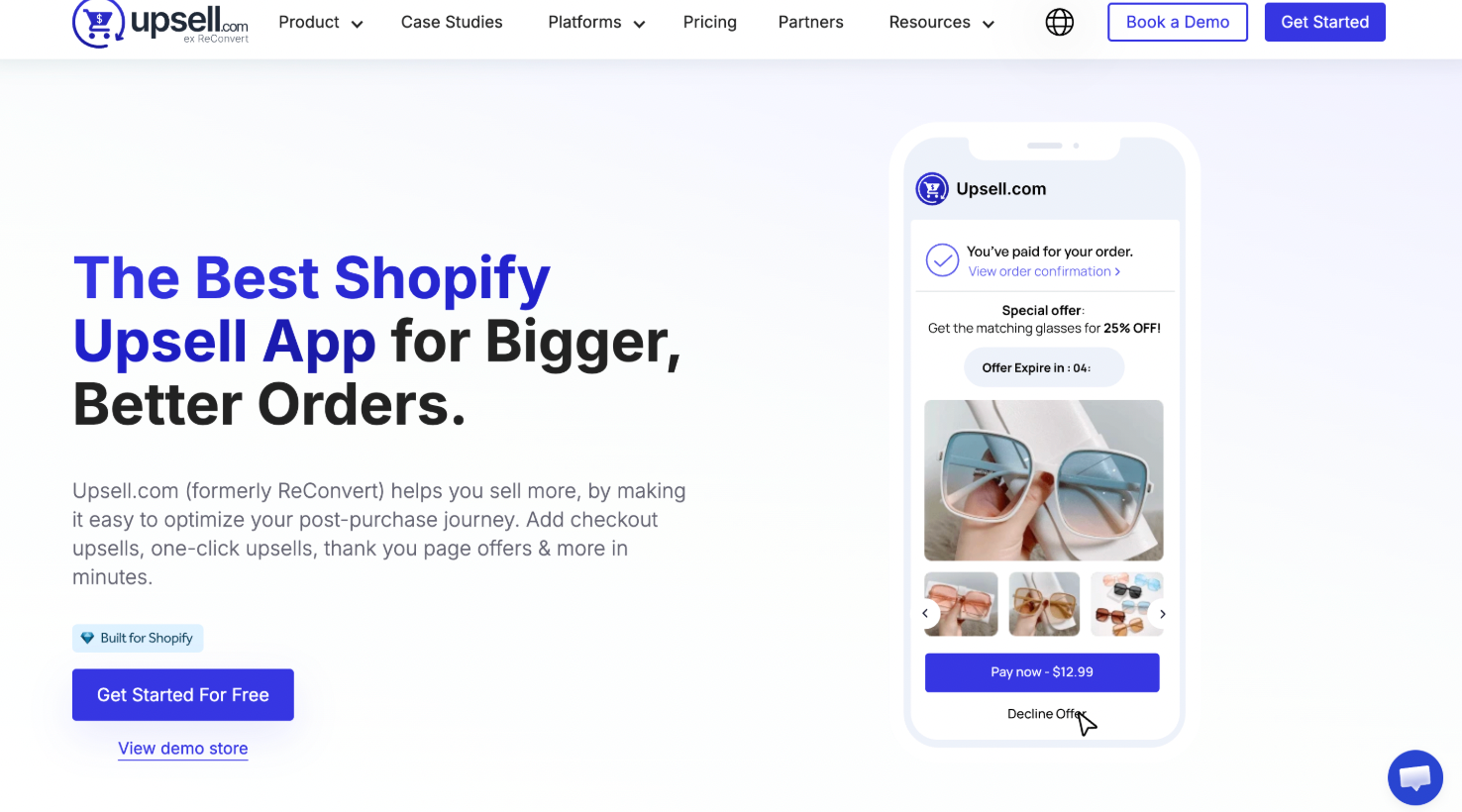
Founded: 2018
Best use case: Turn the order confirmation/thank-you page into a high-converting revenue channel with one-click post-purchase offers and survey/collector integrations.
Best category: Full funnel optimisation and Best segmentation for offers A/B testing
Top features:
- Drag-and-drop thank-you page builder and custom flows
- One-click post-purchase upsells & downsells
- AI product recommendations & “frequently bought together” widget
- Bundles, cart & product page upsells, and A/B testing
- Customer data collectors (birthdays, surveys) to personalize offers
Overview
Upsell.com is currently one of the best Shopify apps in 2026 and one of the highest-rated apps on the Shopify App Store. Now rebranded as Upsell Now, it is the solution we use for almost all of our projects. In our experience, it is the strongest Shopify upsell app available in 2026, and it was also one of the first tools to enter the market.
It has one of the highest review volumes in its category and remains one of the earliest platforms in the upsell space. After extensive testing, it stands out for its deep customization options, full-funnel optimization, and advanced A/B testing capabilities. At scale, it is also more cost-efficient than most competitors.
Personally, we like Upsell because it has one of the most active communities and a large amount of educational content, including YouTube videos and guides. Their YouTube channel has 500+ videos:
https://www.youtube.com/@upsell.com_official
For more detailed content, you can also visit their blog:
Bloghttps://blogs.upsell.com/
Zipify OneClickUpsell (OCU)
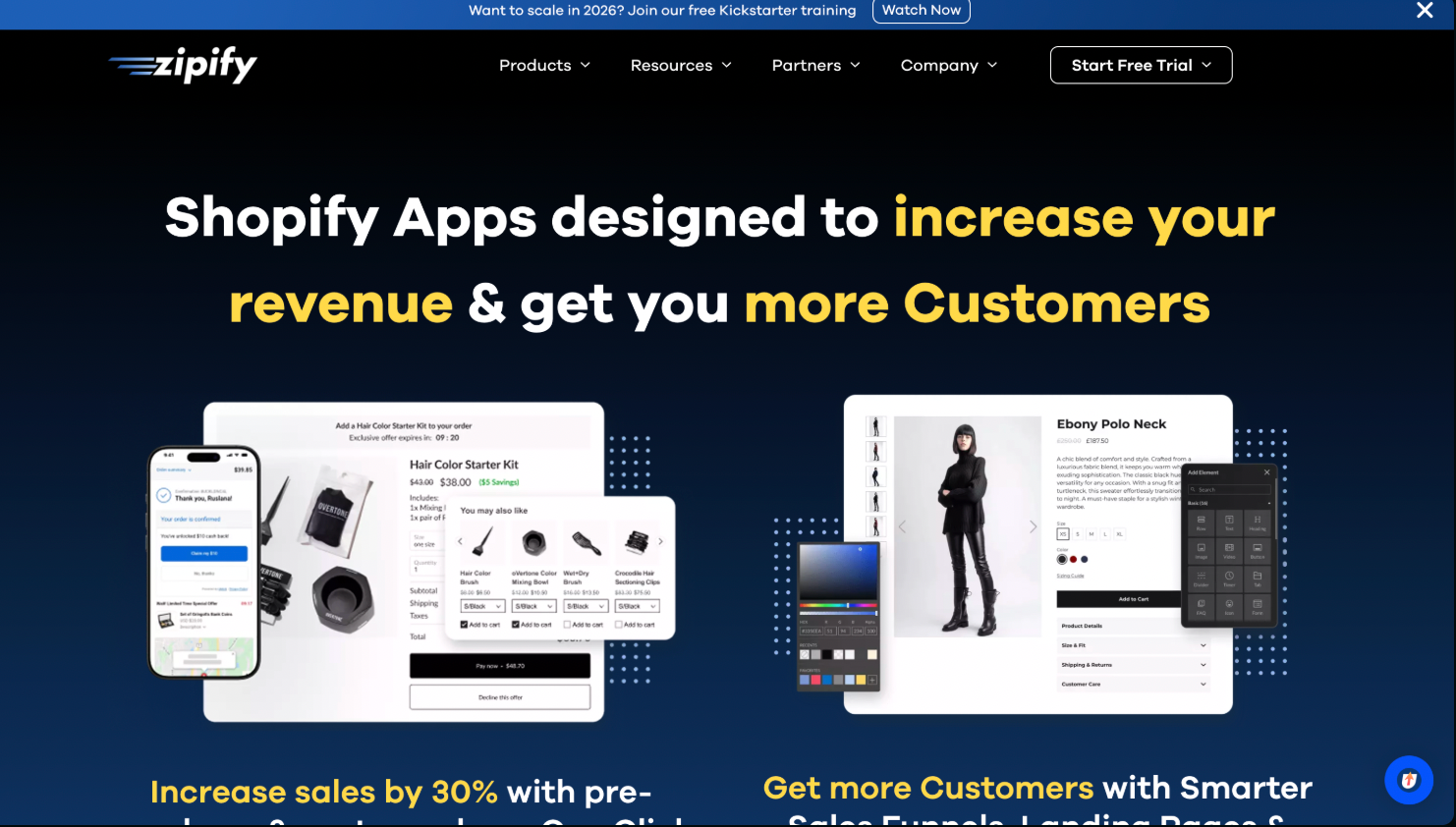
Founded: 2020
Category: One-click post-purchase upsell funnels
Use case:
Adds post-purchase upsell funnels that keep payment details intact, mainly for stores trying to squeeze a bit more revenue out of customers right after checkout.
Core functionality:
- One-click post-purchase upsells and downsells
- Prebuilt funnel templates plus an AI-assisted funnel generator (useful if you don’t feel like starting from scratch)
- Funnel analytics and conversion tracking
- Compatible with Shopify checkout, including Plus
- Integration docs and migration tools for merchants coming from other upsell apps
Limitations / drawbacks:
-
Heavily focused on post-purchase flows, with minimal support for on-page or cart-level widgets (it’s a funnel tool, not a Swiss Army knife)
-
Pricing assumes you’re already moving enough volume to justify it, which can feel ambitious for smaller stores
-
Requires some restraint in funnel setup unless you enjoy accidentally undercutting your own higher-margin products
Suited for:
SMB to mid-market Shopify stores and good -AOV brands that want predictable post-purchase upsells without reinventing checkout.
Not recommended for:
Stores looking for pre-purchase recommendation engines, broader personalization, or experimental A/B testing outside of funnels.
Overview:
Zipify Apps’ OneClickUpsell is a Shopify app focused almost entirely on post-checkout monetization. It’s built for merchants who value structured, proven funnel setups and are comfortable trading flexibility for something that generally works out of the box as long as expectations (and margins) are managed.
AfterSell
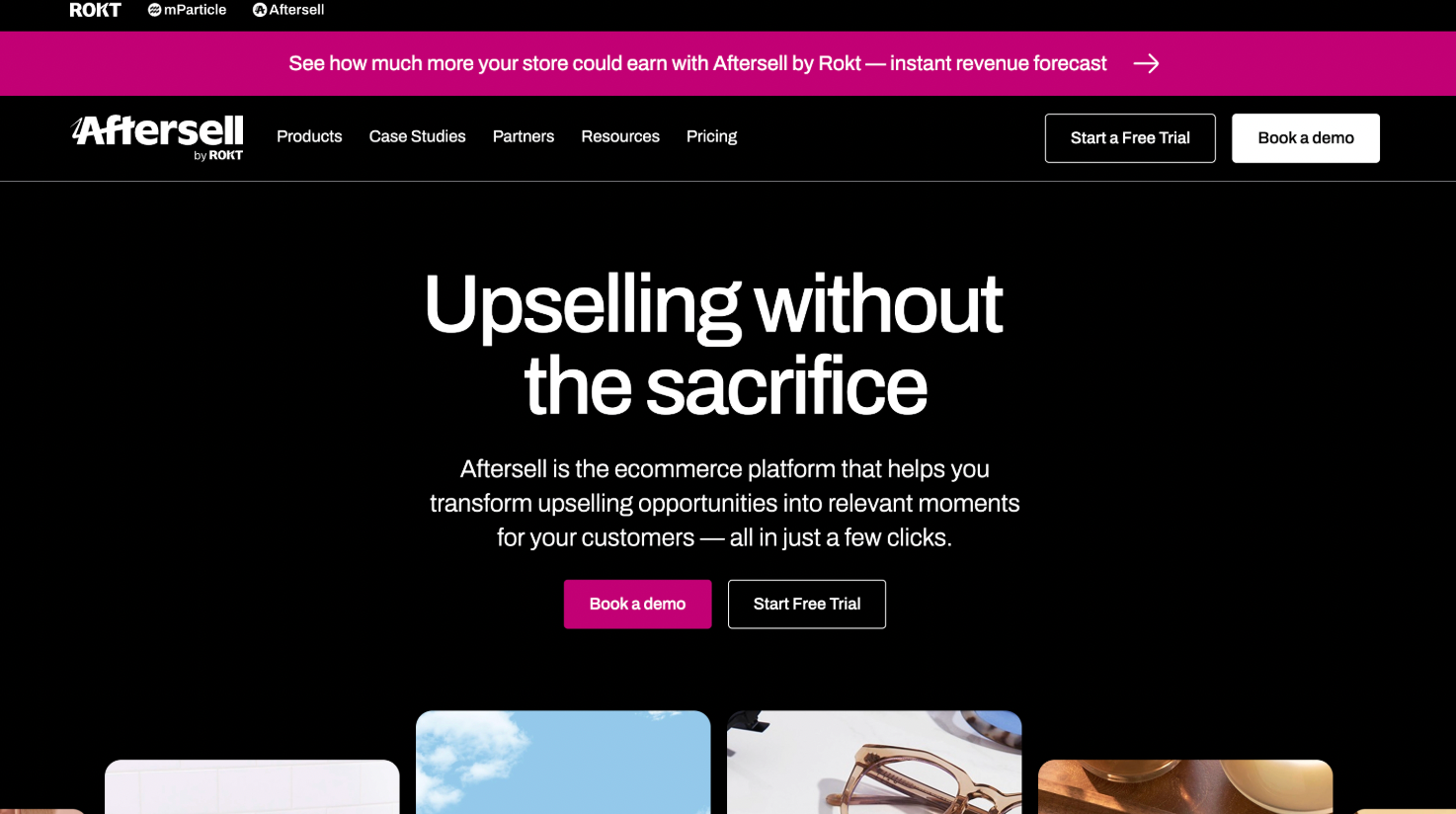
Founded: 2020
Category: Post-purchase and checkout upsell funnels (one-click)
Use case:
Adds one-click post-purchase offers and multi-step downsell flows for stores that want to generate extra revenue immediately after checkout—while the customer is still in a buying mood.
Core functionality:
-
One-click post-purchase offers that keep payment details intact
-
Smart funnels with A/B and multivariate testing
-
Customizable thank-you pages and cart-level upsell widgets
-
Shopify Plus–friendly checkout features (including checkout bumps)
-
Merchant support and structured migration paths from other tools
Limitations / drawbacks:
-
Primarily focused on post-purchase, so pre-purchase merchandising options are fairly limited
-
Subscription upsells require careful configuration unless you enjoy billing edge cases
-
Some localization and multi-currency capabilities are reserved for higher pricing tiers
Suited for:
SMB to mid-market Shopify brands looking for measurable post-checkout AOV improvements without building a complex CRO stack.
Not recommended for:
Merchants wanting a single platform to handle personalization, site search, and on-page recommendations across the entire storefront.
Company overview:
AfterSell provides post-purchase and checkout upsell infrastructure for Shopify merchants. The platform centers on one-click offers, funnel logic, and testing tools designed to increase average order value after checkout. It positions itself as a practical, revenue-focused add-on rather than a broad, all-in-one merchandising system.
Bold Commerce (Bold Upsell)
Category: In-cart, pre-checkout, and AI-assisted upsell platform
Use case:
Supports more complex upsell and cross-sell strategies across product pages, cart, and checkout. Commonly used by merchants who want centralized control over multiple offer types, including checkout order bumps for Shopify Plus.
Core functionality:
-
Pre-purchase product and cart upsells, plus in-checkout order bumps (Plus-only where applicable)
-
Multi-step upsell funnels with follow-up offers and downsells
-
Detailed analytics and experiment tracking
-
Enterprise-oriented features such as permissions, multi-store management, and dedicated support
-
Optional AI-driven product recommendations
Limitations / drawbacks:
-
Configuration can be involved, with a learning curve that’s noticeable compared to lighter-weight upsell tools
-
Pricing tends to scale with traffic and offer impressions, which can add up quickly
-
Occasional theme or script conflicts reported on heavily customized storefronts
Best suited for:
Mid-market to enterprise Shopify merchants that need advanced CRO workflows, multiple upsell surfaces, and centralized management.
Not recommended for:
Very small stores or early-stage brands looking for a simple, inexpensive upsell widget that “just works” with minimal setup.
Overview:
Bold Commerce is a long-standing Shopify partner offering a suite of modular commerce tools, including Bold Upsell. The platform is aimed at merchants who value flexibility, control, and depth—even if that comes with extra setup time and operational overhead positioning it closer to a revenue infrastructure layer than a lightweight add-on.
Summary
For 2026, the best Shopify upsell apps focus on AI-driven personalization, one-click checkout, and post-purchase offers to maximize Average Order Value (AOV). Top contenders include Upsell.com for post-purchase ,Bundler for product bundles, and full-funnel optimization tools with the highest number of reviews and flexible pricing (starting at $5 per month best in A/B testing). Candy Rack is popular for one-click upsells, and Frequently Bought Together is widely used for Amazon-style recommendations.
Based on 2026 Reddit discussions, the “best” Shopify upsell apps emphasize AI-driven personalization, post-purchase funnels, and reducing friction in the checkout flow. Top recommendations include Upsell.com (formerly ReConvert) for maximizing AOV, Zipify OCU, AfterSell, Rebuy, and UFE (Upsell Funnel Engine).
Among the most used and preferred upsell apps by Upwork freelancers and agencies worldwide in 2026, there is no single best option. However, the most recommended Shopify and Shopify Plus apps include Upsell.com (one of the first in the market, offering full-funnel optimization and 24/7 live chat support), AfterSell (post-purchase, Shopify Plus–focused), Zipify OCU (high-volume stores), Bold Upsell (AI-driven recommendations), and Candy Rack (pre-purchase upsells).
Struggling to choose the right Headless CMS & Headless Commerce tech stack? We’ll help you pick the best solution for your business! Exclusive Offer: 20 Hours of Free Development & Consultation
Book a MeetingFrequently Asked Questions
When evaluating Shopify upsell platforms in 2026, agencies should prioritize: Full-funnel coverage (pre-purchase, checkout, post-purchase) Advanced A/B testing and experimentation flexibility Granular offer segmentation (by product, customer behavior, or order logic) Scalability at high order volume Theme and checkout compatibility, especially for Shopify Plus Tools that only focus on a single funnel stage often limit long-term CRO performance.
Post-purchase funnels remain effective, but full-funnel optimization consistently produces higher cumulative AOV lift.
This approach allows:
-
Pre-purchase relevance building
-
Cart and checkout friction reduction
-
Post-purchase revenue capture while payment details remain stored
Platforms that support multiple upsell surfaces within one system typically outperform single-purpose tools over time.
A/B testing is critical once stores move beyond basic upsell widgets. At scale:
-
Static offers plateau quickly
-
Minor offer changes can materially impact AOV
-
Funnel sequencing matters as much as product selection
Apps that support native A/B testing across upsell locations enable continuous optimization without external CRO tools.
Based on agency usage, freelancer recommendations, and high-volume store adoption, the most commonly implemented platforms include:
-
Upsell.com – full-funnel optimization and testing
-
AfterSell – structured post-checkout funnels
-
Zipify OneClickUpsell – predictable one-click upsells
-
Bold Commerce – enterprise-level upsell control
Each serves different operational needs depending on store size and CRO maturity.
The order confirmation (thank-you) page is one of the most underutilized revenue surfaces.
High-performing implementations typically include:
-
One-click post-purchase offers
-
Cross-sell bundles
-
Data collection (surveys, birthdays, preferences)
Apps that allow drag-and-drop thank-you page customization tend to generate stronger post-checkout engagement and lifetime value improvements.
Upsell performance improves significantly when offers are informed by customer data.
Common high-impact data points include:
-
Purchase intent surveys
-
Subscription preferences
-
Milestones (birthdays, reorder cycles)
Platforms that natively collect and reuse this data for offer personalization reduce reliance on third-party tools.
Some advanced features such as checkout-level one-click offers require Shopify Plus.
However, many high-performing upsell strategies can still be executed on standard Shopify plans using:
-
Cart-level upsells
-
Thank-you page funnels
-
Product-page recommendations
The best platforms adapt to plan limitations rather than relying exclusively on Plus-only features.
At low volume, most upsell apps appear affordable. At scale:
-
Impression-based pricing can become costly
-
Revenue-share models may erode margins
-
Flat or predictable pricing becomes more efficient
Agencies typically favor tools that remain cost-efficient as order volume increases, especially for high-traffic DTC brands.
Common considerations include:
-
Page weight impact on older Shopify themes
-
Over-stacking widgets leading to conversion fatigue
-
Checkout configuration complexity
Successful implementations prioritize fewer, better-tested offers rather than maximum widget density.
The decision should be based on funnel strategy rather than brand preference:
-
Choose a full-funnel platform when experimentation and long-term CRO are priorities
-
Choose a post-purchase-focused tool when simplicity and fast deployment matter
-
Choose enterprise-oriented platforms when multi-store or complex workflows are required
In practice, agencies often standardize on one primary platform for consistency while selectively deploying alternatives for specific use cases.